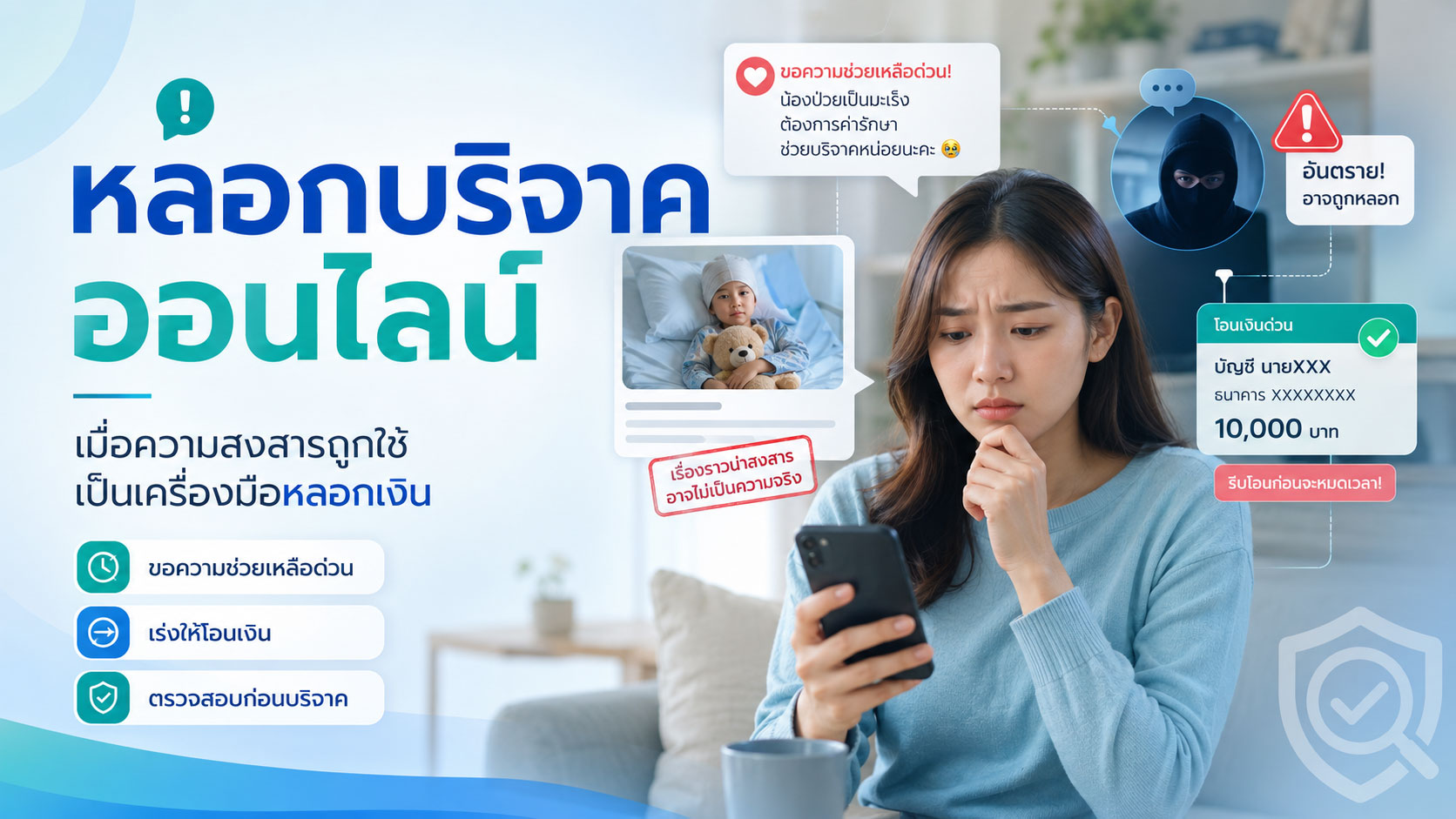
ในสังคมไทย “น้ำใจ” เป็นสิ่งที่มีคุณค่าเสมอ เรามักอยากช่วยเหลือเมื่อเห็นคนเดือดร้อน เห็นผู้ป่วย เด็ก ผู้สูงอายุ สัตว์บาดเจ็บ ผู้ประสบอุบัติเหตุ หรือครอบครัวที่กำลังลำบาก โดยเฉพาะเมื่อเรื่องราวเหล่านั้นถูกเล่าผ่านภาพ ข้อความ หรือคลิปวิดีโอที่กระทบความรู้สึก
แต่ในโลกออนไลน์ ความสงสารและความหวังดีอาจถูกนำมาใช้เป็นเครื่องมือได้เช่นกัน
มิจฉาชีพบางกลุ่มไม่ได้เริ่มต้นด้วยการข่มขู่หรือเสนอผลตอบแทนสูงเกินจริง แต่เลือกใช้ “เรื่องราวที่น่าสงสาร” เพื่อทำให้ผู้คนตัดสินใจโอนเงินอย่างรวดเร็ว ก่อนจะมีเวลาได้ตรวจสอบว่าผู้รับบริจาคมีตัวตนจริงหรือไม่ เหตุการณ์เกิดขึ้นจริงหรือไม่ หรือเงินบริจาคถูกนำไปใช้ตามที่กล่าวอ้างหรือเปล่า
ภัยลักษณะนี้อาจเรียกได้ว่า การหลอกบริจาคออนไลน์ หรือ Fake Donation Scam ซึ่งเป็นรูปแบบการหลอกลวงที่อาศัยความเห็นใจ ความเร่งด่วน และความไว้วางใจของผู้บริจาคเป็นหลัก
เช็คให้ชัวร์ จัดทำบทความนี้ขึ้นเพื่อช่วยให้ผู้อ่านสามารถแยกแยะระหว่างการช่วยเหลือที่น่าเชื่อถือ กับคำขอบริจาคที่ควรตรวจสอบให้รอบคอบมากขึ้น เพื่อให้ความตั้งใจดีของเราไม่ถูกนำไปใช้ในทางที่ผิด
การช่วยเหลือเป็นเรื่องดี แต่ควรช่วยอย่างมีสติ
การระวังคำขอบริจาคออนไลน์ไม่ได้หมายความว่าเราควรเลิกช่วยเหลือผู้อื่น หรือมองทุกเรื่องราวด้วยความไม่ไว้ใจทั้งหมด
ในทางตรงกันข้าม การตรวจสอบก่อนบริจาคคือการช่วยให้เงินของเราไปถึงผู้ที่ควรได้รับความช่วยเหลือจริง และลดโอกาสที่มิจฉาชีพจะใช้ความสงสารของสังคมเป็นช่องทางหารายได้
การช่วยอย่างมีสติจึงไม่ใช่ความใจร้าย แต่เป็นความรับผิดชอบต่อทั้งผู้ให้ ผู้รับ และสังคมโดยรวม
ทำไมการหลอกบริจาคออนไลน์ถึงได้ผล
คำขอบริจาคออนไลน์มักได้ผลเพราะกระทบความรู้สึกโดยตรง โดยเฉพาะเมื่อมีภาพหรือเรื่องเล่าที่ทำให้รู้สึกว่า “ต้องช่วยตอนนี้”
มิจฉาชีพอาจใช้หลายองค์ประกอบร่วมกัน เช่น
- ภาพผู้ป่วย เด็ก ผู้สูงอายุ หรือสัตว์บาดเจ็บ
- เรื่องราวชีวิตที่น่าเห็นใจ
- ข้อความเร่งด่วน เช่น ต้องผ่าตัดวันนี้ ต้องจ่ายค่ารักษาทันที หรือกำลังจะถูกตัดน้ำตัดไฟ
- จำนวนเงินที่ดูไม่มาก ทำให้หลายคนรู้สึกว่าโอนช่วยนิดเดียวคงไม่เสียหาย
- การแชร์ต่อจำนวนมาก ทำให้ดูเหมือนเป็นเรื่องจริง
- คอมเมนต์ที่ดูเหมือนมีคนโอนช่วยแล้ว
- การใช้ชื่อบัญชีส่วนตัวโดยอ้างว่าเป็นญาติ ผู้ดูแล หรือผู้ประสานงาน
เมื่อความสงสารเกิดขึ้นพร้อมกับความเร่งด่วน หลายคนอาจเลือกโอนก่อน แล้วค่อยคิดทีหลัง ซึ่งเป็นจุดที่มิจฉาชีพต้องการ
รูปแบบการหลอกบริจาคออนไลน์ที่พบบ่อย
การหลอกบริจาคไม่ได้มีเพียงรูปแบบเดียว บางกรณีใช้เรื่องจริงบางส่วน บางกรณีแต่งเรื่องทั้งหมด และบางกรณีอาจนำภาพหรือเหตุการณ์ของผู้อื่นมาใช้โดยไม่ได้รับอนุญาต
1. แอบอ้างผู้ป่วยหรือค่ารักษาพยาบาล
รูปแบบนี้มักใช้ภาพผู้ป่วย ใบรับรองแพทย์ ใบเสร็จค่ารักษา หรือข้อความขอความช่วยเหลือเกี่ยวกับโรคร้ายแรง การผ่าตัด อุบัติเหตุ หรือค่าใช้จ่ายเร่งด่วน
สิ่งที่ควรระวัง ได้แก่
- ไม่มีข้อมูลโรงพยาบาลหรือช่องทางตรวจสอบที่ชัดเจน
- ใช้ภาพผู้ป่วยแต่ไม่มีรายละเอียดที่ยืนยันได้
- ขอให้โอนเข้าบัญชีส่วนตัวที่ไม่สัมพันธ์กับผู้ป่วย
- เปลี่ยนเลขบัญชีหรือชื่อผู้รับเงินบ่อย
- ใช้คำพูดเร่งรัดให้โอนทันที
- ไม่สามารถตอบคำถามพื้นฐานเกี่ยวกับเคสได้
- เอกสารที่แสดงดูไม่ชัด ถูกปิดข้อมูลมากเกินไป หรือดูแก้ไขผิดปกติ
การเจ็บป่วยเป็นเรื่องที่กระทบใจมาก แต่ยิ่งเรื่องใดกระทบใจมาก ยิ่งควรตรวจสอบอย่างสุภาพและรอบคอบก่อนโอน
2. แอบอ้างเด็ก ผู้สูงอายุ หรือครอบครัวลำบาก
บางโพสต์อาจเล่าเรื่องครอบครัวที่ไม่มีรายได้ เด็กขาดนม ผู้สูงอายุอยู่ลำพัง บ้านถูกตัดไฟ หรือไม่มีเงินซื้ออาหาร
เรื่องเหล่านี้อาจเป็นเรื่องจริงในหลายกรณี แต่ก็เป็นรูปแบบที่ถูกนำไปใช้หลอกลวงได้เช่นกัน
สัญญาณที่ควรสังเกต เช่น
- มีเพียงภาพและเรื่องเล่า แต่ไม่มีหน่วยงานหรือผู้ประสานงานที่ตรวจสอบได้
- ไม่มีพื้นที่หรือสถานที่เกิดเหตุที่ชัดเจน
- บัญชีรับเงินเป็นชื่อบุคคลที่ไม่ทราบความเกี่ยวข้อง
- เมื่อถามข้อมูลเพิ่มเติม ผู้โพสต์หลีกเลี่ยงหรือกดดันให้โอนก่อน
- มีการใช้เรื่องเดิมซ้ำ ๆ ในหลายพื้นที่หรือหลายบัญชี
- พบว่าภาพเดียวกันถูกใช้ในหลายโพสต์ที่มีรายละเอียดไม่ตรงกัน
ก่อนช่วยเหลือ อาจเริ่มจากการตรวจสอบว่ามีหน่วยงานท้องถิ่น องค์กรการกุศล หรือผู้ใหญ่ในพื้นที่รับรู้เรื่องนี้หรือไม่
3. แอบอ้างภัยพิบัติ อุบัติเหตุ หรือเหตุฉุกเฉิน
เมื่อเกิดอุบัติเหตุ ไฟไหม้ น้ำท่วม หรือเหตุการณ์ฉุกเฉิน ผู้คนมักอยากช่วยเหลืออย่างรวดเร็ว มิจฉาชีพบางรายจึงใช้ช่วงเวลาที่สังคมกำลังตื่นตัวสร้างโพสต์รับบริจาคปลอม
ตัวอย่างที่ควรระวัง:
- เปิดรับบริจาคทันทีหลังเกิดเหตุ แต่ไม่มีข้อมูลยืนยัน
- ใช้ภาพจากเหตุการณ์เก่าหรือคนละพื้นที่
- อ้างว่าเป็นตัวแทนผู้ประสบภัย แต่ไม่มีหลักฐานความเกี่ยวข้อง
- ไม่มีการอัปเดตการใช้เงินหรือการส่งมอบความช่วยเหลือ
- ใช้บัญชีส่วนตัวแทนบัญชีหน่วยงานหรือกองทุนที่ตรวจสอบได้
- ขอรับเงินหลายช่องทางโดยไม่มีความโปร่งใส
ในสถานการณ์ฉุกเฉิน ควรเลือกบริจาคผ่านหน่วยงานที่ตรวจสอบได้ หรือช่องทางทางการของพื้นที่นั้น ๆ มากกว่าการโอนให้บัญชีที่ไม่รู้จักจากโพสต์แชร์ต่อ
4. แอบอ้างช่วยเหลือสัตว์บาดเจ็บหรือสัตว์จรจัด
โพสต์ช่วยสัตว์บาดเจ็บ สัตว์ถูกทิ้ง หรือสัตว์จรจัดมักได้รับความเห็นใจสูง เพราะภาพและเรื่องราวอาจกระทบใจมาก
สิ่งที่ควรตรวจสอบ:
- มีชื่อคลินิกหรือโรงพยาบาลสัตว์ที่ตรวจสอบได้หรือไม่
- มีใบประเมินค่ารักษาหรือหลักฐานการรักษาหรือไม่
- บัญชีรับเงินเป็นขององค์กร กลุ่มช่วยเหลือ หรือบุคคลใด
- มีประวัติการช่วยเหลือจริงต่อเนื่องหรือไม่
- มีการอัปเดตอาการและค่าใช้จ่ายหลังได้รับบริจาคหรือไม่
- ใช้ภาพเดิมซ้ำในหลายเคสหรือไม่
การช่วยเหลือสัตว์เป็นเรื่องดี แต่ควรช่วยผ่านกลุ่มหรือเพจที่มีประวัติชัดเจนและมีการรายงานความคืบหน้าอย่างโปร่งใส
5. ใช้ชื่อองค์กร มูลนิธิ หรือบุคคลมีชื่อเสียงโดยไม่ได้รับอนุญาต
บางครั้งมิจฉาชีพอาจแอบอ้างชื่อองค์กรการกุศล มูลนิธิ วัด โรงเรียน โรงพยาบาล หรือบุคคลสาธารณะ เพื่อเพิ่มความน่าเชื่อถือ
สิ่งที่ควรระวัง:
- ลิงก์รับบริจาคไม่ได้มาจากเว็บไซต์หรือเพจทางการ
- บัญชีรับเงินไม่ใช่ชื่อองค์กร
- ใช้โลโก้หรือรูปบุคคลมีชื่อเสียง แต่ไม่มีการประกาศจากช่องทางจริง
- ข้อความมีการสะกดผิดหรือดูไม่เป็นทางการ
- มีการทักแชทส่วนตัวเพื่อขอรับบริจาค
- ไม่พบประกาศรับบริจาคในช่องทางทางการขององค์กรนั้น
หากเป็นการบริจาคในนามองค์กร ควรเข้าไปตรวจสอบจากเว็บไซต์ เพจทางการ หรือช่องทางติดต่อทางการขององค์กรนั้นโดยตรง
สัญญาณเตือนของคำขอบริจาคที่ควรตรวจสอบก่อนโอน
แม้คำขอบริจาคแต่ละเรื่องจะมีรายละเอียดต่างกัน แต่มีสัญญาณบางอย่างที่ควรระวังร่วมกัน
- ใช้ข้อความเร่งด่วนมากผิดปกติ
- ขอให้โอนทันทีโดยไม่ให้เวลาตรวจสอบ
- ไม่มีข้อมูลผู้รับความช่วยเหลือที่ตรวจสอบได้
- ไม่มีหน่วยงานหรือผู้ประสานงานที่ชัดเจน
- บัญชีรับเงินเป็นชื่อบุคคลที่ไม่ทราบความเกี่ยวข้อง
- ไม่สามารถอธิบายการใช้เงินได้ชัดเจน
- ไม่มีการอัปเดตหลังได้รับเงินบริจาค
- ใช้ภาพหรือเรื่องราวที่ค้นพบว่าเคยถูกใช้มาก่อน
- ปิดคอมเมนต์ ลบคำถาม หรือหลีกเลี่ยงการตอบรายละเอียด
- ขอรับบริจาคหลายบัญชีโดยไม่มีเหตุผล
- มีคนเตือนในคอมเมนต์ว่าเคยพบพฤติกรรมต้องสงสัย
- บอกว่า “ไม่ต้องถามเยอะ แค่ช่วยก็พอ”
หากพบหลายข้อพร้อมกัน ควรหยุดก่อนโอน และตรวจสอบจากแหล่งอื่นเพิ่มเติม
ก่อนบริจาคออนไลน์ ควรเช็คอะไรบ้าง
การตรวจสอบไม่จำเป็นต้องซับซ้อน แต่อย่างน้อยควรมีขั้นตอนพื้นฐานก่อนโอนเงิน
1. เช็คแหล่งที่มาของโพสต์
ดูว่าโพสต์รับบริจาคมาจากใคร เป็นเพจทางการหรือบัญชีส่วนตัว มีประวัติการโพสต์จริงหรือไม่ มีความน่าเชื่อถือในเรื่องที่ขอรับบริจาคหรือเปล่า
หากเป็นโพสต์ที่แชร์ต่อมาหลายทอด ควรย้อนกลับไปดูต้นทางก่อนว่าใครเป็นผู้เปิดรับบริจาคจริง
2. เช็คบัญชีรับเงิน
ก่อนโอน ควรดูชื่อบัญชีรับเงินว่าเกี่ยวข้องกับเรื่องที่ขอบริจาคหรือไม่
หากเป็นองค์กร ควรเป็นบัญชีชื่อองค์กรหรือช่องทางบริจาคที่องค์กรประกาศเอง
หากเป็นบุคคล ควรมีคำอธิบายชัดเจนว่าบุคคลนั้นเกี่ยวข้องกับผู้รับความช่วยเหลืออย่างไร
ควรระวังหากบัญชีรับเงินเปลี่ยนไปเรื่อย ๆ หรือไม่สามารถอธิบายความเกี่ยวข้องได้
3. เช็คภาพและข้อมูล
หากทำได้ ควรค้นหาภาพย้อนกลับหรือค้นหาข้อความสำคัญจากโพสต์ เพื่อดูว่าภาพหรือเรื่องราวเดียวกันเคยถูกใช้ที่อื่นหรือไม่
สิ่งที่ควรดู:
- ภาพมาจากเหตุการณ์เดียวกันจริงหรือไม่
- วันที่ในโพสต์สัมพันธ์กับเหตุการณ์หรือไม่
- สถานที่ตรงกับคำอธิบายหรือไม่
- มีแหล่งข่าวหรือแหล่งอ้างอิงอื่นสนับสนุนหรือไม่
- ข้อมูลในหลายโพสต์ตรงกันหรือไม่
หากพบว่าภาพเดียวกันถูกใช้กับเรื่องราวหลายแบบ ควรระวังเป็นพิเศษ
4. เช็คช่องทางทางการ
หากโพสต์อ้างถึงโรงพยาบาล โรงเรียน วัด มูลนิธิ หน่วยงานรัฐ หรือองค์กรใด ควรตรวจสอบจากช่องทางทางการของหน่วยงานนั้นโดยตรง
อย่ากดลิงก์หรือโทรตามเบอร์ที่อยู่ในโพสต์ทันที หากยังไม่มั่นใจ ควรค้นหาช่องทางทางการด้วยตนเอง
5. เช็คความโปร่งใสหลังรับบริจาค
ผู้รับบริจาคที่น่าเชื่อถือควรมีการอัปเดตความคืบหน้าอย่างเหมาะสม เช่น ยอดบริจาค ค่าใช้จ่าย หลักฐานการรักษา ภาพการส่งมอบ หรือรายงานหลังจบเคส โดยคำนึงถึงความเป็นส่วนตัวของผู้เกี่ยวข้อง
หากรับเงินจำนวนมากแต่ไม่มีการอัปเดตใด ๆ หรือหลีกเลี่ยงคำถามเกี่ยวกับการใช้เงิน ควรเพิ่มความระมัดระวัง
วิธีช่วยเหลืออย่างปลอดภัยมากขึ้น
หากต้องการช่วยเหลือ แต่ยังไม่มั่นใจว่าโพสต์นั้นน่าเชื่อถือหรือไม่ อาจเลือกแนวทางที่ปลอดภัยกว่า
- บริจาคผ่านช่องทางทางการขององค์กรที่ตรวจสอบได้
- ติดต่อหน่วยงานหรือผู้ประสานงานที่เกี่ยวข้องโดยตรง
- ช่วยแชร์เฉพาะโพสต์ที่ตรวจสอบแหล่งที่มาแล้ว
- ช่วยเป็นสิ่งของแทนเงินเมื่อเหมาะสม
- ขอหลักฐานหรือข้อมูลเพิ่มเติมอย่างสุภาพ
- ตรวจสอบเลขบัญชี เบอร์โทร ชื่อเพจ หรือชื่อผู้รับเงินก่อนโอน
- ไม่โอนเงินเพราะถูกกดดันด้วยถ้อยคำรุนแรงหรือเร่งด่วนเกินไป
- แจ้งข้อมูลต้องสงสัยหากพบพฤติกรรมที่อาจหลอกลวง
การถามก่อนบริจาคไม่ใช่การไม่เห็นใจ แต่เป็นการช่วยให้การช่วยเหลือเกิดขึ้นอย่างถูกที่ ถูกคน และถูกทาง
หากเผลอโอนเงินให้คำขอบริจาคที่น่าสงสัยแล้วควรทำอย่างไร
หากโอนไปแล้วและเริ่มสงสัยว่าอาจถูกหลอก ควรรีบจัดการอย่างเป็นขั้นตอน
- หยุดโอนเงินเพิ่มทันที
- เก็บสลิปโอนเงิน
- เก็บภาพหน้าจอโพสต์ แชท คอมเมนต์ และบัญชีรับเงิน
- เก็บลิงก์เพจ โปรไฟล์ หรือเว็บไซต์ที่เกี่ยวข้อง
- บันทึกวันที่ เวลา จำนวนเงิน และรายละเอียดเหตุการณ์
- ติดต่อธนาคารของท่านผ่านช่องทางทางการ
- หากมีความเสียหายหรือพบพฤติกรรมหลอกลวง ควรแจ้งหน่วยงานที่เกี่ยวข้องผ่านช่องทางทางการ
- แจ้งข้อมูลต้องสงสัยเข้ามายังเช็คให้ชัวร์ หากเห็นว่าอาจช่วยเตือนผู้อื่นได้
โดนโกงแล้วควรทำอย่างไร: [ใส่ลิงก์หน้า What To Do If Scammed]
แจ้งข้อมูลต้องสงสัย: [ใส่ลิงก์หน้า Report Scam]
เมื่อจะแชร์โพสต์รับบริจาค ควรรับผิดชอบมากกว่าการกดแชร์
บางครั้งเราอาจไม่ได้โอนเงินเอง แต่ช่วยแชร์โพสต์รับบริจาคด้วยความหวังดี อย่างไรก็ตาม การแชร์ข้อมูลที่ยังไม่ได้ตรวจสอบอาจทำให้คนอื่นหลงเชื่อและเกิดความเสียหายได้
ก่อนแชร์ ควรถามตัวเองว่า:
- เรารู้ไหมว่าโพสต์นี้มาจากต้นทางใด
- ผู้เปิดรับบริจาคตรวจสอบได้หรือไม่
- เลขบัญชีรับเงินสัมพันธ์กับเรื่องที่ขอความช่วยเหลือหรือไม่
- มีหลักฐานหรือช่องทางยืนยันหรือไม่
- หากคนใกล้ตัวเราโอนเงินเพราะเราแชร์ เรามั่นใจพอหรือยัง
การแชร์อย่างรับผิดชอบเป็นส่วนหนึ่งของการช่วยกันสร้างพื้นที่ออนไลน์ที่ปลอดภัยขึ้น
ความสงสารควรเดินคู่กับการตรวจสอบ
มิจฉาชีพที่ใช้คำขอบริจาคปลอมไม่ได้ทำร้ายเฉพาะผู้โอนเงินเท่านั้น แต่ยังทำร้ายความไว้วางใจของสังคม และทำให้ผู้ที่เดือดร้อนจริงได้รับความช่วยเหลือยากขึ้น
ดังนั้น สิ่งที่เราควรทำไม่ใช่การเลิกเชื่อทุกอย่าง แต่คือการช่วยเหลือด้วยสติ ตรวจสอบก่อนโอน และส่งต่อเฉพาะข้อมูลที่มีความน่าเชื่อถือเพียงพอ
ความเมตตาเป็นสิ่งดี แต่เมื่ออยู่บนโลกออนไลน์ ความเมตตาควรมีการตรวจสอบเป็นเกราะป้องกันเสมอ
ใช้เช็คให้ชัวร์เป็นหนึ่งในขั้นตอนก่อนบริจาค
ก่อนโอนเงินบริจาคให้บุคคล เพจ หรือบัญชีที่ยังไม่มั่นใจ ท่านสามารถใช้เช็คให้ชัวร์เป็นหนึ่งในเครื่องมือช่วยตรวจสอบเบื้องต้น เช่น
- ค้นหาเลขบัญชี
- ค้นหาเบอร์โทร
- ค้นหาชื่อบัญชี
- ค้นหาชื่อเพจหรือร้าน
- ค้นหาลิงก์หรือเว็บไซต์
- อ่านบทความเกี่ยวกับรูปแบบภัยออนไลน์ที่เกี่ยวข้อง
ตรวจสอบข้อมูลต้องสงสัย: [ใส่ลิงก์หน้า Check/Search]
หากท่านพบคำขอบริจาคที่น่าสงสัย มีเลขบัญชี เพจ ลิงก์ หรือพฤติกรรมที่อาจเสี่ยง สามารถแจ้งข้อมูลเข้ามาอย่างสุจริต เพื่อช่วยให้ผู้อื่นระมัดระวังก่อนเกิดความเสียหาย
แจ้งข้อมูลต้องสงสัย: [ใส่ลิงก์หน้า Report Scam]
อย่างไรก็ตาม หากไม่พบข้อมูลในระบบ ไม่ได้หมายความว่าปลอดภัยแน่นอน เพราะข้อมูลใหม่อาจยังไม่เคยมีผู้แจ้งเข้ามา ผู้ใช้งานควรตรวจสอบจากหลายแหล่ง ใช้วิจารณญาณ และเลือกบริจาคผ่านช่องทางที่ตรวจสอบได้มากที่สุด
ข้อความสำคัญ
ข้อมูลในบทความนี้มีวัตถุประสงค์เพื่อให้ความรู้และสร้างความตระหนักเกี่ยวกับการหลอกบริจาคออนไลน์เบื้องต้นเท่านั้น ไม่ถือเป็นคำแนะนำทางกฎหมาย การเงิน หรือความปลอดภัยไซเบอร์เฉพาะกรณี
เช็คให้ชัวร์ไม่ใช่หน่วยงานรัฐ ธนาคาร ตำรวจ ศาล หรือผู้ให้คำปรึกษาทางกฎหมายโดยตรง และไม่สามารถอายัดบัญชี ติดตามเงินคืน ดำเนินคดี หรือสั่งการแทนหน่วยงานที่มีอำนาจได้
หากท่านได้รับความเสียหายทางการเงินหรือพบเหตุอันควรสงสัยว่าเกี่ยวข้องกับอาชญากรรม กรุณาติดต่อธนาคารของท่านและหน่วยงานที่เกี่ยวข้องผ่านช่องทางทางการโดยเร็วที่สุด
เช็คให้ชัวร์ — ก่อนเชื่อ ก่อนโอน ก่อนแชร์
Fake Online Donation Scams: When Sympathy Is Used as a Tool to Steal Money
In Thai society, kindness has always been a valuable quality. When we see people in distress, patients, children, elderly people, injured animals, accident victims, or families facing hardship, many of us naturally want to help. This is especially true when those stories are shared through emotional photos, messages, or videos.
However, in the online world, kindness and sympathy can also be misused.
Some scammers do not start by threatening people or promising unrealistic returns. Instead, they use “sad stories” to make people transfer money quickly before they have time to verify whether the recipient is real, whether the situation actually happened, or whether the donated money will be used as claimed.
This type of threat is often called a Fake Donation Scam, where scammers rely on sympathy, urgency, and trust from donors.
CheckHaiSure created this article to help readers distinguish between trustworthy donation requests and donation appeals that should be checked more carefully, so that our good intentions are not misused.
Helping Others Is Good, But It Should Be Done Mindfully
Being careful with online donation requests does not mean we should stop helping people or distrust every story we see.
On the contrary, checking before donating helps ensure that our money reaches people who truly need help and reduces the chance that scammers can use public sympathy as a source of income.
Helping mindfully is not unkind. It is responsible to the donor, the recipient, and society as a whole.
Why Fake Online Donation Scams Work
Online donation requests often work because they affect emotions directly, especially when images or stories make people feel that they “must help now.”
Scammers may combine several elements, such as:
- Photos of patients, children, elderly people, or injured animals
- Emotional stories about hardship
- Urgent messages, such as needing surgery today, paying medical fees immediately, or facing utility disconnection
- Small donation amounts that make people feel a small transfer would not hurt
- Many shares that make the story appear real
- Comments that appear to show other people have already donated
- Personal bank accounts claimed to belong to relatives, caregivers, or coordinators
When sympathy is combined with urgency, many people may transfer first and think later. That is exactly what scammers want.
Common Forms of Fake Online Donation Scams
Fake donation scams do not appear in only one form. Some cases may use parts of a real story, some may be entirely fabricated, and others may use photos or incidents from other people without permission.
1. Impersonating Patients or Medical Expense Appeals
This type of scam often uses photos of patients, medical certificates, hospital bills, or messages requesting help for serious illness, surgery, accidents, or urgent medical expenses.
Things to watch for include:
- No clear hospital information or verifiable contact channel
- Patient photos without details that can be checked
- Requests to transfer money to a personal account unrelated to the patient
- Frequent changes in receiving account numbers or names
- Urgent language pressuring people to transfer immediately
- Inability to answer basic questions about the case
- Documents that are unclear, excessively censored, or appear unusually edited
Illness is highly emotional. The more emotionally powerful a story is, the more politely and carefully it should be checked before donating.
2. Impersonating Children, Elderly People, or Families in Hardship
Some posts may describe families with no income, children without milk, elderly people living alone, homes with electricity being cut off, or families unable to buy food.
Many such situations can be real, but this pattern can also be used for scams.
Warning signs include:
- Only photos and a story are shown, with no verifiable organization or coordinator
- No clear location or incident details
- The receiving bank account belongs to someone with unclear connection
- When asked for more information, the poster avoids answering or pressures people to transfer first
- The same story is reused in multiple areas or by multiple accounts
- The same photo appears in different posts with inconsistent details
Before helping, it may be better to check whether local authorities, charities, community leaders, or trusted people in the area are aware of the case.
3. Impersonating Disaster, Accident, or Emergency Relief
When accidents, fires, floods, or emergencies happen, people often want to help quickly. Scammers may use these moments of public attention to create fake donation posts.
Examples to watch for include:
- Donation requests appearing immediately after an incident without verifiable information
- Photos taken from old incidents or different locations
- Claims of representing victims without proof of involvement
- No updates on how funds are used or how help is delivered
- Use of personal accounts instead of verifiable organization or fund accounts
- Multiple donation channels with no transparency
In emergency situations, it is safer to donate through verifiable organizations or official local channels rather than transferring to unknown accounts from widely shared posts.
4. Impersonating Animal Rescue or Injured Animal Cases
Posts about injured, abandoned, or stray animals often receive high sympathy because the photos and stories can be very emotional.
Things to check include:
- Is there a clinic or animal hospital that can be verified?
- Is there a treatment estimate or treatment evidence?
- Does the receiving account belong to an organization, rescue group, or identifiable person?
- Is there a real history of rescue work?
- Are there updates on the animal’s condition and expenses after donations?
- Are the same photos reused in multiple cases?
Helping animals is meaningful, but it is safer to support groups or pages with a clear history and transparent updates.
5. Misusing the Names of Organizations, Foundations, or Public Figures
Scammers may use the names of charities, foundations, temples, schools, hospitals, or public figures to make donation requests appear more trustworthy.
Things to be careful with include:
- Donation links do not come from the official website or official page
- The receiving account is not under the organization’s name
- Logos or public figures are used, but there is no announcement from an official channel
- The wording contains spelling mistakes or looks unofficial
- Someone contacts you privately to request a donation
- No donation announcement can be found on the organization’s official channels
If a donation is claimed to be under an organization, check directly through the organization’s official website, official page, or official contact channel.
Warning Signs to Check Before Donating
Although each donation request may have different details, there are common warning signs to watch for:
- The message is unusually urgent
- You are pushed to transfer immediately without time to check
- There is no verifiable information about the person receiving help
- There is no clear organization or coordinator
- The receiving account belongs to an unknown person
- The use of money is not clearly explained
- There are no updates after donations are received
- The images or story appear to have been used before
- Comments are closed, questions are deleted, or details are avoided
- Multiple receiving accounts are used without a clear reason
- Other users warn in comments that the behavior may be suspicious
- The poster says, “Do not ask too much, just help”
If several of these signs appear together, pause before transferring and check from other sources.
What to Check Before Donating Online
Checking does not need to be complicated, but there should be at least a few basic steps before transferring money.
1. Check the Source of the Post
Look at who posted the donation request. Is it an official page or a personal account? Does the account have a real posting history? Is it credible in relation to the donation request?
If the post has been shared many times, trace it back to the original source to see who is actually accepting donations.
2. Check the Receiving Bank Account
Before transferring, check whether the receiving account name is related to the donation request.
If it is an organization, the account should ideally be under the organization’s name or a donation channel officially announced by the organization.
If it is a person, there should be a clear explanation of how that person is related to the recipient.
Be careful if the receiving account keeps changing or if the relationship cannot be explained clearly.
3. Check Images and Information
If possible, search the images or key phrases from the post to see whether the same photos or story have been used elsewhere.
Things to check include:
- Do the photos truly belong to the same incident?
- Does the date in the post match the incident?
- Does the location match the description?
- Are there news sources or other references supporting the story?
- Are details consistent across different posts?
If the same photo appears in multiple stories with different details, be especially careful.
4. Check Official Channels
If the post mentions a hospital, school, temple, foundation, government agency, or any organization, verify directly through that organization’s official channels.
Do not immediately click links or call numbers shown in the post if you are unsure. Search for official contact information yourself.
5. Check Transparency After Donations Are Received
A trustworthy fundraiser should provide appropriate updates, such as donation totals, expenses, treatment records, delivery of aid, or a case summary, while respecting the privacy of those involved.
If a large amount of money is collected but there are no updates, or questions about fund usage are avoided, be more cautious.
Safer Ways to Help
If you want to help but are unsure whether a donation post is trustworthy, consider safer approaches:
- Donate through official channels of verifiable organizations
- Contact the relevant organization or coordinator directly
- Share only posts whose source has been checked
- Provide goods instead of money where appropriate
- Politely request additional evidence or details
- Check the account number, phone number, page name, or receiver name before transferring
- Do not transfer money because of harsh or overly urgent pressure
- Report suspicious information if you notice behavior that may be fraudulent
Asking questions before donating is not a lack of compassion. It is a way to help ensure that support reaches the right person through the right channel.
What to Do If You Already Donated to a Suspicious Request
If you have already transferred money and begin to suspect that the donation request may be fraudulent, take action step by step.
- Stop transferring more money immediately
- Keep the transfer slip
- Save screenshots of the post, chats, comments, and receiving account
- Save related page, profile, or website links
- Record the date, time, amount, and details of the incident
- Contact your bank through official channels
- If damage occurred or fraudulent behavior is suspected, report through relevant official channels
- Submit suspicious information to CheckHaiSure if it may help warn others
What to do if scammed: [Insert What To Do If Scammed page link]
Report suspicious information: [Insert Report Scam page link]
Sharing Donation Posts Requires Responsibility Too
Sometimes we may not donate ourselves but share donation posts with good intentions. However, sharing unverified information may cause others to trust it and suffer financial loss.
Before sharing, ask yourself:
- Do I know the original source of this post?
- Can the person or organization accepting donations be verified?
- Is the receiving account related to the case?
- Is there evidence or a reliable confirmation channel?
- If someone close to me transfers money because I shared this, am I confident enough?
Responsible sharing is part of building a safer online space.
Sympathy Should Go Together with Verification
Scammers who use fake donation requests do not only harm donors. They also damage social trust and make it harder for people in real need to receive help.
The answer is not to stop believing everything. The better approach is to help with awareness, check before transferring, and share only information that is credible enough.
Compassion is valuable. But online, compassion should always be protected by verification.
Use CheckHaiSure as One Step Before Donating
Before donating money to a person, page, or account you are not fully sure about, you can use CheckHaiSure as one of your preliminary checking tools.
You may check:
- Bank account numbers
- Phone numbers
- Account names
- Page or shop names
- Links or websites
- Articles about related online threat patterns
Check suspicious information: [Insert Check/Search page link]
If you find a suspicious donation request, bank account, page, link, or behavior, you can submit the information in good faith to help others stay cautious before damage occurs.
Report suspicious information: [Insert Report Scam page link]
However, if no information is found in the system, it does not mean the request is definitely safe. New information may not have been reported yet. Users should check from multiple sources, use careful judgment, and choose the most verifiable donation channels.
Important Notice
The information in this article is intended for general education and awareness about fake online donation scams only. It is not legal, financial, or case-specific cybersecurity advice.
CheckHaiSure is not a government agency, bank, police authority, court, or direct legal advisory service. We cannot freeze accounts, recover money, conduct legal proceedings, or act on behalf of authorized agencies.
If you have suffered financial loss or suspect criminal activity, please contact your bank and the relevant official authorities through official channels as soon as possible.
CheckHaiSure — Check before you trust, transfer, or share.

Leave a Reply
You must be logged in to post a comment.