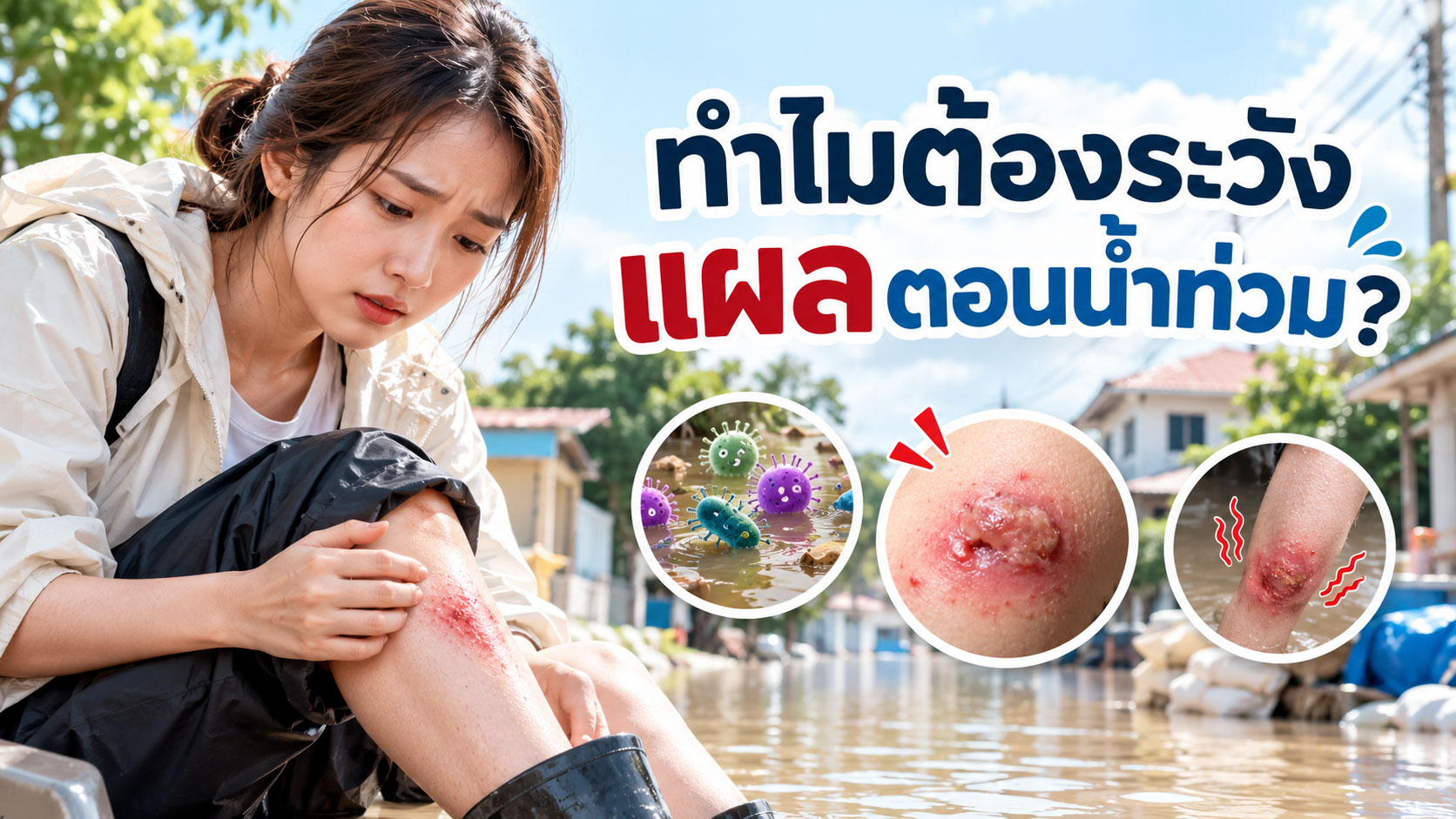
“แค่นี้เอง แผลนิดเดียว”
“โดนของขูดนิดหน่อย เดี๋ยวก็หาย”
“ต้องลุยน้ำแค่หน้าบ้าน ไม่น่ามีอะไร”
“น้ำก็ไม่ได้ลึกมาก”
ประโยคแบบนี้ฟังดูธรรมดามาก
โดยเฉพาะช่วงน้ำท่วมที่หลายคนไม่มีทางเลือก
ต้องเดินลุยน้ำออกจากบ้าน
ย้ายของขึ้นที่สูง
เข็นรถ
ขนกระสอบทราย
เก็บขยะ
ล้างบ้านหลังน้ำลด
หรือเดินบนพื้นที่ที่มองไม่เห็นว่าใต้น้ำมีอะไรอยู่
ปัญหาคือ สิ่งที่ดูเล็กมากบนผิวหนังของเรา
อาจกลายเป็น “ประตู” ให้เชื้อโรคจากน้ำ ดิน หรือโคลนเข้าสู่ร่างกายได้
และเราไม่จำเป็นต้องมีแผลใหญ่
ไม่จำเป็นต้องเลือดไหลมาก
บางครั้งแค่
รอยถลอก
แผลแตกเล็ก ๆ
ผิวที่เปื่อยจากการแช่น้ำนาน
หรือรอยแผลที่เราลืมไปแล้วว่ามีอยู่
ก็เป็นเหตุผลที่ควรระวัง
โดยเฉพาะเมื่อสิ่งที่สัมผัสแผลนั้นไม่ใช่น้ำสะอาด
แต่เป็น น้ำท่วม
น้ำท่วมไม่ใช่น้ำประปาที่ล้นออกมาบนถนน
เวลาเราเห็นน้ำท่วมทั้งถนน
มันอาจดูเหมือนเป็นเพียงน้ำฝนจำนวนมาก
แต่ระหว่างทาง น้ำอาจไหลผ่าน
ท่อระบายน้ำ
ขยะ
ดิน
โคลน
สิ่งปฏิกูล
มูลสัตว์
พื้นที่เลี้ยงสัตว์
คราบน้ำมัน
สารเคมี
ซากสัตว์
หรือพื้นที่ที่มีปัสสาวะของสัตว์ปนเปื้อนอยู่
CDC ระบุว่าน้ำท่วมและน้ำขังสามารถมีทั้งเชื้อโรค สารเคมี และของมีคมที่ทำให้เกิดบาดแผลได้ และแผลเปิดที่สัมผัสน้ำท่วมมีโอกาสติดเชื้อได้ จึงควรหลีกเลี่ยงไม่ให้แผลสัมผัสน้ำท่วมโดยตรง
ดังนั้นสิ่งสำคัญไม่ใช่ถามแค่ว่า
“น้ำดูสกปรกไหม”
แต่ต้องคิดว่า
เราไม่รู้ว่าน้ำก้อนนี้ผ่านอะไรมาบ้างก่อนถึงตัวเรา
ทำไม “แผลเล็ก” ถึงสำคัญ
ผิวหนังเป็นแนวป้องกันชั้นแรกของร่างกาย
เวลาผิวยังสมบูรณ์ เชื้อโรคจำนวนมากไม่สามารถผ่านเข้ามาได้ง่าย
แต่เมื่อมี
แผล
รอยถลอก
รอยแตก
รอยขีดข่วน
หรือผิวที่เปื่อยยุ่ยจากการแช่น้ำเป็นเวลานาน
แนวป้องกันนี้ก็ไม่สมบูรณ์เหมือนเดิม
โรคบางชนิดที่เกี่ยวข้องกับน้ำและดินสามารถเข้าสู่ร่างกายผ่านบริเวณเหล่านี้ได้
หนึ่งในโรคที่คนไทยคุ้นชื่อมากที่สุดคือ
โรคเลปโตสไปโรสิส หรือ “โรคไข้ฉี่หนู”
แต่ความเสี่ยงไม่ได้มีเพียงโรคเดียว
“ไข้ฉี่หนู” ไม่ได้หมายความว่าต้องเห็นหนู หรือเหยียบฉี่หนูโดยตรง
ชื่อ “ไข้ฉี่หนู” ทำให้หลายคนเข้าใจว่า
ต้องเจอหนู
ต้องโดนปัสสาวะหนูโดยตรง
หรือบริเวณนั้นต้องมีหนูเยอะจึงจะเสี่ยง
ความจริงคือเชื้อ Leptospira สามารถอยู่ในปัสสาวะของสัตว์หลายชนิด ไม่ได้มีเฉพาะหนู เช่น สุนัข โค กระบือ สุกร และสัตว์อื่น ๆ
เมื่อปัสสาวะสัตว์ที่มีเชื้อปนเปื้อนลงในดิน น้ำ หรือโคลน เราอาจสัมผัสเชื้อโดยไม่เคยเห็นสัตว์ตัวนั้นเลย
เชื้อสามารถเข้าสู่ร่างกายผ่านบาดแผล รอยถลอก ผิวหนังที่เปื่อยจากการแช่น้ำ และผ่านเยื่อบุตา จมูก หรือปากได้ กรมควบคุมโรคจึงเตือนเป็นพิเศษเรื่องการลุยน้ำ ย่ำโคลน และทำความสะอาดพื้นที่หลังน้ำท่วม
ดังนั้น
ไม่เห็นหนู ไม่ได้แปลว่าไม่มีความเสี่ยง
ไม่ต้องมีแผลใหญ่ เชื้อก็อาจมีทางเข้าได้
นี่เป็นจุดที่คนมักประเมินต่ำไป
เรามักนึกถึงคำว่า “แผล” เป็นภาพของแผลเลือดออกหรือบาดลึก
แต่ช่วงน้ำท่วม สิ่งที่ควรสนใจรวมถึง
แผลจากรองเท้ากัด
รอยแตกที่ส้นเท้า
แผลจากยุงกัดที่เกาจนถลอก
รอยเล็บ
หนังข้างเล็บฉีก
แผลจากการโกน
ตุ่มที่เกาจนเปิด
แผลเก่าที่ยังไม่ปิดสนิท
หรือผิวเท้าที่แช่น้ำจนเปื่อย
กรมควบคุมโรคระบุว่าผิวหนังที่อ่อนนุ่มหรือเปื่อยจากการแช่น้ำก็เป็นช่องทางที่เชื้อไข้ฉี่หนูสามารถเข้าสู่ร่างกายได้เช่นกัน
เพราะฉะนั้นก่อนลงน้ำ
ลองใช้เวลาไม่กี่วินาทีมองมือ เท้า และขาของตัวเองก่อน
แผลที่เราแทบไม่รู้สึกในบ้าน
อาจมีความหมายมากขึ้นเมื่อเราต้องลงไปอยู่ในน้ำท่วม
ถ้ามีแผล คำตอบที่ดีที่สุดคือ “เลี่ยงลงน้ำ” ถ้าทำได้
ถ้าไม่จำเป็นต้องลงน้ำ
การไม่สัมผัสน้ำท่วมคือวิธีลดความเสี่ยงที่ตรงที่สุด
โดยเฉพาะคนที่มีแผลเปิดอยู่แล้ว
แต่ชีวิตจริงไม่ได้เลือกได้เสมอ
บางคนต้องออกไปซื้ออาหาร
ต้องดูแลผู้สูงอายุ
ต้องย้ายของ
ต้องช่วยครอบครัว
หรือต้องทำความสะอาดบ้านหลังน้ำลด
ถ้าหลีกเลี่ยงไม่ได้ ให้ปิดแผลด้วยวัสดุปิดแผลแบบกันน้ำ และสวมอุปกรณ์ป้องกันที่เหมาะสม เช่น รองเท้าบูตและถุงมือกันน้ำ
คำแนะนำของกรมควบคุมโรคและ CDC สอดคล้องกันว่า ควรปิดแผลหรือรอยถลอกด้วยวัสดุกันน้ำ และสวมรองเท้าหรืออุปกรณ์ป้องกันเมื่อต้องสัมผัสน้ำหรือดินที่อาจปนเปื้อน
รองเท้าบูตไม่ได้มีไว้แค่กันเท้าเปียก
หลายคนใส่รองเท้าบูตเพราะไม่อยากให้เท้าเปียก
แต่ในสถานการณ์น้ำท่วม หน้าที่สำคัญอีกอย่างคือช่วยสร้างแนวกั้นระหว่างผิวหนังกับน้ำและโคลน
และยังช่วยลดโอกาสเหยียบ
เศษแก้ว
ตะปู
โลหะ
กิ่งไม้
หรือของมีคมที่เรามองไม่เห็นใต้น้ำ
น้ำท่วมอาจขุ่นจนเราไม่รู้เลยว่าก้าวต่อไปกำลังเหยียบอะไร
แผลจากของมีคมจึงมีความเสี่ยงสองชั้น
ชั้นแรกคือบาดเจ็บโดยตรง
ชั้นที่สองคือแผลนั้นเกิดขึ้นในสภาพแวดล้อมที่สกปรกและอาจปนเปื้อนเชื้อ
ล้างบ้านหลังน้ำลด ก็ยังถือว่าเป็นช่วงเสี่ยง
บางคนระวังมากตอนน้ำท่วม
แต่พอน้ำลดแล้วคิดว่า
“จบแล้ว”
ความจริงช่วงเก็บกวาดบ้านอาจเป็นช่วงที่เราสัมผัส
โคลน
ดินเปียก
ของที่แช่น้ำ
ขยะ
เฟอร์นิเจอร์พัง
เศษแก้ว
ตะปู
โลหะเป็นสนิม
หรือซากสัตว์
เป็นเวลานาน
กรมควบคุมโรคจึงแนะนำให้สวมรองเท้าบูตและถุงมือยางเมื่อต้องทำความสะอาดบ้าน เก็บขยะ หรือสัมผัสดินและน้ำหลังน้ำท่วม
อย่าเพิ่งเก็บบูตและถุงมือทันทีที่น้ำในถนนลด
ช่วง “ล้างบ้าน” ยังเป็นส่วนหนึ่งของการป้องกันหลังน้ำท่วม
ถ้าน้ำเข้าบูต บูตก็ไม่ได้ป้องกันเราเหมือนเดิม
รองเท้าบูตไม่ได้เป็นเกราะวิเศษ
ถ้าน้ำล้นเข้าไปด้านใน
บูตรั่ว
หรือเราใส่บูตที่มีน้ำสกปรกค้างอยู่ภายใน
ผิวเท้าก็ยังสัมผัสน้ำ
ถ้าต้องทำงานนาน ๆ ควรตรวจว่าเท้ายังแห้งหรือไม่ และเปลี่ยนอุปกรณ์หากมีน้ำเข้า
หลังใช้งาน ควรทำความสะอาดและทำให้แห้งก่อนใช้ครั้งต่อไป
สิ่งสำคัญคือหลักการ
พยายามลดเวลาที่ผิวของเรา โดยเฉพาะบริเวณที่มีแผล ต้องสัมผัสน้ำหรือโคลนโดยตรง
ถ้าแผลโดนน้ำท่วมแล้ว สิ่งแรกคือไม่ต้องตกใจ แต่ต้องรีบทำความสะอาด
แผลโดนน้ำไม่ได้หมายความว่าจะต้องติดเชื้อแน่นอน
ไม่จำเป็นต้องตื่นตระหนก
แต่ไม่ควรปล่อยทิ้งไว้เพราะคิดว่า
“เดี๋ยวกลับบ้านค่อยล้าง”
เมื่อออกจากน้ำและอยู่ในจุดปลอดภัยแล้ว ควรล้างบริเวณที่สัมผัสน้ำ รวมถึงบาดแผล ด้วยสบู่และน้ำสะอาดโดยเร็ว
CDC แนะนำให้ทำความสะอาดแผลเปิดด้วยสบู่และน้ำสะอาด และกรมควบคุมโรคแนะนำให้อาบน้ำทำความสะอาดร่างกายด้วยสบู่และน้ำสะอาดทันทีหลังลุยน้ำหรือย่ำโคลน
จากนั้นดูว่าในแผลมี
ดิน
เศษไม้
แก้ว
โลหะ
หรือสิ่งแปลกปลอมติดอยู่หรือไม่
ถ้าเป็นแผลลึก มีสิ่งแปลกปลอมฝังอยู่ หรือไม่สามารถทำความสะอาดได้อย่างมั่นใจ ควรให้บุคลากรทางการแพทย์ประเมิน
อย่าคิดว่าแผลไม่เจ็บ แปลว่าไม่มีปัญหา
หลังทำงานมาทั้งวัน
บางคนเหนื่อยจนแทบไม่รู้สึกถึงแผลเล็ก ๆ
หรือแผลอาจไม่ได้ปวดมากในตอนแรก
จึงควรสังเกตต่ออีกระยะว่า
แผลเริ่มแดงขึ้นหรือไม่
บวมขึ้นหรือไม่
ร้อน
ปวดมากขึ้น
มีของเหลวหรือหนอง
หรือมีไข้ร่วมด้วยหรือไม่
CDC แนะนำให้ไปพบแพทย์หากแผลเกิดอาการแดง บวม มีของเหลวไหล หรือมีอาการติดเชื้อ และควรได้รับการประเมินเร็วในกรณีมีสิ่งแปลกปลอมฝัง แผลแทงลึก หรือแผลที่มีความเสี่ยงต่อการติดเชื้อสูง
อย่ารอจนแผลดู “ใหญ่มาก” ก่อนจึงไปโรงพยาบาล
อาการเปลี่ยนแปลงสำคัญกว่าขนาดแผลเพียงอย่างเดียว
สิ่งที่ต้องเฝ้าระวังไม่ได้อยู่เฉพาะตรงแผล
ไข้ฉี่หนูเป็นตัวอย่างสำคัญ
เราอาจมองแผลแล้วพบว่า
ไม่แดง
ไม่มีหนอง
ดูเหมือนกำลังหาย
แต่หลายวันต่อมากลับมีอาการทั่วร่างกาย
เช่น
ไข้สูง
หนาวสั่น
ปวดศีรษะ
ปวดกล้ามเนื้อ
โดยเฉพาะปวดน่องหรือหลัง
ตาแดง
คลื่นไส้
อาเจียน
กรมควบคุมโรคระบุว่าอาการของโรคไข้ฉี่หนูมักเกิดหลังสัมผัสเชื้อประมาณ 1–2 สัปดาห์ ส่วน CDC ระบุช่วงที่อาการอาจปรากฏได้ประมาณ 2–30 วันหลังได้รับเชื้อ
ดังนั้นหลังน้ำลดแล้ว
อย่าลืมประวัติว่าเราเคยลุยน้ำ
เวลาหาหมอ อย่าลืมบอกประโยคนี้: “ก่อนหน้านี้ผม/หนูลุยน้ำท่วม”
ข้อมูลนี้มีประโยชน์มาก
ถ้ามีไข้หลังน้ำท่วม เราอาจคิดว่าเป็น
หวัด
ไข้ธรรมดา
อาหารเป็นพิษ
หรือพักผ่อนน้อย
แต่ประวัติการสัมผัสน้ำและโคลนช่วยให้แพทย์พิจารณาความเสี่ยงได้เหมาะสมขึ้น
กรมควบคุมโรคแนะนำว่า หากมีไข้สูงหลังลุยน้ำหรือสัมผัสน้ำท่วม โดยเฉพาะเมื่อมีอาการปวดน่อง ปวดเมื่อยมาก ตาแดง ตัวเหลือง ตาเหลือง หรืออาการผิดปกติรุนแรง ควรรีบพบแพทย์และแจ้งประวัติสัมผัสน้ำหรือดินโคลนให้แพทย์ทราบ
บางครั้งประโยคสั้น ๆ ว่า
“เมื่ออาทิตย์ก่อนผมลุยน้ำท่วมอยู่หลายชั่วโมง และตอนนั้นมีแผลที่เท้า”
มีความหมายมากกว่าที่เราคิด
ทำไมไข้ฉี่หนูถึงบอกว่า “อาจถึงตาย”
ไม่ใช่ทุกคนที่ติดเชื้อจะมีอาการรุนแรง
และการพูดว่า “มีแผลแล้วจะเสียชีวิต” ก็ไม่ถูกต้อง
แต่โรคนี้ไม่ควรถูกมองว่าเป็นเพียงไข้ธรรมดา
หากโรครุนแรง โดยเฉพาะเมื่อไม่ได้รับการวินิจฉัยและรักษาอย่างเหมาะสม สามารถเกิดภาวะแทรกซ้อน เช่น ไตเสียหาย ตับวาย เยื่อหุ้มสมองอักเสบ ปัญหาการหายใจ หรืออาการรุนแรงอื่น ๆ และอาจเสียชีวิตได้
ข้อมูลของกรมควบคุมโรคในประเทศไทยปี 2569 ก็ยังพบทั้งผู้ป่วยและผู้เสียชีวิตจากโรคนี้ จึงยังคงมีการเตือนประชาชนในช่วงฝนตก น้ำท่วม และพื้นที่ชื้นแฉะอย่างต่อเนื่อง
ดังนั้นคำว่า
“อาจถึงตาย”
ไม่ได้มีไว้เพื่อทำให้ทุกคนกลัวน้ำ
แต่เพื่อเตือนว่า
ถ้ามีประวัติเสี่ยงแล้วเริ่มป่วย
อย่ารออยู่บ้านนานเกินไป
อีกโรคหนึ่งที่ไม่ควรมองข้าม: “ไข้ดิน” หรือ Melioidosis
ในประเทศไทย เรื่องน้ำ ดิน โคลน และแผล ไม่ได้เกี่ยวข้องกับไข้ฉี่หนูเพียงอย่างเดียว
โรคเมลิออยโดสิส หรือที่เรียกกันว่า “โรคไข้ดิน” ก็เป็นอีกโรคที่ควรระวัง โดยเชื้อสามารถพบในดินและน้ำ และเข้าสู่ร่างกายผ่านบาดแผลได้
กรมควบคุมโรคระบุว่ากลุ่มที่มีความเสี่ยงต่ออาการรุนแรงมากขึ้น ได้แก่ ผู้ที่มีโรคเบาหวาน โรคไต โรคตับ โรคปอดเรื้อรัง ผู้สูงอายุ และผู้ที่มีภูมิคุ้มกันต่ำ
ดังนั้นคนที่มีโรคประจำตัวไม่ควรคิดว่า
“แผลเล็กแค่นี้คงไม่เป็นอะไร”
โดยเฉพาะเมื่อต้องสัมผัสดินหรือน้ำท่วมเป็นเวลานาน
แผลจากตะปูหรือของสกปรก ยังต้องนึกถึง “บาดทะยัก”
ช่วงล้างบ้านหลังน้ำลด เรามักเดินอยู่ในพื้นที่ที่มี
ไม้แตก
ตะปู
เศษโลหะ
เศษเฟอร์นิเจอร์
หรือของแหลมคม
ถ้าเกิดแผลแทงลึก หรือแผลที่ปนเปื้อนดิน สิ่งสกปรก หรือสิ่งแปลกปลอม ไม่ควรมองแค่เรื่องไข้ฉี่หนู
ยังควรให้บุคลากรทางการแพทย์ประเมินความเสี่ยงเรื่องบาดทะยักตามลักษณะแผลและประวัติการได้รับวัคซีนของเรา
CDC ระบุว่าการดูแลแผลและประวัติวัคซีนเป็นส่วนสำคัญของการป้องกันบาดทะยัก และแผลแทงหรือแผลที่ปนเปื้อนดินถือเป็นกลุ่มแผลที่มีความเสี่ยงมากกว่าแผลสะอาดเล็กน้อย
เราไม่จำเป็นต้องตัดสินใจเองว่า
“ต้องฉีดหรือไม่ต้องฉีด”
ถ้าไม่แน่ใจว่าฉีดวัคซีนบาดทะยักครั้งล่าสุดเมื่อไร
ให้บอกบุคลากรทางการแพทย์ตามตรง
คนเป็นเบาหวานควรให้ความสำคัญกับแผลที่เท้ามากเป็นพิเศษ
สำหรับคนทั่วไป แผลที่เท้าเล็ก ๆ อาจรู้สึกเจ็บจนสังเกตได้เร็ว
แต่ผู้ป่วยเบาหวานบางคนอาจมีการรับความรู้สึกที่เท้าลดลง
จึงมีโอกาสไม่ทันสังเกตว่าเกิดแผลขึ้นเมื่อไร
ประกอบกับกรมควบคุมโรคระบุว่าผู้ป่วยเบาหวานเป็นหนึ่งในกลุ่มที่เสี่ยงต่ออาการรุนแรงของโรคเมลิออยโดสิส
ถ้าต้องลุยน้ำหรือทำความสะอาดบ้านหลังน้ำท่วม
จึงควรตรวจเท้าหลังเสร็จงานทุกครั้ง
อย่ารอให้ “รู้สึกเจ็บ” จึงค่อยหาแผล
ผู้สูงอายุก็ไม่ควรถูกส่งลงไปล้างบ้านโดยไม่มีอุปกรณ์ป้องกัน
ในหลายครอบครัว
หลังน้ำลดทุกคนช่วยกัน
ผู้สูงอายุอาจรู้สึกว่า
“บ้านตัวเอง เดี๋ยวช่วยกวาดโคลนหน่อย”
แต่ข้อมูลเฝ้าระวังของกรมควบคุมโรคในปี 2569 พบผู้ป่วยไข้ฉี่หนูจำนวนมากในกลุ่มอายุสูง โดยเฉพาะผู้ที่มีประวัติสัมผัสดิน น้ำ หรือพื้นที่ชื้นแฉะโดยไม่มีอุปกรณ์ป้องกัน
ถ้าครอบครัวมีผู้สูงอายุ
ควรแบ่งงานที่ไม่ต้องยืนแช่น้ำหรือสัมผัสโคลนโดยตรงให้ทำแทน หากเป็นไปได้
ถุงมือก็สำคัญ ไม่ใช่แค่รองเท้าบูต
เวลาเก็บของหลังน้ำลด มือของเราอาจมี
รอยเล็บ
หนังข้างเล็บฉีก
แผลจากงานบ้าน
แผลถลอก
หรือรอยแตกจากผิวแห้ง
แล้วเราใช้มือหยิบ
ถุงขยะ
เฟอร์นิเจอร์เปียก
ไม้
โคลน
เศษของแตก
หรือซากสัตว์
โดยตรง
ดังนั้นงานทำความสะอาดหลังน้ำลดควรคิดถึงมือด้วย
กรมควบคุมโรคแนะนำให้ใช้ถุงมือยางร่วมกับรองเท้าบูตเมื่อต้องทำความสะอาดบ้าน เก็บขยะ หรือสัมผัสวัสดุที่ปนเปื้อนหลังน้ำท่วม
อย่าปล่อยเด็กเล่นน้ำท่วมเหมือนเป็นสระน้ำ
สำหรับเด็ก น้ำที่ท่วมถนนอาจดูสนุก
ได้เล่นน้ำหน้าบ้าน
มีพื้นที่กว้าง
เล่นกับเพื่อน
แต่สิ่งที่เด็กมองไม่เห็นคือ
ของมีคมใต้น้ำ
ฝาท่อ
หลุม
กระแสน้ำ
เชื้อโรค
และสิ่งปนเปื้อน
เด็กยังมีโอกาสมีรอยถลอกจากการเล่นอยู่แล้ว
ดังนั้นน้ำท่วมไม่ควรถูกมองเป็นพื้นที่เล่นน้ำ
นอกจากเรื่องการติดเชื้อแล้ว ความเสี่ยงจากการจมน้ำและการบาดเจ็บก็ยังมีอยู่ด้วย WHO และ CDC ต่างแนะนำให้หลีกเลี่ยงการลุยหรือเข้าไปในน้ำท่วมหากไม่จำเป็น
ถ้าจำเป็นต้องลุยน้ำจริง ๆ ให้คิดแบบนี้ก่อนลง
มองมือและเท้าตัวเองก่อน
มีแผลหรือไม่
มีรอยแตกหรือไม่
ถ้ามีแผล ปิดด้วยวัสดุกันน้ำให้เหมาะสม
ใส่รองเท้าบูต
ถ้าต้องใช้มือสัมผัสโคลนหรือขยะ ใส่ถุงมือ
หลีกเลี่ยงการเอามือเปื้อนน้ำไปจับตา จมูก หรือปาก
อย่าเดินเท้าเปล่า
และอย่าแช่น้ำนานเกินความจำเป็น
หลังขึ้นจากน้ำ
ล้างร่างกายและบริเวณที่สัมผัสน้ำด้วยสบู่และน้ำสะอาดโดยเร็ว
จากนั้นตรวจดูว่ามีแผลใหม่เกิดขึ้นหรือไม่
ถ้าไม่มีรองเท้าบูต อย่าคิดว่าเท้าเปล่าดีกว่า
บางคนเลือกเดินเท้าเปล่าเพราะกลัวรองเท้าหลุด
แต่เท้าเปล่าทำให้ผิวสัมผัสทั้งน้ำและสิ่งของใต้พื้นโดยตรง
ถ้าต้องเข้าไปในพื้นที่น้ำท่วม ควรใช้อุปกรณ์ป้องกันที่เหมาะสมและมั่นคงเท่าที่ทำได้
และถ้าพื้นที่มีน้ำไหลแรง มองไม่เห็นพื้น หรือมีอันตรายทางไฟฟ้า
คำตอบที่ปลอดภัยอาจไม่ใช่
“ใส่อะไรแล้วลงดี”
แต่คือ
อย่าลง
หลังลุยน้ำแล้ว 2–3 วันยังสบายดี ก็ยังไม่ควรลืมประวัติสัมผัส
โรคบางชนิดไม่ได้แสดงอาการทันทีหลังขึ้นจากน้ำ
วันนี้ลุยน้ำ
พรุ่งนี้ยังปกติ
อีกหลายวันต่อมาอาจเริ่มมีไข้
ดังนั้นหลังผ่านเหตุการณ์น้ำท่วม
โดยเฉพาะคนที่มีแผลหรือสัมผัสโคลนเป็นเวลานาน
ให้จำไว้คร่าว ๆ ว่า
สัมผัสน้ำช่วงวันไหน
นานประมาณเท่าไร
มีแผลหรือไม่
และทำกิจกรรมอะไร
ข้อมูลนี้มีประโยชน์หากภายหลังต้องไปพบแพทย์
อาการแบบไหนที่ไม่ควรรอ
หลังมีประวัติลุยน้ำหรือสัมผัสโคลน ควรรีบรับการประเมินทางการแพทย์หากเกิดอาการผิดปกติ โดยเฉพาะ
ไข้สูง
ปวดศีรษะมาก
ปวดเมื่อยกล้ามเนื้อรุนแรง โดยเฉพาะบริเวณน่องหรือหลัง
ตาแดง
ตัวเหลืองหรือตาเหลือง
หายใจลำบาก
อาการทรุดลงอย่างรวดเร็ว
หรือแผลมีอาการ
แดงมากขึ้น
บวม
ร้อน
ปวดมากขึ้น
มีหนองหรือของเหลวไหล
หรือมีไข้ร่วมด้วย
กรมควบคุมโรคแนะนำให้ผู้ที่มีไข้สูงหลังสัมผัสน้ำท่วมหรือดินโคลน โดยเฉพาะเมื่อมีอาการที่เข้าได้กับโรคไข้ฉี่หนู รีบพบแพทย์และแจ้งประวัติการสัมผัสให้ทราบ
อย่าซื้อยากินเองแล้วรอดูหลายวัน หากมีประวัติเสี่ยงและเริ่มมีอาการ
ปัญหาคืออาการช่วงแรกของไข้ฉี่หนูอาจคล้ายโรคอื่น
มีไข้
ปวดตัว
ปวดหัว
เหนื่อย
เราจึงอาจคิดว่า
“กินยาแก้ไข้แล้วนอนก่อน”
ถ้าอาการไม่ดีขึ้นหรือมีประวัติเสี่ยงจากน้ำท่วม ควรเข้ารับการประเมิน
การบอกแพทย์ว่าเคยลุยน้ำหรือย่ำโคลนช่วยให้บริบทของอาการชัดขึ้น
CDC ระบุว่าหากสงสัยโรคเลปโตสไปโรสิส การรักษาเร็วมีความสำคัญ และโรคที่ไม่ได้รับการรักษาอาจพัฒนาไปสู่ภาวะแทรกซ้อนรุนแรงได้
อย่ากลัวจนคิดว่าโดนน้ำท่วมแล้วต้องป่วยทุกคน
ในอีกด้านหนึ่ง เราก็ไม่ควรทำให้เรื่องนี้น่ากลัวเกินจริง
การลุยน้ำท่วม
ไม่ได้แปลว่าจะติดไข้ฉี่หนูทุกคน
มีแผล
ไม่ได้แปลว่าจะเกิดการติดเชื้อรุนแรงทุกครั้ง
เป้าหมายของการเตือนคือให้รู้ว่าเราสามารถลดความเสี่ยงได้
ด้วยสิ่งที่ค่อนข้างเรียบง่าย
หลีกเลี่ยงน้ำถ้าไม่จำเป็น
ปิดแผล
สวมบูต
สวมถุงมือ
ล้างร่างกาย
ทำความสะอาดแผล
และสังเกตอาการหลังสัมผัส
สิ่งเหล่านี้ดูธรรมดา
แต่เป็นสิ่งที่อาจสร้างความแตกต่างได้มาก
ถ้าเป็นคนในครอบครัว อย่าถามแค่ว่า “มีไข้ไหม”
หลังน้ำท่วม ลองถามเพิ่มว่า
“วันก่อนลงน้ำหรือเปล่า”
“มีแผลตรงไหนไหม”
“ตอนล้างบ้านใส่บูตหรือเปล่า”
“ช่วงนี้ปวดน่องผิดปกติไหม”
“แผลแดงขึ้นหรือเปล่า”
โดยเฉพาะผู้สูงอายุ
คนมีเบาหวาน
คนที่มีโรคประจำตัว
หรือคนที่ออกไปทำงานกับน้ำและโคลนทุกวัน
บางครั้งคนป่วยเองไม่ได้เชื่อมโยงว่าไข้วันนี้
อาจเกี่ยวข้องกับน้ำที่ลุยไปเมื่อสัปดาห์ก่อน
ประโยคที่ควรจำ: น้ำท่วมจบแล้ว แต่ช่วงเฝ้าระวังสุขภาพอาจยังไม่จบ
นี่เป็นสิ่งที่อยากให้ทุกคนจำ
น้ำลด ไม่ได้แปลว่าความเสี่ยงทุกอย่างลดตามทันที
หลังน้ำหาย
เรายังต้องล้างบ้าน
ยังสัมผัสโคลน
ยังยกของที่เคยแช่น้ำ
ยังเดินผ่านพื้นที่ชื้นแฉะ
และโรคบางชนิดก็ต้องใช้เวลาก่อนจะแสดงอาการ
ดังนั้นหลังผ่านน้ำท่วม
การดูแลตัวเองไม่ได้จบในวันที่ถนนแห้ง
สรุป: แผลเล็กไม่ได้แปลว่าเรื่องเล็ก เมื่อสิ่งที่สัมผัสมันคือน้ำท่วม
รอยถลอกเล็ก ๆ บนข้อเท้า
แผลรองเท้ากัด
หนังข้างเล็บที่ฉีก
รอยแตกตรงส้นเท้า
หรือแผลจากตะปูระหว่างล้างบ้าน
อาจดูไม่ใช่เรื่องใหญ่
และในสถานการณ์ปกติ หลายแผลก็หายได้โดยไม่มีปัญหา
แต่ช่วงน้ำท่วม บริบทเปลี่ยนไป
เพราะน้ำและโคลนที่สัมผัสเราอาจมีสิ่งปนเปื้อนที่มองไม่เห็น
สิ่งที่ควรทำจึงไม่ใช่กลัวทุกหยดน้ำ
แต่คือรู้ว่าเมื่อไรควรป้องกัน
ถ้ามีแผลและเลี่ยงน้ำได้ — เลี่ยง
ถ้าต้องลง — ปิดแผลและใส่อุปกรณ์ป้องกัน
ถ้าขึ้นจากน้ำ — ล้างตัวและทำความสะอาดแผล
ถ้าเกิดแผลใหม่ — อย่าปล่อยสกปรก
ถ้าเป็นแผลลึกหรือปนเปื้อน — ให้ผู้เชี่ยวชาญประเมิน รวมถึงเรื่องบาดทะยักตามความเหมาะสม
และถ้าหลังจากนั้นเริ่มมีไข้ ปวดกล้ามเนื้อผิดปกติ ตาแดง หายใจลำบาก หรือแผลบวมแดงเป็นหนอง
อย่ารอดูจนหนัก
ไปพบแพทย์
และอย่าลืมบอกว่า
“ก่อนหน้านี้มีประวัติลุยน้ำท่วม สัมผัสดินหรือโคลน และมีแผล”
เพราะบางครั้งสิ่งที่ช่วยเราได้มากที่สุด
ไม่ใช่ยาที่เก็บไว้ในบ้าน
แต่คือการรู้ว่า
แผลเล็ก ๆ เมื่ออยู่ผิดสถานการณ์ ก็สมควรได้รับความสนใจมากกว่าที่เราเคยคิด
Why Should You Be Careful with Wounds During a Flood? A Small Cut Can Become a Serious Infection
“It’s only a tiny cut.”
“I just scraped my foot a little. It’ll be fine.”
“I only have to walk through the water in front of the house.”
“The floodwater isn’t even that deep.”
These are very normal things to think.
Especially during a flood, when people often have no real choice.
You may need to walk through water to leave your home.
Move belongings upstairs.
Push a vehicle.
Carry sandbags.
Remove rubbish.
Clean the house after the water goes down.
Or simply walk through water when you cannot see what is underneath.
The problem is that something very small on your skin can become an entry point for bacteria from floodwater, soil, and mud.
And the wound does not have to be large.
It does not have to be bleeding heavily.
Sometimes it is only:
A small scrape
A cracked heel
A blister
Skin that has become soft from being wet for too long
A torn cuticle
Or an old wound you had almost forgotten about
That becomes more important when what touches it is not clean water,
but floodwater.
Floodwater Is Not Just Rainwater Sitting on the Road
When we see a flooded street, it may look like nothing more than a large amount of rainwater.
But before that water reaches you, it may have passed through:
Drains
Garbage
Soil
Mud
Sewage
Animal waste
Livestock areas
Oil residue
Chemicals
Dead animals
Or places contaminated with animal urine
That means the real question is not:
“Does the water look dirty?”
It is:
What might this water have passed through before it reached me?
That is something we usually cannot know.
Why Can a Small Wound Matter So Much?
Our skin is the body’s first protective barrier.
When the skin is healthy and intact, many microorganisms cannot easily enter the body.
But when there is:
A cut
A scrape
A crack
A scratch
A puncture wound
Or skin that has become softened and damaged from staying wet too long
that protective barrier is no longer as strong.
Certain infections associated with contaminated water and soil can enter through these areas.
One of the best-known examples in Thailand is:
Leptospirosis, commonly known as “rat urine disease” or “rat urine fever.”
But it is not the only risk.
Leptospirosis Does Not Mean You Must See a Rat
The nickname “rat urine disease” can be misleading.
It can make people think:
“I didn’t see any rats.”
“There wasn’t any rat urine.”
“So I should be safe.”
But Leptospira bacteria can be carried by several kinds of animals, not only rats.
Animal urine can contaminate:
Water
Wet soil
Mud
And flooded areas
You may be exposed without seeing the animal responsible.
The bacteria can enter through:
Cuts
Scratches
Damaged skin
Skin softened by prolonged water exposure
And sometimes through the eyes, nose, or mouth
So:
Not seeing a rat does not mean there is no risk.
You Do Not Need a Large Wound for Exposure to Matter
When people hear the word “wound,” they often imagine a deep cut with visible bleeding.
But during a flood, you should also pay attention to much smaller things.
For example:
A shoe blister
Cracked heels
A mosquito bite you scratched open
A small cut around the nail
A shaving cut
An old wound that has not fully closed
A minor abrasion
Or skin that has become white, wrinkled, and soft after being in water for hours
Before entering floodwater, take a few seconds to look at your hands, feet, and legs.
A small wound that feels insignificant at home can matter much more when it is exposed to contaminated water.
If You Have a Wound, the Best Option Is to Avoid Floodwater If You Can
If you do not need to enter the water,
do not.
Avoiding direct contact is the simplest way to reduce risk.
Especially if you already have an open wound.
But real life is not always that simple.
You may need to:
Buy food
Help an elderly family member
Move belongings
Protect your home
Or clean up after the flood
If you cannot avoid the water, cover the wound as well as possible with a waterproof dressing and use appropriate protective equipment.
For example:
Waterproof boots
Rubber gloves
Water-resistant wound coverings
The goal is simple:
Reduce direct contact between your skin and contaminated water as much as possible.
Boots Are Not Just About Keeping Your Feet Dry
Many people think of rubber boots as something that simply stops their feet from getting wet.
During a flood, they do much more than that.
They can help reduce direct skin contact with dirty water and mud.
They also provide some protection from things hidden underwater, such as:
Broken glass
Nails
Sharp metal
Branches
Wood fragments
And other debris
Floodwater can be so cloudy that you cannot see what you are stepping on.
That creates two problems.
First, you can get injured.
Second, the wound can be immediately exposed to contaminated water.
Cleaning the House After the Flood Is Still a High-Risk Period
Some people are very careful while the streets are flooded.
Then the water goes down and they think:
“The danger is over.”
But the cleanup period may involve even more contact with:
Mud
Wet soil
Flood-damaged furniture
Garbage
Broken glass
Rusty nails
Sharp metal
Dirty water
And sometimes animal remains
So do not put away the boots and gloves the moment the street looks dry.
Cleaning a flooded home is still part of flood exposure.
If Water Gets Inside Your Boots, They Are No Longer Protecting You Properly
Rubber boots are not magic.
If water spills over the top,
if the boots leak,
or dirty water remains trapped inside,
your skin is still being exposed.
If you are working for a long time, check your feet when possible.
If water gets inside, change or clean the boots and dry your feet.
The main idea is:
Do not leave damaged or softened skin soaking in contaminated water longer than necessary.
If Floodwater Touches a Wound, Do Not Panic — but Clean It Promptly
A wound touching floodwater does not mean you will definitely become infected.
There is no need to panic.
But it should not be ignored.
As soon as you are in a safe place, wash the area thoroughly with clean water and soap.
Look carefully for:
Mud
Wood
Glass
Metal
Dirt
Or other foreign material
If the wound is deep,
if something is stuck inside it,
or if you cannot clean it properly,
it is better to have it assessed by a healthcare professional.
A Wound That Does Not Hurt Much Can Still Become a Problem
After a long day of flood cleanup, you may be tired enough not to notice a small wound.
It may not hurt much at first.
But over the next few days, watch for changes.
For example:
Increasing redness
Swelling
Warmth
Worsening pain
Pus
Fluid coming from the wound
Fever
Or the wound becoming more tender instead of improving
Do not wait until the wound looks dramatic before taking it seriously.
Changes over time can matter more than the original size of the wound.
The Warning Signs May Appear Somewhere Other Than the Wound
Leptospirosis is a good example.
The wound itself may look normal.
It may not be red.
There may be no pus.
It may even appear to be healing.
Then several days later, you may develop symptoms such as:
High fever
Chills
Headache
Muscle pain
Pain in the calves or lower back
Red eyes
Nausea
Vomiting
That is why it is important to remember your recent exposure.
The flood may already be gone when the illness begins.
When You See a Doctor, Say This Clearly: “I Was Recently Exposed to Floodwater”
This piece of information can be very useful.
If you develop a fever after a flood, you may think it is:
A common cold
A normal fever
Food poisoning
Lack of sleep
Or exhaustion
But telling the doctor that you recently walked through floodwater or handled mud can help them understand the situation better.
A simple sentence such as:
“About a week ago, I was walking through floodwater for several hours and I had a small wound on my foot.”
may be much more important than you realize.
Why Can Leptospirosis Become Life-Threatening?
Not everyone who gets infected becomes seriously ill.
And it would be wrong to say:
“If you have a wound, you will become critically sick.”
But leptospirosis should not be treated as if it were always a minor fever.
In severe cases, the infection can affect organs and may lead to complications involving:
The kidneys
Liver
Lungs
Nervous system
And other major body systems
Severe illness can be life-threatening.
So when we say:
“A flood-related wound can become dangerous,”
the goal is not to make people afraid of every puddle.
The goal is to remind people:
If you have a meaningful exposure and later become sick,
do not wait too long to seek medical care.
Another Disease to Know About: Melioidosis
In Thailand, contaminated soil, mud, and floodwater are not associated only with leptospirosis.
Another infection worth knowing about is:
Melioidosis
Sometimes called “soil disease.”
The bacteria that cause melioidosis can be found in soil and water and may enter the body through cuts or damaged skin.
Some people are at greater risk of severe illness, including those with:
Diabetes
Kidney disease
Liver disease
Chronic lung disease
Reduced immunity
And older adults
So if you have an underlying health condition, a small wound during flood cleanup deserves more attention, not less.
A Nail Puncture or Dirty Deep Wound Also Raises the Question of Tetanus
During post-flood cleanup, it is common to encounter:
Broken wood
Nails
Metal scraps
Damaged furniture
Sharp objects
If you develop a puncture wound or a wound contaminated with soil or debris, leptospirosis is not the only thing to think about.
Tetanus protection may also need to be considered depending on:
The type of wound
How contaminated it is
And your vaccination history
You do not need to decide by yourself whether you need a booster.
If you are unsure when your last tetanus vaccination was, tell the healthcare professional.
People with Diabetes Should Pay Extra Attention to Foot Wounds
For most people, a cut on the foot may hurt enough that they notice it quickly.
But some people with diabetes have reduced sensation in their feet.
That means they may not notice a wound immediately.
At the same time, diabetes can increase the risk of serious complications from certain infections, including melioidosis.
So after walking through floodwater or cleaning a flooded house, it is a good idea to inspect both feet carefully.
Do not wait until something hurts before looking.
Older Adults Should Not Be Sent Into Muddy Cleanup Areas Without Protection
After the water goes down, families often work together.
An older family member may say:
“It’s my house. I can help clean.”
That is understandable.
But if possible, older adults should be given tasks that do not require standing in water or directly handling contaminated mud.
If they do need to help, proper protection matters:
Boots
Gloves
Covered wounds
And shorter exposure where possible
The goal is not to stop people from helping.
It is to reduce unnecessary exposure.
Gloves Matter Too — Not Just Boots
During cleanup, our hands often have tiny breaks in the skin.
For example:
Hangnails
Small scratches
Dry cracks
Old cuts
Minor abrasions
Then we use those same hands to touch:
Wet garbage
Mud
Furniture
Flood-damaged belongings
Broken materials
Or animal waste
That is why gloves are important.
Especially when handling dirty objects or debris.
Protecting the feet while leaving the hands uncovered only solves half the problem.
Do Not Let Children Treat Floodwater Like a Swimming Pool
To a child, a flooded street can look fun.
There is water everywhere.
Friends are outside.
It may feel like a giant temporary pool.
But children cannot see:
Sharp objects underneath
Open drains
Holes
Strong currents
Contaminants
Electrical hazards
Or microorganisms in the water
Children also often have small cuts and scrapes from normal play.
Floodwater should not be treated as recreational water.
The risk is not only infection.
There is also the risk of drowning, injury, and electrocution.
If You Must Enter Floodwater, Think Through These Steps First
Look at your hands and feet.
Do you already have a wound?
Any cracked skin?
Any blisters?
If yes, cover the area appropriately.
Wear boots.
If you will handle mud or rubbish, wear gloves.
Avoid touching your eyes, nose, or mouth with dirty hands.
Do not walk barefoot.
Stay in the water only as long as necessary.
When you get out:
Wash yourself with soap and clean water.
Clean any wounds.
And look for new cuts or abrasions you may not have noticed while you were in the water.
If You Do Not Have Boots, Walking Barefoot Is Not a Safer Alternative
Some people go barefoot because they are afraid ordinary shoes will come off.
But bare feet are directly exposed to:
Contaminated water
Sharp objects
Mud
Broken glass
And hidden debris
Use suitable protective footwear whenever possible.
And if the water is moving strongly,
the ground cannot be seen,
or there is an electrical hazard,
the safest question may not be:
“What should I wear?”
It may be:
“Should I enter the water at all?”
Feeling Fine for Two or Three Days Does Not Mean You Should Forget the Exposure
Some flood-related infections do not cause symptoms immediately.
You may walk through floodwater today.
Feel perfectly normal tomorrow.
And still become sick several days later.
So after a flood, try to remember:
When you were exposed
How long you were in the water
Whether you had any wounds
Whether you were cleaning mud or debris
And whether you used protection
This information becomes useful if you later become ill.
What Symptoms Should Make You Seek Medical Care Promptly?
After exposure to floodwater, muddy water, or contaminated soil, seek medical attention if you develop concerning symptoms, especially:
High fever
Severe headache
Significant muscle pain
Calf pain
Lower-back pain
Red eyes
Yellowing of the skin or eyes
Difficulty breathing
Rapidly worsening illness
Or a wound that becomes:
Increasingly red
Swollen
Hot
More painful
Filled with pus
Or associated with fever
Do not wait for every symptom to appear before asking for help.
Do Not Keep Taking Over-the-Counter Medicine for Days If You Have Risk Factors and Are Getting Worse
The early symptoms of leptospirosis can look similar to many other illnesses.
Fever.
Body aches.
Headache.
Fatigue.
So it is easy to think:
“I’ll take some fever medicine and sleep.”
That may be reasonable for a short time if symptoms are mild.
But if you recently had flood exposure and symptoms persist or worsen, get assessed.
And tell the doctor about the floodwater exposure.
That context matters.
Do Not Become So Afraid That You Think Everyone Who Touches Floodwater Will Get Sick
It is also important not to overstate the risk.
Walking through floodwater does not mean everyone will get leptospirosis.
Having a cut does not mean every wound will become seriously infected.
The purpose of awareness is not fear.
It is prevention.
Many risk-reduction steps are quite simple:
Avoid unnecessary contact.
Cover wounds.
Wear boots.
Wear gloves.
Wash promptly.
Clean wounds.
Watch for symptoms afterward.
These actions may seem ordinary.
But they can make a real difference.
For Family Members, Do Not Ask Only: “Do You Have a Fever?”
After a flood, ask a few more questions.
“Did you walk through floodwater?”
“Do you have any wounds?”
“Did you wear boots while cleaning?”
“Are your calves unusually painful?”
“Is that cut becoming red?”
This is especially useful for:
Older adults
People with diabetes
People with chronic illness
And anyone who has been working in mud or floodwater every day
Sometimes the person who becomes sick does not connect today’s fever with the floodwater they walked through a week earlier.
A Sentence to Remember: The Flood May Be Over, but the Health-Watch Period May Not Be
This is worth remembering:
When the water goes down, not every flood-related risk disappears with it.
After the flood, we still:
Clean houses
Handle mud
Move flood-damaged belongings
Walk through wet ground
And come into contact with contaminated materials
Some illnesses also take time before symptoms appear.
So flood safety does not end on the day the street becomes dry.
Conclusion: A Small Wound Is Not Always a Small Issue When It Meets Floodwater
A tiny scrape on the ankle.
A shoe blister.
A torn cuticle.
A cracked heel.
A nail puncture during cleanup.
Under normal conditions, many of these wounds heal without any major problem.
But flood conditions change the situation.
Because the water and mud around us may contain contaminants we cannot see.
The goal is not to become afraid of every drop of floodwater.
The goal is to know what to do.
If you have a wound and can avoid the water — avoid it.
If you must enter — cover the wound and use protective equipment.
When you get out — wash yourself and clean the wound.
If you get a new wound — do not leave it dirty.
If the wound is deep or contaminated — have it assessed, including tetanus risk when appropriate.
And if you later develop fever, unusual muscle pain, red eyes, breathing difficulty, or a wound that becomes increasingly swollen, red, painful, or filled with pus:
Do not wait until it becomes severe.
Seek medical care.
And remember to say:
“I was recently exposed to floodwater, soil, or mud, and I had a wound.”
Sometimes the most important thing is not a medicine sitting in your cabinet.
It is recognizing that:
A small wound, in the wrong environment, deserves more attention than it normally would.

Leave a Reply
You must be logged in to post a comment.