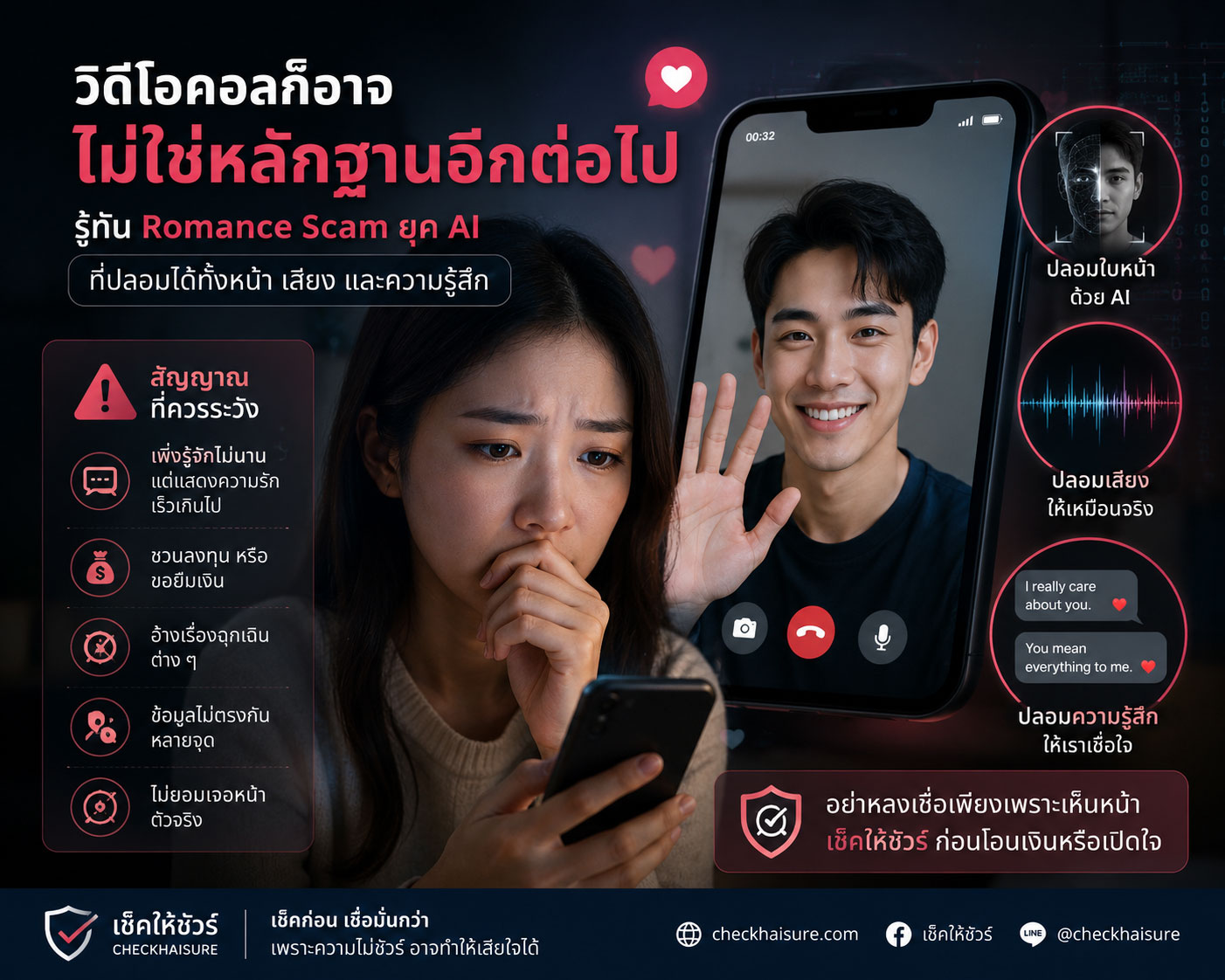
เมื่อก่อน ถ้าเราสงสัยว่าคนที่คุยด้วยในโลกออนไลน์เป็นตัวจริงหรือไม่ หลายคนอาจใช้วิธีง่ายๆ คือ “ขอวิดีโอคอลหน่อย”
ถ้าอีกฝ่ายยอมเปิดกล้อง เห็นหน้า ขยับปาก พูดคุยได้ เราก็มักจะรู้สึกสบายใจขึ้นว่า อย่างน้อยเขาก็น่าจะเป็นคนจริง ไม่ใช่รูปปลอม ไม่ใช่โปรไฟล์หลอก และไม่น่าจะเป็นมิจฉาชีพ
แต่ในยุคที่ AI พัฒนาเร็วขึ้นมาก คำว่า “เห็นหน้าผ่านวิดีโอคอลแล้ว” อาจไม่ใช่หลักฐานที่ปลอดภัยพออีกต่อไป
เพราะวันนี้ มิจฉาชีพไม่ได้มีแค่รูปโปรไฟล์สวยหล่อที่ขโมยมาจากคนอื่น แต่เริ่มมีเครื่องมือที่ช่วยสร้างใบหน้า เสียง ท่าทาง และบทสนทนาให้ดูเหมือนคนจริงได้มากขึ้น บางกรณีอาจใช้วิดีโอปลอม บางกรณีอาจใช้เสียงสังเคราะห์ หรือบางกรณีอาจใช้เทคนิคเปลี่ยนหน้าแบบเรียลไทม์ระหว่างวิดีโอคอล
สิ่งที่น่ากลัวไม่ใช่แค่เทคโนโลยีดูสมจริงขึ้น
แต่คือเทคโนโลยีเหล่านี้ถูกนำมาใช้กับ “ความรู้สึกของมนุษย์”
โดยเฉพาะความเหงา ความไว้ใจ ความหวัง และความต้องการมีใครสักคนที่เข้าใจเรา
Romance Scam ไม่ได้เริ่มจากการขอเงิน แต่เริ่มจากการทำให้เราเชื่อว่า “เขามีตัวตนจริง”
Romance Scam หรือการหลอกลวงด้านความสัมพันธ์ มักไม่ได้เริ่มต้นด้วยคำว่า “โอนเงินให้หน่อย”
ถ้าเริ่มแบบนั้น หลายคนคงระวังตัวได้ทันที
แต่ส่วนใหญ่จะเริ่มจากการทักทายธรรมดา การพูดคุยดีๆ การถามไถ่ การให้กำลังใจ และการทำให้เรารู้สึกว่าอีกฝ่ายใส่ใจเรามากกว่าคนทั่วไป
เขาอาจบอกว่าเราเป็นคนพิเศษ
เขาอาจตอบเร็ว จำรายละเอียดเล็กๆ ของเราได้
เขาอาจเล่าเรื่องชีวิตที่ดูน่าเชื่อถือ
เขาอาจมีรูป มีคลิป มีบัญชีโซเชียล มีเพื่อน มีโพสต์ย้อนหลัง
และในยุคใหม่ เขาอาจยอมวิดีโอคอลให้ดูด้วย
เมื่อทุกอย่างดูครบ เราจึงเริ่มลดการระวังตัวลง
หลายคนไม่ได้เชื่อเพราะโง่
แต่เชื่อเพราะหลักฐานที่เห็นตรงหน้ามันดู “จริงพอ” ที่จะทำให้หัวใจยอมเปิดประตู
นี่คือจุดที่ Romance Scam ยุค AI อันตรายกว่าเดิม
เพราะมันไม่ได้หลอกแค่ตา แต่มันหลอกความรู้สึกว่า “คนนี้น่าจะมีอยู่จริง”
วิดีโอคอลแบบ AI ทำให้การพิสูจน์ตัวตนยากขึ้นอย่างไร
ในอดีต ภาพนิ่งอาจถูกค้นหาย้อนกลับได้ง่ายกว่า เช่น นำรูปไปค้นหาใน Google หรือดูว่ารูปนั้นถูกใช้ในเว็บไซต์อื่นหรือไม่
แต่ AI ทำให้สถานการณ์ซับซ้อนขึ้น
บางโปรไฟล์อาจใช้ภาพที่สร้างขึ้นใหม่ ไม่ได้ขโมยมาจากใครโดยตรง จึงอาจค้นหารูปย้อนกลับแล้วไม่เจออะไรผิดปกติ
บางคนอาจใช้เสียงสังเคราะห์ที่ฟังดูเป็นธรรมชาติ ตอบรับได้เหมือนคนจริง
บางกรณีอาจใช้วิดีโอที่ถูกสร้างหรือปรับแต่งขึ้นมาให้ดูเหมือนกำลังพูดกับเรา
และที่น่ากังวลมากขึ้นคือ การใช้เทคนิคเปลี่ยนใบหน้าแบบเรียลไทม์ระหว่างวิดีโอคอล ทำให้คนที่อยู่หลังกล้องไม่จำเป็นต้องมีหน้าตาเหมือนในโปรไฟล์ แต่สามารถแสดงใบหน้าอีกคนหนึ่งบนหน้าจอได้
แน่นอนว่าไม่ใช่ทุกวิดีโอคอลจะเป็นของปลอม และไม่ใช่ทุกคนที่เจอออนไลน์จะเป็นมิจฉาชีพ
แต่สิ่งที่ต้องเปลี่ยนคือ วิธีคิดของเรา
จากเดิมที่เคยคิดว่า
“ถ้าเขายอมวิดีโอคอล แปลว่าเขาน่าเชื่อถือ”
ควรเปลี่ยนเป็น
“วิดีโอคอลช่วยลดความสงสัยได้บางส่วน แต่ยังไม่ใช่หลักฐานพอที่จะเชื่อเรื่องเงิน การลงทุน หรือข้อมูลส่วนตัว”
จุดหลอกที่อันตรายที่สุด: เมื่อหน้าตาดี + พูดดี + วิดีโอคอลได้
มิจฉาชีพจำนวนมากเข้าใจดีว่า คนเราไม่ได้ตัดสินใจด้วยเหตุผลอย่างเดียว
เราตัดสินใจด้วยความรู้สึกด้วย
ถ้าอีกฝ่ายดูดี พูดจาดี เข้าใจเรา สนใจเรา และยังวิดีโอคอลให้ดูได้ ความระแวงในใจของเราจะค่อยๆ ลดลง
โดยเฉพาะเมื่ออีกฝ่ายไม่ได้รีบขอเงินตั้งแต่วันแรก แต่ค่อยๆ สร้างความสัมพันธ์ทีละนิด
วันนี้คุยเรื่องชีวิต
พรุ่งนี้คุยเรื่องอนาคต
อีกวันเริ่มเรียกเราด้วยคำพิเศษ
ต่อมาเริ่มบอกว่าคิดถึง
แล้วค่อยๆ ขยับไปสู่เรื่องปัญหา เรื่องธุรกิจ เรื่องการลงทุน หรือเรื่องฉุกเฉิน
เมื่อความสัมพันธ์ถูกสร้างขึ้นแล้ว การขอเงินจะไม่รู้สึกเหมือนการทำธุรกรรมกับคนแปลกหน้า
แต่มันจะรู้สึกเหมือนการช่วย “คนที่เราห่วง”
นี่คือเหตุผลที่ Romance Scam ทำร้ายคนได้ลึกกว่าการหลอกขายของออนไลน์ทั่วไป
เพราะมันไม่ได้เอาไปแค่เงิน
แต่มันเอาความไว้ใจ ความหวัง และความรู้สึกดีๆ ของคนคนหนึ่งไปใช้เป็นเครื่องมือ
สัญญาณเตือนว่า “คนที่วิดีโอคอลกับเรา” อาจยังไม่น่าไว้ใจ
แม้อีกฝ่ายจะเคยเปิดกล้องคุยกับเราแล้ว ก็ยังควรระวัง หากมีสัญญาณเหล่านี้ร่วมด้วย
เขาดูดีเกินไป สนใจเราเร็วเกินไป และพูดเรื่องความรักเร็วผิดปกติ
เขาหลีกเลี่ยงการเจอตัวจริงเสมอ แม้จะมีเหตุผลใหม่ๆ มาอธิบายทุกครั้ง
เขาวิดีโอคอลได้ แต่เวลาคุยมักสั้น รีบวาง หรือไม่ยอมทำอะไรนอกเหนือจากที่เขาควบคุมได้
เขาไม่ค่อยตอบคำถามเฉพาะหน้า หรือพยายามเปลี่ยนเรื่องเมื่อเราถามรายละเอียดที่ตรวจสอบได้
เขามีเรื่องฉุกเฉิน เรื่องติดขัด หรือเรื่องเดือดร้อนที่จบด้วยการขอให้ช่วยโอนเงิน
เขาชวนลงทุน ชวนเทรด ชวนฝากเงินในแพลตฟอร์ม หรือบอกว่ามีช่องทางทำกำไรพิเศษ
เขาบอกว่ารักหรือไว้ใจเรา แต่กลับไม่ยอมให้ข้อมูลที่ตรวจสอบได้จริง
เขาไม่อยากให้เราปรึกษาคนอื่น หรือบอกว่า “เรื่องของเราสองคน อย่าให้ใครมายุ่ง”
เขาทำให้เรารู้สึกผิดหากเราถามมากเกินไป หรือไม่ยอมโอนเงินตามที่เขาขอ
เขาใช้ความรัก ความสงสาร หรือความผูกพันมากดดันให้เราตัดสินใจเร็วขึ้น
สัญญาณเหล่านี้สำคัญมาก เพราะ AI อาจปลอมหน้าและเสียงได้ แต่พฤติกรรมหลอกลวงมักยังมีรูปแบบที่คล้ายกัน
อย่าดูแค่ว่าเขาหน้าตาเหมือนในรูปหรือไม่
ให้ดูด้วยว่าเขาพยายามพาเราไปสู่การโอนเงิน ข้อมูลส่วนตัว หรือการลงทุนหรือไม่
วิธีตรวจสอบที่ดีกว่า “ขอวิดีโอคอล”
วิดีโอคอลยังพอช่วยได้บางส่วน แต่ไม่ควรใช้เป็นหลักฐานเดียว
หากเริ่มคุยกับใครในเชิงความสัมพันธ์ออนไลน์ โดยเฉพาะคนที่ยังไม่เคยเจอตัวจริง ควรใช้การตรวจสอบหลายชั้นร่วมกัน
เริ่มจากการดูความสอดคล้องของเรื่องราว เช่น อาชีพ เมืองที่อยู่ เวลาในการทำงาน ภาษา รูปแบบการใช้ชีวิต และสิ่งที่เขาเล่าในแต่ละวัน มีความสมจริงและต่อเนื่องหรือไม่
ลองถามคำถามธรรมดาที่ตอบได้จากชีวิตจริง เช่น สถานที่ใกล้บ้าน สภาพอากาศในพื้นที่ ร้านที่ไปบ่อย หรือรายละเอียดที่คนอยู่จริงน่าจะตอบได้แบบไม่ต้องคิดมาก
อย่ารีบเชื่อบัญชีโซเชียลที่ดูดี เพราะบัญชีปลอมอาจถูกสร้างให้มีโพสต์ย้อนหลัง มีรูปหลายมุม และมีคอมเมนต์ประกอบเพื่อเพิ่มความน่าเชื่อถือ
หากอีกฝ่ายอ้างชื่อบริษัท อาชีพ ตำแหน่ง หรือธุรกิจ ควรตรวจสอบจากแหล่งภายนอก ไม่ใช่ดูเฉพาะเอกสารหรือรูปที่เขาส่งมาเอง
ถ้าเขาชวนลงทุน ต้องแยกเรื่องความรักออกจากเรื่องเงินทันที คนที่จริงใจไม่ควรเร่งให้คุณลงทุน โอนเงิน หรือฝากเงินในแพลตฟอร์มที่เขาเป็นคนแนะนำ
และที่สำคัญที่สุด อย่าใช้ “ความรู้สึกดี” เป็นหลักฐานแทน “ข้อมูลที่ตรวจสอบได้”
อย่าเล่นเกมทดสอบกับมิจฉาชีพนานเกินไป
บางคนเมื่อเริ่มสงสัย อาจอยากลองถาม ลองจับผิด ลองให้เขาพิสูจน์ตัวตนเพิ่ม หรือคุยต่อเพื่อดูว่าเขาจะหลุดตรงไหน
แต่ต้องระวัง เพราะยิ่งคุยนาน ความผูกพันอาจยิ่งเพิ่ม
มิจฉาชีพที่ทำงานเป็นระบบอาจมีคำตอบเตรียมไว้ มีบทสนทนาที่ฝึกมา และมีวิธีทำให้เรารู้สึกผิดที่ไม่ไว้ใจเขา
ถ้าคุณเริ่มสงสัยจริงๆ สิ่งที่ปลอดภัยกว่าอาจไม่ใช่การพยายามเอาชนะเขาในการสนทนา
แต่คือการหยุดให้ข้อมูล หยุดส่งรูป หยุดโอนเงิน หยุดลงทุน และถอยออกมาตรวจสอบกับคนที่ไว้ใจได้
จำไว้ว่า เป้าหมายของเราไม่ใช่การพิสูจน์ว่าเขาเป็นมิจฉาชีพให้ได้แบบในหนังสืบสวน
เป้าหมายของเราคือป้องกันไม่ให้ตัวเองเสียเงิน เสียข้อมูล หรือเสียใจมากไปกว่านี้
ถ้าเขาขอเงินหลังจากสร้างความสัมพันธ์ ให้ถือเป็นจุดหยุดทันที
ไม่ว่าจะคุยกันมานานแค่ไหน
ไม่ว่าเขาจะดูจริงใจแค่ไหน
ไม่ว่าเขาจะเคยวิดีโอคอลให้ดูแล้วกี่ครั้ง
ไม่ว่าเขาจะบอกว่ารักเรามากแค่ไหน
ถ้าคนที่ไม่เคยเจอกันตัวจริงเริ่มขอเงิน ขอให้ช่วยโอนเงิน ขอให้สมัครแพลตฟอร์ม ขอให้ลงทุน หรือขอข้อมูลทางการเงิน
ให้หยุดทันที
เพราะในความสัมพันธ์ที่ปลอดภัย ความรักไม่ควรถูกใช้เป็นเงื่อนไขในการโอนเงิน
คำพูดอย่าง “ถ้ารักกันจริงต้องช่วย”
“ถ้าไม่โอน แปลว่าไม่ไว้ใจ”
“อีกนิดเดียวก็ได้เงินคืนแล้ว”
“ช่วยครั้งนี้แล้วเราจะได้อยู่ด้วยกัน”
หรือ “อย่าบอกใคร เดี๋ยวคนอื่นไม่เข้าใจเรา”
ไม่ใช่ภาษาของความรักที่ปลอดภัย
แต่มันอาจเป็นภาษาของการควบคุม
ถ้าสงสัยว่ากำลังเจอ Romance Scam ยุค AI ควรทำอย่างไร
อันดับแรก หยุดโอนเงินทันที อย่าโอนเพิ่มเพื่อพิสูจน์ว่าเขาเป็นคนจริง และอย่าโอนเพราะกลัวว่าจะเสียความสัมพันธ์
ต่อมา หยุดส่งข้อมูลส่วนตัว เช่น เลขบัตรประชาชน รูปบัตร ที่อยู่ รายละเอียดบัญชีธนาคาร รูปภาพส่วนตัว หรือรหัส OTP
เก็บหลักฐานทั้งหมดไว้ ไม่ว่าจะเป็นแชท รูปภาพ โปรไฟล์ ลิงก์ เบอร์โทร เลขบัญชี สลิปโอนเงิน คลิปเสียง หรือเวลาที่ติดต่อกัน
ปรึกษาคนใกล้ตัวที่ไว้ใจได้ โดยเฉพาะคนที่ไม่ได้อยู่ในอารมณ์เดียวกับเรา เพราะคนภายนอกมักมองเห็นสัญญาณเตือนชัดกว่า
ตรวจสอบเลขบัญชี เบอร์โทร ลิงก์ หรือข้อมูลที่เกี่ยวข้องผ่านแหล่งที่น่าเชื่อถือก่อนทำอะไรต่อ
หากมีการโอนเงินไปแล้ว ให้รีบติดต่อธนาคารเพื่อแจ้งเหตุ และพิจารณาดำเนินการตามช่องทางทางการที่เกี่ยวข้อง
และถ้าอีกฝ่ายยังพยายามติดต่อกลับมา กดดัน ขู่ หรือขอให้โอนเพิ่มเพื่อแก้ปัญหาเดิม ให้จำไว้ว่า นั่นอาจเป็นขั้นตอนต่อไปของการหลอก ไม่ใช่ทางออก
ประโยคที่ควรจำ: “เห็นหน้าแล้ว ไม่ได้แปลว่าปลอดภัย”
ในยุค AI เราอาจต้องปรับวิธีคิดใหม่
การเห็นหน้า ไม่ได้แปลว่าเขาเป็นคนนั้นจริง
การได้ยินเสียง ไม่ได้แปลว่าเสียงนั้นเชื่อถือได้
การวิดีโอคอล ไม่ได้แปลว่าความสัมพันธ์นั้นปลอดภัย
และการพูดจาดี ไม่ได้แปลว่าเขาจะไม่หลอกเรา
สิ่งที่ควรดูไม่ใช่แค่ใบหน้า แต่คือพฤติกรรม
เขาเร่งไหม
เขากดดันไหม
เขาขอเงินไหม
เขาชวนลงทุนไหม
เขาห้ามเราปรึกษาคนอื่นไหม
เขาทำให้เรารู้สึกผิดเมื่อเราระวังตัวไหม
ถ้าคำตอบคือใช่ ต่อให้เขาดูเหมือนคนจริงแค่ไหน ก็ยังควรหยุดและตรวจสอบก่อน
สรุป: ความรักที่ดี ไม่ควรต้องพิสูจน์ด้วยการโอนเงิน
Romance Scam ยุค AI ทำให้โลกออนไลน์ซับซ้อนขึ้น เพราะมิจฉาชีพอาจไม่ได้มีแค่รูปปลอม แต่สามารถสร้างเสียง วิดีโอ และบทสนทนาที่ดูสมจริงได้มากกว่าเดิม
แต่สิ่งหนึ่งที่ยังใช้ป้องกันตัวได้เสมอ คือการไม่รีบให้ความไว้ใจไปผูกกับเรื่องเงิน
ถ้ายังไม่เคยเจอตัวจริง อย่าโอนเงิน
ถ้ายังตรวจสอบไม่ได้ อย่าลงทุน
ถ้าถูกเร่ง ถูกขู่ หรือถูกทำให้รู้สึกผิด ให้หยุดก่อน
ถ้ามีอะไรเกี่ยวกับบัญชีธนาคาร ลิงก์แปลกๆ หรือแพลตฟอร์มลงทุนที่อีกฝ่ายส่งมา ให้ตรวจสอบก่อนเสมอ
ความรักที่จริงใจควรทำให้เรารู้สึกปลอดภัย
ไม่ใช่ทำให้เรากลัวว่าจะเสียเขาไปถ้าไม่โอนเงิน
และในวันที่วิดีโอคอลอาจถูกปลอมได้
สิ่งที่ควรเชื่อมากที่สุด ไม่ใช่ภาพบนหน้าจอ
แต่คือสัญญาณเตือนที่หัวใจและเหตุผลของเรากำลังบอกว่า
“เรื่องนี้อาจไม่ปลอดภัย”
หยุดก่อน ตรวจสอบก่อน และอย่าโอนเงินเพียงเพราะใครบางคนดูเหมือนจริงบนหน้าจอ
A Video Call May No Longer Be Proof: Understanding AI-Powered Romance Scams That Can Fake Faces, Voices, and Feelings
In the past, when people were unsure whether someone they met online was real, one simple test often felt reliable:
“Can we do a video call?”
If the other person turned on the camera, showed their face, moved naturally, and spoke in real time, many people felt reassured. At least they seemed to be a real person. Not just a stolen photo. Not just a fake profile. Not likely to be a scammer.
But in an age where AI technology is advancing quickly, “I saw them on video call” may no longer be strong enough proof.
Today, scammers do not only use attractive profile photos stolen from other people. Some may use tools that can create or manipulate faces, voices, movements, and conversations to appear more realistic. In some cases, they may use fake videos. In others, they may use AI-generated voices. More concerningly, some may use real-time face-swapping technology during video calls.
The most frightening part is not only that the technology looks more realistic.
It is that this technology can be used against human emotions.
Especially loneliness, trust, hope, and the desire to feel understood by someone.
Romance Scams Do Not Start with Money. They Start by Making You Believe Someone Is Real
A romance scam usually does not begin with someone asking you to transfer money.
If it started that way, many people would notice the danger immediately.
Instead, it often begins with simple greetings, kind conversations, daily check-ins, emotional support, and a feeling that this person cares more than others.
They may tell you that you are special.
They may reply quickly and remember small details about you.
They may share a life story that sounds believable.
They may have photos, videos, social media accounts, old posts, friends, and comments.
And in today’s world, they may even agree to video call.
When everything seems complete, we naturally start to lower our guard.
People do not fall for romance scams because they are foolish.
Many believe because the “evidence” in front of them feels real enough to open the door to trust.
This is what makes AI-powered romance scams more dangerous than before.
They do not only deceive the eyes.
They deceive the feeling that “this person must be real.”
How AI Video Calls Make Identity Verification More Difficult
In the past, a still photo could often be checked more easily. You could reverse-search the image and see whether it appeared on other websites or social media accounts.
But AI has made the situation more complicated.
Some profiles may use AI-generated images that were not stolen from a real person, making reverse image searches less useful.
Some scammers may use synthetic voices that sound natural and emotionally convincing.
Some may use videos that are generated or manipulated to look like they are speaking directly to you.
And what is becoming even more concerning is real-time face-swapping during video calls. This means the person behind the camera does not need to look like the profile photo. Technology can make another face appear on the screen in real time.
Of course, not every video call is fake.
And not everyone you meet online is a scammer.
But what needs to change is our mindset.
Instead of thinking:
“If they agree to a video call, they must be trustworthy.”
We should think:
“A video call may reduce some doubt, but it is not enough proof to trust someone with money, investments, or personal information.”
The Most Dangerous Combination: Attractive Appearance + Kind Words + Video Call
Many scammers understand that people do not make decisions with logic alone.
We also make decisions with emotion.
If someone looks attractive, speaks kindly, understands us, gives us attention, and can even appear on video call, our doubts may slowly fade.
This becomes even more dangerous when the person does not ask for money immediately. Instead, they build the relationship gradually.
Today, they talk about life.
Tomorrow, they talk about the future.
Later, they begin using affectionate words.
Then they say they miss you.
Eventually, the conversation moves toward a problem, a business opportunity, an investment, or an emergency.
Once an emotional bond has been created, sending money no longer feels like a transaction with a stranger.
It feels like helping someone you care about.
That is why romance scams can hurt more deeply than many other online scams.
They do not only take money.
They use trust, hope, and affection as tools.
Warning Signs That Someone You Video Called May Still Not Be Trustworthy
Even if the person has shown their face on video, you should still be cautious if you notice these warning signs:
They seem too perfect, become emotionally attached too quickly, or talk about love unusually fast.
They always avoid meeting in person, with a new excuse every time.
They can video call, but the calls are always short, rushed, or controlled by them.
They avoid spontaneous questions or change the subject when you ask for details that can be verified.
They suddenly face an emergency, business problem, travel issue, medical issue, or financial difficulty that ends with asking you for money.
They invite you to invest, trade, deposit money into a platform, or join a “special opportunity.”
They say they love or trust you, but they refuse to provide information that can be independently verified.
They discourage you from talking to friends or family, saying things like “This is between us” or “Other people won’t understand.”
They make you feel guilty for asking questions, being careful, or refusing to transfer money.
They use love, pity, or emotional pressure to push you into making quick decisions.
These signs matter because AI may be able to fake a face or a voice, but scam behavior often follows recognizable patterns.
Do not only ask whether their face matches the photo.
Ask whether their behavior is leading you toward money transfers, personal information, or risky investments.
Better Ways to Verify Someone Than Just Asking for a Video Call
A video call may still help in some situations, but it should not be your only form of verification.
If you are getting to know someone online, especially someone you have never met in person, use multiple layers of caution.
Look at whether their story is consistent. Their job, city, working hours, language, lifestyle, and daily details should make sense over time.
Ask simple questions that a real person living that life should be able to answer naturally, such as local weather, nearby places, daily routines, or ordinary details about their environment.
Do not trust a social media account only because it looks complete. Fake accounts can be prepared with old posts, multiple photos, comments, and interactions to appear more believable.
If they claim to work for a company, hold a specific position, own a business, or have a special opportunity, verify it through independent sources. Do not rely only on documents, screenshots, or photos they send you.
If they introduce an investment, separate love from money immediately. A sincere person should not pressure you to invest, transfer money, or use a financial platform that they recommend.
Most importantly, do not let “good feelings” replace verifiable information.
Do Not Spend Too Long Trying to Test a Scammer
When people start to feel suspicious, they may want to keep asking questions, test the other person, request more proof, or continue the conversation until the scammer makes a mistake.
But this can be risky.
The longer you keep talking, the more emotionally attached you may become.
Organized scammers may have prepared answers, trained scripts, emotional responses, and ways to make you feel guilty for doubting them.
If you are already seriously suspicious, the safest option may not be to win the conversation.
The safer option is to stop sharing information, stop sending photos, stop transferring money, stop investing, and step back to verify the situation with someone you trust.
Remember, your goal is not to prove the person is a scammer like a detective in a movie.
Your goal is to protect yourself from losing money, personal data, emotional safety, or peace of mind.
If They Ask for Money After Building a Relationship, Treat It as a Stop Signal
No matter how long you have been talking,
no matter how sincere they seem,
no matter how many video calls you have had,
no matter how often they say they love you,
if someone you have never met in person begins asking for money, help with transfers, investment deposits, platform registration, financial information, or bank-related details,
stop immediately.
In a safe relationship, love should not be used as a condition for money.
Phrases like:
“If you really love me, you will help.”
“If you don’t transfer, it means you don’t trust me.”
“Just a little more and we can get the money back.”
“After this, we can finally be together.”
“Don’t tell anyone. Other people won’t understand us.”
These are not signs of healthy love.
They may be signs of emotional control.
What to Do If You Suspect an AI-Powered Romance Scam
First, stop transferring money immediately. Do not send more money to prove the person is real, and do not send money because you are afraid of losing the relationship.
Next, stop sharing personal information, such as your ID card number, passport details, home address, bank account information, private photos, or OTP codes.
Save all evidence, including chat messages, photos, profile links, phone numbers, bank account numbers, transfer slips, voice messages, videos, and the timeline of what happened.
Talk to someone you trust, especially someone outside the emotional situation. A person who is not emotionally involved may notice warning signs more clearly.
Check bank account numbers, phone numbers, links, profiles, or related information through reliable sources before taking any further action.
If you have already transferred money, contact your bank as soon as possible to report the situation and ask for guidance. You may also consider reporting the case through the appropriate official channels.
If the person continues contacting you, pressuring you, threatening you, or asking for more money to “fix” the previous problem, remember that this may be the next stage of the scam, not a solution.
A Sentence to Remember: “Seeing a Face Does Not Mean It Is Safe”
In the age of AI, we may need to rethink how we trust what we see online.
Seeing a face does not always mean the person is real.
Hearing a voice does not always mean the voice is trustworthy.
Having a video call does not always mean the relationship is safe.
And kind words do not always mean someone has good intentions.
Do not look only at the face.
Look at the behavior.
Are they rushing you?
Are they pressuring you?
Are they asking for money?
Are they inviting you to invest?
Are they stopping you from talking to others?
Are they making you feel guilty for being careful?
If the answer is yes, then even if they look real on screen, you should stop and verify before going further.
Conclusion: Real Love Should Not Need to Be Proven by a Money Transfer
AI-powered romance scams are making the online world more complicated. Scammers may no longer rely only on fake photos. They may use realistic voices, videos, and conversations to make themselves appear more believable.
But one thing remains true:
Do not connect trust with money too quickly.
If you have never met in person, do not transfer money.
If you cannot verify the information, do not invest.
If you are being rushed, threatened, or made to feel guilty, pause immediately.
If bank accounts, suspicious links, or investment platforms are involved, check first.
Real love should make you feel safe.
It should not make you afraid that you will lose someone if you refuse to send money.
And in a world where even video calls can be manipulated, the most important thing to trust is not only what appears on your screen.
It is the warning signs that your heart and your reason are trying to tell you:
“This may not be safe.”
Pause first. Verify first. And never transfer money just because someone looks real on a screen.

Leave a Reply
You must be logged in to post a comment.