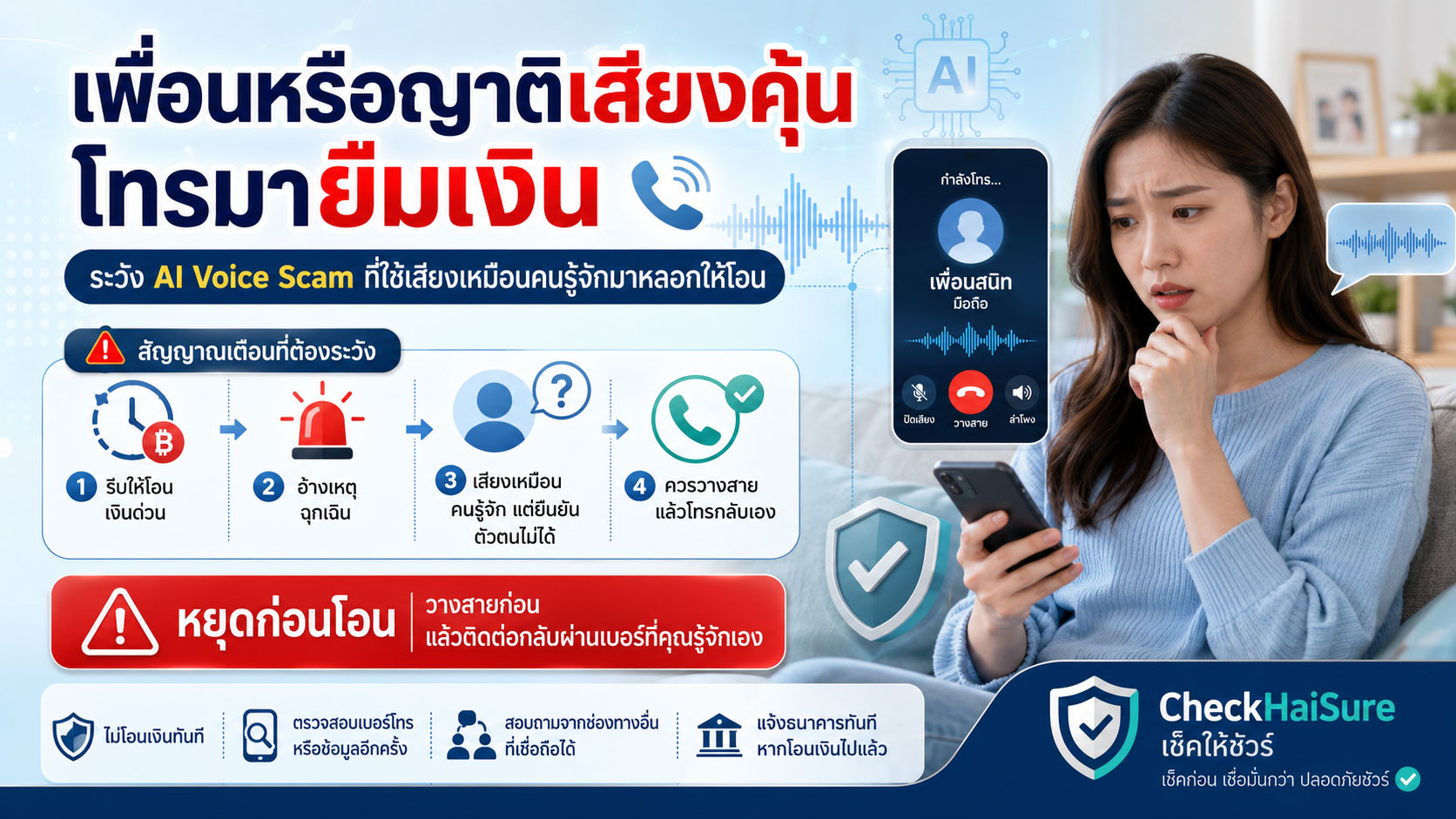
“แม่ ช่วยโอนเงินให้หน่อย หนูมีเรื่องด่วน”
“พี่ ผมรถเสียอยู่ต่างจังหวัด ยืมเงินก่อน เดี๋ยวคืนให้”
“อย่าเพิ่งถามเยอะนะ ตอนนี้รีบมาก”
“โทรศัพท์ผมแบตจะหมด โอนเข้าบัญชีนี้ก่อนนะ”
ถ้าคนที่โทรมาเสียงเหมือนลูก เหมือนแฟน เหมือนเพื่อนสนิท หรือเหมือนญาติที่เรารู้จักดี หลายคนอาจเชื่อทันที
ไม่ใช่เพราะไม่ระวัง
แต่เพราะเสียงเป็นสิ่งที่เราผูกกับความทรงจำและความไว้ใจ
เราอาจจำน้ำเสียงได้
จำวิธีพูดได้
จำคำเรียกได้
จำอารมณ์ตอนเขารีบได้
หรือจำได้แม้กระทั่งเสียงเหมือนกำลังตกใจ
เมื่อเสียงนั้นบอกว่าต้องการความช่วยเหลือ เราอาจรีบช่วยก่อนคิด
นี่คือจุดที่มิจฉาชีพใช้เล่นงาน
เพราะในยุคที่เทคโนโลยีสามารถเลียนแบบเสียงได้มากขึ้น การได้ยิน “เสียงคุ้น” อาจไม่เพียงพออีกต่อไป
เสียงเหมือนคนรู้จัก ไม่ได้แปลว่าคนปลายสายคือคนคนนั้นจริง
ทำไมเสียงถึงทำให้คนเชื่อง่ายกว่าข้อความ
ถ้ามีข้อความแปลกๆ ส่งมาขอยืมเงิน หลายคนอาจเริ่มสงสัย
แต่ถ้าเป็นเสียงของคนที่เรารักหรือคนที่เราคุ้นเคย ความสงสัยมักลดลงทันที
เพราะเสียงให้ความรู้สึกใกล้ชิดกว่าตัวหนังสือ
เสียงทำให้เรารู้สึกว่าเขาอยู่ตรงนั้นจริง
เสียงที่สั่นหรือรีบทำให้เรารู้สึกว่าเขากำลังลำบากจริง
เสียงที่เรียกเราด้วยคำคุ้นเคยทำให้เรารู้สึกว่าไม่มีเหตุผลต้องสงสัย
และเสียงที่เหมือนคนในครอบครัว อาจทำให้หัวใจเราตัดสินใจก่อนสมอง
มิจฉาชีพจึงไม่จำเป็นต้องเล่าเรื่องซับซ้อนมาก
แค่ทำให้เรารู้สึกว่า “คนของเรากำลังเดือดร้อน” ก็พอแล้ว
กลโกงแบบเสียงเหมือนคนรู้จักมักเริ่มอย่างไร
รูปแบบที่พบได้บ่อยคือการโทรมาด้วยความเร่งด่วน
เช่น
ลูกโทรมาบอกว่าเกิดอุบัติเหตุ
ญาติบอกว่ารถเสีย ต้องจ่ายค่าซ่อมทันที
เพื่อนสนิทบอกว่ากระเป๋าเงินหาย
แฟนบอกว่าอยู่โรงพยาบาล ต้องใช้เงินด่วน
คนรู้จักบอกว่าติดอยู่ต่างจังหวัด
หรือมีคนอ้างว่าโทรศัพท์เครื่องหลักหาย ให้ติดต่อผ่านเบอร์ใหม่หรือบัญชีใหม่ก่อน
บางครั้งไม่ได้คุยนาน
มิจฉาชีพอาจให้ได้ยินเสียงสั้นๆ เพียงไม่กี่ประโยค แล้วรีบตัดบท
เช่น
“ตอนนี้พูดนานไม่ได้”
“คนรออยู่”
“แบตจะหมด”
“เดี๋ยวค่อยเล่า”
“ช่วยก่อนนะ”
“อย่าเพิ่งโทรหาคนอื่น เดี๋ยวเรื่องวุ่นวาย”
ยิ่งคุยน้อย ยิ่งมีโอกาสจับพิรุธได้น้อย
เขาจึงพยายามทำให้คุณไม่มีเวลาถาม ไม่มีเวลาฟังให้ละเอียด และไม่มีเวลาตรวจสอบกับคนอื่น
AI Voice Scam ไม่ได้หลอกแค่ผู้สูงอายุ
หลายคนคิดว่า กลโกงแบบนี้คงหลอกได้เฉพาะผู้สูงอายุ
แต่จริงๆ แล้วคนทุกวัยมีโอกาสพลาดได้
เพราะกลโกงนี้ไม่ได้โจมตีที่ความไม่รู้
แต่โจมตีที่ความรัก ความห่วง และความไว้ใจ
พ่อแม่อาจรีบโอนเพราะกลัวลูกมีอันตราย
ลูกอาจรีบช่วยพ่อแม่เพราะกลัวท่านเดือดร้อน
แฟนอาจรีบช่วยเพราะไม่อยากให้อีกฝ่ายลำบาก
เพื่อนอาจรีบโอนเพราะคิดว่าเรื่องฉุกเฉินจริง
และบางคนอาจรีบช่วยเพราะไม่อยากเสียเวลาในช่วงที่คนปลายสายกำลังร้องขอ
นี่คือเหตุผลที่ไม่ควรตำหนิคนที่เกือบถูกหลอกหรือถูกหลอกไปแล้ว
เพราะเขาไม่ได้เชื่อเพราะโลภ
แต่เขาเชื่อเพราะเป็นห่วงคนที่เขารัก
สัญญาณเตือนที่ควรระวัง แม้เสียงจะคุ้นมาก
ถ้ามีคนเสียงเหมือนคนรู้จักโทรมายืมเงิน ให้ระวังเป็นพิเศษเมื่อเจอสัญญาณเหล่านี้
ขอให้โอนเงินทันที
บอกว่าอย่าถามเยอะ
อ้างว่าโทรศัพท์เครื่องเดิมหายหรือพัง
ใช้เบอร์ใหม่ที่ไม่เคยติดต่อมาก่อน
ขอให้โอนเข้าบัญชีที่ไม่ใช่ชื่อของเขา
บอกว่าบัญชีตัวเองใช้ไม่ได้
พูดสั้นๆ แล้วรีบวาง
ไม่ยอมให้วิดีโอคอล
ไม่ตอบคำถามเฉพาะที่มีแต่คนใกล้ตัวรู้
ห้ามโทรกลับเบอร์เดิม
ห้ามบอกคนอื่นในครอบครัว
บอกว่าถ้าช้า จะเกิดปัญหาใหญ่
หรือกดดันให้ทำภายในไม่กี่นาที
ถ้าขอยืมเงินจริง คนที่รู้จักเราดีควรเข้าใจได้ว่าเราต้องตรวจสอบก่อน
แต่ถ้าอีกฝ่ายโกรธ กดดัน หรือพยายามไม่ให้ตรวจสอบ ให้สงสัยไว้ก่อน
จุดที่ต้องระวังที่สุดคือ “บัญชีปลายทางไม่ใช่ชื่อคนที่โทรมา”
ถ้าคนที่เสียงเหมือนเพื่อนหรือญาติขอยืมเงิน แต่ให้โอนเข้าบัญชีชื่อคนอื่น นี่เป็นสัญญาณที่ควรหยุดทันที
เขาอาจอธิบายว่า
“บัญชีผมใช้ไม่ได้”
“โอนเข้าบัญชีเพื่อนก่อน”
“นี่บัญชีร้าน”
“นี่บัญชีช่าง”
“นี่บัญชีคนที่ผมต้องจ่าย”
“เดี๋ยวผมคืนให้เอง”
คำอธิบายเหล่านี้อาจฟังดูเป็นไปได้ในสถานการณ์ฉุกเฉิน
แต่ก็เป็นช่องที่มิจฉาชีพใช้บ่อย
เพราะถ้าให้โอนเข้าบัญชีชื่อคนอื่น เราจะตรวจสอบยากขึ้นว่าเกี่ยวข้องกับคนรู้จักเราจริงหรือไม่
หลักง่ายๆ คือ
ถ้าเป็นคนรู้จักจริง แต่บัญชีรับเงินไม่ใช่ชื่อเขา ให้หยุดก่อน
อย่าโอนเพียงเพราะเสียงเหมือน
ให้โทรกลับไปยังเบอร์เดิมที่คุณเคยใช้ติดต่อเขาเอง หรือถามคนในครอบครัว/เพื่อนร่วมกันเพื่อยืนยันก่อน
อย่าตรวจสอบด้วยคำถามที่เดาได้ง่าย
บางคนอาจถามว่า
“นี่ใคร”
“อยู่ไหน”
“ชื่อแม่ชื่ออะไร”
“บ้านอยู่ที่ไหน”
แต่คำถามบางอย่างอาจไม่ปลอดภัยพอ
เพราะข้อมูลส่วนตัวจำนวนมากอาจหาได้จากโซเชียลมีเดีย หรือเคยถูกพูดไว้ในที่สาธารณะ
ถ้าจะตรวจสอบ ให้ใช้คำถามที่เฉพาะและเปลี่ยนไปเรื่อยๆ
เช่น
เรื่องตลกในครอบครัวที่คนนอกไม่รู้
ชื่อเล่นที่ใช้เรียกกันเฉพาะในบ้าน
เหตุการณ์ส่วนตัวที่ไม่ได้โพสต์ออนไลน์
รายละเอียดนัดล่าสุดที่คุยกันจริง
หรือข้อตกลงลับในครอบครัวที่ตั้งไว้ล่วงหน้า
แต่ถึงอย่างนั้น วิธีที่ปลอดภัยกว่าคือไม่ตรวจสอบกับสายที่โทรมาเพียงช่องทางเดียว
ให้วางสาย แล้วติดต่อกลับผ่านเบอร์หรือแอปที่คุณมีอยู่เดิม
อย่ากดโทรกลับจากเบอร์ใหม่ที่เขาให้มา
วิธีที่ดีที่สุดคือ “โทรกลับช่องทางเดิม”
ถ้ามีคนเสียงคุ้นโทรมาขอยืมเงิน ให้ทำสิ่งนี้ก่อนเสมอ
วางสาย
แล้วโทรกลับไปยังเบอร์เดิมของคนนั้นที่คุณบันทึกไว้
หรือทักไปในแอปแชทเดิมที่เคยใช้คุยกัน
หรือโทรหาคนใกล้ตัวของเขาเพื่อช่วยยืนยัน
หรือถ้าเป็นลูกหลาน ให้โทรหาอีกคนในครอบครัวให้ช่วยเช็ก
อย่าใช้ช่องทางที่คนปลายสายให้มาเป็นช่องทางตรวจสอบ
เพราะถ้าเขาเป็นมิจฉาชีพ เขาจะพยายามพาคุณไปอยู่ในช่องทางที่เขาควบคุมได้
เช่น เบอร์ใหม่
บัญชี LINE ใหม่
ลิงก์ใหม่
หรือบัญชีธนาคารที่เขาบอก
การตรวจสอบที่ปลอดภัยต้องเริ่มจากช่องทางที่คุณมีอยู่แล้ว ไม่ใช่ช่องทางที่เขาส่งมาใหม่
ครอบครัวควรมี “รหัสลับกันพลาด”
ฟังดูง่าย แต่ช่วยได้มาก
ครอบครัวหรือกลุ่มเพื่อนสนิทสามารถตกลงกันไว้ล่วงหน้าว่า ถ้ามีเหตุฉุกเฉินและต้องขอเงิน ต้องพูดรหัสหรือคำเฉพาะที่รู้กันในกลุ่ม
รหัสนี้ไม่ควรเป็นวันเกิด ชื่อสัตว์เลี้ยง ชื่อโรงเรียน หรือข้อมูลที่หาได้จากโซเชียล
ควรเป็นคำที่คนนอกเดายาก และไม่เคยโพสต์ไว้ที่ไหน
เช่น ประโยคตลกเฉพาะบ้าน
ชื่อเล่นที่ใช้กันเฉพาะกลุ่ม
คำที่ตกลงกันเองแบบไม่มีความหมายต่อคนนอก
หรือคำถาม-คำตอบที่รู้กันเฉพาะคนในครอบครัว
ตัวอย่างเช่น
ถ้าใครโทรมาขอยืมเงิน ต้องตอบคำถามว่า “คำลับของบ้านเราคืออะไร”
หรือถ้ามีเหตุฉุกเฉินจริง ต้องบอกประโยคที่ตกลงกันไว้ก่อน
เรื่องนี้อาจดูเหมือนเล่นๆ
แต่ในช่วงเวลาที่ทุกคนตกใจ รหัสลับเล็กๆ อาจช่วยหยุดการโอนเงินผิดคนได้
อย่าให้ความเกรงใจทำให้รีบโอน
บางครั้งคนที่ถูกหลอกไม่ใช่เพราะกลัวอย่างเดียว
แต่เพราะเกรงใจ
เกรงใจว่าเพื่อนกำลังเดือดร้อน
เกรงใจว่าถามมากจะดูไม่ไว้ใจ
เกรงใจว่าญาติจะรู้สึกว่าเราไม่ช่วย
เกรงใจว่าถ้าช้า เขาจะเสียโอกาส
แต่การขอตรวจสอบก่อน ไม่ใช่การไม่ช่วย
คนที่รักเราจริงควรเข้าใจว่าเรื่องเงินต้องระวัง
ถ้าเป็นเรื่องด่วนจริง การตรวจสอบเพียงไม่กี่นาทีอาจไม่ได้ทำให้เสียหาย
แต่ถ้าเป็นมิจฉาชีพ การตรวจสอบเพียงไม่กี่นาทีอาจช่วยป้องกันเงินทั้งก้อนได้
ดังนั้น อย่ารู้สึกผิดที่ถามซ้ำ
อย่ารู้สึกผิดที่โทรกลับเบอร์เดิม
อย่ารู้สึกผิดที่ขอวิดีโอคอล
อย่ารู้สึกผิดที่บอกว่า “ขอเช็กก่อน”
การช่วยเหลือที่ปลอดภัย ต้องไม่เริ่มจากการปิดตาตัวเองเพราะเกรงใจ
ถ้าจำเสียงได้ แต่เรื่องแปลก ให้เชื่อ “เรื่องแปลก” ก่อนเสียง
หลายครั้ง เหยื่ออาจคิดว่า
“เสียงเหมือนมาก คงใช่จริงๆ”
แต่ในสถานการณ์แบบนี้ อย่าใช้เสียงเป็นหลักฐานเดียว
ให้ดูพฤติกรรมและเนื้อเรื่องด้วย
ถ้าเสียงเหมือน แต่ขอเงินเข้าบัญชีคนอื่น ให้สงสัย
ถ้าเสียงเหมือน แต่ใช้เบอร์ใหม่ ให้ตรวจสอบ
ถ้าเสียงเหมือน แต่ไม่ยอมให้โทรกลับเบอร์เดิม ให้ระวัง
ถ้าเสียงเหมือน แต่ไม่ตอบคำถามเฉพาะได้ ให้หยุด
ถ้าเสียงเหมือน แต่เร่งให้โอนภายในไม่กี่นาที ให้ชะลอ
ถ้าเสียงเหมือน แต่ห้ามบอกคนอื่น ให้ยิ่งต้องบอก
เพราะเสียงอาจถูกเลียนแบบได้
แต่พฤติกรรมที่ผิดปกติมักบอกอะไรได้มากกว่า
ถ้าเป็นการยืมเงินจริง ควรช่วยอย่างไรให้ปลอดภัย
บางครั้งคนรู้จักอาจเดือดร้อนจริง
บทความนี้ไม่ได้บอกว่าไม่ควรช่วยใครเลย
แต่ควรช่วยอย่างมีขั้นตอน
ก่อนโอนเงิน ให้ตรวจสอบตัวตนผ่านช่องทางเดิม
ขอให้วิดีโอคอลถ้าเป็นไปได้
ถามคำถามเฉพาะที่คนนอกไม่รู้
โทรหาคนในครอบครัวหรือเพื่อนร่วมกันเพื่อยืนยัน
ตรวจสอบชื่อบัญชีปลายทางว่าตรงกับคนที่ขอหรือไม่
เริ่มจากจำนวนที่จำเป็นจริง ไม่ใช่ยอดที่สูงเกินเหตุ
และบันทึกหลักฐานการคุยกับคนที่รู้จักจริงให้ชัดเจน
ถ้ายังไม่มั่นใจ ให้บอกว่า
“ขอเช็กก่อนนะ ถ้าเป็นเรื่องจริงจะช่วยแน่นอน”
คนที่เดือดร้อนจริงอาจรีบ แต่ควรเข้าใจว่าคุณต้องระวัง
คนที่เป็นมิจฉาชีพมักไม่อยากให้คุณได้ตรวจสอบ
ระวังการต่อยอดจากเสียงไปสู่แชทปลอม
บางครั้งมิจฉาชีพอาจโทรมาเพียงสั้นๆ ด้วยเสียงที่เหมือนคนรู้จัก
จากนั้นบอกให้คุยต่อทางแชท
เช่น
“เดี๋ยวส่งเลขบัญชีให้ใน LINE นี้นะ”
“โทรศัพท์เครื่องเก่าหาย ใช้บัญชีใหม่ก่อน”
“ทักมาที่แชทนี้นะ อย่าทักบัญชีเดิม”
“ส่งสลิปมาที่นี่เลย”
เมื่อเปลี่ยนจากเสียงไปเป็นแชท คุณอาจคิดว่าทุกอย่างยังต่อเนื่องจากคนเดิม
แต่จริงๆ แล้วอาจเป็นการพาคุณเข้าสู่ช่องทางปลอม
ให้ระวังบัญชีแชทใหม่ รูปโปรไฟล์ใหม่ ชื่อคล้ายเดิม หรือบัญชีที่เพิ่งเพิ่มเข้ามา
อย่าโอนเงินเพียงเพราะมีสายก่อนหน้าโทรมาทำให้เชื่อ
ให้ตรวจสอบผ่านบัญชีเดิมหรือเบอร์เดิมก่อนเสมอ
ถ้าเผลอโอนไปแล้วควรทำอย่างไร
ถ้าคุณโอนเงินไปแล้วและเริ่มสงสัยว่าอาจถูกหลอก ให้หยุดทันที
อย่าโอนเพิ่ม
อย่าคุยต่อเพราะอีกฝ่ายบอกว่าจะคืนเงิน
อย่าลบแชท
อย่าลบประวัติการโทร
อย่าลบสลิปโอนเงิน
ให้เก็บหลักฐานทั้งหมด เช่น
เบอร์ที่โทรมา
บัญชี LINE หรือแชทที่ใช้คุย
ข้อความขอยืมเงิน
เลขบัญชีปลายทาง
ชื่อบัญชี
สลิปโอนเงิน
เวลาที่โทร
เวลาที่โอน
และข้อความที่บอกเหตุฉุกเฉิน
จากนั้นติดต่อธนาคารผ่านช่องทางทางการโดยเร็ว
บอกคนที่ถูกแอบอ้างตัวจริง เพื่อให้เขาเตือนคนอื่นต่อ
แจ้งคนในครอบครัวหรือกลุ่มเพื่อนที่อาจถูกหลอกซ้ำ
และแจ้งเหตุผ่านหน่วยงานหรือแพลตฟอร์มที่เกี่ยวข้อง
อย่าอายที่บอกคนอื่น
เพราะการบอกเร็วอาจช่วยให้คนอื่นไม่โอนตาม
คนที่ถูกแอบอ้างเสียงควรทำอย่างไร
ถ้าคุณรู้ว่ามีคนใช้ชื่อหรือเสียงของคุณไปขอยืมเงินจากคนอื่น ให้รีบแจ้งเตือนคนรอบตัว
โพสต์หรือส่งข้อความบอกว่า
“หากมีใครโทรหรือทักไปขอยืมเงินโดยอ้างว่าเป็นผม/ฉัน กรุณาตรวจสอบกับเบอร์เดิมก่อน อย่าโอนเงินทันที”
แจ้งครอบครัว กลุ่มเพื่อน และเพื่อนร่วมงาน
เปลี่ยนรหัสผ่านบัญชีที่เกี่ยวข้องหากสงสัยว่าถูกเข้าถึง
ตรวจสอบว่าโซเชียลมีเดียมีข้อมูลส่วนตัวเปิดเผยมากเกินไปหรือไม่
ตั้งค่าความเป็นส่วนตัวของโพสต์ที่มีเสียง วิดีโอ หรือข้อมูลครอบครัว
และถ้ามีบัญชีปลอม ให้รายงานต่อแพลตฟอร์มนั้น
การถูกแอบอ้างไม่ใช่ความผิดของคุณ
แต่การแจ้งเตือนเร็วอาจช่วยลดความเสียหายให้คนรอบตัวได้มาก
อย่าโพสต์ข้อมูลเสียงและชีวิตส่วนตัวเกินจำเป็น
เราอาจไม่ได้คิดว่าเสียงของเรามีค่า
แต่ในยุคนี้ เสียงจากคลิปสั้น ไลฟ์ วิดีโอ หรือคอนเทนต์สาธารณะ อาจถูกนำไปใช้ในทางที่ไม่ดีได้
ไม่ได้แปลว่าต้องหยุดโพสต์ทุกอย่าง
แต่ควรระวังข้อมูลที่เปิดเผยมากเกินไป
เช่น
ชื่อคนในครอบครัว
ชื่อเล่นที่ใช้เรียกกัน
สถานที่อยู่ประจำ
รายละเอียดการเดินทาง
เรื่องการเงิน
สถานการณ์ที่ทำให้รู้ว่าใครอยู่คนเดียว
หรือข้อมูลที่ช่วยให้มิจฉาชีพแต่งเรื่องได้สมจริงขึ้น
ยิ่งเขารู้บริบทเกี่ยวกับเราและคนรอบตัวมากเท่าไร เขายิ่งสร้างเรื่องหลอกได้แนบเนียนมากขึ้น
ครอบครัวควรคุยกันก่อนเกิดเหตุ ไม่ใช่หลังถูกหลอก
เรื่องนี้ควรเป็นบทสนทนาในบ้าน
ไม่ใช่รอให้เกิดเหตุแล้วค่อยคุย
อาจเริ่มง่ายๆ ว่า
“ถ้ามีใครโทรมาขอยืมเงินด่วน ให้โทรกลับเบอร์เดิมก่อน”
“ถ้าบอกว่าใช้เบอร์ใหม่ ให้ตรวจสอบกับคนอื่นก่อน”
“ถ้าให้โอนเข้าบัญชีคนอื่น ให้หยุด”
“ถ้าห้ามบอกคนในบ้าน ให้ยิ่งต้องบอก”
“ถ้าด่วนจริง ก็ต้องตอบคำถามยืนยันตัวตนได้”
“ถ้าไม่แน่ใจ ให้ยังไม่โอน”
ข้อตกลงเหล่านี้ไม่ได้ทำให้ครอบครัวไม่ไว้ใจกัน
แต่ทำให้ทุกคนปลอดภัยขึ้น
เพราะความไว้ใจที่ดี ควรมีวิธีป้องกันเมื่อมีคนพยายามปลอมเป็นคนที่เรารัก
ประโยคที่ควรจำ: เสียงคุ้นไม่พอ ต้องเช็กช่องทางเดิมก่อนโอน
ถ้าต้องจำประโยคเดียวจากบทความนี้ ขอให้จำว่า
เสียงคุ้นไม่พอ ต้องเช็กช่องทางเดิมก่อนโอน
ถ้าคนในครอบครัวเดือดร้อนจริง การโทรกลับเบอร์เดิมหรือเช็กกับคนใกล้ตัวจะช่วยให้ช่วยได้ถูกคน
แต่ถ้าเป็นมิจฉาชีพ การตรวจสอบเพียงไม่กี่นาทีอาจหยุดความเสียหายได้
อย่าให้เสียงที่คุ้นทำให้เราข้ามขั้นตอนที่ควรทำ
อย่าให้ความห่วงทำให้เราโอนเร็วเกินไป
และอย่าให้ความเกรงใจทำให้เราลืมสิทธิ์ที่จะตรวจสอบ
สรุป: เมื่อเสียงเหมือนคนรัก ขอให้ใจเย็นกว่าปกติ
AI Voice Scam หรือการใช้เสียงคล้ายคนรู้จักมาหลอกยืมเงิน เป็นกลโกงที่อันตรายเพราะมันเข้ามาทางความสัมพันธ์
ไม่ได้หลอกแค่เงิน
แต่หลอกผ่านความรัก ความห่วง ความไว้ใจ และความกลัวว่าจะช่วยคนสำคัญไม่ทัน
ถ้ามีคนเสียงเหมือนเพื่อนหรือญาติโทรมายืมเงิน ให้หยุดก่อนเสมอ
อย่าโอนทันที
อย่าเชื่อเพียงเพราะเสียงเหมือน
อย่าใช้เบอร์ใหม่เป็นหลักฐาน
อย่าโอนเข้าบัญชีคนอื่นโดยไม่ตรวจสอบ
อย่าให้ความด่วนเป็นเหตุผลในการข้ามขั้นตอน
ให้วางสาย แล้วติดต่อกลับผ่านเบอร์เดิมหรือช่องทางเดิมที่คุณเคยใช้
ถามคำถามเฉพาะ
เช็กกับคนในครอบครัวหรือเพื่อนร่วมกัน
และถ้ายังไม่มั่นใจ ให้ยังไม่โอน
เพราะการช่วยคนที่เรารัก ควรเริ่มจากการแน่ใจก่อนว่า คนที่กำลังขอความช่วยเหลือคือเขาจริงๆ
A Friend or Relative with a Familiar Voice Calls to Borrow Money: Beware of AI Voice Scams That Use a Voice Like Someone You Know
“Mom, please transfer some money. I have an emergency.”
“Hey, my car broke down out of town. Can I borrow some money first? I’ll pay you back.”
“Please don’t ask too many questions right now. I’m in a hurry.”
“My phone battery is about to die. Please transfer it to this account first.”
If the person calling sounds like your child, partner, close friend, or relative, many people may believe it immediately.
Not because they are careless.
But because a voice is connected to memory and trust.
We may recognize the tone.
We may recognize the way they speak.
We may recognize the words they use to call us.
We may recognize how they sound when they are in a hurry.
We may even feel that the voice sounds scared or stressed.
When that familiar voice asks for help, we may rush to help before thinking.
This is exactly where scammers take advantage.
In an age where technology can increasingly imitate voices, hearing a “familiar voice” may no longer be enough.
A voice that sounds like someone you know does not always mean the person on the line is truly that person.
Why Voice Makes People Believe More Easily Than Text
If a strange message asks to borrow money, many people may become suspicious.
But if it is the voice of someone we love or someone we know well, suspicion often drops immediately.
A voice feels more personal than text.
A voice makes us feel as if the person is really there.
A shaky or hurried voice makes us feel that they may really be in trouble.
A voice that uses familiar words makes us feel there is no reason to doubt it.
And a voice that sounds like a family member may make the heart decide before the mind has time to check.
Scammers do not need to tell a very complicated story.
They only need to make you feel that “one of my people is in trouble.”
How Voice-Impersonation Scams Often Start
A common pattern is an urgent phone call.
For example:
A child calls and says they had an accident.
A relative says their car broke down and they need to pay for repairs immediately.
A close friend says their wallet was lost.
A partner says they are at the hospital and urgently need money.
Someone you know says they are stuck out of town.
Or someone claims their main phone was lost and asks you to use a new number or new account for now.
Sometimes the conversation is very short.
The scammer may let you hear only a few sentences, then quickly cut the call short.
For example:
“I can’t talk for long right now.”
“Someone is waiting.”
“My battery is dying.”
“I’ll explain later.”
“Please help me first.”
“Don’t call anyone else yet. It will make things complicated.”
The shorter the conversation, the fewer chances you have to notice something is wrong.
That is why scammers try to give you little time to ask questions, little time to listen carefully, and little time to verify with someone else.
AI Voice Scams Do Not Only Target Elderly People
Many people think this type of scam only works on elderly people.
But in reality, anyone can be fooled.
This scam does not attack a lack of knowledge.
It attacks love, concern, and trust.
Parents may transfer money quickly because they fear their child is in danger.
Children may rush to help their parents because they fear they are in trouble.
Partners may send money because they do not want the other person to suffer.
Friends may transfer money because they believe it is a real emergency.
And some people may act quickly simply because they do not want to waste time while the person on the phone is asking for urgent help.
That is why people who nearly fall for this scam, or who have already been scammed, should not be blamed.
They did not believe because they were greedy.
They believed because they were worried about someone they cared about.
Warning Signs to Watch For, Even If the Voice Sounds Very Familiar
If someone who sounds like a person you know calls to borrow money, be especially careful if you notice these signs:
They ask you to transfer money immediately.
They tell you not to ask too many questions.
They claim their usual phone is lost or broken.
They use a new number you have never contacted before.
They ask you to transfer money to an account that is not in their name.
They say their own account cannot be used.
They speak briefly and rush to end the call.
They refuse to do a video call.
They cannot answer specific questions that only someone close would know.
They tell you not to call their old number.
They tell you not to tell other family members.
They say something serious will happen if you are too slow.
Or they pressure you to act within a few minutes.
If someone truly needs to borrow money, they should understand that you need to verify first.
But if the person becomes angry, pressures you, or tries to stop you from checking, treat it as suspicious.
The Most Important Warning Sign: The Receiving Account Is Not in Their Name
If someone who sounds like a friend or relative asks to borrow money but tells you to transfer it to an account under someone else’s name, stop immediately.
They may explain:
“My account is not working.”
“Please transfer to my friend’s account first.”
“This is the shop’s account.”
“This is the mechanic’s account.”
“This is the account of the person I need to pay.”
“I’ll pay you back myself later.”
These explanations may sound possible in an emergency.
But they are also commonly used by scammers.
When the receiving account is not in the person’s name, it becomes much harder to verify whether the money is truly connected to the person you know.
A simple rule is:
If the person sounds familiar, but the receiving account is not theirs, stop first.
Do not transfer money just because the voice sounds right.
Call back using the old number you already have, or check with family members or mutual friends before sending anything.
Do Not Verify with Questions That Are Easy to Guess
Some people may ask:
“Who is this?”
“Where are you?”
“What is your mother’s name?”
“Where do you live?”
But some questions are not safe enough.
Many personal details can be found on social media or may have been mentioned publicly before.
If you want to verify, use specific questions that change from time to time.
For example:
A family joke that outsiders would not know.
A nickname used only at home.
A personal event that was never posted online.
Details from the most recent conversation you actually had.
Or a secret family agreement made in advance.
Even so, the safer method is not to verify only with the same call.
Hang up, then contact the person again through the number or app you already used before.
Do not call back using a new number they provide.
The Best Method Is to Call Back Through the Original Channel
If someone with a familiar voice calls to borrow money, do this first:
Hang up.
Then call back using the person’s saved number.
Or message them through the chat app you normally use.
Or call someone close to them to help confirm.
Or, if the caller claims to be a child or relative, call another family member to check.
Do not use the channel provided by the caller as your verification channel.
If the caller is a scammer, they will try to keep you inside channels they control.
For example:
A new phone number
A new LINE account
A new link
Or a bank account they provide
Safe verification should begin from a channel you already had, not from a new channel sent by the caller.
Families Should Have a “Secret Code” to Prevent Mistakes
It may sound simple, but it can help a lot.
Families or close groups of friends can agree in advance that if there is a real emergency and someone needs money, they must say a specific code word or phrase known only within the group.
This code should not be a birthday, pet name, school name, or anything easy to find on social media.
It should be something difficult for outsiders to guess and never posted publicly.
For example:
A private family joke
A nickname used only within the group
A made-up word with no meaning to outsiders
Or a question-and-answer pair only family members know
For example:
If someone calls to borrow money, they must answer: “What is our family code word?”
Or if there is a real emergency, they must say the phrase agreed in advance.
This may sound playful.
But during a stressful moment, a small secret code can stop money from being sent to the wrong person.
Do Not Let Politeness Make You Transfer Too Quickly
Sometimes people are fooled not only because they are afraid.
They are fooled because they feel bad asking questions.
They worry that a friend is truly in trouble.
They worry that asking too much will seem like distrust.
They worry that a relative will feel hurt if they hesitate.
They worry that if they are too slow, the person will lose an important chance.
But checking first is not the same as refusing to help.
Someone who truly cares about you should understand that money matters require caution.
If the emergency is real, a few minutes of verification should not cause serious harm.
But if it is a scam, a few minutes of verification may protect the entire amount.
So do not feel guilty for asking again.
Do not feel guilty for calling back through the old number.
Do not feel guilty for requesting a video call.
Do not feel guilty for saying, “Let me check first.”
Safe help should not begin by closing your eyes because you feel polite or pressured.
If the Voice Sounds Right but the Story Feels Strange, Trust the Strange Part First
Many victims may think:
“The voice sounds so similar. It must be real.”
But in this kind of situation, do not use the voice as the only proof.
Look at the behavior and the story too.
If the voice sounds familiar but asks for money to be sent to someone else’s account, be suspicious.
If the voice sounds familiar but uses a new number, verify.
If the voice sounds familiar but refuses to let you call back through the old number, be careful.
If the voice sounds familiar but cannot answer personal questions, stop.
If the voice sounds familiar but rushes you to transfer money within minutes, slow down.
If the voice sounds familiar but tells you not to tell anyone, tell someone.
A voice can be imitated.
But unusual behavior often reveals more.
If the Request Is Real, How Can You Help Safely?
Sometimes a person you know may genuinely be in trouble.
This article is not saying you should never help anyone.
It is saying you should help with a process.
Before transferring money, verify the person through an original channel.
Ask for a video call if possible.
Ask a specific question that outsiders would not know.
Call a family member or mutual friend to confirm.
Check whether the receiving account name matches the person requesting help.
Start only with the amount that is truly necessary, not an unusually high amount.
And keep clear evidence of your conversation with the real person.
If you are still unsure, say:
“Let me check first. If this is real, I will help.”
Someone who is genuinely in trouble may be in a hurry, but should still understand your need to be careful.
A scammer usually does not want you to verify.
Beware of Calls That Lead to Fake Chats
Sometimes scammers may call briefly using a voice that sounds like someone you know.
Then they may ask you to continue through chat.
For example:
“I’ll send the account number through this LINE.”
“My old phone was lost. Use this new account first.”
“Message me here, not the old account.”
“Send the transfer slip here.”
Once the conversation moves from voice to chat, you may feel that everything is still connected to the same person.
But in reality, you may have been moved into a fake channel.
Be careful with new chat accounts, new profile pictures, similar names, or accounts that were just added.
Do not transfer money just because the earlier call made you believe.
Always verify through the original account or old number first.
What to Do If You Already Transferred Money
If you already transferred money and begin to suspect it may be a scam, stop immediately.
Do not transfer more.
Do not continue talking because the other person says they will return the money.
Do not delete the chat.
Do not delete call history.
Do not delete transfer slips.
Save all evidence, such as:
The phone number that called you
The LINE account or chat used
The message asking to borrow money
The destination account number
The account name
Transfer slip
Time of the call
Time of the transfer
And messages describing the emergency
Then contact your bank through official channels as soon as possible.
Inform the real person whose identity was impersonated so they can warn others.
Warn family members or mutual friends who may also be targeted.
And report the incident to the relevant platform or authority.
Do not feel embarrassed to tell others.
A quick warning may stop someone else from transferring money too.
What Should You Do If Your Voice or Name Was Impersonated?
If you learn that someone used your name or voice to ask others for money, warn people around you immediately.
You can post or send a message saying:
“If anyone calls or messages you asking to borrow money and claims to be me, please verify with my original number first. Do not transfer money immediately.”
Tell your family, friend groups, and coworkers.
Change passwords for related accounts if you suspect they may have been accessed.
Check whether your social media reveals too much personal information.
Adjust privacy settings for posts containing your voice, videos, or family details.
And if there is a fake account, report it to the platform.
Being impersonated is not your fault.
But warning people quickly can reduce harm to those around you.
Be Careful About Posting Too Much Voice and Personal Context
We may not think our voice has value.
But today, voice from short clips, live streams, videos, or public content may be misused.
This does not mean you must stop posting everything.
But it is wise to be careful about revealing too much context.
For example:
Names of family members
Private nicknames
Regular locations
Travel details
Financial situations
Information showing who is alone
Or details that help scammers create a more believable story
The more scammers know about you and the people around you, the more realistic their story can become.
Families Should Talk Before Something Happens, Not After Being Scammed
This should be a family conversation before an incident happens.
Not only after something goes wrong.
You can start with simple rules:
“If anyone calls asking to borrow money urgently, call back through the original number first.”
“If they say they are using a new number, check with someone else first.”
“If they ask you to transfer money to another person’s account, stop.”
“If they say not to tell the family, tell the family immediately.”
“If it is truly urgent, they should be able to answer a verification question.”
“If you are not sure, do not transfer yet.”
These rules do not mean the family does not trust each other.
They make everyone safer.
Because healthy trust should include protection against people trying to pretend to be someone we love.
A Sentence to Remember: A Familiar Voice Is Not Enough. Check Through the Original Channel Before Transferring Money.
If you remember only one sentence from this article, remember this:
A familiar voice is not enough. Check through the original channel before transferring money.
If a family member is truly in trouble, calling back through the original number or checking with someone close to them can help you send help to the right person.
But if it is a scammer, a few minutes of verification may stop the damage.
Do not let a familiar voice make you skip the steps you should take.
Do not let concern make you transfer too quickly.
And do not let politeness make you forget your right to verify.
Conclusion: When the Voice Sounds Like Someone You Love, Be Even Calmer Than Usual
AI Voice Scams, or scams that use a voice similar to someone you know to borrow money, are dangerous because they enter through relationships.
They do not only target money.
They target love, concern, trust, and the fear that you may not help someone important in time.
If someone who sounds like a friend or relative calls to borrow money, always pause first.
Do not transfer immediately.
Do not believe only because the voice sounds familiar.
Do not treat a new number as proof.
Do not transfer to someone else’s account without checking.
Do not let urgency become a reason to skip verification.
Hang up, then contact the person again through the original number or original channel you normally use.
Ask a specific question.
Check with family members or mutual friends.
And if you are still unsure, do not transfer yet.
Because helping someone you love should begin by making sure the person asking for help is truly them.

Leave a Reply
You must be logged in to post a comment.