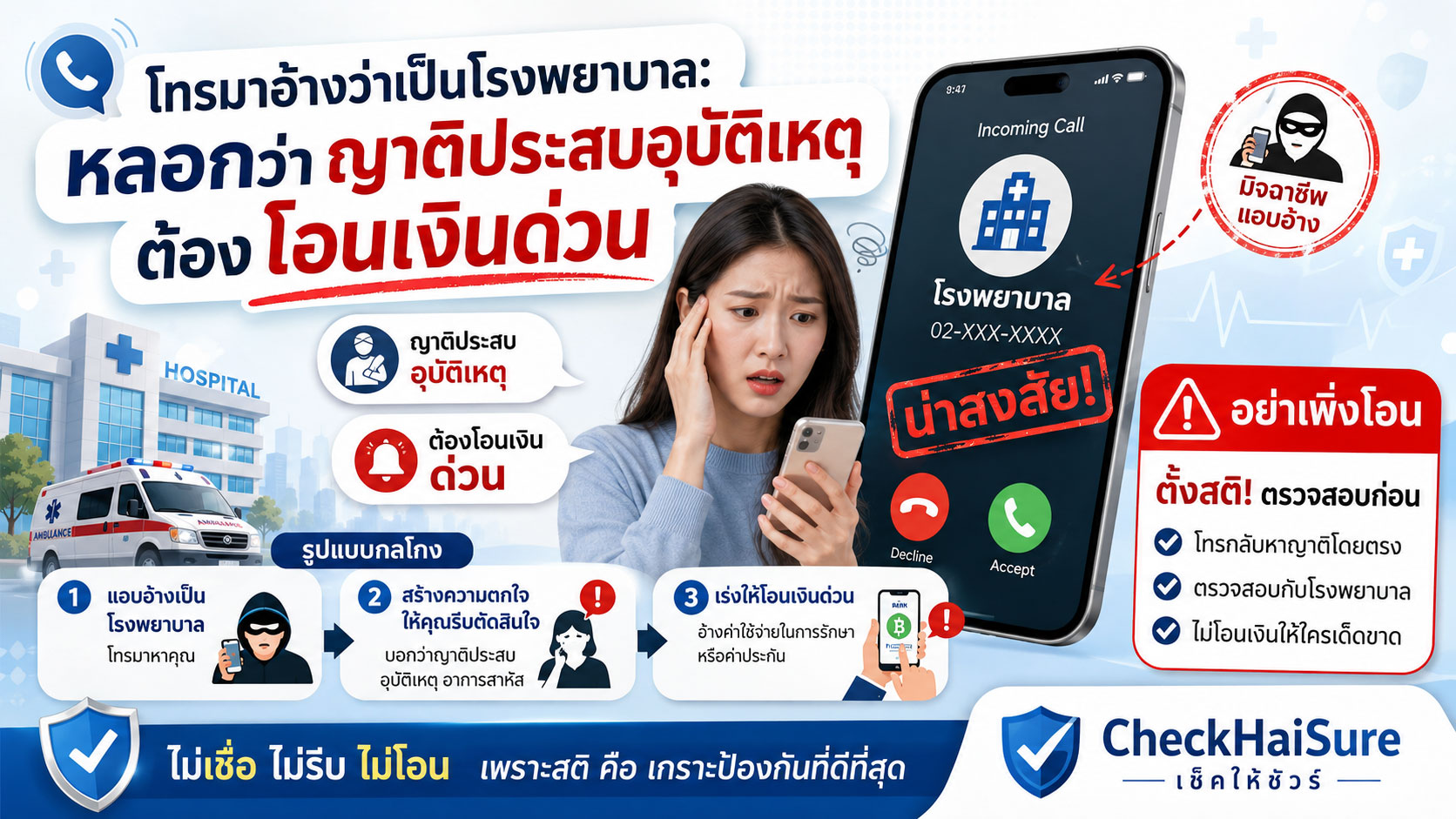
“คุณเป็นญาติของคุณ…ใช่ไหมคะ”
“ตอนนี้เขาประสบอุบัติเหตุ อยู่ที่โรงพยาบาล”
“ต้องรีบผ่าตัดด่วน”
“ต้องโอนเงินมัดจำก่อน เจ้าหน้าที่ถึงจะดำเนินการได้”
“ถ้าช้ากว่านี้ อาการอาจแย่ลง”
ถ้าได้รับสายแบบนี้ คนส่วนใหญ่คงตกใจทันที
เพราะไม่มีใครอยากได้ยินว่าคนในครอบครัว ลูกหลาน พ่อแม่ คู่รัก หรือเพื่อนสนิทกำลังอยู่ในอันตราย
ในวินาทีนั้น เราอาจไม่ได้คิดเรื่องมิจฉาชีพก่อน
เราอาจคิดแค่ว่า
“เขาเป็นอะไรไหม”
“อยู่โรงพยาบาลไหน”
“ต้องช่วยยังไง”
“ถ้าเราไม่โอนตอนนี้ จะเกิดอะไรขึ้น”
“ถ้าเสียเวลาเช็กก่อน จะช้าไปไหม”
มิจฉาชีพเข้าใจจุดนี้ดี
เขาจึงใช้เรื่อง “อุบัติเหตุ” “โรงพยาบาล” “ผ่าตัดด่วน” หรือ “ค่ารักษาฉุกเฉิน” มาแตะความรักและความห่วงของเรา
เพราะถ้าทำให้เราตกใจพอ เราอาจรีบโอนเงินก่อนจะทันตรวจสอบว่าคนที่โทรมาคือใคร
จำไว้ว่า
ถ้าเป็นเรื่องชีวิตคนใกล้ตัว ยิ่งต้องโทรเช็กกับเบอร์เดิมหรือโรงพยาบาลจริงก่อนโอน
ทำไมกลโกงแบบนี้ถึงได้ผลกับหลายคน
เพราะมันไม่ได้เริ่มจากความโลภ
ไม่ได้เริ่มจากอยากได้กำไร
ไม่ได้เริ่มจากอยากได้รางวัล
ไม่ได้เริ่มจากอยากซื้อของราคาถูก
และไม่ได้เริ่มจากอยากได้เงินคืน
แต่มันเริ่มจากความห่วง
ความห่วงทำให้คนตัดสินใจเร็วมาก
ถ้ามีคนบอกว่าญาติเราเจ็บหนัก เราอาจยอมทำแทบทุกอย่างเพื่อช่วยให้ทันเวลา
มิจฉาชีพจึงไม่ต้องใช้เรื่องซับซ้อนมาก
แค่พูดให้เหมือนมีเหตุฉุกเฉิน
ให้มีชื่อคนใกล้ตัวสักชื่อ
ให้มีเสียงร้องไห้หรือเสียงวุ่นวายในพื้นหลัง
ให้มีคนพูดเหมือนเจ้าหน้าที่
ให้มีคำว่า “ต้องรีบ”
ให้มีคำว่า “ผ่าตัด”
ให้มีคำว่า “มัดจำ”
ให้มีคำว่า “ถ้าไม่โอนตอนนี้จะไม่ทัน”
เพียงเท่านี้ คนที่กำลังห่วงก็อาจเข้าสู่ภาวะรีบช่วยก่อน ค่อยเช็กทีหลัง
และนั่นคือสิ่งที่มิจฉาชีพต้องการ
รูปแบบที่มักเจอในสายโรงพยาบาลปลอม
สายลักษณะนี้อาจมาได้หลายแบบ
บางครั้งคนโทรมาอ้างว่าเป็นเจ้าหน้าที่โรงพยาบาล
บางครั้งอ้างว่าเป็นพยาบาล
เจ้าหน้าที่ห้องฉุกเฉิน
เจ้าหน้าที่การเงิน
เจ้าหน้าที่ประกัน
คนขับรถพยาบาล
ตำรวจที่นำคนเจ็บส่งโรงพยาบาล
หรือคนใจดีที่พบผู้บาดเจ็บแล้วช่วยโทรหา
จากนั้นจะเล่าเหตุการณ์ที่ทำให้ตกใจ เช่น
ญาติประสบอุบัติเหตุรถชน
ลูกหลานตกบันไดหรือหมดสติ
คู่รักถูกรถเฉี่ยว
พ่อแม่เป็นลมกะทันหัน
คนในบ้านมีอาการหนัก
หรือมีผู้บาดเจ็บที่มีเบอร์เราอยู่ในมือถือ
แล้วเรื่องจะค่อยๆ ถูกเร่ง
“ต้องจ่ายค่าห้องฉุกเฉิน”
“ต้องโอนค่ามัดจำผ่าตัด”
“ต้องชำระค่ารถพยาบาลก่อน”
“ต้องจ่ายค่ายาก่อน”
“ต้องโอนเงินให้ญาติเซ็นรับผิดชอบแทน”
“ระบบรับเฉพาะโอนตอนนี้”
ฟังดูเหมือนเป็นสถานการณ์จริงและเร่งด่วน
แต่ถ้าปลายทางของเรื่องคือให้โอนเงินเข้าบัญชีที่ตรวจสอบไม่ได้ ให้หยุดก่อนเสมอ
คำว่า “ด่วน” ทำให้เราข้ามขั้นตอนตรวจสอบ
มิจฉาชีพมักใช้คำว่า “ด่วน” ซ้ำๆ
เพราะเขารู้ว่า ถ้าเราได้เวลาคิด เราอาจโทรหาคนที่ถูกอ้างชื่อ
ถ้าเราได้เวลาถามคนในบ้าน เราอาจรู้ว่าญาติยังอยู่ดี
ถ้าเราได้เวลาโทรหาโรงพยาบาลจริง เราอาจรู้ว่าไม่มีผู้ป่วยชื่อนั้น
ถ้าเราได้ดูเลขบัญชี เราอาจเห็นว่าไม่ใช่ชื่อโรงพยาบาล
ถ้าเราได้ตั้งสติ เราอาจเริ่มสงสัยว่าทำไมโรงพยาบาลต้องให้โอนเข้าบัญชีส่วนตัว
ดังนั้นเขาจึงเร่งให้เราตัดสินใจในสาย
“ต้องโอนตอนนี้”
“รอไม่ได้”
“หมอรออยู่”
“ถ้าไม่โอน จะเข้าห้องผ่าตัดไม่ได้”
“ถ้าช้า คนเจ็บอาจเป็นอันตราย”
คำพูดเหล่านี้อาจทำให้เรารู้สึกผิดถ้าไม่รีบทำตาม
แต่เรื่องฉุกเฉินจริงควรตรวจสอบได้
และการตรวจสอบไม่ใช่การไม่ช่วยเหลือ
การตรวจสอบคือการทำให้ความช่วยเหลือไปถูกที่ ไม่ตกไปอยู่กับมิจฉาชีพ
ทำไมต้องเช็กกับเบอร์เดิมของคนที่ถูกอ้างชื่อ
ถ้ามีคนโทรมาบอกว่าญาติประสบอุบัติเหตุ สิ่งแรกที่ควรทำคือพยายามติดต่อคนที่ถูกอ้างชื่อผ่านช่องทางเดิม
โทรหาเบอร์เดิม
ส่งข้อความในแชทเดิม
โทรหาคนที่อยู่กับเขา
โทรหาเพื่อนร่วมงาน
โทรหาคนในบ้าน
หรือโทรหาคนใกล้ตัวที่น่าจะรู้ว่าเขาอยู่ที่ไหน
อย่าใช้เบอร์ที่คนปลายสายให้มาเป็นหลัก
เพราะมิจฉาชีพอาจเตรียมคนอีกคนไว้รับสาย
อย่าเพิ่ม LINE ที่เขาส่งมา
เพราะอาจเป็นบัญชีปลอม
อย่าดูแค่รูปโปรไฟล์หรือชื่อแชท
เพราะสิ่งเหล่านี้ปลอมได้
การเช็กผ่านช่องทางเดิมเป็นวิธีง่ายแต่สำคัญมาก
ถ้าเขาปลอดภัย คุณจะรู้ทันทีว่าสายที่โทรมาเป็นเรื่องหลอก
ถ้าติดต่อไม่ได้จริง ค่อยตรวจสอบกับโรงพยาบาลหรือหน่วยงานที่เกี่ยวข้องผ่านช่องทางทางการต่อไป
โรงพยาบาลจริงควรตรวจสอบได้ ไม่ใช่ให้โอนเข้าบัญชีแปลกๆ
ถ้าอีกฝ่ายอ้างว่าโทรจากโรงพยาบาล ให้ถามรายละเอียดที่ตรวจสอบได้
ชื่อโรงพยาบาล
แผนกที่ติดต่อ
ชื่อผู้ป่วย
เวลาที่นำส่ง
อาการเบื้องต้น
ชื่อเจ้าหน้าที่
เบอร์โทรกลางของโรงพยาบาล
และช่องทางติดต่อกลับที่เป็นทางการ
จากนั้นให้วางสาย แล้วค้นหาเบอร์โรงพยาบาลด้วยตัวเอง
โทรเข้าเบอร์กลางของโรงพยาบาล
หรือใช้เว็บไซต์ทางการของโรงพยาบาล
ไม่ใช่โทรกลับเบอร์ที่คนปลายสายให้มาอย่างเดียว
ถ้าเป็นโรงพยาบาลจริง ควรมีระบบตรวจสอบผู้ป่วยหรือช่องทางให้สอบถาม
แต่ถ้าคนปลายสายไม่ยอมให้วางสาย ไม่ให้โทรเช็กเอง หรือบอกว่าต้องโอนก่อนค่อยคุยรายละเอียด ให้สงสัยไว้ก่อน
โดยเฉพาะถ้าบัญชีรับเงินเป็นชื่อบุคคลธรรมดา หรือชื่อที่ไม่ตรงกับโรงพยาบาล
ระวังบัญชีปลายทางที่ไม่ใช่ชื่อโรงพยาบาล
จุดสำคัญมากคือบัญชีที่ให้โอนเงิน
ถ้าคนปลายสายอ้างว่าต้องจ่ายค่ารักษาหรือค่าผ่าตัด แต่ให้โอนเข้าบัญชีส่วนตัว ให้หยุดทันที
เช่น
ชื่อบัญชีเป็นชื่อคนทั่วไป
ชื่อบัญชีไม่ตรงกับโรงพยาบาล
ชื่อบัญชีเป็นบริษัทที่ไม่เกี่ยวข้อง
บอกว่าเป็นบัญชีของพยาบาล
บอกว่าเป็นบัญชีของหมอ
บอกว่าเป็นบัญชีของเจ้าหน้าที่การเงิน
บอกว่าเป็นบัญชีสำรองของโรงพยาบาล
หรือบอกว่าเป็นบัญชีสำหรับเคสฉุกเฉิน
เรื่องค่ารักษาพยาบาลจริงควรมีช่องทางชำระเงินที่ตรวจสอบได้
ถ้าต้องชำระจริง ควรตรวจสอบกับโรงพยาบาลโดยตรงก่อน
อย่าให้คำว่า “ฉุกเฉิน” ทำให้เราโอนเงินเข้าบัญชีที่ไม่รู้ว่าเป็นของใคร
สัญญาณเตือนของสายโรงพยาบาลปลอม
หากมีคนโทรมาอ้างว่าเป็นโรงพยาบาลหรือเจ้าหน้าที่ที่เกี่ยวกับเหตุฉุกเฉิน ให้ระวังมากเป็นพิเศษเมื่อมีพฤติกรรมเหล่านี้
บอกว่าญาติประสบอุบัติเหตุ แต่ให้ข้อมูลไม่ชัดเจน
เร่งให้โอนเงินทันที
บอกว่าถ้าไม่โอน จะรักษาไม่ได้
ให้โอนเข้าบัญชีบุคคลธรรมดา
ไม่ยอมให้คุณวางสายไปตรวจสอบ
บอกว่าห้ามโทรหาคนเจ็บ
บอกว่าโทรศัพท์คนเจ็บเสียหรือใช้ไม่ได้
บอกว่าไม่สามารถเปิดเผยรายละเอียด แต่ต้องโอนก่อน
ไม่บอกชื่อโรงพยาบาลที่ชัดเจน
ให้เพิ่ม LINE เพื่อรับเลขบัญชี
ส่งเอกสารหรือรูปภาพที่ดูน่ากลัวผ่านแชท
ขอเลขบัตรประชาชนของคุณ
ขอข้อมูลบัตรเครดิต
ขอ OTP เพื่อยืนยันการชำระเงิน
หรือบอกว่าต้องจ่ายค่ามัดจำผ่านช่องทางพิเศษเท่านั้น
ถ้ามีหลายข้อในนี้ ให้หยุดก่อน
อย่าโอนเงินทันที
อย่าให้ข้อมูลส่วนตัว
อย่าให้ OTP
และอย่าอยู่ในสายเพราะเขาบอกว่าคนเจ็บกำลังรอเงินของคุณ
ระวังเสียงร้อง เสียงวุ่นวาย หรือคนที่พูดเหมือนญาติ
บางสายอาจทำให้ดูสมจริงขึ้นด้วยเสียงประกอบ
เช่น เสียงคนร้องไห้
เสียงห้องฉุกเฉิน
เสียงไซเรน
เสียงคนตะโกน
เสียงหมอหรือพยาบาลคุยกัน
หรือเสียงคนพูดเบาๆ เหมือนญาติที่บาดเจ็บ
บางกรณีอาจมีคนพูดสั้นๆ คล้ายเสียงคนรู้จัก เช่น
“แม่ ช่วยด้วย”
“พี่ โอนให้หน่อย”
“ผมเจ็บมาก”
“โทรศัพท์ผมพัง”
เสียงเหล่านี้ทำให้ใจเราเสียได้มาก
แต่เสียงในสายไม่ใช่หลักฐานเสมอไป
อาจเป็นคนแสดง
อาจเป็นเสียงอัด
อาจเป็นเสียงที่ทำให้คล้าย
หรืออาจเป็นการพูดให้เราเติมความกลัวเอง
ถ้าได้ยินเสียงคล้ายคนในครอบครัว อย่าเพิ่งเชื่อทันที
ให้วางสาย แล้วโทรกลับเบอร์เดิมของเขา หรือโทรหาคนใกล้ตัวที่อยู่กับเขา
อย่าให้ความรู้สึกผิดบังคับให้โอน
มิจฉาชีพอาจพูดให้เรารู้สึกผิด
เช่น
“ถ้าไม่รีบโอน คนเจ็บอาจเสียโอกาสรักษา”
“ตอนนี้รอญาติตัดสินใจอยู่”
“คุณเป็นคนเดียวที่ติดต่อได้”
“ถ้าไม่ช่วยตอนนี้ อาการอาจแย่ลง”
“คนเจ็บบอกให้โทรหาคุณ”
คำพูดเหล่านี้ทำให้เรารู้สึกว่าทุกอย่างขึ้นอยู่กับเรา
และถ้าเราไม่โอน เราอาจเป็นต้นเหตุของความเสียหาย
แต่ต้องจำไว้ว่า มิจฉาชีพใช้ความรักและความรับผิดชอบของเราเป็นเครื่องมือ
การตรวจสอบก่อนโอน ไม่ได้แปลว่าเราไม่ห่วง
มันแปลว่าเราอยากช่วยให้ถูกคน ถูกที่ และถูกทาง
ถ้าได้รับสายแบบนี้ ควรทำอย่างไร
สิ่งแรกคือ หายใจและตั้งหลัก
อย่าเพิ่งโอนเงิน
อย่าเพิ่งให้ข้อมูลบัตร
อย่าเพิ่งให้ OTP
อย่าเพิ่งเพิ่ม LINE
อย่าเพิ่งกดลิงก์
และอย่าเชื่อทุกอย่างเพราะอีกฝ่ายพูดว่าด่วน
ให้ถามข้อมูลพื้นฐานเท่าที่จำเป็น แล้ววางสายเพื่อตรวจสอบ
เช่น
ผู้ป่วยชื่ออะไร
อยู่โรงพยาบาลไหน
แผนกอะไร
เจ้าหน้าที่ชื่ออะไร
เบอร์กลางของโรงพยาบาลคืออะไร
เกิดเหตุที่ไหน
นำส่งเมื่อเวลาใด
จากนั้นติดต่อคนที่ถูกอ้างชื่อผ่านเบอร์เดิม
ถ้าติดต่อไม่ได้ ให้โทรหาคนใกล้ตัวของเขา
และหากยังน่าสงสัย ให้โทรเข้าโรงพยาบาลผ่านเบอร์ทางการที่คุณค้นหาเอง
อย่าใช้เลขบัญชีหรือช่องทางที่คนปลายสายส่งมาเป็นหลักในการตัดสินใจ
ถ้าเผลอโอนเงินไปแล้ว
ถ้าคุณเผลอโอนเงินไปแล้ว ให้หยุดทันที
อย่าโอนเพิ่ม
มิจฉาชีพอาจบอกว่า
“ยังเหลือค่าห้องผ่าตัด”
“ต้องจ่ายค่ายาเพิ่ม”
“ต้องโอนค่าประกันอุปกรณ์”
“ยอดแรกเป็นแค่มัดจำ”
“ถ้าไม่จ่ายต่อ การรักษาจะหยุด”
อย่าเชื่อทันที
ให้วางสาย แล้วตรวจสอบกับโรงพยาบาลจริงและคนในครอบครัว
เก็บหลักฐานทุกอย่าง เช่น
เบอร์โทร
ชื่อที่อีกฝ่ายใช้
ชื่อโรงพยาบาลที่ถูกอ้าง
เลขบัญชีปลายทาง
ชื่อบัญชี
สลิปโอนเงิน
แชท
ข้อความ
ลิงก์
เวลาที่เกิดเหตุ
จำนวนเงิน
และคำพูดที่ใช้เร่งหรือขู่
จากนั้นติดต่อธนาคารผ่านช่องทางทางการโดยเร็ว
และแจ้งเหตุผ่านหน่วยงานหรือแพลตฟอร์มที่เกี่ยวข้อง
อย่าลบหลักฐานเพราะอาย
การถูกหลอกด้วยความห่วงคนในครอบครัวเป็นเรื่องที่เกิดขึ้นได้กับทุกคน
สิ่งสำคัญคือหยุดเร็วและไม่โอนเพิ่ม
คุยกับคนในบ้านไว้ก่อนว่า ถ้าเกิดเหตุจริงต้องติดต่อใคร
กลโกงนี้ป้องกันได้มากขึ้น ถ้าครอบครัวมีข้อตกลงกันล่วงหน้า
อาจตั้งกติกาง่ายๆ เช่น
ถ้ามีคนโทรมาบอกว่าใครประสบอุบัติเหตุ ให้โทรเช็กกับเบอร์เดิมก่อน
ถ้าโทรไม่ติด ให้โทรหาคนใกล้ตัวของคนนั้น
ถ้าบอกว่าอยู่โรงพยาบาล ให้โทรเข้าเบอร์กลางโรงพยาบาลที่หาเอง
ถ้าให้โอนเงินเข้าบัญชีบุคคล ให้หยุด
ถ้าขอ OTP ให้ไม่ให้
ถ้าให้เพิ่ม LINE เพื่อคุยเรื่องเงิน ให้ไม่ทำตามทันที
ถ้าคนปลายสายเร่งมากผิดปกติ ให้สงสัยไว้ก่อน
และถ้าไม่แน่ใจ ให้โทรหาคนในบ้านอีกคนเพื่อช่วยตรวจสอบ
ครอบครัวอาจตั้ง “คำถามลับ” หรือ “รหัสครอบครัว” สำหรับเหตุฉุกเฉินก็ได้
เช่น ถ้ามีคนอ้างว่าเป็นลูกหลาน ให้ถามเรื่องที่รู้กันในบ้านเท่านั้น
คำตอบไม่ควรเป็นข้อมูลที่หาได้จากโซเชียลมีเดีย
ข้อตกลงเล็กๆ แบบนี้อาจช่วยให้ทุกคนมีเวลาตั้งสติในวันที่เกิดสายหลอกจริง
อย่าโทษตัวเองถ้าคุณตกใจเมื่อได้ยินว่าญาติเกิดอุบัติเหตุ
ถ้าคุณเคยเจอสายแบบนี้แล้วตกใจ นั่นไม่ได้แปลว่าคุณไม่รอบคอบ
มันแปลว่าคุณเป็นห่วงคนที่คุณรัก
ไม่มีใครอยากให้ลูกหลานเจ็บ
ไม่มีใครอยากให้พ่อแม่เกิดอุบัติเหตุ
ไม่มีใครอยากให้คู่รักอยู่ในห้องฉุกเฉิน
ไม่มีใครอยากให้เพื่อนสนิทรอความช่วยเหลือ
และไม่มีใครอยากพลาดโอกาสช่วยคนสำคัญ
มิจฉาชีพเลือกใช้เรื่องอุบัติเหตุ เพราะรู้ว่าความห่วงทำให้คนรีบตัดสินใจได้จริง
สิ่งสำคัญไม่ใช่การไม่เคยกลัว
แต่คือเมื่อได้ยินเรื่องร้ายแรง ให้หยุดก่อน โอนทีหลังไม่ได้แปลว่าไม่ช่วย
การเช็กก่อน อาจเป็นสิ่งที่ช่วยทั้งคนที่เรารัก และช่วยป้องกันไม่ให้เราตกเป็นเหยื่อ
ประโยคที่ควรจำ: เรื่องฉุกเฉินยิ่งต้องเช็กก่อนโอน
ถ้าต้องจำประโยคเดียวจากบทความนี้ ขอให้จำว่า
เรื่องฉุกเฉินยิ่งต้องเช็กก่อนโอน
ถ้ามีคนบอกว่าญาติประสบอุบัติเหตุ ให้โทรหาเบอร์เดิมก่อน
ถ้าบอกว่าอยู่โรงพยาบาล ให้โทรหาโรงพยาบาลจริงก่อน
ถ้าบอกว่าต้องโอนเงินด่วน ให้ตรวจชื่อบัญชีก่อน
ถ้าให้โอนเข้าบัญชีบุคคล ให้หยุด
ถ้าขอ OTP ให้ไม่ให้
ถ้าห้ามวางสาย ให้ยิ่งต้องวาง
และถ้าเขาเร่งจนไม่ให้คุณตรวจสอบ ให้สงสัยไว้ก่อนว่าเขาอาจไม่ใช่คนที่กำลังช่วยคุณ
สรุป: ความห่วงคนที่เรารัก ไม่ควรถูกใช้เป็นเครื่องมือหลอกเงิน
กลโกงโรงพยาบาลปลอมอันตราย เพราะมันไม่เล่นกับความโลภ แต่เล่นกับความรัก
มันทำให้เรากลัวว่าคนที่เรารักกำลังเจ็บ
ทำให้เรารู้สึกว่าต้องช่วยทันที
ทำให้เรารู้สึกผิดถ้าช้า
และทำให้เราอยากโอนเงินก่อนจะคิดเรื่องอื่น
แต่ในสถานการณ์แบบนี้ สิ่งที่ควรทำคือหยุดก่อน
อย่าโอนเงินทันที
อย่าให้ OTP
อย่าให้ข้อมูลบัตร
อย่ากดลิงก์
อย่าเพิ่ม LINE ที่เขาส่งมา
อย่าโอนเข้าบัญชีบุคคล
อย่าอยู่ในสายเพราะเขาบอกว่าห้ามวาง
ให้วางสาย แล้วโทรหาคนที่ถูกอ้างชื่อผ่านเบอร์เดิม
ถ้าติดต่อไม่ได้ ให้โทรหาคนใกล้ตัวของเขา
ถ้าอ้างว่าอยู่โรงพยาบาล ให้โทรเข้าเบอร์กลางโรงพยาบาลที่หาเอง
ถ้าเป็นเรื่องจริง ยังมีช่องทางจริงให้ตรวจสอบและช่วยเหลือ
แต่ถ้าเป็นมิจฉาชีพ การหยุดเช็กก่อนโอน อาจช่วยไม่ให้ความห่วงของเรากลายเป็นเงินที่หายไป
A Call Claims to Be from a Hospital: Beware of Scammers Saying a Relative Had an Accident and Urgently Needs Money
“Are you a relative of…?”
“They had an accident and are now at the hospital.”
“They need urgent surgery.”
“You must transfer a deposit before the staff can proceed.”
“If you are too slow, their condition may get worse.”
If you receive a call like this, most people would panic immediately.
No one wants to hear that a family member, child, parent, partner, or close friend is in danger.
In that moment, you may not think about scammers first.
You may only think:
“Are they okay?”
“Which hospital are they at?”
“How can I help?”
“What if I do not transfer money now?”
“What if checking first takes too long?”
Scammers understand this very well.
They use words like “accident,” “hospital,” “urgent surgery,” and “emergency medical fee” to touch your love and concern for the people close to you.
Because if they can make you panic enough, you may transfer money before verifying who is really calling.
Remember this:
If it involves the life of someone close to you, you should verify through their usual number or the real hospital before transferring money.
Why This Scam Works on Many People
This scam does not begin with greed.
It does not begin with wanting profit.
It does not begin with wanting a prize.
It does not begin with wanting cheap products.
And it does not begin with wanting a refund.
It begins with concern.
Concern can make people decide very quickly.
If someone says your relative is badly injured, you may be willing to do almost anything to help in time.
Scammers do not need a complicated story.
They only need to make the situation feel urgent.
They may use the name of someone close to you.
Add crying or chaotic sounds in the background.
Speak like hospital staff.
Use the word “urgent.”
Use the word “surgery.”
Use the word “deposit.”
And say, “If you do not transfer now, it may be too late.”
That may be enough to make someone who is worried choose to help first and check later.
That is exactly what scammers want.
Common Forms of Fake Hospital Calls
This type of call can come in many forms.
Sometimes the caller claims to be hospital staff.
Sometimes they claim to be a nurse.
Emergency room staff.
A finance department officer.
An insurance officer.
An ambulance driver.
A police officer who brought the injured person to the hospital.
Or a kind stranger who found the injured person and called for help.
Then they describe a frightening situation, such as:
A relative was in a car accident.
A child fell down the stairs or lost consciousness.
A partner was hit by a vehicle.
A parent suddenly fainted.
Someone at home is in serious condition.
Or an injured person had your number saved in their phone.
Then the story becomes urgent.
“You need to pay the emergency room fee.”
“You need to transfer a surgery deposit.”
“You need to pay for the ambulance first.”
“You need to pay for medicine first.”
“You need to transfer money so a relative can approve the treatment.”
“The system only accepts transfer right now.”
It may sound like a real and urgent situation.
But if the story ends with transferring money to an account that cannot be verified, stop first.
The Word “Urgent” Makes People Skip Verification
Scammers often repeat the word “urgent.”
They know that if you have time to think, you may call the person they mentioned.
If you have time to ask someone at home, you may find out your relative is safe.
If you have time to call the real hospital, you may find out there is no patient by that name.
If you have time to check the account number, you may notice it is not under the hospital’s name.
If you have time to calm down, you may start wondering why a hospital is asking you to transfer money to a personal account.
So they push you to decide during the call.
“You must transfer now.”
“We cannot wait.”
“The doctor is waiting.”
“They cannot enter surgery unless you pay.”
“If you are too slow, the patient may be in danger.”
These words may make you feel guilty if you do not act quickly.
But a real emergency should still be verifiable.
Checking first does not mean you refuse to help.
Checking first means you are making sure your help goes to the right person, the right place, and the right channel.
Why You Should Check with the Person’s Usual Number First
If someone calls and says your relative had an accident, the first thing to do is try to contact the person through their usual channel.
Call their usual phone number.
Message their usual chat account.
Call someone who may be with them.
Call a coworker.
Call someone at home.
Or call someone close to them who may know where they are.
Do not rely mainly on the phone number given by the caller.
Scammers may have another person prepared to answer.
Do not add the LINE account they send.
It may be fake.
Do not trust only a profile picture or chat name.
These can be faked.
Checking through an existing channel is simple but very important.
If the person is safe, you will know immediately that the call was a scam.
If you truly cannot reach them, then verify with the hospital or relevant agency through official channels.
A Real Hospital Should Be Verifiable, Not Ask You to Transfer to a Strange Account
If the caller claims to be from a hospital, ask for details that can be verified.
Hospital name
Department
Patient name
Time of arrival
Initial condition
Staff name
Hospital main phone number
And official callback channel
Then hang up and search for the hospital number yourself.
Call the hospital’s main number.
Use the hospital’s official website.
Do not rely only on the number given by the caller.
If it is a real hospital, there should be a way to check patient information or ask for guidance.
But if the caller refuses to let you hang up, refuses to let you check, or says you must transfer first before they can explain details, treat it as suspicious.
This is especially true if the receiving account is a personal account or does not match the hospital’s name.
Be Careful If the Receiving Account Is Not Under the Hospital’s Name
The destination account is extremely important.
If the caller says you must pay medical fees or surgery fees but asks you to transfer money to a personal account, stop immediately.
For example:
The account name is an individual’s name.
The account name does not match the hospital.
The account name belongs to an unrelated company.
They say it is a nurse’s account.
They say it is a doctor’s account.
They say it is the finance officer’s account.
They say it is a backup hospital account.
Or they say it is an account for emergency cases.
Real medical payments should have verifiable payment channels.
If payment is truly required, verify directly with the hospital first.
Do not let the word “emergency” make you transfer money to an account whose owner you do not know.
Warning Signs of a Fake Hospital Call
If someone calls claiming to be from a hospital or emergency service, be especially careful if they do any of the following:
They say a relative had an accident but provide unclear details.
They pressure you to transfer money immediately.
They say treatment cannot proceed unless you transfer money.
They ask you to transfer to a personal bank account.
They refuse to let you hang up and verify.
They tell you not to call the injured person.
They say the injured person’s phone is broken or unavailable.
They say they cannot disclose details but still require payment first.
They do not clearly name the hospital.
They ask you to add LINE to receive the account number.
They send frightening documents or images through chat.
They ask for your national ID number.
They ask for credit card information.
They ask for an OTP to confirm payment.
Or they say you must pay through a special channel only.
If several of these warning signs appear, stop first.
Do not transfer money immediately.
Do not share personal information.
Do not provide OTPs.
And do not stay on the call just because they say the injured person is waiting for your money.
Beware of Crying, Chaotic Sounds, or a Voice That Sounds Like Your Relative
Some calls may sound more realistic because of background audio.
For example:
Crying sounds
Emergency room noise
Siren sounds
People shouting
Doctors or nurses talking
Or a weak voice that sounds like an injured relative
In some cases, someone may speak briefly in a voice that sounds familiar:
“Mom, please help.”
“Please transfer the money.”
“I’m badly hurt.”
“My phone is broken.”
These sounds can shake you emotionally.
But a voice on the call is not always proof.
It may be someone acting.
It may be recorded audio.
It may be a voice made to sound similar.
Or it may be designed to make your fear fill in the missing details.
If you hear a voice that sounds like someone in your family, do not believe it immediately.
Hang up and call their usual number, or contact someone close to them who may be with them.
Do Not Let Guilt Force You to Transfer Money
Scammers may try to make you feel guilty.
For example:
“If you do not transfer quickly, the patient may lose the chance to be treated.”
“We are waiting for a relative’s decision.”
“You are the only person we can contact.”
“If you do not help now, their condition may worsen.”
“The injured person asked us to call you.”
These words make you feel as if everything depends on you.
And if you do not transfer, you may feel responsible for what happens.
But remember: scammers use your love and sense of responsibility as tools.
Checking before transferring does not mean you do not care.
It means you want to help the right person, in the right place, through the right channel.
What Should You Do If You Receive This Kind of Call?
The first step is to breathe and steady yourself.
Do not transfer money immediately.
Do not provide card information.
Do not provide OTPs.
Do not add LINE accounts.
Do not click links.
And do not believe everything just because the caller says it is urgent.
Ask only the basic details needed, then hang up to verify.
For example:
What is the patient’s name?
Which hospital are they at?
Which department?
What is the staff member’s name?
What is the hospital’s main phone number?
Where did the incident happen?
What time were they brought in?
Then contact the person they mentioned through their usual number.
If you cannot reach them, call someone close to them.
If you still need to check further, call the hospital through an official number you find yourself.
Do not use the account number or contact channel sent by the caller as the basis for your decision.
If You Already Transferred Money
If you already transferred money, stop immediately.
Do not transfer more.
Scammers may say:
“There is still a surgery room fee.”
“You need to pay additional medicine fees.”
“You need to pay equipment insurance.”
“The first amount was only a deposit.”
“If you do not continue paying, treatment will stop.”
Do not believe this immediately.
Hang up, then verify with the real hospital and your family.
Save all evidence, such as:
Phone number
Name used by the caller
Hospital name they claimed
Destination account number
Account name
Transfer slip
Chat messages
Text messages
Links
Time of the incident
Amount transferred
And words they used to pressure or threaten you
Then contact your bank through official channels as soon as possible.
Report the incident through relevant authorities or platforms.
Do not delete evidence because you feel embarrassed.
Being tricked through concern for a family member can happen to anyone.
The most important thing is to stop quickly and not transfer more.
Talk with Your Family About Emergency Contact Rules Before Anything Happens
This scam becomes easier to prevent when families have simple rules in advance.
You can agree on things like:
If someone calls saying a family member had an accident, call that person’s usual number first.
If that person cannot be reached, call someone close to them.
If the caller says they are at a hospital, call the hospital’s main number that you find yourself.
If they ask you to transfer to a personal account, stop.
If they ask for an OTP, do not provide it.
If they ask you to add LINE to discuss payment, do not follow immediately.
If the caller is unusually urgent, treat it as suspicious.
And if you are unsure, call another family member to help check.
Families can also create a “secret question” or “family code” for emergencies.
For example, if someone claims to be your child or relative, ask something only your family would know.
The answer should not be information easily found on social media.
Small agreements like these can help everyone stay calm if a fake emergency call happens.
Do Not Blame Yourself If You Panicked After Hearing That a Relative Had an Accident
If you have ever received a call like this and panicked, that does not mean you were careless.
It means you care about someone you love.
No one wants their child to be hurt.
No one wants their parents to have an accident.
No one wants their partner to be in an emergency room.
No one wants a close friend waiting for help.
And no one wants to miss the chance to help someone important.
Scammers use accident stories because they know concern can make people act quickly.
The key is not to never feel afraid.
The key is to stop first when you hear something serious.
Transferring money later does not mean you are refusing to help.
Checking first may protect both the person you love and yourself.
A Sentence to Remember: Emergencies Should Be Checked Before You Transfer Money
If you remember only one sentence from this article, remember this:
The more urgent the emergency sounds, the more important it is to verify before transferring money.
If someone says your relative had an accident, call their usual number first.
If they say your relative is at a hospital, call the real hospital first.
If they say you must transfer urgently, check the account name first.
If they ask you to transfer to a personal account, stop.
If they ask for an OTP, do not provide it.
If they tell you not to hang up, that is even more reason to hang up.
And if they pressure you so much that you cannot verify, be suspicious that they may not be trying to help.
Conclusion: Concern for Loved Ones Should Not Be Used as a Tool to Steal Money
Fake hospital scams are dangerous because they do not play with greed.
They play with love.
They make you fear that someone you love is hurt.
They make you feel that you must help immediately.
They make you feel guilty if you wait.
And they make you want to transfer money before thinking about anything else.
In this situation, the best first step is to stop.
Do not transfer money immediately.
Do not provide OTPs.
Do not provide card information.
Do not click links.
Do not add the LINE account they send.
Do not transfer to a personal account.
Do not stay on the call just because they tell you not to hang up.
Hang up and call the person they mentioned through their usual number.
If you cannot reach them, call someone close to them.
If they claim the person is at a hospital, call the hospital’s main number that you find yourself.
If the emergency is real, real channels can still verify it and help.
But if it is a scam, stopping to check before transferring may prevent your concern from becoming money lost to criminals.

Leave a Reply
You must be logged in to post a comment.