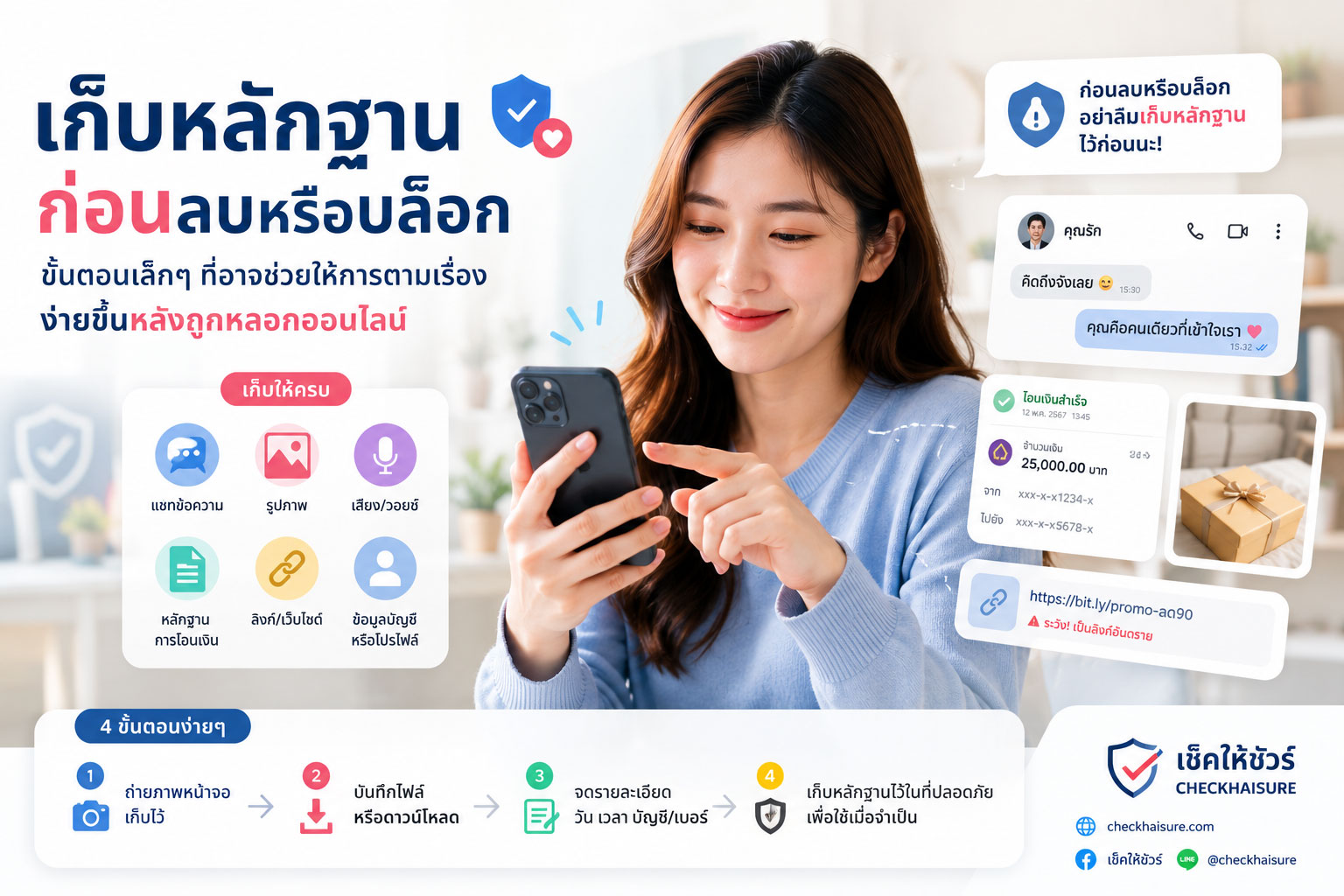
เมื่อเริ่มรู้ตัวว่าอาจถูกหลอกออนไลน์ สิ่งแรกที่หลายคนอยากทำคือ “ลบทุกอย่าง” หรือ “บล็อกทันที”
ลบแชท
ลบรูป
ลบลิงก์
บล็อกบัญชี
ลบเพื่อน
ออกจากกลุ่ม
ปิดการสนทนา
และพยายามไม่เห็นอะไรที่ทำให้รู้สึกแย่อีก
ความรู้สึกแบบนี้เข้าใจได้มาก
เพราะเมื่อรู้ว่าถูกหลอก เราอาจรู้สึกโกรธ กลัว อาย เสียใจ หรือไม่อยากเห็นข้อความของมิจฉาชีพอีกแม้แต่นิดเดียว
แต่ก่อนจะลบหรือบล็อก สิ่งหนึ่งที่ควรทำให้ได้ก่อนคือ
เก็บหลักฐาน
เพราะหลักฐานที่อยู่ในแชท ลิงก์ สลิป เลขบัญชี รูปโปรไฟล์ หรือข้อมูลการติดต่อ อาจเป็นสิ่งสำคัญในการแจ้งธนาคาร แจ้งแพลตฟอร์ม แจ้งความ หรือขอความช่วยเหลือในขั้นตอนต่อไป
การลบหรือบล็อกอาจทำให้ใจเราสบายขึ้นในทันที
แต่ถ้าลบก่อนเก็บหลักฐาน อาจทำให้การตามเรื่องยากขึ้นมาก
ทำไมต้องเก็บหลักฐานก่อนลบหรือบล็อก
มิจฉาชีพออนไลน์มักพยายามลบตัวตนของตัวเองอย่างรวดเร็ว
วันนี้บัญชีอาจยังเปิดอยู่
พรุ่งนี้อาจเปลี่ยนชื่อ
อีกวันอาจลบรูป
ปิดเพจ
ปิดเว็บไซต์
ลบโพสต์
ลบแชท
หรือหายไปจากระบบทันที
ถ้าเรารีบบล็อกหรือลบทุกอย่างก่อนเก็บข้อมูล เราอาจเสียโอกาสในการเก็บรายละเอียดสำคัญ เช่น ชื่อบัญชี เลขบัญชี ลิงก์เว็บไซต์ เบอร์โทร รูปโปรไฟล์ ข้อความที่ใช้หลอก หรือหลักฐานการโอนเงิน
บางครั้งข้อมูลเล็กๆ เหล่านี้อาจดูไม่สำคัญตอนแรก
แต่เมื่อถึงเวลาต้องเล่าเหตุการณ์ให้ธนาคาร แพลตฟอร์ม หรือเจ้าหน้าที่ฟัง ข้อมูลเหล่านี้อาจช่วยให้ภาพรวมชัดขึ้นมาก
เช่น เริ่มคุยกันวันไหน
อีกฝ่ายใช้ชื่ออะไร
ขอให้โอนเงินด้วยเหตุผลอะไร
ให้โอนไปบัญชีไหน
ส่งลิงก์อะไรมา
มีการขู่ กดดัน หรืออ้างตัวเป็นใคร
และหลังโอนเงินแล้วเกิดอะไรขึ้น
ถ้าไม่มีหลักฐานเลย เราอาจต้องอธิบายจากความจำ ซึ่งในช่วงที่กำลังเครียดหรือเสียใจ ความจำของเราอาจไม่ครบถ้วนเท่าที่คิด
หลักฐานไม่ได้มีไว้เพื่อโทษตัวเอง แต่มีไว้เพื่อปกป้องตัวเอง
หลายคนไม่อยากเก็บหลักฐาน เพราะรู้สึกว่าแชทเหล่านั้นเป็นเรื่องน่าอาย
บางคนไม่อยากเห็นข้อความหวานๆ ที่เคยเชื่อ
บางคนไม่อยากเห็นสลิปโอนเงิน
บางคนไม่อยากยอมรับว่าตัวเองถูกหลอก
บางคนกลัวว่าคนอื่นจะตำหนิว่า “ทำไมถึงเชื่อ”
แต่ขอให้จำไว้ว่า หลักฐานไม่ได้มีไว้เพื่อซ้ำเติมตัวเอง
หลักฐานมีไว้เพื่อปกป้องตัวเอง
การถูกหลอกไม่ได้แปลว่าเราโง่
แต่มันแปลว่ามีคนตั้งใจใช้ข้อมูล ความไว้ใจ ความกลัว หรือความหวังของเราเป็นเครื่องมือ
สิ่งที่ควรทำหลังจากรู้ตัว ไม่ใช่การรีบทำลายทุกอย่างเพราะอยากลืม
แต่คือการเก็บข้อมูลที่จำเป็นไว้ก่อน แล้วค่อยพาตัวเองออกจากสถานการณ์นั้นอย่างปลอดภัย
ควรเก็บหลักฐานอะไรบ้าง
ถ้าคุณสงสัยว่ากำลังถูกหลอก หรือเพิ่งรู้ตัวว่าถูกหลอก ให้เริ่มเก็บหลักฐานเท่าที่ทำได้
ไม่จำเป็นต้องจัดให้สวยงามตั้งแต่แรก
ไม่จำเป็นต้องสรุปให้สมบูรณ์ทันที
แค่เก็บไว้ก่อนให้ครบที่สุด
สิ่งที่ควรเก็บ ได้แก่
ภาพหน้าจอแชทที่คุยกัน ตั้งแต่ช่วงเริ่มต้นจนถึงจุดที่มีการขอเงิน ขอข้อมูล หรือส่งลิงก์
ชื่อบัญชี รูปโปรไฟล์ username ID เบอร์โทร อีเมล หรือช่องทางติดต่อของอีกฝ่าย
ลิงก์เว็บไซต์ ลิงก์ร้านค้า ลิงก์สมัครสมาชิก ลิงก์แอป หรือลิงก์ใดๆ ที่อีกฝ่ายส่งมา
เลขบัญชี ชื่อบัญชี ธนาคาร หรือข้อมูลพร้อมเพย์ที่ใช้รับเงิน
สลิปโอนเงิน รายละเอียดวัน เวลา จำนวนเงิน และบัญชีปลายทาง
ภาพสินค้า โฆษณา โพสต์ เพจ หรือโปรไฟล์ที่เกี่ยวข้อง
ข้อความที่มีการขู่ กดดัน เร่งให้โอนเงิน หรืออ้างว่าเป็นเจ้าหน้าที่
เสียง วิดีโอ หรือไฟล์ที่เกี่ยวข้อง หากมี
เลขพัสดุ ฉลากพัสดุ หรือหลักฐานการจัดส่งในกรณีซื้อของออนไลน์
ประวัติการโทร เบอร์ที่โทรเข้า เวลาโทร และชื่อที่แสดงบนหน้าจอ หากเกี่ยวข้อง
หากเป็นกรณีแอปน่าสงสัย ให้เก็บชื่อแอป ไอคอน เว็บไซต์ที่ดาวน์โหลด และสิทธิ์ที่แอปขอ
บางอย่างอาจดูเล็กน้อย แต่เมื่อรวมกันแล้ว อาจช่วยให้เห็นรูปแบบของการหลอกได้ชัดขึ้น
เก็บหลักฐานอย่างไรให้ใช้งานต่อได้ง่าย
วิธีที่ง่ายที่สุดคือการถ่ายภาพหน้าจอ
แต่ถ้าต้องการให้ใช้งานต่อได้ง่ายขึ้น ควรเก็บให้เห็นข้อมูลสำคัญในภาพเดียว เช่น ชื่อบัญชี วันที่ เวลา ข้อความ และลิงก์
ถ้าเป็นแชทยาว ให้เลื่อนถ่ายหลายภาพอย่างต่อเนื่อง อย่าถ่ายเฉพาะข้อความสุดท้าย เพราะข้อความก่อนหน้าอาจช่วยอธิบายบริบทได้
ถ้าเป็นลิงก์เว็บไซต์ ให้ถ่ายภาพทั้งหน้าจอที่เห็น URL หรือคัดลอกลิงก์เก็บไว้ในโน้ตแยกต่างหาก
ถ้าเป็นสลิปโอนเงิน ให้เก็บภาพสลิปต้นฉบับ อย่าครอบตัดจนรายละเอียดหาย
ถ้าเป็นเพจหรือโปรไฟล์ ให้ถ่ายภาพหน้าโปรไฟล์ที่เห็นชื่อ รูป จำนวนผู้ติดตาม และลิงก์ของหน้า
ถ้าเป็นพัสดุ COD หรือสินค้าผิดปก ให้ถ่ายภาพกล่องก่อนเปิด ฉลากพัสดุ สินค้าที่ได้รับ และหลักฐานคำสั่งซื้อ
หากทำได้ ควรจดลำดับเหตุการณ์แบบสั้นๆ ไว้ด้วย เช่น
เริ่มคุยวันไหน
เห็นโฆษณาจากที่ไหน
กดลิงก์เมื่อไร
โอนเงินกี่ครั้ง
ติดต่อใคร
อีกฝ่ายให้เหตุผลว่าอะไร
และเริ่มสงสัยเมื่อไร
การมี timeline สั้นๆ จะช่วยให้เล่าเรื่องได้ชัดขึ้นในภายหลัง
อย่าแก้ไขหลักฐานจนเสียความน่าเชื่อถือ
บางคนอาจอยากวงข้อความ ใส่ลูกศร ปิดชื่อบางส่วน หรือครอบรูปให้ดูง่ายขึ้น
การทำสำเนาเพื่อใช้อธิบายสามารถทำได้ แต่ควรเก็บไฟล์ต้นฉบับไว้เสมอ
ถ้าเป็นภาพหน้าจอ อย่าลบภาพเดิม
ถ้าเป็นสลิป อย่าแก้ไขรายละเอียด
ถ้าเป็นแชท อย่าเลือกเก็บเฉพาะบางส่วนจนบริบทหาย
ถ้าเป็นคลิปหรือเสียง อย่าเพิ่งตัดต่อไฟล์ต้นฉบับ
เพราะเมื่อถึงเวลาต้องใช้ข้อมูลจริง ไฟล์ต้นฉบับที่ครบและไม่ถูกแก้ไขอาจมีประโยชน์มากกว่าไฟล์ที่ถูกปรับแต่งแล้ว
ถ้าจำเป็นต้องปิดข้อมูลส่วนตัวเพื่อส่งให้คนอื่นดู เช่น เลขบัตรประชาชนหรือที่อยู่ ให้ทำเป็นสำเนาอีกไฟล์หนึ่ง และเก็บต้นฉบับไว้ในที่ปลอดภัย
เก็บหลักฐานแล้ว ไม่ได้แปลว่าต้องคุยต่อ
เรื่องนี้สำคัญมาก
การเก็บหลักฐาน ไม่ได้แปลว่าคุณต้องคุยกับมิจฉาชีพต่อ
ไม่ได้แปลว่าต้องลองจับผิด
ไม่ได้แปลว่าต้องพยายามให้เขายอมรับ
และไม่ได้แปลว่าต้องเสี่ยงตอบกลับเพื่อเก็บข้อมูลเพิ่ม
หากเริ่มรู้แล้วว่ามีความเสี่ยง ให้หยุดโอนเงิน หยุดส่งข้อมูล หยุดกดลิงก์ และหยุดทำตามคำสั่งของอีกฝ่าย
เก็บเท่าที่มีอยู่แล้วพอ
จากนั้นจึงบล็อก รายงาน หรือติดต่อหน่วยงานที่เกี่ยวข้องตามสถานการณ์
อย่าพยายามเล่นเกมกับมิจฉาชีพนานเกินไป เพราะยิ่งคุยนาน อาจยิ่งถูกกดดัน ถูกขู่ หรือถูกหลอกให้เสียข้อมูลเพิ่ม
เป้าหมายของการเก็บหลักฐานคือเพื่อช่วยให้คุณออกจากสถานการณ์ได้ปลอดภัยขึ้น ไม่ใช่เพื่อให้คุณอยู่ในสถานการณ์นั้นนานขึ้น
ก่อนบล็อก ควรทำอะไรบ้าง
ก่อนกดบล็อก ลองใช้เวลาสั้นๆ ตรวจว่าได้เก็บข้อมูลสำคัญครบหรือยัง
เก็บแชทหลักๆ แล้วหรือยัง
เก็บชื่อบัญชี รูปโปรไฟล์ username หรือเบอร์โทรแล้วหรือยัง
เก็บเลขบัญชีและสลิปโอนเงินแล้วหรือยัง
เก็บลิงก์เว็บไซต์หรือเพจที่เกี่ยวข้องแล้วหรือยัง
เก็บข้อความที่เขาขอเงิน ขอข้อมูล หรือส่งลิงก์แล้วหรือยัง
เก็บหลักฐานการขู่หรือกดดันแล้วหรือยัง
ถ้าเกี่ยวกับพัสดุหรือสินค้า ได้ถ่ายฉลากและของที่ได้รับแล้วหรือยัง
ถ้าเกี่ยวกับแอป ได้เก็บชื่อแอปและแหล่งดาวน์โหลดแล้วหรือยัง
เมื่อเก็บข้อมูลสำคัญแล้ว จึงค่อยบล็อกหรือรายงานบัญชีนั้นผ่านแพลตฟอร์ม
ในบางแพลตฟอร์ม หากคุณบล็อกก่อน อาจทำให้เข้าดูประวัติหรือโปรไฟล์ได้ยากขึ้น ดังนั้นควรถ่ายภาพหน้าจอหรือบันทึกข้อมูลที่จำเป็นก่อน
หลังเก็บหลักฐานแล้วควรทำอะไรต่อ
หลังจากเก็บหลักฐานแล้ว ขั้นตอนต่อไปขึ้นอยู่กับประเภทของเหตุการณ์
ถ้ามีการโอนเงิน ให้รีบติดต่อธนาคารของคุณเพื่อแจ้งเหตุ ตรวจสอบธุรกรรม และขอคำแนะนำตามขั้นตอนของธนาคาร
ถ้าเป็นการซื้อของออนไลน์ ให้ติดต่อแพลตฟอร์มหรือบริษัทขนส่งที่เกี่ยวข้อง หากมีช่องทางร้องเรียน
ถ้าเป็นบัญชีปลอมหรือเพจหลอกลวง ให้รายงานต่อแพลตฟอร์มที่พบ เช่น Facebook, Instagram, TikTok, LINE หรือ marketplace ที่เกี่ยวข้อง
ถ้าเป็นเว็บไซต์ ลิงก์ หรือแอปต้องสงสัย ให้หลีกเลี่ยงการกดซ้ำ และแจ้งเตือนคนใกล้ตัวไม่ให้หลงเชื่อ
ถ้ามีความเสียหายรุนแรง ถูกขู่ ถูกแบล็กเมล หรือมีข้อมูลส่วนตัวรั่วไหล ควรขอความช่วยเหลือจากหน่วยงานที่เกี่ยวข้องโดยเร็ว
และถ้าคุณยังไม่แน่ใจว่าสิ่งที่เจอเป็นมิจฉาชีพหรือไม่ การรวบรวมข้อมูลไว้ก่อนจะช่วยให้คนอื่นช่วยตรวจสอบได้ง่ายขึ้น
อย่าโพสต์หลักฐานทั้งหมดลงสาธารณะทันที
หลายคนเมื่อถูกหลอก อาจอยากโพสต์เตือนคนอื่นทันที
การเตือนภัยเป็นเรื่องดี แต่ควรระวังข้อมูลส่วนตัวของตัวเองและผู้อื่นด้วย
ก่อนโพสต์ ควรปิดข้อมูลที่อ่อนไหว เช่น เลขบัตรประชาชน ที่อยู่ เบอร์โทรส่วนตัว เลขบัญชีบางส่วน หรือข้อมูลที่อาจทำให้ตัวเองเสียหายเพิ่มเติม
หากเป็นหลักฐานที่ต้องใช้แจ้งความหรือดำเนินการ ควรเก็บต้นฉบับไว้ และพิจารณาโพสต์เฉพาะส่วนที่จำเป็นต่อการเตือนภัย
อย่าโพสต์ OTP รหัสผ่าน เอกสารส่วนตัว หรือข้อมูลทางการเงินแบบเต็มรูปแบบ
เพราะบางครั้งการเปิดเผยหลักฐานมากเกินไป อาจทำให้ข้อมูลของคุณถูกนำไปใช้ซ้ำโดยคนไม่หวังดี
หลักฐานควรช่วยปกป้องคุณ ไม่ใช่เพิ่มความเสี่ยงให้คุณ
ถ้าเผลอลบแชทไปแล้ว ยังพอทำอะไรได้บ้าง
ถ้าคุณลบแชทไปแล้ว อย่าเพิ่งหมดหวัง
ลองตรวจสอบว่ามีภาพหน้าจอที่เคยส่งให้ใครหรือไม่
มีสลิปโอนเงินในแอปธนาคารหรือไม่
มีอีเมลยืนยันคำสั่งซื้อหรือไม่
มีประวัติการโทรหรือ SMS เหลืออยู่หรือไม่
มีลิงก์ในประวัติเบราว์เซอร์หรือไม่
มีรูปสินค้า โฆษณา หรือเพจที่เคยบันทึกไว้หรือไม่
มีเพื่อนหรือคนในครอบครัวที่เคยเห็นข้อมูลนั้นหรือไม่
ในบางแพลตฟอร์ม อาจยังมีประวัติบางอย่างในระบบ หรือสามารถขอข้อมูลได้ตามเงื่อนไขของแพลตฟอร์ม แต่ไม่ควรคาดหวังว่าจะกู้คืนได้ทุกอย่าง
สิ่งสำคัญคือ เริ่มเก็บสิ่งที่ยังเหลืออยู่ทันที และจดลำดับเหตุการณ์จากความจำให้เร็วที่สุดเท่าที่ทำได้
ยิ่งจดเร็ว รายละเอียดจะยิ่งใกล้เคียงกับความจริงมากขึ้น
ประโยคที่ควรจำ: อย่าเพิ่งลบสิ่งที่อาจช่วยคุณได้
เมื่อเจอเรื่องหลอกลวง ความรู้สึกแรกอาจทำให้เราอยากลบทุกอย่างออกจากชีวิต
แต่บางสิ่งที่เราอยากลบ อาจเป็นสิ่งเดียวที่ช่วยให้เราตามเรื่องได้
แชทที่ทำให้เจ็บใจ อาจเป็นหลักฐาน
สลิปที่ไม่อยากเห็น อาจเป็นข้อมูลสำคัญ
ลิงก์ที่อยากลืม อาจช่วยระบุเว็บหลอก
โปรไฟล์ที่อยากบล็อก อาจช่วยให้แพลตฟอร์มตรวจสอบ
และข้อความที่ทำให้เรารู้สึกแย่ อาจช่วยยืนยันว่ามีการกดดันหรือหลอกลวงเกิดขึ้นจริง
ดังนั้น ก่อนลบหรือบล็อก ให้หยุดสักครู่
เก็บหลักฐานก่อน
ปกป้องตัวเองก่อน
แล้วค่อยตัดการติดต่อ
สรุป: เก็บก่อน ลบทีหลัง ปลอดภัยกว่า
การลบหรือบล็อกมิจฉาชีพเป็นสิ่งที่ควรทำเมื่อเรารู้สึกไม่ปลอดภัย
แต่ถ้าทำได้ ควรเก็บหลักฐานสำคัญก่อน
เพราะหลักฐานอาจช่วยให้ธนาคาร แพลตฟอร์ม เจ้าหน้าที่ หรือคนที่ช่วยตรวจสอบเข้าใจเหตุการณ์ได้ชัดเจนขึ้น
สิ่งที่ควรจำคือ
อย่าลบแชทก่อนถ่ายภาพหน้าจอ
อย่าบล็อกก่อนเก็บชื่อบัญชีและลิงก์โปรไฟล์
อย่าทิ้งสลิปหรือเลขบัญชี
อย่าลบลิงก์ เว็บไซต์ หรือข้อมูลร้านค้า
อย่าแก้ไขหลักฐานต้นฉบับ
และอย่าคุยต่อเพื่อเสี่ยงเก็บข้อมูลเพิ่มโดยไม่จำเป็น
เมื่อสงสัยว่าถูกหลอก ให้หยุดโอน หยุดส่งข้อมูล เก็บหลักฐาน แล้วค่อยบล็อกหรือรายงาน
การเก็บหลักฐานอาจใช้เวลาเพียงไม่กี่นาที
แต่ในวันที่ต้องตามเรื่อง หลักฐานเหล่านั้นอาจมีค่ามากกว่าที่คิด
Save the Evidence Before Deleting or Blocking: A Small Step That May Help You Follow Up After an Online Scam
When people begin to realize they may have been scammed online, the first thing many want to do is “delete everything” or “block the person immediately.”
Delete the chat.
Delete the photos.
Delete the links.
Block the account.
Remove the person as a friend.
Leave the group.
Close the conversation.
And try not to see anything that makes them feel bad again.
This feeling is completely understandable.
When you realize you may have been deceived, you may feel angry, afraid, embarrassed, sad, or simply unable to look at the scammer’s messages anymore.
But before deleting or blocking, there is one thing you should try to do first:
Save the evidence.
The evidence in chats, links, transfer slips, bank account numbers, profile pictures, or contact details may be important when reporting to your bank, the platform, the police, or other support channels later.
Deleting or blocking may make you feel better immediately.
But if you delete everything before saving evidence, following up on the case may become much harder.
Why You Should Save Evidence Before Deleting or Blocking
Online scammers often erase their identity quickly.
Today, the account may still be active.
Tomorrow, it may change its name.
The next day, it may remove photos, close the page, shut down the website, delete posts, erase chats, or disappear from the platform.
If you rush to block or delete everything before saving the information, you may lose important details such as the account name, bank account number, website link, phone number, profile photo, messages used to deceive you, or proof of payment.
At first, these small details may not seem important.
But when you need to explain the situation to your bank, the platform, or authorities, they may help make the full picture much clearer.
For example:
When did the conversation begin?
What name did the person use?
Why did they ask you to transfer money?
Which account did they ask you to transfer to?
What link did they send?
Did they threaten, pressure, or pretend to be someone official?
What happened after the transfer?
Without evidence, you may need to explain everything from memory. But when you are stressed or upset, your memory may not be as complete as you think.
Evidence Is Not for Blaming Yourself. It Is for Protecting Yourself
Many people do not want to save evidence because the messages feel embarrassing.
Some do not want to see the sweet words they once believed.
Some do not want to look at the transfer slips.
Some do not want to admit they were deceived.
Some are afraid others will ask, “How could you believe that?”
But remember this:
Evidence is not there to shame you.
Evidence is there to protect you.
Being scammed does not mean you are foolish.
It means someone intentionally used your trust, fear, hope, or personal situation as a tool.
After realizing what happened, the best step is not to destroy everything immediately because you want to forget.
It is to save the necessary information first, then remove yourself from the situation safely.
What Evidence Should You Save?
If you suspect you are being scammed, or if you have just realized you were scammed, start saving whatever evidence you can.
It does not need to be perfectly organized at first.
It does not need to be summarized immediately.
Just save as much as possible before it disappears.
Evidence to save may include:
Screenshots of chat messages from the beginning of the conversation to the point where money, personal information, or links were requested.
Account names, profile photos, usernames, IDs, phone numbers, email addresses, or contact channels used by the other person.
Website links, shop links, registration links, app links, or any links sent by the other person.
Bank account numbers, account names, bank names, or PromptPay details used to receive money.
Transfer slips, including date, time, amount, and destination account details.
Product photos, ads, posts, pages, or profiles involved in the case.
Messages that include threats, pressure, urgency, or claims of being an official.
Voice messages, videos, or related files, if any.
Tracking numbers, parcel labels, or delivery evidence in online shopping cases.
Call history, incoming numbers, call times, and displayed caller names if phone calls were involved.
If the case involves a suspicious app, save the app name, icon, download website, and permissions requested by the app.
Some of these may seem minor, but together they can help show the pattern of deception more clearly.
How to Save Evidence So It Can Be Useful Later
The easiest method is to take screenshots.
But to make them more useful later, try to capture important details in the same image, such as the account name, date, time, message, and link.
If the chat is long, take several screenshots in order. Do not save only the final message, because earlier messages may help explain the context.
If it is a website link, take a screenshot showing the URL, or copy the link into a separate note.
If it is a transfer slip, save the original slip image. Do not crop it so much that important details disappear.
If it is a page or profile, take screenshots showing the name, profile photo, follower count, and page link.
If it is a COD parcel or wrong product case, take photos of the box before opening, the delivery label, the product received, and the order evidence.
If possible, also write a short timeline, such as:
When did the conversation begin?
Where did you see the ad?
When did you click the link?
How many times did you transfer money?
Who did you contact?
What reason did the other person give?
When did you begin to feel suspicious?
A short timeline can help you explain the case more clearly later.
Do Not Edit Evidence in a Way That Reduces Its Reliability
Some people may want to circle messages, add arrows, hide certain names, or crop images to make them easier to read.
Creating a copy for explanation is fine, but you should always keep the original files.
If it is a screenshot, do not delete the original.
If it is a transfer slip, do not edit the details.
If it is a chat record, do not save only selected parts in a way that removes important context.
If it is a video or audio file, do not edit the original file first.
When you need to use the real information, complete and unedited files may be more useful than edited versions.
If you need to hide personal information before sending evidence to someone else, such as your ID number or home address, create a separate copy and keep the original safely.
Saving Evidence Does Not Mean You Have to Keep Talking
This is very important.
Saving evidence does not mean you must continue talking to the scammer.
It does not mean you need to test them.
It does not mean you need to make them admit anything.
And it does not mean you should risk replying just to collect more information.
If you already sense risk, stop transferring money, stop sharing information, stop clicking links, and stop following their instructions.
Save what you already have.
Then block, report, or contact the relevant organization depending on the situation.
Do not spend too long trying to outsmart a scammer. The longer you keep talking, the more pressure, threats, or manipulation you may face.
The purpose of saving evidence is to help you leave the situation more safely, not to keep you inside it longer.
What to Do Before Blocking
Before pressing block, take a short moment to check whether you have saved the key information.
Have you saved the main chat messages?
Have you saved the account name, profile picture, username, or phone number?
Have you saved the bank account number and transfer slips?
Have you saved the related website link or page?
Have you saved the messages where they asked for money, requested information, or sent links?
Have you saved messages showing threats or pressure?
If it involves a parcel or product, have you photographed the label and item received?
If it involves an app, have you saved the app name and download source?
Once key information is saved, then block or report the account through the platform.
On some platforms, blocking first may make it harder to view past profiles or messages. That is why saving screenshots or important details beforehand can be helpful.
What to Do After Saving Evidence
After saving evidence, the next step depends on what happened.
If money was transferred, contact your bank as soon as possible to report the incident, check the transaction, and ask for guidance.
If it was an online shopping issue, contact the platform or delivery company involved, if there is a complaint channel.
If it was a fake account or scam page, report it to the platform where you found it, such as Facebook, Instagram, TikTok, LINE, or the relevant marketplace.
If it involved a suspicious website, link, or app, avoid clicking again and warn people close to you not to fall for it.
If the damage is serious, if you are being threatened or blackmailed, or if personal information has been exposed, seek help from the relevant authorities or support channels as soon as possible.
And if you are still unsure whether it is a scam, collecting information first can make it easier for someone else to help you check.
Do Not Post All Evidence Publicly Immediately
Many people want to warn others right away after being scammed.
Warning others is a good thing, but you should also protect your own sensitive information.
Before posting, hide information such as your full ID number, home address, personal phone number, full bank account number, or anything that could create more risk for you.
If the evidence may be needed for reporting or legal follow-up, keep the original files and share only what is necessary for public warning.
Do not post OTPs, passwords, personal documents, or full financial details.
Sometimes, exposing too much evidence publicly may allow bad actors to misuse your information again.
Evidence should help protect you, not create another risk.
If You Already Deleted the Chat, What Can You Still Do?
If you already deleted the chat, do not lose hope.
Check whether you still have screenshots you sent to someone else.
Check whether transfer slips remain in your banking app.
Check whether there are order confirmation emails.
Check whether call logs or SMS messages remain.
Check whether the link is still in your browser history.
Check whether you saved any product photos, ads, or page screenshots.
Check whether a friend or family member saw the information before.
Some platforms may still keep certain records, or may allow data requests depending on their policy, but you should not assume everything can be recovered.
The most important step is to start saving whatever remains immediately and write down a timeline from memory as soon as possible.
The sooner you write it down, the more accurate the details are likely to be.
A Sentence to Remember: Do Not Delete What Might Help You
When a scam happens, your first feeling may be to erase everything from your life.
But something you want to delete may be the very thing that helps you follow up later.
A painful chat may be evidence.
A transfer slip you do not want to see may be important information.
A link you want to forget may help identify a scam website.
A profile you want to block may help the platform investigate.
And a message that made you feel terrible may help show that pressure or deception really happened.
So before deleting or blocking, pause for a moment.
Save the evidence first.
Protect yourself first.
Then cut off contact.
Conclusion: Save First, Delete Later
Deleting or blocking a scammer is often the right thing to do when you feel unsafe.
But when possible, save important evidence first.
Evidence may help your bank, the platform, authorities, or people helping you understand the case more clearly.
Remember:
Do not delete chats before taking screenshots.
Do not block before saving the account name and profile link.
Do not throw away transfer slips or bank account numbers.
Do not delete links, websites, or shop information.
Do not edit original evidence.
And do not keep talking just to collect more information if it puts you at risk.
When you suspect a scam, stop transferring money, stop sharing information, save the evidence, and then block or report.
Saving evidence may take only a few minutes.
But when you need to follow up later, those few minutes may be more valuable than you think.

Leave a Reply
You must be logged in to post a comment.