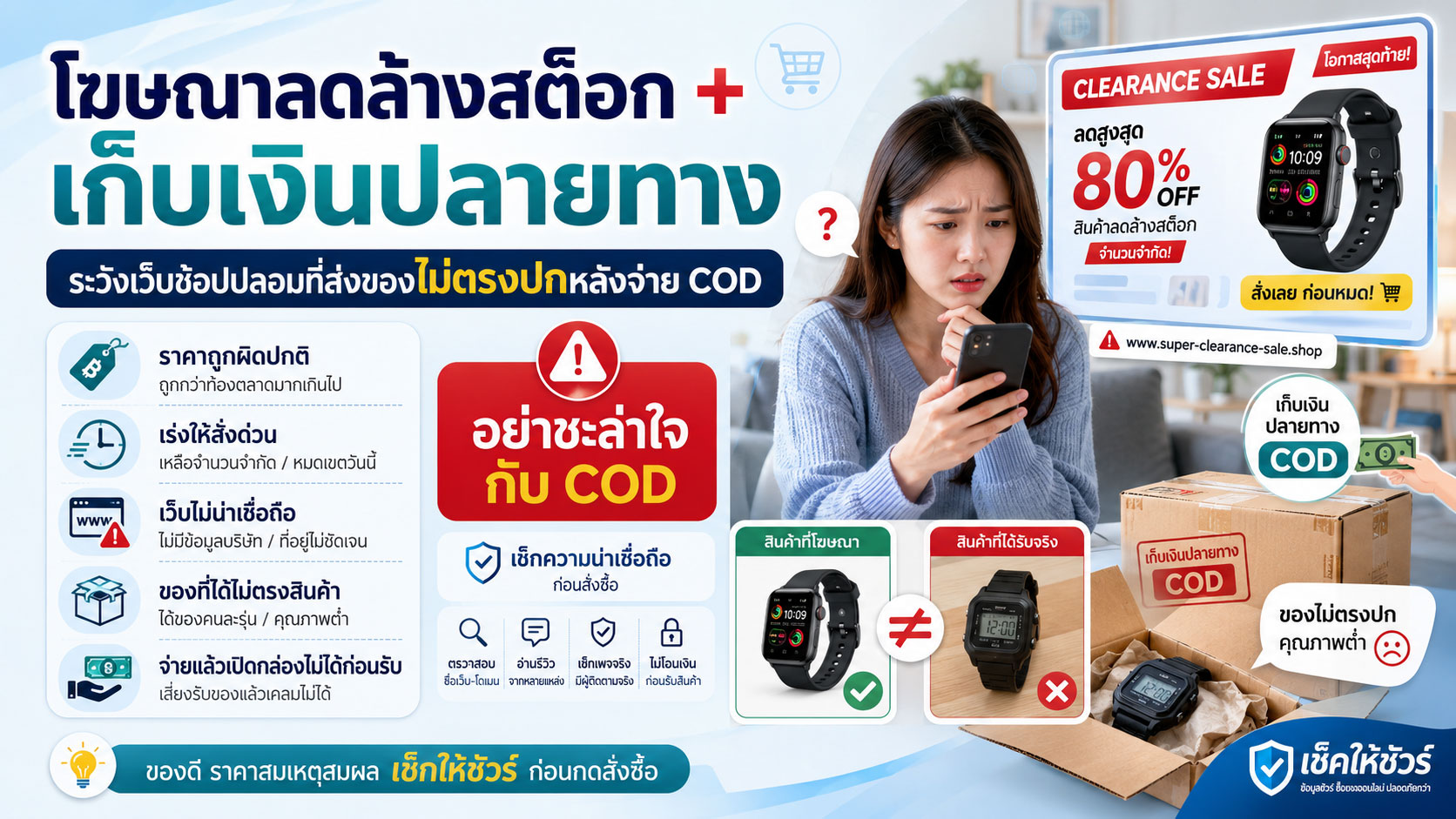
บางครั้งการหลอกขายของออนไลน์ไม่ได้เริ่มจากร้านค้าที่ดูน่าสงสัย
แต่มันอาจเริ่มจากโฆษณาวิดีโอที่ดูดีมาก
มีคนหน้าตาดีออกมาพูดแนะนำสินค้า
มีภาพสินค้าดูน่าใช้
มีข้อความว่า “ลดล้างสต็อก”
มีคำว่า “โอกาสสุดท้าย”
มีราคาที่ถูกกว่าปกติอย่างมาก
มีรีวิวที่ดูเหมือนลูกค้าจริง
และที่สำคัญ มีตัวเลือก “เก็บเงินปลายทาง” หรือ COD
สำหรับผู้ซื้อทั่วไป สิ่งเหล่านี้ทำให้รู้สึกว่า “น่าจะปลอดภัย”
เพราะยังไม่ต้องโอนเงินก่อน
รอให้ของมาถึงบ้านแล้วค่อยจ่าย
ถ้าเป็น COD ก็น่าจะมั่นใจกว่า
แต่ในความเป็นจริง COD ไม่ได้แปลว่าปลอดภัยเสมอไป
เพราะมิจฉาชีพบางกลุ่มรู้ดีว่า ผู้รับพัสดุมักต้องจ่ายเงินก่อน แล้วจึงเปิดกล่องดูของข้างในได้
และนั่นคือช่องว่างที่ถูกนำมาใช้หลอก
โฆษณาที่ดูดี อาจเป็นเพียงประตูเข้าสู่เว็บร้านค้าปลอม
โฆษณาประเภทนี้มักถูกออกแบบให้ดึงดูดในช่วงเวลาสั้นๆ
คนดูอาจกำลังเลื่อนฟีดใน Facebook, Instagram, TikTok หรือแพลตฟอร์มวิดีโออื่นๆ แล้วเจอโฆษณาที่ดูเหมือนแคมเปญพิเศษ
เนื้อหาอาจบอกว่า
“ร้านกำลังปิดกิจการ ต้องระบายสินค้าทั้งหมด”
“สินค้าค้างสต็อก เหลือจำนวนจำกัด”
“ลดราคาวันสุดท้าย”
“ซื้อวันนี้เท่านั้น ก่อนสินค้าหมด”
“ไม่พอใจยินดีคืนเงิน”
“จ่ายปลายทางได้ ไม่ต้องโอนก่อน”
บางโฆษณาอาจใช้คนพูดหน้ากล้องเพื่อเพิ่มความน่าเชื่อถือ บางครั้งเป็นคนหน้าตาดี แต่งตัวดี พูดจาฉะฉาน และอธิบายสินค้าดูเป็นธรรมชาติ
ผู้ชมจึงรู้สึกว่าโฆษณานี้น่าจะมาจากร้านจริง
แต่สิ่งที่ต้องระวังคือ คนที่พูดในโฆษณาอาจไม่ได้เกี่ยวข้องกับร้านจริงเสมอไป
ภาพ วิดีโอ หรือเสียงอาจถูกจ้างทำ ถูกนำกลับมาใช้ซ้ำ ถูกตัดต่อ หรือถูกสร้างขึ้นเพื่อทำให้โฆษณาดูมีตัวตนมากขึ้น
สิ่งที่เราควรตรวจสอบจึงไม่ใช่แค่ “โฆษณาดูดีไหม”
แต่ต้องดูว่า “ร้านปลายทางเชื่อถือได้จริงหรือไม่”
เว็บที่ให้สั่งซื้อ อาจไม่ใช่แพลตฟอร์มที่มีระบบคุ้มครองผู้ซื้อ
หลังจากกดโฆษณา ผู้ใช้อาจถูกพาไปยังเว็บไซต์ร้านค้าหนึ่งที่ดูเหมือนเว็บ e-commerce ทั่วไป
มีรูปสินค้า
มีราคาโปรโมชัน
มีปุ่มสั่งซื้อ
มีช่องกรอกชื่อ ที่อยู่ เบอร์โทร
มีตัวเลือกจัดส่ง
และมีการชำระเงินแบบ COD เป็นค่าเริ่มต้น
ทุกอย่างดูง่ายและเร็วมาก
บางเว็บอาจไม่ต้องสมัครสมาชิก
ไม่ต้องเข้าสู่ระบบ
ไม่ต้องมีประวัติคำสั่งซื้อ
ไม่ต้องผ่านแพลตฟอร์ม marketplace ที่คนรู้จัก
เพียงกรอกข้อมูล กดสั่งซื้อ แล้วรอของมาส่ง
นี่คือจุดที่ควรระวัง
เพราะหากเว็บไซต์นั้นเป็นเพียงลิงก์ร้านค้าชั่วคราว ไม่มีชื่อบริษัทชัดเจน ไม่มีช่องทางติดต่อที่ตรวจสอบได้ ไม่มีนโยบายคืนสินค้าที่น่าเชื่อถือ และไม่อยู่บนแพลตฟอร์มที่มีระบบคุ้มครองผู้ซื้อ เมื่อเกิดปัญหา ผู้ซื้ออาจตามเรื่องได้ยากมาก
โดยเฉพาะเมื่อจ่ายเงินผ่าน COD ไปแล้ว และพบภายหลังว่าสินค้าไม่ตรงปก
กลโกงสำคัญคือ “ส่งของจริง” แต่ไม่ใช่ของที่สั่ง
หลายคนอาจคิดว่าถ้าเป็นมิจฉาชีพคงไม่ส่งของเลย
แต่ในบางรูปแบบของ COD scam มิจฉาชีพอาจส่งของจริงมาให้
ปัญหาคือ ของที่ส่งมาอาจไม่ใช่สินค้าที่เราสั่ง
เช่น สั่งเครื่องใช้ไฟฟ้า แต่ได้ของเล่นราคาถูก
สั่งเสื้อผ้าคุณภาพดี แต่ได้ผ้าบางๆ คนละแบบ
สั่งอุปกรณ์ไอที แต่ได้สายชาร์จราคาถูก
สั่งรองเท้า แต่ได้สินค้าคนละรุ่นหรือคนละไซซ์
สั่งของแต่งบ้าน แต่ได้ของชิ้นเล็กที่แทบไม่มีมูลค่า
หรือบางครั้งได้สินค้าที่ไม่เกี่ยวข้องกันเลย
การส่งของบางอย่างมาให้ ทำให้การหลอกดูแนบเนียนขึ้น
เพราะระบบขนส่งมีพัสดุจริง
มีเลขพัสดุจริง
มีชื่อผู้รับจริง
มีการเรียกเก็บเงินปลายทางจริง
และมีหลักฐานว่ามีการจัดส่งจริง
แต่สิ่งที่ไม่มีคือ ความรับผิดชอบของร้านที่เชื่อถือได้
หลังจากผู้รับจ่ายเงินแล้วเปิดกล่อง จึงพบว่าของไม่ตรงกับโฆษณา
และเมื่อพยายามติดต่อร้าน ก็อาจพบว่าเว็บหายไป เพจเงียบ แอดมินไม่ตอบ เบอร์โทรใช้ไม่ได้ หรือไม่มีช่องทางขอคืนเงินที่จริงจัง
ทำไม COD ถึงถูกใช้เป็นเครื่องมือสร้างความไว้ใจ
COD หรือ Cash on Delivery เป็นวิธีชำระเงินที่มีประโยชน์สำหรับการซื้อขายออนไลน์จริง
ผู้ซื้อหลายคนชอบ เพราะรู้สึกว่าไม่ต้องเสี่ยงโอนเงินก่อน
แต่ในมือของมิจฉาชีพ COD สามารถถูกใช้เป็น “เครื่องมือสร้างความสบายใจ” ได้เช่นกัน
เพราะเมื่อเห็นคำว่าเก็บเงินปลายทาง ผู้ซื้ออาจคิดว่า
“ยังไม่ต้องจ่ายตอนนี้ คงไม่เสี่ยง”
“ถ้าไม่ส่งของ ก็ไม่ต้องเสียเงิน”
“ของมาถึงบ้านแล้วค่อยจ่าย น่าจะโอเค”
“ร้านที่ให้ COD ได้น่าจะน่าเชื่อถือ”
แต่ความจริงคือ ความเสี่ยงไม่ได้อยู่แค่ “จะส่งของหรือไม่”
ความเสี่ยงอยู่ที่ “ของที่ส่งมาตรงกับสิ่งที่เราสั่งหรือไม่” และ “ถ้าไม่ตรง จะเรียกร้องกับใครได้”
มิจฉาชีพจึงเลือกใช้ COD เพราะรู้ว่าผู้ซื้อจำนวนมากจะลดการระวังตัวลง
และเมื่อพัสดุมาถึงหน้าบ้าน ผู้รับอาจรู้สึกรีบ เกรงใจพนักงานส่งของ หรือคิดว่าเป็นของที่ตัวเองสั่งไว้ จึงจ่ายเงินก่อนโดยไม่ได้ตรวจสอบให้ดี
ปัญหาสำคัญ: เปิดกล่องหลังจ่ายแล้ว อาจตามเงินคืนยาก
ในหลายสถานการณ์ ผู้รับพัสดุไม่สามารถเปิดกล่องตรวจสินค้าก่อนจ่ายเงินได้ หรือไม่ได้ขอเปิดตรวจต่อหน้าพนักงานส่งของ
เมื่อจ่ายเงินและรับพัสดุแล้ว จึงค่อยเปิดดูภายหลัง
หากพบว่าไม่ตรงปก ปัญหาจะเริ่มทันที
เพราะบริษัทขนส่งมักเป็นเพียงผู้จัดส่งและผู้เก็บเงินตามคำสั่งของผู้ส่ง ไม่ได้เป็นผู้ขายสินค้า และอาจไม่ได้รับผิดชอบต่อคุณภาพหรือความถูกต้องของสินค้าข้างในในฐานะร้านค้า
หากร้านต้นทางเป็นเว็บปลอม ไม่มีที่อยู่ชัดเจน หรือเป็นร้านที่เปิดปิดเปลี่ยนชื่ออยู่ตลอด การขอคืนเงินจะยากมาก
นี่คือเหตุผลที่ผู้ซื้อไม่ควรมอง COD เป็นหลักประกันเต็มรูปแบบ
COD อาจช่วยลดความเสี่ยงจากการโอนเงินก่อนแล้วไม่ได้ของ
แต่ไม่ได้ป้องกันความเสี่ยงจากการได้รับ “ของผิด ของปลอม ของราคาถูก หรือของไม่ตรงปก”
สัญญาณเตือนของโฆษณา Clearance Sale ที่ควรระวัง
ถ้าเจอโฆษณาช้อปปิ้งออนไลน์ที่มีลักษณะเหล่านี้ ควรหยุดตรวจสอบก่อนสั่งซื้อ
ราคาถูกกว่าปกติมากจนผิดสังเกต
ใช้คำเร่งด่วน เช่น “วันสุดท้าย”, “ล้างสต็อก”, “ปิดกิจการ”, “เหลือไม่กี่ชิ้น”, “โอกาสสุดท้าย”
โฆษณาใช้คนพูดหน้ากล้องดูน่าเชื่อถือ แต่ไม่มีข้อมูลร้านที่ตรวจสอบได้
กดโฆษณาแล้วพาไปเว็บแปลก ไม่ใช่ marketplace หรือเว็บไซต์แบรนด์ที่รู้จัก
เว็บไซต์ไม่มีชื่อบริษัท ที่อยู่ เลขทะเบียน หรือข้อมูลติดต่อที่ชัดเจน
นโยบายคืนสินค้าเขียนคลุมเครือ หรือไม่มีเลย
ไม่มีรีวิวจากแหล่งภายนอก มีแต่รีวิวในเว็บของตัวเอง
รูปสินค้าดูเหมือนนำมาจากเว็บอื่น หรือดูดีเกินกว่าราคาที่ขาย
ชื่อโดเมนเพิ่งสร้างใหม่ ดูยาวผิดปกติ หรือเปลี่ยนชื่อร้านบ่อย
COD ถูกตั้งเป็นตัวเลือกหลักเพื่อทำให้ผู้ซื้อรู้สึกปลอดภัย
ไม่มีช่องทางติดตามคำสั่งซื้อที่เป็นระบบ
มีคอมเมนต์ในโฆษณาน้อยผิดปกติ หรือคอมเมนต์ดูเหมือนถูกสร้างขึ้นซ้ำๆ
ถ้าเจอหลายสัญญาณพร้อมกัน อย่าเพิ่งสั่งซื้อเพียงเพราะกลัวพลาดโปรโมชัน
เพราะโปรโมชันที่เร่งให้รีบตัดสินใจ อาจถูกออกแบบมาเพื่อไม่ให้เรามีเวลาตรวจสอบ
ก่อนสั่งซื้อจากโฆษณา ควรตรวจสอบอะไรบ้าง
ก่อนกรอกชื่อ ที่อยู่ และเบอร์โทรในเว็บจากโฆษณา ควรถามตัวเองก่อนว่า
ร้านนี้คือใคร
สามารถค้นหาชื่อร้านจากแหล่งอื่นได้หรือไม่
มีรีวิวจากลูกค้าจริงนอกเว็บไซต์ของร้านหรือไม่
มีเพจหรือเว็บไซต์ที่เปิดมานานพอสมควรหรือไม่
มีที่อยู่ เบอร์โทร หรือช่องทางติดต่อที่ตรวจสอบได้หรือไม่
นโยบายคืนสินค้าและคืนเงินชัดเจนหรือไม่
ราคาถูกเกินจริงหรือไม่
รูปสินค้าถูกใช้ซ้ำในเว็บอื่นหรือไม่
โดเมนของเว็บดูน่าเชื่อถือหรือเพิ่งสร้างขึ้นเพื่อขายเฉพาะแคมเปญนี้
ถ้าสั่งผ่าน COD แล้วของไม่ตรงปก จะติดต่อใครได้
คำถามเหล่านี้อาจดูเสียเวลา
แต่เวลาเพียงไม่กี่นาทีอาจช่วยป้องกันการเสียเงินและเสียความรู้สึกได้มาก
ถ้าจะใช้ COD ควรทำอย่างไรให้ปลอดภัยขึ้น
COD ไม่ใช่สิ่งที่ผิด และยังเป็นทางเลือกที่มีประโยชน์ในหลายกรณี
แต่ควรใช้ด้วยความระมัดระวัง
ก่อนรับพัสดุ ให้ตรวจสอบชื่อผู้ส่ง ชื่อร้าน เบอร์โทร เลขพัสดุ และยอดเงินว่าตรงกับคำสั่งซื้อจริงหรือไม่
ถ้าไม่ได้สั่ง หรือไม่แน่ใจว่าใครในบ้านสั่ง ให้ปฏิเสธการรับก่อน
ถ้าเป็นไปได้ ให้ตรวจสอบกับคนในบ้านก่อนจ่ายเงิน โดยเฉพาะกรณีที่พัสดุส่งถึงบ้านแต่ผู้สั่งไม่อยู่
อย่าจ่ายเงินให้พัสดุที่คุณจำไม่ได้ว่าเคยสั่ง
หากขนส่งมีบริการให้ตรวจสอบหรือปฏิเสธพัสดุ COD ตามเงื่อนไข ให้ใช้สิทธินั้นตามขั้นตอน
ถ้าพัสดุดูน่าสงสัย ให้ถ่ายรูปฉลาก กล่อง และข้อมูลผู้ส่งไว้
และหากสินค้ามาจากเว็บที่ไม่รู้จัก ควรระวังเป็นพิเศษ แม้ว่ายอดเงินจะไม่สูงมาก
เพราะมิจฉาชีพมักตั้งราคาให้ไม่แพงเกินไป เพื่อให้ผู้รับยอมจ่ายง่ายขึ้น
ถ้าได้รับของไม่ตรงปกหลังจ่าย COD แล้ว ควรทำอย่างไร
ถ้าเปิดกล่องแล้วพบว่าสินค้าไม่ตรงกับที่สั่ง ให้เริ่มจากเก็บหลักฐานทันที
ถ่ายรูปกล่องทุกด้าน
ถ่ายรูปฉลากพัสดุ
ถ่ายรูปสินค้าที่ได้รับ
บันทึกเลขพัสดุ
เก็บหลักฐานคำสั่งซื้อ
เก็บภาพโฆษณา
เก็บลิงก์เว็บไซต์
เก็บแชทหรือข้อความจากร้าน
และเก็บหลักฐานการจ่ายเงิน
จากนั้นติดต่อบริษัทขนส่งตามช่องทางทางการ เพื่อสอบถามขั้นตอนร้องเรียนเกี่ยวกับ COD
ติดต่อร้านค้าหรือช่องทางที่สั่งซื้อ หากยังสามารถติดต่อได้
รายงานโฆษณาหรือเพจที่น่าสงสัยบนแพลตฟอร์มโซเชียล
หากพบว่ามีการหลอกลวงเป็นระบบ หรือมีความเสียหายหลายราย ควรพิจารณาแจ้งหน่วยงานที่เกี่ยวข้องตามช่องทางทางการ
อย่าทิ้งกล่องหรือหลักฐานเร็วเกินไป
เพราะหลักฐานบนฉลากพัสดุและข้อมูลคำสั่งซื้ออาจเป็นสิ่งสำคัญในการติดตามเรื่อง
อย่าให้คำว่า “ราคาดีเกินไป” ปิดการทำงานของความสงสัย
สินค้าลดราคามีจริง
ร้านล้างสต็อกมีจริง
ร้านปิดกิจการมีจริง
COD ก็เป็นบริการจริง
แต่เมื่อทุกอย่างถูกรวมกันในรูปแบบที่เร่งให้รีบซื้อ รีบกรอกข้อมูล และรีบตัดสินใจ เราควรระวังมากขึ้น
โดยเฉพาะเมื่อราคาถูกเกินกว่าความสมเหตุสมผล
มิจฉาชีพรู้ว่า คนเรากลัวพลาดโอกาส
กลัวว่าสินค้าจะหมด
กลัวว่าราคาจะกลับมาแพง
กลัวว่าคนอื่นจะได้ก่อน
และกลัวว่าถ้าไม่กดตอนนี้ จะไม่มีอีกแล้ว
ความกลัวพลาดโอกาส หรือ FOMO คือเครื่องมือสำคัญของโฆษณาหลอกลวงประเภทนี้
ถ้าโฆษณาทำให้คุณรู้สึกว่า “ต้องกดเดี๋ยวนี้” ให้หยุดก่อน
เพราะการซื้อที่ปลอดภัยไม่ควรต้องรีบจนไม่มีเวลาตรวจสอบ
ประโยคที่ควรจำ: COD ช่วยให้จ่ายตอนรับของ แต่ไม่ได้รับประกันว่าของตรงปก
การเก็บเงินปลายทางช่วยให้เราไม่ต้องโอนเงินก่อน
แต่มันไม่ได้แปลว่าเราจะได้รับสินค้าตรงตามโฆษณาเสมอไป
มันไม่ได้รับประกันว่าร้านมีตัวตนจริง
ไม่ได้รับประกันว่าสินค้ามีคุณภาพ
ไม่ได้รับประกันว่าสามารถคืนเงินได้ง่าย
และไม่ได้รับประกันว่าเว็บที่เราสั่งซื้อมีระบบคุ้มครองผู้ซื้อ
ดังนั้น ก่อนสั่งซื้อจากโฆษณาออนไลน์ อย่าดูแค่ว่ามี COD หรือไม่
ให้ดูว่าร้านน่าเชื่อถือหรือไม่
เว็บปลายทางตรวจสอบได้หรือไม่
ราคาสมเหตุสมผลหรือไม่
มีช่องทางคืนสินค้าและร้องเรียนจริงหรือไม่
และถ้าเกิดปัญหา เราจะตามเรื่องกับใครได้
สรุป: โฆษณาดูดี + COD ไม่ได้แปลว่าปลอดภัยเสมอไป
โฆษณา clearance sale หรือ last chance sale บนโซเชียลอาจดูน่าสนใจมาก
โดยเฉพาะเมื่อใช้วิดีโอที่ดูมืออาชีพ คนพูดน่าเชื่อถือ ราคาถูกมาก และมี COD เป็นตัวเลือกชำระเงิน
แต่เบื้องหลังอาจเป็นเว็บร้านค้าปลอม เว็บชั่วคราว หรือร้านที่ตั้งใจส่งสินค้าราคาถูกไม่ตรงกับที่โฆษณาไว้
มิจฉาชีพอาจไม่ได้หวังให้คุณโอนเงินก่อน
แต่หวังให้คุณสบายใจเพราะเห็นคำว่า “จ่ายปลายทาง” แล้วรับพัสดุโดยไม่ตรวจสอบ
ก่อนกดสั่งซื้อ ให้จำไว้ว่า
อย่าเชื่อโฆษณาเพียงเพราะดูดี
อย่ารีบซื้อเพียงเพราะกลัวพลาดโปร
อย่ากรอกข้อมูลในเว็บที่ไม่รู้จักโดยไม่ตรวจสอบ
อย่ารับพัสดุ COD ที่คุณไม่มั่นใจว่าเป็นคำสั่งซื้อจริง
และอย่าคิดว่า COD คือหลักประกันว่าของจะตรงปก
ซื้อของออนไลน์ได้
แต่ควรซื้อด้วยความเข้าใจว่า ความปลอดภัยไม่ได้อยู่ที่คำว่า “เก็บเงินปลายทาง” เพียงอย่างเดียว
แต่อยู่ที่การตรวจสอบร้าน แหล่งที่มา เงื่อนไขการคืนสินค้า และความสมเหตุสมผลของข้อเสนอ ก่อนที่เราจะกดสั่งซื้อ
Clearance Sale Ads + Cash on Delivery: Beware of Fake Online Shops That Send the Wrong Product After You Pay COD
Sometimes an online shopping scam does not begin with a shop that looks suspicious.
It may begin with a video ad that looks very convincing.
A good-looking person speaks confidently about the product.
The product images look attractive.
The ad says “clearance sale.”
It uses words like “last chance.”
The price is much lower than usual.
The reviews look like they came from real customers.
And most importantly, it offers “Cash on Delivery” or COD.
For many buyers, these details make the offer feel safer.
You do not need to transfer money first.
You can wait until the product arrives at your door.
You pay only when the parcel is delivered.
So it feels like COD should be more reliable.
But in reality, COD does not always mean safe.
Some scammers understand very well that in many delivery situations, the recipient has to pay first before opening the parcel.
And that small gap is exactly what they use.
A Good-Looking Ad May Only Be the Doorway to a Fake Shop
These ads are often designed to catch attention quickly.
You may be scrolling through Facebook, Instagram, TikTok, or another video platform when you see an ad that looks like a special campaign.
The message may say:
“The shop is closing down and all stock must go.”
“Excess inventory, limited quantity only.”
“Final day discount.”
“Buy today before it sells out.”
“Money-back guarantee.”
“Cash on delivery available. No need to pay first.”
Some ads may use a person speaking directly to the camera to build trust. The person may look attractive, dress well, speak clearly, and explain the product naturally.
This can make viewers feel that the ad probably comes from a real shop.
But what we need to remember is that the person speaking in the ad may not be connected to the real seller at all.
Images, videos, or voices may be hired, reused, edited, or created simply to make the ad feel more believable.
So the question should not only be:
“Does this ad look good?”
The more important question is:
“Can I really trust the shop behind this ad?”
The Ordering Website May Not Be a Platform with Buyer Protection
After clicking the ad, users may be taken to a shopping website that looks like a normal e-commerce page.
It may show product photos.
It may show a promotional price.
It may have an order button.
It may ask for your name, address, and phone number.
It may show shipping options.
And COD may already be selected as the default payment method.
Everything looks simple and fast.
Some websites do not require account registration.
They do not require login.
They do not show a proper order history.
They are not part of a well-known marketplace.
You simply enter your information, place the order, and wait for delivery.
This is where you should be careful.
If the website is only a temporary shopping page, with no clear company name, no verifiable contact information, no reliable return policy, and no platform-level buyer protection, it may be very difficult to follow up when something goes wrong.
Especially after you have already paid through COD and later find that the product is not what was advertised.
The Key Trick: They Send Something, but Not What You Ordered
Many people assume that if it is a scam, the seller will not send anything at all.
But in some COD scams, scammers actually do send a parcel.
The problem is that the item inside may not be the product you ordered.
For example:
You order an electronic appliance but receive a cheap toy.
You order quality clothing but receive a thin, poorly made item in a different style.
You order an IT accessory but receive a low-cost cable.
You order shoes but receive the wrong model or wrong size.
You order a home product but receive a tiny item with almost no value.
Or you receive something completely unrelated.
Sending a real parcel makes the scam look more convincing.
There is a real delivery.
There is a real tracking number.
There is a real recipient name.
There is real COD payment.
And there is proof that something was delivered.
But what is missing is a trustworthy seller who takes responsibility.
After the recipient pays and opens the box, they realize the product does not match the ad.
When they try to contact the seller, the website may be gone, the page may stop responding, the admin may disappear, the phone number may not work, or there may be no serious refund process at all.
Why COD Is Used to Create a False Sense of Trust
Cash on Delivery is a real and useful payment option for online shopping.
Many buyers like it because they do not need to risk transferring money before the product is delivered.
But in the hands of scammers, COD can also become a tool for creating comfort.
When buyers see “Cash on Delivery,” they may think:
“I do not have to pay now, so it should be safe.”
“If they do not send the product, I do not lose money.”
“I will pay only when it arrives, so it should be okay.”
“A shop that offers COD must be trustworthy.”
But the real risk is not only whether the parcel arrives.
The real risk is whether the product inside matches what you ordered, and who you can contact if it does not.
Scammers use COD because they know many buyers will lower their guard.
When the parcel arrives at the door, the recipient may feel rushed, feel uncomfortable keeping the delivery person waiting, or simply assume it is something they ordered.
So they pay first and check later.
The Main Problem: After Paying COD and Opening the Box, Getting a Refund Can Be Difficult
In many situations, the recipient cannot open the parcel before payment, or may not ask to inspect it in front of the delivery staff.
After paying and accepting the parcel, they open the box and discover the problem.
At that point, things become difficult.
The delivery company is usually only responsible for transporting the parcel and collecting payment according to the sender’s instruction. It is not the actual seller and may not be responsible for whether the product inside is correct or good quality.
If the original seller is a fake website, has no clear address, or constantly changes names and pages, requesting a refund can be very difficult.
This is why buyers should not treat COD as full protection.
COD may reduce the risk of transferring money first and receiving nothing.
But it does not protect you from receiving a wrong product, fake product, low-value product, or product that does not match the advertisement.
Warning Signs of Clearance Sale Ads You Should Be Careful With
If you see an online shopping ad with these signs, pause and check before placing an order.
The price is much lower than normal.
The ad uses urgent phrases such as “final day,” “clearance sale,” “closing down,” “only a few left,” or “last chance.”
The ad uses a person speaking on camera to look trustworthy, but there is no verifiable shop information.
Clicking the ad takes you to an unfamiliar website, not a known marketplace or official brand website.
The website has no clear company name, address, registration details, or contact information.
The return policy is unclear or missing.
There are no reviews from external sources, only reviews shown on the shop’s own website.
Product images look like they were taken from other websites, or look too good for the price.
The domain name looks unusual, was recently created, or the shop name keeps changing.
COD is emphasized as the main reason to make buyers feel safe.
There is no proper order tracking system.
Comments on the ad are unusually limited, hidden, repetitive, or look artificial.
If several of these signs appear together, do not place an order just because you are afraid of missing the promotion.
A promotion that pushes you to decide quickly may be designed to stop you from checking properly.
What to Check Before Ordering from an Ad
Before entering your name, address, and phone number on a website from an ad, ask yourself:
Who is this shop?
Can I find this shop from other reliable sources?
Are there real customer reviews outside the shop’s own website?
Has the page or website existed for a reasonable amount of time?
Is there a verifiable address, phone number, or contact channel?
Is the refund and return policy clear?
Is the price too good to be true?
Are the product images reused on other websites?
Does the domain look trustworthy, or does it look like it was created only for this campaign?
If I pay through COD and the product is wrong, who can I contact?
These questions may take a few minutes.
But a few minutes of checking may help prevent financial loss and frustration later.
How to Use COD More Safely
COD is not wrong. It is still useful in many situations.
But it should be used carefully.
Before accepting a parcel, check the sender name, shop name, phone number, tracking number, and payment amount to make sure they match your real order.
If you did not order it, or you are not sure who in your household ordered it, refuse the parcel first.
If possible, check with family members before paying, especially when the parcel arrives while the actual buyer is not at home.
Do not pay for a parcel you do not remember ordering.
If the delivery provider has a process for checking or refusing COD parcels under certain conditions, use that process properly.
If the parcel looks suspicious, take photos of the label, box, and sender details.
And if the product came from an unfamiliar website, be especially careful, even if the amount is not very high.
Scammers often keep the price low enough to make people more willing to pay.
What to Do If You Receive the Wrong Product After Paying COD
If you open the box and find that the product does not match what you ordered, start by saving evidence immediately.
Take photos of every side of the box.
Take photos of the delivery label.
Take photos of the product you received.
Save the tracking number.
Save the order confirmation.
Save screenshots of the ad.
Save the website link.
Save chat messages or shop responses.
And keep proof of payment.
Then contact the delivery company through official channels to ask about the complaint process for COD parcels.
Contact the seller or ordering channel if it is still available.
Report the suspicious ad or page on the social media platform.
If the case appears to be a coordinated scam or has affected many people, consider reporting it through the proper official channels.
Do not throw away the box or evidence too quickly.
The delivery label and order details may be important for follow-up.
Do Not Let a “Too Good to Miss” Price Turn Off Your Suspicion
Real discounts exist.
Clearance sales are real.
Closing-down sales can be real.
COD is a real payment option.
But when all of these are combined in a way that pushes you to buy quickly, enter information quickly, and decide quickly, you should be more cautious.
Especially when the price is unrealistically low.
Scammers know that people fear missing a good opportunity.
We may fear that the product will sell out.
We may fear that the price will go back up.
We may fear that someone else will get it first.
We may fear that if we do not click now, we will never see the deal again.
This fear of missing out, or FOMO, is one of the strongest tools used in misleading shopping ads.
If an ad makes you feel, “I must buy this now,” pause first.
Safe shopping should not require you to rush so much that you have no time to verify.
A Sentence to Remember: COD Lets You Pay When the Parcel Arrives, but It Does Not Guarantee the Product Is Correct
Cash on Delivery allows you to avoid paying before shipment.
But it does not always mean you will receive the product shown in the ad.
It does not guarantee that the shop is real.
It does not guarantee product quality.
It does not guarantee an easy refund.
And it does not guarantee that the website you ordered from has buyer protection.
So before ordering from an online ad, do not look only at whether COD is available.
Check whether the shop is trustworthy.
Check whether the website can be verified.
Check whether the price makes sense.
Check whether there is a real return and complaint process.
And ask yourself who you can follow up with if something goes wrong.
Conclusion: A Good-Looking Ad + COD Does Not Always Mean Safe
Clearance sale or last chance sale ads on social media can look very attractive.
Especially when they use professional-looking videos, convincing presenters, very low prices, and COD as a payment option.
But behind the ad may be a fake shopping website, a temporary store, or a seller that intentionally sends cheap products that do not match the advertisement.
The scammer may not expect you to transfer money first.
They may expect you to feel safe because of the words “Cash on Delivery” and accept the parcel without checking carefully.
Before placing an order, remember:
Do not trust an ad only because it looks good.
Do not rush to buy just because you fear missing the promotion.
Do not enter information on an unfamiliar website without checking.
Do not accept COD parcels you are not sure you ordered.
And do not assume COD guarantees that the product will match the ad.
Online shopping is convenient and useful.
But safety does not come from the words “Cash on Delivery” alone.
It comes from checking the shop, the source, the return conditions, and whether the offer makes sense before you place the order.

Leave a Reply
You must be logged in to post a comment.