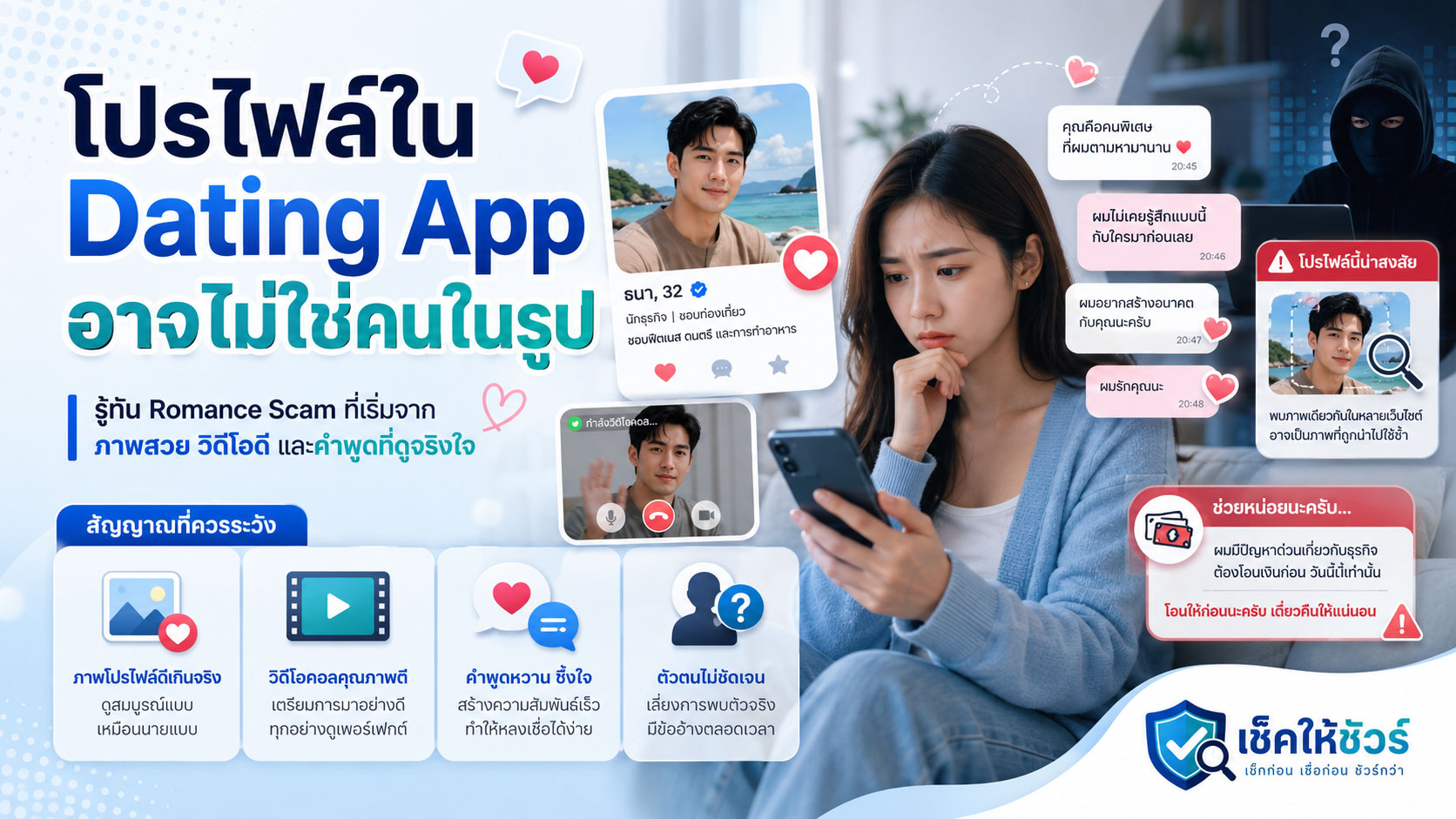
การหาเพื่อน คนคุย หรือคู่รักผ่านแอปหาคู่กลายเป็นเรื่องปกติมากขึ้นในชีวิตประจำวัน
เพียงมีสมาร์ตโฟนหนึ่งเครื่อง ใครก็สามารถดาวน์โหลดแอป สมัครบัญชีใหม่ ใส่รูปโปรไฟล์ เขียนคำแนะนำตัว และเริ่มพูดคุยกับคนอื่นได้ภายในเวลาไม่นาน
ด้านหนึ่ง นี่คือความสะดวกของโลกยุคใหม่
แต่อีกด้านหนึ่ง มันก็เป็นช่องทางที่มิจฉาชีพสามารถใช้สร้างตัวตนปลอมได้ง่ายเช่นกัน
เพราะการมีรูปสวย รูปหล่อ วิดีโอดูดี หรือโปรไฟล์ที่เขียนน่าเชื่อถือ ไม่ได้แปลว่า “คนหลังหน้าจอ” คือคนเดียวกับที่เราเห็นในรูปเสมอไป
ในยุคที่ภาพ วิดีโอ และข้อมูลส่วนตัวสามารถถูกขโมย คัดลอก ดัดแปลง หรือสร้างขึ้นใหม่ได้ง่ายขึ้น เราอาจต้องเริ่มตั้งคำถามกับสิ่งที่เห็นบนหน้าจอมากกว่าเดิม
ไม่ใช่เพื่อให้กลัวความรักออนไลน์
แต่เพื่อไม่ให้ความรู้สึกดีในช่วงแรก พาเราไปสู่ความเสี่ยงที่ใหญ่เกินกว่าจะรับมือทัน
Dating App เปิดประตูให้คนรู้จักกันง่ายขึ้น แต่ก็เปิดทางให้โปรไฟล์ปลอมง่ายขึ้นด้วย
แอปหาคู่ถูกออกแบบมาให้คนเริ่มรู้จักกันได้เร็ว
เราเลื่อนดูโปรไฟล์ เห็นรูป อ่านประโยคสั้นๆ ดูความสนใจร่วมกัน แล้วตัดสินใจว่าจะเริ่มคุยหรือไม่
แต่ปัญหาคือ สิ่งที่เราเห็นในช่วงแรกมักเป็นเพียง “ข้อมูลที่อีกฝ่ายเลือกให้เราเห็น”
รูปโปรไฟล์อาจเป็นรูปของคนอื่นก็ได้
วิดีโออาจถ่ายจากชีวิตจริงแต่อาจเป็นวิดีโอที่ถูกนำมาจากบัญชีอื่นก็ได้
ชื่อ อายุ อาชีพ เมืองที่อยู่ และเรื่องราวในโปรไฟล์อาจเป็นเพียงฉากที่ถูกสร้างขึ้นเพื่อให้คนรู้สึกไว้ใจก็ได้
สิ่งที่ทำให้ Dating App เสี่ยงคือ เรามักเริ่มตัดสินใจจากภาพ และ ความรู้สึกก่อน แล้วค่อยตรวจสอบทีหลัง
แต่มิจฉาชีพเข้าใจจุดนี้ดี
เขารู้ว่ารูปที่ดูดีทำให้คนหยุดดู
คำพูดที่อบอุ่นทำให้คนอยากตอบ
และความสัมพันธ์ที่ค่อยๆ พัฒนา ทำให้คนเริ่มลดกำแพงป้องกันตัวลง
รูปหน้าตาดีอาจเป็น “เหยื่ออีกคน” ไม่ใช่ตัวจริงของคนที่คุยกับเรา
หนึ่งในความเข้าใจผิดที่พบบ่อยคือ ถ้าโปรไฟล์มีรูปคนหน้าตาดีหลายรูป มีภาพไลฟ์สไตล์ มีรูปท่องเที่ยว หรือมีวิดีโอประกอบ แปลว่าน่าจะเป็นคนจริง
แต่ในความเป็นจริง รูปเหล่านั้นอาจถูกขโมยมาจากคนอื่น
บางครั้งอาจเป็นรูปของ influencer
บางครั้งอาจเป็นรูปจากบัญชีโซเชียลของคนทั่วไป
บางครั้งอาจเป็นรูปของคนที่ไม่รู้ตัวเลยว่าภาพของตัวเองถูกนำไปใช้สร้างบัญชีปลอม
และบางครั้งอาจเป็นภาพที่ถูกสร้างขึ้นใหม่ด้วย AI จนค้นหาย้อนกลับได้ยากกว่าเดิม
ดังนั้น ในบางกรณี คนในรูปก็อาจเป็นเหยื่อเหมือนกัน
เขาอาจไม่ได้รู้เรื่อง ไม่ได้เกี่ยวข้อง และไม่ได้เป็นคนที่กำลังคุยกับเราอยู่
คนที่เราควรตรวจสอบจึงไม่ใช่แค่ “หน้าตาในรูป”
แต่คือ “พฤติกรรมของบัญชีที่ใช้รูปนั้น”
เพราะรูปอาจดูดีมาก
แต่วิธีคุยอาจกำลังพาเราไปสู่การโอนเงิน การลงทุน หรือการเปิดเผยข้อมูลส่วนตัว
อย่าเริ่มจากความเชื่อว่า “เขาคงใช้รูปตัวเอง”
ในโลกออนไลน์ เราอาจต้องปรับจุดเริ่มต้นของความไว้ใจใหม่
จากเดิมที่คิดว่า
“คนทั่วไปก็น่าจะใช้รูปตัวเอง”
ควรเปลี่ยนเป็น
“ฉันยังไม่รู้ว่ารูปนี้เป็นของเขาจริงหรือไม่ จนกว่าจะตรวจสอบจากหลายอย่างประกอบกัน”
นี่ไม่ใช่การมองโลกในแง่ร้าย
แต่มันคือการป้องกันตัวในพื้นที่ที่ใครก็สร้างบัญชีใหม่ได้ง่าย
โดยเฉพาะในแอปที่การสมัครอาจใช้เพียงเบอร์โทร อีเมล หรือบัญชีโซเชียลบางประเภท การมีโปรไฟล์หนึ่งบัญชีจึงยังไม่เพียงพอที่จะยืนยันตัวตนของใครได้
คนที่จริงใจควรเข้าใจว่าความระมัดระวังเป็นเรื่องปกติ
แต่คนที่มีเจตนาไม่ดี มักพยายามทำให้เรารู้สึกผิดที่ไม่เชื่อเขาเร็วพอ
ถ้าเขาเริ่มพูดว่า
“ทำไมไม่เชื่อใจกัน”
“ถ้าไม่ไว้ใจ ก็ไม่ต้องคุย”
“ฉันพิสูจน์ไปแล้ว ทำไมยังสงสัย”
หรือ “คนรักกันต้องไม่ระแวงกันแบบนี้”
ให้ระวัง
เพราะความสัมพันธ์ที่ปลอดภัย ไม่ควรเริ่มจากการกดดันให้เราเลิกระวังตัว
Verified Badge ช่วยได้ แต่ไม่ใช่เกราะป้องกันทุกอย่าง
แอปหาคู่บางแอปมีฟีเจอร์ยืนยันตัวตน เช่น verified profile, photo verification หรือ video selfie verification
ฟีเจอร์เหล่านี้มีประโยชน์ และควรให้ความสำคัญ
ถ้าคุณมีทางเลือก การเริ่มคุยกับโปรไฟล์ที่ผ่านการยืนยันตัวตนย่อมดีกว่าการคุยกับบัญชีที่ไม่มีสัญญาณยืนยันใดๆ เลย
แต่สิ่งสำคัญคือ ต้องเข้าใจข้อจำกัดของมันด้วย
Verified badge อาจช่วยบอกได้บางส่วนว่า บัญชีนั้นผ่านขั้นตอนตรวจสอบบางอย่างของแพลตฟอร์ม
แต่อาจไม่ได้บอกว่า คนคนนั้นเป็นคนดี ปลอดภัย จริงใจ ไม่มีเจตนาหลอกลวง หรือจะไม่ขอเงินเราในอนาคต
บางบัญชีอาจผ่านการยืนยันในช่วงแรก
แต่ภายหลังอาจเปลี่ยนรูป เปลี่ยนพฤติกรรม หรือถูกนำไปใช้ในทางที่ไม่เหมาะสม
บางคนอาจเป็นคนจริง ใช้รูปจริง แต่ก็ยังมีเจตนาหลอกลวงได้
ดังนั้น verified badge ควรถูกมองเป็น “สัญญาณช่วยลดความเสี่ยง”
ไม่ใช่ “ใบรับประกันความปลอดภัย”
คำแนะนำที่เหมาะสมคือ
ถ้าเป็นไปได้ ให้เลือกคุยกับโปรไฟล์ที่ verified ก่อน
แต่หลังจากนั้น ให้ดูพฤติกรรม การสื่อสาร ความสอดคล้องของข้อมูล และท่าทีต่อเรื่องเงินเป็นหลัก
เพราะสุดท้ายแล้ว คนที่หลอกเราไม่ได้อันตรายเพราะเขาไม่มี badge
เขาอันตรายเพราะเขาพยายามพาเราไปสู่การตัดสินใจที่เสียเปรียบ
สัญญาณที่ควรระวังใน Dating App
แม้โปรไฟล์จะดูดีมาก หรือผ่านการ verified แล้ว ก็ควรระวังหากมีสัญญาณเหล่านี้
เขาดูดีเกินไป และสนใจเรารวดเร็วผิดปกติ
เขารีบย้ายบทสนทนาออกจากแอปไปยัง LINE, WhatsApp, Telegram หรือช่องทางส่วนตัวอื่น โดยให้เหตุผลว่าแอปไม่สะดวก
เขาพูดเรื่องความรัก ความผูกพัน หรืออนาคตร่วมกันเร็วเกินไป ทั้งที่ยังรู้จักกันไม่นาน
เขาหลีกเลี่ยงการเจอตัวจริงเสมอ แต่มีเหตุผลที่ฟังดูน่าเห็นใจทุกครั้ง
เขาอ้างว่าอยู่ต่างประเทศ ทำงานบนเรือ เป็นทหาร วิศวกร นักลงทุน นักธุรกิจ หรือมีงานที่ทำให้เจอยาก ติดต่อยาก หรือกลับมาไทยไม่ได้ง่ายๆ
เขาใช้รูปและโปรไฟล์ที่ดูสมบูรณ์แบบมาก แต่รายละเอียดชีวิตกลับคลุมเครือเมื่อต้องถามลึกขึ้น
เขาไม่อยากให้เราปรึกษาเพื่อนหรือครอบครัว
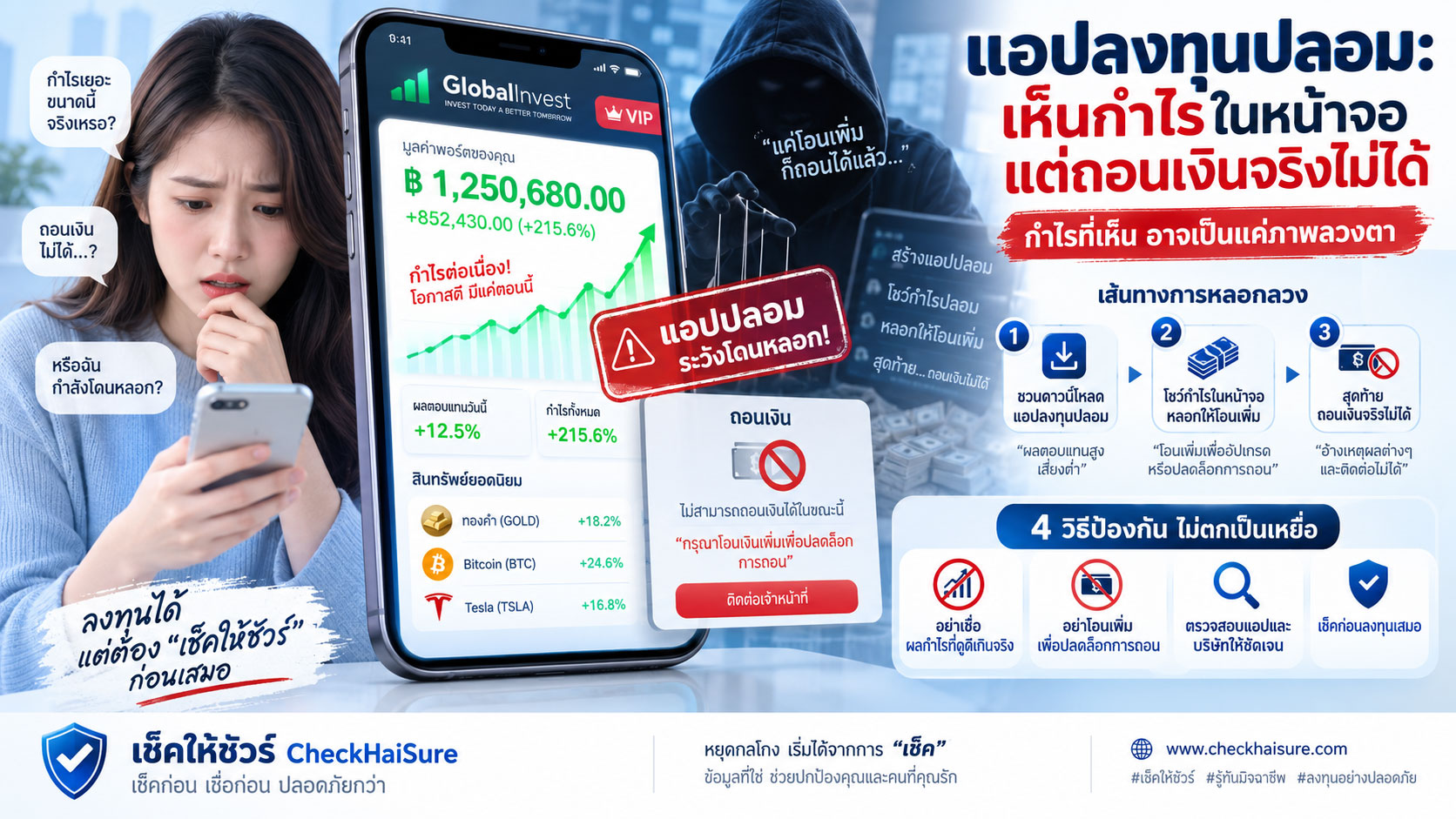
เขาชวนลงทุน เทรดคริปโต ฝากเงินในแพลตฟอร์ม หรือบอกว่ามีโอกาสพิเศษที่อยากให้เรารวยไปด้วยกัน
เขาขอให้ช่วยเรื่องเงิน ค่าเดินทาง ค่ารักษาพยาบาล ค่าภาษี ค่าธรรมเนียม ค่าปลดล็อกบัญชี หรือค่าเอกสารบางอย่าง
เขาทำให้เรารู้สึกผิดถ้าเราไม่ช่วย ไม่เชื่อ หรือไม่ยอมทำตาม
จำไว้ว่า สัญญาณเตือนเหล่านี้สำคัญกว่าใบหน้าในโปรไฟล์
เพราะรูปอาจปลอมได้
วิดีโออาจถูกนำมาใช้ซ้ำได้
แต่รูปแบบการหลอกมักยังวนกลับมาที่เรื่องเดิมเสมอ
นั่นคือ ความไว้ใจ → ความผูกพัน → ความกดดัน → เงินหรือข้อมูลส่วนตัว
อย่าให้ “ความเหงา” ทำหน้าที่แทน “การตรวจสอบ”
สิ่งที่ทำให้ Romance Scam ผ่าน Dating App อันตราย ไม่ใช่แค่เทคโนโลยี
แต่คือช่วงเวลาที่เราอาจกำลังต้องการใครสักคน
บางคนเข้าแอปเพราะอยากมีเพื่อนคุย
บางคนอยากเริ่มต้นความสัมพันธ์ใหม่
บางคนเพิ่งผ่านช่วงยากของชีวิต
บางคนแค่อยากรู้สึกว่ามีคนรับฟัง
มิจฉาชีพมักไม่ได้โจมตีตรงเงินทันที
แต่โจมตีตรงจุดที่มนุษย์ต้องการการยอมรับและความเข้าใจ
เขาอาจพูดในสิ่งที่เราอยากได้ยิน
ตอบในเวลาที่เรากำลังเหงา
ให้ความสำคัญในวันที่เรารู้สึกไม่มีใคร
และทำให้เรารู้สึกว่า “คนนี้ไม่เหมือนคนอื่น”
ความรู้สึกเหล่านี้ไม่ผิด
แต่สิ่งที่ต้องระวังคือ อย่าให้ความรู้สึกดีทำให้เราข้ามขั้นตอนตรวจสอบ
เพราะคนที่จริงใจควรพร้อมให้เวลาความไว้ใจเติบโตอย่างปลอดภัย
ไม่ใช่รีบพาเราไปสู่เรื่องเงินในวันที่เรายังไม่รู้จักตัวตนจริงของเขา
วิธีใช้ Dating App ให้ปลอดภัยขึ้น
เริ่มจากตั้งหลักว่า ทุกโปรไฟล์คือ “คนที่ยังต้องตรวจสอบ” ไม่ใช่ “คนที่เชื่อได้แล้ว”
เลือกคุยกับโปรไฟล์ที่ผ่านการ verified เมื่อเป็นไปได้ แต่ยังต้องระวังเหมือนเดิม
ดูความสอดคล้องของข้อมูล เช่น อายุ อาชีพ เมืองที่อยู่ เวลาออนไลน์ ภาษา รูปแบบชีวิต และสิ่งที่เขาเล่าในแต่ละวัน
อย่ารีบย้ายไปคุยนอกแอปเร็วเกินไป เพราะระบบรายงาน บล็อก และตรวจสอบของแอปอาจช่วยป้องกันความเสี่ยงได้บางส่วน
หากมีรูปที่ดูเหมือนภาพจากอินเทอร์เน็ตมากเกินไป ลองค้นหาย้อนกลับ หรือสังเกตว่ารูปมีความสอดคล้องกับเรื่องราวที่เขาเล่าหรือไม่
อย่าส่งข้อมูลส่วนตัวเร็วเกินไป เช่น ที่อยู่จริง ที่ทำงาน เลขบัตรประชาชน รูปเอกสาร ข้อมูลบัญชีธนาคาร หรือรูปส่วนตัวที่อาจถูกนำไปใช้กดดันในภายหลัง
ถ้าจะนัดเจอ ควรเลือกสถานที่สาธารณะ แจ้งคนใกล้ตัว และไม่ไปในที่ส่วนตัวตั้งแต่ครั้งแรก
และที่สำคัญที่สุด อย่าโอนเงิน อย่าลงทุน และอย่ากดลิงก์ทางการเงินใดๆ จากคนที่ยังไม่เคยเจอตัวจริงและยังตรวจสอบไม่ได้
คำถาม 7 ข้อก่อนเชื่อใจโปรไฟล์ใน Dating App
ก่อนจะให้ความไว้ใจมากขึ้น ลองถามตัวเองว่า
หนึ่ง เขาผ่านการ verified หรือไม่
สอง ข้อมูลที่เขาเล่ามีความสอดคล้องกันในระยะเวลาหลายวันหรือหลายสัปดาห์หรือไม่
สาม เขารีบทำให้ความสัมพันธ์พัฒนาเร็วเกินไปหรือไม่
สี่ เขาพยายามย้ายบทสนทนาออกจากแอปเร็วเกินไปหรือไม่
ห้า เขาหลีกเลี่ยงการเจอตัวจริงด้วยเหตุผลซ้ำๆ หรือไม่
หก เขาเริ่มพูดเรื่องเงิน การลงทุน หรือความช่วยเหลือทางการเงินหรือยัง
เจ็ด เมื่อเราขอเวลาตรวจสอบ เขาเคารพการตัดสินใจของเราหรือกดดันให้เรารีบเชื่อ
ถ้าคำตอบบางข้อทำให้คุณรู้สึกไม่สบายใจ
อย่าเพิ่งเดินหน้าต่อเพราะกลัวเสียโอกาส
คนที่ปลอดภัยจริง ควรไม่ทำให้คุณรู้สึกว่าการระวังตัวเป็นความผิด
ถ้าเริ่มสงสัยว่ากำลังเจอโปรไฟล์ปลอม ควรทำอย่างไร
หยุดส่งข้อมูลส่วนตัวทันที
อย่าโอนเงิน ไม่ว่าจะเป็นยอดเล็กหรือยอดใหญ่
อย่ากดลิงก์ที่อีกฝ่ายส่งมา โดยเฉพาะลิงก์สมัครลงทุน ลิงก์รับเงิน ลิงก์ยืนยันตัวตน หรือลิงก์ดาวน์โหลดแอปนอกแหล่งทางการ
เก็บหลักฐาน เช่น ชื่อโปรไฟล์ รูปภาพ แชท เบอร์โทร บัญชีโซเชียล ลิงก์ เลขบัญชี และรายละเอียดเวลาที่พูดคุย
ใช้ระบบ report หรือ block ภายในแอป หากพบพฤติกรรมที่น่าสงสัย
ปรึกษาคนใกล้ตัวที่ไว้ใจได้ โดยเฉพาะก่อนตัดสินใจเรื่องเงิน
และหากมีการโอนเงินไปแล้ว ควรรีบติดต่อธนาคารและดำเนินการตามช่องทางที่เกี่ยวข้องโดยเร็ว
อย่ารอให้แน่ใจ 100% ว่าถูกหลอกก่อนถึงจะหยุด
เพราะในหลายกรณี การหยุดเร็วคือสิ่งที่ช่วยลดความเสียหายได้มากที่สุด
สรุป: ใน Dating App อย่าเชื่อแค่รูป อย่าเชื่อแค่ Badge และอย่าให้ความรักพาไปสู่การโอนเงิน
Dating App สามารถเป็นพื้นที่ที่ดีในการรู้จักผู้คนใหม่ๆ ได้
แต่ในขณะเดียวกัน มันก็เป็นพื้นที่ที่มิจฉาชีพสามารถสร้างตัวตนใหม่ได้ง่ายเช่นกัน
รูปโปรไฟล์อาจไม่ใช่รูปของคนที่คุยกับเรา
วิดีโออาจถูกนำมาใช้ซ้ำ
ข้อมูลอาจถูกแต่งขึ้น
บัญชีที่ดูดีอาจถูกเตรียมมาเพื่อสร้างความไว้ใจ
และแม้แต่โปรไฟล์ที่ verified แล้ว ก็ยังไม่ใช่หลักฐานว่าคนคนนั้นปลอดภัยในทุกด้าน
ดังนั้น วิธีที่ปลอดภัยกว่าไม่ใช่การเลิกใช้แอปหาคู่
แต่คือการใช้ด้วยความเข้าใจ
ค่อยๆ รู้จัก
ค่อยๆ ตรวจสอบ
อย่ารีบให้ข้อมูลส่วนตัว
อย่ารีบย้ายไปคุยนอกแอป
อย่ารีบเชื่อเพียงเพราะเขาดูดี
และอย่าโอนเงินให้คนที่ยังไม่เคยเจอตัวจริง ไม่ว่าจะคุยกันมาดีแค่ไหนก็ตาม
ความสัมพันธ์ที่ดีควรทำให้เรารู้สึกปลอดภัยขึ้น
ไม่ใช่ทำให้เราต้องเสี่ยงเงิน เสี่ยงข้อมูล หรือเสี่ยงใจเพียงเพื่อพิสูจน์ว่าเราไว้ใจเขา
ในโลกที่ใครก็สร้างโปรไฟล์ใหม่ได้ง่าย
การระวังตัวไม่ใช่การปิดใจ
แต่คือการให้โอกาสตัวเองได้รู้จักคนใหม่อย่างปลอดภัยกว่าเดิม
A Dating App Profile May Not Be the Person in the Photo: Understanding Romance Scams That Begin with Attractive Images, Good Videos, and Sincere-Sounding Words
Finding friends, someone to talk to, or a romantic partner through dating apps has become a normal part of everyday life.
With just one smartphone, anyone can download an app, create a new account, upload profile photos, write a short introduction, and start talking to other people within a short time.
On one side, this is the convenience of the modern world.
On the other side, it also gives scammers an easy way to create fake identities.
Having attractive photos, good-looking videos, or a profile that sounds believable does not always mean that the “person behind the screen” is the same person you see in the pictures.
In an age where images, videos, and personal information can be stolen, copied, edited, reused, or even created with AI, we may need to question what we see on screen more carefully than before.
Not to make us afraid of online relationships,
but to make sure good feelings in the beginning do not lead us into risks that become too serious to handle.
Dating Apps Make It Easier to Meet People, but They Also Make It Easier to Create Fake Profiles
Dating apps are designed to help people connect quickly.
We swipe through profiles, look at photos, read short descriptions, check shared interests, and decide whether to start a conversation.
But the problem is that what we see at the beginning is usually only “the information the other person chooses to show us.”
A profile photo may belong to someone else.
A video may look like it was taken from real life, but it may have been taken from another account.
A name, age, job, city, and personal story may not be real. They may simply be part of a scene created to make others feel comfortable and trusting.
What makes dating apps risky is that we often begin by judging from appearance and feelings first, then verify later.
Scammers understand this very well.
They know that attractive photos make people stop and look.
Warm words make people want to reply.
And a relationship that slowly develops can make people lower their guard over time.
A Good-Looking Photo May Belong to Another Victim, Not the Person Talking to You
One common misunderstanding is that if a profile has several attractive photos, lifestyle images, travel pictures, or videos, it is probably a real person.
But in reality, those images may have been stolen from someone else.
Sometimes they may be photos of an influencer.
Sometimes they may come from an ordinary person’s social media account.
Sometimes they may belong to someone who has no idea their images are being used to create a fake profile.
And sometimes they may be AI-generated images that are harder to find through reverse image search.
In some cases, the person in the photo may also be a victim.
They may not know anything about it.
They may not be involved.
And they may not be the person you are talking to at all.
So what we should check is not only “the face in the photo.”
We should also check “the behavior of the account using that photo.”
Because the photo may look very good,
but the conversation may be leading you toward money transfers, investments, or sharing personal information.
Do Not Start by Assuming “They Must Be Using Their Own Photos”
In the online world, we may need to change the starting point of trust.
Instead of thinking:
“Most people probably use their own photos.”
It may be safer to think:
“I do not yet know whether this photo really belongs to them until I can verify it through several signs.”
This is not about being negative.
It is about protecting yourself in a space where anyone can create a new account easily.
Especially on apps where registration may require only a phone number, email address, or social media account, one profile alone is not enough to confirm someone’s real identity.
A sincere person should understand that caution is normal.
But a person with bad intentions may try to make you feel guilty for not trusting them quickly enough.
Be careful if they start saying things like:
“Why don’t you trust me?”
“If you don’t trust me, then don’t talk to me.”
“I already proved myself. Why are you still suspicious?”
Or “People who love each other should not doubt each other like this.”
A safe relationship should not begin by pressuring you to stop being careful.
A Verified Badge Helps, but It Is Not a Shield Against Everything
Some dating apps have identity-related features such as verified profiles, photo verification, or video selfie verification.
These features are useful and should be taken seriously.
When you have a choice, starting a conversation with a verified profile is usually better than talking to an account with no verification signal at all.
But it is important to understand the limitations.
A verified badge may show that an account has passed some form of verification process from the platform.
But it does not prove that the person is kind, safe, sincere, honest, or that they will never ask you for money in the future.
Some accounts may pass verification at first,
but later change photos, change behavior, or be used in inappropriate ways.
Some people may be real and use their real photos, but still have the intention to deceive others.
So a verified badge should be seen as “a signal that may help reduce risk,”
not “a guarantee of safety.”
A better approach is:
When possible, choose verified profiles first.
But after that, pay attention mainly to behavior, communication style, consistency of information, and their attitude toward money.
In the end, a scammer is not dangerous simply because they do not have a badge.
They are dangerous because they are trying to lead you into a decision that puts you at a disadvantage.
Warning Signs to Watch for in Dating Apps
Even if a profile looks very attractive or has already been verified, you should still be careful if you notice these signs.
They look too perfect and become interested in you unusually fast.
They quickly move the conversation away from the dating app to LINE, WhatsApp, Telegram, or another private channel, claiming that the app is inconvenient.
They talk about love, emotional connection, or a future together too quickly, even though you have only known each other for a short time.
They always avoid meeting in person, but always have a sympathetic excuse.
They claim to live overseas, work on a ship, serve in the military, work as an engineer, investor, or business owner, or have a job that makes it difficult to meet, difficult to contact, or difficult to return to Thailand.
Their photos and profile look almost perfect, but their life details become unclear when you ask deeper questions.
They do not want you to consult friends or family.
They invite you to invest, trade crypto, deposit money into a platform, or say they have a special opportunity and want you to become successful together.
They ask for help with money, travel costs, medical bills, taxes, fees, account unlocking, documents, or other expenses.
They make you feel guilty if you do not help, do not believe them, or do not follow what they ask.
Remember, these warning signs are more important than the face in the profile.
Because photos can be fake.
Videos can be reused.
But scam patterns often lead back to the same path:
Trust → emotional attachment → pressure → money or personal information.
Do Not Let “Loneliness” Replace “Verification”
What makes romance scams through dating apps dangerous is not only technology.
It is also the moment when we may be hoping for someone.
Some people use dating apps because they want someone to talk to.
Some want to start a new relationship.
Some have recently gone through a difficult time.
Some simply want to feel heard.
Scammers often do not attack money directly at first.
They attack the human need for acceptance and understanding.
They may say the things you want to hear.
They may reply at the time you feel lonely.
They may give you attention when you feel no one else is there.
And they may make you feel, “This person is different from everyone else.”
These feelings are not wrong.
But what we need to be careful about is letting good feelings make us skip the verification process.
A sincere person should allow trust to grow safely over time.
They should not rush you toward money before you truly know who they are.
How to Use Dating Apps More Safely
Start with the mindset that every profile is “someone who still needs to be verified,” not “someone who can already be trusted.”
Choose verified profiles when possible, but remain careful.
Look for consistency in the information they provide, such as age, job, city, online timing, language, lifestyle, and what they tell you from day to day.
Do not rush to move the conversation outside the app too quickly, because the app’s report, block, and safety systems may help reduce some risks.
If the photos look too much like internet images, try doing a reverse image search, or observe whether the photos are consistent with the stories they tell.
Do not share personal information too soon, such as your real address, workplace, ID card number, document photos, bank account details, or private photos that could later be used to pressure you.
If you decide to meet in person, choose a public place, inform someone you trust, and avoid going to a private location for the first meeting.
Most importantly, do not transfer money, invest, or click any financial links from someone you have never met in person and cannot properly verify.
7 Questions to Ask Before Trusting a Dating App Profile
Before giving someone more trust, ask yourself:
One: Has this person been verified?
Two: Is the information they share consistent over several days or weeks?
Three: Are they trying to move the relationship forward too quickly?
Four: Are they trying to move the conversation outside the app too soon?
Five: Do they keep avoiding meeting in person with repeated excuses?
Six: Have they started talking about money, investments, or financial help?
Seven: When you ask for time to verify things, do they respect your decision or pressure you to trust them quickly?
If some of your answers make you uncomfortable,
do not continue simply because you are afraid of missing an opportunity.
A truly safe person should not make you feel that being careful is wrong.
What to Do If You Suspect You Are Talking to a Fake Profile
Stop sharing personal information immediately.
Do not transfer money, whether the amount is small or large.
Do not click links sent by the other person, especially investment registration links, money-receiving links, identity verification links, or links to download apps outside official app stores.
Save evidence such as the profile name, photos, chat messages, phone numbers, social media accounts, links, bank account numbers, and the timeline of your conversations.
Use the app’s report or block function if you notice suspicious behavior.
Talk to someone you trust, especially before making any decision involving money.
If you have already transferred money, contact your bank as soon as possible and follow the appropriate reporting steps.
Do not wait until you are 100% sure you have been scammed before stopping.
In many cases, stopping early is what helps reduce the damage the most.
Conclusion: On Dating Apps, Do Not Trust Only Photos, Do Not Trust Only Badges, and Do Not Let Love Lead You to Transfer Money
Dating apps can be good places to meet new people.
At the same time, they are also spaces where scammers can easily create new identities.
A profile photo may not belong to the person talking to you.
A video may be reused.
Information may be invented.
A good-looking account may be prepared to build trust.
And even a verified profile is not proof that the person is safe in every way.
So the safer approach is not to stop using dating apps entirely.
It is to use them with awareness.
Get to know people slowly.
Verify information gradually.
Do not rush to share personal details.
Do not rush to move outside the app.
Do not trust someone just because they look attractive.
And do not transfer money to someone you have never met in person, no matter how well the conversation has been going.
A good relationship should make you feel safer.
It should not require you to risk your money, your information, or your heart just to prove that you trust someone.
In a world where anyone can easily create a new profile,
being careful does not mean closing your heart.
It means giving yourself a safer chance to meet someone new.

Leave a Reply
You must be logged in to post a comment.