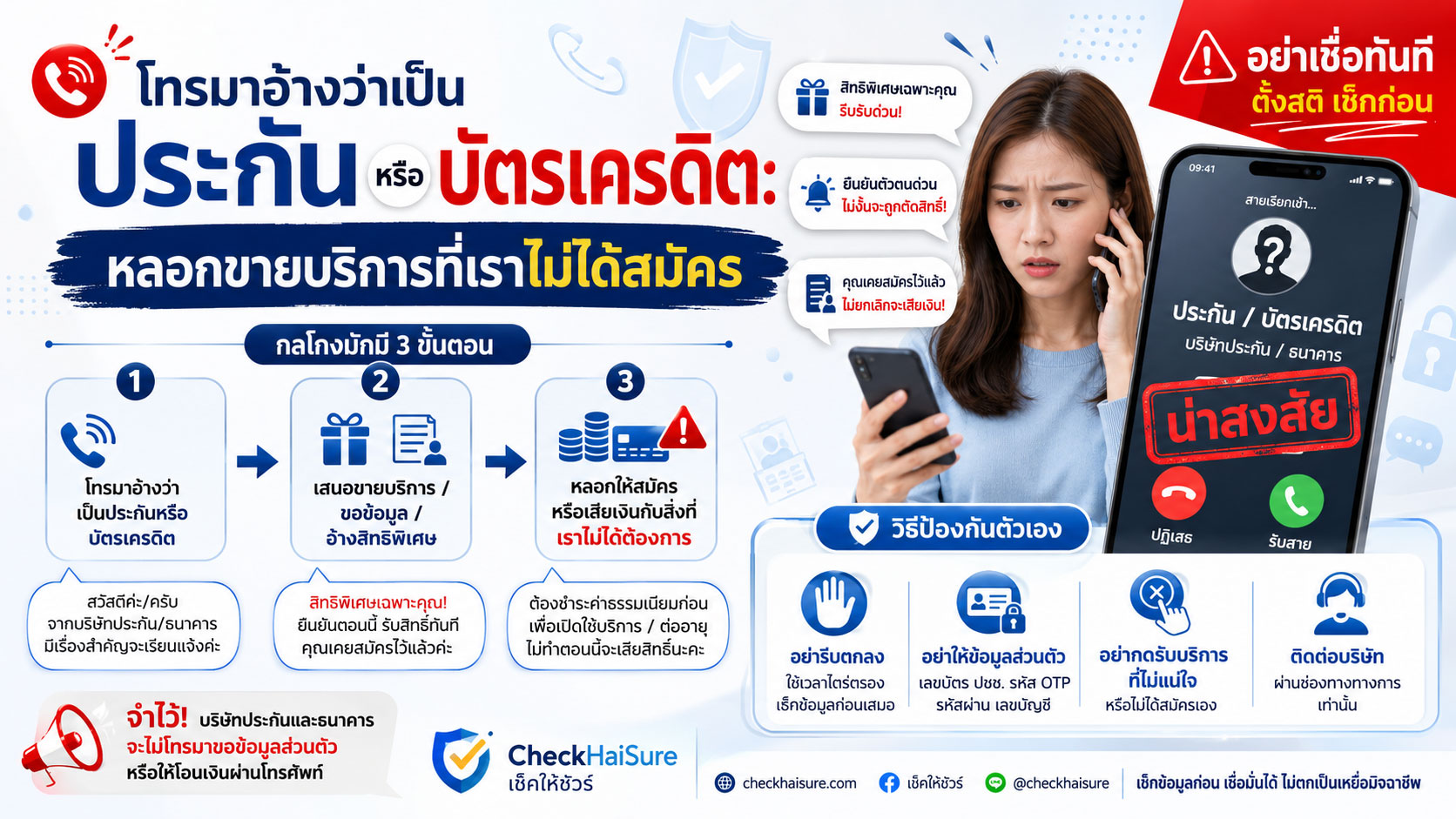
“คุณมีสิทธิ์ได้รับความคุ้มครองพิเศษจากบัตรเครดิต”
“มีประกันอุบัติเหตุฟรีให้ทดลองใช้”
“บริการนี้ผูกกับบัตรของคุณอยู่แล้ว แค่ยืนยันข้อมูลเท่านั้น”
“ถ้าไม่ยกเลิกวันนี้ ระบบจะเริ่มคิดค่าบริการ”
“ขอเลขบัตรหรือ OTP เพื่อยืนยันการยกเลิกค่ะ”
ถ้าได้รับสายแบบนี้ หลายคนอาจไม่แน่ใจทันทีว่าเป็นเรื่องจริงหรือไม่
เพราะคำว่า “ประกัน” และ “บัตรเครดิต” เป็นเรื่องที่ดูเหมือนเกิดขึ้นได้จริงในชีวิตประจำวัน
หลายคนมีบัตรเครดิต
หลายคนเคยได้รับสายเสนอประกัน
หลายคนเคยมีบริการเสริมที่พ่วงมากับบัตร
หลายคนไม่แน่ใจว่าตัวเองเคยสมัครอะไรไว้หรือเปล่า
และหลายคนกลัวว่าจะถูกคิดเงินโดยไม่รู้ตัว
มิจฉาชีพจึงใช้ความไม่แน่ใจนี้เป็นจุดเริ่มต้น
เขาอาจโทรมาอ้างว่าเป็นบริษัทประกัน ธนาคาร เจ้าหน้าที่บัตรเครดิต ฝ่ายสิทธิประโยชน์ ฝ่ายดูแลลูกค้า หรือศูนย์ยกเลิกบริการ แล้วพูดให้เรารู้สึกว่าเรามีบริการบางอย่างผูกอยู่กับบัญชีหรือบัตรของเรา
จากนั้นอาจพาเราไปสู่การยืนยันตัวตน ให้ข้อมูลบัตร กดลิงก์ อ่าน OTP หรือยอมรับเงื่อนไขบางอย่างโดยไม่รู้ตัว
จำไว้ว่า
บริการที่เราไม่ได้สมัคร ไม่ควรเริ่มคิดเงินจากการที่คนปลายสายพูดให้เราตกใจ
ทำไมกลโกงนี้ถึงทำให้คนลังเล
เพราะมันไม่ได้ดูน่ากลัวแบบคดีความหรือหมายจับ
แต่ดูเหมือนเรื่องงานบริการทั่วไป
ประกันเสริม
ค่าคุ้มครองรายเดือน
บริการช่วยเหลือฉุกเฉิน
ประกันอุบัติเหตุ
ประกันบัตรสูญหาย
บริการดูแลสุขภาพ
สิทธิ์พิเศษจากบัตรเครดิต
หรือแพ็กเกจคุ้มครองที่พ่วงมากับบัญชี
คำเหล่านี้ฟังดูเหมือนสิ่งที่บริษัทจริงอาจมี
และคนจำนวนมากอาจจำไม่ได้ว่าเคยสมัครอะไรไว้หรือไม่
บางครั้งเราอาจเคยกรอกเอกสาร
เคยสมัครบัตร
เคยตอบรับโปรโมชัน
เคยกดรับสิทธิ์
หรือเคยคุยกับเจ้าหน้าที่จริงมาก่อน
เมื่อมีคนโทรมาบอกว่า “บริการนี้กำลังจะเริ่มคิดเงิน” เราจึงอาจตกใจ
ไม่ใช่เพราะอยากได้อะไรเพิ่ม
แต่เพราะกลัวว่าจะเสียเงินโดยไม่รู้ตัว
มิจฉาชีพใช้จุดนี้ทำให้เราต้องรีบตัดสินใจในสาย
จาก “แจ้งสิทธิ์” ไปสู่ “ขอข้อมูล”
บางสายเริ่มต้นเหมือนการแจ้งข่าวดี
“คุณได้รับสิทธิ์ประกันฟรี”
“ลูกค้าบัตรเครดิตได้รับความคุ้มครองพิเศษ”
“มีบริการคุ้มครองรายได้ให้ทดลองใช้”
“ไม่มีค่าใช้จ่ายในเดือนแรก”
“เป็นสิทธิ์เฉพาะลูกค้าเท่านั้น”
ฟังดูเหมือนเราไม่ได้เสียอะไร
แต่เมื่อคุยต่อไป เขาอาจเริ่มขอข้อมูล
ชื่อเต็ม
เลขบัตรประชาชน
วันเดือนปีเกิด
เลขหน้าบัตรเครดิต
วันหมดอายุบัตร
รหัสหลังบัตร
ที่อยู่
ข้อมูลบัญชี
หรือ OTP
บางครั้งเขาอาจบอกว่าข้อมูลเหล่านี้ใช้เพื่อ “ยืนยันสิทธิ์” “เปิดบริการ” “ตรวจสอบสถานะ” หรือ “ยกเลิกก่อนถูกคิดเงิน”
แต่ไม่ว่าจะใช้คำไหน ถ้าคนที่โทรมาไม่สามารถตรวจสอบตัวตนได้ชัดเจน อย่าให้ข้อมูลสำคัญ
เพราะข้อมูลที่เราคิดว่าให้ไปเพื่อยกเลิกบริการ อาจถูกนำไปใช้ทำธุรกรรม เปิดบริการใหม่ หรือหลอกเราในขั้นตอนต่อไป
ระวังคำว่า “ถ้าไม่ยกเลิกวันนี้ จะถูกคิดเงิน”
อีกวิธีที่พบบ่อยคือการทำให้เรากลัวค่าบริการ
คนปลายสายอาจบอกว่า
“ระบบกำลังจะเริ่มคิดค่าประกันรายเดือน”
“บริการนี้ทดลองฟรีครบกำหนดแล้ว”
“ถ้าไม่ยกเลิกวันนี้ จะถูกตัดเงินจากบัตร”
“มีค่าบริการค้างอยู่ ต้องยืนยันปิดบริการ”
“ถ้าไม่ดำเนินการตอนนี้ ยอดจะเข้าในรอบบิลหน้า”
คำพูดเหล่านี้ทำให้คนฟังรีบอยากยกเลิก
เพราะไม่มีใครอยากเสียเงินกับบริการที่ตัวเองไม่ได้ใช้
แต่การยกเลิกบริการจริงควรทำผ่านช่องทางที่ตรวจสอบได้
เช่น แอปของธนาคาร เว็บไซต์ทางการ Call Center ทางการ หรือสาขา
ไม่ใช่ให้คนที่โทรมาเองขอ OTP ขอเลขบัตร หรือให้กดลิงก์ที่เขาส่งมา
ถ้าเขาบอกว่าต้องทำตอนนี้เท่านั้น และห้ามวางสาย ให้ยิ่งต้องหยุดก่อน
“ประกันฟรี” อาจไม่ฟรีอย่างที่คิด
คำว่า “ฟรี” ทำให้คนลดความระวัง
บางสายอาจพูดว่า
“ฟรี 30 วัน”
“ฟรีเดือนแรก”
“ไม่มีค่าใช้จ่ายวันนี้”
“แค่ยืนยันสิทธิ์ไว้ก่อน”
“ถ้าไม่ใช้สามารถยกเลิกได้”
แต่สิ่งที่ต้องระวังคือ เงื่อนไขหลังจากนั้น
บางครั้งอาจมีค่าบริการรายเดือน
บางครั้งอาจเป็นการสมัครสมาชิก
บางครั้งอาจมีการผูกบัตร
บางครั้งอาจทำให้เรายอมรับบริการโดยไม่รู้ตัว
หรือบางครั้งอาจเป็นแค่ข้ออ้างเพื่อขอข้อมูลบัตรและ OTP
ถ้าเป็นบริการจริง ควรมีรายละเอียดเงื่อนไขเป็นลายลักษณ์อักษรให้ตรวจสอบได้
ไม่ควรเร่งให้ตอบตกลงในสายโดยที่เรายังไม่เข้าใจว่า สมัครอะไร จ่ายเท่าไร ยกเลิกอย่างไร และบริษัทไหนเป็นผู้ให้บริการ
ของฟรีที่ต้องให้ข้อมูลบัตรหรือ OTP ควรระวังไว้ก่อนเสมอ
บัตรเครดิตเป็นข้อมูลสำคัญ ไม่ใช่ข้อมูลสำหรับยืนยันกับคนโทรมา
บางคนอาจคิดว่า การบอกเลขหน้าบัตรเครดิตบางส่วนไม่น่าจะอันตราย
แต่ในความจริง ข้อมูลบัตรหลายส่วนเมื่อรวมกันอาจเสี่ยงมาก
เลขบัตร
วันหมดอายุ
ชื่อบนบัตร
รหัสหลังบัตร
OTP
วงเงิน
หรือข้อมูลส่วนตัวของเจ้าของบัตร
หากข้อมูลเหล่านี้ตกไปอยู่กับมิจฉาชีพ อาจถูกใช้ซื้อของ สมัครบริการ หรือทำธุรกรรมบางอย่างได้
อย่าให้ข้อมูลบัตรเครดิตกับคนที่โทรมาเอง
โดยเฉพาะรหัสหลังบัตรและ OTP
ถ้าคนปลายสายบอกว่าต้องใช้รหัสหลังบัตรเพื่อยืนยันตัวตน ให้สงสัยทันที
ถ้าบอกว่าต้องอ่าน OTP เพื่อยกเลิกบริการ ให้หยุดทันที
OTP และรหัสหลังบัตร คือกุญแจทางการเงิน ไม่ใช่ข้อมูลสำหรับยืนยันกับคนแปลกหน้า
บางสายอาจไม่ได้หลอกเงินทันที แต่หลอกให้ “ตกลงสมัคร”
กลโกงลักษณะนี้ไม่ได้มีแค่การขโมยเงินตรงๆ
บางครั้งอาจเป็นการขายบริการแบบคลุมเครือ กดดัน หรือทำให้คนฟังเข้าใจผิด
เช่น
พูดเร็วมาก
อธิบายเงื่อนไขไม่ครบ
ใช้คำว่า “สิทธิ์ลูกค้า” แทนคำว่า “สมัครบริการ”
บอกว่า “รับทราบ” แต่ตีความเป็นการตกลง
ให้ตอบว่า “ใช่” หลายครั้ง
บอกว่าไม่มีค่าใช้จ่ายวันนี้ แต่ไม่พูดชัดว่ามีค่าใช้จ่ายภายหลัง
หรือบอกว่ายกเลิกได้ง่าย แต่ไม่ได้ให้ช่องทางชัดเจน
คนฟังอาจคิดว่าแค่รับฟังข้อมูล
แต่ปลายสายอาจพยายามทำให้การสนทนากลายเป็นการยินยอม
ถ้าไม่มั่นใจ ให้พูดชัดเจนว่า
“ไม่สมัครบริการใดๆ”
“ไม่ยินยอมให้คิดค่าบริการ”
“ขอตรวจสอบผ่านช่องทางทางการก่อน”
“กรุณาส่งรายละเอียดเป็นเอกสารทางการให้ตรวจสอบ”
แล้ววางสาย
อย่าตอบรับเพียงเพราะเกรงใจหรืออยากให้จบเร็ว
สัญญาณเตือนของสายประกันหรือบัตรเครดิตปลอม
ถ้ามีคนโทรมาอ้างว่าเป็นประกัน ธนาคาร หรือบัตรเครดิต ให้ระวังเป็นพิเศษเมื่อมีพฤติกรรมเหล่านี้
บอกว่าคุณมีบริการที่สมัครไว้ ทั้งที่คุณจำไม่ได้
บอกว่าถ้าไม่ยกเลิกวันนี้จะถูกคิดเงิน
เสนอประกันฟรีแต่ขอข้อมูลบัตร
ขอเลขบัตรเครดิตเต็ม
ขอวันหมดอายุบัตร
ขอรหัสหลังบัตร
ขอ OTP หรือรหัสยืนยัน
ให้กดลิงก์เพื่อยกเลิกบริการ
ให้เพิ่ม LINE เจ้าหน้าที่
พูดเร็วและเร่งให้ตอบตกลง
ไม่ยอมส่งรายละเอียดเป็นเอกสารทางการ
ไม่บอกชื่อบริษัทที่ชัดเจน
ใช้เบอร์มือถือหรือบัญชีแชทส่วนตัว
บอกว่าห้ามวางสายเพราะระบบกำลังทำรายการ
บอกว่าต้องดำเนินการตอนนี้เท่านั้น
หรือขู่ว่าจะมีค่าปรับ ค่าบริการ หรือยอดเรียกเก็บถ้าไม่ทำตาม
ถ้ามีหลายข้อในนี้ ให้หยุดก่อน
อย่าให้ข้อมูล
อย่าให้ OTP
อย่ากดลิงก์
อย่าตอบตกลง
และอย่ารีบยกเลิกผ่านช่องทางที่คนปลายสายส่งมา
ถ้าไม่แน่ใจว่าเคยสมัครบริการจริงหรือไม่ ควรทำอย่างไร
ถ้าคุณไม่แน่ใจว่าตัวเองเคยสมัครประกันหรือบริการเสริมจริงหรือไม่ ให้ตรวจสอบผ่านช่องทางทางการด้วยตัวเอง
ไม่ต้องรีบจัดการในสาย
คุณสามารถวางสาย แล้วตรวจสอบได้ เช่น
ดูรายการเดินบัญชีหรือรายการบัตรเครดิตย้อนหลัง
ตรวจสอบในแอปของธนาคารหรือผู้ให้บริการบัตร
โทรหา Call Center ทางการจากเบอร์ที่คุณหาเอง
ติดต่อบริษัทประกันผ่านเว็บไซต์หรือเบอร์ทางการ
ตรวจสอบอีเมลหรือเอกสารกรมธรรม์ที่เคยได้รับ
หรือสอบถามสาขาหรือเจ้าหน้าที่ที่ตรวจสอบตัวตนได้
อย่าใช้เบอร์หรือลิงก์ที่คนปลายสายส่งมาเป็นช่องทางหลัก
เพราะถ้าคนโทรมาเป็นมิจฉาชีพ ช่องทางที่เขาให้ก็อาจเป็นของปลอมเช่นกัน
ถ้าเขาบอกว่าเป็นธนาคารหรือบัตรเครดิต ให้โทรกลับเอง
ถ้ามีคนอ้างว่าโทรจากธนาคารหรือบริษัทบัตรเครดิต วิธีปลอดภัยคือวางสายแล้วโทรกลับผ่านเบอร์ทางการ
เช่น เบอร์หลังบัตร
เบอร์ในแอปธนาคาร
เว็บไซต์ทางการ
หรือช่องทางติดต่อที่คุณหาเอง
อย่าโทรกลับเบอร์ที่คนปลายสายบอกให้โทร
อย่ากดลิงก์จาก SMS
อย่าเพิ่ม LINE ที่เขาให้
อย่าเข้าเว็บที่เขาสะกดให้ฟัง
และอย่าให้ข้อมูลเพียงเพราะเขาบอกชื่อเราถูก
การที่เขารู้ชื่อ เบอร์โทร หรือบางข้อมูลของเรา ไม่ได้แปลว่าเขาเป็นเจ้าหน้าที่จริง
ระวังการหลอกให้กดลิงก์ “ยกเลิกบริการ”
บางสายอาจส่งลิงก์มาให้กดเพื่อยกเลิกบริการ
ลิงก์นั้นอาจใช้คำว่า
ยกเลิกประกัน
ยืนยันไม่รับสิทธิ์
ตรวจสอบยอดค่าบริการ
ปิดบริการเสริม
ดูรายละเอียดกรมธรรม์
หรือยืนยันการคืนเงิน
หน้าเว็บอาจดูเหมือนของจริง มีโลโก้บริษัท มีช่องกรอกข้อมูล และมีข้อความเร่งด่วน
แต่ถ้าเป็นเว็บปลอม ข้อมูลที่กรอกอาจถูกส่งให้มิจฉาชีพทันที
โดยเฉพาะถ้าเว็บขอเลขบัตรเครดิต รหัสหลังบัตร OTP หรือข้อมูลเข้าสู่ระบบ
อย่ากดลิงก์จากคนที่โทรมาเอง
ถ้าต้องการยกเลิกบริการ ให้เข้าแอปหรือเว็บไซต์ทางการด้วยตัวเอง
ถ้าได้รับสายขายประกันจริง แต่ไม่สนใจ ควรพูดอย่างไร
บางสายอาจเป็นการขายจริง แต่เราไม่จำเป็นต้องตอบรับทันที
คุณสามารถพูดสั้นๆ ได้ว่า
“ขอบคุณค่ะ/ครับ ตอนนี้ยังไม่สนใจ”
“ขอรายละเอียดเป็นเอกสารทางการก่อน”
“ขอตรวจสอบกับธนาคารหรือบริษัทโดยตรงก่อน”
“ไม่ขอสมัครบริการใดๆ ในสายนี้”
“ไม่อนุญาตให้คิดค่าบริการใดๆ จากการสนทนานี้”
ถ้าอีกฝ่ายยังพูดต่อ เร่งให้ตอบ หรือพยายามทำให้เรารู้สึกผิด ให้ยุติสายได้เลย
เราไม่จำเป็นต้องอยู่ในสายเพราะเกรงใจ
เรื่องเงิน เรื่องบัตร และเรื่องประกัน ต้องให้เวลาตัวเองอ่านและตรวจสอบก่อนเสมอ
ถ้าเผลอให้ข้อมูลหรือกดลิงก์ไปแล้ว
ถ้าเผลอให้ข้อมูลบัตร ให้ OTP กดลิงก์ หรือยืนยันบางอย่างไปแล้ว ให้หยุดทันที
อย่าให้ข้อมูลเพิ่ม
อย่าอ่าน OTP รอบต่อไป
อย่ากดลิงก์ซ้ำ
อย่าคุยต่อเพราะเขาบอกว่าจะช่วยยกเลิกให้สมบูรณ์
ให้รีบติดต่อธนาคารหรือผู้ออกบัตรผ่านช่องทางทางการ
ตรวจสอบรายการใช้จ่าย
ขออายัดหรือเปลี่ยนบัตรหากจำเป็น
เปลี่ยนรหัสผ่านที่เกี่ยวข้อง
เก็บหลักฐานทั้งหมด เช่น
เบอร์โทร
ชื่อบริษัทที่ถูกอ้าง
ชื่อคนที่ติดต่อ
SMS
ลิงก์
แชท
เวลาที่ติดต่อ
ข้อมูลที่เผลอให้ไป
รายการใช้จ่ายผิดปกติ
และคำพูดที่ใช้กดดัน
อย่าลบหลักฐานเพราะคิดว่าเสียหน้า
การถูกหลอกด้วยเรื่องบริการเสริม ประกัน หรือบัตรเครดิตเกิดขึ้นได้กับทุกคน
สิ่งสำคัญคือหยุดเร็วและป้องกันความเสียหายต่อทันที
คุยกับคนในบ้านเรื่องสายขายบริการที่เราไม่ได้สมัคร
หัวข้อนี้ควรคุยกับคนในบ้านไว้ล่วงหน้า
โดยเฉพาะผู้สูงอายุ คนที่มีบัตรเครดิตหลายใบ หรือคนที่ไม่คุ้นกับบริการเสริมทางการเงิน
อาจตกลงกันง่ายๆ ว่า
ถ้ามีคนโทรมาบอกว่ามีประกันหรือบริการเสริม ให้ไม่ตอบตกลงทันที
ถ้าบอกว่าจะถูกคิดเงินถ้าไม่ยกเลิกวันนี้ ให้ไม่ตกใจจนให้ข้อมูล
ถ้าขอเลขบัตรเครดิต ให้ไม่ให้
ถ้าขอรหัสหลังบัตร ให้ไม่ให้
ถ้าขอ OTP ให้ไม่ให้
ถ้าส่งลิงก์ให้ยกเลิกบริการ ให้ไม่กด
ถ้าไม่แน่ใจ ให้โทรหาเบอร์หลังบัตรหรือ Call Center ทางการเอง
และถ้ามีคนพูดเร็วมากจนฟังไม่ทัน ให้ขอวางสายก่อนเสมอ
ข้อตกลงเล็กๆ แบบนี้อาจช่วยให้คนในบ้านไม่ถูกกดดันให้ตอบตกลงหรือให้ข้อมูลในสายที่ไม่น่าไว้ใจ
อย่าโทษตัวเองถ้าคุณสับสนกับบริการที่ไม่ได้สมัคร
ถ้าคุณเคยได้รับสายแบบนี้แล้วลังเล นั่นไม่ใช่เรื่องแปลก
เพราะบริการทางการเงินและประกันมีรายละเอียดเยอะ
บางอย่างมีชื่อคล้ายกัน
บางอย่างพ่วงมากับบัตร
บางอย่างทดลองใช้ฟรี
บางอย่างมีเงื่อนไขรายเดือน
บางอย่างเราอาจเคยได้ยินแต่จำไม่ได้
และบางอย่างถูกอธิบายให้สับสนโดยตั้งใจ
มิจฉาชีพหรือคนขายที่ไม่โปร่งใสบางรายใช้ความสับสนนี้ให้เป็นประโยชน์
สิ่งสำคัญคือ อย่าตัดสินใจในตอนที่ยังไม่เข้าใจ
ถ้าฟังไม่ทัน ให้หยุด
ถ้าไม่แน่ใจ ให้ไม่ตกลง
ถ้าไม่เคยสมัคร ให้ตรวจสอบก่อน
ถ้าขอข้อมูลบัตรหรือ OTP ให้ยุติสาย
ถ้ามีค่าใช้จ่าย ให้ขอดูเอกสารก่อนเสมอ
คุณมีสิทธิ์ใช้เวลาอ่านและตรวจสอบก่อนตัดสินใจ
ประโยคที่ควรจำ: ไม่เข้าใจ ไม่สมัคร ไม่ให้ข้อมูล
ถ้าต้องจำประโยคเดียวจากบทความนี้ ขอให้จำว่า
ไม่เข้าใจ ไม่สมัคร ไม่ให้ข้อมูล
ถ้าไม่แน่ใจว่าบริการคืออะไร อย่าตอบตกลง
ถ้าไม่แน่ใจว่าบริษัทจริงหรือไม่ อย่าให้ข้อมูล
ถ้าไม่แน่ใจว่าเคยสมัครหรือไม่ อย่ารีบยกเลิกผ่านลิงก์ที่เขาส่งมา
ถ้าขอเลขบัตร รหัสหลังบัตร หรือ OTP ให้หยุดทันที
ถ้าบอกว่าจะคิดเงินวันนี้ ให้ตรวจสอบผ่านช่องทางทางการก่อน
และถ้าอีกฝ่ายเร่งจนไม่ให้คุณคิด ให้สงสัยไว้ก่อนว่าเขาอาจไม่ต้องการให้คุณเข้าใจเงื่อนไขจริงๆ
สรุป: อย่าให้บริการที่เราไม่ได้สมัคร กลายเป็นช่องให้เสียเงิน
กลโกงที่อ้างว่าเป็นประกันหรือบัตรเครดิตอันตราย เพราะมันเล่นกับความไม่แน่ใจของคนทั่วไป
เราอาจไม่แน่ใจว่าเคยสมัครไหม
ไม่แน่ใจว่ามีบริการพ่วงอยู่หรือเปล่า
ไม่แน่ใจว่าจะถูกคิดเงินจริงไหม
ไม่แน่ใจว่าต้องยกเลิกอย่างไร
และไม่แน่ใจว่าคนที่โทรมาเป็นเจ้าหน้าที่จริงหรือไม่
แต่สิ่งที่ควรทำคือหยุดก่อน
อย่าให้เลขบัตรเครดิต
อย่าให้รหัสหลังบัตร
อย่าให้ OTP
อย่ากดลิงก์
อย่าตอบตกลงเพราะเกรงใจ
อย่ารีบยกเลิกผ่านช่องทางที่เขาส่งมา
อย่าอยู่ในสายเพราะเขาบอกว่าระบบกำลังทำรายการ
ให้วางสาย แล้วตรวจสอบผ่านธนาคาร บริษัทบัตรเครดิต หรือบริษัทประกันผ่านช่องทางทางการที่คุณหาเอง
ถ้าเป็นบริการจริง ยังตรวจสอบและยกเลิกได้
แต่ถ้าเป็นมิจฉาชีพ การหยุดก่อนให้ข้อมูล อาจช่วยป้องกันไม่ให้บริการที่เราไม่ได้สมัคร กลายเป็นเงินที่หายไปจริง
A Call Claims to Be from an Insurance Company or Credit Card Provider: Beware of Being Sold Services You Never Signed Up For
“You are eligible for special protection from your credit card.”
“You have free accident insurance available for trial.”
“This service is already linked to your card. We only need to verify your information.”
“If you do not cancel today, the system will begin charging you.”
“Please provide your card number or OTP to confirm the cancellation.”
If you receive a call like this, it can be hard to know right away whether it is real or not.
Words like “insurance” and “credit card” sound like things that could happen in everyday life.
Many people have credit cards.
Many people have received calls offering insurance.
Many people have seen add-on services linked to cards.
Many people are not sure whether they once signed up for something.
And many people worry about being charged for something without realizing it.
Scammers use this uncertainty as the opening.
They may call pretending to be from an insurance company, bank, credit card department, customer benefits team, customer service center, or service cancellation center. They make it sound as if some service is already linked to your account or card.
Then they may lead you into verifying your identity, sharing card information, clicking a link, reading an OTP, or agreeing to terms you do not fully understand.
Remember this:
A service you never signed up for should not start charging you just because someone on the phone pressures you.
Why This Scam Makes People Hesitate
This scam does not always sound as frightening as a criminal case or arrest warrant.
It sounds like normal customer service.
Insurance add-ons
Monthly protection fees
Emergency assistance services
Accident insurance
Lost-card protection
Health support services
Credit card benefits
Or protection packages linked to your account
These terms can sound like something a real company might offer.
And many people may not clearly remember whether they ever signed up.
You may have filled in a form before.
Applied for a card.
Accepted a promotion.
Clicked to claim a benefit.
Or spoken with a real officer in the past.
So when someone calls and says, “This service is about to start charging,” you may feel worried.
Not because you want anything extra.
But because you do not want to lose money for a service you do not use.
Scammers use this concern to make you decide quickly during the call.
From “Benefit Notification” to “Please Provide Information”
Some calls begin like good news.
“You have received free insurance benefits.”
“Credit card customers are eligible for special protection.”
“There is income protection coverage available for trial.”
“There is no fee for the first month.”
“This is an exclusive customer benefit.”
It may sound like you have nothing to lose.
But as the conversation continues, they may begin asking for information.
Full name
National ID number
Date of birth
Credit card number
Card expiry date
CVV or security code
Address
Bank account information
Or OTP
They may say this information is needed to “confirm your benefit,” “activate the service,” “check your status,” or “cancel it before you are charged.”
But whatever wording they use, if the caller cannot be clearly verified, do not share sensitive information.
The information you think you are giving to cancel a service may be used to make a transaction, activate a new service, or scam you in the next step.
Beware of “If You Do Not Cancel Today, You Will Be Charged”
Another common method is making you afraid of fees.
The caller may say:
“The system is about to begin charging the monthly insurance fee.”
“Your free trial has ended.”
“If you do not cancel today, your card will be charged.”
“There is an outstanding service fee, and you must confirm cancellation.”
“If you do not act now, the charge will appear in your next billing cycle.”
These words make people want to cancel quickly.
No one wants to pay for a service they did not use.
But real service cancellation should happen through verifiable channels.
For example, through your bank’s app, the official website, official call center, or a branch.
It should not require a caller to ask for your OTP, card number, or a link they send you.
If they say it must be done right now and you cannot hang up, stop first.
“Free Insurance” May Not Be as Free as It Sounds
The word “free” can make people lower their guard.
Some callers may say:
“Free for 30 days.”
“Free for the first month.”
“No charge today.”
“Just confirm your benefit first.”
“You can cancel later if you do not use it.”
But the important part is what happens after that.
There may be a monthly fee.
It may become a subscription.
Your card may be linked to the service.
You may accidentally agree to something you do not understand.
Or it may simply be an excuse to ask for your card information and OTP.
If the service is real, the terms should be available in writing for you to review.
You should not be rushed into agreeing by phone before you understand what you are signing up for, how much it costs, how to cancel, and which company provides the service.
Be careful with any “free” offer that requires card details or OTP.
Credit Card Details Are Sensitive, Not Something to Confirm with a Caller
Some people may think sharing part of a credit card number is not dangerous.
But in reality, several card details combined together can be risky.
Card number
Expiry date
Name on card
CVV or security code
OTP
Credit limit
Or personal details of the cardholder
If this information reaches scammers, it may be used for purchases, subscriptions, or other transactions.
Do not share credit card information with someone who calls you first.
Be especially careful with the CVV and OTP.
If the caller says they need your CVV to verify your identity, be suspicious immediately.
If they say you must read an OTP to cancel a service, stop immediately.
OTP and CVV are financial keys, not information to confirm with a stranger.
Some Calls May Not Steal Money Immediately, but Try to Make You “Agree”
This type of scam is not always direct theft.
Sometimes it may involve unclear, pressured, or misleading sales tactics.
For example:
They speak very fast.
They do not explain all conditions.
They use “customer benefit” instead of “service subscription.”
They treat “acknowledging information” as agreement.
They ask you to say “yes” repeatedly.
They say there is no fee today but do not clearly say there will be a fee later.
Or they say cancellation is easy but do not provide a clear cancellation channel.
You may think you are only listening to information.
But the caller may be trying to turn the conversation into consent.
If you are unsure, say clearly:
“I do not want to subscribe to any service.”
“I do not consent to any charge.”
“I will verify through official channels first.”
“Please send official written details for review.”
Then hang up.
Do not agree just because you feel uncomfortable or want the call to end quickly.
Warning Signs of Fake Insurance or Credit Card Service Calls
If someone calls claiming to be from insurance, a bank, or a credit card provider, be especially careful if they do any of the following:
They say you have a service you do not remember signing up for.
They say you will be charged if you do not cancel today.
They offer free insurance but ask for card information.
They ask for your full credit card number.
They ask for your card expiry date.
They ask for your CVV or security code.
They ask for an OTP or verification code.
They send a link to cancel the service.
They ask you to add a LINE account.
They speak quickly and pressure you to agree.
They refuse to send official written details.
They do not clearly identify the company.
They use a mobile number or personal chat account.
They say you cannot hang up because the system is processing.
They say the action must be completed right now.
Or they threaten fees, penalties, or charges if you do not follow their instructions.
If several of these signs appear, stop first.
Do not share information.
Do not provide OTPs.
Do not click links.
Do not agree.
And do not cancel through a channel sent by the caller.
What If You Are Not Sure Whether You Signed Up?
If you are not sure whether you signed up for insurance or an add-on service, check through official channels yourself.
You do not need to handle it during the call.
You can hang up and check by:
Reviewing your bank or credit card statements
Checking your bank or card provider’s official app
Calling the official call center from a number you find yourself
Contacting the insurance company through its official website or number
Checking emails or policy documents you may have received
Or visiting a branch or speaking with a verified officer
Do not use the phone number or link sent by the caller as your main verification channel.
If the caller is a scammer, the channel they provide may also be fake.
If They Claim to Be from a Bank or Credit Card Provider, Call Back Yourself
If someone claims to be calling from your bank or credit card company, the safer method is to hang up and call back through an official channel.
For example:
The number on the back of your card
The number inside your banking app
The official website
Or a contact channel you find yourself
Do not call back the number the caller gives you.
Do not click SMS links.
Do not add a LINE account they provide.
Do not enter a website they spell out for you.
And do not share information just because they know your name.
The fact that they know your name, phone number, or some personal details does not prove they are real staff.
Beware of Links to “Cancel a Service”
Some callers may send a link and say it is for cancellation.
The link may use wording such as:
Cancel insurance
Confirm benefit rejection
Check service charges
Close add-on service
View policy details
Confirm refund
The page may look real, with a company logo, information fields, and urgent messages.
But if it is a fake website, anything you enter may go directly to scammers.
This is especially dangerous if the page asks for your credit card number, CVV, OTP, or login information.
Do not click links sent by someone who called you first.
If you need to cancel a service, open the official app or website yourself.
What to Say If It Is a Real Sales Call but You Are Not Interested
Some calls may be real sales calls, but you do not need to agree immediately.
You can say:
“Thank you, but I am not interested right now.”
“Please send official written details first.”
“I will verify directly with the bank or company first.”
“I do not want to subscribe to any service during this call.”
“I do not authorize any charge from this conversation.”
If the caller keeps talking, pressures you, or tries to make you feel guilty, you can end the call.
You do not need to stay on the phone out of politeness.
Money, cards, and insurance should always be reviewed carefully before you decide.
If You Already Shared Information or Clicked a Link
If you already shared card details, provided an OTP, clicked a link, or confirmed something, stop immediately.
Do not provide more information.
Do not read the next OTP.
Do not click the link again.
Do not continue talking just because they say they can help complete the cancellation.
Contact your bank or card issuer through official channels as soon as possible.
Check your transactions.
Request card blocking or replacement if needed.
Change related passwords.
Save all evidence, such as:
Phone number
Company name being used
Name of the person who contacted you
SMS messages
Links
Chat messages
Time of contact
Information you may have shared
Suspicious transactions
And words used to pressure you
Do not delete evidence because you feel embarrassed.
Being tricked through insurance, add-on services, or credit card confusion can happen to anyone.
The important thing is to stop quickly and prevent further damage.
Talk with Your Family About Calls Offering Services You Never Signed Up For
This topic is worth discussing at home in advance.
Especially with elderly family members, people who have multiple credit cards, or people who are not familiar with financial add-on services.
You can agree on simple rules:
If someone calls about insurance or add-on services, do not agree immediately.
If they say you will be charged unless you cancel today, do not panic and share information.
If they ask for a credit card number, do not provide it.
If they ask for the CVV, do not provide it.
If they ask for an OTP, do not provide it.
If they send a cancellation link, do not click it.
If you are unsure, call the number on the back of the card or the official call center yourself.
And if someone speaks too fast to understand, hang up first.
Small agreements like these can help prevent family members from being pressured into agreeing or sharing information on suspicious calls.
Do Not Blame Yourself If You Felt Confused
If you have ever received this kind of call and hesitated, that is understandable.
Financial and insurance services can be complicated.
Some services have similar names.
Some are linked to cards.
Some start as free trials.
Some have monthly conditions.
Some you may have heard of but do not clearly remember.
And some are explained in a confusing way on purpose.
Scammers or unclear sales callers may use this confusion to their advantage.
The important thing is: do not decide while you still do not understand.
If you cannot follow the explanation, stop.
If you are unsure, do not agree.
If you do not remember signing up, check first.
If they ask for card information or OTP, end the call.
If there is a fee, ask for written details first.
You have the right to take time to read and verify before deciding.
A Sentence to Remember: If You Do Not Understand It, Do Not Subscribe, and Do Not Share Information
If you remember only one sentence from this article, remember this:
If you do not understand it, do not subscribe, and do not share information.
If you are not sure what the service is, do not agree.
If you are not sure the company is real, do not share information.
If you are not sure whether you subscribed, do not cancel through a link they send.
If they ask for your card number, CVV, or OTP, stop immediately.
If they say you will be charged today, verify through official channels first.
And if they rush you so much that you cannot think, suspect that they may not want you to understand the real terms.
Conclusion: Do Not Let a Service You Never Signed Up For Become a Way to Lose Money
Scams that pretend to be insurance or credit card services are dangerous because they play with uncertainty.
You may not be sure whether you signed up.
You may not be sure whether a service is linked to your card.
You may not be sure whether you will really be charged.
You may not be sure how to cancel.
And you may not be sure whether the caller is real.
But the safest first step is to stop.
Do not share your credit card number.
Do not share your CVV.
Do not provide OTPs.
Do not click links.
Do not agree just because you feel pressured.
Do not cancel through a channel they send you.
Do not stay on the call because they say the system is processing.
Hang up and verify through your bank, credit card provider, or insurance company using official channels you find yourself.
If the service is real, it can still be checked and cancelled.
But if it is a scam, stopping before you share information may prevent a service you never signed up for from becoming real money lost.

Leave a Reply
You must be logged in to post a comment.