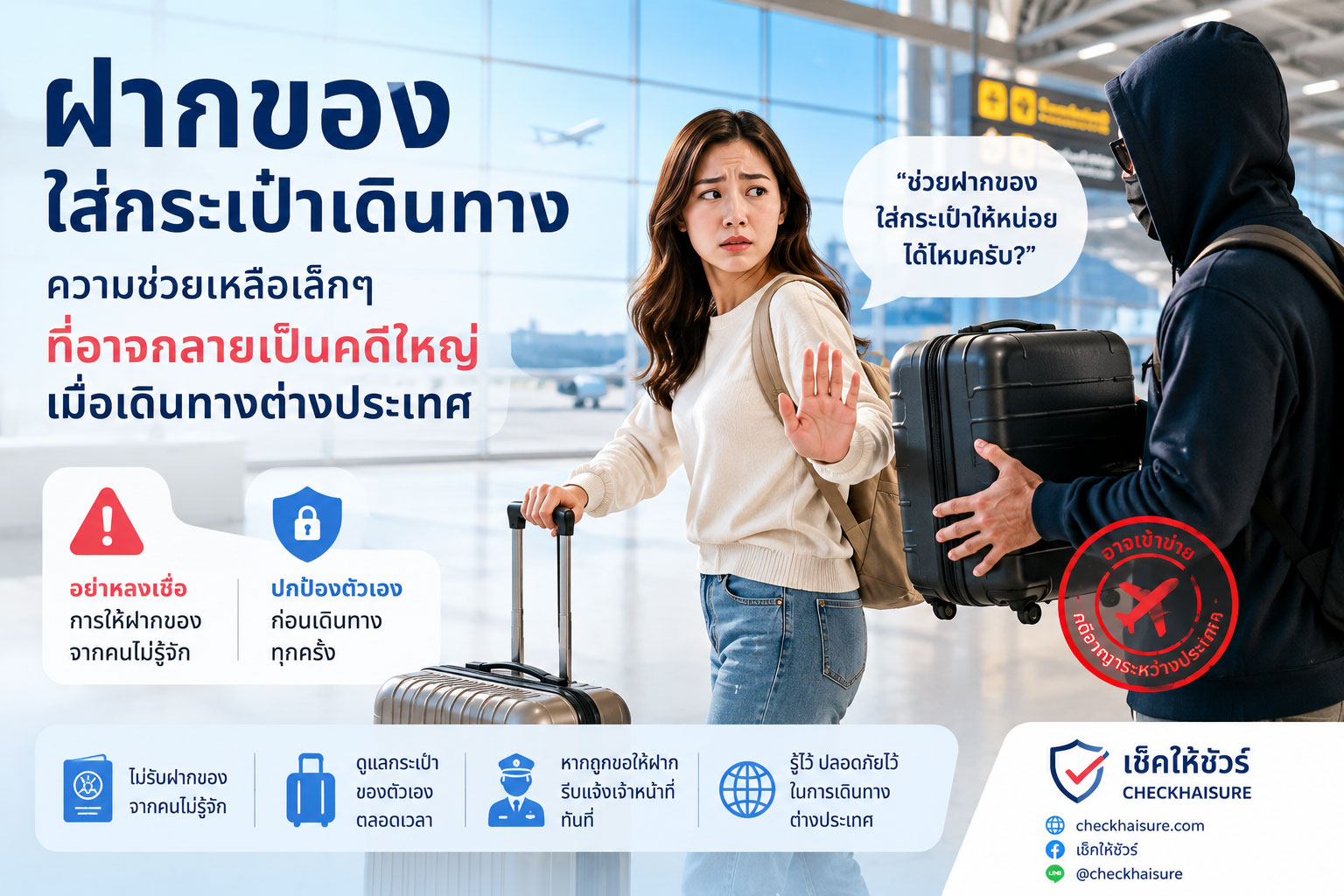
เวลาไปเที่ยวต่างประเทศเป็นกลุ่ม เรามักเจอบรรยากาศที่เป็นกันเอง
เริ่มจากรู้จักกันในกลุ่มท่องเที่ยว
คุยกันใน Facebook
แชร์แผนเดินทาง
ถามเรื่องตั๋วเครื่องบิน โรงแรม สถานที่เที่ยว
แล้วค่อยๆ รู้สึกเหมือนเป็นเพื่อนร่วมทริปกันจริงๆ
บางคนอาจเพิ่งรู้จักกันไม่นาน แต่เพราะคุยกันหลายวันหรือหลายสัปดาห์ จึงเริ่มรู้สึกไว้ใจ
จนถึงวันเดินทาง ที่สนามบิน ระหว่างชั่งน้ำหนักกระเป๋าหรือเช็กอิน อาจมีใครบางคนพูดขึ้นมาว่า
“กระเป๋าเราน้ำหนักเกินนิดเดียว ช่วยใส่ของนี้ในกระเป๋าให้หน่อยได้ไหม”
“ของเบามาก แค่ฝากไว้ในกระเป๋าเธอก่อน”
“ช่วยแบ่งน้ำหนักหน่อย เดี๋ยวถึงปลายทางค่อยเอาคืน”
“ไม่ใช่ของผิดกฎหมายหรอก แค่ของใช้ส่วนตัว”
“เราเดินทางด้วยกันอยู่แล้ว ไม่น่ามีอะไร”
คำขอแบบนี้อาจดูเล็กมาก
แต่ในการเดินทางระหว่างประเทศ มันไม่ใช่เรื่องเล็กเลย
เพราะทันทีที่ของนั้นอยู่ในกระเป๋าของคุณ มันอาจถูกมองว่าเป็นความรับผิดชอบของคุณ
และถ้าของข้างในเป็นยาเสพติด ของผิดกฎหมาย หรือสิ่งต้องห้าม ผลที่ตามมาอาจรุนแรงกว่าที่คิด
ความเสี่ยงไม่ได้เริ่มที่สนามบิน แต่อาจเริ่มตั้งแต่ “การสร้างความไว้ใจ” ก่อนเดินทาง
ภัยลักษณะนี้อาจไม่ได้เริ่มจากคนแปลกหน้าที่เดินเข้ามาขอฝากกระเป๋าแบบชัดเจน
เพราะถ้าเป็นคนแปลกหน้าทันที หลายคนคงปฏิเสธได้ง่าย
แต่สิ่งที่น่ากังวลกว่าคือการสร้างความสัมพันธ์มาก่อน
เช่น สร้างกลุ่มท่องเที่ยว
ชวนคนที่อยากหาเพื่อนเที่ยวต่างประเทศ
พูดคุยเป็นกันเอง
ช่วยตอบคำถาม
แนะนำเส้นทาง
ทำตัวเหมือนเพื่อนร่วมทริปที่ไว้ใจได้
แล้วค่อยขอความช่วยเหลือในวันเดินทาง
เมื่อมีความรู้สึกว่า “เราเป็นกลุ่มเดียวกัน” การปฏิเสธจะยากขึ้น
โดยเฉพาะถ้าอีกฝ่ายใช้เหตุผลที่ฟังดูธรรมดา เช่น น้ำหนักกระเป๋าเกิน ต้องแบ่งของ หรือไม่อยากเสียค่าน้ำหนักเพิ่ม
มิจฉาชีพอาจไม่ได้ขอให้เราขนกระเป๋าทั้งใบเสมอไป
บางครั้งอาจเป็นเพียงถุงเล็กๆ
กล่องของฝาก
ซองเอกสาร
กระเป๋าผ้า
ถุงเครื่องสำอาง
ของใช้ส่วนตัว
หรือสิ่งที่ถูกซีลมาอย่างเรียบร้อย
ยิ่งของดูปกติ ยิ่งทำให้คนรับฝากรู้สึกว่าไม่น่ามีอะไร
แต่นั่นคือจุดเสี่ยงที่สุด
คำว่า “ช่วยแบ่งน้ำหนัก” อาจเป็นข้ออ้างที่ฟังดูสมเหตุสมผลเกินไป
ในสนามบิน เรื่องน้ำหนักกระเป๋าเป็นปัญหาที่เกิดขึ้นจริง
หลายคนเคยน้ำหนักเกิน
หลายคนเคยต้องย้ายของจากกระเป๋าใบหนึ่งไปอีกใบ
หลายคนเคยช่วยเพื่อนหรือครอบครัวแบ่งน้ำหนักสัมภาระ
มิจฉาชีพจึงอาจใช้ข้ออ้างนี้ได้ง่ายมาก
เพราะมันฟังดูเป็นเรื่องปกติของการเดินทาง
แต่สิ่งสำคัญคือ ต้องแยกให้ออกระหว่าง “ช่วยคนในครอบครัวหรือคนที่เรารู้จักจริง” กับ “รับของจากคนที่เพิ่งรู้จักหรือยังไม่รู้จักดีพอ”
แม้จะคุยกันในกลุ่มท่องเที่ยวมานาน
แม้จะมีรูปโปรไฟล์จริง
แม้จะดูเป็นคนสุภาพ
แม้จะเดินทางไฟลต์เดียวกัน
แม้จะบอกว่าเป็นเพื่อนร่วมทริป
ก็ยังไม่ควรรับฝากของเข้ากระเป๋า ถ้าคุณไม่ได้เป็นเจ้าของของนั้น และไม่สามารถยืนยันได้เต็มที่ว่าข้างในคืออะไร
เพราะในด่านตรวจของประเทศปลายทาง คำอธิบายว่า “เขาฝากมา” อาจไม่เพียงพอ
กระเป๋าของใคร ความรับผิดชอบอาจตกอยู่ที่คนนั้น
ในการเดินทางระหว่างประเทศ ผู้โดยสารควรรู้เสมอว่าอะไรอยู่ในกระเป๋าของตัวเอง
ไม่ว่าจะเป็นกระเป๋าโหลดใต้ท้องเครื่อง
กระเป๋าถือขึ้นเครื่อง
ถุงของฝาก
ซองเอกสาร
หรือของชิ้นเล็กที่ใครฝากให้ถือผ่านด่าน
เมื่อของนั้นอยู่กับเรา อยู่ในกระเป๋าเรา หรือถูกเช็กอินภายใต้ชื่อเรา ความเสี่ยงทางกฎหมายอาจตามมาที่เรา
ถ้าเจ้าหน้าที่ปลายทางตรวจพบยาเสพติดหรือของผิดกฎหมายในกระเป๋า คำถามแรกมักไม่ใช่ว่า “ใครเป็นเจ้าของจริง”
แต่คือ “ของนี้อยู่ในกระเป๋าของใคร”
และในสถานการณ์จริง การพิสูจน์ว่าเราไม่รู้เห็นอาจไม่ง่ายเลย
โดยเฉพาะเมื่อเราเป็นคนเช็กอินกระเป๋าเอง ถือกระเป๋าเอง หรือรับของจากอีกฝ่ายด้วยความสมัครใจ
บางประเทศมีกฎหมายเกี่ยวกับยาเสพติดและของต้องห้ามที่เข้มงวดมาก โทษอาจรุนแรงถึงจำคุกระยะยาว และกระบวนการพิสูจน์ความบริสุทธิ์ในต่างประเทศอาจใช้เวลา ค่าใช้จ่าย และความเครียดสูงมาก
ของที่ดูธรรมดา อาจถูกซ่อนสิ่งผิดกฎหมายไว้ข้างใน
สิ่งผิดกฎหมายไม่ได้ถูกซ่อนไว้ในรูปแบบที่ดูน่าสงสัยเสมอไป
บางครั้งอาจซ่อนในกระเป๋าที่ดูปกติ
ซ่อนในซับในของกระเป๋า
ซ่อนในกล่องของฝาก
ซ่อนในถุงชา กาแฟ ขนม หรือของใช้
ซ่อนในเสื้อผ้า
ซ่อนในเครื่องสำอาง
ซ่อนในของเล่น
หรือซ่อนในช่องลับที่คนทั่วไปดูไม่ออก
สิ่งที่อันตรายคือ คนรับฝากอาจมองด้วยตาเปล่าแล้วไม่เห็นอะไรผิดปกติ
ต่อให้เปิดดูคร่าวๆ ก็อาจไม่พบ
ต่อให้อีกฝ่ายยืนยันว่า “ไม่มีอะไร” ก็ไม่ได้แปลว่าไม่มีจริง
และต่อให้สิ่งนั้นถูกซีลมาอย่างดี ก็ไม่ควรรับฝาก เพราะของที่ถูกซีลอาจยิ่งทำให้เราไม่รู้ว่าข้างในคืออะไร
หลักที่ปลอดภัยที่สุดคือ
ถ้าคุณไม่ได้แพ็กเอง ไม่ได้ซื้อเอง ไม่ได้เป็นเจ้าของเอง และไม่สามารถรับผิดชอบได้เต็มที่ อย่าใส่ไว้ในกระเป๋าของคุณ
สัญญาณเตือนก่อนเดินทางที่ควรระวัง
หากคุณกำลังจะไปเที่ยวกับกลุ่มที่เพิ่งรู้จัก หรือเดินทางกับคนที่รู้จักกันผ่านออนไลน์ ควรระวังหากมีสัญญาณเหล่านี้
อีกฝ่ายพยายามสร้างความสนิทเร็วผิดปกติ
ชวนเดินทางเป็นกลุ่ม แต่ข้อมูลตัวตนจริงไม่ชัดเจน
เปลี่ยนแผนบ่อย หรือทำให้ทุกอย่างดูรีบในวันเดินทาง
ขอฝากของในกระเป๋าของคุณโดยอ้างว่าน้ำหนักเกิน
ขอฝากของที่ถูกซีล ปิดสนิท หรือไม่ให้เปิดดู
บอกว่าเป็นของใช้ส่วนตัว แต่ไม่ยอมอธิบายรายละเอียด
เร่งให้คุณช่วย เพราะใกล้ถึงเวลาเช็กอินหรือ boarding
ทำให้คุณรู้สึกผิดถ้าปฏิเสธ
บอกว่า “แค่นิดเดียวเอง” หรือ “ไม่เป็นไรหรอก”
ขอให้คุณโหลดกระเป๋าหรือถือของแทน แต่บอกว่าจะรับคืนที่ปลายทาง
หากเจอข้อใดข้อหนึ่ง ควรหยุดและปฏิเสธอย่างสุภาพแต่ชัดเจน
เพราะการเกรงใจไม่ควรมีค่ามากกว่าความปลอดภัยและอิสรภาพของเรา
ประโยคปฏิเสธที่ใช้ได้จริง
บางครั้งเราไม่ได้รับฝากของเพราะอยากเสี่ยง แต่เพราะไม่รู้จะปฏิเสธอย่างไร
คุณสามารถใช้ประโยคง่ายๆ เช่น
“ขอโทษนะ เรารับฝากของเข้ากระเป๋าไม่ได้จริงๆ เป็นกฎส่วนตัวเวลาเดินทางต่างประเทศ”
“เราไม่สามารถรับผิดชอบของที่เราไม่ได้แพ็กเองได้”
“ถ้าน้ำหนักเกิน แนะนำให้ไปจัดการกับเคาน์เตอร์สายการบินดีกว่า”
“เรื่องนี้เกี่ยวกับด่านตรวจและกฎหมายปลายทาง เราขอไม่รับฝากนะ”
“เราเข้าใจ แต่เราต้องขอปฏิเสธ เพราะเราไม่รับของจากใครใส่กระเป๋าเวลาเดินทาง”
ไม่จำเป็นต้องอธิบายยาว
ไม่จำเป็นต้องโต้เถียง
ไม่จำเป็นต้องพิสูจน์ว่าอีกฝ่ายเป็นคนไม่ดี
เพียงแค่ยืนยันว่า “ไม่รับฝาก” ก็พอ
คนที่หวังดีจริงควรเข้าใจ
แต่ถ้าอีกฝ่ายโกรธ กดดัน หรือพยายามทำให้เรารู้สึกผิด นั่นยิ่งเป็นสัญญาณว่าเราตัดสินใจถูกแล้ว
อย่าปล่อยกระเป๋าไว้กับคนอื่น แม้เพียงช่วงสั้นๆ
อีกเรื่องที่สำคัญไม่แพ้กันคือ อย่าปล่อยกระเป๋าของคุณให้อยู่กับคนอื่นโดยไม่มีการดูแล
ในสนามบิน โรงแรม รถรับส่ง หรือจุดพักระหว่างเดินทาง อย่าวางกระเป๋าทิ้งไว้แล้วให้คนที่เพิ่งรู้จักเฝ้าแทน
อย่าให้ใครช่วยถือกระเป๋าไปไกลจากสายตา
อย่าให้ใครเปิดกระเป๋าเพื่อ “ช่วยจัดของ”
อย่าให้ใครเข้าใกล้กระเป๋าในจังหวะที่คุณไม่เห็น
และอย่าฝากกระเป๋าไว้กับคนที่คุณไม่มั่นใจ
เพราะความเสี่ยงไม่ได้มีแค่การรับของเพิ่ม
แต่อาจรวมถึงการถูกใส่ของเข้าไปในกระเป๋าโดยที่เราไม่รู้ตัว
ก่อนเช็กอิน ควรตรวจสอบว่ากระเป๋ายังอยู่ในสภาพเดิม ล็อกแน่นหนา ไม่มีรอยเปิด ไม่มีของแปลกเพิ่ม และป้ายชื่อหรือ luggage tag ถูกต้อง
หลังเช็กอิน ควรเก็บเอกสาร baggage claim tag ไว้ให้ดี และไม่ทิ้ง boarding pass หรือ tag ที่มีข้อมูลส่วนตัวในที่สาธารณะ
ถ้ามีคนขอฝากของที่สนามบิน ควรทำอย่างไร
ถ้ามีคนขอฝากของใส่กระเป๋าหรือขอให้ถือของแทนที่สนามบิน ให้ปฏิเสธทันที
หากอีกฝ่ายอ้างว่าน้ำหนักเกิน ให้แนะนำให้ติดต่อเจ้าหน้าที่สายการบิน
หากอีกฝ่ายบอกว่าเป็นของสำคัญ ให้บอกให้เขาถือเองหรือโหลดในชื่อของเขาเอง
หากอีกฝ่ายพยายามกดดัน ให้เดินออกจากสถานการณ์และแจ้งเจ้าหน้าที่สนามบินหรือสายการบินหากรู้สึกไม่ปลอดภัย
หากคุณเผลอรับของมาแล้วแต่ยังไม่ได้ผ่านด่านหรือเช็กอิน ให้รีบคืนทันที และอย่านำเข้าไปในพื้นที่ควบคุม
หากมีของไม่ทราบที่มาอยู่ในกระเป๋าของคุณ ให้แจ้งเจ้าหน้าที่ก่อนเดินทางต่อ อย่าพยายามแก้ปัญหาเองเงียบๆ
ในสนามบิน การซื่อสัตย์และแจ้งเจ้าหน้าที่เร็ว มักปลอดภัยกว่าการพยายามรับมือเองเพราะกลัวเสียหน้า
สำหรับทริปที่รวมตัวจากกลุ่มออนไลน์ ควรตั้งกติกาก่อนเดินทาง
ถ้าคุณเข้าร่วมทริปกับคนที่รู้จักจาก Facebook group, LINE group หรือกลุ่มท่องเที่ยวออนไลน์ ควรตั้งกติกาให้ชัดตั้งแต่ก่อนเดินทาง
เช่น
ทุกคนรับผิดชอบสัมภาระของตัวเอง
ไม่มีการฝากของใส่กระเป๋าคนอื่น
ไม่มีการช่วยโหลดกระเป๋าแทนกัน หากไม่ใช่ครอบครัวหรือคนที่รู้จักจริง
หากน้ำหนักเกิน ให้จัดการกับสายการบินโดยตรง
ห้ามรับพัสดุ ถุง กล่อง หรือซองจากคนอื่นเพื่อนำข้ามประเทศ
หากมีใครฝ่าฝืนหรือพยายามกดดัน ต้องแจ้งหัวหน้าทริปหรือเจ้าหน้าที่ทันที
กติกาแบบนี้อาจดูเข้มงวด
แต่ในความจริง มันช่วยปกป้องทุกคนในกลุ่ม
เพราะการเดินทางต่างประเทศไม่ใช่แค่เรื่องตั๋ว เครื่องบิน และโรงแรม
แต่เกี่ยวข้องกับกฎหมายของหลายประเทศ และความรับผิดชอบต่อสิ่งที่อยู่กับตัวเรา
ถ้าถูกจับที่ปลายทางแล้วบอกว่า “ของไม่ใช่ของฉัน” อาจไม่ง่ายอย่างที่คิด
นี่คือจุดที่หลายคนมองข้าม
มิจฉาชีพอาจคิดเผื่อไว้แล้วว่า ถ้าถูกจับ เขาจะปฏิเสธว่าไม่ใช่ของตัวเอง
เขาอาจบอกว่าไม่รู้เรื่อง
บอกว่าไม่ได้ฝาก
บอกว่าของนั้นเป็นของคุณ
บอกว่าเขาไม่เคยขอให้คุณถือ
หรือหายตัวไปทันทีเมื่อเกิดปัญหา
ในขณะที่คุณเป็นคนที่มีกระเป๋าใบนั้นอยู่กับตัว
เป็นคนเช็กอิน
เป็นคนรับ baggage tag
และเป็นคนถูกตรวจพบของผิดกฎหมาย
การพิสูจน์ว่าคุณเป็นเหยื่ออาจต้องใช้หลักฐานจำนวนมาก เช่น แชท ภาพจากกล้องวงจรปิด พยาน หลักฐานการสนทนา และการตรวจสอบจากหลายหน่วยงาน
ซึ่งทั้งหมดนี้อาจเกิดขึ้นหลังจากคุณถูกควบคุมตัวแล้ว
ดังนั้น วิธีที่ดีที่สุดไม่ใช่การหวังว่าจะอธิบายได้ภายหลัง
แต่คือการไม่ยอมให้ของของคนอื่นเข้ามาอยู่ในกระเป๋าของเราตั้งแต่แรก
ประโยคที่ควรจำ: กระเป๋าของเรา ต้องมีแต่ของที่เรารู้และรับผิดชอบได้
ก่อนเดินทางต่างประเทศ ให้จำหลักง่ายๆ นี้ไว้
กระเป๋าของเรา ควรมีแต่ของที่เราแพ็กเอง
ของที่เราซื้อเอง
ของที่เรารู้ที่มา
และของที่เราสามารถอธิบายได้ทุกชิ้น
ถ้ามีใครขอฝากของ ไม่ว่าจะเล็กแค่ไหน
ถ้าเราไม่ได้รู้แน่ชัดว่าข้างในคืออะไร
ถ้าเราไม่ได้เป็นเจ้าของ
ถ้าเราไม่สามารถรับผิดชอบผลทางกฎหมายได้
คำตอบควรเป็น “ไม่รับฝาก”
เพราะความเกรงใจอาจใช้เวลาเพียงไม่กี่วินาที
แต่คดีในต่างประเทศอาจเปลี่ยนชีวิตทั้งชีวิต
สรุป: อย่าให้คำว่า “ช่วยหน่อย” พาเราไปสู่ความเสี่ยงข้ามประเทศ
ภัยจากการรับฝากของหรือกระเป๋าในการเดินทางต่างประเทศไม่ใช่เรื่องไกลตัว
ในหลายประเทศมีการเตือนผู้เดินทางว่าอย่ารับฝากกระเป๋า พัสดุ หรือสิ่งของจากผู้อื่น เพราะอาจมีของผิดกฎหมายซ่อนอยู่
แม้คนขอฝากจะดูเป็นมิตร
แม้จะรู้จักกันจากกลุ่มท่องเที่ยว
แม้จะเดินทางไฟลต์เดียวกัน
แม้จะบอกว่าแค่ช่วยแบ่งน้ำหนัก
แม้จะยืนยันว่าไม่มีอะไรผิดกฎหมาย
ก็ไม่ควรนำของนั้นเข้ากระเป๋าของคุณ
ก่อนบิน ให้ถามตัวเองเสมอว่า
ของทุกชิ้นในกระเป๋านี้ เราแพ็กเองหรือไม่
เรารู้ที่มาของทุกชิ้นหรือไม่
เราสามารถอธิบายต่อเจ้าหน้าที่ได้หรือไม่
และเราพร้อมรับผิดชอบตามกฎหมายของประเทศปลายทางหรือไม่
ถ้าคำตอบไม่ชัดเจน อย่าเอาของนั้นไปด้วย
การปฏิเสธคำขอเล็กๆ ที่สนามบิน อาจเป็นการปกป้องอิสรภาพ ชีวิต และอนาคตของเราเอง
เดินทางให้สนุกได้
แต่ต้องไม่รับฝากความเสี่ยงของใครไว้ในกระเป๋าของเรา
Adding Items to Your Luggage: A Small Favor That Could Become a Serious Case When Traveling Abroad
When traveling overseas as a group, the atmosphere can feel friendly and relaxed.
It may begin with meeting people in a travel group,
chatting on Facebook,
sharing travel plans,
discussing flights, hotels, and places to visit,
and gradually feeling like real travel companions.
Some people may have only known each other for a short time. But after chatting for days or weeks, trust can start to build.
Then, on the travel day at the airport, while bags are being weighed or checked in, someone may say:
“My luggage is just a little overweight. Can you put this in your bag for me?”
“It is very light. Please just keep it in your luggage for now.”
“Can you help share the weight? I will take it back when we arrive.”
“It is nothing illegal, just personal items.”
“We are traveling together anyway. It should be fine.”
This kind of request may seem very small.
But when traveling internationally, it is not small at all.
Because once that item is inside your luggage, it may become your responsibility.
And if the item contains drugs, illegal goods, or prohibited items, the consequences can be much more serious than you expect.
The Risk May Not Start at the Airport. It May Start from “Building Trust” Before the Trip
This type of danger may not begin with a complete stranger walking up to you and clearly asking you to carry a bag.
If that happened, many people would refuse immediately.
The more concerning situation is when trust has already been built in advance.
For example, someone may create a travel group,
invite people who want travel companions,
chat in a friendly way,
answer questions,
recommend routes,
act like a trustworthy trip member,
and then ask for help on the travel day.
Once we feel that “we are in the same group,” refusing becomes harder.
Especially if the reason sounds normal, such as overweight luggage, needing to split items, or trying to avoid extra baggage fees.
A scammer may not always ask you to carry a whole suitcase.
Sometimes it may be just a small bag,
a gift box,
an envelope,
a tote bag,
a cosmetics pouch,
personal items,
or something that appears neatly sealed.
The more normal the item looks, the easier it is for someone to think there is no problem.
And that is exactly where the risk begins.
“Helping Share the Weight” May Sound Too Reasonable
At airports, overweight luggage is a real and common issue.
Many people have had bags that were slightly overweight.
Many have moved items from one bag to another.
Many have helped family members or close friends distribute luggage weight.
That is why scammers may use this excuse easily.
It sounds like a normal travel problem.
But the important thing is to separate “helping family or someone you truly know” from “accepting items from someone you just met or do not know well enough.”
Even if you have chatted in a travel group for a long time,
even if their profile photo looks real,
even if they seem polite,
even if they are on the same flight,
even if they say they are your travel companion,
you should not accept items into your luggage if you are not the owner and cannot fully confirm what is inside.
Because at the destination airport, saying “someone asked me to carry it” may not be enough.
Your Luggage May Become Your Responsibility
When traveling internationally, every passenger should always know what is inside their own luggage.
This includes checked luggage,
carry-on bags,
gift bags,
document envelopes,
or even small items someone asks you to carry through airport control.
If an item is with you, inside your luggage, or checked in under your name, the legal risk may fall on you.
If officers at the destination find drugs or illegal items in your bag, the first question may not be “Who is the real owner?”
It may be “Whose luggage is this?”
In real situations, proving that you did not know what was inside can be very difficult.
Especially if you checked in the bag yourself, carried it yourself, or accepted the item voluntarily.
Some countries have very strict laws for drugs and prohibited goods. Penalties may include long prison sentences, and proving innocence abroad can require time, money, legal support, and extreme stress.
Normal-Looking Items Can Hide Illegal Goods
Illegal items are not always hidden in suspicious-looking packages.
They may be hidden in ordinary bags,
inside suitcase linings,
inside gift boxes,
inside tea, coffee, snacks, or personal products,
inside clothes,
inside cosmetics,
inside toys,
or inside secret compartments that ordinary people cannot detect.
The dangerous part is that the person accepting the item may not see anything unusual.
Even opening it briefly may not reveal anything.
Even if the other person says, “There is nothing inside,” that does not make it true.
And even if the item is sealed neatly, you should not accept it, because a sealed item may make it even harder for you to know what is inside.
The safest rule is:
If you did not pack it yourself, did not buy it yourself, do not own it, and cannot take full responsibility for it, do not put it in your luggage.
Warning Signs Before Traveling
If you are joining a trip with people you recently met, or traveling with people you know only through online groups, be careful if you notice these signs:
The person tries to become close to you unusually quickly.
The trip is organized through a group, but the person’s real identity is unclear.
Plans keep changing, or everything becomes rushed on the travel day.
They ask to put items in your luggage, claiming their bag is overweight.
They ask you to carry sealed items, closed packages, or items they do not want you to open.
They say it is personal belongings but do not explain clearly what the items are.
They pressure you because check-in or boarding time is approaching.
They make you feel guilty if you refuse.
They say, “It is just a small thing,” or “It will be fine.”
They ask you to check in a bag or carry something for them, saying they will take it back at the destination.
If you notice any of these signs, stop and refuse politely but clearly.
Being polite should never cost more than your safety and freedom.
Practical Ways to Refuse
Sometimes people accept items not because they want to take a risk, but because they do not know how to say no.
You can use simple sentences such as:
“I’m sorry, but I do not accept items into my luggage when traveling internationally. It is my personal rule.”
“I cannot take responsibility for anything I did not pack myself.”
“If your luggage is overweight, it is better to handle it with the airline counter.”
“This involves airport checks and the law at the destination, so I cannot accept it.”
“I understand, but I have to say no. I do not carry other people’s items in my luggage when I travel.”
You do not need to explain too much.
You do not need to argue.
You do not need to prove that the other person is a bad person.
Just clearly say that you cannot accept the item.
A person with good intentions should understand.
But if they become angry, pressure you, or try to make you feel guilty, that is another sign that you made the right decision.
Do Not Leave Your Luggage with Others, Even for a Short Time
Another important point is that you should not leave your luggage with other people without supervision.
At the airport, hotel, transfer vehicle, or rest stop, do not leave your luggage with someone you recently met.
Do not let someone carry your bag out of your sight.
Do not let someone open your bag to “help organize things.”
Do not let anyone get close to your luggage when you cannot see it.
And do not leave your luggage with someone you are not sure you can trust.
The risk is not only accepting extra items.
It may also include someone putting something into your luggage without your knowledge.
Before check-in, make sure your luggage is in the same condition, properly locked, has no signs of being opened, contains no unknown items, and has the correct name tag or luggage tag.
After check-in, keep your baggage claim tag safely. Do not throw away boarding passes or luggage tags with personal information in public areas.
What to Do If Someone Asks You to Carry an Item at the Airport
If someone asks you to put an item in your luggage or carry something for them at the airport, refuse immediately.
If they say their bag is overweight, suggest that they contact the airline staff.
If they say it is an important item, tell them to carry it themselves or check it in under their own name.
If they pressure you, step away from the situation and inform airport or airline staff if you feel unsafe.
If you already accepted the item but have not passed security or checked in yet, return it immediately and do not take it into the controlled area.
If there is an unknown item in your luggage, inform airport staff before continuing. Do not try to solve it quietly by yourself.
At an airport, being honest and reporting early is usually safer than trying to handle a risky situation alone because you feel embarrassed.
For Trips Organized Through Online Groups, Set Rules Before Traveling
If you join a trip through a Facebook group, LINE group, or online travel group, it is safer to set clear rules before the trip.
For example:
Everyone is responsible for their own luggage.
No one should put items in another person’s luggage.
No one should help check in another person’s bag unless they are family or someone they truly know.
If luggage is overweight, it should be handled directly with the airline.
No one should accept parcels, bags, boxes, or envelopes from others to carry across borders.
If anyone breaks these rules or pressures others, it should be reported to the trip leader or airport staff immediately.
These rules may sound strict.
But in reality, they help protect everyone in the group.
International travel is not only about tickets, flights, and hotels.
It also involves the laws of multiple countries and your responsibility for anything that travels with you.
If You Are Arrested at the Destination, Saying “It Is Not Mine” May Not Be Easy
This is the point many people overlook.
A scammer may have already planned what to say if something goes wrong.
They may deny knowing anything.
They may say they never asked you to carry it.
They may claim the item belongs to you.
They may disappear immediately.
Or they may simply refuse to take responsibility.
Meanwhile, you are the person who has the luggage.
You checked it in.
You received the baggage tag.
And you are the person found with the illegal item.
Proving that you are a victim may require a lot of evidence, such as chat messages, CCTV footage, witnesses, conversation records, and investigation by multiple agencies.
And all of this may happen only after you have already been detained.
So the best protection is not hoping you can explain later.
The best protection is making sure other people’s items never enter your luggage in the first place.
A Sentence to Remember: Your Luggage Should Contain Only Items You Know and Can Take Responsibility For
Before traveling overseas, remember this simple rule:
Your luggage should contain only items you packed yourself,
items you bought yourself,
items you know the source of,
and items you can explain clearly to authorities.
If someone asks you to carry something, no matter how small it is,
if you do not know exactly what is inside,
if you are not the owner,
if you cannot accept the legal responsibility,
your answer should be “no.”
A moment of politeness may last only a few seconds.
But a legal case overseas can change an entire life.
Conclusion: Do Not Let “Please Help Me” Put You at Cross-Border Risk
The risk of accepting items or luggage from others when traveling abroad is not a distant issue.
Many countries warn travelers not to carry bags, parcels, or items for other people because illegal goods may be hidden inside.
Even if the person seems friendly,
even if you met through a travel group,
even if you are on the same flight,
even if they say they only need help sharing luggage weight,
even if they insist there is nothing illegal,
you should not put that item in your luggage.
Before flying, always ask yourself:
Did I pack every item in this bag myself?
Do I know the source of every item?
Can I explain every item to airport officers?
Am I ready to accept legal responsibility under the laws of the destination country?
If the answer is unclear, do not take the item.
Refusing a small favor at the airport may protect your freedom, your life, and your future.
Enjoy traveling.
But never carry someone else’s risk in your luggage.

Leave a Reply
You must be logged in to post a comment.