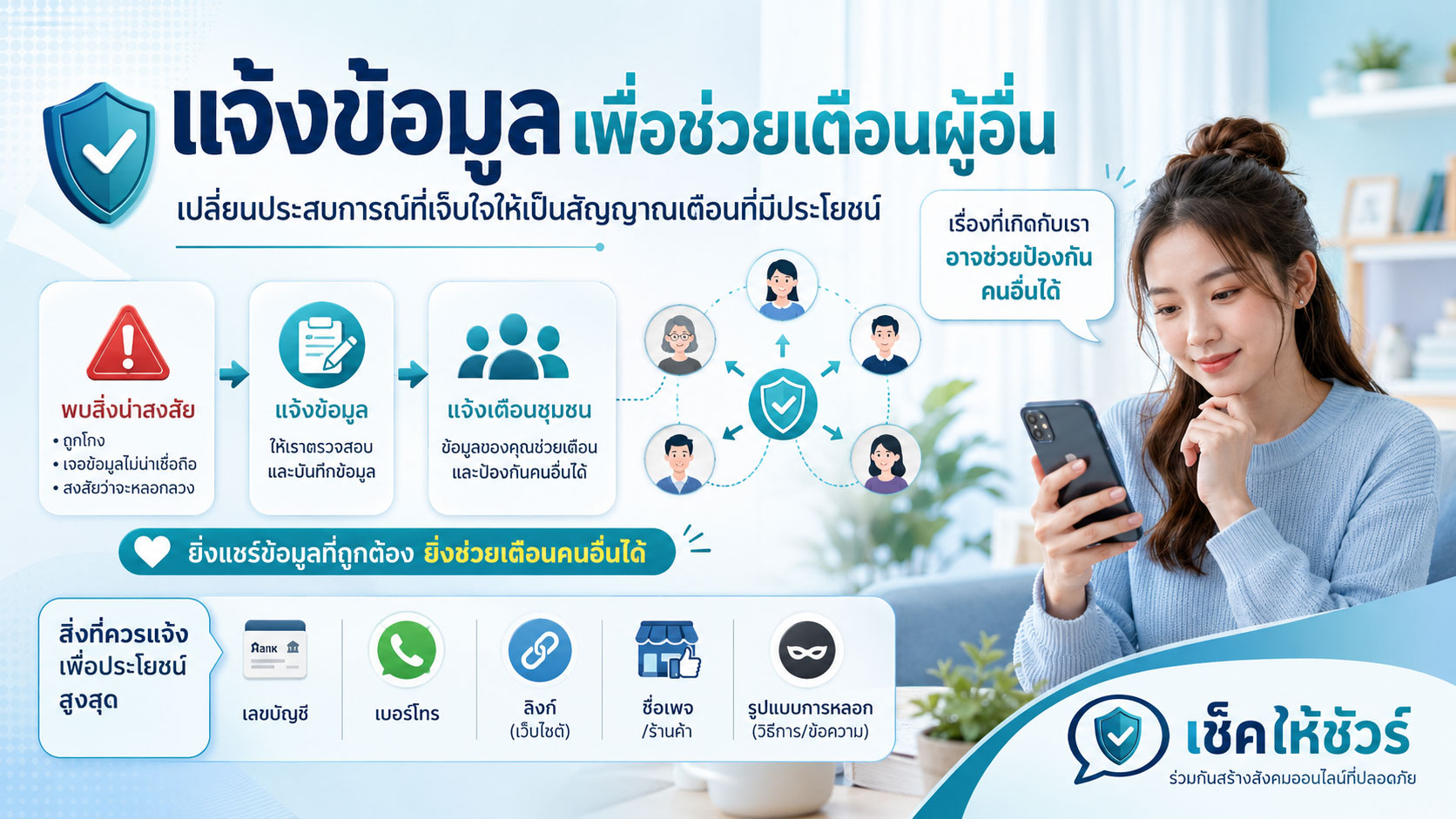
เมื่อเราถูกหลอกออนไลน์ สิ่งที่เสียไปอาจไม่ใช่แค่เงิน
บางคนเสียความมั่นใจ
บางคนเสียความไว้ใจ
บางคนเสียเวลา
บางคนเสียความรู้สึกดีๆ
และบางคนอาจเสียใจมากจนไม่อยากเล่าเรื่องนี้ให้ใครฟังอีก
ความรู้สึกเหล่านี้เข้าใจได้ทั้งหมด
เพราะการถูกหลอกไม่ใช่เรื่องเล็ก โดยเฉพาะเมื่อมิจฉาชีพใช้ความหวัง ความกลัว ความรัก ความรีบ หรือความไว้ใจของเราเป็นเครื่องมือ
แต่หลังจากตั้งหลักได้แล้ว สิ่งหนึ่งที่อาจมีคุณค่ามากคือการ “แจ้งข้อมูลเพื่อช่วยเตือนผู้อื่น”
ไม่ใช่เพื่อซ้ำเติมตัวเอง
ไม่ใช่เพื่อให้ใครมาตัดสิน
ไม่ใช่เพื่อประจานตัวเอง
แต่เพื่อให้ประสบการณ์ของเราอาจช่วยให้คนอื่นหยุดทัน ก่อนจะเสียหายเหมือนกัน
ข้อมูลเล็กๆ จากคนหนึ่ง อาจช่วยอีกหลายคนได้
บางครั้งสิ่งที่เรารู้สึกว่าเป็นข้อมูลเล็กน้อย อาจเป็นสัญญาณสำคัญสำหรับคนอื่น
เช่น เลขบัญชีที่ใช้รับเงิน
ชื่อบัญชีที่มิจฉาชีพใช้
เบอร์โทรที่ติดต่อมา
ลิงก์เว็บไซต์ปลอม
ชื่อเพจหรือร้านค้า
รูปแบบข้อความที่ใช้หลอก
ชื่อแอปที่ชวนให้ติดตั้ง
รูปแบบโฆษณาที่พาไปเว็บปลอม
หรือวิธีพูดที่ใช้กดดันให้รีบโอนเงิน
ข้อมูลเหล่านี้อาจไม่ได้ช่วยให้เราย้อนเวลากลับไปได้
แต่สามารถช่วยให้คนอื่นตรวจเจอความเสี่ยงเร็วขึ้น
บางคนอาจกำลังจะโอนเงินเข้าบัญชีเดียวกัน
บางคนอาจกำลังจะกดลิงก์เดียวกัน
บางคนอาจกำลังคุยกับเพจหรือโปรไฟล์เดียวกัน
บางคนอาจกำลังลังเลว่า “เรื่องนี้แปลกไหม”
ถ้าเขาได้เห็นข้อมูลเตือนภัยก่อน อาจช่วยให้เขาหยุดคิดและตรวจสอบเพิ่มได้ทัน
การแจ้งข้อมูล ไม่ได้แปลว่าต้องเล่าทุกอย่างในชีวิตส่วนตัว
หลายคนไม่อยากเตือนคนอื่น เพราะกลัวว่าต้องเล่ารายละเอียดทั้งหมดของตัวเอง
กลัวคนรู้ว่าโอนไปเท่าไร
กลัวคนถามว่าทำไมถึงเชื่อ
กลัวถูกตำหนิ
กลัวถูกแชร์ต่อแบบเสียหาย
หรือกลัวว่าข้อมูลส่วนตัวของตัวเองจะหลุดไปมากกว่าเดิม
จริงๆ แล้ว การแจ้งข้อมูลเพื่อเตือนผู้อื่นไม่จำเป็นต้องเปิดเผยทุกอย่าง
เราสามารถแชร์เฉพาะข้อมูลที่ช่วยให้คนอื่นระวังได้ โดยปิดข้อมูลส่วนตัวที่ไม่จำเป็น
เช่น อธิบายรูปแบบการหลอก
บอกชื่อเพจหรือเว็บไซต์ต้องสงสัย
แจ้งเลขบัญชีหรือเบอร์โทรที่เกี่ยวข้องตามความเหมาะสม
แชร์ภาพตัวอย่างข้อความหลอกโดยปิดข้อมูลส่วนตัว
หรือเล่าว่ามิจฉาชีพใช้วิธีเร่งให้โอนเงินอย่างไร
สิ่งสำคัญคือ เตือนให้เป็นประโยชน์ ไม่ใช่เปิดเผยจนตัวเองเสี่ยงเพิ่ม
ก่อนแจ้งข้อมูล ควรเก็บหลักฐานไว้ก่อน
ก่อนจะโพสต์ แชร์ หรือแจ้งข้อมูลไปยังแพลตฟอร์มใด ควรเก็บหลักฐานต้นฉบับไว้ก่อน
เช่น แชท สลิปโอนเงิน ลิงก์ เว็บไซต์ ชื่อบัญชี รูปโปรไฟล์ เบอร์โทร เลขพัสดุ หรือภาพหน้าจอที่เกี่ยวข้อง
เพราะหลังจากรายงานหรือโพสต์เตือน บัญชีมิจฉาชีพอาจเปลี่ยนชื่อ ลบเพจ ปิดเว็บไซต์ หรือหายไปทันที
ถ้าเรายังไม่ได้เก็บหลักฐานไว้ อาจย้อนกลับไปดูไม่ได้อีก
ควรเก็บทั้งภาพหน้าจอและข้อมูลที่เป็นข้อความ เช่น ลิงก์ URL ชื่อบัญชี เลขบัญชี และวันเวลาที่เกิดเหตุ
หากจะส่งข้อมูลให้ผู้อื่นช่วยตรวจสอบ ควรทำสำเนาที่ปิดข้อมูลส่วนตัวก่อน แต่เก็บไฟล์ต้นฉบับไว้ในที่ปลอดภัย
หลักฐานที่ดีไม่จำเป็นต้องสวยงาม
แต่ควรชัดเจนพอให้เห็นว่าเกิดอะไรขึ้น ใครเกี่ยวข้อง ช่องทางไหน และมีพฤติกรรมเสี่ยงอย่างไร
แจ้งที่ไหนได้บ้าง
การแจ้งข้อมูลเพื่อช่วยเตือนผู้อื่นทำได้หลายช่องทาง ขึ้นอยู่กับประเภทของเหตุการณ์
ถ้าเป็นเพจปลอม บัญชีปลอม หรือโฆษณาหลอก ควรรายงานผ่านแพลตฟอร์มนั้น เช่น Facebook, Instagram, TikTok, LINE หรือ marketplace ที่เกี่ยวข้อง
ถ้าเป็นเว็บปลอม ลิงก์หลอก หรือเว็บที่แอบอ้างหน่วยงาน ควรเก็บ URL และแจ้งผ่านช่องทางร้องเรียนหรือแจ้งเหตุที่เกี่ยวข้อง
ถ้าเกี่ยวกับบัญชีรับโอนเงิน ควรแจ้งธนาคารและหน่วยงานที่เกี่ยวข้องก่อน แล้วจึงพิจารณาเตือนคนอื่นตามความเหมาะสม
ถ้าเป็นร้านค้าออนไลน์ต้องสงสัย อาจแจ้งข้อมูลในพื้นที่รีวิวหรือแพลตฟอร์มที่เกี่ยวข้อง โดยใช้ถ้อยคำระมัดระวังและยึดตามหลักฐาน
ถ้าเป็นรูปแบบการหลอกใหม่ๆ ที่อาจกระทบคนจำนวนมาก การแชร์บทเรียนหรือสัญญาณเตือนในชุมชนออนไลน์ก็อาจช่วยได้มาก
และถ้าคุณต้องการให้ข้อมูลเพื่อช่วยเตือนคนอื่นในเชิงสาธารณะ ควรเขียนให้เน้น “รูปแบบความเสี่ยง” มากกว่าเน้นดราม่าหรืออารมณ์ชั่ววูบ
เขียนเตือนอย่างไรให้มีประโยชน์และปลอดภัย
โพสต์เตือนภัยที่ดีไม่จำเป็นต้องยาวมาก
แต่ควรตอบคำถามสำคัญให้คนอ่านเข้าใจได้เร็ว เช่น
เกิดเหตุจากช่องทางไหน
มิจฉาชีพอ้างว่าเป็นใคร
ใช้วิธีหลอกอย่างไร
ให้กดลิงก์ โอนเงิน ติดตั้งแอป หรือกรอกข้อมูลอะไร
มีเลขบัญชี เบอร์โทร ลิงก์ หรือชื่อเพจที่เกี่ยวข้องหรือไม่
มีจุดสังเกตอะไรที่คนอื่นควรระวัง
และหลังจากรู้ตัว คุณทำอะไรต่อ
ตัวอย่างการเขียนที่ปลอดภัยกว่า เช่น
“พบเพจโฆษณาขายสินค้าราคาถูกผิดปกติ กดเข้าไปแล้วพาไปเว็บสั่งซื้อที่ไม่มีข้อมูลบริษัทชัดเจน และให้จ่าย COD เป็นค่าเริ่มต้น หลังรับของพบว่าสินค้าไม่ตรงกับโฆษณา แนะนำให้ตรวจสอบชื่อร้านและเว็บไซต์ก่อนสั่งซื้อ”
หรือ
“ได้รับ SMS อ้างว่าเป็นธนาคาร แจ้งว่าบัญชีมีปัญหาและให้กดลิงก์เพื่อยืนยันตัวตน ลิงก์ไม่ใช่โดเมนทางการของธนาคาร แนะนำอย่ากดลิงก์ และให้เปิดแอปธนาคารหรือติดต่อ Call Center ทางการเอง”
การเล่าแบบนี้ช่วยให้คนอ่านเห็นรูปแบบและป้องกันตัวได้ โดยไม่จำเป็นต้องเปิดเผยข้อมูลส่วนตัวของผู้เสียหายเกินไป
ข้อมูลที่ควรปิดก่อนแชร์สาธารณะ
ก่อนโพสต์ลงสาธารณะ ควรตรวจให้ดีว่ามีข้อมูลส่วนตัวของคุณหรือคนอื่นปะปนอยู่หรือไม่
ข้อมูลที่ควรปิด ได้แก่
เลขบัตรประชาชน
ที่อยู่บ้าน
เบอร์โทรส่วนตัวของผู้เสียหาย
เลขบัญชีธนาคารของตัวเอง
QR code หรือข้อมูลทางการเงินส่วนตัว
รหัส OTP
รหัสผ่าน
อีเมลส่วนตัว
รูปบัตรประชาชนหรือเอกสารส่วนตัว
ข้อมูลของคนในครอบครัว
หรือรูปภาพส่วนตัวที่ไม่เกี่ยวกับการเตือนภัย
หากต้องการแสดงสลิปโอนเงิน ควรปิดข้อมูลส่วนตัวของผู้โอนบางส่วน แต่เก็บต้นฉบับไว้ใช้กับธนาคารหรือหน่วยงานที่เกี่ยวข้อง
หากต้องการแสดงแชท ควรดูว่ามีข้อมูลส่วนตัวของคุณหลุดอยู่ในข้อความหรือไม่
การเตือนคนอื่นเป็นเรื่องดี แต่ไม่ควรทำให้ข้อมูลของคุณถูกนำไปใช้ต่อโดยคนไม่หวังดี
ระวังการกล่าวหาเกินหลักฐาน
เวลาถูกหลอก เราอาจโกรธมาก และอยากเขียนให้แรงที่สุดเท่าที่จะทำได้
ความรู้สึกนี้เข้าใจได้
แต่ถ้าจะโพสต์เตือนสาธารณะ ควรยึดตามสิ่งที่มีหลักฐานและเล่าอย่างระมัดระวัง
เช่น ใช้คำว่า “ต้องสงสัย”, “ควรระวัง”, “พบพฤติกรรมคล้ายการหลอกลวง”, “ยังไม่สามารถยืนยันตัวตนของร้านได้”, หรือ “ขอให้ตรวจสอบก่อนทำรายการ”
แทนการกล่าวหาที่เกินกว่าหลักฐานที่มี
การเขียนแบบนี้ทำให้โพสต์ดูน่าเชื่อถือมากขึ้น และลดความเสี่ยงที่ข้อมูลจะกลายเป็นปัญหาทางกฎหมายหรือการโต้แย้งภายหลัง
เป้าหมายของการแจ้งเตือนคือช่วยให้คนอื่นระวัง ไม่ใช่ทำให้สถานการณ์ลุกลามเกินจำเป็น
แชร์เพื่อเตือน ไม่ใช่เพื่อให้คนรุมซ้ำเติมเหยื่อ
สิ่งหนึ่งที่ควรระวังในสังคมออนไลน์คือ บางครั้งโพสต์เตือนภัยอาจกลายเป็นพื้นที่ซ้ำเติมผู้เสียหาย
เช่น มีคนถามว่า “ทำไมถึงเชื่อ”
“ของแบบนี้ดูออกง่าย”
“โลภเองหรือเปล่า”
หรือ “ไม่น่าพลาดเลย”
คำพูดเหล่านี้อาจทำให้ผู้เสียหายคนอื่นไม่กล้าออกมาเตือน
ทั้งที่ข้อมูลจากผู้เสียหายมีคุณค่ามากในการป้องกันคนอื่น
ดังนั้น หากเราเป็นคนเขียนโพสต์ ควรใช้โทนที่ช่วยให้คนอ่านรู้เท่าทัน มากกว่าทำให้ใครรู้สึกอาย
และหากเราเป็นคนอ่านโพสต์เตือนภัยของผู้อื่น ก็ควรจำไว้ว่าการถูกหลอกไม่ใช่เรื่องที่ควรถูกซ้ำเติม
วันนี้เขาออกมาเตือน อาจช่วยให้เราไม่พลาดในวันหน้า
ถ้าไม่อยากเปิดเผยตัวเอง ยังช่วยเตือนคนอื่นได้ไหม
ได้
การช่วยเตือนผู้อื่นไม่จำเป็นต้องเปิดเผยตัวตนเสมอไป
คุณอาจแจ้งข้อมูลผ่านช่องทางรายงานของแพลตฟอร์ม
แจ้งหน่วยงานที่เกี่ยวข้อง
ส่งข้อมูลให้คนใกล้ตัวที่อาจเสี่ยง
หรือใช้ช่องทางที่รับข้อมูลเตือนภัยโดยไม่จำเป็นต้องเปิดเผยรายละเอียดส่วนตัวทั้งหมด
คุณอาจเขียนโพสต์แบบไม่ระบุตัวเองมากเกินไป เช่น
“ขอแชร์เป็นอุทาหรณ์จากเหตุการณ์ที่พบ…”
“พบรูปแบบโฆษณาที่ควรระวัง…”
“มีลิงก์ลักษณะนี้ส่งมา ขอให้ตรวจสอบก่อนกด…”
“หากได้รับข้อความแบบนี้ อย่าเพิ่งโอนเงิน…”
การไม่เปิดเผยตัวตนไม่ได้ลดคุณค่าของข้อมูล
สิ่งสำคัญคือข้อมูลนั้นช่วยให้คนอื่นสังเกตความเสี่ยงได้ดีขึ้น
อย่ารีบแชร์ข้อมูลที่ยังไม่ตรวจสอบจนกลายเป็นข่าวปลอม
แม้การเตือนภัยจะสำคัญ แต่ก็ควรระวังการแชร์ข้อมูลที่ยังไม่ชัดเจน
บางครั้งเราอาจได้รับข้อความเตือนภัยต่อๆ กันมา โดยไม่รู้ว่าจริงหรือไม่
บางครั้งรูปภาพอาจเป็นของคนอื่นที่ไม่เกี่ยวข้อง
บางครั้งเพจหรือร้านอาจถูกกล่าวหาโดยไม่มีหลักฐานเพียงพอ
บางครั้งข้อมูลเก่าอาจถูกนำมาแชร์ใหม่จนทำให้คนเข้าใจผิด
ก่อนแชร์ต่อ ควรถามตัวเองว่า
เรารู้แหล่งที่มาของข้อมูลหรือไม่
มีหลักฐานประกอบหรือไม่
เป็นเหตุการณ์ล่าสุดหรือข้อมูลเก่า
ข้อมูลนี้อาจทำให้ใครเสียหายโดยไม่เป็นธรรมหรือไม่
และเรากำลังช่วยเตือน หรือแค่ช่วยกระจายความตื่นตระหนก
การเตือนภัยที่ดีควรช่วยให้คนระวังมากขึ้น ไม่ใช่ทำให้สังคมสับสนมากขึ้น
ทำให้ข้อมูลเตือนภัยอ่านง่าย คนจะนำไปใช้ได้จริง
หากอยากให้โพสต์เตือนภัยมีประโยชน์ ควรเขียนให้อ่านง่าย
เริ่มจากสรุปเหตุการณ์สั้นๆ
ตามด้วยจุดที่ควรระวัง
แล้วปิดท้ายด้วยสิ่งที่แนะนำให้ทำ
ตัวอย่างโครงสร้างง่ายๆ คือ
หนึ่ง เกิดอะไรขึ้น
สอง เจอจากช่องทางไหน
สาม อีกฝ่ายใช้วิธีหลอกอย่างไร
สี่ มีสัญญาณเตือนอะไร
ห้า คนอื่นควรทำอย่างไรถ้าเจอแบบเดียวกัน
ยิ่งโพสต์อ่านง่าย คนยิ่งมีโอกาสจำและแชร์ต่ออย่างมีประโยชน์
ไม่จำเป็นต้องใช้ภาษาซับซ้อน
เพราะเป้าหมายไม่ใช่การเขียนให้ดูน่ากลัวที่สุด
แต่คือการทำให้คนที่กำลังรีบ กลัว หรือสับสน เข้าใจได้ทันทีว่าควรหยุดตรงไหน
ประโยคที่ควรจำ: ประสบการณ์ของเรา อาจเป็นสัญญาณเตือนของคนอื่น
ไม่มีใครอยากถูกหลอก
และไม่มีใครอยากเอาประสบการณ์แย่ๆ ของตัวเองมาเล่าใหม่
แต่ถ้าวันหนึ่งเราพร้อม การแจ้งข้อมูลอย่างระมัดระวังอาจช่วยคนอื่นได้มากกว่าที่คิด
เลขบัญชีที่เราเจอ อาจเป็นบัญชีที่คนอื่นกำลังจะโอน
ลิงก์ที่เราเคยกด อาจเป็นลิงก์ที่คนอื่นเพิ่งได้รับ
เพจที่หลอกเรา อาจกำลังยิงโฆษณาหาคนใหม่
ข้อความที่เราเคยเชื่อ อาจกำลังถูกส่งซ้ำไปหาคนอีกจำนวนมาก
การเตือนหนึ่งครั้ง อาจทำให้ใครบางคนหยุดทัน
และบางครั้ง การหยุดทันหนึ่งครั้ง ก็หมายถึงการไม่ต้องเสียเงิน ไม่ต้องเสียข้อมูล และไม่ต้องเสียใจเหมือนเดิม
สรุป: แจ้งข้อมูลอย่างระวัง เพื่อช่วยให้คนอื่นเช็กก่อนพลาด
การแจ้งข้อมูลเพื่อช่วยเตือนผู้อื่นเป็นส่วนหนึ่งของการสร้างภูมิคุ้มกันในสังคมออนไลน์
แต่ควรทำอย่างมีสติ
เก็บหลักฐานก่อน
ปิดข้อมูลส่วนตัวที่ไม่จำเป็น
แจ้งแพลตฟอร์มหรือหน่วยงานที่เกี่ยวข้อง
เล่ารูปแบบความเสี่ยงให้ชัด
ใช้ถ้อยคำตามหลักฐาน
หลีกเลี่ยงการเปิดเผยข้อมูลที่ทำให้ตัวเองเสี่ยง
และไม่แชร์ต่อข้อมูลที่ยังไม่ตรวจสอบ
หากคุณเคยเจอเพจปลอม เว็บหลอก เบอร์โทรต้องสงสัย ลิงก์อันตราย แอปปลอม ร้านค้าออนไลน์ที่ไม่น่าไว้ใจ หรือรูปแบบการหลอกใหม่ๆ การแจ้งข้อมูลอย่างระมัดระวังอาจช่วยให้คนอื่นระวังตัวได้ทัน
ประสบการณ์ที่เจ็บใจ อาจกลายเป็นคำเตือนที่มีค่า
และคำเตือนที่มีค่า อาจช่วยให้ใครบางคนไม่ต้องตกเป็นเหยื่อรายต่อไป
Share Information to Help Warn Others: Turn a Painful Experience into a Useful Warning Signal
When we are scammed online, the loss may not be only financial.
Some people lose confidence.
Some lose trust.
Some lose time.
Some lose emotional energy.
And some feel so hurt that they do not want to talk about what happened ever again.
All of these feelings are understandable.
Being scammed is not a small thing, especially when scammers use our hope, fear, love, urgency, or trust as tools against us.
But after you have had time to regain your balance, one thing that may become very valuable is sharing information to help warn others.
Not to blame yourself.
Not to let others judge you.
Not to expose yourself publicly.
But to help someone else stop in time before they suffer the same kind of damage.
Small Details from One Person May Help Many Others
Sometimes, details that seem small to us can become important warning signs for someone else.
For example:
A bank account number used to receive money
The account name used by a scammer
A phone number that contacted you
A fake website link
The name of a page or online shop
The wording used in the scam message
The name of an app they asked you to install
The type of ad that led to a fake website
Or the way they pressured you to transfer money quickly
These details may not help us turn back time.
But they can help others detect risk earlier.
Someone else may be about to transfer money to the same account.
Someone else may be about to click the same link.
Someone else may be talking to the same page or profile.
Someone else may be wondering, “Is this situation strange?”
If they see a warning in time, it may help them pause and check before making a decision.
Sharing Information Does Not Mean Sharing Your Whole Personal Story
Many people hesitate to warn others because they worry they must reveal everything about themselves.
They worry people will know how much money they transferred.
They worry others will ask why they believed it.
They worry they will be criticized.
They worry their story will be shared in a harmful way.
Or they worry their personal information will be exposed even more.
In reality, sharing information to warn others does not require you to reveal everything.
You can share only what helps others stay alert while hiding unnecessary personal details.
For example, you can explain the scam pattern, mention a suspicious page or website, share a related bank account or phone number where appropriate, show an example of the scam message with personal details hidden, or describe how the scammer pressured you to transfer money.
The key is to make the warning useful without creating more risk for yourself.
Save Evidence Before Sharing
Before posting, sharing, or reporting information anywhere, save the original evidence first.
This may include chat messages, transfer slips, links, websites, account names, profile pictures, phone numbers, tracking numbers, or related screenshots.
After you report or warn others, the scammer may change the account name, delete the page, shut down the website, or disappear.
If you have not saved the evidence, you may not be able to access it again.
Try to keep both screenshots and text-based details such as URLs, account names, bank account numbers, and the timeline of the incident.
If you need to send information to someone else for checking, create a copy with your personal details hidden, while keeping the original files in a safe place.
Good evidence does not need to look perfect.
It only needs to be clear enough to show what happened, who was involved, which channel was used, and what risky behavior appeared.
Where Can You Report or Share Information?
The right place to report or share information depends on the type of incident.
If it involves a fake page, fake account, or scam ad, report it on the platform where you found it, such as Facebook, Instagram, TikTok, LINE, or the relevant marketplace.
If it involves a fake website, scam link, or website impersonating an organization, save the URL and report it through the appropriate complaint or incident reporting channel.
If it involves a bank account used to receive money, contact your bank and the relevant authorities first, then consider warning others carefully where appropriate.
If it involves a suspicious online shop, you may share information in the relevant review space or platform, using careful wording and relying on evidence.
If it is a new scam pattern that may affect many people, sharing the lesson or warning signs in online communities may also help.
When sharing publicly, it is better to focus on the risk pattern rather than drama or emotion.
How to Write a Warning That Is Useful and Safe
A good warning post does not need to be very long.
But it should answer the questions that help readers understand the risk quickly:
Where did the incident start?
Who did the scammer claim to be?
How did they try to deceive people?
Did they ask you to click a link, transfer money, install an app, or enter personal information?
Is there a related bank account, phone number, link, or page name?
What warning signs should others watch for?
And what did you do after realizing something was wrong?
A safer example might be:
“Found an ad for unusually cheap products. After clicking, it led to a shopping website with no clear company information and COD set as the default payment option. After accepting the parcel, the product did not match the advertisement. Please check the shop name and website before ordering.”
Or:
“Received an SMS claiming to be from a bank, saying the account had a problem and asking me to click a link to verify identity. The link was not the bank’s official domain. Do not click the link. Open your banking app or contact the official call center yourself.”
This kind of writing helps people understand the pattern and protect themselves without exposing too much personal information.
Information You Should Hide Before Posting Publicly
Before posting publicly, check carefully whether your own or someone else’s personal information appears in the evidence.
Information you should hide includes:
National ID number
Home address
Personal phone number of the victim
Your own bank account number
QR codes or personal financial details
OTP codes
Passwords
Personal email address
Photos of ID cards or personal documents
Information about family members
Or private photos unrelated to the warning
If you want to show a transfer slip, hide some personal details of the sender, while keeping the original version for your bank or relevant authority.
If you want to show chat screenshots, check whether your own personal information appears in the messages.
Warning others is valuable, but it should not allow bad actors to misuse your information again.
Be Careful Not to Accuse Beyond the Evidence
When someone is scammed, it is natural to feel angry and want to write as strongly as possible.
That feeling is understandable.
But if you are posting publicly, it is safer to stick to what you can support with evidence and use careful wording.
For example, you may use phrases such as:
“Suspicious”
“Please be careful”
“Shows behavior similar to a scam”
“The shop identity could not be verified”
Or “Please check carefully before making a payment”
This makes the warning more credible and reduces the risk of creating legal or dispute issues later.
The goal is to help others stay alert, not to make the situation spiral beyond what is necessary.
Share to Warn, Not to Shame the Victim
One thing we should be careful about online is that warning posts can sometimes become spaces where victims are blamed.
People may comment things like:
“How could you believe that?”
“This is obviously fake.”
“You were greedy.”
Or “You should have known better.”
These comments can make other victims afraid to share their experiences.
But information from victims is often extremely useful in protecting others.
So if you are writing a warning post, use a tone that helps readers learn, not one that makes anyone feel ashamed.
And if you are reading someone else’s warning post, remember that being scammed is not something people should be mocked for.
Their warning today may help protect us tomorrow.
Can You Warn Others Without Revealing Your Identity?
Yes.
Helping warn others does not always require revealing who you are.
You can report through the platform’s built-in reporting system.
You can report to the relevant authorities.
You can share information privately with people who may be at risk.
Or you can use channels that accept warning information without requiring you to reveal every personal detail publicly.
You can also write posts in a less personal way, such as:
“Sharing this as a warning from a case I found…”
“Found a suspicious ad pattern…”
“This type of link is being shared. Please check before clicking…”
“If you receive a message like this, do not transfer money immediately…”
Not revealing your identity does not reduce the value of the warning.
What matters is whether the information helps others recognize the risk.
Do Not Share Unverified Information So Quickly That It Becomes Misinformation
Although warning others is important, it is also important to avoid sharing unclear information.
Sometimes we receive warning messages that have been forwarded many times without knowing whether they are true.
Sometimes a photo may belong to someone who is not involved.
Sometimes a page or shop may be accused without enough evidence.
Sometimes old information may be shared again and create misunderstanding.
Before sharing, ask yourself:
Do I know where this information came from?
Is there evidence?
Is this a recent incident or old information?
Could this unfairly harm someone?
Am I helping people stay safe, or am I spreading panic?
A good warning should help people become more careful, not more confused.
Make Warning Information Easy to Read
If you want your warning to be useful, write it in a clear and simple structure.
Start with a short summary of what happened.
Then explain the warning signs.
Then end with what others should do.
A simple structure could be:
What happened?
Where did it happen?
How did the scam work?
What were the warning signs?
What should others do if they see the same thing?
The easier a post is to read, the more likely people are to remember it and share it responsibly.
You do not need complicated language.
The goal is not to make the story sound as frightening as possible.
The goal is to help someone who may be rushed, afraid, or confused understand where they should stop.
A Sentence to Remember: Your Experience May Become Someone Else’s Warning Signal
No one wants to be scammed.
And no one wants to retell a painful experience.
But when you are ready, sharing information carefully may help more people than you think.
The bank account you encountered may be the same account someone else is about to transfer money to.
The link you clicked may be the same link someone else just received.
The page that deceived you may be advertising to new targets.
The message you once believed may be sent again to many others.
One warning may help someone pause in time.
And sometimes, one pause can mean not losing money, not losing personal information, and not going through the same pain.
Conclusion: Share Carefully So Others Can Check Before They Fall for It
Sharing information to warn others is one way to build protection in the online community.
But it should be done with care.
Save evidence first.
Hide unnecessary personal information.
Report to platforms or relevant authorities.
Explain the risk pattern clearly.
Use wording that matches the evidence.
Avoid exposing information that creates more risk for yourself.
And do not forward information that has not been checked.
If you have encountered a fake page, scam link, suspicious phone number, dangerous app, unreliable online shop, or a new scam pattern, sharing the information carefully may help others stay alert.
A painful experience can become a valuable warning.
And a valuable warning may help someone avoid becoming the next victim.

Leave a Reply
You must be logged in to post a comment.