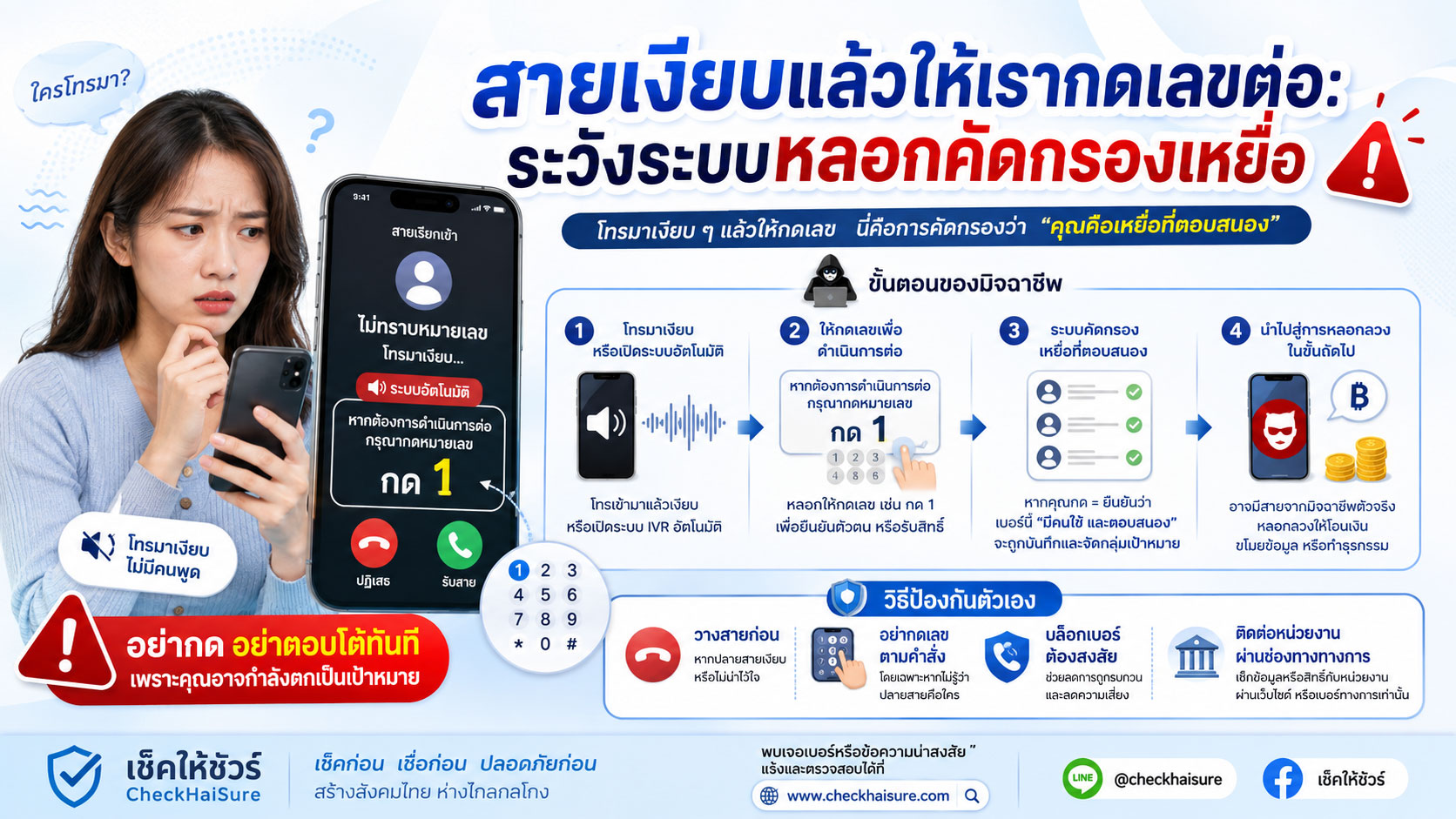
เคยไหม รับสายแล้วปลายสายเงียบ
ไม่มีคนพูด
ไม่มีเสียงเจ้าหน้าที่
ไม่มีคำอธิบายชัดเจน
มีแค่เสียงระบบอัตโนมัติ
หรือเสียงพูดสั้นๆ ว่า
“กรุณากด 1 เพื่อติดต่อเจ้าหน้าที่”
“หากต้องการยกเลิกบริการ กด 9”
“บัญชีของคุณมีความผิดปกติ กด 0 เพื่อตรวจสอบ”
“พัสดุของคุณมีปัญหา กด 1 เพื่อฟังรายละเอียด”
“หมายเลขของคุณกำลังจะถูกระงับ กด 2 เพื่อดำเนินการต่อ”
หลายคนอาจคิดว่า กดเลขไปก็ไม่น่าจะเป็นอะไร
ไม่ได้โอนเงิน
ไม่ได้ให้ OTP
ไม่ได้บอกเลขบัตร
แค่กดเลขบนโทรศัพท์เท่านั้นเอง
แต่ในโลกของมิจฉาชีพ บางครั้ง “การกดเลข” อาจไม่ใช่เรื่องเล็ก
เพราะมันอาจเป็นสัญญาณว่า เบอร์นี้มีคนรับสายจริง เจ้าของเบอร์ยอมทำตามคำสั่ง และอาจถูกส่งต่อเข้าสู่ขั้นตอนหลอกลวงต่อไป
จำไว้ว่า
สายที่เริ่มจากความเงียบ แล้วขอให้เรากดเลข อาจไม่ได้ต้องการคำตอบ แต่อาจต้องการคัดกรองว่าเราหลอกต่อได้ไหม
ทำไมสายเงียบถึงไม่น่าไว้ใจ
สายเงียบอาจเกิดจากหลายสาเหตุ
บางครั้งอาจเป็นระบบโทรอัตโนมัติ
บางครั้งอาจเป็นการโทรขายของ
บางครั้งอาจเป็น Call Center ที่ระบบต่อสายช้า
บางครั้งอาจเป็นเบอร์โทรผิด
แต่บางครั้งก็อาจเป็นส่วนหนึ่งของการหลอกลวง
สิ่งที่ทำให้ควรระวังคือ เมื่อสายเงียบหรือเสียงระบบพยายามให้เรากดเลขต่อ โดยไม่ได้บอกข้อมูลที่ชัดเจน ตรวจสอบได้ และไม่บอกว่ามาจากหน่วยงานใดอย่างน่าเชื่อถือ
เช่น ไม่บอกชื่อบริษัทชัดเจน
ไม่บอกเหตุผลที่ติดต่อมาอย่างตรงไปตรงมา
ไม่บอกช่องทางตรวจสอบทางการ
แต่รีบให้กดเลขเพื่อคุยกับเจ้าหน้าที่
การกดเลขอาจดูเหมือนเป็นแค่การตอบสนองเล็กๆ
แต่สำหรับระบบหลอกลวง มันอาจเป็นตัวกรองว่าใครมีแนวโน้มจะอยู่ต่อ ฟังต่อ และทำตามคำสั่งต่อ
“กด 1” อาจเป็นประตูไปสู่เจ้าหน้าที่ปลอม
หลายสายไม่ได้เริ่มจากคนจริง
แต่เริ่มจากเสียงอัตโนมัติ
“กด 1 เพื่อติดต่อเจ้าหน้าที่”
“กด 2 เพื่อยืนยันตัวตน”
“กด 9 เพื่อยกเลิกบริการ”
พอกดแล้ว อาจมีคนรับสายต่อทันที
คนนั้นอาจอ้างว่าเป็นเจ้าหน้าที่ธนาคาร
บริษัทขนส่ง
บริษัทโทรศัพท์
บริษัทประกัน
บัตรเครดิต
ฝ่ายกฎหมาย
ตำรวจ
หรือหน่วยงานราชการ
จากสายเงียบที่ดูเหมือนไม่มีอะไร อาจค่อยๆ กลายเป็นเรื่องใหญ่
บัญชีมีปัญหา
พัสดุมีสิ่งผิดกฎหมาย
เบอร์ถูกใช้ทำผิด
บัตรเครดิตถูกเรียกเก็บเงิน
มีบริการที่ไม่ได้ยกเลิก
หรือมีคดีที่เกี่ยวข้องกับชื่อเรา
นี่คือวิธีที่มิจฉาชีพพาเราเข้าสู่บทสนทนา
เริ่มจากให้เรากดเลขเล็กๆ ก่อน
จากนั้นให้คุยกับเจ้าหน้าที่ปลอม
ต่อมาให้ยืนยันตัวตน
ให้กดลิงก์
ให้เพิ่ม LINE
ให้บอก OTP
หรือนำไปสู่การโอนเงิน
ทุกอย่างอาจเริ่มจากการคิดว่า “ลองกดดูก็ได้”
ทำไมมิจฉาชีพอยากรู้ว่าเรา “กดตาม” หรือไม่
เพราะการหลอกลวงต้องใช้เวลาและคน
มิจฉาชีพจึงอาจต้องการคัดกรองก่อนว่า เบอร์ไหนควรโทรต่อ เบอร์ไหนควรส่งให้คนคุย และเบอร์ไหนมีแนวโน้มจะเชื่อ
คนที่รับสายแล้วกดเลขตาม อาจถูกมองว่า
เบอร์นี้มีคนใช้งานจริง
เจ้าของเบอร์สนใจสิ่งที่ระบบพูด
เจ้าของเบอร์ยอมทำตามคำสั่ง
อาจเป็นคนที่คุยต่อได้
อาจเป็นคนที่ตกใจง่ายเมื่อได้ยินเรื่องด่วน
หรืออาจเป็นเบอร์ที่ควรโทรกลับอีกครั้ง
ไม่ได้แปลว่ากดเลขครั้งเดียวแล้วจะเสียเงินทันทีเสมอไป
แต่การกดอาจทำให้เบอร์ของเราเข้าสู่ขั้นตอนถัดไปของการหลอก
เหมือนเราเปิดประตูให้คนปลายสายรู้ว่า “เบอร์นี้มีคนตอบสนอง”
สายเงียบอาจใช้ทดสอบว่าเบอร์ยังใช้งานอยู่
บางครั้งสายเงียบไม่ได้พยายามหลอกทันที
แต่อาจเป็นการทดสอบเบอร์
ถ้ามีคนรับสาย ระบบอาจบันทึกว่าเบอร์นี้ active
ถ้ามีคนกดเลข ระบบอาจรู้ว่าเบอร์นี้ตอบสนอง
ถ้ามีคนพูดกลับ ระบบอาจรู้ว่าเจ้าของเบอร์พร้อมคุย
ถ้ามีคนโทรกลับ ระบบอาจรู้ว่าเบอร์นี้สนใจหรือกังวล
จากนั้นอาจมีสายอื่นตามมาในวันต่อๆ ไป
เช่น สายธนาคารปลอม
สายขนส่งปลอม
สายประกันปลอม
สายบัตรเครดิตปลอม
สายตำรวจปลอม
หรือ SMS หลอกลวงที่ดูเกี่ยวข้องกับเรื่องที่เคยได้ยิน
เราอาจจำไม่ได้ว่าสายแรกคืออะไร
แต่สำหรับระบบของมิจฉาชีพ เบอร์ของเราอาจถูกจัดไว้ในกลุ่ม “ติดต่อได้”
ดังนั้นถ้ารับสายแล้วเงียบ หรือเป็นระบบแปลกๆ ที่ให้กดเลขโดยไม่มีเหตุผลชัดเจน วิธีที่ปลอดภัยกว่าคือวางสาย
ระวังประโยคที่ทำให้เรากดเพราะกลัวเสียสิทธิ์
เสียงระบบอัตโนมัติมักใช้คำที่ทำให้เรารู้สึกว่า ถ้าไม่กดตอนนี้จะมีปัญหา
เช่น
“บัญชีของคุณกำลังถูกระงับ”
“หมายเลขของคุณจะถูกปิดภายในวันนี้”
“พัสดุของคุณกำลังถูกตีกลับ”
“บริการของคุณจะเริ่มคิดค่าบริการ”
“บัตรของคุณมีรายการผิดปกติ”
“มีเอกสารสำคัญรอการยืนยัน”
“หากไม่ดำเนินการ จะถือว่ายอมรับเงื่อนไข”
คำเหล่านี้ทำให้คนฟังรู้สึกว่าต้องรีบกด
ไม่งั้นอาจเสียสิทธิ์
เสียเงิน
เสียบัญชี
เสียเบอร์
หรือมีปัญหาตามมา
แต่นี่คือจุดที่ต้องหยุดคิด
ถ้าเรื่องสำคัญจริง ควรตรวจสอบผ่านช่องทางทางการได้ ไม่ใช่ต้องกดเลขจากสายที่เราไม่รู้ว่าใครโทรมา
อย่ากดเลขเพื่อ “ยกเลิก” สิ่งที่เราไม่แน่ใจ
หนึ่งในกับดักที่พบบ่อยคือการบอกว่า ถ้าไม่ต้องการบริการ ให้กดเลขเพื่อยกเลิก
ฟังดูเหมือนเรากำลังป้องกันตัวเอง
เช่น
“หากไม่ได้ทำรายการ กด 1”
“หากต้องการยกเลิกบริการ กด 9”
“หากไม่ต้องการให้ตัดเงิน กด 0”
“หากไม่ใช่คุณทำรายการ กด 2 เพื่อติดต่อเจ้าหน้าที่”
หลายคนกดเพราะคิดว่า ไม่ได้สมัคร ไม่ได้ทำรายการ จึงต้องรีบยกเลิก
แต่บางครั้งการกดอาจเป็นการพาเราไปคุยกับคนปลอม
จากนั้นคนปลอมจะบอกว่า เพื่อยกเลิกต้องยืนยันตัวตน
แล้วอาจขอข้อมูลส่วนตัว
ขอเลขบัตร
ขอ OTP
ให้กดลิงก์
ให้เพิ่ม LINE
หรือให้ติดตั้งแอป
ถ้าเราไม่แน่ใจว่ามีบริการหรือรายการจริงหรือไม่ อย่ากดเลขจากสายนั้น
ให้วางสาย แล้วตรวจสอบกับบริษัท ธนาคาร หรือผู้ให้บริการผ่านช่องทางทางการที่เราหาเอง
อย่าโทรกลับเบอร์แปลกเพียงเพราะสายเงียบ
บางคนรับสายเงียบแล้วสงสัย
“ใครโทรมา”
“มีเรื่องด่วนหรือเปล่า”
“ทำไมโทรแล้วไม่พูด”
จึงกดโทรกลับ
แต่การโทรกลับเบอร์แปลกอาจทำให้เราตกอยู่ในบทสนทนาที่มิจฉาชีพเตรียมไว้
บางครั้งอาจเจอเสียงระบบ
บางครั้งอาจมีคนรับแล้วอ้างเป็นเจ้าหน้าที่
บางครั้งอาจถูกพาเข้าเรื่องพัสดุ บัญชี เบอร์โทร หรือบริการที่ต้องยกเลิก
ถ้าเป็นเรื่องสำคัญจริง ผู้ติดต่อที่น่าเชื่อถือควรมีช่องทางทางการให้ตรวจสอบได้
ไม่จำเป็นต้องโทรกลับเบอร์ที่เราไม่รู้จักทันที
ถ้าคิดว่าอาจเกี่ยวกับธนาคาร บริษัทขนส่ง ค่ายมือถือ หรือหน่วยงานใด ให้ติดต่อผ่านเบอร์ทางการของหน่วยงานนั้นเอง
อย่าให้เบอร์แปลกเป็นคนพาเราเข้าสู่เรื่องที่เราไม่รู้จริง
สัญญาณเตือนของสายเงียบหรือระบบกดเลขที่ควรวางสาย
ถ้ารับสายแล้วเจอพฤติกรรมเหล่านี้ ให้ระวังเป็นพิเศษ
ปลายสายเงียบผิดปกติ
มีเสียงระบบอัตโนมัติแต่ไม่บอกหน่วยงานชัดเจน
ให้กดเลขเพื่อฟังรายละเอียด
ให้กดเลขเพื่อติดต่อเจ้าหน้าที่
ให้กดเลขเพื่อยกเลิกบริการ
พูดเรื่องบัญชี พัสดุ บัตรเครดิต เบอร์โทร หรือคดี โดยไม่ให้ข้อมูลชัดเจน
ใช้คำว่า ด่วน ระงับ ปิดบัญชี ตัดเงิน คดี หรือยกเลิกวันนี้
ไม่บอกช่องทางตรวจสอบทางการ
หลังจากกดเลขแล้วมีคนรับสายและเริ่มขอข้อมูลส่วนตัว
ขอ OTP หรือรหัสยืนยัน
ให้กดลิงก์
ให้เพิ่ม LINE
ให้ติดตั้งแอป
หรือบอกว่าห้ามวางสาย เพราะระบบกำลังดำเนินการ
ถ้ามีข้อใดข้อหนึ่งที่ดูผิดปกติ ให้หยุดก่อน
ไม่ต้องกดต่อ
ไม่ต้องคุยต่อ
ไม่ต้องให้ข้อมูล
ไม่ต้องโทรกลับ
และไม่ต้องกลัวว่าการวางสายจะทำให้เรื่องจริงเสียหายทันที
ถ้ากดเลขไปแล้ว ควรทำอย่างไร
ถ้าเผลอกดเลขไปแล้ว ไม่ต้องตกใจเกินไป
การกดเลขอย่างเดียวอาจยังไม่ได้ทำให้เงินหายทันที
แต่ควรหยุดไม่ให้เรื่องไปต่อ
อย่าให้ข้อมูลส่วนตัว
อย่าให้เลขบัตรประชาชน
อย่าให้ข้อมูลบัตรเครดิต
อย่าให้ OTP
อย่ากดลิงก์
อย่าเพิ่ม LINE
อย่าติดตั้งแอป
อย่าเปิดแอปธนาคารตามคำสั่ง
อย่าโอนเงิน
และอย่าอยู่ในสายเพราะเขาบอกว่าเรื่องกำลังดำเนินการอยู่
ให้วางสาย แล้วตรวจสอบด้วยตัวเองผ่านช่องทางทางการ
ถ้าหลังจากนั้นมีสายแปลก โทรซ้ำ หรือ SMS แปลกมากขึ้น ให้ยิ่งระวัง เพราะเบอร์ของเราอาจถูกมองว่าเป็นเบอร์ที่ตอบสนอง
ถ้าเขาอ้างชื่อหน่วยงานจริง ต้องทำอย่างไร
บางสายอาจอ้างชื่อบริษัทหรือหน่วยงานที่เรารู้จัก
เช่น ธนาคาร
บริษัทขนส่ง
บริษัทโทรศัพท์
บัตรเครดิต
บริษัทประกัน
แพลตฟอร์มออนไลน์
หรือหน่วยงานรัฐ
อย่ารีบเชื่อเพราะเขาพูดชื่อหน่วยงานถูก
ชื่อหน่วยงานพูดง่าย
โลโก้ปลอมได้
เสียงระบบทำให้ดูน่าเชื่อได้
และข้อความอัตโนมัติสร้างให้เหมือนจริงได้
วิธีปลอดภัยคือวางสาย แล้วติดต่อหน่วยงานนั้นผ่านช่องทางทางการที่เราหาเอง
เช่น แอปทางการ
เว็บไซต์ทางการ
เบอร์หลังบัตร
เบอร์ Call Center ที่ค้นจากแหล่งน่าเชื่อถือ
หรือสาขา
อย่าใช้เบอร์ที่ระบบบอกในสาย
อย่าใช้ลิงก์ที่ SMS ส่งมา
อย่าเพิ่ม LINE จากข้อความอัตโนมัติ
และอย่าโทรกลับเบอร์ที่เราไม่แน่ใจ
อย่าให้เสียงระบบทำให้รู้สึกว่าเป็นทางการเสมอไป
หลายคนเผลอเชื่อเสียงระบบอัตโนมัติเพราะมันดูเป็นทางการ
มีเสียงผู้หญิงหรือผู้ชายพูดชัดเจน
มีคำว่า “ระบบ”
มีคำว่า “เพื่อความปลอดภัย”
มีคำว่า “กรุณากด”
มีตัวเลือกเหมือน Call Center จริง
และบางครั้งมีเสียงดนตรีรอสาย
แต่เสียงระบบไม่ใช่หลักฐานว่าเป็นหน่วยงานจริง
ทุกวันนี้ใครก็สามารถทำเสียงอัตโนมัติหรือข้อความเสียงให้ดูน่าเชื่อถือได้
สิ่งที่ต้องดูไม่ใช่แค่ว่าเสียงดูเป็นทางการหรือไม่
แต่ต้องดูว่าเขาให้เราทำอะไร
ถ้าให้กดเลขโดยไม่ชัดเจน
ให้รีบยืนยันตัวตน
ให้กดลิงก์
ให้บอก OTP
ให้คุยกับเจ้าหน้าที่ปลอม
หรือให้โอนเงิน
ให้หยุดก่อนเสมอ
คุยกับคนในบ้านเรื่อง “รับสายแล้วอย่ากดเลขตามระบบแปลกๆ”
หัวข้อนี้ควรคุยกับคนในบ้านไว้ล่วงหน้า
โดยเฉพาะผู้สูงอายุ คนที่ใช้โทรศัพท์รับสายทุกเบอร์ หรือคนที่กังวลเมื่อได้ยินคำว่าบัญชี พัสดุ บัตรเครดิต หรือบริการกำลังถูกคิดเงิน
อาจตกลงกันง่ายๆ ว่า
ถ้ารับสายแล้วเงียบ ให้วางสาย
ถ้าเป็นเสียงระบบให้กดเลข แต่ไม่รู้ว่าใครโทรมา ให้ไม่กด
ถ้าบอกว่าบัญชีหรือบัตรมีปัญหา ให้โทรหาธนาคารเอง
ถ้าบอกว่าพัสดุมีปัญหา ให้ตรวจสอบกับบริษัทขนส่งเอง
ถ้าบอกว่าเบอร์จะถูกระงับ ให้ติดต่อค่ายมือถือเอง
ถ้าบอกว่าต้องกดยกเลิกบริการวันนี้ ให้ไม่ทำผ่านสายนั้น
ถ้าขอ OTP ให้ไม่ให้
ถ้าให้เพิ่ม LINE ให้ไม่เพิ่ม
ถ้าไม่แน่ใจ ให้ปรึกษาคนในบ้านก่อนเสมอ
ข้อตกลงเล็กๆ นี้อาจช่วยป้องกันไม่ให้สายเงียบธรรมดากลายเป็นจุดเริ่มต้นของความเสียหาย
ถ้าได้รับสายแบบนี้บ่อย ควรรับมืออย่างไร
ถ้ามีสายเงียบหรือสายระบบแปลกๆ โทรมาบ่อย ให้ลดการตอบสนองกับเบอร์เหล่านั้น
ไม่รับสายซ้ำจากเบอร์เดิมที่น่าสงสัย
ไม่โทรกลับเบอร์แปลก
บล็อกเบอร์ที่ผิดปกติ
ใช้ฟีเจอร์แจ้งเตือนเบอร์สแปมในโทรศัพท์หรือแอปที่เชื่อถือได้
ระวัง SMS หรือลิงก์ที่ตามมาหลังจากรับสาย
และแจ้งคนในครอบครัวให้ช่วยระวัง
หากสายอ้างเรื่องการเงิน บัญชี หรือข้อมูลสำคัญ ให้ตรวจสอบกับหน่วยงานจริงโดยตรง
อย่าตรวจสอบผ่านช่องทางที่เบอร์แปลกเตรียมไว้ให้
อย่าโทษตัวเองถ้าเคยเผลอกดเลข
ถ้าคุณเคยรับสายเงียบแล้วเผลอกดเลขต่อ ไม่ได้แปลว่าคุณไม่รอบคอบ
เพราะเสียงระบบถูกออกแบบมาให้เรากดตามได้ง่าย
บางครั้งมันพูดเหมือนเรื่องสำคัญ
บางครั้งมันทำให้เรากลัวเสียเงิน
บางครั้งมันทำให้เรากลัวพัสดุหาย
บางครั้งมันทำให้เรากลัวบัญชีถูกระงับ
และบางครั้งมันทำให้เราคิดว่าแค่กดเลขคงไม่เป็นอะไร
สิ่งสำคัญคือหลังจากรู้ตัว ให้ไม่ไปต่อ
ไม่ให้ข้อมูล
ไม่ให้ OTP
ไม่กดลิงก์
ไม่เพิ่ม LINE
ไม่โอนเงิน
และไม่เชื่อว่าต้องทำทุกอย่างให้จบในสายเดียว
การหยุดกลางทางยังช่วยลดความเสี่ยงได้มาก
ประโยคที่ควรจำ: ไม่รู้ว่าใครโทรมา อย่ากดต่อ
ถ้าต้องจำประโยคเดียวจากบทความนี้ ขอให้จำว่า
ไม่รู้ว่าใครโทรมา อย่ากดต่อ
ถ้าสายเงียบ ให้วางสาย
ถ้าเสียงระบบให้กดเลข แต่ไม่ชัดเจนว่าใครติดต่อมา ให้ไม่กด
ถ้าบอกว่าเป็นเรื่องด่วน ให้ตรวจสอบผ่านช่องทางจริง
ถ้ากดแล้วมีคนขอข้อมูล ให้หยุดทันที
ถ้าขอ OTP ให้ไม่ให้
ถ้าให้กดลิงก์หรือเพิ่ม LINE ให้ไม่ทำ
ถ้าอ้างว่าเป็นธนาคาร ขนส่ง หรือค่ายมือถือ ให้ติดต่อหน่วยงานนั้นเอง
และถ้าปลายสายไม่อยากให้คุณวางสายไปตรวจสอบ นั่นยิ่งเป็นเหตุผลที่ควรวางสาย
สรุป: สายเงียบอาจไม่ได้น่ากลัวเพราะความเงียบ แต่อันตรายตรงที่พาเราไปกดต่อ
กลโกงสายเงียบหรือระบบให้กดเลขต่ออันตราย เพราะมันดูเหมือนไม่มีอะไร
ไม่ได้ขอเงินทันที
ไม่ได้ขอ OTP ทันที
ไม่ได้ขอข้อมูลบัตรทันที
ไม่ได้ขู่แรงตั้งแต่แรก
และบางครั้งเป็นแค่เสียงระบบธรรมดา
แต่จุดเริ่มต้นเล็กๆ นี้อาจพาเราไปสู่ขั้นตอนต่อไป
จากรับสาย
เป็นกดเลข
จากกดเลข
เป็นคุยกับเจ้าหน้าที่ปลอม
จากคุย
เป็นยืนยันตัวตน
จากยืนยัน
เป็นให้ OTP
จาก OTP
เป็นความเสียหายจริง
ดังนั้นถ้ารับสายแล้วเงียบ หรือมีเสียงระบบจากเบอร์ที่ไม่รู้จักให้กดเลขต่อ ให้หยุดก่อน
ไม่ต้องกด
ไม่ต้องคุย
ไม่ต้องโทรกลับ
ไม่ต้องกลัวว่าจะพลาดเรื่องสำคัญทันที
ให้วางสาย แล้วตรวจสอบกับหน่วยงานที่เกี่ยวข้องผ่านช่องทางทางการด้วยตัวเอง
ถ้าเรื่องจริง ยังตรวจสอบได้
แต่ถ้าเป็นมิจฉาชีพ การไม่กดต่อ อาจช่วยไม่ให้เบอร์ของเรากลายเป็นประตูสู่การหลอกลวงรอบถัดไป
Silent Calls That Ask You to Press a Number: Beware of Systems That Screen Potential Scam Victims
Have you ever answered a call and heard nothing?
No person speaking.
No clear explanation.
No real officer on the line.
Only an automated voice.
Or a short message such as:
“Please press 1 to speak with an officer.”
“To cancel this service, press 9.”
“There is unusual activity on your account. Press 0 to verify.”
“There is a problem with your parcel. Press 1 for details.”
“Your phone number is about to be suspended. Press 2 to continue.”
Many people may think pressing a number is harmless.
You did not transfer money.
You did not share an OTP.
You did not give a card number.
You only pressed a button on your phone.
But in the world of scammers, “pressing a number” may not be a small thing.
It may signal that this phone number is active, that someone really answers it, that the owner follows instructions, and that the number may be worth passing to the next stage of a scam.
Remember this:
A silent call that asks you to press a number may not be looking for an answer. It may be checking whether you can be led further into a scam.
Why Silent Calls Should Not Be Trusted Immediately
Silent calls can happen for many reasons.
Sometimes they come from automated dialing systems.
Sometimes they are sales calls.
Sometimes a call center system connects slowly.
Sometimes it is simply a wrong number.
But sometimes, it may be part of a scam process.
The warning sign is when the call is silent, or an automated voice asks you to press a number without clearly identifying who is contacting you, why they are calling, or how you can verify the call through an official channel.
For example:
They do not clearly state the company name.
They do not explain the reason for the call directly.
They do not provide an official verification channel.
But they quickly ask you to press a number to speak with an officer.
Pressing a number may feel like a small response.
But for a scam system, it may be a filter to see who is likely to stay on the line, listen further, and follow more instructions.
“Press 1” May Become the Door to a Fake Officer
Many scam calls do not start with a real person.
They start with an automated voice.
“Press 1 to speak with an officer.”
“Press 2 to verify your identity.”
“Press 9 to cancel the service.”
After you press a number, someone may answer immediately.
That person may claim to be from a bank, delivery company, telecom company, insurance company, credit card provider, legal department, police station, or government agency.
A call that began with silence may slowly turn into a serious-sounding problem.
Your account has an issue.
Your parcel contains illegal items.
Your phone number was used illegally.
Your credit card has a suspicious charge.
You have a service that must be cancelled.
Or your name is linked to a case.
This is how scammers guide people into a conversation.
First, they ask you to press a small number.
Then they connect you to a fake officer.
Then they ask you to verify your identity.
Then they may send a link.
Ask you to add LINE.
Ask for an OTP.
Or lead you toward transferring money.
Everything may begin with the thought: “I’ll just press and see.”
Why Scammers Want to Know Whether You “Follow Instructions”
Scams require time and people.
That is why scammers may want to filter first.
They want to know which numbers are worth calling again, which people should be transferred to a live scammer, and which callers are more likely to believe the story.
A person who answers and presses a number may be seen as someone whose number is active.
It may suggest that:
This number is really being used.
The owner is interested in the message.
The owner follows instructions.
The owner may continue the conversation.
The owner may panic when hearing something urgent.
Or this number may be worth calling again.
Pressing one number does not always mean money will disappear immediately.
But it may move your number into the next stage of the scam process.
It tells the system: “This person responded.”
Silent Calls May Be Used to Test Whether a Number Is Active
Sometimes, a silent call is not designed to steal money immediately.
It may simply be testing the number.
If someone answers, the system may mark the number as active.
If someone presses a number, the system may mark the number as responsive.
If someone speaks back, the system may know the owner is willing to talk.
If someone calls back, the system may know the person is curious or worried.
After that, other calls may follow in the next few days.
A fake bank call.
A fake delivery company call.
A fake insurance call.
A fake credit card call.
A fake police call.
Or scam SMS messages that seem related to something you heard before.
You may not remember the first silent call.
But in a scammer’s system, your number may already be marked as “reachable.”
So if you answer a call and hear silence, or an odd automated message asks you to press a number without a clear reason, the safer choice is to hang up.
Beware of Messages That Make You Press Because You Fear Losing Something
Automated scam calls often use wording that makes people feel that not pressing a number may cause a problem.
For example:
“Your account is being suspended.”
“Your phone number will be closed today.”
“Your parcel is being returned.”
“Your service will begin charging.”
“There is an unusual transaction on your card.”
“There is an important document waiting for confirmation.”
“If you do not proceed, it will be treated as acceptance of the terms.”
These messages make people feel they must press immediately.
Otherwise, they may lose access, lose money, lose an account, lose a parcel, or face another problem.
But this is exactly where you should pause.
If the issue is truly important, it should be verifiable through official channels. It should not require you to press a number from an unknown incoming call.
Do Not Press a Number to “Cancel” Something You Are Unsure About
One common trap is telling you to press a number if you want to cancel something.
It sounds like you are protecting yourself.
For example:
“If you did not make this transaction, press 1.”
“To cancel this service, press 9.”
“To prevent money from being deducted, press 0.”
“If this was not you, press 2 to speak with an officer.”
Many people press because they think: “I didn’t do this, so I should cancel it quickly.”
But sometimes, pressing the number simply connects you to a fake officer.
That person may then say that to cancel the service, you must verify your identity.
Then they may ask for personal information.
Ask for your card number.
Ask for an OTP.
Send a link.
Ask you to add LINE.
Or ask you to install an app.
If you are not sure whether a service or transaction is real, do not press a number from that call.
Hang up and check directly with the company, bank, or service provider through official channels you find yourself.
Do Not Call Back a Strange Number Just Because the Call Was Silent
Some people receive a silent call and wonder:
“Who called me?”
“Was it urgent?”
“Why did they call and say nothing?”
So they call the number back.
But calling back a strange number may place you into a conversation that scammers have prepared.
Sometimes you may hear an automated system.
Sometimes someone may answer and claim to be an officer.
Sometimes you may be led into a story about a parcel, account, phone number, or service cancellation.
If it is truly important, a legitimate organization should have official channels that can be verified.
You do not need to call back an unknown number immediately.
If you think it may involve your bank, delivery company, telecom provider, or another organization, contact that organization through its official channel yourself.
Do not let an unknown number guide you into a story you cannot verify.
Warning Signs of Silent Calls or Automated Number-Press Scams
If you answer a call and notice any of the following, be especially careful:
The call is unusually silent.
There is an automated voice but no clear organization name.
The voice asks you to press a number for details.
The voice asks you to press a number to speak with an officer.
The voice asks you to press a number to cancel a service.
The call mentions an account, parcel, credit card, phone number, or legal case without clear details.
It uses urgent words such as suspend, close, charge, case, cancel today, or verify now.
It does not give an official verification channel.
After you press a number, someone answers and asks for personal information.
They ask for an OTP or verification code.
They ask you to click a link.
They ask you to add LINE.
They ask you to install an app.
Or they say you must not hang up because the system is processing.
If anything feels unusual, stop first.
Do not press more numbers.
Do not continue the conversation.
Do not share information.
Do not call back.
And do not fear that hanging up will instantly damage something real.
What If You Already Pressed a Number?
If you already pressed a number, do not panic too much.
Pressing a number alone may not immediately cause financial loss.
But you should stop the process from going further.
Do not share personal information.
Do not provide your national ID number.
Do not share credit card details.
Do not provide OTPs.
Do not click links.
Do not add LINE.
Do not install apps.
Do not open your banking app while following instructions.
Do not transfer money.
And do not stay on the line just because they say the matter is being processed.
Hang up, then verify by yourself through official channels.
If you receive more strange calls or scam SMS messages afterward, be extra cautious. Your number may have been marked as responsive.
What If They Mention a Real Company or Agency?
Some calls may mention the name of a company or organization you know.
For example:
A bank
A delivery company
A telecom provider
A credit card company
An insurance company
An online platform
Or a government agency
Do not believe the call just because they say a real name.
Anyone can say an organization’s name.
Logos can be copied.
Automated voices can sound official.
And recorded messages can be made to look convincing.
The safer method is to hang up and contact the organization through official channels you find yourself.
For example:
The official app
The official website
The number on the back of your card
The official call center number from a trusted source
Or a branch
Do not use the number spoken in the call.
Do not use links sent by SMS.
Do not add LINE from an automated message.
And do not call back a number you cannot verify.
Do Not Assume an Automated Voice Is Always Official
Many people trust automated voices because they sound formal.
The voice may be clear and professional.
It may use words like “system.”
It may say “for your safety.”
It may say “please press.”
It may have options like a real call center.
Sometimes there may even be hold music.
But an automated voice is not proof that the call is real.
Today, almost anyone can create an automated voice message that sounds convincing.
The most important question is not whether the voice sounds official.
The most important question is: what is it asking you to do?
If it asks you to press numbers without clear verification, confirm your identity quickly, click a link, share an OTP, speak with a fake officer, or transfer money, stop first.
Talk with Your Family About Not Pressing Numbers on Suspicious Calls
This topic is worth discussing at home in advance.
Especially with elderly family members, people who answer every call, or anyone who becomes anxious when hearing words like account, parcel, credit card, or service charge.
You can agree on simple rules:
If the call is silent, hang up.
If an automated voice asks you to press a number and you do not know who is calling, do not press.
If it says your account or card has a problem, contact the bank yourself.
If it says your parcel has a problem, check with the delivery company yourself.
If it says your phone number will be suspended, contact your telecom provider yourself.
If it says you must press to cancel a service today, do not do it through that call.
If they ask for an OTP, do not provide it.
If they ask you to add LINE, do not add it.
If you are unsure, ask someone in the family first.
A small family agreement like this can prevent a simple silent call from becoming the beginning of real damage.
What to Do If You Receive These Calls Often
If silent calls or strange automated calls keep coming, reduce your response to those numbers.
Do not answer repeated suspicious numbers.
Do not call back unknown numbers.
Block suspicious numbers.
Use trusted spam-call warning features on your phone or from reliable apps.
Be careful with SMS messages or links that arrive after those calls.
And let your family know to be cautious too.
If a call mentions money, accounts, or sensitive information, verify directly with the real organization.
Do not verify through channels prepared by the strange number.
Do Not Blame Yourself If You Pressed a Number Before
If you have ever answered a silent call and pressed a number, that does not mean you were careless.
Automated systems are designed to make people respond easily.
Sometimes they sound important.
Sometimes they make you afraid of losing money.
Sometimes they make you afraid a parcel will disappear.
Sometimes they make you afraid an account will be suspended.
And sometimes they make you think pressing a number cannot hurt.
The important thing is to stop once you realize.
Do not share information.
Do not provide OTPs.
Do not click links.
Do not add LINE.
Do not transfer money.
And do not believe everything must be completed in the same call.
Stopping halfway can still reduce the risk.
A Sentence to Remember: If You Do Not Know Who Is Calling, Do Not Press Further
If you remember only one sentence from this article, remember this:
If you do not know who is calling, do not press further.
If the call is silent, hang up.
If an automated voice asks you to press a number but does not clearly identify who is calling, do not press.
If it says the matter is urgent, verify through a real channel.
If you press and someone starts asking for information, stop immediately.
If they ask for an OTP, do not provide it.
If they ask you to click a link or add LINE, do not do it.
If they claim to be from a bank, delivery company, or telecom provider, contact that organization yourself.
And if the caller does not want you to hang up and verify, that is even more reason to hang up.
Conclusion: Silent Calls May Not Be Dangerous Because of the Silence, but Because They Lead You to Press Further
Silent calls and automated number-press scams are dangerous because they seem harmless at first.
They do not ask for money immediately.
They do not ask for an OTP immediately.
They do not ask for card information immediately.
They may not threaten you strongly at the beginning.
Sometimes they are just a simple automated voice.
But this small beginning can lead to the next step.
From answering the call,
to pressing a number.
From pressing a number,
to speaking with a fake officer.
From speaking,
to verifying your identity.
From verification,
to sharing an OTP.
From an OTP,
to real financial loss.
So if you answer a call and hear silence, or an automated voice from an unknown number asks you to press a number, stop first.
Do not press.
Do not continue.
Do not call back.
Do not worry that you will immediately miss something important.
Hang up and check with the relevant organization through official channels yourself.
If the matter is real, it can still be verified.
But if it is a scam, refusing to press further may prevent your number from becoming a doorway into the next stage of fraud.

Leave a Reply
You must be logged in to post a comment.