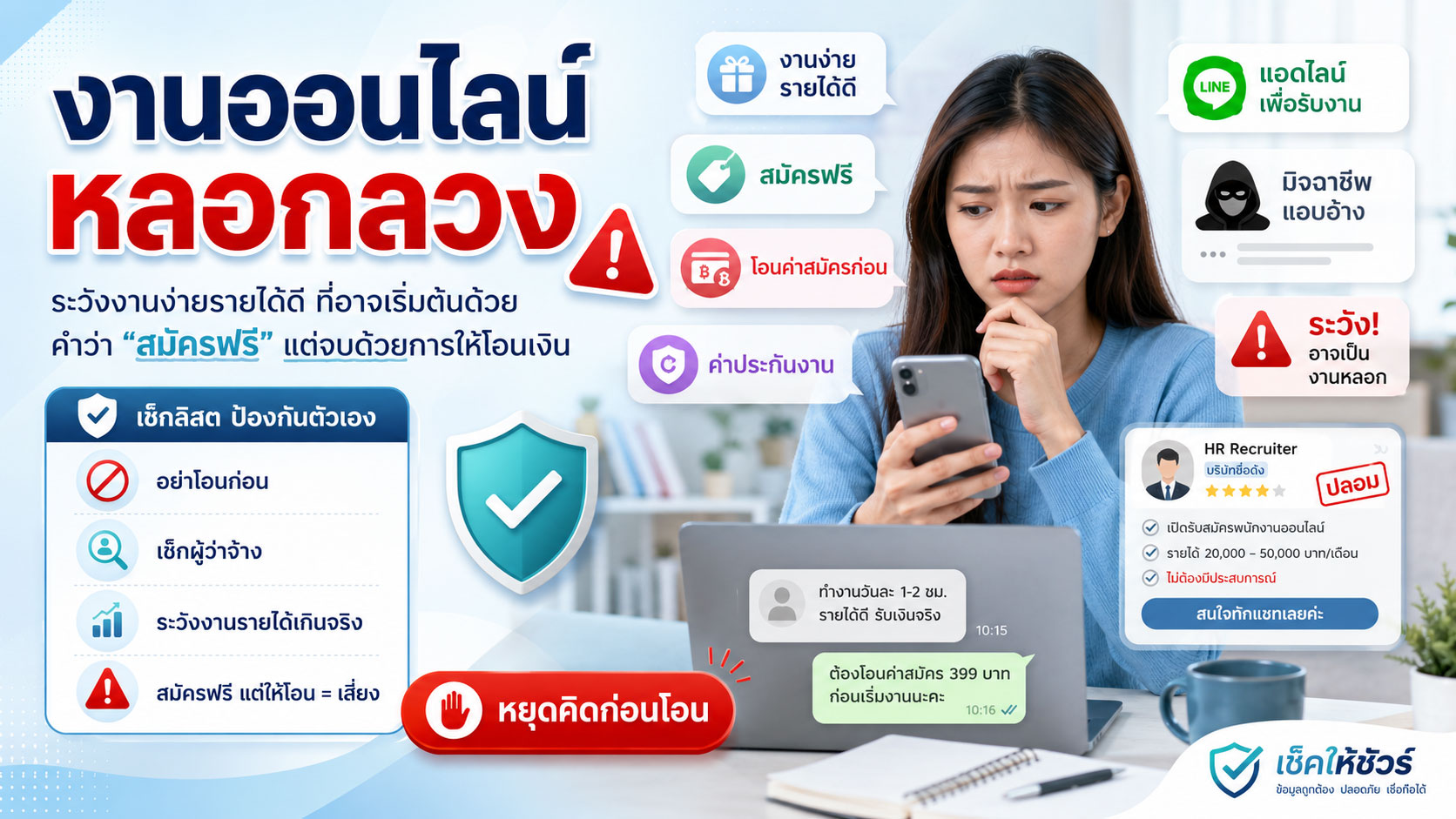
งานออนไลน์และรายได้เสริมเป็นสิ่งที่หลายคนสนใจมากขึ้น ไม่ว่าจะเป็นนักเรียน นักศึกษา คนทำงานประจำ แม่บ้าน เจ้าของร้าน หรือผู้ที่กำลังมองหารายได้เพิ่มเติมจากที่บ้าน ความคิดที่ว่า “ใช้มือถือทำงานได้”, “ทำเวลาว่างก็มีรายได้”, หรือ “ไม่ต้องมีประสบการณ์ก็เริ่มได้” จึงฟังดูน่าสนใจและเข้ากับชีวิตยุคดิจิทัล
แต่ในอีกด้านหนึ่ง ความต้องการหารายได้เสริมนี้ก็ถูกมิจฉาชีพบางกลุ่มนำมาใช้เป็นช่องทางหลอกลวง โดยสร้างประกาศงานออนไลน์ที่ดูน่าเชื่อถือ ใช้คำพูดชวนเชื่อ รายได้สูง งานง่าย สมัครเร็ว และเริ่มต้นได้ทันที ก่อนจะค่อย ๆ นำผู้สมัครไปสู่การจ่ายค่าสมัคร เติมเงิน ทำภารกิจ โอนค่าประกัน หรือส่งข้อมูลส่วนตัวโดยไม่ทันระวัง
ภัยประเภทนี้มักเรียกว่า งานออนไลน์หลอกลวง หรือ Online Job Scam
สิ่งที่ทำให้การหลอกสมัครงานออนไลน์น่ากังวล คือผู้เสียหายจำนวนมากไม่ได้เริ่มต้นด้วยความโลภ แต่อาจเริ่มจากความจำเป็นจริง ๆ เช่น อยากมีรายได้เสริม ต้องการช่วยครอบครัว ต้องการใช้เวลาว่างให้เกิดประโยชน์ หรือกำลังหางานในช่วงที่มีภาระค่าใช้จ่าย
เช็คให้ชัวร์ จัดทำบทความนี้ขึ้นเพื่อช่วยให้ผู้อ่านรู้ทันรูปแบบงานออนไลน์ที่ควรระวัง สังเกตสัญญาณเตือน และตรวจสอบก่อนสมัคร ก่อนส่งข้อมูล หรือก่อนโอนเงินให้กับงานที่ยังไม่แน่ใจ
งานออนไลน์จริงมีอยู่ แต่งานที่ดีเกินจริงควรตรวจสอบก่อน
ไม่ใช่งานออนไลน์ทุกงานจะเป็นมิจฉาชีพ ปัจจุบันมีงานออนไลน์จริงจำนวนมาก เช่น งานเขียน งานออกแบบ งานแปล งานตอบแชท งานขายของ งานดูแลเพจ งานทำคอนเทนต์ งานฟรีแลนซ์ งานสอนออนไลน์ หรืองานบริการลูกค้าจากระยะไกล
แต่งานออนไลน์ที่น่าเชื่อถือควรมีรายละเอียดชัดเจน เช่น ลักษณะงาน ผู้ว่าจ้าง เงื่อนไขการจ่ายเงิน ระยะเวลาทำงาน ช่องทางติดต่อ สัญญาหรือข้อตกลง และไม่ควรเริ่มต้นด้วยการให้ผู้สมัครโอนเงินก่อนโดยไม่มีเหตุผลที่ตรวจสอบได้
หลักคิดง่าย ๆ คือ:
งานที่ดีควรจ่ายค่าตอบแทนให้ผู้ทำงาน ไม่ใช่เริ่มจากการให้ผู้สมัครจ่ายเงินก่อน
หากประกาศงานใดดูง่ายมาก รายได้สูงมาก รับทุกคน ไม่ต้องมีทักษะ ไม่ต้องสัมภาษณ์ แต่ให้โอนเงินหรือเติมเงินก่อน ควรหยุดตรวจสอบทันที
ทำไมงานออนไลน์หลอกลวงถึงหลอกคนได้ง่าย
งานออนไลน์หลอกลวงมักออกแบบมาให้ตรงกับความต้องการของคนจำนวนมาก เช่น อยากมีรายได้เพิ่ม อยากทำงานจากบ้าน อยากเริ่มงานเร็ว หรืออยากหารายได้โดยไม่ต้องลงทุนมาก
มิจฉาชีพอาจใช้ถ้อยคำที่ทำให้รู้สึกว่าโอกาสนี้เหมาะกับเรา เช่น
- ทำงานผ่านมือถือได้
- รายได้วันละหลายร้อยหรือหลายพันบาท
- ไม่ต้องมีประสบการณ์
- รับจำนวนจำกัด
- สมัครฟรี เริ่มงานได้ทันที
- ทำภารกิจง่าย ๆ ก็ได้เงิน
- ถอนเงินได้ทุกวัน
- มีแอดมินสอนงานตลอด
- มีคนทำจริงและได้เงินแล้ว
เมื่อคำเหล่านี้มาพร้อมกับภาพหน้าจอรายได้ รีวิวผู้สมัคร หรือกลุ่มแชทที่ดูเหมือนมีคนทำงานจริง ผู้สมัครอาจเริ่มเชื่อและลดความระมัดระวังลง
รูปแบบงานออนไลน์หลอกลวงที่พบบ่อย
งานออนไลน์หลอกลวงมีหลายรูปแบบ แต่ส่วนใหญ่มักมีจุดร่วมคือ เริ่มจากงานที่ดูง่าย แล้วค่อยพาไปสู่การจ่ายเงิน ส่งข้อมูล หรือทำธุรกรรมที่มีความเสี่ยง
1. งานกดไลก์ กดติดตาม หรือรีวิวสินค้า
รูปแบบนี้มักอ้างว่าให้รายได้จากการกดไลก์ กดติดตาม กดแชร์ รีวิวสินค้า หรือเพิ่มยอดให้ร้านค้าและแพลตฟอร์มต่าง ๆ
ช่วงแรกอาจให้เงินเล็กน้อยจริง เพื่อสร้างความเชื่อใจ จากนั้นจะชวนให้ทำภารกิจที่มีมูลค่าสูงขึ้น และต้องเติมเงินหรือโอนเงินก่อนจึงจะทำต่อได้
สัญญาณที่ควรระวัง ได้แก่:
- งานง่ายมากแต่ให้ค่าตอบแทนสูงผิดปกติ
- ให้เข้ากลุ่มแชทเพื่อรับภารกิจ
- ช่วงแรกจ่ายเงินจริงจำนวนเล็กน้อยเพื่อสร้างความเชื่อใจ
- ต่อมาต้องเติมเงินเพื่อรับภารกิจใหญ่ขึ้น
- บอกว่าหากไม่เติมเงิน จะถอนเงินเดิมไม่ได้
- มีคนในกลุ่มแชทโชว์ยอดกำไรหรือยอดถอนเงินตลอดเวลา
- แอดมินเร่งให้โอนเงินเพื่อรักษาสิทธิ์
หากงานเริ่มจาก “ทำภารกิจ” แล้วเปลี่ยนเป็น “เติมเงินก่อนถอน” ควรหยุดทันที
2. งานแพ็กของ งานคีย์ข้อมูล หรืองานทำที่บ้านที่ต้องจ่ายค่าสมัคร
งานลักษณะนี้มักใช้คำว่า ทำที่บ้านได้ ไม่ต้องมีประสบการณ์ รายได้ดี มีงานส่งให้ตลอด แต่ก่อนเริ่มงานต้องจ่ายค่าสมัคร ค่าประกันอุปกรณ์ ค่าคู่มือ ค่าเอกสาร หรือค่ามัดจำ
ตัวอย่างที่ควรระวัง:
- งานแพ็กสินค้า แต่ต้องโอนค่ามัดจำก่อนรับของ
- งานคีย์ข้อมูล แต่ต้องจ่ายค่าระบบก่อนเริ่ม
- งานรับงานไปทำที่บ้าน แต่ต้องซื้ออุปกรณ์จากผู้ว่าจ้าง
- งานแอดมินออนไลน์ แต่ต้องจ่ายค่าฝึกอบรม
- งานพาร์ตไทม์ แต่ให้โอนเงินเพื่อยืนยันตัวตน
งานจริงบางประเภทอาจมีค่าใช้จ่ายบางอย่างได้ แต่ควรมีบริษัทที่ตรวจสอบได้ สัญญาชัดเจน และเหตุผลที่สมเหตุสมผล ไม่ใช่บัญชีส่วนตัวหรือแชทที่เร่งให้โอนทันที
3. งานออนไลน์ที่ให้เติมเงินเพื่อปลดล็อกค่าจ้าง
มิจฉาชีพบางรายจะทำให้ผู้สมัครเห็นยอดรายได้ในระบบ เช่น ทำภารกิจครบแล้วมีเงินสะสม แต่เมื่อจะถอนเงินกลับแจ้งว่าต้องจ่ายค่าธรรมเนียม ค่าภาษี ค่าปลดล็อกบัญชี หรือเติมเงินเพิ่มเพื่อถอนยอดเดิมออกมา
ตัวอย่างคำอ้างที่พบบ่อย:
- ต้องเติมเงินเพื่อเพิ่มระดับบัญชี
- ต้องจ่ายค่าภาษีก่อนถอนเงิน
- ต้องปลดล็อกระบบก่อนรับค่าจ้าง
- ต้องทำภารกิจสุดท้ายก่อนถอนเงินทั้งหมด
- ต้องโอนเพิ่มเพราะทำรายการผิดขั้นตอน
- หากไม่จ่ายภายในเวลาที่กำหนด ยอดเดิมจะหาย
นี่เป็นสัญญาณอันตรายมาก เพราะผู้เสียหายมักโอนเพิ่มเพราะเสียดายเงินหรือเวลาที่ลงทุนไปแล้ว
4. งานที่ให้ใช้บัญชีธนาคารของตนเองรับเงินหรือโอนเงินต่อ
บางประกาศอาจอ้างว่าเป็นงานการเงิน งานตรวจสอบรายการ งานรับโอนเงิน งานตัวแทนชำระเงิน หรืองานช่วยธุรกรรม โดยให้ผู้สมัครใช้บัญชีของตนเองรับเงินและโอนต่อไปยังบัญชีอื่น
รูปแบบนี้มีความเสี่ยงสูงมาก เพราะบัญชีของผู้สมัครอาจถูกนำไปเกี่ยวข้องกับเงินที่มาจากการหลอกลวงผู้อื่น หรือธุรกรรมที่ผิดกฎหมาย
ควรระวังหากงานมีลักษณะดังนี้:
- ให้รับเงินจากคนแปลกหน้าเข้าบัญชีตนเอง
- ให้โอนเงินต่อไปยังบัญชีอื่น
- ให้ค่าคอมมิชชันจากยอดโอน
- ไม่สามารถอธิบายที่มาของเงินได้ชัดเจน
- ไม่ใช่บริษัทที่ตรวจสอบได้
- บอกว่าเป็นงานง่าย แค่รับเงินแล้วโอนต่อ
- ขอใช้บัญชีธนาคารหรือบัญชีพร้อมเพย์ของผู้สมัคร
ไม่ควรใช้บัญชีของตนเองรับหรือโอนเงินแทนบุคคลหรือองค์กรที่ตรวจสอบไม่ได้ เพราะอาจสร้างปัญหาตามมาได้มากกว่าที่คิด
5. งานที่ให้ส่งข้อมูลส่วนตัวหรือเอกสารสำคัญเกินจำเป็น
บางงานอาจเริ่มจากการขอข้อมูลสมัครงาน เช่น ชื่อ เบอร์โทร อีเมล สำเนาบัตรประชาชน รูปถ่าย หรือข้อมูลบัญชีธนาคาร โดยอ้างว่าใช้ยืนยันตัวตนหรือทำสัญญา
การสมัครงานจริงอาจต้องใช้ข้อมูลบางส่วน แต่ควรให้กับบริษัทหรือผู้ว่าจ้างที่ตรวจสอบได้เท่านั้น และควรระวังหากมีการขอข้อมูลมากเกินไปตั้งแต่ยังไม่รู้รายละเอียดงาน
ข้อมูลที่ควรระวังเป็นพิเศษ:
- รูปบัตรประชาชน
- เลขบัตรประชาชน
- สำเนาทะเบียนบ้าน
- เลขบัญชีธนาคาร
- รูปถ่ายหน้าตรงพร้อมบัตร
- รหัส OTP
- รหัสผ่าน
- ข้อมูลเข้าสู่ระบบอีเมลหรือโซเชียลมีเดีย
- ข้อมูลครอบครัวหรือผู้ติดต่อฉุกเฉินที่ไม่เกี่ยวข้อง
หากยังไม่สามารถตรวจสอบนายจ้างได้ ไม่ควรส่งเอกสารสำคัญหรือข้อมูลส่วนตัวเกินจำเป็น
6. งานที่ให้ติดตั้งแอปหรือลิงก์เพื่อเริ่มทำงาน
บางกรณีมิจฉาชีพอาจส่งลิงก์ให้ติดตั้งแอป อ้างว่าเป็นระบบทำงาน ระบบรับภารกิจ ระบบบันทึกเวลา หรือระบบรับค่าจ้าง
ควรระวังหากแอปหรือเว็บไซต์นั้น:
- ไม่ได้มาจาก App Store หรือ Google Play
- ขอสิทธิ์เข้าถึงข้อความ หน้าจอ หรือ Accessibility
- ขอให้กรอกข้อมูลธนาคาร
- ขอให้แชร์หน้าจอขณะใช้งาน
- บอกว่าต้องติดตั้งทันทีจึงจะเริ่มงานได้
- ไม่มีชื่อบริษัทหรือผู้ให้บริการที่ตรวจสอบได้
การติดตั้งแอปจากลิงก์ที่ไม่ชัดเจนอาจทำให้อุปกรณ์ บัญชี และข้อมูลส่วนตัวเสี่ยงมากกว่าการเสียค่าสมัครเพียงอย่างเดียว
สัญญาณเตือนของงานออนไลน์ที่ควรหยุดตรวจสอบ
หากประกาศงานหรือผู้ชักชวนมีลักษณะหลายข้อด้านล่าง ควรระวังเป็นพิเศษ
- รายได้สูงมากแต่งานง่ายผิดปกติ
- รับทุกคนโดยไม่ตรวจคุณสมบัติ
- ไม่บอกชื่อบริษัทหรือข้อมูลนายจ้างชัดเจน
- ใช้บัญชีส่วนตัวรับค่าสมัครหรือค่ามัดจำ
- ให้โอนเงินก่อนเริ่มงาน
- ให้เติมเงินก่อนถอนรายได้
- ให้เข้ากลุ่มแชทที่มีคนโชว์รายได้จำนวนมาก
- เร่งให้สมัครหรือโอนเงินทันที
- ไม่ให้เวลาตรวจสอบ
- ขอ OTP รหัสผ่าน หรือข้อมูลลับ
- ขอให้ใช้บัญชีธนาคารรับเงินแทน
- ส่งลิงก์หรือแอปที่ไม่รู้จักให้ติดตั้ง
- หลีกเลี่ยงเมื่อต้องการข้อมูลบริษัทหรือสัญญา
หากยังไม่มั่นใจ ควรหยุดก่อน เพราะงานที่น่าเชื่อถือควรเปิดโอกาสให้ผู้สมัครตรวจสอบได้
ก่อนสมัครงานออนไลน์ ควรเช็คอะไรบ้าง
ก่อนส่งข้อมูล สมัครงาน หรือโอนเงินใด ๆ ควรตรวจสอบข้อมูลพื้นฐานให้รอบคอบ
รายการที่ควรเช็ค ได้แก่:
- ชื่อบริษัทหรือผู้ว่าจ้าง
- เว็บไซต์หรือเพจทางการ
- ที่อยู่และช่องทางติดต่อ
- รายละเอียดงานที่ชัดเจน
- เงื่อนไขการจ่ายค่าตอบแทน
- เหตุผลที่ต้องจ่ายเงินก่อน หากมี
- ชื่อบัญชีรับเงินว่าตรงกับบริษัทหรือไม่
- รีวิวหรือประวัติจากแหล่งอื่น
- เบอร์โทรหรือ LINE ID ที่ใช้ติดต่อ
- ข้อมูลผู้ชักชวนว่าน่าเชื่อถือหรือไม่
- มีสัญญาหรือเอกสารที่ตรวจสอบได้หรือไม่
- มีคนแจ้งเตือนเกี่ยวกับงานนี้หรือบัญชีนี้หรือไม่
หากเป็นบริษัทจริง ควรมีข้อมูลที่ตรวจสอบได้มากกว่าแค่แชทหรือโพสต์รับสมัครงานหนึ่งโพสต์
คำถามที่ควรถามตัวเองก่อนรับงานออนไลน์
ก่อนตัดสินใจสมัครหรือโอนเงิน ลองถามตัวเองด้วยคำถามเหล่านี้:
- งานนี้ให้รายได้สมเหตุสมผลกับลักษณะงานหรือไม่
- ทำไมงานง่ายมากแต่รายได้สูงมาก
- ทำไมต้องจ่ายเงินก่อนเริ่มงาน
- ทำไมต้องเติมเงินก่อนถอนรายได้
- นายจ้างตรวจสอบตัวตนได้จริงหรือไม่
- ชื่อบัญชีรับเงินตรงกับบริษัทหรือไม่
- มีสัญญาหรือรายละเอียดงานชัดเจนหรือไม่
- หากไม่โอนตอนนี้ จะเสียโอกาสจริงหรือแค่ถูกเร่ง
- มีใครที่ไว้ใจช่วยตรวจสอบให้ได้หรือไม่
- ถ้าเป็นคนในครอบครัวเราเจองานแบบนี้ เราจะแนะนำให้เขาทำหรือไม่
คำถามสุดท้ายมักช่วยได้มาก เพราะบางครั้งเราจะมองเห็นความเสี่ยงชัดขึ้นเมื่อคิดแทนคนที่เราเป็นห่วง
หากเริ่มสงสัยว่างานออนไลน์นี้อาจเป็นการหลอกลวง
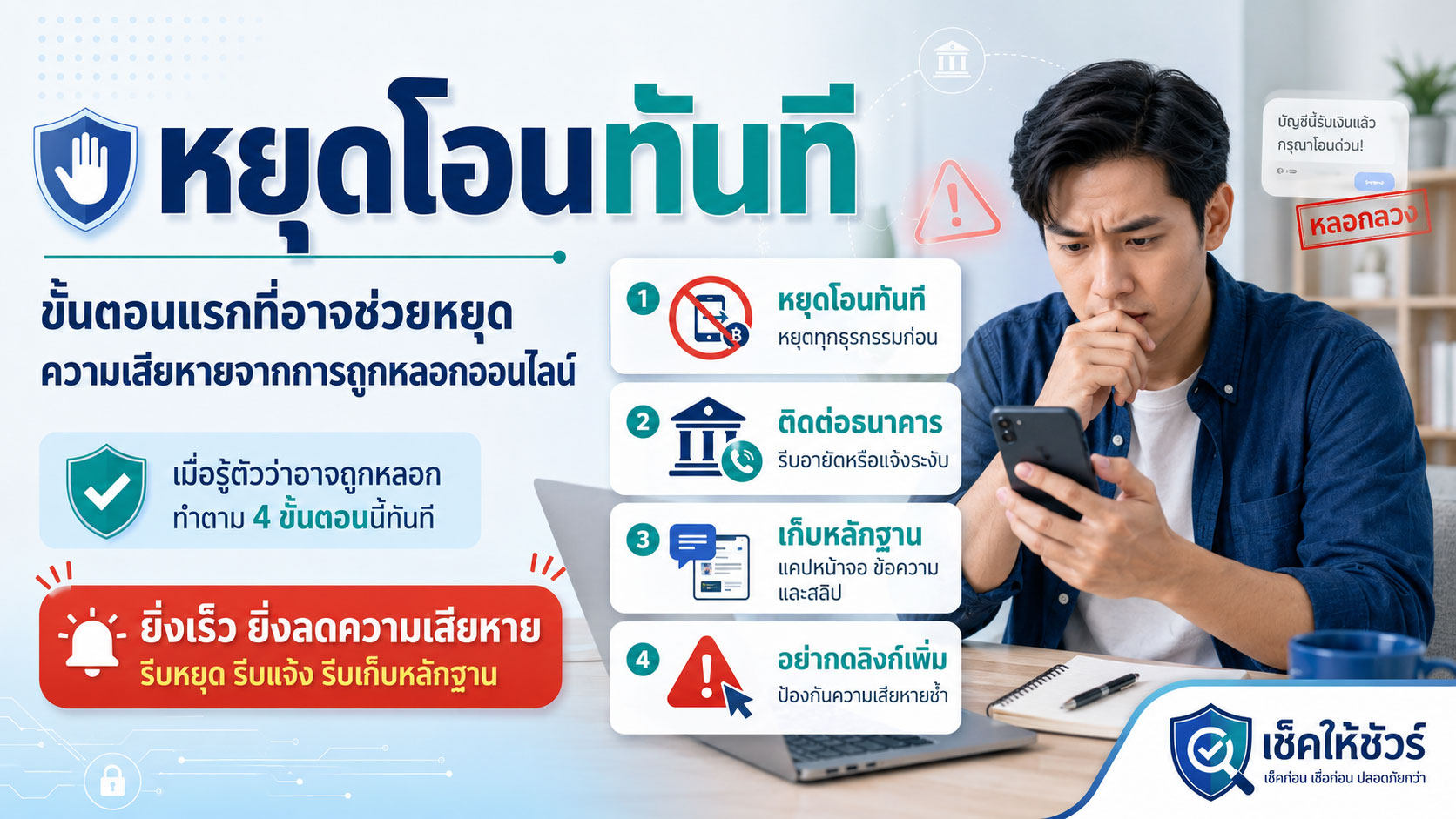
หากเริ่มรู้สึกว่างานที่สมัครมีความผิดปกติ ควรหยุดและจัดการอย่างเป็นขั้นตอน
สิ่งที่ควรทำ:
- อย่าโอนเงินเพิ่ม
- อย่าเติมเงินเพื่อถอนรายได้
- อย่าส่งข้อมูลส่วนตัวเพิ่มเติม
- อย่าให้รหัส OTP หรือรหัสผ่าน
- อย่าติดตั้งแอปจากลิงก์ที่ไม่มั่นใจ
- เก็บภาพหน้าจอประกาศงาน แชท ลิงก์ และข้อมูลบัญชี
- บันทึกวันที่ เวลา จำนวนเงิน และลำดับเหตุการณ์
- ติดต่อธนาคาร หากมีการโอนเงินไปแล้ว
- แจ้งเหตุผ่านช่องทางที่เกี่ยวข้อง หากเกิดความเสียหาย
- แจ้งข้อมูลต้องสงสัยเพื่อช่วยเตือนผู้อื่น
โดนโกงแล้วควรทำอย่างไร: [ใส่ลิงก์หน้า What To Do If Scammed]
แจ้งข้อมูลต้องสงสัย: [ใส่ลิงก์หน้า Report Scam]
อย่าปล่อยให้ความอยากได้งานทำให้เรามองข้ามความปลอดภัย
การอยากมีรายได้เพิ่มเป็นเรื่องเข้าใจได้ โดยเฉพาะในช่วงที่ค่าใช้จ่ายสูงหรือรายได้ไม่แน่นอน แต่งานที่ดีไม่ควรทำให้เราต้องเสี่ยงเสียเงิน เสียข้อมูล หรือใช้บัญชีของตนเองทำธุรกรรมที่ตรวจสอบไม่ได้
หากงานใดเริ่มต้นด้วยการให้จ่ายก่อน เติมก่อน โอนก่อน หรือส่งข้อมูลสำคัญก่อน ทั้งที่ยังไม่รู้จักนายจ้างจริง ควรหยุดก่อนเสมอ
บางครั้งการไม่รับงานที่น่าสงสัย อาจเป็นการปกป้องตัวเองได้มากกว่าการรีบคว้าโอกาสที่ดูดีเกินจริง
ใช้เช็คให้ชัวร์เป็นหนึ่งในขั้นตอนก่อนสมัครงานออนไลน์
ก่อนสมัครงานออนไลน์ที่ยังไม่มั่นใจ ท่านสามารถใช้เช็คให้ชัวร์เป็นหนึ่งในเครื่องมือช่วยตรวจสอบเบื้องต้น เช่น
- ค้นหาเบอร์โทรของผู้ชักชวน
- ค้นหาเลขบัญชีหรือชื่อบัญชีที่ให้โอนเงิน
- ค้นหาชื่อเพจหรือชื่อบริษัท
- ค้นหาลิงก์เว็บไซต์หรือโพสต์รับสมัคร
- อ่านบทความเกี่ยวกับงานออนไลน์หลอกลวงและภัยออนไลน์รูปแบบอื่น
ตรวจสอบข้อมูลต้องสงสัย: [ใส่ลิงก์หน้า Check/Search]
หากพบประกาศงาน เบอร์โทร เลขบัญชี เพจ ลิงก์ หรือพฤติกรรมที่น่าสงสัย สามารถแจ้งข้อมูลเข้ามาอย่างสุจริต เพื่อช่วยให้ผู้อื่นระวังก่อนเสียเงินหรือส่งข้อมูลสำคัญ
แจ้งข้อมูลต้องสงสัย: [ใส่ลิงก์หน้า Report Scam]
อย่างไรก็ตาม หากไม่พบข้อมูลในระบบ ไม่ได้หมายความว่างานนั้นปลอดภัยแน่นอน เพราะข้อมูลใหม่อาจยังไม่เคยมีผู้แจ้งเข้ามา ผู้ใช้งานควรตรวจสอบจากหลายแหล่ง ใช้วิจารณญาณ และไม่โอนเงินหากยังมีข้อสงสัย
งานที่น่าเชื่อถือควรเริ่มจากความชัดเจน ไม่ใช่ความเร่งด่วน
งานออนไลน์ที่ดีควรอธิบายได้ว่าใครเป็นผู้ว่าจ้าง ต้องทำอะไร จ่ายเงินอย่างไร มีเงื่อนไขอะไร และติดต่อกลับได้ที่ไหน
หากงานใดไม่ชัดเจน แต่เร่งให้ตัดสินใจเร็ว ให้โอนเงินก่อน หรือให้ส่งข้อมูลสำคัญก่อน ควรถือเป็นสัญญาณว่าต้องตรวจสอบเพิ่ม
ก่อนสมัครงานออนไลน์ครั้งต่อไป ลองจำประโยคนี้ไว้:
งานที่ดีควรให้โอกาสเรา ไม่ใช่ทำให้เราเสี่ยงก่อนเริ่มงาน
ข้อความสำคัญ
ข้อมูลในบทความนี้มีวัตถุประสงค์เพื่อให้ความรู้และแนวทางตรวจสอบงานออนไลน์ที่อาจมีความเสี่ยงเบื้องต้นเท่านั้น ไม่ถือเป็นการตัดสินว่างาน บริษัท บุคคล เพจ บัญชี หรือช่องทางใดเป็นมิจฉาชีพหรือกระทำความผิดโดยแน่นอน
เช็คให้ชัวร์ไม่ใช่หน่วยงานรัฐ ธนาคาร ตำรวจ ศาล หรือผู้ให้คำปรึกษาทางกฎหมายโดยตรง และไม่สามารถอายัดบัญชี ติดตามเงินคืน ดำเนินคดี หรือสั่งการแทนหน่วยงานที่มีอำนาจได้
หากท่านได้รับความเสียหายทางการเงินหรือพบเหตุอันควรสงสัยว่าเกี่ยวข้องกับอาชญากรรม กรุณาติดต่อธนาคารของท่านและหน่วยงานที่เกี่ยวข้องผ่านช่องทางทางการโดยเร็วที่สุด
เช็คให้ชัวร์ — ก่อนเชื่อ ก่อนโอน ก่อนแชร์
Online Job Scams: Beware of “Easy Work, Good Income” That Starts with “Free Registration” but Ends with a Money Transfer
Online jobs and side income opportunities are becoming more attractive to many people, including students, working adults, homemakers, shop owners, and anyone looking for extra income from home. The idea of “working from a phone,” “earning during free time,” or “starting without experience” can sound very appealing in today’s digital lifestyle.
However, this demand for extra income is also being used by scammers. They create online job posts that look trustworthy, using attractive wording, high income promises, easy tasks, quick registration, and immediate start options. Then, step by step, applicants may be led into paying registration fees, topping up money, completing paid tasks, transferring deposits, or submitting personal information without realizing the risk.
This type of threat is often called an Online Job Scam.
What makes online job scams concerning is that many victims do not begin with greed. They may simply need extra income, want to support their family, make better use of free time, or find work during a period of financial pressure.
CheckHaiSure created this article to help readers recognize risky online job patterns, notice warning signs, and check carefully before applying, sharing information, or transferring money to job offers they are not sure about.
Real Online Jobs Exist, But Jobs That Look Too Good to Be True Should Be Checked First
Not every online job is a scam. Today, many legitimate online jobs exist, such as writing, design, translation, chat support, online selling, page management, content creation, freelancing, online teaching, and remote customer service.
However, a trustworthy online job should provide clear details, such as the job description, employer information, payment terms, working schedule, contact channels, agreement, and expectations. It should not begin by asking applicants to transfer money first without a reason that can be verified.
A simple principle is:
A good job should pay the worker, not begin by making the applicant pay first.
If a job looks extremely easy, pays unusually well, accepts everyone, requires no skills, requires no interview, but asks for a transfer or top-up before starting, pause and check immediately.
Why Online Job Scams Can Easily Trick People
Online job scams are often designed to match what many people want: extra income, work from home, fast start, or simple work without much investment.
Scammers may use words that make the opportunity feel suitable and accessible, such as:
- Work from your phone
- Earn hundreds or thousands of baht per day
- No experience required
- Limited positions available
- Free registration and immediate start
- Complete simple tasks and get paid
- Withdraw money daily
- Admin will teach you step by step
- Real people have already earned money
When these claims come with income screenshots, applicant reviews, or chat groups that appear to show real workers, applicants may begin to trust the offer and become less cautious.
Common Types of Online Job Scams
Online job scams appear in many forms, but most share one pattern: they start with simple work and gradually lead applicants toward payments, personal information sharing, or risky transactions.
1. Like, Follow, Share, or Review Task Jobs
This type of scam often claims that you can earn money by liking posts, following accounts, sharing content, reviewing products, or increasing engagement for shops and platforms.
At first, the scammer may actually pay a small amount to build trust. Later, they invite the victim to complete higher-value tasks that require a top-up or money transfer before continuing.
Warning signs include:
- The task is extremely easy but pays unusually well
- You are asked to join a chat group to receive tasks
- A small payment is made at first to build trust
- Later, you must top up money to receive bigger tasks
- You are told that you cannot withdraw previous earnings unless you top up
- People in the group keep showing profit or withdrawal screenshots
- Admins pressure you to transfer money to keep your right
If the job starts as “complete tasks” but changes into “top up before withdrawal,” stop immediately.
2. Packing, Data Entry, or Work-from-Home Jobs That Require Registration Fees
These jobs often claim that you can work from home, need no experience, earn good income, and receive continuous assignments. But before starting, you must pay a registration fee, equipment deposit, manual fee, document fee, or security deposit.
Examples to watch for include:
- Product packing jobs requiring a deposit before receiving items
- Data entry jobs requiring a system fee before starting
- Work-from-home jobs requiring you to buy equipment from the employer
- Online admin jobs requiring training fees
- Part-time jobs requiring money transfer for identity verification
Some real jobs may involve certain costs, but there should be a verifiable company, clear agreement, and reasonable explanation. It should not be only a personal bank account or a chat message pressuring you to transfer immediately.
3. Jobs That Require Top-Ups to Unlock Wages
Some scammers create a system that shows accumulated income after completing tasks. However, when the applicant tries to withdraw, they are told to pay a fee, tax, account unlock charge, or top-up amount before receiving the money.
Common excuses include:
- You must top up to upgrade your account level
- You must pay tax before withdrawal
- You must unlock the system before receiving wages
- You must complete one final task before withdrawing everything
- You must transfer more because you completed a transaction incorrectly
- If you do not pay within the time limit, your existing balance will disappear
This is a serious warning sign because victims often transfer more money due to regret over the money or time they have already invested.
4. Jobs That Ask You to Use Your Bank Account to Receive or Transfer Money
Some job posts may claim to be financial processing jobs, transaction checking jobs, payment agent roles, or money transfer support roles. Applicants are asked to use their own bank accounts to receive money and transfer it onward to other accounts.
This is highly risky because the applicant’s account may become connected to money obtained from scams or other unlawful transactions.
Be careful if the job involves:
- Receiving money from strangers into your account
- Transferring money onward to other accounts
- Earning commission from transfer amounts
- No clear explanation of where the money comes from
- No verifiable company
- Claims that the job is easy: just receive and forward money
- Requests to use your bank account or PromptPay account
Do not use your bank account to receive or transfer money on behalf of people or organizations that cannot be clearly verified. The consequences may be far more serious than expected.
5. Jobs That Ask for Excessive Personal Information or Important Documents
Some jobs may begin by requesting applicant information, such as name, phone number, email, ID card copy, photo, or bank account details. They may claim this is needed for identity verification or contract preparation.
Real job applications may require some information, but it should only be shared with a verifiable company or employer. Be careful if too much information is requested before you know the job details clearly.
Information to protect carefully includes:
- Photo or copy of national ID card
- National ID number
- House registration copy
- Bank account number
- Selfie with ID card
- OTP codes
- Passwords
- Email or social media login information
- Family information or emergency contacts that are not relevant
If the employer cannot be verified yet, avoid sending important documents or excessive personal information.
6. Jobs That Require Installing an App or Clicking a Link to Start Work
In some cases, scammers send links to install an app, claiming it is a work system, task system, time-recording system, or payment system.
Be careful if the app or website:
- Does not come from the App Store or Google Play
- Requests access to messages, screen control, or Accessibility permissions
- Asks for banking information
- Asks you to share your screen while using it
- Says you must install immediately to start working
- Has no verifiable company or service provider
Installing apps from unclear links may put your device, accounts, and personal information at risk, beyond just losing a registration fee.
Warning Signs of Online Jobs That Should Make You Stop and Check
If a job post or recruiter shows several of the signs below, be especially careful:
- Very high income for unusually easy work
- Everyone is accepted without qualification checks
- No clear company or employer information
- Personal bank account used for registration fees or deposits
- Money transfer required before starting work
- Top-up required before withdrawing earnings
- Chat groups filled with people showing large incomes
- Pressure to apply or transfer immediately
- No time allowed for checking
- Requests for OTPs, passwords, or secret information
- Requests to use your bank account to receive money
- Unknown links or apps to install
- Avoiding questions about company details or contract
If you are not sure, pause first. A trustworthy job should allow applicants to verify information.
What to Check Before Applying for an Online Job
Before sending information, applying, or transferring any money, check basic details carefully.
Information worth checking includes:
- Company or employer name
- Official website or official page
- Address and contact channels
- Clear job description
- Payment terms
- Reason for any upfront payment, if claimed
- Whether the receiving account name matches the company
- Reviews or history from other sources
- Phone number or LINE ID used for contact
- Whether the recruiter’s identity can be verified
- Whether there is a contract or verifiable document
- Whether anyone has reported this job or account before
A real company should have more verifiable information than just a chat message or one job post.
Questions to Ask Yourself Before Accepting an Online Job
Before applying or transferring money, ask yourself:
- Is the income reasonable for the work?
- Why is the job extremely easy but pays so much?
- Why do I need to pay before starting work?
- Why do I need to top up before withdrawing wages?
- Can the employer’s identity be verified?
- Does the receiving account name match the company?
- Are the job details or contract clear?
- If I do not transfer now, will I truly lose the opportunity, or am I being rushed?
- Can someone I trust help me check this?
- If someone in my family found this job, would I advise them to accept it?
The last question often helps because we may see risks more clearly when thinking about someone we care about.
If You Start to Suspect the Online Job May Be a Scam
If something feels wrong about a job you applied for, stop and handle the situation step by step.
Recommended actions:
- Do not transfer more money
- Do not top up to withdraw income
- Do not send more personal information
- Do not share OTPs or passwords
- Do not install apps from links you are unsure about
- Save screenshots of job posts, chats, links, and account details
- Record the date, time, amount, and timeline of events
- Contact your bank if you already transferred money
- Report through relevant official channels if damage occurred
- Submit suspicious information to help warn others
What to do if scammed: [Insert What To Do If Scammed page link]
Report suspicious information: [Insert Report Scam page link]
Do Not Let the Desire for Work Make You Overlook Safety
Wanting extra income is understandable, especially when expenses are high or income is uncertain. But a good job should not make you risk losing money, exposing personal data, or using your own bank account for unclear transactions.
If a job starts by asking you to pay first, top up first, transfer first, or send sensitive information before you can verify the employer, pause first.
Sometimes, refusing a suspicious job may protect you more than rushing to accept an opportunity that looks too good to be true.
Use CheckHaiSure as One Step Before Applying for Online Jobs
Before applying for an online job you are unsure about, you can use CheckHaiSure as one of your preliminary checking tools.
You may check:
- Phone numbers used by recruiters
- Bank account numbers or account names for payment requests
- Page names or company names
- Website links or job posts
- Articles about online job scams and other online threats
Check suspicious information: [Insert Check/Search page link]
If you find suspicious job posts, phone numbers, bank accounts, pages, links, or behaviors, you can submit information in good faith to help others avoid losing money or sharing important personal information.
Report suspicious information: [Insert Report Scam page link]
However, if no information is found in the system, it does not mean the job is definitely safe. New information may not have been reported yet. Users should check multiple sources, use careful judgment, and avoid transferring money if any doubt remains.
A Trustworthy Job Should Begin with Clarity, Not Urgency
A good online job should clearly explain who the employer is, what work must be done, how payment works, what conditions apply, and how the employer can be contacted.
If a job is unclear but pressures you to decide quickly, transfer money first, or send important information first, treat it as a sign that more checking is needed.
Before accepting your next online job, remember this:
A good job should give you an opportunity, not make you take risks before you even begin.
Important Notice
The information in this article is intended for general education and preliminary guidance on checking potentially risky online job offers only. It is not a final judgment that any job, company, person, page, account, or channel is definitely fraudulent or has committed wrongdoing.
CheckHaiSure is not a government agency, bank, police authority, court, or direct legal advisory service. We cannot freeze accounts, recover money, conduct legal proceedings, or act on behalf of authorized agencies.
If you have suffered financial loss or suspect criminal activity, please contact your bank and the relevant official authorities through official channels as soon as possible.
CheckHaiSure — Check before you trust, transfer, or share.
Leave a Reply
You must be logged in to post a comment.