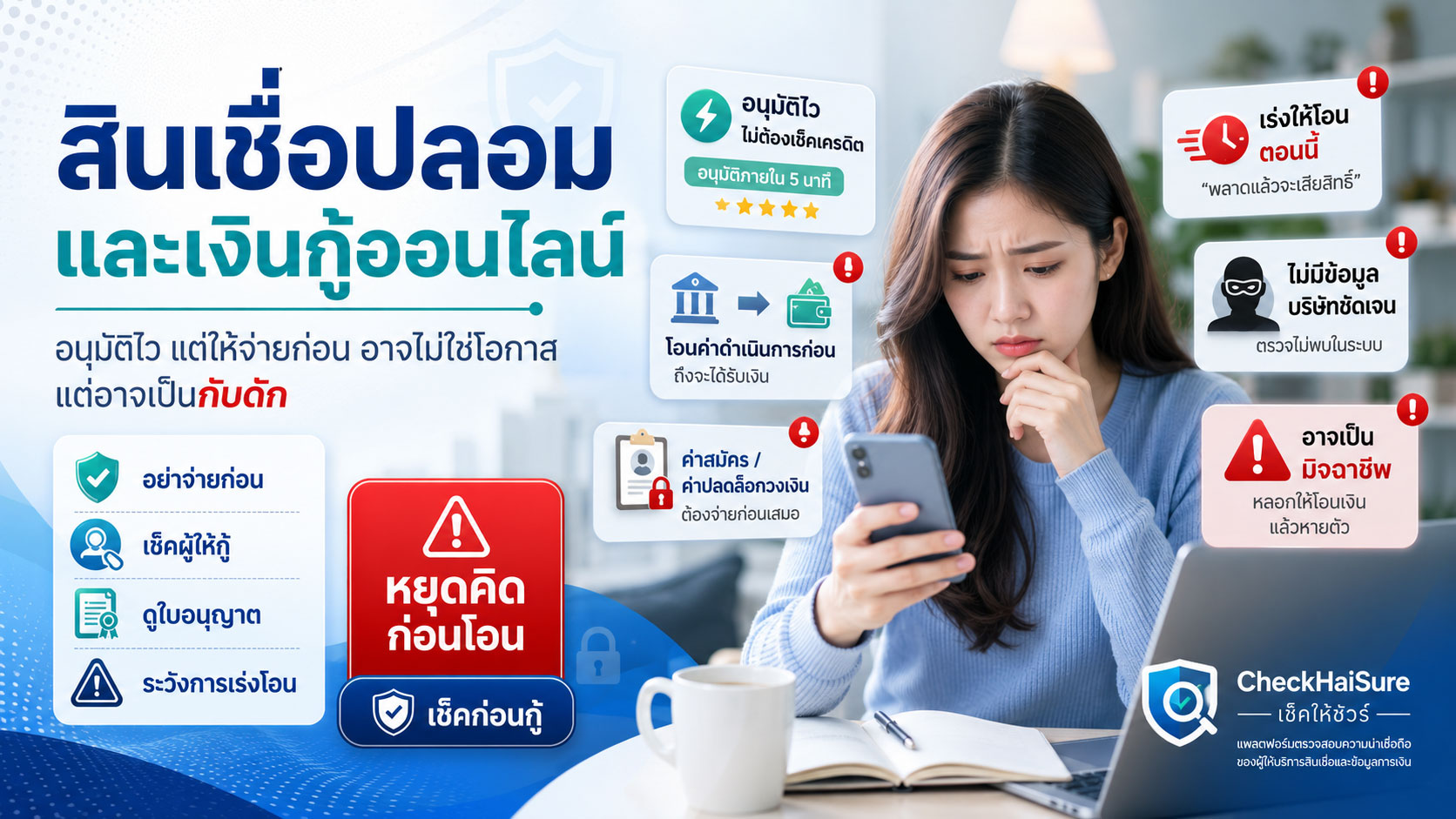
ในช่วงที่ค่าใช้จ่ายเพิ่มขึ้น รายได้ไม่แน่นอน หรือมีเหตุจำเป็นเร่งด่วน หลายคนอาจมองหาเงินกู้หรือสินเชื่อออนไลน์เป็นทางเลือก เพราะดูสะดวก สมัครง่าย ไม่ต้องเดินทาง และบางโฆษณาอาจใช้คำที่ทำให้รู้สึกมีความหวัง เช่น “อนุมัติไว”, “ไม่เช็กเครดิต”, “ไม่ต้องมีคนค้ำ”, “รายได้น้อยก็กู้ได้”, “ได้เงินภายใน 10 นาที” หรือ “สมัครฟรี รู้ผลทันที”
สำหรับคนที่กำลังเดือดร้อน ข้อความเหล่านี้อาจดูเหมือนทางออก
แต่ในอีกด้านหนึ่ง มิจฉาชีพบางกลุ่มใช้ความจำเป็นทางการเงินของผู้คนเป็นช่องทางหลอกลวง โดยสร้างเพจ แอป เว็บไซต์ หรือบัญชีแชทที่อ้างว่าให้บริการเงินกู้หรือสินเชื่อออนไลน์ แล้วค่อย ๆ หลอกให้เหยื่อโอนเงินก่อนด้วยเหตุผลต่าง ๆ เช่น ค่าธรรมเนียม ค่าประกัน ค่ายืนยันตัวตน ค่าปลดล็อกระบบ ค่าดำเนินการ หรือค่าปรับจากการกรอกข้อมูลผิด
ภัยลักษณะนี้มักเรียกว่า สินเชื่อปลอม หรือ Fake Loan Scam
สิ่งที่ทำให้สินเชื่อปลอมน่ากังวล คือผู้เสียหายมักอยู่ในช่วงที่ต้องการเงินอย่างเร่งด่วน จึงอาจตัดสินใจเร็ว หวังว่าจะได้เงินก้อนมาช่วยแก้ปัญหา แต่สุดท้ายกลับเสียเงินเพิ่ม เสียข้อมูลส่วนตัว หรือถูกหลอกให้โอนซ้ำหลายครั้ง
เช็คให้ชัวร์ จัดทำบทความนี้ขึ้นเพื่อช่วยให้ผู้อ่านสังเกตสัญญาณของสินเชื่อปลอม ตรวจสอบก่อนสมัคร และระวังคำขอให้ “จ่ายก่อน” ที่อาจนำไปสู่ความเสียหายมากขึ้น
เงินกู้ออนไลน์มีจริง แต่ต้องตรวจสอบให้ชัดก่อนเชื่อ
ปัจจุบันมีผู้ให้บริการสินเชื่อออนไลน์ที่ถูกต้องและน่าเชื่อถืออยู่จริง ทั้งจากธนาคาร สถาบันการเงิน หรือผู้ให้บริการทางการเงินที่ได้รับอนุญาต แต่ผู้ให้บริการที่ถูกต้องควรมีข้อมูลบริษัทชัดเจน ช่องทางติดต่อทางการ เงื่อนไขสัญญา อัตราดอกเบี้ย ค่าธรรมเนียม วิธีชำระคืน และข้อกำหนดต่าง ๆ ที่ตรวจสอบได้
ในทางตรงกันข้าม สินเชื่อปลอมมักเน้นคำโฆษณาที่ทำให้ตัดสินใจเร็ว แต่ให้ข้อมูลสำคัญไม่ชัดเจน
ตัวอย่างคำที่ควรระวัง เช่น
- อนุมัติแน่นอนทุกเคส
- ไม่เช็กประวัติใด ๆ
- รายได้เท่าไรก็กู้ได้
- เครดิตเสียก็กู้ได้ทันที
- ไม่ต้องมีเอกสาร
- ไม่ต้องตรวจสอบอะไร
- กู้ได้สูงมาก แม้ไม่มีรายได้ประจำ
- ต้องโอนค่าธรรมเนียมก่อนรับเงิน
- ต้องจ่ายค่าประกันก่อนปล่อยเงิน
- ต้องโอนเพิ่มเพื่อแก้ข้อมูลผิด
หลักคิดสำคัญคือ:
สินเชื่อที่น่าเชื่อถือควรเริ่มจากการตรวจสอบข้อมูลและเงื่อนไขอย่างโปร่งใส ไม่ใช่เริ่มจากการให้ผู้กู้โอนเงินก่อน
ทำไมสินเชื่อปลอมถึงหลอกคนได้ง่าย
สินเชื่อปลอมมักได้ผลเพราะเข้าไปอยู่ในช่วงเวลาที่ผู้คนกำลังเปราะบางทางการเงิน
เมื่อคนต้องการเงินด่วนเพื่อจ่ายค่าเช่า ค่ารักษา ค่าเทอม หนี้สิน ค่าใช้จ่ายครอบครัว หรือค่าใช้จ่ายฉุกเฉิน เขาอาจมีเวลาคิดน้อยลง และหวังว่าจะมีช่องทางที่ช่วยให้ได้เงินเร็ว
มิจฉาชีพจึงมักใช้วิธีทำให้เหยื่อรู้สึกว่า:
- มีโอกาสได้เงินกู้จริง
- ขั้นตอนง่ายกว่าที่อื่น
- ไม่ต้องกลัวประวัติเครดิต
- ถ้าไม่รีบสมัคร อาจเสียสิทธิ์
- จ่ายค่าธรรมเนียมนิดเดียว แล้วจะได้เงินก้อนใหญ่
- โอนเพิ่มอีกนิดเดียว ระบบก็จะปล่อยเงิน
- หากหยุดตอนนี้ เงินที่จ่ายไปก่อนหน้าจะสูญเปล่า
เมื่อความหวังผสมกับความเร่งด่วน การตัดสินใจอาจเกิดขึ้นเร็วเกินกว่าจะตรวจสอบได้ครบถ้วน
รูปแบบสินเชื่อปลอมที่พบบ่อย
สินเชื่อปลอมอาจมาได้หลายรูปแบบ ทั้งเพจ Facebook โฆษณาในโซเชียล แอปที่ส่งผ่านลิงก์ เว็บไซต์ปลอม บัญชี LINE หรือผู้ติดต่อที่อ้างว่าเป็นเจ้าหน้าที่สินเชื่อ
1. อ้างว่าอนุมัติไว แต่ให้โอนค่าธรรมเนียมก่อน
นี่เป็นรูปแบบที่พบบ่อยมาก ผู้เสียหายจะได้รับแจ้งว่าสินเชื่อผ่านการอนุมัติแล้ว แต่ก่อนจะได้รับเงิน ต้องโอนค่าธรรมเนียมบางอย่างก่อน
คำอ้างที่พบบ่อย เช่น
- ค่าดำเนินการ
- ค่าประกันเงินกู้
- ค่ายืนยันตัวตน
- ค่าตรวจสอบเอกสาร
- ค่าปลดล็อกวงเงิน
- ค่าธรรมเนียมโอนเงิน
- ค่าประกันความเสี่ยง
- ค่าเปิดบัญชีระบบ
เมื่อผู้เสียหายโอนเงินก้อนแรกไปแล้ว มิจฉาชีพอาจมีเหตุผลใหม่ให้โอนเพิ่มอีก เช่น ข้อมูลผิด ระบบล็อก บัญชีไม่ตรง หรือวงเงินยังปล่อยไม่ได้
ควรระวังเป็นพิเศษหากเงินกู้ยังไม่เข้าบัญชี แต่มีการขอให้จ่ายเงินก่อนหลายรอบ
2. อ้างว่ากรอกข้อมูลผิด ต้องจ่ายค่าปรับหรือค่าแก้ไขระบบ
บางกรณีมิจฉาชีพจะให้ผู้สมัครกรอกข้อมูลผ่านเว็บหรือแอป จากนั้นแจ้งว่ากรอกเลขบัญชีผิด ชื่อไม่ตรง ระบบผิดพลาด หรือข้อมูลไม่ผ่านการตรวจสอบ ทำให้ต้องจ่ายค่าปรับหรือค่าแก้ไขก่อนจึงจะปล่อยเงินได้
ตัวอย่างคำอ้าง:
- เลขบัญชีผิด ต้องจ่ายค่าแก้ไข
- ชื่อบัญชีไม่ตรง ต้องจ่ายค่าปลดล็อก
- ระบบระงับวงเงิน ต้องโอนเงินยืนยัน
- หากไม่จ่าย จะถูกฟ้องหรือขึ้นบัญชีดำ
- วงเงินถูกล็อก ต้องจ่ายค่าธรรมเนียมเพื่อปลดล็อก
นี่เป็นกลวิธีที่ทำให้เหยื่อรู้สึกผิดและกลัวว่าจะเสียโอกาสหรือเกิดปัญหาทางกฎหมาย จึงยอมโอนเพิ่ม
หากยังไม่ได้รับเงินจริง แต่ถูกเรียกเก็บค่าปรับหรือค่าปลดล็อกหลายครั้ง ควรหยุดทันที
3. แอปเงินกู้ปลอมที่ให้ติดตั้งนอกช่องทางทางการ
สินเชื่อปลอมบางรูปแบบมาในรูปของแอปที่ส่งผ่านลิงก์ โดยอ้างว่าเป็นแอปสำหรับสมัครกู้ ตรวจสอบวงเงิน หรือรับเงินกู้
ควรระวังหากแอปนั้น:
- ไม่ได้อยู่ใน App Store หรือ Google Play
- ถูกส่งมาเป็นไฟล์ให้ติดตั้งเอง
- ขอสิทธิ์เข้าถึงรายชื่อผู้ติดต่อ
- ขอสิทธิ์อ่านข้อความหรือแจ้งเตือน
- ขอสิทธิ์เข้าถึงรูปภาพ เอกสาร หรือไฟล์ในเครื่อง
- ขอให้กรอกข้อมูลธนาคาร รหัส หรือข้อมูลส่วนตัวมากเกินจำเป็น
- ไม่มีชื่อบริษัทหรือใบอนุญาตที่ตรวจสอบได้
การติดตั้งแอปต้องสงสัยอาจไม่ใช่แค่เสียเงิน แต่ยังเสี่ยงต่อข้อมูลส่วนตัว รายชื่อผู้ติดต่อ รูปภาพ เอกสาร และบัญชีออนไลน์ของผู้ใช้งานด้วย
4. เพจหรือบัญชีแชทที่แอบอ้างเป็นสถาบันการเงิน
มิจฉาชีพอาจสร้างเพจหรือบัญชี LINE ที่ใช้ชื่อ โลโก้ หรือรูปแบบใกล้เคียงกับธนาคาร บริษัทสินเชื่อ หรือหน่วยงานทางการเงิน เพื่อทำให้ดูน่าเชื่อถือ
สิ่งที่ควรตรวจสอบ:
- เพจนั้นเป็นเพจทางการจริงหรือไม่
- มีเครื่องหมายยืนยันหรือข้อมูลบริษัทชัดเจนหรือไม่
- ลิงก์เว็บไซต์ตรงกับเว็บไซต์ทางการหรือไม่
- ช่องทางติดต่อปรากฏอยู่ในเว็บไซต์ทางการขององค์กรจริงหรือไม่
- บัญชีรับเงินเป็นชื่อบริษัทหรือเป็นชื่อบุคคล
- มีการสะกดชื่อผิด หรือใช้โดเมนแปลก ๆ หรือไม่
- มีคนแจ้งเตือนในคอมเมนต์หรือรีวิวหรือไม่
หากอ้างว่าเป็นสถาบันการเงิน แต่ให้โอนเงินเข้าบัญชีบุคคลหรือคุยผ่านแชทส่วนตัวที่ตรวจสอบไม่ได้ ควรหยุดก่อน
5. เงินกู้นอกระบบออนไลน์ที่คิดดอกเบี้ยหรือค่าธรรมเนียมไม่ชัดเจน
บางกรณีอาจไม่ใช่แค่เพจปลอม แต่เป็นการปล่อยกู้นอกระบบผ่านออนไลน์ที่มีเงื่อนไขไม่เป็นธรรม ดอกเบี้ยสูง ค่าปรับหนัก หรือใช้การทวงหนี้ที่กดดัน
สัญญาณที่ควรระวัง:
- ไม่แจ้งอัตราดอกเบี้ยที่ชัดเจน
- ไม่แจ้งยอดชำระรวม
- ไม่มีสัญญาที่อ่านเข้าใจได้
- ให้ส่งข้อมูลส่วนตัวจำนวนมาก
- ขอรายชื่อผู้ติดต่อในโทรศัพท์
- ข่มขู่หากชำระช้า
- ใช้ภาพหรือข้อมูลส่วนตัวกดดัน
- ให้กู้จริง แต่หักค่าธรรมเนียมสูงผิดปกติก่อนโอนเงิน
แม้จะได้เงินกู้จริง แต่หากเงื่อนไขไม่โปร่งใสหรือมีการคุกคามภายหลัง ก็อาจสร้างความเสียหายในระยะยาวได้
สัญญาณเตือนของสินเชื่อปลอมที่ควรหยุดทันที
หากพบหลายข้อพร้อมกัน ควรระวังอย่างมาก
- อนุมัติเร็วผิดปกติ โดยแทบไม่ตรวจข้อมูล
- อ้างว่าไม่เช็กเครดิต ไม่ดูรายได้ ไม่ต้องมีเอกสาร
- ให้โอนเงินก่อนรับเงินกู้
- ขอค่าธรรมเนียม ค่าประกัน หรือค่าปลดล็อกหลายรอบ
- แจ้งว่ากรอกข้อมูลผิดแล้วต้องจ่ายค่าปรับ
- ข่มขู่ว่าจะฟ้องหรือขึ้นบัญชีดำ ทั้งที่ยังไม่ได้รับเงิน
- ให้ติดตั้งแอปจากลิงก์นอกช่องทางทางการ
- ขอ OTP รหัสผ่าน หรือข้อมูลลับ
- ขอข้อมูลส่วนตัวมากเกินจำเป็น
- ใช้บัญชีรับเงินเป็นชื่อบุคคล
- เพจหรือเว็บไซต์ตรวจสอบตัวตนไม่ได้
- เร่งให้โอนทันทีเพื่อรักษาสิทธิ์
- หลีกเลี่ยงเมื่อถามเรื่องใบอนุญาต บริษัท หรือสัญญา
หากยังไม่ได้รับเงินกู้ แต่ถูกเรียกเก็บเงินก่อน นี่คือสัญญาณที่ควรหยุดตรวจสอบอย่างจริงจัง
ก่อนสมัครสินเชื่อออนไลน์ ควรเช็คอะไรบ้าง
ก่อนส่งข้อมูล สมัครผ่านลิงก์ หรือตกลงโอนเงินใด ๆ ควรตรวจสอบอย่างน้อยในประเด็นต่อไปนี้
- ชื่อบริษัทหรือผู้ให้บริการ
- เว็บไซต์ทางการ
- ช่องทางติดต่อทางการ
- ที่อยู่บริษัท
- เงื่อนไขสินเชื่อ
- อัตราดอกเบี้ยและค่าธรรมเนียม
- ยอดชำระคืนโดยประมาณ
- สัญญาหรือเอกสารที่อ่านได้ชัดเจน
- บัญชีรับเงิน หากมีการเรียกเก็บค่าใช้จ่าย
- ความสัมพันธ์ระหว่างบัญชีรับเงินกับบริษัท
- รีวิวหรือข้อมูลเตือนภัยจากแหล่งอื่น
- ลิงก์หรือแอปที่ให้ใช้งานมาจากช่องทางทางการหรือไม่
หากผู้ให้บริการไม่สามารถให้ข้อมูลเหล่านี้ได้อย่างชัดเจน แต่เร่งให้โอนเงินก่อน ควรระวังเป็นพิเศษ
คำถามที่ควรถามตัวเองก่อนกู้เงินออนไลน์
ก่อนตัดสินใจสมัครหรือโอนเงิน ลองถามตัวเองว่า:
- ผู้ให้บริการนี้ตรวจสอบได้จริงหรือไม่
- ทำไมถึงอนุมัติวงเงินได้ง่ายมาก
- ทำไมต้องจ่ายเงินก่อน ทั้งที่ยังไม่ได้รับเงินกู้
- บัญชีที่ให้โอนเป็นชื่อบริษัทหรือชื่อบุคคล
- เงื่อนไขดอกเบี้ยและค่าธรรมเนียมชัดเจนหรือไม่
- หากไม่โอนตอนนี้ จะเสียโอกาสจริง หรือถูกกดดันให้รีบ
- มีสัญญาที่อ่านเข้าใจได้หรือไม่
- ลิงก์หรือแอปมาจากช่องทางทางการหรือไม่
- มีใครที่ไว้ใจช่วยตรวจสอบก่อนตัดสินใจได้หรือไม่
- หากคนในครอบครัวเจอสินเชื่อแบบนี้ เราจะแนะนำให้เขากู้หรือไม่
หากตอบคำถามเหล่านี้ไม่ได้ชัดเจน ควรหยุดก่อน
หากสมัครไปแล้วและเริ่มสงสัยว่าเป็นสินเชื่อปลอม
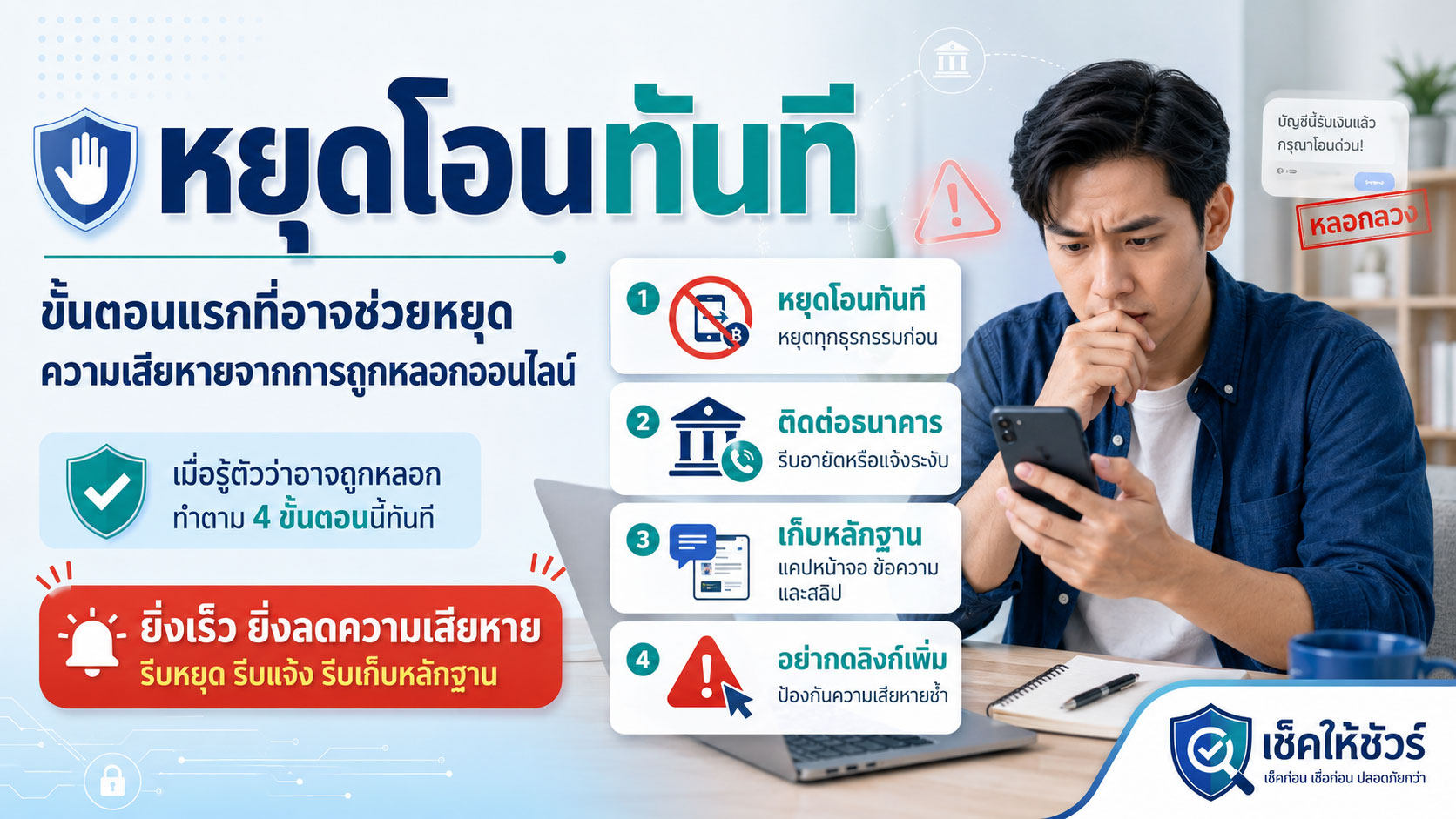
หากท่านส่งข้อมูลไปแล้ว โอนเงินไปแล้ว หรือติดตั้งแอปไปแล้ว และเริ่มสงสัยว่าถูกหลอก ควรรีบดำเนินการอย่างเป็นขั้นตอน
สิ่งที่ควรทำ:
- หยุดโอนเงินเพิ่มทันที
- อย่าจ่ายค่าปลดล็อก ค่าปรับ หรือค่าธรรมเนียมเพิ่ม
- เก็บหลักฐานทั้งหมด เช่น แชท ลิงก์ แอป เพจ เว็บไซต์ และสลิปโอนเงิน
- เก็บเลขบัญชี ชื่อบัญชี เบอร์โทร LINE ID หรือข้อมูลผู้ติดต่อ
- บันทึกวัน เวลา จำนวนเงิน และลำดับเหตุการณ์
- ติดต่อธนาคารผ่านช่องทางทางการ หากมีการโอนเงินไปแล้ว
- เปลี่ยนรหัสผ่านบัญชีสำคัญ หากเคยให้ข้อมูลหรือกดลิงก์
- ตรวจสอบโทรศัพท์ หากเคยติดตั้งแอปต้องสงสัย
- แจ้งเหตุผ่านช่องทางที่เกี่ยวข้อง หากเกิดความเสียหาย
- แจ้งข้อมูลต้องสงสัยเพื่อช่วยเตือนผู้อื่น
โดนโกงแล้วควรทำอย่างไร: [ใส่ลิงก์หน้า What To Do If Scammed]
แจ้งข้อมูลต้องสงสัย: [ใส่ลิงก์หน้า Report Scam]
อย่าให้ความเดือดร้อนทำให้ต้องเสียเงินเพิ่ม
เมื่อเรากำลังต้องการเงินด่วน การมีใครบางคนบอกว่า “อนุมัติแล้ว” อาจทำให้รู้สึกโล่งใจและอยากทำตามขั้นตอนให้จบเร็วที่สุด
แต่มิจฉาชีพมักใช้จุดนี้หลอกให้โอนเงินเพิ่มทีละขั้น เช่น จ่ายค่ายืนยันตัวตนก่อน จ่ายค่าปลดล็อกก่อน จ่ายค่าปรับก่อน จ่ายค่าภาษีก่อน แล้วค่อยปล่อยเงิน
หากยังไม่ได้รับเงินจริง แต่ต้องจ่ายเงินก่อนเรื่อย ๆ ควรหยุดทันที
การกู้เงินควรช่วยลดปัญหา ไม่ใช่ทำให้ต้องเสียเงินเพิ่มก่อนจะได้เงิน
ใช้เช็คให้ชัวร์เป็นหนึ่งในขั้นตอนก่อนสมัครสินเชื่อ
ก่อนสมัครสินเชื่อออนไลน์จากเพจ แอป เว็บไซต์ หรือผู้ติดต่อที่ยังไม่มั่นใจ ท่านสามารถใช้เช็คให้ชัวร์เป็นหนึ่งในเครื่องมือช่วยตรวจสอบเบื้องต้น เช่น
- ค้นหาเลขบัญชี
- ค้นหาชื่อบัญชี
- ค้นหาเบอร์โทร
- ค้นหาชื่อเพจหรือชื่อบริษัท
- ค้นหาลิงก์เว็บไซต์
- อ่านบทความเกี่ยวกับสินเชื่อปลอมและภัยออนไลน์รูปแบบอื่น
ตรวจสอบข้อมูลต้องสงสัย: [ใส่ลิงก์หน้า Check/Search]
หากพบเพจเงินกู้ เลขบัญชี เบอร์โทร ลิงก์ แอป หรือพฤติกรรมที่น่าสงสัย สามารถแจ้งข้อมูลเข้ามาอย่างสุจริต เพื่อช่วยให้ผู้อื่นระวังก่อนเสียเงินหรือส่งข้อมูลสำคัญ
แจ้งข้อมูลต้องสงสัย: [ใส่ลิงก์หน้า Report Scam]
อย่างไรก็ตาม หากไม่พบข้อมูลในระบบ ไม่ได้หมายความว่าสินเชื่อนั้นปลอดภัยแน่นอน เพราะข้อมูลใหม่อาจยังไม่เคยมีผู้แจ้งเข้ามา ผู้ใช้งานควรตรวจสอบจากหลายแหล่ง ใช้วิจารณญาณ และไม่โอนเงินหากยังมีข้อสงสัย
สินเชื่อที่ดีควรชัดเจน โปร่งใส และไม่กดดัน
สินเชื่อที่น่าเชื่อถือควรมีข้อมูลที่ตรวจสอบได้ มีเงื่อนไขที่อ่านเข้าใจได้ มีช่องทางติดต่อที่ชัดเจน และไม่ใช้ความเร่งด่วนหรือความเดือดร้อนของผู้สมัครมากดดันให้โอนเงินก่อน
ก่อนสมัครสินเชื่อออนไลน์ครั้งต่อไป ลองจำประโยคนี้ไว้:
ถ้ายังไม่ได้รับเงิน แต่ต้องจ่ายก่อนหลายรอบ นั่นอาจไม่ใช่สินเชื่อ แต่อาจเป็นสัญญาณของการหลอกลวง
ข้อความสำคัญ
ข้อมูลในบทความนี้มีวัตถุประสงค์เพื่อให้ความรู้และแนวทางตรวจสอบสินเชื่อออนไลน์ที่อาจมีความเสี่ยงเบื้องต้นเท่านั้น ไม่ถือเป็นการตัดสินว่าบุคคล บริษัท เพจ แอป เว็บไซต์ บัญชี หรือช่องทางใดเป็นมิจฉาชีพหรือกระทำความผิดโดยแน่นอน
เช็คให้ชัวร์ไม่ใช่หน่วยงานรัฐ ธนาคาร ตำรวจ ศาล สถาบันการเงิน หรือผู้ให้คำปรึกษาทางกฎหมายและการเงินโดยตรง และไม่สามารถอายัดบัญชี ติดตามเงินคืน ดำเนินคดี อนุมัติสินเชื่อ หรือสั่งการแทนหน่วยงานที่มีอำนาจได้
หากท่านได้รับความเสียหายทางการเงินหรือพบเหตุอันควรสงสัยว่าเกี่ยวข้องกับอาชญากรรม กรุณาติดต่อธนาคารของท่านและหน่วยงานที่เกี่ยวข้องผ่านช่องทางทางการโดยเร็วที่สุด
เช็คให้ชัวร์ — ก่อนเชื่อ ก่อนโอน ก่อนแชร์
Fake Loan Scams and Online Loans: Fast Approval with Upfront Payment May Not Be an Opportunity — It May Be a Trap
When expenses are rising, income is uncertain, or urgent financial needs appear, many people may look for online loans or digital lending services as an option. They seem convenient, easy to apply for, and do not require travel. Some advertisements may also use hopeful phrases such as “fast approval,” “no credit check,” “no guarantor required,” “low income accepted,” “money within 10 minutes,” or “free application, instant result.”
For someone facing financial pressure, these messages may feel like a way out.
However, some scammers use people’s financial hardship as a tool. They create pages, apps, websites, or chat accounts claiming to offer online loans or credit services. Then they gradually trick victims into transferring money first for different reasons, such as processing fees, insurance fees, identity verification fees, system unlocking fees, service charges, or penalties for entering incorrect information.
This type of scam is commonly known as a Fake Loan Scam.
What makes fake loan scams especially concerning is that victims are often already in urgent need of money. They may decide quickly, hoping to receive funds that can help solve their problems. Instead, they may end up losing more money, sharing personal information, or being pressured to transfer repeatedly.
CheckHaiSure created this article to help readers recognize warning signs of fake loans, check carefully before applying, and be cautious of any request to “pay first” before receiving money.
Online Loans Can Be Real, But They Must Be Clearly Verified
There are legitimate online loan providers, including banks, financial institutions, and licensed financial service providers. A trustworthy provider should have clear company information, official contact channels, contract terms, interest rates, fees, repayment methods, and conditions that users can verify.
Fake loan scams, on the other hand, often focus on attractive advertising that makes people decide quickly while leaving important information unclear.
Words and claims to be careful with include:
- Guaranteed approval for everyone
- No background check
- Any income level can apply
- Bad credit accepted immediately
- No documents required
- No verification needed
- High loan amount available even without stable income
- Transfer a fee before receiving the loan
- Pay insurance before the money is released
- Transfer more money to correct incorrect information
A key principle to remember is:
A trustworthy loan should begin with transparent verification and clear conditions, not with asking the borrower to transfer money first.
Why Fake Loan Scams Can Easily Trick People
Fake loan scams often work because they appear during moments when people are financially vulnerable.
When someone needs urgent money for rent, medical expenses, tuition, debt, family costs, or emergency needs, they may have less time to think carefully and may hope that a fast loan channel can help.
Scammers often make victims feel that:
- There is a real chance of getting a loan
- The process is easier than other providers
- Credit history will not be a problem
- If they do not apply quickly, they may lose the opportunity
- A small fee will lead to a much larger loan amount
- One more transfer will unlock the system
- If they stop now, the money already paid will be wasted
When hope is combined with urgency, decisions can happen too quickly before proper checking is done.
Common Fake Loan Scam Patterns
Fake loan scams may appear through Facebook pages, social media ads, apps sent through links, fake websites, LINE accounts, or people claiming to be loan officers.
1. Fast Approval, But You Must Pay a Fee First
This is one of the most common patterns. The victim is told that the loan has been approved, but before receiving the money, they must transfer a certain fee first.
Common excuses include:
- Processing fee
- Loan insurance fee
- Identity verification fee
- Document checking fee
- Credit limit unlocking fee
- Money transfer fee
- Risk insurance fee
- System account opening fee
After the victim transfers the first amount, scammers may create new reasons for additional payments, such as incorrect information, locked system, account mismatch, or loan disbursement failure.
Be especially careful if the loan has not entered your account yet, but you are asked to pay several times first.
2. Claiming You Entered Incorrect Information and Must Pay a Penalty or System Correction Fee
In some cases, scammers ask applicants to enter information through a website or app. Later, they claim that the bank account number was entered incorrectly, the name does not match, the system has an error, or the information failed verification. The victim is then asked to pay a penalty or correction fee before the loan can be released.
Common claims include:
- The bank account number is wrong and must be corrected for a fee
- The account name does not match and requires an unlocking fee
- The system has frozen the credit limit and needs transfer verification
- If you do not pay, you will be sued or blacklisted
- The loan limit is locked and a fee is required to unlock it
This tactic makes victims feel guilty or afraid that they will lose the opportunity or face legal trouble, causing them to transfer more money.
If you have not received the loan but are being charged penalties or unlocking fees repeatedly, stop immediately.
3. Fake Loan Apps Installed Outside Official Channels
Some fake loan scams come in the form of apps sent through links. The app may claim to be used for loan applications, credit limit checking, or receiving loan funds.
Be careful if the app:
- Is not available on the App Store or Google Play
- Is sent as a file for manual installation
- Requests access to your contacts
- Requests access to messages or notifications
- Requests access to photos, documents, or files on your device
- Asks for banking information, passwords, or excessive personal information
- Has no verifiable company name or license information
Installing a suspicious loan app may not only result in financial loss. It may also put your personal information, contacts, photos, documents, and online accounts at risk.
4. Pages or Chat Accounts Impersonating Financial Institutions
Scammers may create pages or LINE accounts using names, logos, or styles similar to banks, loan companies, or financial organizations to appear more trustworthy.
Things to check include:
- Is the page truly an official page?
- Does it have verification, company details, or official information?
- Does the website link match the official website?
- Is the contact channel listed on the organization’s real official website?
- Is the receiving account under a company name or an individual name?
- Are there misspellings, strange domains, or unusual wording?
- Are there warnings in comments or reviews?
If someone claims to represent a financial institution but asks you to transfer money to a personal account or communicate only through an unverifiable private chat, stop first.
5. Online Informal Loans with Unclear Interest or Fees
Some cases may not be completely fake, but may involve informal online lending with unfair conditions, high interest, heavy penalties, or aggressive collection behavior.
Warning signs include:
- Interest rate is not clearly stated
- Total repayment amount is unclear
- No contract that can be read and understood
- Excessive personal information is requested
- Contact list access is requested
- Threats are used for late payment
- Personal photos or information are used to pressure the borrower
- A loan is actually transferred, but high fees are deducted upfront
Even if money is received, unclear or unfair loan conditions may create long-term harm.
Warning Signs of Fake Loans That Should Make You Stop Immediately
If several of the following signs appear together, be very cautious:
- Approval is unusually fast with almost no verification
- They claim no credit check, no income check, and no documents are required
- You must transfer money before receiving the loan
- Fees, insurance, or unlocking charges are requested repeatedly
- They claim you entered incorrect information and must pay a penalty
- They threaten to sue or blacklist you even though you have not received money
- You are asked to install an app from a link outside official channels
- They ask for OTPs, passwords, or secret information
- Excessive personal information is requested
- The receiving account belongs to an individual
- The page or website cannot be verified
- You are pressured to transfer immediately to keep your right
- They avoid answering questions about license, company, or contract
If you have not received any loan money but are asked to pay first, this is a serious warning sign that should be checked carefully.
What to Check Before Applying for an Online Loan
Before submitting information, applying through a link, or agreeing to transfer any money, check at least the following:
- Company or service provider name
- Official website
- Official contact channels
- Company address
- Loan conditions
- Interest rates and fees
- Estimated repayment amount
- Clear and readable contract or documents
- Receiving account, if any payment is requested
- Relationship between the receiving account and the company
- Reviews or warning information from other sources
- Whether the link or app comes from an official channel
If the provider cannot clearly provide this information but pressures you to transfer money first, be especially careful.
Questions to Ask Yourself Before Applying for an Online Loan
Before applying or transferring money, ask yourself:
- Can this provider truly be verified?
- Why is the loan approval extremely easy?
- Why must I pay before receiving the loan?
- Is the receiving account under a company name or an individual name?
- Are the interest rate and fees clearly explained?
- If I do not transfer now, will I really lose the opportunity, or am I being pressured?
- Is there a contract I can read and understand?
- Does the link or app come from an official channel?
- Can someone I trust help me check before I decide?
- If someone in my family found this loan offer, would I advise them to apply?
If you cannot answer these questions clearly, pause first.
If You Already Applied and Suspect It May Be a Fake Loan
If you already submitted information, transferred money, or installed an app and now suspect it may be a fake loan, take action step by step.
Recommended actions include:
- Stop transferring more money immediately
- Do not pay more unlocking fees, penalties, or service charges
- Save all evidence, including chats, links, apps, pages, websites, and transfer slips
- Save account numbers, account names, phone numbers, LINE IDs, or contact information
- Record the date, time, amount, and timeline of events
- Contact your bank through official channels if money was transferred
- Change important passwords if you shared information or clicked a suspicious link
- Check your phone if you installed a suspicious app
- Report through relevant official channels if damage occurred
- Submit suspicious information to help warn others
What to do if scammed: [Insert What To Do If Scammed page link]
Report suspicious information: [Insert Report Scam page link]
Do Not Let Financial Hardship Make You Lose More Money
When you urgently need money, hearing that your loan has been “approved” may feel like relief, and you may want to complete the process quickly.
Scammers often use this moment to request more payments step by step: identity verification first, unlocking fee first, penalty first, tax first, and then they claim the money will be released.
If you have not received the money but keep being asked to pay first, stop immediately.
A loan should help reduce financial pressure. It should not make you lose more money before receiving anything.
Use CheckHaiSure as One Step Before Applying for a Loan
Before applying for an online loan from a page, app, website, or contact that you are not fully confident about, you can use CheckHaiSure as one of your preliminary checking tools.
You may check:
- Bank account numbers
- Account names
- Phone numbers
- Page names or company names
- Website links
- Articles about fake loan scams and other online threats
Check suspicious information: [Insert Check/Search page link]
If you find suspicious loan pages, bank accounts, phone numbers, links, apps, or behaviors, you can submit information in good faith to help others avoid losing money or sharing important personal information.
Report suspicious information: [Insert Report Scam page link]
However, if no information is found in the system, it does not mean the loan is definitely safe. New information may not have been reported yet. Users should check multiple sources, use careful judgment, and avoid transferring money if doubts remain.
A Good Loan Should Be Clear, Transparent, and Not Pressure You
A trustworthy loan should have verifiable information, understandable conditions, clear contact channels, and should not use urgency or financial hardship to pressure applicants into transferring money first.
Before applying for your next online loan, remember this:
If you have not received the money but are asked to pay again and again, it may not be a loan — it may be a warning sign of a scam.
Important Notice
The information in this article is intended for general education and preliminary guidance on checking potentially risky online loans only. It is not a final judgment that any person, company, page, app, website, account, or channel is definitely fraudulent or has committed wrongdoing.
CheckHaiSure is not a government agency, bank, police authority, court, financial institution, or direct legal or financial advisory service. We cannot freeze accounts, recover money, conduct legal proceedings, approve loans, or act on behalf of authorized agencies.
If you have suffered financial loss or suspect criminal activity, please contact your bank and the relevant official authorities through official channels as soon as possible.
CheckHaiSure — Check before you trust, transfer, or share.
Leave a Reply
You must be logged in to post a comment.