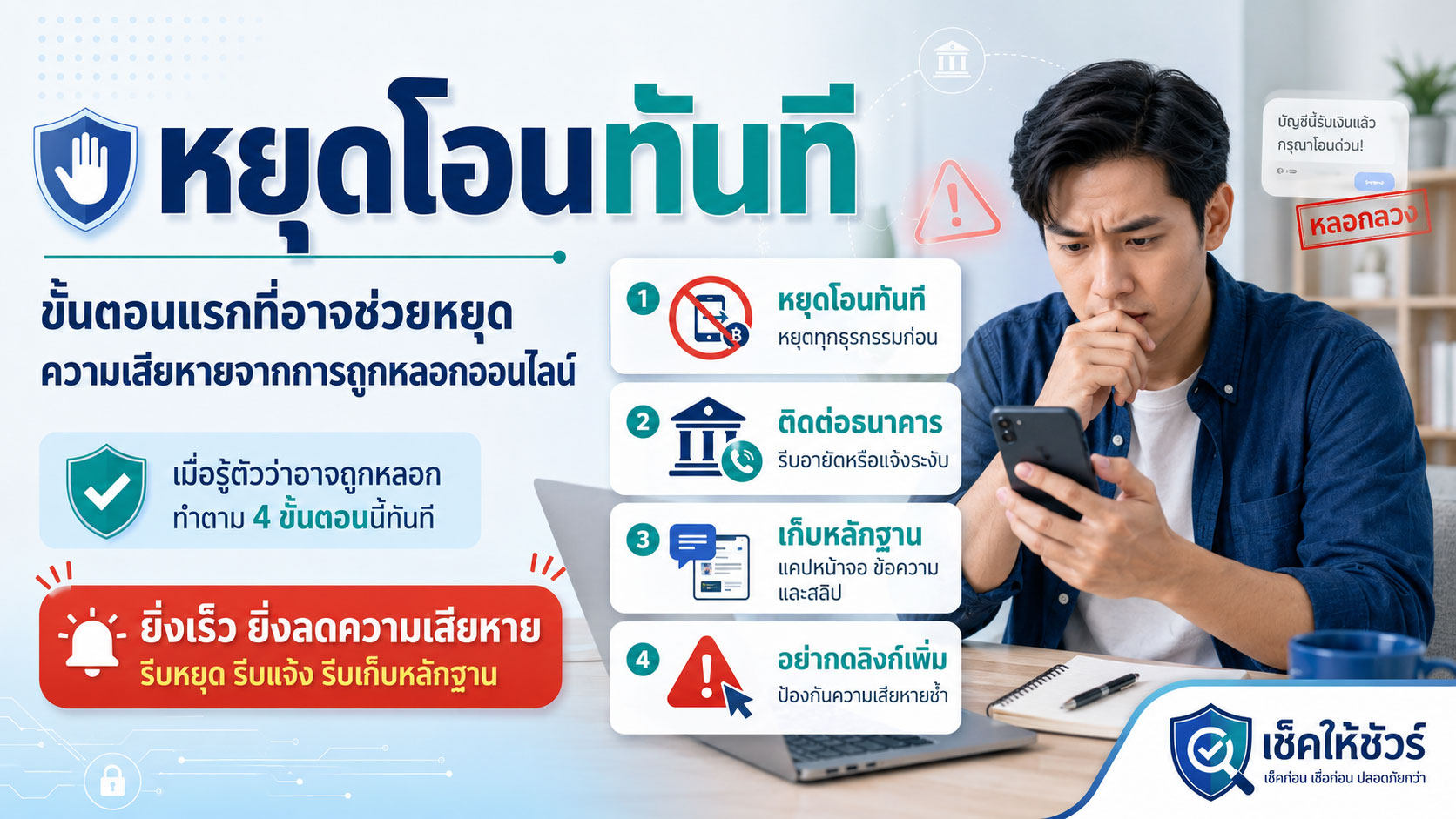
ภัยออนไลน์ในปัจจุบันไม่ได้มาในรูปแบบเดิมเสมอไป มิจฉาชีพสามารถปรับเปลี่ยนวิธีการหลอกลวงให้เข้ากับพฤติกรรมของผู้คน เทคโนโลยีใหม่ บริการทางการเงินดิจิทัล โซเชียลมีเดีย และสถานการณ์ในสังคมได้อย่างรวดเร็ว
บางครั้งภัยเหล่านี้อาจดูเหมือนข้อความธรรมดา โทรศัพท์จากเจ้าหน้าที่ เพจขายสินค้า โปรโมชั่นพิเศษ โอกาสลงทุน งานออนไลน์ หรือแม้แต่การติดต่อจากคนที่ดูน่าเชื่อถือ แต่เบื้องหลังอาจมีเป้าหมายเพื่อหลอกให้โอนเงิน กดลิงก์ ติดตั้งแอป ให้ข้อมูลส่วนตัว หรือเปิดทางให้เข้าถึงบัญชีทางการเงินของเรา
เช็คให้ชัวร์ จัดทำหน้านี้ขึ้นเพื่อช่วยให้ประชาชนเข้าใจรูปแบบภัยออนไลน์ที่พบบ่อย สังเกตสัญญาณเตือนเบื้องต้น และรู้ว่าควรระมัดระวังอย่างไร ก่อนตัดสินใจเชื่อ โอนเงิน กดลิงก์ หรือให้ข้อมูลสำคัญกับบุคคลที่ไม่รู้จัก
ทำไมการรู้รูปแบบภัยจึงสำคัญ
การรู้เท่าทันรูปแบบการหลอกลวงเป็นหนึ่งในวิธีป้องกันที่ดีที่สุด เพราะหลายครั้งความเสียหายเกิดขึ้นในช่วงเวลาสั้น ๆ ระหว่างความตกใจ ความรีบ ความกลัว ความโลภ หรือความไว้วางใจที่ถูกสร้างขึ้นโดยมิจฉาชีพ
หากเรารู้ทันสัญญาณเหล่านี้ตั้งแต่ต้น เราอาจมีเวลา “หยุดคิด” และ “เช็คให้ชัวร์” ก่อนตัดสินใจทำสิ่งที่เสี่ยง เช่น
- โอนเงินไปยังบัญชีที่ไม่รู้จัก
- กดลิงก์จาก SMS หรือแชทที่ไม่น่าไว้ใจ
- ให้รหัส OTP หรือข้อมูลส่วนตัว
- ดาวน์โหลดแอปจากแหล่งที่ไม่เป็นทางการ
- เชื่อคำกล่าวอ้างจากบุคคลที่แอบอ้างเป็นเจ้าหน้าที่
- ลงทุนในโครงการที่ดูดีเกินจริง
- ซื้อสินค้าจากร้านค้าที่ไม่มีความน่าเชื่อถือเพียงพอ
เป้าหมายของหน้านี้ไม่ใช่เพื่อสร้างความหวาดกลัว แต่เพื่อช่วยให้ทุกคนมีภูมิคุ้มกันทางความรู้ และสามารถใช้ชีวิตในสังคมดิจิทัลได้อย่างมั่นใจมากขึ้น
หมวดหมู่รูปแบบภัยออนไลน์
1. Call Center Scam / แก๊งคอลเซ็นเตอร์
ภัยประเภทนี้มักเริ่มจากการโทรศัพท์เข้ามาหาเหยื่อ โดยแอบอ้างเป็นเจ้าหน้าที่จากหน่วยงานรัฐ ธนาคาร บริษัทขนส่ง ตำรวจ ศาล หรือหน่วยงานที่ดูน่าเชื่อถือ เพื่อสร้างความตกใจหรือความกลัวให้ผู้รับสายรีบทำตามคำสั่ง
ตัวอย่างพฤติกรรมที่พบบ่อย
- อ้างว่าท่านมีพัสดุผิดกฎหมาย
- อ้างว่าบัญชีธนาคารของท่านเกี่ยวข้องกับคดี
- อ้างว่ามีหมายจับหรือหมายศาล
- อ้างว่าเงินในบัญชีของท่านไม่ปลอดภัย
- ขอให้โอนเงินไปยัง “บัญชีตรวจสอบ”
- ขอให้เปิดกล้อง วิดีโอคอล หรือแสดงเอกสารส่วนตัว
- ขอให้ติดตั้งแอปหรือกดลิงก์บางอย่าง
สัญญาณเตือน
- ใช้น้ำเสียงเร่งรัด ข่มขู่ หรือทำให้ตกใจ
- ห้ามวางสายหรือห้ามบอกคนอื่น
- ขอข้อมูลส่วนตัว รหัส OTP หรือข้อมูลบัญชี
- ขอให้โอนเงินเพื่อพิสูจน์ความบริสุทธิ์
- อ้างว่าเป็นเรื่องลับหรือเร่งด่วนมาก
ควรทำอย่างไร
วางสายทันทีหากรู้สึกผิดปกติ แล้วติดต่อหน่วยงานที่ถูกกล่าวอ้างผ่านช่องทางทางการด้วยตนเอง ห้ามโอนเงิน ห้ามให้รหัส OTP และห้ามติดตั้งแอปจากคำแนะนำของผู้โทร
2. SMS และลิงก์ปลอม
มิจฉาชีพมักส่ง SMS หรือข้อความผ่านแชท โดยแนบลิงก์ที่ดูเหมือนมาจากธนาคาร บริษัทขนส่ง หน่วยงานรัฐ แพลตฟอร์มช้อปปิ้ง หรือบริการที่คนทั่วไปใช้งานบ่อย เป้าหมายคือหลอกให้กดลิงก์ กรอกข้อมูลส่วนตัว หรือดาวน์โหลดแอปปลอม
ตัวอย่างข้อความที่อาจพบ
- พัสดุของท่านจัดส่งไม่สำเร็จ กรุณากดลิงก์
- บัญชีของท่านถูกระงับ กรุณายืนยันตัวตน
- ท่านได้รับเงินคืน กรุณากรอกข้อมูล
- คะแนนสะสมใกล้หมดอายุ
- มีรายการผิดปกติในบัญชีของท่าน
- กรุณาอัปเดตแอปเพื่อใช้งานต่อ
สัญญาณเตือน
- ลิงก์ดูแปลก สะกดผิด หรือไม่ใช่โดเมนทางการ
- ข้อความเร่งให้ทำทันที
- ขอข้อมูลบัตรประชาชน เลขบัญชี รหัสผ่าน หรือ OTP
- ให้ติดตั้งไฟล์หรือแอปนอก App Store / Google Play
- อ้างว่าถ้าไม่ทำทันทีจะถูกระงับบัญชีหรือเสียสิทธิ์
ควรทำอย่างไร
อย่ากดลิงก์จากข้อความที่ไม่มั่นใจ ควรเปิดแอปหรือเว็บไซต์ทางการด้วยตนเองแทน และตรวจสอบกับผู้ให้บริการผ่านช่องทางที่เชื่อถือได้
3. เพจปลอมและร้านค้าออนไลน์ต้องสงสัย
ภัยประเภทนี้มักเกิดขึ้นบนโซเชียลมีเดียหรือแพลตฟอร์มซื้อขายออนไลน์ โดยมิจฉาชีพสร้างเพจ ร้านค้า หรือบัญชีผู้ขายให้ดูน่าเชื่อถือ ใช้รูปสินค้า ราคาถูก รีวิวปลอม หรือโปรโมชันเร่งด่วน เพื่อหลอกให้โอนเงินก่อนแล้วไม่ส่งสินค้า
รูปแบบที่พบบ่อย
- ขายสินค้าราคาถูกกว่าตลาดมากผิดปกติ
- ใช้รูปสินค้าจากร้านอื่นหรือจากอินเทอร์เน็ต
- มีรีวิวซ้ำ ๆ หรือรีวิวที่ดูไม่เป็นธรรมชาติ
- เร่งให้โอนเงินเพื่อจองสินค้า
- ไม่ยอมให้เก็บเงินปลายทางหรือใช้ช่องทางชำระเงินที่ปลอดภัย
- หลังโอนเงินแล้วบล็อกหรือไม่ตอบกลับ
สัญญาณเตือน
- เพจเพิ่งสร้างใหม่หรือเปลี่ยนชื่อบ่อย
- ไม่มีข้อมูลร้านที่ตรวจสอบได้
- ชื่อบัญชีรับโอนไม่ตรงกับชื่อร้าน
- มีข้ออ้างไม่ให้ดูสินค้าจริงหรือไม่ให้หลักฐานเพิ่มเติม
- ราคาดีเกินจริงจนผิดปกติ
ควรทำอย่างไร
ตรวจสอบชื่อร้าน เพจ เบอร์โทรศัพท์ และเลขบัญชีก่อนโอนเงิน เลือกชำระผ่านระบบที่มีการคุ้มครองผู้ซื้อหากเป็นไปได้ และหลีกเลี่ยงการโอนเงินเข้าบัญชีส่วนบุคคลที่ไม่สามารถตรวจสอบได้
4. หลอกลงทุนและผลตอบแทนเกินจริง
ภัยลงทุนปลอมมักใช้คำโฆษณาว่าได้กำไรเร็ว ลงทุนน้อย ได้ผลตอบแทนสูง มีผู้เชี่ยวชาญดูแล หรือมีระบบอัตโนมัติช่วยทำกำไร โดยอาจอ้างถึงหุ้น คริปโต ทองคำ ค่าเงิน AI เทรดดิ้ง ธุรกิจออนไลน์ หรือโครงการที่ดูทันสมัย
รูปแบบที่พบบ่อย
- ชวนเข้ากลุ่ม Line, Telegram หรือ Facebook
- แสดงผลกำไรปลอมจากสมาชิกคนอื่น
- ให้ลงทุนจำนวนเล็กน้อยก่อน แล้วชวนเพิ่มเงิน
- ถอนได้ในช่วงแรกเพื่อสร้างความเชื่อใจ
- เมื่อยอดเงินสูงขึ้นจะอ้างค่าธรรมเนียม ภาษี หรือเงื่อนไขเพิ่ม
- สุดท้ายไม่สามารถถอนเงินได้
สัญญาณเตือน
- รับประกันกำไรแน่นอน
- ผลตอบแทนสูงผิดปกติในเวลาสั้น
- ไม่มีใบอนุญาตหรือข้อมูลบริษัทที่ตรวจสอบได้
- ใช้ภาพคนดังหรือหน่วยงานโดยไม่ได้รับอนุญาต
- กดดันให้รีบตัดสินใจก่อนหมดโอกาส
ควรทำอย่างไร
อย่าลงทุนเพียงเพราะเห็นผลตอบแทนสูงหรือมีคนในกลุ่มยืนยัน ควรตรวจสอบสถานะบริษัท ใบอนุญาต ความเสี่ยง และข้อมูลจากแหล่งทางการก่อนตัดสินใจเสมอ
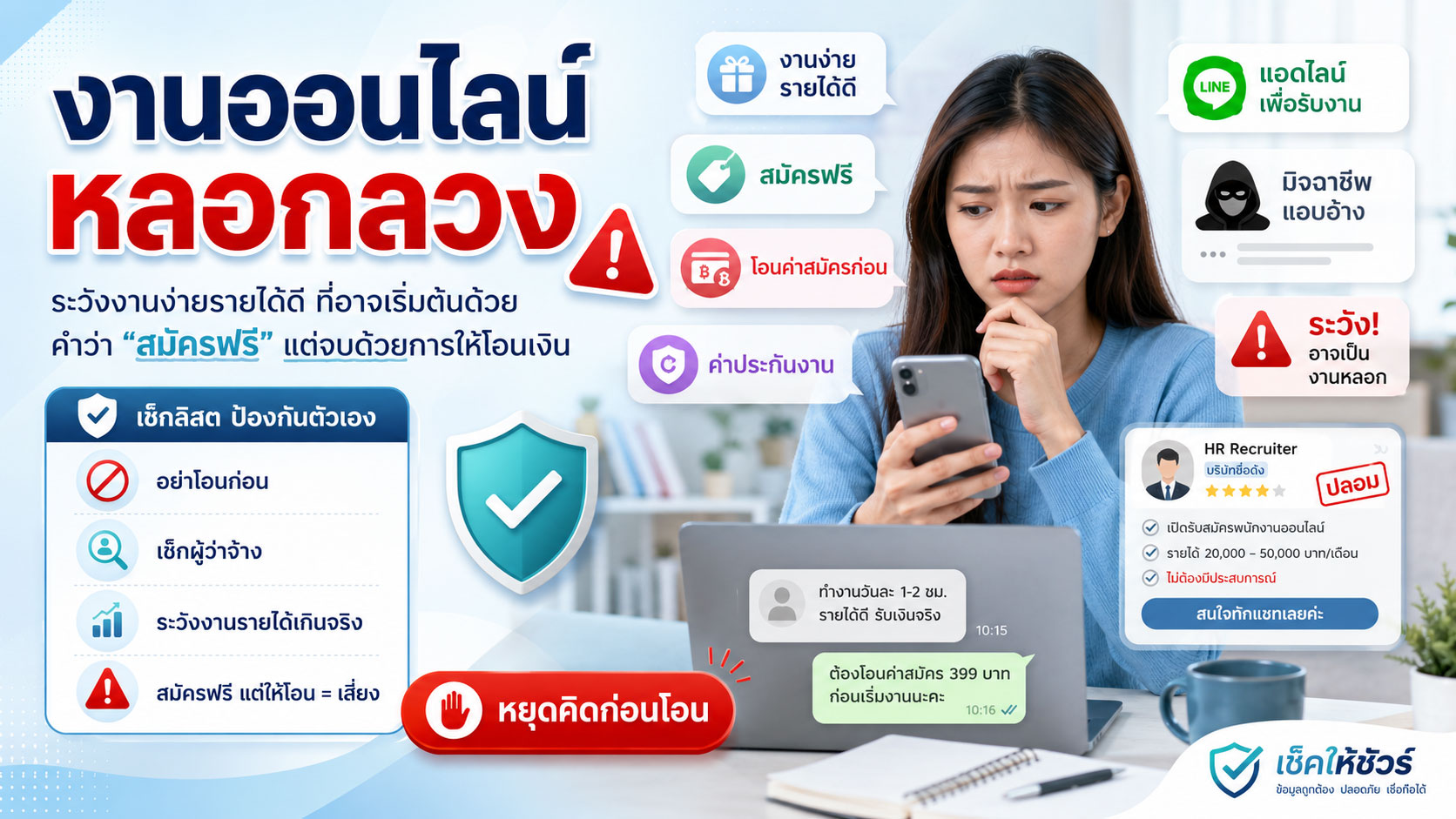
5. หลอกสมัครงานและงานออนไลน์
ภัยประเภทนี้มักเจาะกลุ่มคนที่ต้องการหารายได้เสริม นักศึกษา คนว่างงาน หรือผู้ที่กำลังมองหางานออนไลน์ โดยใช้ข้อความเชิญชวนว่าเป็นงานง่าย รายได้ดี ทำจากที่บ้าน ไม่ต้องมีประสบการณ์
ตัวอย่างรูปแบบที่พบบ่อย
- งานกดไลก์ กดติดตาม หรือรีวิวสินค้า
- งานแพ็กของที่บ้าน
- งานแอดมินออนไลน์
- งานรับออเดอร์ปลอม
- งานทำภารกิจในระบบแล้วได้รับค่าคอมมิชชั่น
- งานที่ต้องโอนเงินค่าสมัคร ค่ามัดจำ หรือค่าเปิดระบบก่อน
สัญญาณเตือน
- รายได้สูงเกินจริงเมื่อเทียบกับงานที่ทำ
- ขอให้โอนเงินก่อนเริ่มงาน
- ไม่มีชื่อบริษัท ที่อยู่ หรือข้อมูลนายจ้างที่ตรวจสอบได้
- สื่อสารผ่านแชทส่วนตัวเท่านั้น
- ให้ทำภารกิจที่ต้องเติมเงินเพิ่มขึ้นเรื่อย ๆ
ควรทำอย่างไร
งานที่น่าเชื่อถือไม่ควรบังคับให้ผู้สมัครโอนเงินก่อนเริ่มงาน ควรตรวจสอบบริษัท ประวัติผู้ว่าจ้าง และหลีกเลี่ยงงานที่ต้องเติมเงินเพื่อปลดล็อกค่าตอบแทน
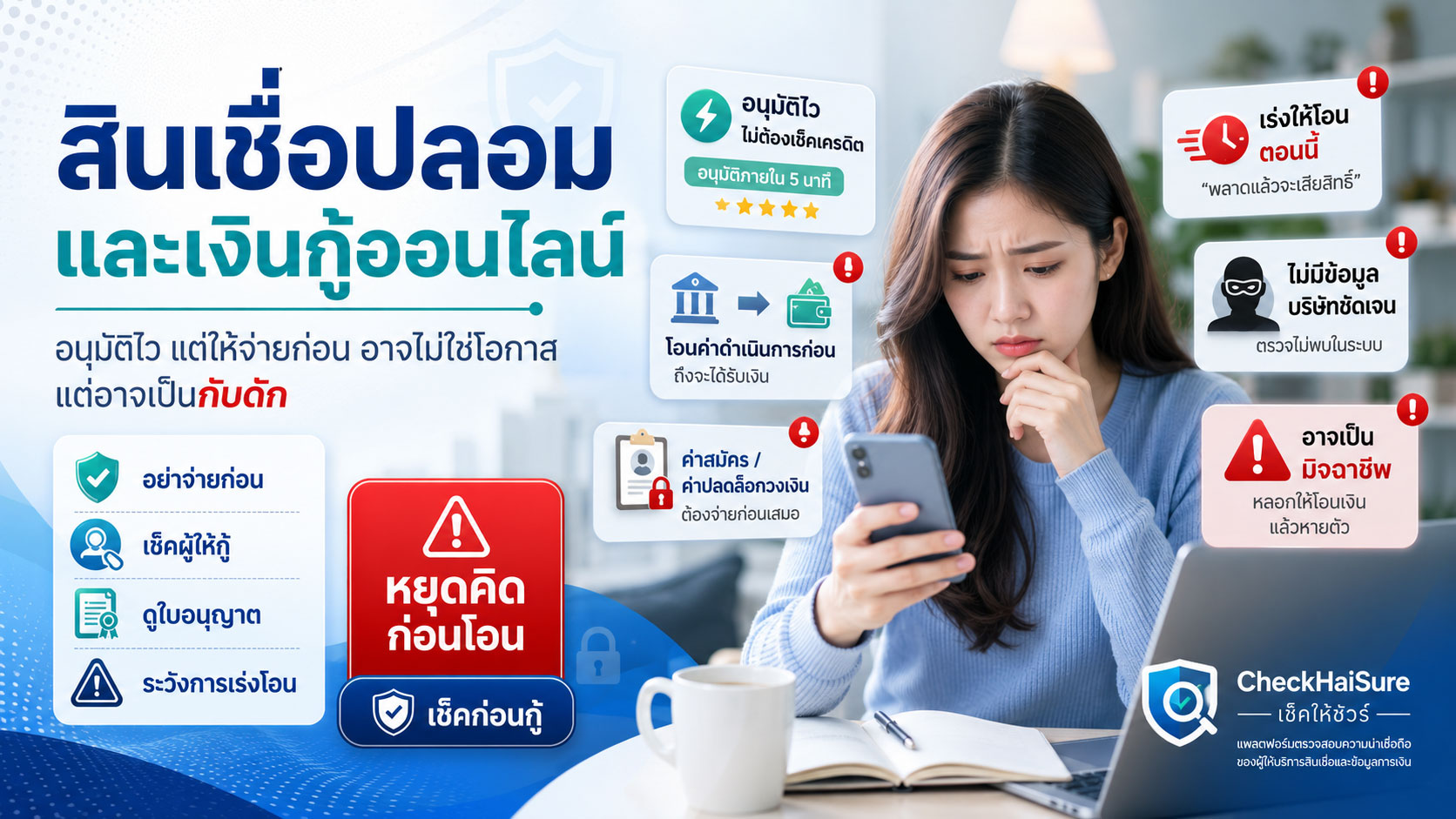
6. หลอกกู้เงินและสินเชื่อปลอม
มิจฉาชีพอาจสร้างเพจหรือแอปปลอมที่อ้างว่าให้กู้เงินง่าย อนุมัติไว ไม่เช็กเครดิต หรือไม่ต้องใช้เอกสารมาก จากนั้นหลอกให้เหยื่อโอนค่าธรรมเนียม ค่าประกัน ค่าปลดล็อก หรือขอข้อมูลส่วนตัวเพื่อนำไปใช้ในทางที่ผิด
รูปแบบที่พบบ่อย
- โฆษณากู้เงินผ่าน Facebook หรือ Line
- อ้างว่าอนุมัติแล้ว แต่ต้องโอนค่าดำเนินการก่อน
- ขอสำเนาบัตรประชาชนหรือข้อมูลส่วนตัวจำนวนมาก
- ให้ติดตั้งแอปเงินกู้จากลิงก์ที่ไม่เป็นทางการ
- ข่มขู่หรือประจานเมื่อเหยื่อไม่ชำระเงิน
สัญญาณเตือน
- ขอเงินก่อนปล่อยกู้
- ไม่มีใบอนุญาตหรือข้อมูลผู้ให้บริการชัดเจน
- ดอกเบี้ยหรือเงื่อนไขไม่โปร่งใส
- ใช้วิธีเร่งรัดหรือข่มขู่
- ขอเข้าถึงรายชื่อผู้ติดต่อในโทรศัพท์
ควรทำอย่างไร
หลีกเลี่ยงการกู้เงินจากเพจหรือแอปที่ตรวจสอบไม่ได้ และอย่าโอนเงินล่วงหน้าเพื่อขอสินเชื่อ ควรใช้บริการจากผู้ให้บริการที่ได้รับอนุญาตและมีช่องทางติดต่อทางการเท่านั้น
7. Romance Scam / หลอกความสัมพันธ์
ภัยประเภทนี้เกิดจากการสร้างความสัมพันธ์ทางอารมณ์ผ่านโซเชียลมีเดีย แอปหาคู่ หรือแชทส่วนตัว มิจฉาชีพอาจใช้รูปโปรไฟล์ปลอม แอบอ้างเป็นคนต่างชาติ ทหาร นักธุรกิจ หรือบุคคลที่มีฐานะดี เพื่อสร้างความไว้ใจ ก่อนขอเงินหรือหลอกให้โอนเงินด้วยเหตุผลต่าง ๆ
รูปแบบที่พบบ่อย
- พูดคุยสร้างความสัมพันธ์รวดเร็วผิดปกติ
- อ้างว่าต้องการส่งของขวัญหรือเงินมาให้
- อ้างว่าติดปัญหาศุลกากร ค่าธรรมเนียม หรือค่ารักษาพยาบาล
- ขอให้ช่วยโอนเงินชั่วคราว
- หลีกเลี่ยงการวิดีโอคอลหรือพบตัวจริง
สัญญาณเตือน
- โปรไฟล์ดูดีเกินจริงและตรวจสอบไม่ได้
- แสดงความรักหรือความผูกพันเร็วเกินไป
- ขอเงินหลังจากสร้างความไว้ใจ
- ใช้เหตุฉุกเฉินเร่งให้ตัดสินใจ
- เรื่องราวเปลี่ยนไปเรื่อย ๆ และไม่สามารถตรวจสอบได้
ควรทำอย่างไร
อย่าโอนเงินให้คนที่ไม่เคยพบตัวจริง แม้จะพูดคุยมานาน ควรปรึกษาคนใกล้ตัวและตรวจสอบรูปภาพหรือข้อมูลโปรไฟล์ก่อนตัดสินใจ
8. แอบอ้างเป็นธนาคาร หน่วยงานรัฐ หรือบริษัทที่น่าเชื่อถือ
มิจฉาชีพมักใช้ชื่อหรือภาพลักษณ์ขององค์กรที่ประชาชนไว้วางใจ เช่น ธนาคาร หน่วยงานรัฐ บริษัทขนส่ง แพลตฟอร์มช้อปปิ้ง หรือบริษัทเทคโนโลยี เพื่อทำให้เหยื่อเชื่อว่าเป็นการติดต่อจริง
รูปแบบที่พบบ่อย
- อ้างว่าต้องยืนยันตัวตน
- แจ้งว่าบัญชีผิดปกติหรือถูกระงับ
- แจ้งว่ามีเงินคืนหรือสิทธิพิเศษ
- ขอให้กรอกข้อมูลในเว็บไซต์ปลอม
- ขอรหัส OTP หรือรหัสผ่าน
- ส่งเอกสารปลอมหรือบัตรเจ้าหน้าที่ปลอม
สัญญาณเตือน
- ติดต่อจากช่องทางที่ไม่ใช่ช่องทางทางการ
- ขอข้อมูลลับหรือรหัสยืนยัน
- ใช้ลิงก์ที่ไม่ใช่โดเมนขององค์กรจริง
- มีการข่มขู่หรือเร่งรัดให้ทำทันที
- ไม่สามารถตรวจสอบกับหน่วยงานจริงได้
ควรทำอย่างไร
อย่าให้รหัสผ่านหรือ OTP แก่ใคร ควรติดต่อหน่วยงานนั้นผ่านเบอร์โทร เว็บไซต์ หรือแอปทางการที่ท่านค้นหาเอง ไม่ใช่ช่องทางที่อีกฝ่ายส่งมาให้
9. หลอกให้ติดตั้งแอปหรือรีโมตควบคุมเครื่อง
ภัยประเภทนี้มีความเสี่ยงสูง เพราะมิจฉาชีพอาจหลอกให้ติดตั้งแอปที่สามารถควบคุมโทรศัพท์ ดูหน้าจอ เข้าถึงข้อมูล หรือช่วยให้ทำธุรกรรมโดยไม่ได้รับอนุญาต
รูปแบบที่พบบ่อย
- อ้างว่าเป็นเจ้าหน้าที่ช่วยแก้ปัญหาบัญชี
- ให้ติดตั้งแอปจากลิงก์ภายนอก
- ขอให้เปิดสิทธิ์การเข้าถึงหลายรายการ
- ให้แชร์หน้าจอหรือเปิดโหมดช่วยเหลือระยะไกล
- หลอกให้กรอกข้อมูลธนาคารในแอปปลอม
สัญญาณเตือน
- ขอให้ติดตั้งแอปที่ไม่รู้จัก
- ขอสิทธิ์ควบคุมหน้าจอหรือเข้าถึงข้อความ
- ขอให้ทำตามขั้นตอนระหว่างคุยโทรศัพท์
- ห้ามวางสายหรือห้ามออกจากแอป
- โทรศัพท์เริ่มทำงานผิดปกติหลังติดตั้ง
ควรทำอย่างไร
อย่าติดตั้งแอปจากลิงก์ที่ผู้อื่นส่งมา หากสงสัยว่าเครื่องถูกควบคุม ให้ตัดอินเทอร์เน็ต รีบติดต่อธนาคาร เปลี่ยนรหัสผ่านจากอุปกรณ์ที่ปลอดภัย และขอคำแนะนำจากผู้เชี่ยวชาญหรือศูนย์บริการที่เชื่อถือได้
10. หลอกบริจาคและแอบอ้างเหตุเดือดร้อน
ภัยประเภทนี้ใช้ความสงสาร ความเห็นใจ หรือเหตุการณ์เร่งด่วนในสังคมมาเป็นเครื่องมือ เช่น อ้างว่าช่วยผู้ป่วย เด็ก สัตว์ ผู้ประสบภัย หรือครอบครัวที่เดือดร้อน แต่เงินอาจไม่ได้ถูกนำไปใช้ตามที่กล่าวอ้าง
รูปแบบที่พบบ่อย
- โพสต์รูปภาพหรือเรื่องราวสะเทือนใจ
- ขอรับบริจาคผ่านบัญชีส่วนบุคคล
- ไม่มีหลักฐานความเชื่อมโยงกับผู้เดือดร้อนจริง
- ใช้รูปภาพเก่าหรือรูปจากแหล่งอื่น
- หลีกเลี่ยงการให้รายละเอียดการใช้เงิน
สัญญาณเตือน
- ไม่มีข้อมูลหน่วยงานหรือผู้รับบริจาคที่ตรวจสอบได้
- ใช้ภาษากดดันให้รีบโอน
- ไม่แสดงหลักฐานอัปเดตการช่วยเหลือ
- บัญชีรับเงินไม่ตรงกับชื่อองค์กรหรือโครงการ
- มีคนหลายรายใช้รูปหรือเรื่องเดียวกัน
ควรทำอย่างไร
บริจาคผ่านหน่วยงานที่เชื่อถือได้ ตรวจสอบบัญชีรับเงิน และอย่าโอนเงินเพียงเพราะเห็นภาพหรือข้อความที่กระตุ้นอารมณ์โดยยังไม่ได้ตรวจสอบ
11. หลอกขายบัตร คูปอง โปรโมชัน หรือสิทธิพิเศษ
มิจฉาชีพอาจใช้ความต้องการซื้อของราคาถูกหรือสิทธิพิเศษ เช่น บัตรคอนเสิร์ต บัตรเดินทาง คูปองส่วนลด สิทธิ์จองสินค้า หรือแพ็กเกจท่องเที่ยว มาหลอกให้โอนเงินล่วงหน้า
รูปแบบที่พบบ่อย
- ขายบัตรหรือสิทธิ์ที่ราคาถูกกว่าปกติ
- อ้างว่ามีโควตาพิเศษหรือหลุดจอง
- ให้โอนเงินเพื่อจองทันที
- ใช้หลักฐานการซื้อปลอม
- ส่งบัตรปลอมหรือใช้บัตรซ้ำหลายคน
สัญญาณเตือน
- ราคาถูกผิดปกติ
- ผู้ขายเร่งให้ตัดสินใจ
- ไม่ยอมใช้ช่องทางชำระเงินที่ปลอดภัย
- โปรไฟล์ผู้ขายไม่มีประวัติน่าเชื่อถือ
- ไม่สามารถตรวจสอบสิทธิ์หรือแหล่งที่มาได้
ควรทำอย่างไร
ซื้อจากช่องทางทางการหรือผู้ขายที่ตรวจสอบได้ ใช้วิธีชำระเงินที่มีหลักฐานและการคุ้มครองผู้ซื้อ หลีกเลี่ยงการโอนเงินล่วงหน้าให้บุคคลที่ไม่รู้จัก
12. ข่าวปลอมและข้อมูลบิดเบือน
ภัยดิจิทัลไม่ได้จำกัดเฉพาะการหลอกเอาเงินเท่านั้น แต่รวมถึงข่าวปลอม ข้อมูลบิดเบือน และข้อความที่ทำให้เกิดความเข้าใจผิดในสังคม ซึ่งอาจถูกใช้เพื่อสร้างความตื่นตระหนก หลอกให้กดลิงก์ หรือโน้มน้าวให้ตัดสินใจผิดพลาด
รูปแบบที่พบบ่อย
- ข่าวเร่งด่วนที่ไม่มีแหล่งอ้างอิงชัดเจน
- ข้อมูลสุขภาพ การเงิน หรือกฎหมายที่ไม่ถูกต้อง
- ข้อความลูกโซ่ให้รีบแชร์ต่อ
- ภาพตัดต่อหรือคลิปที่ถูกนำออกจากบริบท
- ข้อมูลที่ใช้ชื่อหน่วยงานหรือคนดังเพื่อเพิ่มความน่าเชื่อถือ
สัญญาณเตือน
- ใช้คำว่า “ด่วนมาก”, “แชร์ต่อทันที”, “ห้ามพลาด”
- ไม่มีแหล่งข้อมูลทางการ
- เนื้อหากระตุ้นความกลัวหรือความโกรธ
- ข้อมูลขัดแย้งกับแหล่งข่าวที่เชื่อถือได้
- มีลิงก์ให้กดเพื่อรับสิทธิ์หรือดูรายละเอียดเพิ่มเติม
ควรทำอย่างไร
ตรวจสอบจากหลายแหล่ง โดยเฉพาะแหล่งข่าวหรือหน่วยงานทางการ อย่าแชร์ต่อทันทีหากยังไม่มั่นใจ เพราะการแชร์ข่าวปลอมอาจทำให้ผู้อื่นเสียหายได้
สัญญาณเตือนร่วมที่ควรจำ
แม้ภัยออนไลน์จะมีหลายรูปแบบ แต่ส่วนใหญ่มักมีสัญญาณเตือนคล้ายกัน เช่น
- เร่งให้ตัดสินใจทันที
- ใช้ความกลัว ความโลภ หรือความสงสารเป็นตัวกระตุ้น
- ขอให้โอนเงินก่อน
- ขอข้อมูลส่วนตัว รหัสผ่าน หรือ OTP
- ส่งลิงก์ที่ตรวจสอบไม่ได้
- ขอให้ติดตั้งแอปจากแหล่งที่ไม่เป็นทางการ
- ห้ามบอกคนอื่นหรือห้ามวางสาย
- ใช้ชื่อหน่วยงานหรือบุคคลที่น่าเชื่อถือมาแอบอ้าง
- ราคาหรือผลตอบแทนดีเกินจริง
- ข้อมูลผู้ติดต่อไม่ชัดเจนหรือเปลี่ยนไปมา
หากพบสัญญาณเหล่านี้ ควรหยุดคิด ตรวจสอบ และปรึกษาคนที่ไว้ใจก่อนตัดสินใจ
เช็คให้ชัวร์ก่อนเสมอ
ก่อนโอนเงิน กดลิงก์ ให้ข้อมูลส่วนตัว สมัครงาน ลงทุน ซื้อสินค้า หรือเชื่อคำกล่าวอ้างใด ๆ จากช่องทางที่ไม่คุ้นเคย ท่านสามารถใช้เช็คให้ชัวร์เป็นหนึ่งในเครื่องมือช่วยตรวจสอบเบื้องต้น
ท่านสามารถค้นหาข้อมูลต้องสงสัย เช่น
- เบอร์โทรศัพท์
- เลขบัญชี
- ชื่อบัญชี
- ลิงก์เว็บไซต์
- ชื่อร้านค้า
- เพจออนไลน์
- LINE ID
- ข้อความต้องสงสัย
- รูปแบบการหลอกลวงที่พบเห็น
อย่างไรก็ตาม หากไม่พบข้อมูลในระบบ ไม่ได้หมายความว่าข้อมูลนั้นปลอดภัย 100% เพราะภัยออนไลน์ใหม่ ๆ อาจยังไม่เคยมีผู้แจ้งเข้ามา ผู้ใช้งานควรใช้วิจารณญาณ ตรวจสอบหลายช่องทาง และหลีกเลี่ยงการทำธุรกรรมหากยังไม่มั่นใจ
ร่วมเป็นส่วนหนึ่งในการเตือนภัย
หากท่านพบข้อมูลต้องสงสัยหรือเคยพบเหตุการณ์ที่อาจเป็นประโยชน์ต่อผู้อื่น ท่านสามารถแจ้งข้อมูลเข้ามายังเช็คให้ชัวร์ได้
การแจ้งข้อมูลด้วยความสุจริตของท่าน อาจช่วยให้คนอื่นหยุดคิดก่อนโอนเงิน ตรวจสอบก่อนกดลิงก์ หรือหลีกเลี่ยงความเสียหายก่อนที่จะสายเกินไป
แจ้งข้อมูลต้องสงสัย: แจ้งข้อมูลต้องสงสัย
ตรวจสอบข้อมูลต้องสงสัย: ตรวจสอบข้อมูลต้องสงสัย
ข้อความสำคัญ
ข้อมูลในหน้านี้มีวัตถุประสงค์เพื่อการให้ความรู้ การแจ้งเตือน และการตรวจสอบเบื้องต้นเท่านั้น ไม่ถือเป็นคำแนะนำทางกฎหมาย การตัดสินความผิด หรือการรับรองว่าบุคคล ร้านค้า องค์กร หรือบัญชีใดมีหรือไม่มีความผิด
ผู้ใช้งานควรใช้วิจารณญาณ ตรวจสอบข้อมูลจากแหล่งทางการ และติดต่อหน่วยงานที่เกี่ยวข้องโดยตรงเมื่อเกิดความเสียหายหรือมีเหตุอันควรสงสัยว่าเกี่ยวข้องกับอาชญากรรม
เช็คให้ชัวร์ — ก่อนเชื่อ ก่อนโอน ก่อนแชร์
Common Online Scam Types
Online threats today do not always appear in the same form. Scammers can quickly adapt their methods to people’s behavior, new technologies, digital financial services, social media platforms, and current social situations.
Sometimes these threats may look like a normal message, a phone call from an official, a product page, a special promotion, an investment opportunity, an online job, or even a message from someone who appears trustworthy. Behind these approaches, however, the real intention may be to trick people into transferring money, clicking links, installing apps, sharing personal information, or allowing access to financial accounts.
CheckHaiSure created this page to help people understand common online scam patterns, recognize early warning signs, and know what to be careful about before trusting, transferring money, clicking links, or sharing sensitive information with someone they do not know.
Why Understanding Scam Patterns Matters
Being aware of scam patterns is one of the most important ways to protect yourself. In many cases, damage happens within a short moment when fear, urgency, pressure, greed, kindness, or misplaced trust is used against the victim.
If we can recognize warning signs early, we may have time to pause and check before taking action, such as:
- Transferring money to an unknown account
- Clicking links from suspicious SMS or chat messages
- Sharing OTPs, passwords, or personal information
- Downloading apps from unofficial sources
- Believing claims from someone impersonating an official
- Investing in opportunities that sound too good to be true
- Buying from online shops without enough trust signals
The goal of this page is not to create fear, but to help people build knowledge-based immunity and participate in digital society with greater confidence.
Common Online Scam Categories
1. Call Center Scams
This type of scam often starts with a phone call. Scammers may impersonate government officers, bank staff, delivery companies, police officers, courts, or other trusted organizations. Their goal is to create fear or urgency so the victim follows their instructions quickly.
Common Examples
- Claiming that your parcel contains illegal items
- Claiming that your bank account is involved in a criminal case
- Claiming that there is an arrest warrant or court order against you
- Claiming that money in your bank account is unsafe
- Asking you to transfer money to a “verification account”
- Asking you to turn on a camera, video call, or show personal documents
- Asking you to install an app or click a specific link
Warning Signs
- The caller uses pressure, threats, or fear
- You are told not to hang up or not to tell anyone
- They ask for personal information, OTPs, or bank details
- They ask you to transfer money to prove your innocence
- They claim the matter is highly confidential or extremely urgent
What You Should Do
Hang up immediately if something feels suspicious. Contact the real organization directly through official channels. Do not transfer money, do not share OTPs, and do not install apps based on instructions from the caller.
2. Fake SMS and Suspicious Links
Scammers often send SMS or chat messages containing links that appear to come from banks, delivery companies, government agencies, shopping platforms, or popular services. The goal is to trick people into clicking the link, entering personal information, or downloading a fake app.
Common Message Examples
- Your parcel could not be delivered. Please click this link.
- Your account has been suspended. Please verify your identity.
- You are eligible for a refund. Please enter your information.
- Your reward points are about to expire.
- Unusual activity was found in your account.
- Please update your app to continue using the service.
Warning Signs
- The link looks unusual, misspelled, or does not match the official domain
- The message pressures you to act immediately
- It asks for ID numbers, bank account details, passwords, or OTPs
- It asks you to install files or apps outside official app stores
- It claims you will lose access or benefits if you do not act quickly
What You Should Do
Do not click links from messages you are unsure about. Open the official app or website by yourself instead, and contact the service provider through trusted channels.
3. Fake Pages and Suspicious Online Shops
This type of scam often happens on social media or online marketplaces. Scammers may create fake pages, shops, or seller accounts that appear trustworthy. They may use product photos, very low prices, fake reviews, or urgent promotions to trick buyers into transferring money before disappearing.
Common Patterns
- Products are priced far below the market rate
- Product images are copied from other shops or the internet
- Reviews look repetitive or unnatural
- The seller pressures you to transfer money quickly
- Cash on delivery or safer payment options are not allowed
- After payment, the seller blocks you or stops responding
Warning Signs
- The page is newly created or has changed its name many times
- There is no verifiable shop information
- The receiving bank account name does not match the shop name
- The seller refuses to provide additional proof
- The price is too good to be true
What You Should Do
Check the shop name, page, phone number, and bank account before transferring money. Use buyer-protection payment methods where possible, and avoid transferring money to unverifiable personal accounts.
4. Fake Investment and Unrealistic Returns
Investment scams often use attractive claims such as quick profit, low investment, high returns, expert guidance, or automated trading systems. They may refer to stocks, crypto, gold, foreign exchange, AI trading, online businesses, or modern-looking projects.
Common Patterns
- Inviting people to join LINE, Telegram, or Facebook groups
- Showing fake profit results from other members
- Asking for a small first investment, then encouraging larger amounts
- Allowing early withdrawals to build trust
- Later claiming additional fees, taxes, or conditions before withdrawal
- Eventually, the victim cannot withdraw money
Warning Signs
- Guaranteed profit
- Abnormally high returns in a short time
- No verifiable license or company information
- Unauthorized use of celebrities or official organizations
- Pressure to act before the “opportunity” disappears
What You Should Do
Do not invest simply because the promised return is high or because people in a group claim to have made money. Always verify the company, license, risks, and official information before making any investment decision.
5. Fake Job Offers and Online Work Scams
This type of scam targets people looking for extra income, students, job seekers, or those interested in working from home. The message often sounds attractive: easy work, good income, no experience required.
Common Examples
- Like, follow, or product review tasks
- Packing work from home
- Online admin jobs
- Fake order-processing jobs
- Task-based jobs with commission rewards
- Jobs that require registration fees, deposits, or system activation payments
Warning Signs
- The income is too high compared with the work required
- You must transfer money before starting
- There is no verifiable company name, address, or employer information
- Communication happens only through private chat
- You are asked to add more money to unlock rewards
What You Should Do
A legitimate job should not require you to transfer money before starting work. Check the company and employer carefully, and avoid any job that requires you to top up money in order to receive payment.
6. Fake Loan Offers and Illegal Lending Scams
Scammers may create fake pages or apps claiming to offer easy loans, fast approval, no credit checks, or minimal documentation. They then trick victims into paying fees, insurance charges, unlocking fees, or submitting personal information that may later be misused.
Common Patterns
- Loan advertisements through Facebook or LINE
- Claims that the loan has been approved but a processing fee is required first
- Requests for ID documents or excessive personal information
- Instructions to install a loan app from an unofficial link
- Threats or harassment when the victim refuses to pay
Warning Signs
- Asking for money before releasing a loan
- No clear license or provider information
- Unclear interest rates or loan conditions
- Aggressive pressure or threats
- Requesting access to contacts on your phone
What You Should Do
Avoid borrowing from unverifiable pages or apps. Do not transfer money in advance to receive a loan. Use only licensed financial service providers with official contact channels.
7. Romance Scams
Romance scams use emotional trust as the main tool. Scammers may approach victims through social media, dating apps, or private chats. They may use fake profile photos and pretend to be foreigners, soldiers, businesspeople, or wealthy individuals before asking for money.
Common Patterns
- Building emotional attachment unusually quickly
- Claiming they want to send gifts or money
- Claiming there are customs fees, medical fees, or emergency costs
- Asking for temporary financial help
- Avoiding video calls or real-life meetings
Warning Signs
- The profile looks too perfect and cannot be verified
- The person expresses love or strong attachment too quickly
- They ask for money after gaining trust
- They create urgent emotional situations
- Their story changes and cannot be confirmed
What You Should Do
Do not transfer money to someone you have never met in person, even if you have been chatting for a long time. Talk to someone you trust and check profile photos or information before making any decision.
8. Impersonation of Banks, Government Agencies, or Trusted Companies
Scammers often use the names and identities of organizations people already trust, such as banks, government agencies, delivery companies, shopping platforms, or technology companies.
Common Patterns
- Claiming you must verify your identity
- Claiming your account has a problem or has been suspended
- Claiming you are eligible for a refund or special benefit
- Asking you to enter information on a fake website
- Asking for OTPs or passwords
- Sending fake documents or fake staff ID cards
Warning Signs
- Contact comes from an unofficial channel
- They ask for confidential information or verification codes
- The link does not match the real organization’s official domain
- They pressure or threaten you to act immediately
- You cannot verify the matter directly with the real organization
What You Should Do
Never share passwords or OTPs with anyone. Contact the organization through official phone numbers, websites, or apps that you find yourself, not through links or contacts sent by the other party.
9. Fake App Installation and Remote-Control Scams
This type of threat is highly dangerous. Scammers may trick victims into installing apps that can control the phone, view the screen, access information, or help perform unauthorized transactions.
Common Patterns
- Claiming to be staff helping fix an account problem
- Asking you to install an app from an external link
- Asking you to grant multiple permissions
- Asking you to share your screen or enable remote support
- Tricking you into entering banking information into a fake app
Warning Signs
- You are asked to install an unknown app
- The app asks for screen-control or message-access permissions
- You are told to follow steps while staying on the phone
- You are told not to hang up or leave the app
- Your phone behaves unusually after installation
What You Should Do
Do not install apps from links sent by strangers. If you suspect your phone has been compromised, disconnect from the internet, contact your bank immediately, change passwords from a safe device, and seek help from a trusted expert or service center.
10. Fake Donation and Hardship Impersonation Scams
This type of scam uses sympathy, kindness, or urgent social situations. Scammers may claim to help patients, children, animals, disaster victims, or struggling families, while the money may not be used as claimed.
Common Patterns
- Emotional posts with sad images or stories
- Donation requests to personal bank accounts
- No clear evidence linking the fundraiser to the actual person in need
- Old or stolen images from other sources
- Avoiding details about how donations will be used
Warning Signs
- No verifiable organization or recipient information
- Language pressures people to transfer money quickly
- No update or evidence of actual assistance
- The receiving account does not match the organization or campaign name
- Multiple people use the same image or story
What You Should Do
Donate through trusted organizations, verify the receiving account, and avoid transferring money only because an emotional image or message was shared.
11. Fake Tickets, Coupons, Promotions, or Special Privileges
Scammers may exploit demand for discounted products or special privileges, such as concert tickets, travel tickets, discount coupons, product reservations, or travel packages.
Common Patterns
- Selling tickets or privileges at unusually low prices
- Claiming to have special quota or canceled reservations
- Asking for immediate payment to reserve the item
- Using fake purchase evidence
- Sending fake tickets or selling the same ticket to multiple buyers
Warning Signs
- The price is unusually cheap
- The seller pressures you to decide quickly
- Safer payment methods are refused
- The seller profile has no reliable history
- The source of the ticket or privilege cannot be verified
What You Should Do
Buy from official channels or verifiable sellers. Use payment methods with evidence and buyer protection where possible. Avoid transferring money in advance to unknown individuals.
12. Fake News and Misinformation
Digital threats are not limited to financial fraud. They also include fake news, distorted information, and misleading messages that can create panic, trick people into clicking links, or influence people to make harmful decisions.
Common Patterns
- Urgent news without clear sources
- Incorrect health, financial, or legal information
- Chain messages asking people to share immediately
- Edited images or videos taken out of context
- Claims using the names of agencies or celebrities to look credible
Warning Signs
- Words such as “urgent,” “share immediately,” or “do not miss this”
- No official source
- Content designed to trigger fear or anger
- Information conflicts with reliable news or official sources
- Links are included to claim rewards or see more details
What You Should Do
Check multiple sources, especially official agencies or trusted news outlets. Do not share immediately if you are not sure. Sharing misinformation may harm others.
Common Warning Signs to Remember
Although online threats come in many forms, many of them share similar warning signs:
- You are pressured to decide immediately
- Fear, greed, sympathy, or urgency is used to influence you
- You are asked to transfer money first
- You are asked for personal information, passwords, or OTPs
- You receive a link that cannot be verified
- You are asked to install an app from an unofficial source
- You are told not to tell anyone or not to hang up
- Trusted organizations or well-known people are impersonated
- The price, reward, or return sounds too good to be true
- Contact information is unclear or keeps changing
If you notice these signs, pause, verify, and consult someone you trust before taking action.
Always Check First
Before transferring money, clicking a link, sharing personal information, applying for a job, investing, buying products, or trusting claims from unfamiliar channels, you can use CheckHaiSure as one of your preliminary checking tools.
You may search for suspicious information such as:
- Phone numbers
- Bank account numbers
- Account names
- Website links
- Shop names
- Online pages
- LINE IDs
- Suspicious messages
- Scam patterns you have encountered
However, if no result is found in the system, it does not mean the information is 100% safe. New online threats may not have been reported yet. Users should always use judgment, check multiple sources, and avoid transactions when they are not confident.
Be Part of the Warning Network
If you find suspicious information or have encountered an incident that may help others, you can submit it to CheckHaiSure.
A good-faith report from you may help someone else pause before transferring money, check before clicking a link, or avoid damage before it is too late.
Report suspicious information: Report suspicious information
Check suspicious information: Check suspicious information
Important Notice
The information on this page is intended for education, awareness, warning, and preliminary checking purposes only. It is not legal advice, a legal judgment, or a confirmation that any person, shop, organization, or account has or has not committed wrongdoing.
Users should exercise their own judgment, verify information with official sources, and contact the relevant authorities directly when damage has occurred or when there is reasonable suspicion of criminal activity.
CheckHaiSure — Check before you trust, transfer, or share.