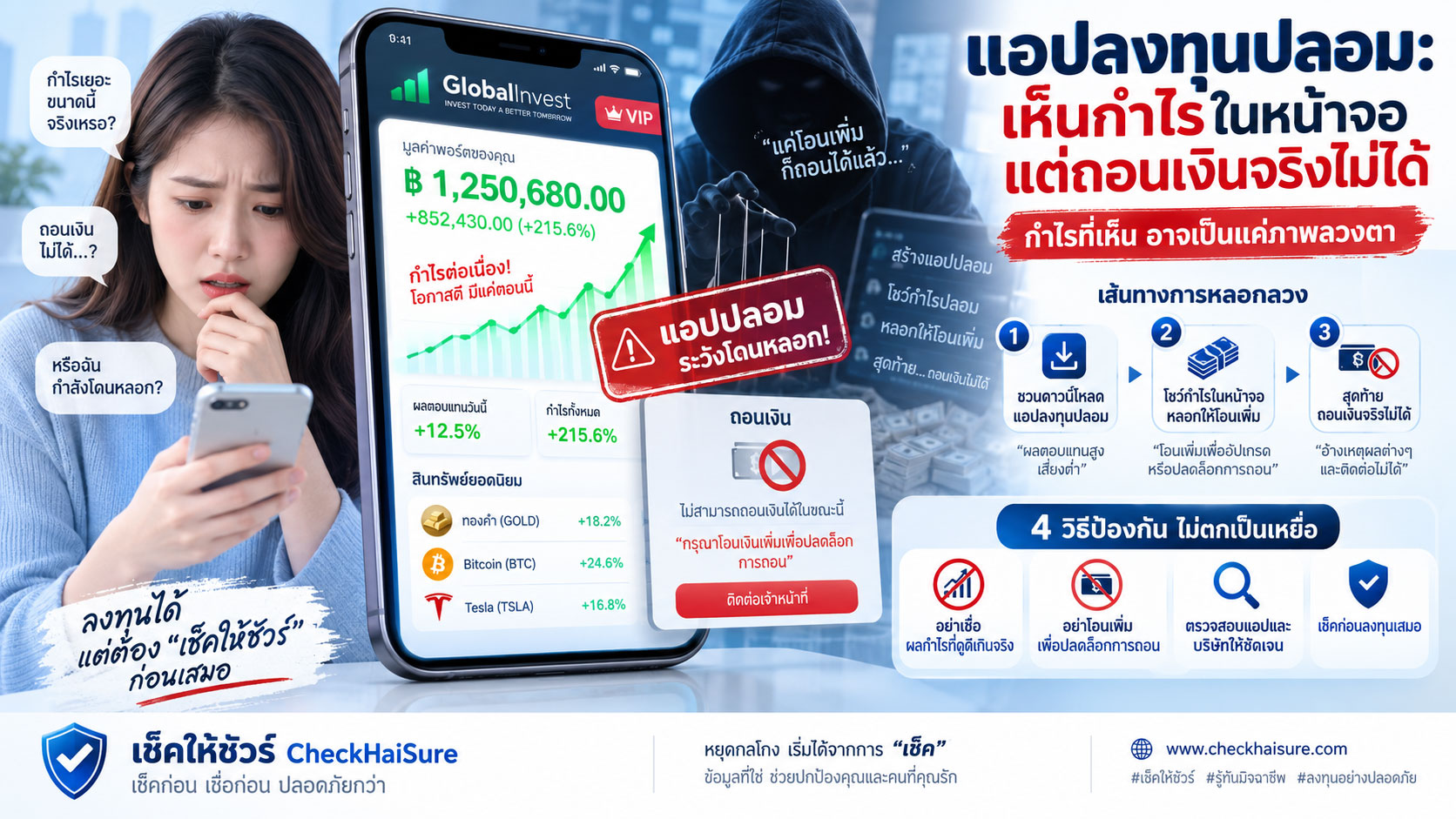
ในสังคมดิจิทัลปัจจุบัน การโอนเงินผ่านแอปธนาคารและบริการทางการเงินออนไลน์กลายเป็นเรื่องปกติในชีวิตประจำวัน ไม่ว่าจะเป็นการซื้อสินค้าออนไลน์ จองบริการ สมัครงาน ลงทุน จ่ายค่ามัดจำ หรือโอนเงินให้บุคคลที่ติดต่อกันผ่านโซเชียลมีเดีย
ความสะดวกเหล่านี้ช่วยให้ชีวิตง่ายขึ้น แต่ในขณะเดียวกันก็ทำให้มิจฉาชีพสามารถหลอกให้โอนเงินได้รวดเร็วขึ้นเช่นกัน หลายเหตุการณ์เกิดขึ้นภายในเวลาไม่กี่นาที จากข้อความที่ดูน่าเชื่อถือ โปรโมชั่นที่ดูคุ้มค่า การแอบอ้างเป็นเจ้าหน้าที่ หรือการเร่งให้ตัดสินใจทันที
เช็คให้ชัวร์ จัดทำหน้านี้ขึ้นเพื่อเป็นแนวทางเบื้องต้นให้ทุกคนใช้ตรวจสอบก่อนโอนเงิน เพื่อช่วยลดความเสี่ยงจากการถูกหลอก และช่วยให้ผู้ใช้งานมีโอกาสหยุดคิด ตรวจสอบ และตัดสินใจอย่างรอบคอบมากขึ้น
หลักสำคัญก่อนโอนเงิน
ก่อนโอนเงินทุกครั้ง โดยเฉพาะเมื่อเป็นการโอนให้บุคคล ร้านค้า หรือช่องทางที่ท่านไม่คุ้นเคย ควรจำหลักง่าย ๆ ไว้ว่า
อย่ารีบโอน เพียงเพราะอีกฝ่ายเร่งให้โอน
มิจฉาชีพมักใช้ความเร่งด่วนเป็นเครื่องมือ เช่น บอกว่าสินค้าเหลือน้อย โปรโมชันจะหมดเวลา ต้องจองทันที ต้องชำระก่อนจึงจะได้สิทธิ์ หรือหากไม่รีบทำตามจะเกิดปัญหาร้ายแรง
หากอีกฝ่ายพยายามกดดันให้ท่านตัดสินใจเร็วเกินไป นั่นอาจเป็นสัญญาณเตือนที่ควรหยุดตรวจสอบก่อนเสมอ
เช็กลิสต์ก่อนโอนเงิน
1. ตรวจสอบชื่อบัญชีให้ตรงกับผู้ขายหรือผู้รับเงิน
ก่อนโอนเงิน ควรดูให้ชัดเจนว่า ชื่อบัญชีรับเงินตรงกับชื่อร้านค้า ชื่อบริษัท หรือชื่อบุคคลที่ท่านกำลังติดต่ออยู่หรือไม่
หากชื่อบัญชีไม่ตรงกับชื่อร้าน หรือเป็นบัญชีบุคคลที่ไม่มีความเกี่ยวข้องชัดเจน ควรระมัดระวังเป็นพิเศษ
สิ่งที่ควรสังเกต
- ชื่อบัญชีรับเงินตรงกับชื่อร้านค้าหรือไม่
- หากเป็นบริษัท ชื่อบัญชีควรเป็นชื่อนิติบุคคลหรือชื่อที่ตรวจสอบได้
- หากเป็นร้านค้าออนไลน์ มีเหตุผลชัดเจนหรือไม่ว่าทำไมต้องโอนเข้าบัญชีบุคคล
- ชื่อบัญชีสะกดแปลก หรือดูไม่เกี่ยวข้องกับผู้ขายหรือไม่
- มีการเปลี่ยนบัญชีรับเงินบ่อยหรือไม่
ควรระวังเป็นพิเศษหาก
- ร้านค้าใช้ชื่อแบรนด์ แต่ให้โอนเข้าบัญชีบุคคลที่ไม่เกี่ยวข้อง
- อีกฝ่ายอ้างว่าบัญชีร้านใช้ไม่ได้ชั่วคราว
- อีกฝ่ายบอกให้โอนเข้าบัญชีของ “พนักงาน”, “แอดมิน”, “ญาติ”, หรือ “บัญชีสำรอง”
- ชื่อบัญชีดูไม่ตรงกับเพศ ชื่อร้าน หรือข้อมูลที่เคยแจ้งไว้
2. ค้นหาเลขบัญชี เบอร์โทร และชื่อผู้รับเงินก่อนโอน
ก่อนโอนเงิน ควรนำข้อมูลสำคัญไปค้นหาก่อน เช่น เลขบัญชี เบอร์โทรศัพท์ ชื่อบัญชี ชื่อร้านค้า หรือชื่อเพจ
ท่านสามารถใช้เครื่องมือค้นหาทั่วไป หรือใช้แพลตฟอร์มเช็คให้ชัวร์เป็นหนึ่งในช่องทางตรวจสอบเบื้องต้น
ข้อมูลที่ควรลองค้นหา
- เลขบัญชีธนาคาร
- ชื่อบัญชี
- เบอร์โทรศัพท์
- ชื่อร้านค้า
- ชื่อเพจ Facebook
- LINE ID
- ลิงก์เว็บไซต์
- ข้อความชักชวนที่ได้รับ
ข้อควรเข้าใจ
หากค้นหาแล้วไม่พบข้อมูลเสียหาย ไม่ได้หมายความว่าปลอดภัย 100% เพราะข้อมูลอาจยังไม่เคยถูกแจ้งมาก่อน หรือมิจฉาชีพอาจใช้บัญชีใหม่ เบอร์ใหม่ หรือเพจใหม่อยู่เสมอ
การไม่พบข้อมูลควรถือว่า “ยังไม่มีข้อมูลเพียงพอ” ไม่ใช่ “ยืนยันว่าปลอดภัยแล้ว”
3. ตรวจสอบประวัติร้านค้า เพจ หรือผู้ขาย
หากเป็นการซื้อของออนไลน์หรือจองบริการ ควรตรวจสอบตัวตนของร้านค้าให้มากกว่าการดูรูปสินค้าและรีวิวเพียงอย่างเดียว เพราะรีวิว รูปภาพ และจำนวนผู้ติดตามสามารถถูกสร้างหรือปลอมแปลงได้
สิ่งที่ควรตรวจสอบ
- เพจเปิดมานานแค่ไหน
- เคยเปลี่ยนชื่อเพจหรือไม่
- มีที่อยู่ร้านหรือช่องทางติดต่อที่ตรวจสอบได้หรือไม่
- มีรีวิวจากลูกค้าจริงหรือไม่
- รีวิวมีลักษณะซ้ำ ๆ หรือดูไม่เป็นธรรมชาติหรือไม่
- รูปสินค้าถูกนำมาจากร้านอื่นหรือไม่
- มีประวัติการโพสต์ต่อเนื่องหรือเพิ่งเริ่มโพสต์ไม่นาน
- มีช่องทางชำระเงินที่ปลอดภัยหรือไม่
สัญญาณที่ควรระวัง
- ราคาถูกผิดปกติเมื่อเทียบกับตลาด
- มีแต่รีวิวสั้น ๆ คล้ายกันจำนวนมาก
- เพจเพิ่งสร้างใหม่แต่มีโปรโมชันแรงมาก
- ผู้ขายไม่ยอมให้ข้อมูลเพิ่มเติม
- ผู้ขายเร่งให้โอนเงินก่อนทันที
- มีข้ออ้างไม่ให้รับสินค้าปลายทางหรือไม่ให้ใช้ช่องทางที่คุ้มครองผู้ซื้อ
4. ระวังราคาที่ดีเกินจริง
หนึ่งในกลวิธีที่มิจฉาชีพใช้บ่อยคือการเสนอราคาที่ถูกกว่าปกติมาก หรือให้ผลตอบแทนที่สูงผิดปกติ เพื่อทำให้ผู้ซื้อรู้สึกว่าต้องรีบคว้าโอกาสไว้ก่อน
หากข้อเสนอใดดูดีเกินจริง ควรหยุดคิดก่อนเสมอ
ตัวอย่างที่ควรระวัง
- สินค้าราคาถูกกว่าราคาตลาดมาก
- บัตรคอนเสิร์ตหรือคูปองราคาถูกผิดปกติ
- สินค้าหายากแต่มีจำนวนมากพร้อมส่ง
- ลงทุนเล็กน้อยแต่รับประกันกำไรสูง
- งานออนไลน์รายได้ดีมากแต่ไม่ต้องมีประสบการณ์
- เงินกู้อนุมัติไวแต่ต้องโอนค่าธรรมเนียมก่อน
วิธีคิดง่าย ๆ
ก่อนโอนเงิน ให้ถามตัวเองว่า
“ถ้าข้อเสนอนี้ดีจริง ทำไมอีกฝ่ายต้องเร่งให้เราโอนเงินทันที?”
5. อย่าโอนเงินเพราะความกลัว ความรีบ หรือความเกรงใจ
มิจฉาชีพมักใช้จิตวิทยาในการกดดัน เช่น ทำให้กลัว ทำให้รีบ ทำให้รู้สึกเกรงใจ หรือทำให้รู้สึกว่าจะเสียโอกาสหากไม่ตัดสินใจทันที
ตัวอย่างการกดดันที่พบบ่อย
- “ต้องโอนภายใน 10 นาที ไม่งั้นหมดสิทธิ์”
- “ถ้าไม่ทำตอนนี้ บัญชีจะถูกระงับ”
- “ห้ามวางสาย ห้ามบอกใคร”
- “มีคนรอซื้อหลายคน ถ้าไม่โอนตอนนี้จะขายให้คนอื่น”
- “ต้องจ่ายค่าธรรมเนียมก่อน ถึงจะถอนเงินได้”
- “ถ้าไม่โอนเพิ่ม จะเสียเงินที่ลงทุนไปก่อนหน้า”
หากเจอข้อความลักษณะนี้ ควรหยุดทันที และขอเวลาตรวจสอบก่อนเสมอ ผู้ที่สุจริตมักให้เวลาท่านตรวจสอบได้อย่างเหมาะสม
6. ห้ามให้รหัส OTP รหัสผ่าน หรือข้อมูลลับทางการเงิน
ไม่มีธนาคาร หน่วยงานรัฐ หรือผู้ให้บริการที่น่าเชื่อถือรายใดควรขอรหัส OTP รหัสผ่าน PIN หรือข้อมูลลับของท่านผ่านโทรศัพท์ แชท ลิงก์ หรือข้อความส่วนตัว
ข้อมูลที่ไม่ควรบอกใคร
- รหัส OTP
- รหัสผ่านแอปธนาคาร
- PIN
- เลขบัตรเครดิตเต็ม
- CVV หลังบัตร
- รหัสยืนยันตัวตน
- ข้อมูลสำหรับเข้าสู่ระบบ
- ข้อมูลบัตรประชาชนแบบเต็ม หากไม่มีเหตุจำเป็นและช่องทางที่ปลอดภัย
หากมีใครขอข้อมูลเหล่านี้ ให้ถือว่าเป็นสัญญาณอันตรายทันที
7. อย่ากดลิงก์หรือดาวน์โหลดแอปจากคนที่ไม่รู้จัก
ก่อนโอนเงินหรือทำธุรกรรมใด ๆ หากอีกฝ่ายส่งลิงก์มาให้กรอกข้อมูล ดาวน์โหลดแอป ยืนยันตัวตน หรือรับสิทธิ์พิเศษ ควรตรวจสอบให้แน่ใจก่อนเสมอ
ควรระวังหากลิงก์นั้น
- ส่งมาทาง SMS หรือแชทจากบุคคลที่ไม่รู้จัก
- สะกดคล้ายเว็บไซต์จริงแต่ไม่ใช่โดเมนทางการ
- ขอให้กรอกข้อมูลธนาคาร รหัสผ่าน หรือ OTP
- ขอให้ติดตั้งแอปจากไฟล์หรือลิงก์ภายนอก
- อ้างว่าต้องทำทันทีเพื่อไม่ให้บัญชีถูกระงับ
วิธีที่ปลอดภัยกว่า
เปิดแอปหรือเว็บไซต์ทางการด้วยตนเอง แทนการกดจากลิงก์ที่ผู้อื่นส่งมาให้
8. หลีกเลี่ยงการโอนเงินล่วงหน้าเมื่อไม่มีหลักฐานเพียงพอ
การโอนเงินล่วงหน้าอาจมีความเสี่ยง โดยเฉพาะเมื่อติดต่อกับบุคคลที่ไม่เคยรู้จัก ไม่เคยซื้อขายกันมาก่อน หรือไม่มีระบบคุ้มครองผู้ซื้อ
ควรพิจารณาทางเลือกที่ปลอดภัยกว่า
- ใช้แพลตฟอร์มที่มีระบบคุ้มครองผู้ซื้อ
- เลือกเก็บเงินปลายทางเมื่อเหมาะสม
- นัดรับสินค้าในสถานที่ปลอดภัย หากเป็นสินค้ามูลค่าสูง
- ขอหลักฐานเพิ่มเติม เช่น ภาพสินค้าแบบระบุวันที่ หรือวิดีโอสั้น
- เริ่มจากยอดเงินเล็กน้อยหากจำเป็นจริง ๆ
- หลีกเลี่ยงการจ่ายเต็มจำนวนก่อนเห็นหลักฐานที่น่าเชื่อถือ
9. ตรวจสอบบัญชีรับเงินซ้ำก่อนกดยืนยัน
ก่อนกดยืนยันโอนเงิน ควรตรวจสอบรายละเอียดทั้งหมดอีกครั้ง เพราะหลังจากโอนแล้ว การติดตามเงินคืนอาจทำได้ยากและต้องอาศัยขั้นตอนของธนาคารหรือหน่วยงานที่เกี่ยวข้อง
ตรวจสอบอีกครั้งก่อนกดยืนยัน
- เลขบัญชีถูกต้องหรือไม่
- ชื่อบัญชีตรงกับที่ตกลงไว้หรือไม่
- จำนวนเงินถูกต้องหรือไม่
- ธนาคารถูกต้องหรือไม่
- เหตุผลในการโอนเงินชัดเจนหรือไม่
- ท่านมีหลักฐานการติดต่อและข้อตกลงครบหรือไม่
หากมีข้อสงสัยแม้เพียงเล็กน้อย ควรหยุดก่อน ไม่ควรกดโอนเพียงเพราะอีกฝ่ายเร่งหรือกดดัน
10. เก็บหลักฐานทุกครั้งเมื่อมีการโอนเงิน
หากจำเป็นต้องโอนเงินจริง ควรเก็บหลักฐานให้ครบถ้วน เพราะหลักฐานเหล่านี้อาจมีประโยชน์หากเกิดปัญหาในภายหลัง
หลักฐานที่ควรเก็บ
- สลิปโอนเงิน
- ภาพหน้าจอแชท
- ลิงก์ร้านค้า เพจ หรือเว็บไซต์
- ชื่อบัญชีและเลขบัญชีรับเงิน
- เบอร์โทรศัพท์หรือช่องทางติดต่อ
- รายละเอียดสินค้า บริการ หรือข้อตกลง
- วันที่และเวลาที่พูดคุยหรือโอนเงิน
- รูปภาพหรือหลักฐานการโฆษณา
อย่าลบแชทหรือหลักฐานเร็วเกินไป แม้ในตอนแรกจะยังไม่แน่ใจว่าเป็นการหลอกลวงหรือไม่
สัญญาณอันตรายก่อนโอนเงิน
หากพบสัญญาณต่อไปนี้ ควรหยุดและตรวจสอบทันที
- อีกฝ่ายเร่งให้โอนเงินอย่างผิดปกติ
- ราคาถูกหรือผลตอบแทนสูงเกินจริง
- ชื่อบัญชีรับเงินไม่ตรงกับผู้ขายหรือองค์กร
- เพจหรือบัญชีออนไลน์เพิ่งสร้างใหม่
- ไม่มีข้อมูลติดต่อที่ตรวจสอบได้
- มีข้ออ้างไม่ให้ใช้ช่องทางชำระเงินที่ปลอดภัย
- ขอให้โอนเงินเพิ่มเรื่อย ๆ
- ขอรหัส OTP หรือข้อมูลลับ
- ส่งลิงก์ให้กรอกข้อมูลทางการเงิน
- ขอให้ติดตั้งแอปจากแหล่งที่ไม่เป็นทางการ
- ห้ามบอกคนอื่นหรือห้ามวางสาย
- คำอธิบายเปลี่ยนไปมาเมื่อถามรายละเอียด
เมื่อมีสัญญาณเหล่านี้ อย่าฝืนโอนเงินเพราะความเกรงใจ ความรีบ หรือความกลัว
คำถามที่ควรถามตัวเองก่อนโอนเงิน
ก่อนกดยืนยัน ลองถามตัวเองสั้น ๆ ว่า
- เรารู้จักผู้รับเงินจริงหรือไม่
- ชื่อบัญชีตรงกับผู้ขายหรือองค์กรจริงหรือไม่
- มีหลักฐานเพียงพอหรือยัง
- ราคาหรือข้อเสนอดีเกินจริงหรือไม่
- อีกฝ่ายเร่งให้โอนเร็วผิดปกติหรือไม่
- เราได้ค้นหาเลขบัญชี เบอร์โทร หรือชื่อร้านแล้วหรือยัง
- มีช่องทางชำระเงินที่ปลอดภัยกว่านี้หรือไม่
- หากเงินจำนวนนี้ไม่ได้คืน เรารับความเสี่ยงได้หรือไม่
- เราได้ปรึกษาคนที่ไว้ใจแล้วหรือยัง
- ถ้ายังไม่มั่นใจ ทำไมต้องรีบโอนตอนนี้
หากตอบคำถามเหล่านี้แล้วยังไม่สบายใจ ควรหยุดก่อน และตรวจสอบเพิ่มเติม
หากโอนไปแล้วและเริ่มสงสัยว่าถูกหลอก
หากท่านโอนเงินไปแล้วและเริ่มสงสัยว่าถูกหลอก ควรรีบดำเนินการดังนี้
- หยุดโอนเงินเพิ่มทันที
- หยุดติดต่อกับอีกฝ่ายหากถูกกดดันหรือข่มขู่
- เก็บหลักฐานทั้งหมดให้ครบ
- ติดต่อธนาคารของท่านโดยเร็วที่สุด
- สอบถามแนวทางการระงับธุรกรรมหรือช่วยเหลือตามขั้นตอนของธนาคาร
- แจ้งความหรือแจ้งหน่วยงานที่เกี่ยวข้องตามช่องทางทางการ
- เปลี่ยนรหัสผ่านหากเคยกดลิงก์หรือให้ข้อมูลส่วนตัว
- แจ้งข้อมูลเข้ามายังเช็คให้ชัวร์ เพื่อช่วยเตือนผู้อื่นในอนาคต
เช็คให้ชัวร์ไม่สามารถอายัดบัญชี ติดตามเงินคืน หรือดำเนินคดีแทนหน่วยงานที่มีอำนาจได้ แต่ข้อมูลที่ท่านแจ้งอาจช่วยให้ผู้อื่นระมัดระวังและไม่ตกเป็นเหยื่อในลักษณะเดียวกัน
ใช้เช็คให้ชัวร์เป็นหนึ่งในขั้นตอนก่อนโอน
ก่อนโอนเงิน ท่านสามารถใช้เช็คให้ชัวร์เป็นหนึ่งในเครื่องมือช่วยตรวจสอบเบื้องต้น เช่น
- ค้นหาเลขบัญชี
- ค้นหาเบอร์โทรศัพท์
- ค้นหาชื่อบัญชี
- ค้นหาชื่อร้านค้า
- ค้นหาชื่อเพจ
- ค้นหา LINE ID
- ค้นหาลิงก์หรือเว็บไซต์ต้องสงสัย
- อ่านรูปแบบภัยออนไลน์ที่เกี่ยวข้อง
อย่างไรก็ตาม การไม่พบข้อมูลในระบบไม่ได้หมายความว่าปลอดภัยเสมอไป ผู้ใช้งานควรตรวจสอบจากหลายแหล่ง ใช้วิจารณญาณ และไม่โอนเงินหากยังมีข้อสงสัย
ตรวจสอบข้อมูลต้องสงสัย: ตรวจสอบข้อมูลต้องสงสัย
แจ้งข้อมูลต้องสงสัย: แจ้งข้อมูลต้องสงสัย
ข้อความสำคัญ
ข้อมูลในหน้านี้มีวัตถุประสงค์เพื่อการให้ความรู้ การแจ้งเตือน และการตรวจสอบเบื้องต้นเท่านั้น ไม่ถือเป็นคำแนะนำทางกฎหมายหรือการรับรองว่าบุคคล ร้านค้า องค์กร หรือบัญชีใดปลอดภัยหรือไม่ปลอดภัยอย่างแน่นอน
ผู้ใช้งานควรใช้วิจารณญาณ ตรวจสอบข้อมูลจากแหล่งทางการ และติดต่อธนาคารหรือหน่วยงานที่เกี่ยวข้องโดยเร็วที่สุดหากได้รับความเสียหายทางการเงินหรือพบเหตุอันควรสงสัยว่าเกี่ยวข้องกับอาชญากรรม
เช็คให้ชัวร์ — ก่อนเชื่อ ก่อนโอน ก่อนแชร์
What to Check Before Transferring Money
In today’s digital society, transferring money through mobile banking apps and online financial services has become part of everyday life. People transfer money for online shopping, service bookings, job applications, investments, deposits, and payments to individuals contacted through social media.
This convenience makes life easier, but it also allows scammers to trick people into transferring money more quickly. Many incidents happen within only a few minutes, triggered by a message that looks trustworthy, an attractive promotion, impersonation of an official, or pressure to make an immediate decision.
CheckHaiSure created this page as a practical guide to help people check before transferring money, reduce the risk of being scammed, and give users a moment to pause, verify, and make a more careful decision.
The Most Important Rule Before Transferring Money
Before making any transfer, especially to a person, shop, or channel you are not familiar with, remember this simple rule:
Do not rush to transfer money just because someone pressures you to do so.
Scammers often use urgency as a tool. They may say the product is almost sold out, the promotion will end soon, payment is required immediately, or serious consequences will happen if you do not act right away.
If someone is pressuring you to decide too quickly, treat it as a warning sign and check carefully before taking action.
Checklist Before Transferring Money
1. Check Whether the Account Name Matches the Seller or Receiver
Before transferring money, carefully check whether the receiving account name matches the shop, company, or person you are dealing with.
If the account name does not match the shop name, or if it belongs to an unrelated individual, be especially careful.
What to Check
- Does the receiving account name match the shop name?
- If it is a company, is the account under a verifiable company name?
- If it is an online shop, is there a clear reason why payment must be made to a personal account?
- Does the account name look unusual or unrelated to the seller?
- Has the receiving account been changed frequently?
Be Extra Careful If
- A shop uses a brand name but asks you to transfer money to an unrelated personal account
- The seller claims the shop account is temporarily unavailable
- The seller asks you to transfer money to an “admin,” “staff,” “relative,” or “backup account”
- The account name does not match the shop, seller identity, or information previously provided
2. Search the Account Number, Phone Number, and Receiver Name Before Transferring
Before transferring money, search for key information such as the bank account number, phone number, account name, shop name, or page name.
You may use general search tools or use CheckHaiSure as one of your preliminary checking channels.
Information You May Search For
- Bank account number
- Account name
- Phone number
- Shop name
- Facebook page name
- LINE ID
- Website link
- Message or promotion text you received
Important Reminder
If no negative information is found, it does not mean the transaction is 100% safe. The information may not have been reported before, or scammers may be using a new account, new phone number, or new page.
No search result should be understood as “not enough information yet,” not as a guarantee of safety.
3. Review the Shop, Page, or Seller History
If you are buying online or booking a service, check the seller’s identity beyond product photos and reviews. Reviews, product images, and follower counts can be created, copied, or manipulated.
What to Review
- How long the page has existed
- Whether the page has changed its name before
- Whether the shop has a verifiable address or contact channel
- Whether reviews look genuine
- Whether reviews appear repetitive or unnatural
- Whether product images may have been copied from another shop
- Whether the page has consistent posting history
- Whether safer payment channels are available
Warning Signs
- The price is unusually cheap compared with the market
- Many reviews are short and similar
- The page is newly created but offers very aggressive promotions
- The seller refuses to provide additional proof
- The seller pressures you to transfer money immediately
- The seller refuses cash on delivery or buyer-protection payment methods without a reasonable explanation
4. Be Careful with Offers That Look Too Good to Be True
One common scam tactic is offering a price that is far cheaper than normal, or a return that is unusually high, to make the victim feel that they must act quickly.
If an offer looks too good to be true, pause before taking action.
Examples to Be Careful With
- Products priced far below market value
- Concert tickets or coupons at unusually low prices
- Rare products that are somehow available in large quantities
- Small investments with guaranteed high returns
- Online jobs with very high income and no experience required
- Fast loan approval that requires an upfront fee
A Simple Question to Ask Yourself
Before transferring money, ask:
“If this offer is really so good, why is the other party rushing me to transfer money immediately?”
5. Do Not Transfer Money Because of Fear, Pressure, or Politeness
Scammers often use psychological pressure. They may make you feel scared, rushed, guilty, polite, or afraid of missing an opportunity.
Common Pressure Messages
- “You must transfer within 10 minutes or you will lose the right.”
- “If you do not act now, your account will be suspended.”
- “Do not hang up and do not tell anyone.”
- “Other buyers are waiting. If you do not transfer now, I will sell it to someone else.”
- “You must pay this fee before you can withdraw your money.”
- “If you do not transfer more, you will lose the money you already invested.”
If you see messages like these, stop and take time to check. A legitimate person or business should allow you reasonable time to verify information.
6. Never Share OTPs, Passwords, or Financial Security Information
No legitimate bank, government agency, or trusted service provider should ask for your OTP, password, PIN, or sensitive security information through phone calls, chats, links, or private messages.
Information You Should Never Share
- OTP codes
- Mobile banking passwords
- PINs
- Full credit card numbers
- CVV codes
- Verification codes
- Login information
- Full national ID details unless truly necessary and submitted through a safe official channel
If anyone asks for this information, treat it as a serious danger sign.
7. Do Not Click Links or Download Apps from Unknown People
Before transferring money or making any transaction, be careful if someone sends you a link to enter information, download an app, verify your identity, or claim a special benefit.
Be Careful If the Link
- Is sent by SMS or chat from someone you do not know
- Looks similar to a real website but is not the official domain
- Asks for banking details, passwords, or OTPs
- Asks you to install an app from an external file or link
- Claims you must act immediately to avoid account suspension
Safer Practice
Open the official app or website yourself instead of clicking links sent by others.
8. Avoid Paying in Advance When There Is Not Enough Evidence
Advance payment can be risky, especially when dealing with someone you do not know, have never bought from before, or where there is no buyer-protection system.
Safer Options to Consider
- Use platforms with buyer protection
- Choose cash on delivery where appropriate
- Meet in a safe public place for high-value items
- Ask for additional proof, such as a dated product photo or short video
- Start with a smaller amount only if truly necessary
- Avoid paying the full amount before receiving credible evidence
9. Double-Check the Receiving Account Before Confirming
Before pressing confirm, check all transfer details again. After money is transferred, recovering it may be difficult and may require procedures through banks or official authorities.
Check Again Before Confirming
- Is the account number correct?
- Does the account name match what was agreed?
- Is the amount correct?
- Is the bank correct?
- Is the reason for payment clear?
- Do you have sufficient evidence of the conversation and agreement?
If you have even a small doubt, pause. Do not transfer money simply because someone is rushing or pressuring you.
10. Keep Evidence Every Time You Transfer Money
If you truly need to transfer money, keep all evidence. These records may be useful if a problem happens later.
Evidence to Keep
- Transfer slip
- Chat screenshots
- Shop, page, or website link
- Receiving account name and account number
- Phone number or contact channel
- Product, service, or agreement details
- Date and time of conversation or transfer
- Product images or promotional evidence
Do not delete chats or evidence too quickly, even if you are not yet sure whether it is a scam.
Warning Signs Before Transferring Money
If you notice any of the signs below, stop and check immediately:
- The other party pressures you to transfer money unusually quickly
- The price is too cheap or the return is too high
- The receiving account name does not match the seller or organization
- The page or online account was created recently
- There is no verifiable contact information
- Safer payment methods are refused without a clear reason
- You are asked to transfer more money repeatedly
- You are asked for OTPs or confidential information
- You are sent a link to enter financial information
- You are asked to install an app from an unofficial source
- You are told not to tell anyone or not to hang up
- The explanation keeps changing when you ask for details
When these signs appear, do not transfer money because of politeness, fear, or urgency.
Questions to Ask Yourself Before Transferring Money
Before confirming a transfer, ask yourself:
- Do I truly know the person or organization receiving the money?
- Does the account name match the real seller or organization?
- Do I have enough evidence?
- Is the price or offer too good to be true?
- Is the other party rushing me unusually?
- Have I searched the account number, phone number, or shop name?
- Is there a safer payment method available?
- If I do not get this money back, can I accept the risk?
- Have I consulted someone I trust?
- If I am not fully confident, why do I need to transfer now?
If the answers still make you uncomfortable, stop and check further.
If You Already Transferred Money and Suspect a Scam
If you have already transferred money and begin to suspect that you may have been scammed, act quickly.
Recommended steps:
- Stop transferring any additional money immediately
- Stop communicating with the other party if you are being pressured or threatened
- Keep all evidence
- Contact your bank as soon as possible
- Ask your bank about possible transaction support or account-related procedures
- Report the incident through official reporting channels or relevant authorities
- Change your passwords if you clicked a link or shared personal information
- Submit the suspicious information to CheckHaiSure to help warn others in the future
CheckHaiSure cannot freeze accounts, recover money, or conduct legal proceedings on behalf of authorized agencies. However, the information you submit may help others avoid becoming victims of similar situations.
Use CheckHaiSure as One Step Before Transferring
Before transferring money, you can use CheckHaiSure as one of your preliminary checking tools.
You may search for:
- Bank account numbers
- Phone numbers
- Account names
- Shop names
- Page names
- LINE IDs
- Suspicious links or websites
- Related scam patterns
However, not finding information in the system does not mean something is definitely safe. Users should verify through multiple sources, use careful judgment, and avoid transferring money if there is still any doubt.
Check suspicious information: Check suspicious information
Report suspicious information: Report suspicious information
Important Notice
The information on this page is intended for education, awareness, warning, and preliminary checking purposes only. It is not legal advice and does not guarantee that any person, shop, organization, or account is definitely safe or unsafe.
Users should exercise their own judgment, verify information through official sources, and contact their bank or the relevant authorities as soon as possible if they have suffered financial loss or suspect criminal activity.
CheckHaiSure — Check before you trust, transfer, or share.