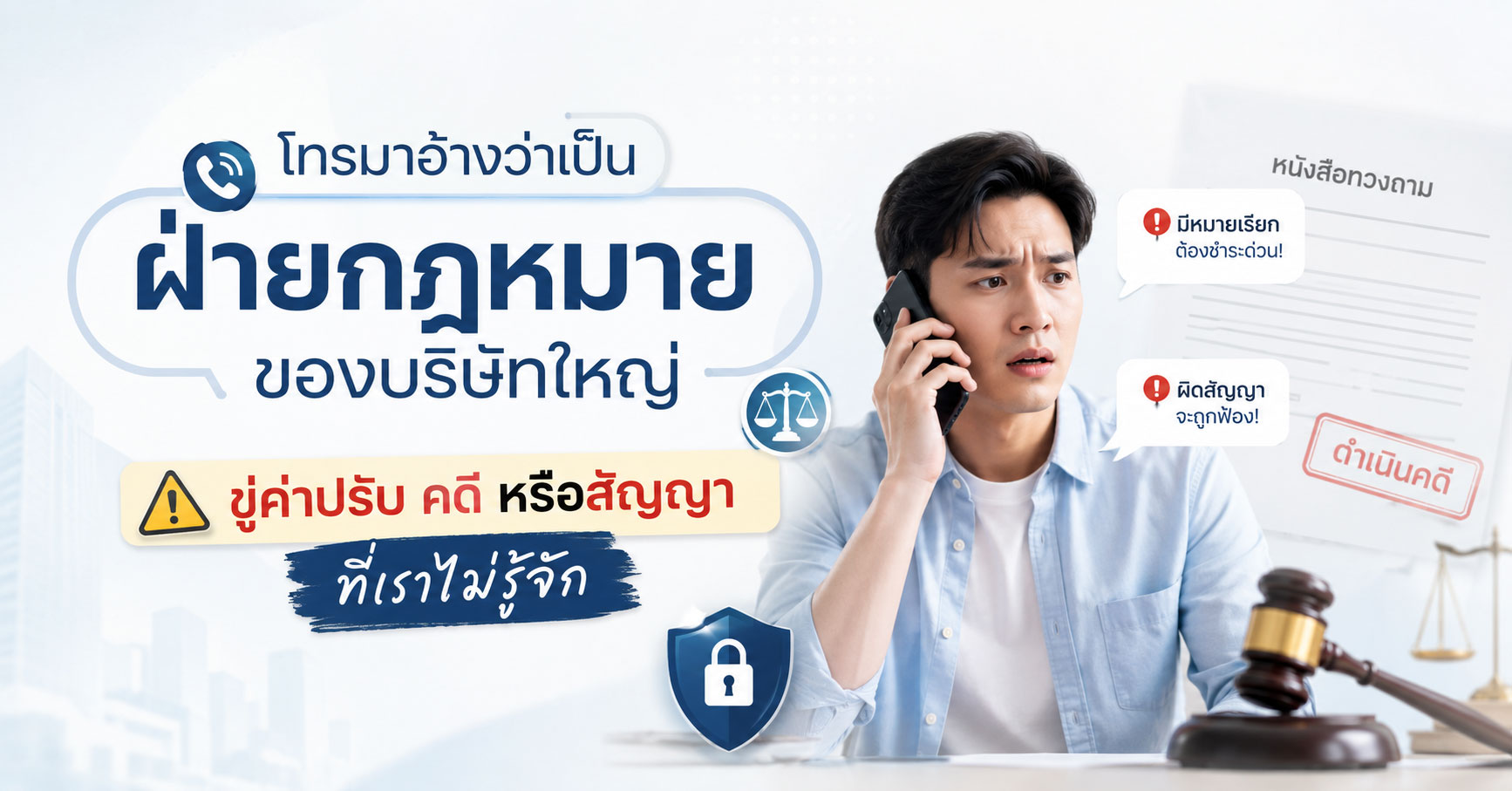
“สวัสดีค่ะ โทรจากฝ่ายกฎหมายของบริษัท…”
“คุณมีสัญญาค้างชำระอยู่กับทางเรา”
“ถ้าไม่ชำระวันนี้ จะส่งเรื่องดำเนินคดี”
“มีค่าปรับจากบริการที่คุณสมัครไว้”
“ระบบพบว่าคุณผิดเงื่อนไขสัญญา ต้องรีบเคลียร์ยอดก่อนเรื่องถึงศาล”
ถ้าได้รับสายแบบนี้ หลายคนอาจตกใจทันที
เพราะคำว่า “ฝ่ายกฎหมาย” ฟังดูจริงจัง
คำว่า “สัญญา” ฟังดูเหมือนมีหลักฐาน
คำว่า “ค่าปรับ” ฟังดูเหมือนเรากำลังค้างอะไรบางอย่าง
และคำว่า “ดำเนินคดี” ทำให้หลายคนรู้สึกว่า ถ้าไม่รีบจัดการ อาจมีปัญหาใหญ่ตามมา
มิจฉาชีพจึงใช้ชื่อบริษัทใหญ่ แบรนด์ดัง แพลตฟอร์มออนไลน์ บริษัทโทรศัพท์ บริษัทไฟแนนซ์ บริษัทประกัน หรือผู้ให้บริการที่คนทั่วไปคุ้นหู มาเพิ่มความน่าเชื่อถือ
บางครั้งเราอาจเคยใช้บริการบริษัทนั้นจริง
เคยสมัครแอปจริง
เคยซื้อของจากแพลตฟอร์มนั้นจริง
เคยมีเบอร์โทรศัพท์รายเดือนจริง
เคยใช้บัตรเครดิตจริง
หรือเคยกดทดลองใช้งานอะไรบางอย่างโดยลืมไปแล้ว
พอมีคนโทรมาอ้างว่าเรา “มีสัญญา” หรือ “มีค่าปรับ” เราจึงเริ่มไม่มั่นใจ
“เราเคยสมัครไว้หรือเปล่า”
“มีคนเอาชื่อเราไปใช้ไหม”
“ถ้าไม่จ่ายวันนี้ จะโดนฟ้องไหม”
“ถ้าเป็นเรื่องจริง แล้วเราปล่อยไว้จะเสียหายไหม”
ความไม่มั่นใจนี้เอง คือช่องที่มิจฉาชีพใช้กดดันให้เรารีบจ่ายเงินหรือให้ข้อมูล
จำไว้ว่า
บริษัทจริงต้องตรวจสอบได้ ไม่ใช่ขู่ให้โอนเงินผ่านสายโทรศัพท์
ทำไมคำว่า “ฝ่ายกฎหมาย” ถึงทำให้คนกลัว
เพราะคำนี้ทำให้เรื่องดูไม่ใช่เรื่องบริการลูกค้าทั่วไป
ถ้าคนโทรมาบอกว่าเป็น Call Center เราอาจยังคิดว่าเป็นเรื่องสอบถามหรือแก้ปัญหา
แต่ถ้าบอกว่าเป็น “ฝ่ายกฎหมาย” ความรู้สึกจะเปลี่ยนทันที
เราจะเริ่มคิดว่าอาจมีเอกสาร
อาจมีสัญญา
อาจมีหนี้
อาจมีค่าปรับ
อาจมีคดี
หรืออาจมีผลทางกฎหมายตามมา
มิจฉาชีพจึงใช้คำนี้เพื่อทำให้เราอยู่ในสถานะเสียเปรียบตั้งแต่เริ่มต้น
จากเดิมที่เราควรเป็นคนถามว่า “คุณเป็นใคร”
กลายเป็นเราต้องรีบอธิบายว่า “เราไม่ได้ทำ”
จากเดิมที่เราควรตรวจสอบก่อน
กลายเป็นเรากลัวว่าจะตรวจสอบไม่ทัน
จากเดิมที่เราควรมีเวลาอ่านเอกสาร
กลายเป็นต้องรีบตัดสินใจในสาย
นี่คือการใช้ความกลัวแทนข้อเท็จจริง
กลโกงมักเริ่มจากบริษัทที่เราคุ้นชื่อ
มิจฉาชีพมักไม่ใช้ชื่อบริษัทแปลกๆ ที่เราไม่รู้จัก
แต่จะเลือกชื่อที่คนทั่วไปเคยเห็นหรือเคยใช้บริการ
เช่น
แพลตฟอร์มซื้อขายออนไลน์
บริษัทขนส่ง
บริษัทโทรศัพท์
บริษัทอินเทอร์เน็ต
บริษัทสินเชื่อ
บริษัทบัตรเครดิต
บริษัทประกัน
บริษัทสมัครสมาชิกออนไลน์
บริษัทจัดหางาน
หรือบริษัทใหญ่ที่มีสาขาทั่วประเทศ
เพราะถ้าเป็นชื่อที่คุ้น เราจะมีโอกาสเชื่อมากขึ้น
บางครั้งเขาอาจบอกว่า
“คุณเคยสมัครบริการเสริมไว้”
“คุณมีสัญญาทดลองใช้งานที่ยังไม่ได้ยกเลิก”
“คุณมีค่าปรับจากการผิดเงื่อนไข”
“มีการใช้ชื่อคุณทำสัญญา”
“ระบบพบว่าคุณค้างชำระ”
“มีการส่งเอกสารแจ้งเตือนแล้ว แต่คุณไม่ตอบกลับ”
เมื่อได้ยินแบบนี้ คนที่ไม่มั่นใจในรายละเอียดเก่าๆ ของตัวเองอาจเริ่มกลัว
และยิ่งกลัว ยิ่งมีโอกาสทำตามคำสั่งของคนปลายสาย
สัญญาที่เราไม่รู้จัก ไม่ควรทำให้เรารีบจ่ายทันที
หากมีคนอ้างว่าเรามีสัญญากับบริษัทใดบริษัทหนึ่ง สิ่งที่ควรทำไม่ใช่รีบจ่ายเงิน
แต่ควรขอดูรายละเอียดและตรวจสอบผ่านช่องทางทางการ
สัญญาจริงควรมีข้อมูลที่ตรวจสอบได้ เช่น
ชื่อบริการ
วันที่สมัคร
ช่องทางที่สมัคร
เลขที่สัญญา
เงื่อนไขบริการ
ยอดเงินที่ชัดเจน
เอกสารอ้างอิง
ช่องทางติดต่อบริษัท
และวิธีโต้แย้งหากเราไม่ได้สมัครจริง
แต่ถ้าคนปลายสายไม่ให้เวลาตรวจสอบ
ไม่ยอมให้เราวางสาย
ไม่ให้ติดต่อบริษัทเอง
ส่งเอกสารผ่านแชทแบบเร่งด่วน
หรือบอกว่าให้จ่ายก่อนแล้วค่อยตรวจสอบทีหลัง
ให้สงสัยไว้ก่อนว่าอาจไม่ใช่ฝ่ายกฎหมายจริง
เพราะเรื่องกฎหมายจริงไม่ควรบังคับให้เราตัดสินใจโดยไม่มีเวลาตรวจสอบ
ค่าปรับที่เราจำไม่ได้ อาจเป็นเหยื่อล่อ
อีกวิธีที่พบบ่อยคือการบอกว่าเรามีค่าปรับ
ค่าปรับผิดสัญญา
ค่าปรับยกเลิกบริการ
ค่าปรับจากแพ็กเกจทดลองใช้
ค่าปรับจากการละเมิดเงื่อนไข
ค่าปรับจากบัตรเครดิต
ค่าปรับจากสินเชื่อ
ค่าปรับจากการส่งพัสดุ
หรือค่าปรับจากบริการที่เราไม่รู้จัก
จำนวนเงินอาจไม่สูงมากในช่วงแรก เพื่อให้เรารู้สึกว่า “จ่ายให้จบๆ ไปดีกว่า”
เช่น 890 บาท
1,500 บาท
2,900 บาท
4,999 บาท
หรือยอดที่ฟังดูเหมือนค่าธรรมเนียมจริง
แต่เมื่อจ่ายไปแล้ว อาจมีค่าอื่นตามมา
ค่าดำเนินการ
ค่าปิดคดี
ค่าปลดล็อกสัญญา
ค่าถอนชื่อออกจากระบบ
ค่าประกันความเสียหาย
ค่าทนาย
หรือค่ายกเลิกเอกสาร
จากยอดเล็กๆ อาจกลายเป็นหลายยอด
และทุกยอดมักมีเหตุผลใหม่ให้รีบจ่าย
ถ้าคุณไม่รู้จักสัญญานั้น อย่าใช้เงินเพื่อซื้อความสบายใจจากคนที่ยังตรวจสอบไม่ได้
คำว่า “ดำเนินคดี” ถูกใช้เพื่อเร่งให้กลัว
มิจฉาชีพมักพูดให้สถานการณ์ดูใกล้เกิดเรื่องใหญ่
เช่น
“ถ้าไม่จ่ายภายในวันนี้ จะส่งเรื่องฟ้อง”
“ถ้าไม่เคลียร์ยอดตอนนี้ จะขึ้นบัญชีดำ”
“ถ้าวางสาย จะถือว่าไม่รับผิดชอบ”
“ฝ่ายกฎหมายจะส่งเรื่องถึงศาล”
“จะมีเจ้าหน้าที่ไปที่บ้าน”
“จะกระทบเครดิตของคุณ”
“จะมีหมายเรียกตามที่อยู่ทะเบียนบ้าน”
คำพูดเหล่านี้อาจทำให้คนรีบจ่ายเพื่อให้เรื่องจบ
แต่ต้องจำไว้ว่า คนที่ขู่ให้จ่ายเงินในสาย ไม่ได้แปลว่าเป็นเจ้าหน้าที่กฎหมายจริง
ถ้ามีข้อพิพาทจริง บริษัทควรมีเอกสาร ขั้นตอน และช่องทางให้ตรวจสอบได้
ไม่ควรใช้การโทรมาขู่แบบเร่งด่วนแล้วให้โอนเงินไปบัญชีที่คนปลายสายบอก
เรื่องจริงอาจจริงจังได้
แต่ต้องตรวจสอบได้
ไม่ใช่ทำให้เรากลัวจนโอนเงินทันที
ระวังการให้ข้อมูลเพื่อ “ตรวจสอบสัญญา”
บางครั้งมิจฉาชีพไม่ได้ขอเงินทันที
แต่อาจขอข้อมูลก่อน โดยบอกว่าจะช่วยตรวจสอบว่าเราเกี่ยวข้องจริงไหม
เช่น
“ขอเลขบัตรประชาชนเพื่อค้นสัญญา”
“ขอวันเดือนปีเกิดเพื่อยืนยันตัวตน”
“ขอรูปบัตรประชาชนเพื่อปิดเรื่อง”
“ขอที่อยู่เพื่อยืนยันเอกสาร”
“ขอข้อมูลบัตรเครดิตที่ใช้สมัคร”
“ขอ OTP เพื่อยืนยันว่าเป็นเจ้าของบัญชีจริง”
“ขอให้กดลิงก์เพื่อดูรายละเอียดสัญญา”
ฟังดูเหมือนเป็นขั้นตอนปกติ
แต่ข้อมูลเหล่านี้อาจถูกนำไปใช้ต่อ
เลขบัตรประชาชนอาจใช้แอบอ้าง
รูปบัตรประชาชนอาจใช้สมัครบริการ
ข้อมูลบัตรอาจใช้ทำรายการ
OTP อาจใช้ยืนยันธุรกรรม
และลิงก์อาจพาไปเว็บปลอม
ถ้าคุณยังไม่มั่นใจว่าคนปลายสายเป็นใคร อย่าให้ข้อมูลสำคัญเพียงเพราะเขาบอกว่าจะช่วยตรวจสอบให้
เอกสารกฎหมายที่ส่งผ่านแชท อาจทำให้ดูจริงเกินจริง
มิจฉาชีพบางคนจะส่งเอกสารมาให้ดู
เอกสารอาจมีโลโก้บริษัท
หัวกระดาษดูเป็นทางการ
ชื่อฝ่ายกฎหมาย
เลขที่อ้างอิง
ยอดค้างชำระ
ตราประทับ
ลายเซ็น
หรือข้อความขู่เรื่องดำเนินคดี
แต่เอกสารที่ส่งมาในแชท ไม่ได้แปลว่าเป็นของจริงเสมอไป
โลโก้ปลอมได้
ชื่อบริษัทเอามาใช้ได้
แบบฟอร์มทำเลียนแบบได้
ลายเซ็นปลอมได้
เลขที่เอกสารแต่งขึ้นได้
และยอดค้างชำระสร้างขึ้นได้
อย่าตรวจสอบเอกสารกับคนที่ส่งเอกสารนั้นมาเองเท่านั้น
ให้เก็บไว้เป็นหลักฐาน แล้วติดต่อบริษัทจริงผ่านเว็บไซต์ทางการ แอปทางการ หรือ Call Center ที่คุณหาเอง
บัญชีรับเงินต้องน่าสงสัย ถ้าไม่ใช่ชื่อบริษัทจริง
ถ้ามีการให้ชำระเงิน สิ่งที่ควรดูอย่างมากคือบัญชีปลายทาง
ถ้าคนปลายสายให้โอนเงินเข้าบัญชีบุคคลธรรมดา ให้ระวังทันที
เช่น ชื่อบัญชีเป็นชื่อคนทั่วไป
ชื่อบัญชีไม่ตรงกับบริษัท
บัญชีเป็นคนละบริษัท
บัญชีเป็นชื่อที่ไม่เกี่ยวข้อง
หรือบอกว่าเป็นบัญชีของเจ้าหน้าที่ ฝ่ายกฎหมาย หรือบัญชีกลาง
การชำระเงินให้บริษัทจริง โดยเฉพาะบริษัทใหญ่ ควรมีช่องทางที่ตรวจสอบได้และชื่อบัญชีควรสอดคล้องกับบริษัทหรือผู้ให้บริการจริง
อย่าโอนเงินเพราะเขาบอกว่า “เป็นบัญชีที่ฝ่ายกฎหมายใช้รับเคสเร่งด่วน”
อย่าโอนเงินเพราะเขาบอกว่า “จ่ายเข้าบัญชีนี้ก่อน เดี๋ยวออกใบเสร็จให้”
อย่าโอนเงินเพราะเขาบอกว่า “ต้องจ่ายช่องทางพิเศษเพื่อไม่ให้เรื่องถึงศาล”
ช่องทางพิเศษที่ตรวจสอบไม่ได้ มักเป็นช่องทางเสี่ยง
สัญญาณเตือนของสายฝ่ายกฎหมายปลอม
ถ้ามีคนโทรมาอ้างว่าเป็นฝ่ายกฎหมายของบริษัทใหญ่ ให้ระวังมากเป็นพิเศษเมื่อมีพฤติกรรมเหล่านี้
อ้างว่าคุณมีสัญญาที่ไม่รู้จัก
บอกว่าคุณค้างชำระค่าบริการ
ขู่ค่าปรับหรือดำเนินคดี
เร่งให้จ่ายภายในวันนี้
ไม่ยอมให้คุณวางสายไปตรวจสอบ
ไม่ให้ติดต่อบริษัทเอง
ส่งเอกสารผ่านแชทแล้วกดดันให้จ่ายทันที
ให้โอนเงินเข้าบัญชีบุคคลธรรมดา
บอกว่าเป็นบัญชีฝ่ายกฎหมาย บัญชีกลาง หรือบัญชีเคสเร่งด่วน
ขอเลขบัตรประชาชนเต็ม
ขอรูปบัตรประชาชน
ขอข้อมูลบัตรเครดิต
ขอ OTP
ให้กดลิงก์เพื่อดูสัญญาหรือชำระเงิน
ให้เพิ่ม LINE เจ้าหน้าที่
หรือบอกว่าถ้าไม่ทำตอนนี้ จะส่งเรื่องถึงศาลทันที
ถ้ามีหลายข้อในนี้ ให้หยุดทันที
อย่าเพิ่งจ่าย อย่าเพิ่งให้ข้อมูล และอย่าใช้ช่องทางที่เขาส่งมาเป็นช่องทางตรวจสอบ
ถ้าได้รับสายแบบนี้ ควรทำอย่างไร
สิ่งแรกคือ ตั้งหลัก
ไม่ต้องรีบเถียง
ไม่ต้องรีบยอมรับ
ไม่ต้องรีบปฏิเสธ
ไม่ต้องรีบจ่าย
และไม่ต้องอยู่ในสายจนจบ
คุณสามารถพูดสั้นๆ ว่า
“ขอบคุณค่ะ/ครับ เดี๋ยวจะตรวจสอบกับบริษัทผ่านช่องทางทางการเอง”
แล้ววางสาย
จากนั้นให้ค้นหาช่องทางติดต่อของบริษัทด้วยตัวเอง
เช่น เว็บไซต์ทางการ
แอปทางการ
Call Center ทางการ
อีเมลบริษัท
สาขา
หรือช่องทางลูกค้าสัมพันธ์ที่ตรวจสอบได้
อย่าใช้เบอร์ ลิงก์ LINE หรือบัญชีรับเงินที่คนปลายสายส่งมา
เพราะนั่นอาจเป็นส่วนหนึ่งของแผนหลอก
เมื่อติดต่อบริษัทจริง ให้สอบถามว่า
มีสัญญาในชื่อเราจริงหรือไม่
มียอดค้างชำระจริงหรือไม่
มีฝ่ายกฎหมายติดต่อมาจริงหรือไม่
เอกสารที่ได้รับเป็นของบริษัทจริงหรือไม่
และช่องทางชำระเงินที่ถูกต้องคืออะไร
ถ้าบริษัทจริงตรวจสอบแล้วไม่มีข้อมูล ก็เป็นสัญญาณว่าคุณอาจเจอสายหลอก
ถ้าคุณเคยใช้บริษัทนั้นจริง ยิ่งต้องตรวจสอบ ไม่ใช่ยิ่งรีบจ่าย
หลายคนอาจคิดว่า “เราเคยใช้บริการบริษัทนี้จริง งั้นอาจจะจริงก็ได้”
แต่การเคยใช้บริการจริง ไม่ได้แปลว่าสายที่โทรมาจริง
มิจฉาชีพอาจใช้ชื่อบริษัทที่คนจำนวนมากเคยใช้ เพื่อเพิ่มโอกาสให้เราเชื่อ
เช่น ถ้าเป็นบริษัทโทรศัพท์ คนจำนวนมากก็มีเบอร์มือถือ
ถ้าเป็นแพลตฟอร์มซื้อของ คนจำนวนมากก็เคยสั่งของ
ถ้าเป็นบริษัทขนส่ง คนจำนวนมากก็เคยรับพัสดุ
ถ้าเป็นบัตรเครดิตหรือสินเชื่อ หลายคนก็อาจเคยสมัครหรือเคยสอบถาม
ถ้าเป็นประกัน หลายคนก็อาจเคยได้รับสายขายประกันมาก่อน
ยิ่งเป็นบริษัทที่เราคุ้น ยิ่งควรตรวจสอบผ่านช่องทางจริง
ไม่ใช่รีบจ่ายเพราะคิดว่า “คงใช่”
ถ้าเผลอจ่ายเงินหรือให้ข้อมูลไปแล้ว
ถ้าคุณเผลอโอนเงิน กดลิงก์ ให้ข้อมูลส่วนตัว ส่งเอกสาร ให้ OTP หรือเพิ่ม LINE ไปแล้ว ให้หยุดทันที
อย่าจ่ายเพิ่ม
มิจฉาชีพอาจบอกว่า
“ต้องจ่ายอีกยอดเพื่อปิดคดี”
“ยอดแรกเป็นค่าดำเนินการ ยังเหลือค่าถอนฟ้อง”
“ต้องจ่ายค่าทนาย”
“ต้องโอนเพิ่มเพื่อปลดล็อกเอกสาร”
“ถ้าไม่จ่ายต่อ ยอดเดิมจะถือว่าไม่สมบูรณ์”
อย่าเชื่อคำพูดที่ทำให้ต้องเสียเงินเพิ่ม
ให้เก็บหลักฐานทั้งหมด เช่น
เบอร์โทร
ชื่อบริษัทที่ถูกอ้าง
ชื่อคนที่ติดต่อ
แชท
ลิงก์
เอกสารที่ส่งมา
เลขบัญชีปลายทาง
ชื่อบัญชี
สลิปโอนเงิน
วันที่และเวลา
ยอดเงิน
และคำพูดที่ใช้ขู่
หากให้ข้อมูลบัตรหรือ OTP ไปแล้ว ให้ติดต่อธนาคารหรือผู้ให้บริการบัตรผ่านช่องทางทางการโดยเร็ว
หากส่งเอกสารส่วนตัวไปแล้ว ให้เฝ้าระวังการถูกนำข้อมูลไปแอบอ้าง
และแจ้งเหตุผ่านช่องทางที่เกี่ยวข้อง
สิ่งสำคัญคืออย่าลบหลักฐานเพราะอาย
การหยุดเร็วและเก็บข้อมูลไว้ อาจช่วยลดความเสียหายได้มากกว่าการคุยกับคนเดิมต่อ
ควรบอกคนในบ้านให้รู้ทันคำว่า “ฝ่ายกฎหมาย”
หัวข้อนี้ควรคุยกับคนในบ้านไว้ก่อน
เพราะคำว่า “ฝ่ายกฎหมาย” สามารถทำให้คนหลายวัยตกใจได้
โดยเฉพาะผู้สูงอายุ คนที่ไม่ถนัดเอกสาร หรือคนที่กลัวเรื่องคดีความ
อาจตกลงกันง่ายๆ ว่า
ถ้ามีคนโทรมาอ้างฝ่ายกฎหมาย ให้ไม่ต้องรีบจ่าย
ถ้าอ้างว่ามีสัญญา ให้ขอดูรายละเอียดและตรวจสอบกับบริษัทจริง
ถ้าขู่คดี ให้ไม่ต้องกลัวจนโอนทันที
ถ้าส่งเอกสารผ่านแชท ให้เก็บไว้ แต่ไม่ทำตามทันที
ถ้าให้โอนเข้าบัญชีบุคคล ให้หยุด
ถ้าขอ OTP ให้ไม่ให้
ถ้าให้กดลิงก์ ให้ไม่กด
ถ้าไม่แน่ใจ ให้โทรหาคนในบ้านหรือบริษัทจริงก่อนเสมอ
แค่มีข้อตกลงว่า “เรื่องกฎหมายต้องไม่จ่ายในสายทันที” ก็ช่วยลดความเสี่ยงได้มาก
อย่าโทษตัวเองถ้าคุณกลัวคำว่าคดีหรือค่าปรับ
ถ้าคุณเคยได้รับสายแนวนี้แล้วรู้สึกกลัว นั่นเป็นเรื่องเข้าใจได้
คนธรรมดาส่วนใหญ่ไม่อยากมีปัญหากับบริษัทใหญ่
ไม่อยากถูกฟ้อง
ไม่อยากมีค่าปรับ
ไม่อยากเสียเครดิต
ไม่อยากถูกส่งเอกสารไปที่บ้าน
และไม่อยากให้เรื่องเล็กกลายเป็นเรื่องใหญ่
มิจฉาชีพจึงใช้คำเหล่านี้ เพราะรู้ว่ามันทำให้คนรีบตัดสินใจได้
แต่เราไม่จำเป็นต้องตัดสินใจเรื่องเงินจากความกลัว
ถ้ามีคนอ้างเรื่องกฎหมาย ให้หยุดก่อน
ถ้ามีคนอ้างเรื่องสัญญา ให้ตรวจสอบก่อน
ถ้ามีคนอ้างเรื่องค่าปรับ ให้ขอหลักฐานและเช็กกับบริษัทจริงก่อน
เรื่องจริงไม่ควรหายไปเพียงเพราะคุณวางสายไปตรวจสอบ
แต่เรื่องหลอกมักไม่อยากให้คุณทำแบบนั้น
ประโยคที่ควรจำ: บริษัทจริงต้องตรวจสอบได้ ไม่ใช่ขู่ให้โอนเงินผ่านสายโทรศัพท์
ถ้าต้องจำประโยคเดียวจากบทความนี้ ขอให้จำว่า
บริษัทจริงต้องตรวจสอบได้ ไม่ใช่ขู่ให้โอนเงินผ่านสายโทรศัพท์
ถ้ามีสัญญาจริง ควรมีรายละเอียดให้ตรวจสอบ
ถ้ามียอดค้างจริง ควรมีช่องทางชำระเงินที่เป็นทางการ
ถ้ามีฝ่ายกฎหมายจริง ควรสามารถยืนยันผ่านบริษัทจริงได้
ถ้ามีเอกสารจริง ควรตรวจสอบที่มาของเอกสารได้
แต่ถ้าคนปลายสายเร่งให้จ่ายทันที ขู่ให้กลัว ห้ามตรวจสอบ ขอ OTP หรือให้โอนเข้าบัญชีแปลกๆ ให้หยุดก่อน
ความกลัวไม่ควรเป็นเหตุผลให้เราโอนเงินให้คนที่ยังพิสูจน์ตัวตนไม่ได้
สรุป: คำว่า “ฝ่ายกฎหมาย” อาจเป็นแค่บทบาทหนึ่งของมิจฉาชีพ
กลโกงที่อ้างว่าเป็นฝ่ายกฎหมายของบริษัทใหญ่อันตราย เพราะมันทำให้คนธรรมดารู้สึกเหมือนตัวเองกำลังมีปัญหา ทั้งที่อาจไม่มีอะไรเกิดขึ้นจริง
จากคำว่า “สัญญา”
กลายเป็น “ค่าปรับ”
จาก “ค่าปรับ”
กลายเป็น “ดำเนินคดี”
จาก “ดำเนินคดี”
กลายเป็นความกลัว
และจากความกลัว
กลายเป็นการโอนเงินหรือให้ข้อมูลสำคัญ
สิ่งที่ควรทำคือหยุดก่อน
อย่ารีบจ่าย
อย่าให้ข้อมูลส่วนตัว
อย่าให้ OTP
อย่ากดลิงก์
อย่าเพิ่ม LINE ที่เขาส่งมา
อย่าโอนเข้าบัญชีบุคคลหรือบัญชีที่ตรวจสอบไม่ได้
อย่าตัดสินใจเพราะถูกขู่ว่าจะส่งเรื่องถึงศาลภายในวันนี้
ให้วางสาย แล้วตรวจสอบกับบริษัทจริงผ่านช่องทางทางการด้วยตัวเอง
ถ้าเป็นเรื่องจริง บริษัทจริงยังตรวจสอบได้
แต่ถ้าเป็นมิจฉาชีพ การวางสายอาจช่วยหยุดความเสียหายก่อนที่คำว่า “ฝ่ายกฎหมาย” จะกลายเป็นข้ออ้างให้เราเสียเงิน
A Call Claims to Be from the Legal Department of a Big Company: Beware of Threats About Fines, Legal Action, or Contracts You Do Not Recognize
“Hello, this is the legal department of…”
“You have an unpaid contract with our company.”
“If you do not pay today, we will proceed with legal action.”
“There is a penalty fee from a service you registered for.”
“Our system found that you violated the contract terms. You must clear the payment before the case goes to court.”
If you receive a call like this, many people may panic immediately.
Because the words “legal department” sound serious.
The word “contract” sounds like there may be evidence.
The word “fine” makes it feel like you owe something.
And the phrase “legal action” can make people feel that if they do not handle it quickly, a bigger problem may follow.
Scammers often use the names of large companies, well-known brands, online platforms, telecom companies, finance companies, insurance companies, or familiar service providers to make the call sound more believable.
Sometimes you may have actually used that company before.
You may have registered for an app.
You may have bought something from that platform.
You may have had a mobile phone plan.
You may have used a credit card.
Or you may have once clicked a trial service and forgotten about it.
So when someone calls and says you have a “contract” or a “fine,” you may start to doubt yourself.
“Did I sign up for something?”
“Did someone use my name?”
“If I do not pay today, will I be sued?”
“If this is real and I ignore it, will it become worse?”
This uncertainty is the opening scammers use to pressure you into paying money or sharing information.
Remember this:
A real company should be verifiable. It should not threaten you into transferring money over a phone call.
Why the Words “Legal Department” Make People Afraid
Because this phrase makes the issue feel more serious than a normal customer service matter.
If someone says they are from a call center, we may think it is a normal inquiry or support issue.
But if they say they are from the “legal department,” the feeling changes immediately.
You may start thinking there could be documents.
There could be a contract.
There could be a debt.
There could be a penalty.
There could be a case.
Or there could be legal consequences.
Scammers use this phrase to put you at a disadvantage from the beginning.
Instead of asking, “Who are you?”
You may rush to explain, “I did not do that.”
Instead of checking first,
You may worry that you do not have enough time to check.
Instead of having time to read documents,
You may feel forced to decide during the call.
This is fear being used in place of facts.
The Scam Often Starts with a Company Name You Recognize
Scammers usually do not use the name of a strange company you have never heard of.
They often choose names that many people have seen or used before, such as:
Online shopping platforms
Delivery companies
Mobile phone companies
Internet service providers
Loan companies
Credit card companies
Insurance companies
Online subscription services
Recruitment companies
Or big companies with branches nationwide
Because if the company sounds familiar, you are more likely to believe the call.
Sometimes they may say:
“You registered for an additional service.”
“You have a trial service contract that was never canceled.”
“You have a penalty for violating the terms.”
“Your name was used to sign a contract.”
“Our system found an unpaid balance.”
“We already sent a notice, but you did not respond.”
When people hear this, especially if they are not sure about old registrations or forgotten services, they may become afraid.
And the more afraid they become, the more likely they are to follow the caller’s instructions.
A Contract You Do Not Recognize Should Not Make You Pay Immediately
If someone claims you have a contract with a company, the right response is not to rush to pay.
You should ask for details and verify through official channels.
A real contract should have information that can be checked, such as:
Service name
Registration date
Registration channel
Contract number
Service terms
A clear amount
Reference documents
Official company contact channels
And a process to dispute the claim if you did not register
But if the caller does not give you time to verify, refuses to let you hang up, does not allow you to contact the company yourself, sends documents through chat under time pressure, or says you must pay first and check later, treat it as suspicious.
A real legal matter should not force you to decide without time to verify.
A Fine You Do Not Remember May Be Bait
Another common tactic is claiming that you have a fine.
A contract penalty
A service cancellation fee
A trial package penalty
A terms violation fee
A credit card penalty
A loan-related penalty
A delivery-related penalty
Or a fee from a service you do not recognize
The first amount may not be very high, so you may feel, “Maybe I should just pay it and end the problem.”
For example:
890 baht
1,500 baht
2,900 baht
4,999 baht
Or an amount that sounds like a real service fee
But after you pay, more fees may appear.
Processing fee
Case closing fee
Contract unlocking fee
Name removal fee
Damage guarantee fee
Lawyer fee
Or document cancellation fee
A small first payment can become many payments.
And each payment usually comes with a new reason to rush.
If you do not recognize the contract, do not use your money to buy peace of mind from someone you cannot verify.
The Phrase “Legal Action” Is Used to Create Fear and Urgency
Scammers often make the situation feel like something serious is about to happen.
They may say:
“If you do not pay today, we will file a lawsuit.”
“If you do not clear the amount now, you will be blacklisted.”
“If you hang up, it will be recorded as refusal to take responsibility.”
“The legal department will send the case to court.”
“An officer will visit your home.”
“This will affect your credit.”
“A summons will be sent to your registered address.”
These words may make people pay quickly just to make the problem go away.
But remember: someone threatening you on the phone is not automatically a real legal officer.
If there is a real dispute, the company should have documents, procedures, and verifiable channels.
It should not rely on a threatening phone call and a transfer to an account provided by the caller.
A real issue can be serious.
But it should be verifiable.
It should not make you so afraid that you transfer money immediately.
Be Careful When They Ask for Information to “Check the Contract”
Sometimes scammers do not ask for money immediately.
They may ask for information first, claiming that they will check whether you are truly involved.
For example:
“Please provide your ID number so we can search the contract.”
“Please confirm your date of birth for identity verification.”
“Please send a photo of your ID card so we can close the case.”
“Please confirm your address for document verification.”
“Please provide the credit card information used for registration.”
“Please provide the OTP to confirm you are the real account owner.”
“Please click this link to view contract details.”
These may sound like normal verification steps.
But the information may be misused.
Your ID number may be used for impersonation.
Your ID card photo may be used to register for services.
Your card information may be used for transactions.
An OTP may be used to approve something.
And a link may lead to a fake website.
If you are not sure who the caller is, do not share sensitive information just because they say they will help check the contract.
Legal Documents Sent Through Chat May Look More Real Than They Are
Some scammers send documents to make the situation look official.
The documents may include:
A company logo
An official-looking letterhead
Legal department wording
Reference numbers
Outstanding balance details
A stamp
A signature
Or threats about legal action
But a document sent through chat is not always real.
A logo can be copied.
A company name can be used without permission.
A form can be imitated.
A signature can be forged.
A document number can be invented.
And an outstanding balance can be fabricated.
Do not verify the document only with the person who sent it.
Save it as evidence, then contact the real company through its official website, official app, or a call center number you find yourself.
Be Suspicious If the Receiving Account Is Not the Real Company Name
If payment is requested, pay close attention to the destination account.
If the caller asks you to transfer money to a personal bank account, be very careful.
For example:
The account name is an individual’s name.
The account name does not match the company.
The account belongs to another company.
The account name appears unrelated.
Or they say it is an officer’s account, a legal department account, or a central account.
Payment to a real company, especially a large company, should happen through verifiable channels, and the account name should match the company or service provider.
Do not transfer money because they say, “This is the account the legal department uses for urgent cases.”
Do not transfer money because they say, “Pay to this account first, and we will issue a receipt later.”
Do not transfer money because they say, “You must use a special channel to prevent the case from going to court.”
An unverifiable special channel is often a risky channel.
Warning Signs of a Fake Legal Department Call
If someone calls and claims to be from the legal department of a big company, be especially careful if they do any of the following:
They claim you have a contract you do not recognize.
They say you owe service fees.
They threaten fines or legal action.
They pressure you to pay today.
They refuse to let you hang up and verify.
They tell you not to contact the company yourself.
They send documents through chat and pressure you to pay immediately.
They ask you to transfer money to a personal account.
They say the account belongs to the legal department, a central account, or an urgent case account.
They ask for your full ID number.
They ask for a photo of your ID card.
They ask for credit card information.
They ask for an OTP.
They ask you to click a link to view the contract or make payment.
They ask you to add a LINE officer.
Or they say that if you do not act now, the case will immediately go to court.
If several of these signs appear, stop immediately.
Do not pay yet.
Do not share information yet.
And do not use the channel they send you as your verification channel.
What Should You Do If You Receive This Kind of Call?
The first thing to do is stay calm.
You do not need to rush to argue.
You do not need to quickly admit anything.
You do not need to quickly deny anything.
You do not need to rush to pay.
And you do not need to stay on the call until the end.
You can simply say:
“Thank you. I will verify this with the company through official channels myself.”
Then hang up.
After that, find the company’s contact channels yourself.
Use sources such as:
The official website
The official app
The official call center
The company email
A branch
Or a verifiable customer service channel
Do not use the phone number, link, LINE account, or payment account sent by the caller.
Those may be part of the scam.
When you contact the real company, ask clearly:
Is there really a contract under my name?
Is there really an outstanding balance?
Did the legal department really contact me?
Is the document I received actually from the company?
And what is the correct payment channel?
If the real company checks and finds no information, that is a strong sign that the call may be fraudulent.
If You Have Used That Company Before, You Still Need to Verify
Some people may think, “I have used this company before, so maybe it is real.”
But having used the company before does not mean the call is real.
Scammers may use the names of companies that many people have used to increase the chance that someone believes them.
If it is a telecom company, many people have mobile numbers.
If it is an online shopping platform, many people have ordered before.
If it is a delivery company, many people have received parcels.
If it is a credit card or loan company, many people may have applied or asked before.
If it is an insurance company, many people may have received sales calls before.
The more familiar the company name is, the more important it is to verify through the real channel.
Do not rush to pay just because you think, “It sounds possible.”
If You Already Paid or Shared Information
If you already transferred money, clicked a link, shared personal information, sent documents, provided an OTP, or added a LINE account, stop immediately.
Do not pay more.
Scammers may say:
“You must pay another amount to close the case.”
“The first amount was only a processing fee. There is still a withdrawal-of-claim fee.”
“You must pay the lawyer fee.”
“You must transfer more to unlock the document.”
“If you do not continue, the previous payment will be incomplete.”
Do not believe words that push you to lose more money.
Save all evidence, such as:
Phone number
Company name being used
Name of the person who contacted you
Chat messages
Links
Documents sent to you
Destination account number
Account name
Transfer slip
Date and time
Amount paid
And words used to threaten you
If you shared card information or an OTP, contact your bank or card provider through official channels as soon as possible.
If you sent personal documents, monitor for possible misuse of your identity.
Then report the incident through relevant channels.
Most importantly, do not delete evidence because you feel embarrassed.
Stopping quickly and keeping information may reduce the damage more than continuing to talk to the same person.
Talk with Your Family About the Phrase “Legal Department”
This topic is worth discussing with people at home.
The phrase “legal department” can frighten people of many ages.
It may especially affect elderly family members, people who are not comfortable with documents, or people who are afraid of legal issues.
You can agree on simple rules:
If someone calls claiming to be from a legal department, do not rush to pay.
If they mention a contract, ask for details and verify with the real company.
If they threaten legal action, do not transfer money out of fear.
If they send documents through chat, save them, but do not act immediately.
If they ask you to transfer to a personal account, stop.
If they ask for an OTP, do not provide it.
If they ask you to click a link, do not click.
If you are unsure, call someone in the family or the real company first.
Just one household rule — “Legal matters should not be paid during a phone call immediately” — can reduce risk significantly.
Do Not Blame Yourself If Legal Threats or Fines Scared You
If you have ever received a call like this and felt afraid, that is understandable.
Most ordinary people do not want problems with big companies.
They do not want to be sued.
They do not want fines.
They do not want credit damage.
They do not want documents being sent to their home.
And they do not want a small issue to become a big problem.
Scammers use these words because they know they can make people decide quickly.
But you do not need to make financial decisions based on fear.
If someone mentions legal issues, pause first.
If someone mentions a contract, verify first.
If someone mentions a fine, ask for evidence and check with the real company first.
A real issue should not disappear just because you hang up to verify it.
But a scam often does not want you to do that.
A Sentence to Remember: A Real Company Should Be Verifiable
If you remember only one sentence from this article, remember this:
A real company should be verifiable. It should not threaten you into transferring money over a phone call.
If there is a real contract, there should be details you can check.
If there is a real outstanding balance, there should be an official payment channel.
If there is a real legal department, it should be confirmable through the real company.
If there is a real document, its source should be verifiable.
But if the caller rushes you to pay immediately, threatens you, refuses verification, asks for an OTP, or gives you a strange account to transfer to, stop first.
Fear should not be the reason you transfer money to someone whose identity you have not verified.
Conclusion: “Legal Department” May Be Just Another Role Played by Scammers
Scams that impersonate the legal department of a big company are dangerous because they make ordinary people feel as if they are already in trouble, even when nothing may have happened.
The word “contract” becomes “fine.”
The word “fine” becomes “legal action.”
Legal action becomes fear.
And fear becomes money transfers or sharing sensitive information.
The right response is to stop first.
Do not rush to pay.
Do not share personal information.
Do not provide an OTP.
Do not click links.
Do not add the LINE account they send.
Do not transfer money to a personal account or an account you cannot verify.
Do not decide because someone threatens that the case will go to court today.
Hang up, then verify with the real company through official channels yourself.
If the issue is real, the real company can still confirm it.
But if it is a scam, hanging up may stop the damage before the words “legal department” become an excuse for losing money.

Leave a Reply
You must be logged in to post a comment.