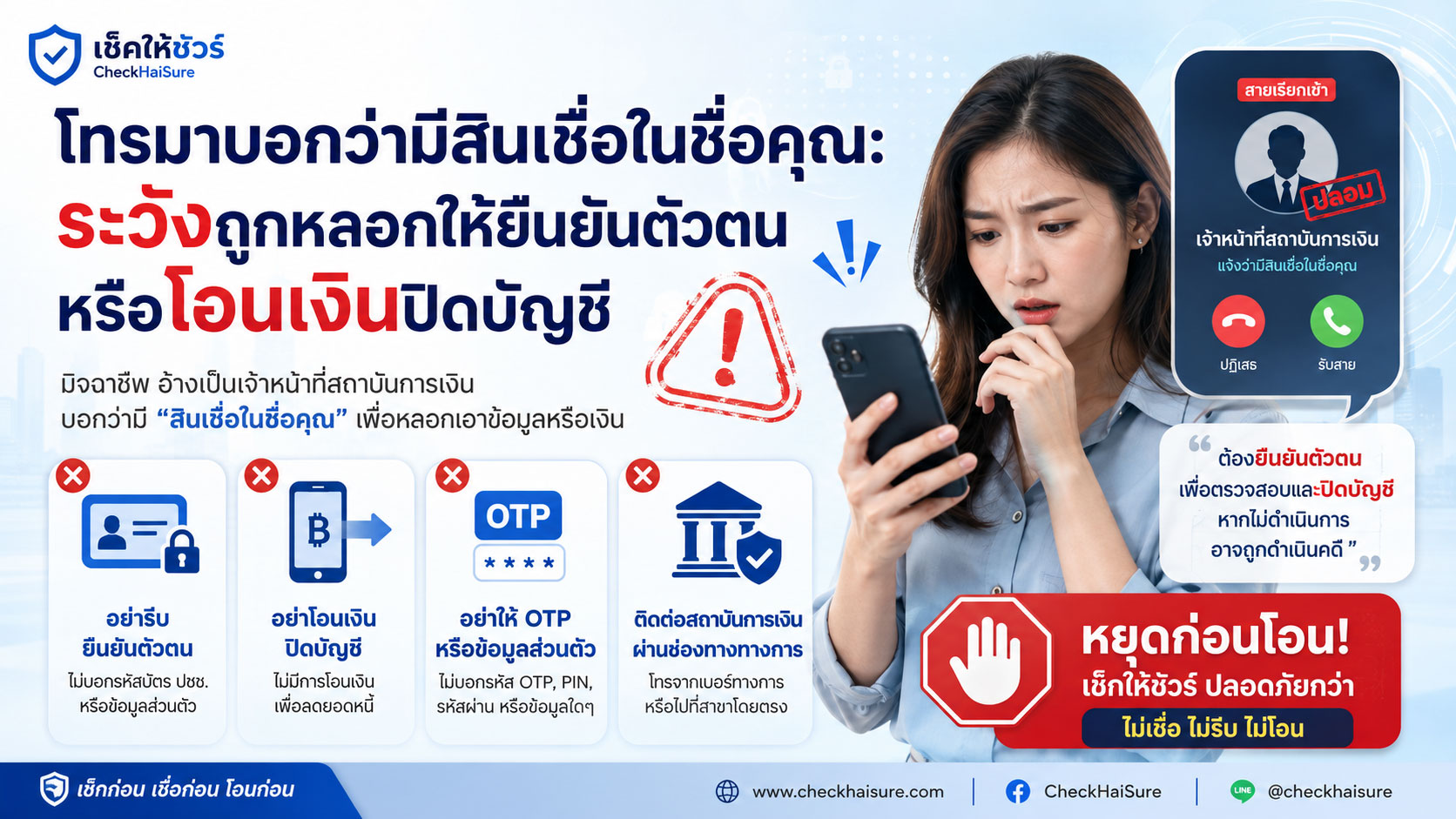
“มีสินเชื่อเปิดในชื่อคุณค่ะ”
“ระบบพบว่าคุณมียอดกู้ค้างชำระ”
“มีคนใช้ข้อมูลของคุณสมัครสินเชื่อออนไลน์”
“ถ้าไม่รีบปิดบัญชี อาจกระทบเครดิตของคุณ”
“ต้องโอนเงินปิดยอดก่อน เพื่อยกเลิกสินเชื่อในชื่อคุณ”
ถ้าได้รับสายแบบนี้ หลายคนอาจตกใจทันที
เพราะคำว่า “สินเชื่อ” และ “หนี้” เป็นเรื่องที่คนส่วนใหญ่ไม่อยากให้เกิดขึ้นโดยไม่รู้ตัว
เราอาจไม่เคยกู้เงิน
ไม่เคยสมัครแอปสินเชื่อนั้น
ไม่เคยใช้บริการบริษัทที่เขาพูดถึง
ไม่เคยเซ็นเอกสาร
ไม่เคยได้รับเงินกู้
แต่กลับมีคนโทรมาบอกว่า “มีสินเชื่อในชื่อคุณ”
ความรู้สึกแรกอาจไม่ใช่แค่กลัวเสียเงิน
แต่กลัวว่าชื่อเราจะถูกนำไปใช้
กลัวว่าข้อมูลส่วนตัวรั่ว
กลัวว่าจะติดหนี้โดยไม่รู้ตัว
กลัวว่าจะเสียเครดิต
กลัวว่าจะถูกฟ้อง
กลัวว่าจะมีคนโทรไปหาคนในครอบครัว
หรือกลัวว่าถ้าไม่รีบจัดการ เรื่องจะบานปลาย
มิจฉาชีพเข้าใจความกลัวนี้ดี
เขาจึงอาจโทรมาอ้างว่าเป็นบริษัทสินเชื่อ ฝ่ายกฎหมาย ฝ่ายติดตามหนี้ ธนาคาร แอปเงินกู้ หรือเจ้าหน้าที่ตรวจสอบข้อมูล แล้วหลอกให้เรารีบ “ยืนยันตัวตน” “ยกเลิกสินเชื่อ” หรือ “โอนเงินปิดบัญชี”
ฟังดูเหมือนกำลังช่วยแก้ปัญหา
แต่แท้จริงอาจเป็นทางเข้าของการหลอกเอาข้อมูลส่วนตัว รหัส OTP หรือเงินจากเรา
จำไว้ว่า
หนี้ที่เราไม่รู้จัก ต้องตรวจสอบกับแหล่งทางการ ไม่ใช่จ่ายเพื่อให้เรื่องเงียบ
ทำไมคำว่า “มีสินเชื่อในชื่อคุณ” ถึงทำให้คนตกใจ
เพราะไม่มีใครอยากเป็นหนี้โดยไม่รู้ตัว
หนี้ไม่ใช่แค่ตัวเลขบนกระดาษ
มันอาจกระทบความรู้สึกปลอดภัย
กระทบประวัติเครดิต
กระทบการขอสินเชื่อในอนาคต
กระทบความสัมพันธ์ในครอบครัว
และทำให้คนรู้สึกเหมือนตัวเองกำลังมีปัญหาทางการเงินทั้งที่ไม่ได้ก่อ
เมื่อมีคนโทรมาบอกว่าเรามียอดสินเชื่อค้างชำระ หลายคนจึงรีบปฏิเสธ
“ไม่ใช่ของฉัน”
“ฉันไม่ได้กู้”
“ฉันไม่เคยสมัคร”
“ใครเอาชื่อฉันไปใช้”
“ต้องทำยังไงให้ปิดเรื่องนี้”
ความอยาก “เคลียร์ชื่อ” เป็นเรื่องธรรมดา
แต่ถ้าเรากำลังคุยกับมิจฉาชีพ ความอยากเคลียร์ชื่ออาจถูกใช้เป็นเครื่องมือหลอกให้เราทำตามทีละขั้นตอน
กลโกงมักเริ่มจากการทำให้เราสงสัยตัวเอง
มิจฉาชีพมักไม่เริ่มจากคำว่า “โอนเงินมาให้เรา” ทันที
เขาอาจเริ่มจากข้อมูลที่ทำให้เรากังวล เช่น
ชื่อของคุณถูกใช้สมัครสินเชื่อ
มีเบอร์โทรของคุณอยู่ในระบบเงินกู้
มีการยื่นกู้ผ่านแอปออนไลน์
มีบัญชีธนาคารของคุณเกี่ยวข้อง
มีเอกสารในชื่อคุณถูกใช้ประกอบการสมัคร
มีรายการค้างชำระที่ยังไม่ปิด
หรือมีหนี้ที่กำลังจะถูกส่งต่อฝ่ายกฎหมาย
บางครั้งเขาอาจพูดชื่อเราได้ถูกต้อง
อาจรู้เบอร์โทร
อาจรู้บางส่วนของเลขบัตรประชาชน
อาจรู้ชื่อธนาคารที่เราใช้
หรืออาจรู้ข้อมูลบางอย่างที่ทำให้ดูน่าเชื่อ
แต่การที่เขารู้ข้อมูลบางส่วน ไม่ได้แปลว่าเขาเป็นเจ้าหน้าที่จริง
ข้อมูลบางอย่างอาจหลุดรั่ว ถูกซื้อขาย ถูกเดา หรือถูกรวบรวมจากหลายแหล่ง
อย่าให้ข้อมูลบางส่วนที่เขารู้ ทำให้เราเผลอให้ข้อมูลที่สำคัญกว่าออกไป
จาก “ช่วยตรวจสอบ” สู่ “ขอข้อมูลเพิ่ม”
เมื่อเราเริ่มตกใจ อีกฝ่ายอาจพูดเหมือนกำลังช่วย
“ไม่ต้องกังวลนะคะ เดี๋ยวช่วยตรวจสอบให้”
“ถ้าไม่ใช่คุณ เราจะช่วยยกเลิกสินเชื่อให้”
“ขอข้อมูลเพื่อยืนยันว่าไม่ใช่ผู้กู้ตัวจริง”
“ขอเอกสารเพื่อปิดบัญชีสินเชื่อ”
“ขอ OTP เพื่อยืนยันการยกเลิก”
ฟังดูเหมือนเป็นขั้นตอนบริการลูกค้า
แต่ข้อมูลที่เขาขออาจเป็นสิ่งที่อันตรายมาก เช่น
เลขบัตรประชาชนเต็ม
วันเดือนปีเกิด
ที่อยู่
รูปบัตรประชาชน
รูปหน้าตรง
ข้อมูลบัญชีธนาคาร
ข้อมูลบัตรเครดิต
Username หรือ Password
OTP
รหัสผ่านแอปธนาคาร
หรือการกดลิงก์เพื่อยืนยันตัวตน
ถ้าคนที่ติดต่อมาไม่สามารถตรวจสอบตัวตนได้ชัดเจน อย่าให้ข้อมูลสำคัญเพียงเพราะเขาบอกว่าจะช่วยยกเลิกสินเชื่อให้
เพราะบางครั้ง “การยืนยันตัวตน” อาจไม่ใช่การปิดสินเชื่อปลอม
แต่อาจเป็นการเปิดทางให้มิจฉาชีพใช้ตัวตนของเราต่อ
อย่าให้ OTP เพื่อ “ยกเลิกสินเชื่อ”
OTP เป็นหนึ่งในจุดที่ต้องระวังที่สุด
มิจฉาชีพอาจบอกว่า
“รหัสนี้ใช้ยืนยันการยกเลิกสินเชื่อ”
“ต้องอ่าน OTP เพื่อปิดบัญชีเงินกู้”
“ระบบส่งรหัสเพื่อถอนชื่อคุณออกจากรายการหนี้”
“ถ้าไม่ให้รหัส จะถือว่าสินเชื่อยัง active อยู่”
“OTP นี้ไม่ได้เกี่ยวกับเงิน เป็นแค่การยืนยันตัวตน”
อย่าเชื่อ
OTP ไม่ใช่รหัสสำหรับบอกเจ้าหน้าที่
รหัสนี้อาจถูกใช้เพื่อสมัครบริการ
ยืนยันธุรกรรม
เข้าสู่บัญชี
เปลี่ยนข้อมูล
ผูกอุปกรณ์
หรืออนุมัติบางอย่างแทนเรา
ถ้าใครโทรมาขอ OTP ไม่ว่าจะอ้างว่าเป็นบริษัทสินเชื่อ ธนาคาร ฝ่ายกฎหมาย หรือเจ้าหน้าที่รัฐ ให้หยุดทันที
OTP คือกุญแจ ไม่ใช่เครื่องมือปิดหนี้ที่เราไม่รู้จัก
ระวังการโอนเงินเพื่อ “ปิดบัญชี” หรือ “ปิดยอด”
บางครั้งมิจฉาชีพอาจบอกว่า ถ้าเราไม่ต้องการให้สินเชื่อในชื่อเราดำเนินต่อ ต้องจ่ายเงินบางส่วนก่อน
อาจใช้คำว่า
ค่าปิดบัญชี
ค่าปิดยอด
ค่าธรรมเนียมยกเลิกสินเชื่อ
ค่าลบประวัติ
ค่าระงับหนี้
ค่าตรวจสอบเอกสาร
ค่าดำเนินการฝ่ายกฎหมาย
หรือยอดชำระขั้นต่ำเพื่อไม่ให้ส่งเรื่องต่อ
บางยอดอาจดูไม่สูงมาก เพื่อให้เราคิดว่า “จ่ายให้จบๆ ดีกว่า”
แต่ถ้าเราจ่ายไปแล้ว อาจมียอดใหม่ตามมา
“ยังเหลือค่าปลดล็อก”
“ต้องจ่ายค่าระงับเครดิต”
“ต้องจ่ายค่าถอนเรื่องจากระบบ”
“ต้องโอนเพิ่มเพื่อคืนสถานะ”
“ถ้าไม่จ่ายต่อ ยอดแรกจะไม่สมบูรณ์”
จากการโอนครั้งเดียว อาจกลายเป็นหลายครั้ง
และทุกครั้งจะถูกเร่งด้วยคำว่า “ต้องทำตอนนี้”
จำไว้ว่า ถ้าหนี้นั้นเราไม่รู้จัก อย่ารีบจ่ายเพื่อให้เรื่องเงียบ
ให้ตรวจสอบก่อนเสมอว่า หนี้มีอยู่จริงหรือไม่ บริษัทมีอยู่จริงหรือไม่ และช่องทางชำระเงินเป็นของบริษัทจริงหรือไม่
บัญชีรับเงินต้องตรวจสอบให้ดี
ถ้ามีการให้โอนเงินเพื่อปิดสินเชื่อ สิ่งที่ต้องดูทันทีคือบัญชีปลายทาง
ถ้าเป็นบัญชีบุคคลธรรมดา ให้ระวังมาก
เช่น
ชื่อบัญชีเป็นชื่อคนทั่วไป
ชื่อบัญชีไม่ตรงกับบริษัท
บัญชีไม่ใช่ชื่อนิติบุคคล
บัญชีเป็นคนละบริษัทกับที่อ้าง
หรือบอกว่าเป็นบัญชีของเจ้าหน้าที่ ฝ่ายกฎหมาย หรือบัญชีเคสเร่งด่วน
บริษัทสินเชื่อหรือสถาบันการเงินจริงควรมีช่องทางชำระเงินที่ตรวจสอบได้
ไม่ควรให้โอนเข้าบัญชีส่วนตัวของใครบางคน เพราะอ้างว่าจะช่วยปิดบัญชีให้เร็วขึ้น
อย่าเชื่อคำว่า
“บัญชีนี้ใช้รับชำระเคสด่วน”
“โอนเข้าบัญชีเจ้าหน้าที่ก่อน เดี๋ยวออกใบเสร็จให้”
“จ่ายช่องทางพิเศษจะได้ไม่กระทบเครดิต”
“ต้องโอนตอนนี้ก่อนระบบส่งเรื่อง”
ช่องทางพิเศษที่ตรวจสอบไม่ได้ คือช่องทางเสี่ยง
สัญญาณเตือนของสาย “มีสินเชื่อในชื่อคุณ”
ถ้ามีคนโทรมาบอกว่ามีสินเชื่อในชื่อคุณ ให้ระวังเป็นพิเศษเมื่อมีพฤติกรรมเหล่านี้
อ้างว่ามีสินเชื่อหรือเงินกู้ในชื่อคุณ
บอกว่ามียอดค้างชำระที่คุณไม่รู้จัก
อ้างว่ามีคนใช้ข้อมูลคุณไปสมัครสินเชื่อ
ขู่เรื่องเครดิตเสีย บัญชีดำ หรือดำเนินคดี
บอกว่าต้องรีบปิดบัญชีวันนี้
ขอเลขบัตรประชาชนเต็ม
ขอรูปบัตรประชาชนหรือรูปหน้าตรง
ขอข้อมูลบัญชีธนาคาร
ขอข้อมูลบัตรเครดิต
ขอ OTP หรือรหัสยืนยัน
ส่งลิงก์ให้กดยืนยันตัวตนหรือดูยอดหนี้
ให้เพิ่ม LINE เจ้าหน้าที่
ส่งเอกสารหนี้หรือเอกสารกฎหมายผ่านแชท
ให้โอนเงินเข้าบัญชีบุคคล
บอกว่าห้ามวางสาย
บอกว่าห้ามติดต่อบริษัทเอง
หรือบอกว่าถ้าไม่ทำตอนนี้ จะส่งเรื่องถึงฝ่ายกฎหมายทันที
ถ้ามีหลายข้อในนี้ ให้หยุดก่อน
อย่าให้ข้อมูล
อย่ากดลิงก์
อย่าให้ OTP
อย่าโอนเงิน
และอย่าใช้ช่องทางที่คนปลายสายส่งมาเป็นช่องทางตรวจสอบ
อย่ากดลิงก์เพื่อดูยอดหนี้หรือยืนยันตัวตน
บางครั้งมิจฉาชีพจะส่งลิงก์มาให้กด
บอกว่าเป็นลิงก์สำหรับ
ดูรายละเอียดสินเชื่อ
เช็กยอดหนี้
ยกเลิกสินเชื่อ
ยืนยันว่าไม่ได้เป็นผู้กู้
อัปโหลดเอกสาร
หรือติดต่อเจ้าหน้าที่ฝ่ายกฎหมาย
ลิงก์อาจดูเหมือนเว็บบริษัทสินเชื่อจริง
มีโลโก้
มีแบบฟอร์ม
มีเลขที่อ้างอิง
มีข้อความเร่งด่วน
หรือมีหน้าขอข้อมูลส่วนตัว
แต่ถ้าเป็นเว็บปลอม ข้อมูลที่เรากรอกอาจถูกส่งให้มิจฉาชีพทันที
อย่ากดลิงก์จากคนปลายสาย
ถ้าต้องการตรวจสอบ ให้เข้าเว็บไซต์หรือแอปของบริษัทจริงด้วยตัวเอง หรือโทรหา Call Center ทางการจากแหล่งที่คุณหาเอง
อย่าให้มิจฉาชีพเป็นคนกำหนดเส้นทางตรวจสอบให้คุณ
เอกสารหนี้ที่ส่งมาในแชท อาจเป็นเอกสารปลอม
เพื่อให้ดูน่าเชื่อถือ มิจฉาชีพอาจส่งเอกสารมาให้ดู
เช่น
สัญญาสินเชื่อ
ใบแจ้งหนี้
เอกสารค้างชำระ
เอกสารทวงถาม
เอกสารฝ่ายกฎหมาย
หมายเรียกปลอม
หนังสือแจ้งดำเนินคดี
หรือเอกสารที่มีโลโก้บริษัทและชื่อของเรา
เอกสารเหล่านี้อาจทำให้คนตกใจมาก
แต่เอกสารที่ส่งผ่านแชท ไม่ได้แปลว่าเป็นของจริงเสมอไป
โลโก้ปลอมได้
แบบฟอร์มปลอมได้
เลขที่สัญญาแต่งขึ้นได้
ยอดหนี้สร้างขึ้นได้
ลายเซ็นปลอมได้
และข้อมูลบางส่วนของเราอาจถูกนำมาจากแหล่งอื่น
อย่าตรวจสอบเอกสารกับคนที่ส่งเอกสารนั้นมาเอง
ให้เก็บไว้เป็นหลักฐาน แล้วติดต่อบริษัทหรือสถาบันการเงินจริงผ่านช่องทางทางการด้วยตัวเอง
ถ้าเราเคยสมัครสินเชื่อจริง ยิ่งต้องตรวจสอบให้ดี
บางคนอาจเคยสมัครสินเชื่อออนไลน์ไว้จริง เคยกรอกข้อมูลไว้จริง หรือเคยกดดูวงเงินในแอปบางอย่างจริง
เมื่อมีคนโทรมาอ้างเรื่องสินเชื่อ จึงอาจยิ่งลังเล
“หรือจะเป็นอันนั้นที่เคยสมัครไว้”
“หรือมีค่าธรรมเนียมที่เราไม่รู้”
“หรือเราลืมอ่านเงื่อนไข”
ถ้าคุณเคยใช้บริการจริง ไม่ได้แปลว่าสายนี้จริง
ยิ่งเคยใช้บริการ ยิ่งควรตรวจสอบผ่านช่องทางทางการ
เปิดแอปหรือเว็บไซต์ของบริษัทเอง
โทร Call Center ที่หาเอง
ดูเอกสารในบัญชีผู้ใช้งานของตัวเอง
ตรวจสอบอีเมลหรือเอกสารที่ได้รับจากช่องทางจริง
และอย่ารีบจ่ายผ่านบัญชีที่คนปลายสายให้มา
ความเป็นไปได้ว่า “อาจจริง” ไม่ควรทำให้เราโอนเงินโดยไม่ตรวจสอบ
ถ้ามีคนใช้ชื่อเราไปกู้จริง ควรทำอย่างไร
ถ้ากังวลว่าอาจมีคนใช้ข้อมูลของคุณไปสมัครสินเชื่อจริง ให้ตั้งหลักและตรวจสอบอย่างเป็นทางการ
อย่ารีบทำตามคนที่โทรมา
ให้เริ่มจากช่องทางที่เชื่อถือได้ เช่น
บริษัทสินเชื่อหรือธนาคารที่ถูกอ้าง ผ่านช่องทางทางการ
สถาบันการเงินที่คุณใช้บริการอยู่
เอกสารหรือแอปทางการของผู้ให้บริการ
ธนาคารที่บัญชีของคุณผูกอยู่
หรือหน่วยงานที่เกี่ยวข้องกับการรับแจ้งเหตุและการเงิน
ถ้ามีเอกสารหรือข้อความจากคนปลายสาย ให้เก็บไว้ก่อน
อย่าลบ
ถ้าพบว่ามีการแอบอ้างตัวตนจริง ให้เก็บหลักฐาน แจ้งผู้ให้บริการ และดำเนินการตามช่องทางทางการ
สิ่งสำคัญคือ อย่าแก้ปัญหาการถูกแอบอ้าง ด้วยการให้ข้อมูลเพิ่มเติมกับคนที่อาจเป็นมิจฉาชีพ
ถ้าได้รับสายแบบนี้ ควรตอบอย่างไร
คุณไม่จำเป็นต้องเถียง
ไม่จำเป็นต้องรีบอธิบายว่าไม่ได้กู้
ไม่จำเป็นต้องตอบคำถามยาวๆ
ไม่จำเป็นต้องให้ข้อมูลเพื่อพิสูจน์ตัวเอง
และไม่จำเป็นต้องอยู่ในสายจนจบ
คุณสามารถพูดสั้นๆ ว่า
“ขอบคุณค่ะ/ครับ เดี๋ยวจะตรวจสอบกับบริษัทหรือหน่วยงานทางการด้วยตัวเอง”
แล้ววางสาย
จากนั้นตรวจสอบผ่านช่องทางที่คุณหาเอง
อย่าโทรกลับเบอร์ที่เขาให้
อย่ากดลิงก์ที่เขาส่ง
อย่าเพิ่ม LINE เจ้าหน้าที่ที่เขาแนะนำ
อย่าโอนเงินเข้าบัญชีที่เขาระบุ
และอย่าใช้ช่องทางของคนที่คุณสงสัย เพื่อตรวจสอบคนที่คุณสงสัย
ถ้าเผลอให้ข้อมูลหรือโอนเงินไปแล้ว
ถ้าคุณเผลอให้ข้อมูล กดลิงก์ ส่งเอกสาร ให้ OTP เพิ่ม LINE หรือโอนเงินไปแล้ว ให้หยุดทันที
อย่าทำขั้นตอนต่อ
อย่าให้รหัสเพิ่ม
อย่าโอนเงินเพิ่ม
อย่าคุยต่อเพราะเขาบอกว่าจะช่วยปิดบัญชีให้สมบูรณ์
อย่าลบแชท
อย่าลบ SMS
อย่าลบเอกสาร
อย่าลบสลิป
ให้เก็บหลักฐานทั้งหมด เช่น
เบอร์โทร
ชื่อบริษัทที่ถูกอ้าง
ชื่อคนที่ติดต่อ
แชท
SMS
ลิงก์
เอกสารที่ส่งมา
เลขบัญชีปลายทาง
ชื่อบัญชี
สลิปโอนเงิน
วันและเวลา
ยอดเงิน
และคำพูดที่ใช้กดดัน
หากให้ข้อมูลบัตร ข้อมูลบัญชี หรือ OTP ไปแล้ว ให้ติดต่อธนาคารหรือผู้ให้บริการทางการเงินผ่านช่องทางทางการโดยเร็ว
หากส่งเอกสารส่วนตัว เช่น บัตรประชาชนหรือรูปใบหน้า ให้ระวังการถูกนำข้อมูลไปแอบอ้าง และติดตามความผิดปกติที่อาจเกิดขึ้น
อย่าอายที่จะขอความช่วยเหลือ
การหยุดเร็วและเก็บหลักฐานไว้สำคัญกว่าการพยายามแก้ปัญหากับคนเดิมต่อ
ควรคุยกับคนในบ้านเรื่อง “หนี้ที่ไม่ได้กู้”
หัวข้อนี้ควรคุยกับคนในบ้านไว้ล่วงหน้า
เพราะคำว่า “หนี้” และ “สินเชื่อ” ทำให้คนกังวลได้ง่ายมาก
โดยเฉพาะผู้สูงอายุ คนที่ไม่คุ้นกับสินเชื่อออนไลน์ หรือคนที่กลัวเรื่องเครดิตและคดีความ
อาจตกลงกันง่ายๆ ว่า
ถ้ามีคนโทรมาบอกว่ามีสินเชื่อในชื่อเรา ให้ไม่ต้องรีบจ่าย
ถ้าอ้างว่ามีหนี้ ให้ตรวจสอบกับบริษัทจริงก่อน
ถ้าขู่เรื่องเครดิตเสียหรือฟ้องร้อง ให้ไม่โอนเงินทันที
ถ้าขอ OTP ให้ไม่ให้
ถ้าให้กดลิงก์ดูยอดหนี้ ให้ไม่กด
ถ้าให้ส่งรูปบัตรประชาชน ให้หยุดก่อน
ถ้าให้โอนเข้าบัญชีบุคคล ให้สงสัยทันที
และถ้าไม่แน่ใจ ให้ถามคนในบ้านหรือโทรหาบริษัทจริงผ่านช่องทางทางการก่อนเสมอ
ข้อตกลงง่ายๆ แบบนี้อาจช่วยให้คนที่กำลังตกใจไม่ต้องตัดสินใจคนเดียว
อย่าโทษตัวเองถ้าคุณกลัวคำว่าหนี้หรือเครดิตเสีย
ถ้าคุณเคยได้รับสายแนวนี้แล้วตกใจ นั่นเป็นเรื่องเข้าใจได้
เพราะไม่มีใครอยากมีหนี้ที่ไม่ได้ก่อ
ไม่มีใครอยากถูกทวงเงิน
ไม่มีใครอยากเสียเครดิต
ไม่มีใครอยากถูกฟ้อง
ไม่มีใครอยากให้ชื่อของตัวเองถูกนำไปใช้
และไม่มีใครอยากให้เรื่องการเงินกลายเป็นปัญหาครอบครัว
มิจฉาชีพเลือกใช้คำว่า “สินเชื่อ” “ยอดค้าง” “เครดิตเสีย” และ “ฝ่ายกฎหมาย” เพราะรู้ว่าคำเหล่านี้ทำให้คนกลัวได้จริง
สิ่งสำคัญไม่ใช่การไม่เคยกลัว
แต่คือเมื่อเริ่มกลัว ให้หยุดก่อน
ไม่จ่ายทันที
ไม่ให้ข้อมูลทันที
ไม่ให้ OTP
ไม่กดลิงก์
ไม่ส่งเอกสาร
และไม่ทำตามช่องทางที่คนปลายสายเตรียมไว้
ความกลัวอาจเกิดขึ้นได้
แต่เราไม่จำเป็นต้องแก้ปัญหาหนี้ที่ไม่รู้จัก ด้วยการจ่ายเงินให้คนที่ยังตรวจสอบไม่ได้
ประโยคที่ควรจำ: หนี้ที่เราไม่รู้จัก ต้องตรวจสอบกับแหล่งทางการ
ถ้าต้องจำประโยคเดียวจากบทความนี้ ขอให้จำว่า
หนี้ที่เราไม่รู้จัก ต้องตรวจสอบกับแหล่งทางการ ไม่ใช่จ่ายเพื่อให้เรื่องเงียบ
ถ้ามีสินเชื่อจริง ควรมีข้อมูลให้ตรวจสอบ
ถ้ามียอดค้างจริง ควรมีช่องทางชำระเงินทางการ
ถ้ามีการใช้ชื่อเราจริง ควรมีขั้นตอนตรวจสอบและโต้แย้งได้
ถ้ามีฝ่ายกฎหมายจริง ควรตรวจสอบผ่านบริษัทจริงได้
แต่ถ้าคนปลายสายเร่งให้จ่ายทันที ขอ OTP ให้กดลิงก์ หรือให้โอนเข้าบัญชีบุคคล ให้หยุดก่อน
การจ่ายเงินเร็ว อาจไม่ได้ทำให้ปัญหาจบ
แต่อาจทำให้ปัญหาเริ่มจริงๆ
สรุป: อย่าให้หนี้ที่ไม่รู้จัก พาเราไปเสียเงินจริง
กลโกง “มีสินเชื่อในชื่อคุณ” อันตรายเพราะมันเล่นกับความกลัวที่ลึกมากของคนทั่วไป
กลัวเป็นหนี้
กลัวเครดิตเสีย
กลัวถูกฟ้อง
กลัวชื่อถูกใช้
กลัวครอบครัวรู้
และกลัวว่าถ้าไม่รีบจัดการ เรื่องจะบานปลาย
แต่นั่นคือเหตุผลที่เราต้องหยุดก่อน
อย่ารีบจ่าย
อย่าให้ข้อมูลส่วนตัว
อย่าให้ OTP
อย่ากดลิงก์
อย่าส่งรูปบัตรประชาชน
อย่าเพิ่ม LINE ที่เขาส่งมา
อย่าโอนเงินเข้าบัญชีบุคคล
อย่าตัดสินใจเพราะถูกขู่ว่าจะส่งเรื่องวันนี้
ให้วางสาย แล้วตรวจสอบกับบริษัท ธนาคาร หรือหน่วยงานจริงผ่านช่องทางทางการด้วยตัวเอง
ถ้าเป็นหนี้จริง ยังตรวจสอบได้
แต่ถ้าเป็นมิจฉาชีพ การไม่รีบจ่าย อาจช่วยให้คุณไม่เสียเงินจริงให้กับหนี้ที่ไม่มีอยู่จริง
A Call Says There Is a Loan Under Your Name: Beware of Being Tricked into Verifying Your Identity or Transferring Money to Close the Account
“There is a loan opened under your name.”
“Our system found an outstanding loan balance.”
“Someone used your information to apply for an online loan.”
“If you do not close the account quickly, it may affect your credit.”
“You must transfer money to close the balance first so we can cancel the loan under your name.”
If you receive a call like this, many people may panic immediately.
Because the words “loan” and “debt” are things most people do not want to discover unexpectedly.
You may have never borrowed money.
Never applied for that loan app.
Never used the company they mentioned.
Never signed any document.
Never received any loan money.
But suddenly, someone calls and says, “There is a loan under your name.”
The first fear may not be only about losing money.
You may worry that your identity has been used.
That your personal information has leaked.
That you may unknowingly be in debt.
That your credit may be damaged.
That you may be sued.
That someone may call your family.
Or that if you do not fix it quickly, the problem may get worse.
Scammers understand this fear very well.
They may call pretending to be a loan company, legal department, debt collection team, bank, online loan app, or verification officer. Then they pressure you to “verify your identity,” “cancel the loan,” or “transfer money to close the account.”
It may sound like they are helping you solve a problem.
But in reality, it may be the beginning of a scam designed to steal your personal information, OTP codes, or money.
Remember this:
A debt you do not recognize must be checked through official sources, not paid just to make the issue go quiet.
Why the Words “There Is a Loan Under Your Name” Can Be So Alarming
No one wants to become responsible for debt they did not create.
Debt is not just a number on a document.
It can affect your sense of safety.
Your credit history.
Your ability to apply for future loans.
Your family relationships.
And it can make you feel as if you are already in financial trouble even though you did nothing.
When someone calls and says you have an outstanding loan, many people immediately deny it.
“That is not mine.”
“I did not borrow anything.”
“I never applied.”
“Who used my name?”
“What do I need to do to clear this?”
Wanting to clear your name is natural.
But if you are speaking with scammers, that desire can be used to lead you step by step into their trap.
The Scam Often Begins by Making You Doubt Yourself
Scammers usually do not begin by saying, “Transfer money to us.”
They may begin with details that make you feel worried, such as:
Your name was used to apply for a loan.
Your phone number appears in an online loan system.
A loan application was submitted through an app.
Your bank account is connected to the application.
Documents under your name were used for the application.
There is an unpaid balance that has not been closed.
Or the debt is about to be forwarded to the legal department.
Sometimes they may say your name correctly.
They may know your phone number.
They may know part of your national ID number.
They may know the name of a bank you use.
Or they may mention details that make the call sound believable.
But the fact that they know some information does not mean they are real officers.
Some information may have leaked, been bought, guessed, or collected from different sources.
Do not let the information they already know cause you to reveal more important information.
From “We Will Help Check” to “Please Provide More Information”
Once you start feeling afraid, the caller may sound helpful.
“Don’t worry. We will help check it for you.”
“If it was not you, we can help cancel the loan.”
“We need your information to confirm you are not the real borrower.”
“Please send documents so we can close the loan account.”
“Please provide the OTP to confirm the cancellation.”
This may sound like customer service.
But the information they ask for may be highly dangerous, such as:
Full national ID number
Date of birth
Address
Photo of your ID card
Face photo
Bank account information
Credit card information
Username or password
OTP
Banking app passcode
Or clicking a link to verify your identity
If the person contacting you cannot be verified clearly, do not share sensitive information just because they claim they can cancel the loan for you.
Sometimes “identity verification” is not about closing a fake loan.
It may be a way for scammers to continue using your identity.
Do Not Share an OTP to “Cancel a Loan”
OTP codes are one of the most important things to protect.
Scammers may say:
“This code is used to confirm loan cancellation.”
“We need the OTP to close the loan account.”
“The system sent this code to remove your name from the debt list.”
“If you do not provide the code, the loan will remain active.”
“This OTP is not about money. It is only identity verification.”
Do not believe this.
An OTP is not a code to tell an officer.
It may be used to register a service.
Confirm a transaction.
Access an account.
Change information.
Link a device.
Or approve something on your behalf.
If anyone calls and asks for your OTP, whether they claim to be from a loan company, bank, legal department, or government agency, stop immediately.
An OTP is a key, not a tool for closing a debt you do not recognize.
Beware of Transfers to “Close the Account” or “Settle the Balance”
Sometimes scammers say that if you do not want the loan under your name to continue, you must pay part of it first.
They may use words such as:
Account closing fee
Balance settlement fee
Loan cancellation fee
Credit record removal fee
Debt suspension fee
Document verification fee
Legal department processing fee
Or minimum payment to prevent escalation
The first amount may look small enough to make you think, “Maybe I should just pay and end this.”
But after you pay, new amounts may appear.
“There is still an unlocking fee.”
“You need to pay a credit suspension fee.”
“You must pay to remove the case from the system.”
“You must transfer more to restore your status.”
“If you do not continue, the first payment will not be completed.”
One transfer may become many transfers.
And every time, they will pressure you with “this must be done now.”
Remember: if the debt is unfamiliar, do not pay quickly just to make it go away.
First verify whether the debt really exists, whether the company is real, and whether the payment channel belongs to the real company.
Check the Receiving Account Carefully
If someone asks you to transfer money to close a loan, check the destination account immediately.
If it is a personal bank account, be very careful.
For example:
The account name is an individual person.
The account name does not match the company.
The account is not under a registered company name.
The account belongs to a different company.
Or they say it is the officer’s account, legal department account, or urgent case account.
A real loan company or financial institution should have payment channels that can be verified.
They should not ask you to transfer to someone’s personal account just because they claim it will help close the case faster.
Do not trust phrases like:
“This account is used for urgent cases.”
“Transfer to the officer first, and we will issue a receipt later.”
“Using this special payment channel will protect your credit.”
“You must transfer now before the system escalates the case.”
An unverifiable special channel is a risky channel.
Warning Signs of a “Loan Under Your Name” Scam
If someone calls and says there is a loan under your name, be especially careful if they do any of the following:
They claim there is a loan or debt under your name.
They say there is an outstanding balance you do not recognize.
They claim someone used your information to apply for a loan.
They threaten credit damage, blacklisting, or legal action.
They say you must close the account today.
They ask for your full national ID number.
They ask for a photo of your ID card or face.
They ask for bank account information.
They ask for credit card information.
They ask for an OTP or verification code.
They send a link to verify your identity or view the debt.
They ask you to add a LINE officer.
They send debt documents or legal documents through chat.
They ask you to transfer money to a personal account.
They tell you not to hang up.
They tell you not to contact the company yourself.
Or they say that if you do not act now, the matter will be sent to the legal department immediately.
If several of these signs appear, stop first.
Do not share information.
Do not click links.
Do not provide OTPs.
Do not transfer money.
And do not use the channel sent by the caller as your verification channel.
Do Not Click Links to View Debt Details or Verify Your Identity
Sometimes scammers send a link and say it is for:
Viewing loan details
Checking the outstanding balance
Canceling the loan
Confirming you are not the borrower
Uploading documents
Or contacting the legal department
The link may look like a real loan company website.
It may have a logo.
A form.
A reference number.
Urgent wording.
Or a page asking for personal information.
But if it is a fake website, the information you enter may go directly to scammers.
Do not click links sent by the caller.
If you need to verify, open the real company’s website or app yourself, or call the official call center from a source you find yourself.
Do not let scammers decide the verification path for you.
Debt Documents Sent Through Chat May Be Fake
To make the story look believable, scammers may send documents such as:
Loan agreements
Billing notices
Outstanding balance documents
Debt collection letters
Legal department documents
Fake summons documents
Legal action notices
Or documents with a company logo and your name
These documents can be frightening.
But documents sent through chat are not always real.
Logos can be copied.
Forms can be faked.
Contract numbers can be invented.
Outstanding balances can be created.
Signatures can be forged.
And some of your personal information may have come from other sources.
Do not verify the document with the same person who sent it.
Save it as evidence, then contact the real company or financial institution through official channels yourself.
If You Actually Applied for a Loan Before, You Still Need to Check Carefully
Some people may have applied for an online loan before, filled in information, or checked a credit limit in an app.
So when someone calls about a loan, they may hesitate.
“Could it be that loan I once applied for?”
“Could there be a fee I did not know about?”
“Did I miss a condition?”
If you have used a service before, that does not mean this call is real.
The more possible it sounds, the more important it is to verify through official channels.
Open the company’s official app or website yourself.
Call the official call center that you find yourself.
Check documents inside your own user account.
Review emails or documents from official channels.
And do not rush to pay through an account provided by the caller.
The possibility that something “might be real” should not make you transfer money without checking.
If Someone Really Used Your Name to Apply for a Loan, What Should You Do?
If you are worried that someone may really have used your information to apply for a loan, pause and verify officially.
Do not rush to follow the caller’s instructions.
Start with trusted channels, such as:
The loan company or bank being mentioned, through official channels
Your own financial institution
Official documents or apps from the real service provider
The bank account connected to your name
Or relevant official reporting and financial support channels
If you received documents or messages from the caller, save them first.
Do not delete them.
If you discover that your identity really has been misused, keep evidence, notify the service provider, and follow the official process.
The important point is this:
Do not solve identity misuse by giving even more information to someone who may be a scammer.
What Should You Say If You Receive This Kind of Call?
You do not need to argue.
You do not need to quickly explain that you did not borrow money.
You do not need to answer long questions.
You do not need to provide information to prove yourself.
And you do not need to stay on the call until the end.
You can simply say:
“Thank you. I will verify this with the company or official agency myself.”
Then hang up.
After that, verify through a channel you find yourself.
Do not call back the number they give you.
Do not click the link they send.
Do not add the LINE officer they recommend.
Do not transfer money to the account they provide.
And do not use the channel of the person you suspect to verify the person you suspect.
If You Already Shared Information or Transferred Money
If you already shared information, clicked a link, sent documents, provided an OTP, added a LINE account, or transferred money, stop immediately.
Do not continue the next steps.
Do not provide more codes.
Do not transfer more money.
Do not keep talking because they say they can complete the account closure.
Do not delete chats.
Do not delete SMS messages.
Do not delete documents.
Do not delete transfer slips.
Save all evidence, such as:
Phone number
Company name being used
Name of the person who contacted you
Chat messages
SMS messages
Links
Documents sent to you
Destination account number
Account name
Transfer slip
Date and time
Amount transferred
And words they used to pressure you
If you shared card information, bank information, or an OTP, contact your bank or financial service provider through official channels as soon as possible.
If you sent personal documents such as an ID card photo or face photo, be alert for possible identity misuse and monitor for unusual activity.
Do not be embarrassed to ask for help.
Stopping quickly and keeping evidence matters more than trying to fix the problem with the same person.
Talk with Your Family About “Debt You Did Not Borrow”
This is a topic worth discussing with people at home in advance.
The words “debt” and “loan” can easily make people anxious.
This is especially true for elderly family members, people unfamiliar with online loans, or people who worry about credit history and legal action.
You can agree on simple rules:
If someone calls and says there is a loan under your name, do not rush to pay.
If they claim there is a debt, verify with the real company first.
If they threaten credit damage or legal action, do not transfer money immediately.
If they ask for an OTP, do not provide it.
If they send a link to check debt details, do not click it.
If they ask for an ID card photo, stop first.
If they ask you to transfer to a personal account, be suspicious immediately.
And if you are unsure, ask someone in the family or contact the real company through official channels first.
Simple agreements like these can help someone who is panicking avoid making decisions alone.
Do Not Blame Yourself If the Words “Debt” or “Credit Damage” Scared You
If you have ever received this kind of call and felt afraid, that is understandable.
No one wants debt they did not create.
No one wants debt collection calls.
No one wants credit damage.
No one wants to be sued.
No one wants their identity to be misused.
And no one wants financial trouble to become a family problem.
Scammers use words like “loan,” “outstanding balance,” “credit damage,” and “legal department” because they know these words can create real fear.
The key is not to never feel afraid.
The key is to stop when fear begins.
Do not pay immediately.
Do not share information immediately.
Do not provide OTPs.
Do not click links.
Do not send documents.
And do not follow the channel prepared by the caller.
Fear can happen.
But you do not need to solve an unfamiliar debt by paying someone you cannot verify.
A Sentence to Remember: A Debt You Do Not Recognize Must Be Checked Through Official Sources
If you remember only one sentence from this article, remember this:
A debt you do not recognize must be checked through official sources, not paid just to make the issue go quiet.
If there is a real loan, there should be information you can verify.
If there is a real outstanding balance, there should be an official payment channel.
If your name was truly used, there should be a process to check and dispute it.
If there is a real legal department, it should be verifiable through the real company.
But if the caller rushes you to pay immediately, asks for an OTP, sends a link, or asks you to transfer money to a personal account, stop first.
Paying quickly may not end the problem.
It may cause the problem to truly begin.
Conclusion: Do Not Let an Unknown Debt Make You Lose Real Money
The “loan under your name” scam is dangerous because it plays with deep fears many people have.
Fear of debt.
Fear of credit damage.
Fear of being sued.
Fear of identity misuse.
Fear of family finding out.
And fear that if you do not act quickly, the issue will become worse.
That is exactly why you need to stop first.
Do not rush to pay.
Do not share personal information.
Do not provide OTPs.
Do not click links.
Do not send ID card photos.
Do not add the LINE account they send.
Do not transfer money to a personal account.
Do not decide just because they threaten to send the case today.
Hang up, then verify with the company, bank, or real agency through official channels yourself.
If the debt is real, it can still be checked.
But if it is a scam, refusing to pay quickly may protect you from losing real money to a debt that never existed.

Leave a Reply
You must be logged in to post a comment.