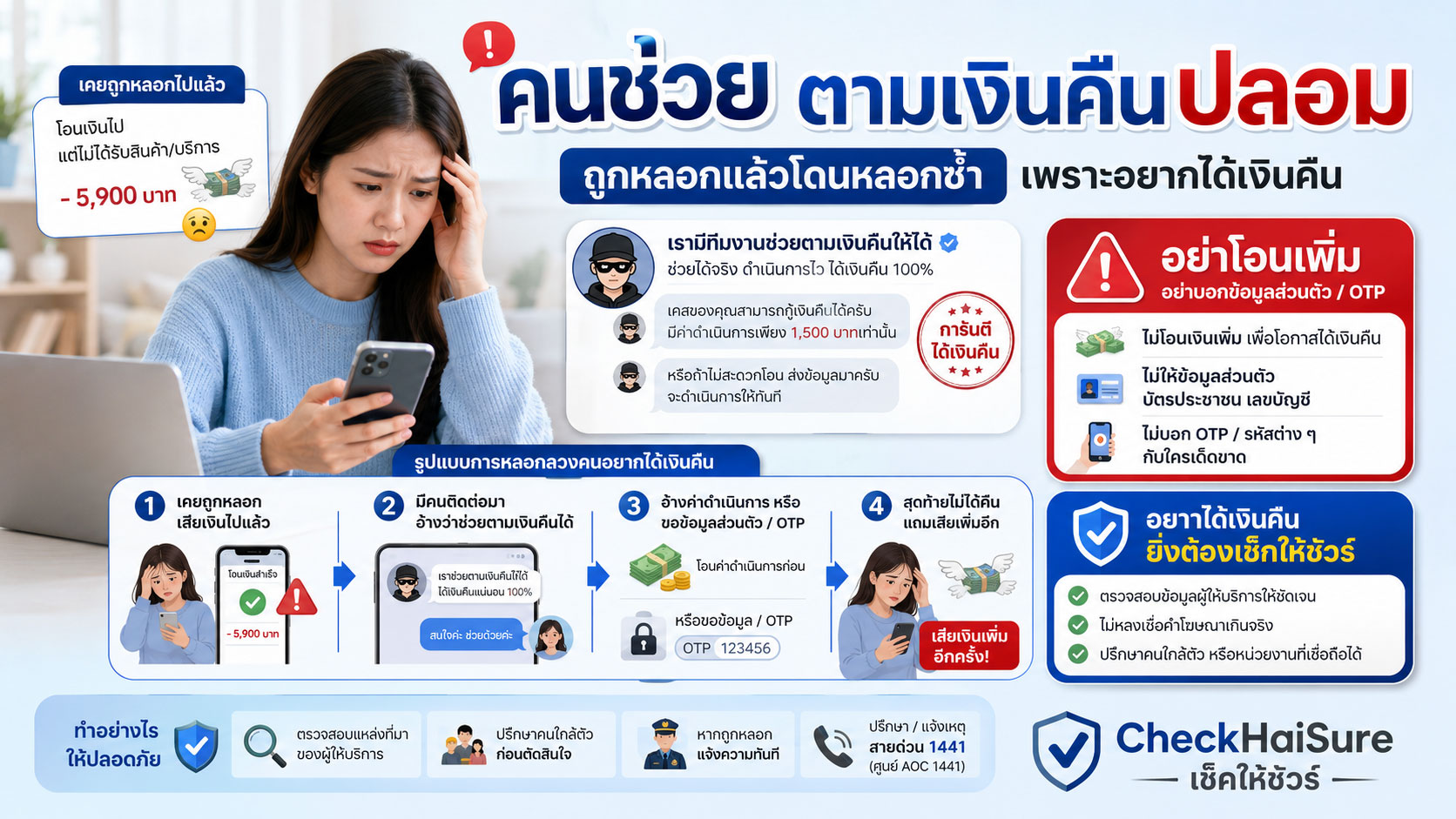
หลังจากรู้ตัวว่าถูกหลอกออนไลน์ สิ่งแรกที่หลายคนรู้สึกคือใจหาย
เงินหายไปแล้ว
ติดต่อคนขายไม่ได้
บัญชีที่โอนไปกลายเป็นบัญชีต้องสงสัย
เพจปิดหนี
แชทหาย
คนที่เคยพูดดีเริ่มเงียบ
หรือคนปลายสายที่กดดันเราเมื่อครู่หายไปทันที
ในช่วงเวลานั้น หลายคนไม่ได้ต้องการอะไรมาก
แค่อยากได้เงินคืน
อยากมีคนบอกว่าต้องทำอย่างไร
อยากให้มีใครสักคนช่วยตามเรื่อง
อยากรู้ว่ายังมีหวังอยู่ไหม
และอยากแก้ไขความผิดพลาดให้เร็วที่สุด
จังหวะนี้เองที่มิจฉาชีพอีกรูปแบบหนึ่งเข้ามา
เขาอาจไม่ได้มาในรูปแบบร้านค้าปลอม คนรักปลอม ตำรวจปลอม หรือเจ้าหน้าที่ธนาคารปลอม
แต่เขามาในบทบาทใหม่
“คนช่วยตามเงินคืน”
“ทีมกฎหมายช่วยอายัดเงิน”
“เจ้าหน้าที่ช่วยกู้เงินจากบัญชีม้า”
“บริษัทรับตามเงินจากมิจฉาชีพ”
“ผู้เชี่ยวชาญด้านไซเบอร์ช่วยดึงเงินกลับ”
“แอดมินช่วยประสานงานกับธนาคาร”
คำเหล่านี้ฟังดูเหมือนความหวัง
แต่บางครั้ง ความหวังนั้นอาจเป็นกับดักรอบที่สอง
จำไว้ว่า
ถ้าเพิ่งถูกหลอก อย่าเพิ่งเชื่อคนที่บอกว่าจะตามเงินคืนได้เร็ว โดยให้จ่ายเงินก่อน
ทำไมคนที่เพิ่งถูกหลอกถึงเสี่ยงถูกหลอกซ้ำ
คนที่เพิ่งถูกหลอกมักอยู่ในสภาพจิตใจที่เปราะบาง
ไม่ได้แปลว่าอ่อนแอ
แต่เป็นเรื่องปกติของคนที่เพิ่งเจอเหตุการณ์กระทบใจ
หลายคนกำลังตกใจ
หลายคนกำลังโกรธตัวเอง
หลายคนกลัวคนในบ้านรู้
หลายคนอายจนไม่กล้าปรึกษาใคร
หลายคนอยากรีบแก้ก่อนความเสียหายใหญ่ขึ้น
หลายคนกลัวว่าถ้าช้า เงินจะหายไปถาวร
และหลายคนพร้อมคว้าโอกาสใดก็ได้ที่ดูเหมือนจะช่วยให้ได้เงินคืน
มิจฉาชีพรู้ดีว่า คนในช่วงนี้อาจยังไม่มีเวลาตรวจสอบละเอียด
แค่เห็นข้อความว่า “ช่วยตามเงินคืนได้” ก็อาจหยุดอ่านทันที
ยิ่งถ้าเขาพูดด้วยความมั่นใจ ใช้คำทางกฎหมาย ใช้คำว่าอายัดบัญชี ใช้คำว่าไซเบอร์ หรือโชว์รีวิวว่าเคยช่วยคนอื่นได้เงินคืนมาแล้ว ความหวังอาจทำให้ความระวังลดลง
นี่คือเหตุผลที่ recovery scam หรือการหลอกซ้ำหลังถูกหลอกครั้งแรก อันตรายมาก
เพราะมันไม่ได้หลอกคนที่ไม่รู้
แต่มันหลอกคนที่กำลังเจ็บและอยากได้รับความช่วยเหลือ
คนช่วยตามเงินคืนปลอมมักหาเหยื่อจากที่ไหน
มิจฉาชีพกลุ่มนี้อาจไม่ได้โทรมาหาคุณทันที
แต่บางครั้งเขารออยู่ในที่ที่คนถูกหลอกมักไปขอความช่วยเหลือ
เช่น
คอมเมนต์ใต้โพสต์เตือนภัย
กลุ่ม Facebook เกี่ยวกับถูกโกงออนไลน์
โพสต์ที่คนแชร์เรื่องถูกหลอก
แชทส่วนตัวหลังจากคุณโพสต์ขอคำแนะนำ
เพจที่อ้างว่าช่วยตามเงินคืน
บัญชี TikTok หรือ X ที่อ้างว่ามีทีมกฎหมาย
เว็บไซต์ที่โฆษณาว่าช่วยกู้เงินจากมิจฉาชีพ
หรือแชทที่มีคนแนะนำว่า “ลองติดต่อคนนี้ เขาช่วยได้”
บางคนอาจทักมาด้วยน้ำเสียงเห็นใจ
“เราเคยโดนเหมือนกันค่ะ คนนี้ช่วยได้จริง”
“อย่าเพิ่งหมดหวังนะครับ มีทีมตามเงินคืนได้”
“ผมมีคนรู้จักที่ธนาคาร ช่วยอายัดบัญชีได้”
“แอดไลน์นี้เลย เขาช่วยหลายเคสแล้ว”
ประโยคเหล่านี้อาจดูเหมือนคนหวังดี
แต่ต้องระวังว่า บางบัญชีอาจเป็นหน้าม้า บางรีวิวอาจปลอม และบางคำแนะนำอาจเป็นส่วนหนึ่งของการหลอกซ้ำ
รูปแบบที่มักใช้หลอกว่าช่วยตามเงินคืนได้
คนช่วยตามเงินคืนปลอมมักใช้เรื่องที่เหยื่ออยากได้ยิน
เช่น
“ตามเงินคืนได้ 100%”
“รู้จักคนในธนาคาร”
“มีช่องทางพิเศษกับตำรวจไซเบอร์”
“อายัดบัญชีปลายทางได้ภายใน 10 นาที”
“ดึงเงินกลับจากบัญชีม้าได้”
“แฮ็กบัญชีมิจฉาชีพคืนเงินได้”
“มีระบบตรวจ blockchain / trace money”
“ไม่ต้องแจ้งความ เดี๋ยวทีมเราจัดการให้”
“เสียค่าดำเนินการนิดเดียว แต่ได้เงินคืนแน่นอน”
“ถ้าช้ากว่านี้ เงินจะถูกถอนหมด”
คำพูดเหล่านี้เล่นกับความกลัวและความหวังพร้อมกัน
กลัวว่าเงินจะหายถาวร
หวังว่าจะมีทางพิเศษ
กลัวว่าถ้าไม่รีบจ่าย จะหมดโอกาส
หวังว่าจะมีคนเก่งกว่ามาช่วยแก้
กลัวว่าถ้าไปตามขั้นตอนปกติจะช้า
หวังว่าจะได้เงินคืนโดยไม่ต้องเผชิญเรื่องยุ่งยาก
แต่เรื่องเงินจริงควรต้องตรวจสอบได้ ไม่ใช่เชื่อเพียงเพราะอีกฝ่ายพูดมั่นใจ
ถ้าเขารับประกันผลลัพธ์เกินจริง ให้ระวัง
เพราะการตามเงินคืนจากมิจฉาชีพไม่มีใครควรสัญญาได้ง่ายๆ ว่าได้คืนแน่นอน
จุดหลอกหลักคือ “จ่ายก่อนเพื่อได้เงินคืน”
วิธีที่พบบ่อยที่สุดคือให้เหยื่อจ่ายเงินก่อน
โดยใช้ชื่อเรียกที่ดูเป็นทางการหรือดูสมเหตุสมผล เช่น
ค่าดำเนินการ
ค่าทนาย
ค่าธรรมเนียมอายัดบัญชี
ค่าประสานงานธนาคาร
ค่าตรวจสอบเส้นทางเงิน
ค่าปลดล็อกระบบ
ค่ากู้ข้อมูล
ค่าบริการไซเบอร์
ค่าค้ำประกัน
ค่าภาษีก่อนรับเงินคืน
หรือค่าธรรมเนียมเพื่อถอนเงินที่ตามคืนมาได้แล้ว
ตอนแรกอาจเป็นยอดเล็ก
เช่น หลักร้อยหรือหลักพัน
แต่เมื่อจ่ายไปแล้ว อาจมีเหตุผลใหม่ตามมา
“ธนาคารขอค่าปลดล็อกเพิ่ม”
“ระบบเจอเงินแล้ว แต่ต้องจ่ายค่ายืนยันตัวตน”
“ตำรวจต้องการเอกสารเพิ่ม มีค่าดำเนินการ”
“เงินถูกพักไว้ ต้องจ่ายค่าธรรมเนียมถอน”
“ยอดเงินคืนสูง ต้องเสียภาษีก่อน”
“ถ้าไม่จ่ายตอนนี้ เงินจะหลุดจากระบบ”
จากความหวังว่าจะได้เงินคืน กลายเป็นการโอนเงินเพิ่มเรื่อยๆ
นี่คือการถูกหลอกซ้ำ
และเจ็บกว่าครั้งแรกตรงที่ มันเกิดขึ้นในช่วงที่เรากำลังพยายามแก้ปัญหา
“รับประกันได้เงินคืน” คือคำที่ควรระวัง
หลายคนอยากได้ยินคำนี้
เพราะหลังถูกหลอก ไม่มีใครอยากฟังคำว่า “อาจจะได้” หรือ “ต้องรอตรวจสอบ”
แต่ความจริงคือ การตามเงินคืนมีหลายปัจจัย
เงินถูกถอนออกไปแล้วหรือยัง
บัญชีปลายทางยังมีเงินอยู่หรือไม่
แจ้งธนาคารเร็วแค่ไหน
มีหลักฐานเพียงพอหรือไม่
เส้นทางเงินถูกโอนไปกี่ทอด
เกี่ยวข้องกับบัญชีม้าหรือไม่
และต้องดำเนินการผ่านขั้นตอนใดบ้าง
ดังนั้น ถ้ามีใครพูดง่ายๆ ว่า “ได้คืนแน่นอน” โดยยังไม่ดูหลักฐานจริง หรือบอกว่าโอนค่าดำเนินการแล้วจะได้คืนภายในไม่กี่ชั่วโมง ให้สงสัยไว้ก่อน
คนที่ช่วยจริงควรอธิบายข้อจำกัดอย่างตรงไปตรงมา
ไม่ควรขายความหวังแบบรับประกันเกินจริง
ระวังคนที่บอกว่า “ไม่ต้องแจ้งความ ไม่ต้องติดต่อธนาคาร”
ถ้ามีคนบอกว่าเขาช่วยตามเงินคืนได้ แต่ห้ามคุณติดต่อธนาคาร ห้ามแจ้งความ หรือห้ามใช้ช่องทางทางการ ให้ระวังมาก
เพราะคนที่ช่วยจริงควรแนะนำให้คุณเก็บหลักฐาน ติดต่อธนาคาร และใช้ช่องทางที่ถูกต้อง
แต่คนหลอกมักไม่อยากให้คุณคุยกับหน่วยงานจริง
เพราะเมื่อคุณติดต่อธนาคารหรือหน่วยงานที่เกี่ยวข้อง คุณอาจรู้ว่าคำพูดของเขาไม่จริง
เขาอาจบอกว่า
“ถ้าแจ้งความ เรื่องจะช้า”
“ถ้าติดต่อธนาคารเอง เงินจะถูกล็อกนาน”
“ถ้าบอกคนอื่น เคสจะเสีย”
“ให้ทีมเราทำก่อน ห้ามดำเนินการเอง”
คำพูดเหล่านี้คล้ายกับกลโกงอื่น คือพยายามตัดคุณออกจากช่องทางตรวจสอบ
ถ้าใครห้ามคุณใช้ช่องทางทางการ ให้หยุดและถอยออกมาก่อน
รีวิวและภาพสลิปอาจปลอมได้
เพจหรือบัญชีที่อ้างว่าช่วยตามเงินคืน อาจมีรีวิวจำนวนมาก
เช่น
ภาพแชทลูกค้าขอบคุณ
ภาพสลิปโอนเงินคืน
คอมเมนต์ว่าช่วยได้จริง
รูปก่อน-หลังได้เงินคืน
วิดีโอรีวิว
หรือบัญชีที่ดูเหมือนคนจริงมาช่วยยืนยัน
แต่สิ่งเหล่านี้สามารถจัดฉากได้
แชทปลอมทำได้
สลิปปลอมทำได้
คอมเมนต์ปลอมทำได้
บัญชีหน้าม้าทำได้
รูปโปรไฟล์คนอื่นก็ถูกนำมาใช้ได้
อย่าใช้รีวิวเป็นหลักฐานเดียว
โดยเฉพาะถ้ารีวิวนั้นพาคุณไปสู่การจ่ายเงินก่อน
สิ่งที่ควรดูมากกว่าคือ เขาเป็นหน่วยงานหรือผู้ให้บริการที่ตรวจสอบตัวตนได้จริงหรือไม่ มีที่อยู่ชัดเจนหรือไม่ มีเลขจดทะเบียนหรือใบอนุญาตที่เกี่ยวข้องหรือไม่ และช่องทางการติดต่อสอดคล้องกับแหล่งทางการหรือไม่
ถ้าทุกอย่างมีแค่เพจ แชท และคำรับประกัน ให้ระวัง
ระวังการอ้างว่าเป็นเจ้าหน้าที่หรือคนในระบบ
บางคนอาจอ้างว่า
รู้จักเจ้าหน้าที่ธนาคาร
รู้จักตำรวจไซเบอร์
มีคนในศูนย์อายัดบัญชี
ทำงานกับหน่วยงานรัฐ
เป็นทีมกฎหมายพิเศษ
เป็นแฮกเกอร์สายขาว
เป็นผู้เชี่ยวชาญด้าน digital forensics
หรือมีระบบลับที่คนทั่วไปเข้าไม่ถึง
คำพูดเหล่านี้ทำให้ดูมีอำนาจและดูมีทางพิเศษ
แต่ถ้าไม่มีหลักฐานที่ตรวจสอบได้ และสุดท้ายพาไปสู่การให้โอนเงินก่อน ก็ยังน่าสงสัย
การอ้างว่ามี “คนใน” เป็นกลวิธีที่มิจฉาชีพชอบใช้
เพราะทำให้เหยื่อรู้สึกว่าเจอช่องทางที่เร็วกว่า เส้นทางที่คนทั่วไปไม่มี
แต่ในเรื่องการเงินและคดี ความถูกต้องสำคัญกว่าความเร็ว
อย่าให้คำว่า “คนในช่วยได้” ทำให้เราข้ามการตรวจสอบ
ถ้าต้องการตามเงินคืน ควรเริ่มจากอะไรจริงๆ
หลังรู้ตัวว่าถูกหลอก สิ่งที่ควรทำคือเริ่มจากช่องทางที่ตรวจสอบได้
อันดับแรก หยุดโอนเงินเพิ่ม
ถ้ายังติดต่อมิจฉาชีพได้ อย่าเจรจาจนเสียหลักฐานเพิ่ม และอย่าโอนเพิ่มเพราะเขาบอกว่าจะแก้รายการให้
เก็บหลักฐานให้มากที่สุด
เช่น แชท ลิงก์ เบอร์โทร ชื่อบัญชี เลขบัญชี สลิปโอนเงิน หน้าเพจ โปรไฟล์สินค้า เอกสารที่เขาส่งมา และเวลาที่เกิดเหตุ
ติดต่อธนาคารของคุณผ่านช่องทางทางการโดยเร็ว หากมีการโอนเงินเกี่ยวข้อง
สอบถามขั้นตอนการแจ้งเหตุ อายัดรายการ หรือดำเนินการตามกระบวนการของธนาคาร
แจ้งเหตุผ่านหน่วยงานที่เกี่ยวข้องตามประเภทของเหตุ
รายงานเพจ บัญชี หรือแพลตฟอร์มที่เกี่ยวข้อง
และบอกคนที่ไว้ใจได้ให้ช่วยดูสถานการณ์
สิ่งเหล่านี้อาจไม่ได้รับประกันว่าจะได้เงินคืนเสมอไป
แต่เป็นเส้นทางที่ปลอดภัยกว่าและลดโอกาสถูกหลอกซ้ำ
อย่าโพสต์หลักฐานทั้งหมดแบบเปิดสาธารณะ
หลังถูกหลอก หลายคนอยากโพสต์เตือนคนอื่น
การเตือนภัยเป็นเรื่องดี
แต่ควรระวังข้อมูลที่เปิดเผย
อย่าโพสต์เลขบัตรประชาชนของตัวเอง
อย่าโพสต์เบอร์โทรส่วนตัวแบบไม่จำเป็น
อย่าโพสต์ที่อยู่
อย่าโพสต์ข้อมูลบัญชีธนาคารของตัวเอง
อย่าเปิดเผยข้อมูลที่ทำให้มิจฉาชีพรู้ว่าคุณกำลังสิ้นหวังหรือพร้อมจ่ายเพื่อได้เงินคืน
เพราะคนช่วยตามเงินคืนปลอมอาจใช้ข้อมูลเหล่านี้มาทักคุณต่อ
ถ้าต้องการเตือนคนอื่น ให้ปิดข้อมูลส่วนตัวของตัวเองก่อน
เก็บหลักฐานต้นฉบับไว้ และส่งให้หน่วยงานหรือแพลตฟอร์มที่เกี่ยวข้องผ่านช่องทางที่เหมาะสม
การเตือนภัยควรช่วยคนอื่น โดยไม่เพิ่มความเสี่ยงให้ตัวเอง
ถ้ามีคนทักมาบอกว่าช่วยตามเงินคืนได้ ควรถามอะไร
ก่อนจ่ายเงินหรือให้ข้อมูลใดๆ ให้ถามตัวเองและถามเขาให้ชัด
เขาเป็นใคร
มีตัวตนหรือองค์กรที่ตรวจสอบได้หรือไม่
มีที่อยู่หรือช่องทางติดต่อทางการหรือไม่
มีเอกสารสัญญาหรือเงื่อนไขบริการชัดเจนหรือไม่
ทำไมต้องจ่ายเงินก่อน
ถ้าไม่ได้เงินคืน ค่าบริการเป็นอย่างไร
เขาจะทำอะไรแทนเราได้จริงตามกฎหมาย
เขาขอข้อมูลอะไรจากเรา
เขาขอรหัสผ่าน OTP หรือสิทธิ์เข้าบัญชีหรือไม่
เขาบอกให้เราไม่ต้องติดต่อธนาคารหรือหน่วยงานทางการหรือเปล่า
เขารับประกันเกินจริงหรือไม่
และเขากดดันให้จ่ายภายในเวลาสั้นๆ หรือไม่
ถ้าคำตอบไม่ชัด หรือเริ่มใช้ความเร่งด่วนกดดัน ให้หยุดก่อน
สิ่งที่ไม่ควรให้กับคนที่อ้างว่าช่วยตามเงินคืน
ไม่ควรให้รหัสผ่าน
ไม่ควรให้ OTP
ไม่ควรให้ PIN แอปธนาคาร
ไม่ควรให้เขารีโมตเข้ามือถือ
ไม่ควรแชร์หน้าจอระหว่างเปิดแอปธนาคาร
ไม่ควรให้ข้อมูลบัตรเครดิตหรือเดบิต
ไม่ควรส่งรูปบัตรประชาชนโดยไม่มั่นใจว่าเขาเป็นหน่วยงานที่ถูกต้อง
ไม่ควรให้เขาเปิดบัญชีหรือทำธุรกรรมแทน
ไม่ควรโอนเงินเพิ่มเพื่อให้เขา “ปลดล็อก” เงินคืน
และไม่ควรโอนเงินให้บุคคลที่ไม่สามารถตรวจสอบตัวตนได้
การตามเงินคืนไม่ควรทำให้เราเปิดประตูให้เขาเข้าถึงข้อมูลสำคัญมากกว่าเดิม
ถ้าเผลอจ่ายให้คนช่วยตามเงินคืนปลอมไปแล้ว
ถ้าคุณจ่ายเงินให้คนที่อ้างว่าจะช่วยตามเงินคืน แล้วเริ่มรู้สึกว่าน่าสงสัย ให้หยุดทันที
อย่าจ่ายรอบต่อไป
อย่าเชื่อคำว่า “อีกขั้นตอนเดียว”
อย่าเชื่อว่า “ถ้าไม่จ่ายตอนนี้ เงินที่ตามได้จะหาย”
อย่าให้รหัสผ่านหรือ OTP เพิ่ม
อย่าลบหลักฐาน
เก็บทุกอย่างไว้
เช่น แชท ข้อความ เสียงสนทนา ถ้ามี เบอร์โทร เพจ บัญชี LINE เว็บไซต์ เอกสารที่ส่งมา สลิปโอนเงิน เลขบัญชีปลายทาง ชื่อบัญชี และเวลาที่ติดต่อกัน
จากนั้นติดต่อธนาคารผ่านช่องทางทางการหากมีการโอนเงิน
แจ้งเหตุผ่านหน่วยงานที่เกี่ยวข้อง
และบอกคนใกล้ตัวให้ช่วยดูสถานการณ์
แม้จะรู้สึกเจ็บใจที่ถูกหลอกซ้ำ แต่อย่าโทษตัวเองจนไม่กล้าขอความช่วยเหลือ
การหยุดเร็วสำคัญกว่าการพยายามแก้กับคนเดิม
ครอบครัวควรช่วยอย่างไรเมื่อคนใกล้ตัวถูกหลอกซ้ำ
ถ้าคนในบ้านถูกหลอกแล้วเผลอไปจ่ายให้คนช่วยตามเงินคืนปลอม อย่าเพิ่งซ้ำเติม
คำว่า “ทำไมไม่คิดก่อน” อาจทำให้เขาเงียบลง
แต่สิ่งที่ต้องการตอนนั้นคือการหยุดความเสียหายเพิ่ม
ช่วยเขาเก็บหลักฐาน
ช่วยเช็กว่าโอนไปที่ไหน
ช่วยติดต่อธนาคาร
ช่วยเปลี่ยนรหัสผ่านถ้ามีข้อมูลรั่ว
ช่วยบล็อกช่องทางที่มิจฉาชีพใช้ติดต่อ
ช่วยแจ้งแพลตฟอร์มหรือหน่วยงานที่เกี่ยวข้อง
และช่วยเตือนว่าอย่ากลับไปคุยกับคนเดิม
คนที่ถูกหลอกซ้ำไม่ได้โง่
เขาอาจกำลังอยู่ในช่วงที่ใจเสีย และอยากแก้ปัญหาเร็วที่สุด
การมีคนข้างๆ ที่ไม่ซ้ำเติม อาจช่วยให้เขากลับมาตั้งหลักได้เร็วขึ้น
ทำไมต้องระวังคำว่า “ช่วยได้แน่นอน”
หลังถูกหลอก เราอยากได้คนที่พูดมั่นใจ
แต่บางครั้งคนที่พูดมั่นใจเกินไปอาจไม่ได้ช่วยจริง
เขาอาจรู้ว่าเราอยากได้ยินอะไร
อยากได้ยินว่าเงินยังอยู่
อยากได้ยินว่าตามคืนได้
อยากได้ยินว่าเรื่องไม่ยาก
อยากได้ยินว่ามีคนจัดการให้
อยากได้ยินว่าจ่ายอีกนิดเดียวแล้วจบ
แต่ความจริงที่ปลอดภัยอาจไม่หวานเท่านั้น
คนที่ช่วยจริงอาจบอกให้รีบติดต่อธนาคาร
อาจบอกให้เก็บหลักฐาน
อาจบอกว่าต้องรอตรวจสอบ
อาจบอกว่ามีความไม่แน่นอน
อาจบอกว่าไม่ควรจ่ายเงินให้ใครที่รับประกันผล
คำพูดแบบนี้อาจไม่สวยหรู แต่ปลอดภัยกว่า
อย่าเลือกคนช่วยเพียงเพราะเขาพูดในสิ่งที่เราอยากได้ยิน
ประโยคที่ควรจำ: อย่าเสียเงินเพิ่ม เพื่อหวังได้เงินที่เสียไปคืนจากคนที่ตรวจสอบไม่ได้
ถ้าต้องจำประโยคเดียวจากบทความนี้ ขอให้จำว่า
อย่าเสียเงินเพิ่ม เพื่อหวังได้เงินที่เสียไปคืนจากคนที่ตรวจสอบไม่ได้
ถูกหลอกครั้งแรก เจ็บแล้ว
แต่อย่าให้ความเจ็บนั้นพาเราไปอยู่ในมือของมิจฉาชีพอีกรอบ
ถ้ามีใครรับประกันว่าจะได้เงินคืนแน่นอน ให้ระวัง
ถ้ามีใครให้จ่ายค่าดำเนินการก่อน ให้หยุด
ถ้ามีใครขอ OTP หรือรหัสผ่าน อันตรายมาก
ถ้ามีใครบอกว่าไม่ต้องติดต่อธนาคารหรือหน่วยงานทางการ ให้สงสัย
ถ้ามีใครเร่งว่า “ต้องจ่ายตอนนี้เท่านั้น” ให้ถอยออกมาก่อน
เพราะการตามเงินคืนที่ปลอดภัยต้องเริ่มจากช่องทางที่ตรวจสอบได้ ไม่ใช่จากคนแปลกหน้าที่มาพร้อมคำสัญญาสวยงาม
สรุป: หลังถูกหลอก สิ่งสำคัญคือหยุดความเสียหาย ไม่ใช่รีบเชื่อความหวังใหม่
คนช่วยตามเงินคืนปลอมเป็นกลโกงที่โหดร้าย เพราะมันเกิดขึ้นหลังจากเหยื่อเสียเงินไปแล้ว
มันไม่ได้หลอกด้วยของลดราคา ความรัก เงินรางวัล หรือคดีปลอม
แต่มันหลอกด้วยความหวังว่า “อาจได้เงินคืน”
และในช่วงที่ใจยังไม่มั่นคง ความหวังแบบนี้อาจมีพลังมาก
ถ้าคุณเพิ่งถูกหลอก ให้หยุดก่อน
อย่าโอนเงินเพิ่มให้ใครที่อ้างว่าช่วยตามเงินคืน
อย่าให้ OTP
อย่าให้รหัสผ่าน
อย่าให้เข้าถึงมือถือหรือบัญชีธนาคาร
อย่าเชื่อรีวิวหรือสลิปที่ตรวจสอบไม่ได้
อย่าใช้ช่องทางที่คนแปลกหน้าส่งมาเป็นทางหลัก
ให้เก็บหลักฐาน
ติดต่อธนาคารผ่านช่องทางทางการ
แจ้งเหตุผ่านหน่วยงานที่เกี่ยวข้อง
รายงานแพลตฟอร์มที่ใช้หลอก
และขอความช่วยเหลือจากคนที่ไว้ใจได้
การได้เงินคืนอาจไม่ง่ายและไม่มีใครควรรับประกันแบบลอยๆ
แต่การหยุดไม่ให้เสียเพิ่ม คือสิ่งที่เราทำได้ทันที
เพราะหลังถูกหลอก สิ่งแรกที่ต้องปกป้องไม่ใช่แค่เงินที่เสียไปแล้ว
แต่คือเงิน ข้อมูล และสติที่เรายังเหลืออยู่
Fake Scam Recovery Services: Being Scammed Once, Then Scammed Again While Trying to Get Your Money Back
After realizing you have been scammed online, the first feeling many people experience is shock.
The money is gone.
The seller cannot be contacted.
The account you transferred money to now looks suspicious.
The page has disappeared.
The chat is gone.
The person who once spoke kindly has gone silent.
Or the caller who pressured you earlier has vanished immediately.
At that moment, many people do not want much.
They just want their money back.
They want someone to tell them what to do.
They want someone to help follow up.
They want to know whether there is still hope.
And they want to fix the mistake as quickly as possible.
This is exactly when another type of scammer appears.
They may not come as a fake seller, fake lover, fake police officer, or fake bank staff.
They come in a new role:
“Money recovery helper”
“Legal team that can freeze the money”
“Officer who can recover funds from mule accounts”
“Company that helps recover money from scammers”
“Cyber expert who can pull the money back”
“Admin who can coordinate with the bank”
These words may sound like hope.
But sometimes, that hope is the second trap.
Remember this:
If you have just been scammed, do not quickly trust someone who says they can recover your money fast, especially if they ask you to pay first.
Why People Who Have Just Been Scammed Are at Risk of Being Scammed Again
People who have just been scammed are often emotionally vulnerable.
This does not mean they are weak.
It is a normal human reaction after a distressing event.
Many people are shocked.
Many are angry at themselves.
Many are afraid their family will find out.
Many feel too embarrassed to ask anyone for help.
Many want to fix the problem before the damage gets worse.
Many fear that if they are too slow, the money will be gone forever.
And many are ready to grab any opportunity that looks like it may help them get their money back.
Scammers know that people in this state may not have the time or emotional strength to check carefully.
A message saying “we can help recover your money” may be enough to make someone stop and listen.
And if the person speaks with confidence, uses legal terms, mentions account freezing, cybersecurity, or shows reviews claiming they helped others get money back, hope can lower caution.
This is why recovery scams are so dangerous.
They do not target people who know nothing.
They target people who are already hurt and looking for help.
Where Fake Recovery Scammers Find Victims
These scammers may not call you immediately.
Sometimes they wait in places where scam victims often look for help.
For example:
Comments under scam warning posts
Facebook groups about online fraud
Posts where victims share their experience
Private messages after you post asking for advice
Pages claiming to recover scam money
TikTok or X accounts claiming to have a legal team
Websites advertising scam fund recovery
Or chats where someone says, “Try contacting this person. They can help.”
Some may approach you with sympathy.
“I was scammed too. This person really helped me.”
“Don’t give up yet. There is a team that can recover the money.”
“I know someone at the bank who can freeze the account.”
“Add this LINE account. They have helped many cases.”
These sentences may sound like kind advice.
But be careful: some accounts may be fake supporters, some reviews may be fabricated, and some recommendations may be part of the second scam.
Common Claims Used by Fake Recovery Services
Fake recovery scammers often say what victims want to hear.
For example:
“We can recover 100% of your money.”
“We know people inside the bank.”
“We have a special channel with cyber police.”
“We can freeze the destination account within 10 minutes.”
“We can pull money back from mule accounts.”
“We can hack the scammer’s account and return your money.”
“We have a system to trace money or blockchain transactions.”
“You don’t need to file a report. Our team will handle it.”
“The processing fee is small, but you will definitely get your money back.”
“If you wait any longer, the money will be withdrawn.”
These words combine fear and hope.
Fear that the money will disappear forever.
Hope that there is a special shortcut.
Fear that if you do not pay quickly, you will lose the chance.
Hope that someone more skilled can solve everything.
Fear that normal procedures will be too slow.
Hope that you can recover the money without facing complicated steps.
But financial recovery should be verifiable, not based only on someone’s confident words.
If they guarantee results too easily, be careful.
No one should casually promise that scam money can definitely be recovered.
The Main Trap Is “Pay First to Get Your Money Back”
The most common method is asking the victim to pay first.
They may use names that sound official or reasonable, such as:
Processing fee
Lawyer fee
Account freezing fee
Bank coordination fee
Money tracing fee
System unlocking fee
Data recovery fee
Cyber service fee
Guarantee fee
Tax before receiving recovered money
Or withdrawal fee for money they claim has already been recovered
At first, the amount may be small.
It may be a few hundred or a few thousand baht.
But after you pay, new reasons may appear.
“The bank requires another unlocking fee.”
“The system found your money, but identity confirmation is required.”
“The police need additional documents, and there is a processing cost.”
“The recovered money is being held, and a withdrawal fee is needed.”
“The amount is large, so tax must be paid first.”
“If you do not pay now, the money will leave the system.”
What began as hope of getting money back becomes a series of additional transfers.
This is being scammed again.
And it can hurt even more than the first time because it happens while you are trying to fix the problem.
“Guaranteed Recovery” Is a Phrase to Be Careful With
Many people want to hear this phrase.
After being scammed, no one wants to hear “maybe” or “it depends on investigation.”
But the truth is that recovering money depends on many factors.
Has the money already been withdrawn?
Does the destination account still have funds?
How quickly did you notify the bank?
Do you have enough evidence?
How many times was the money transferred onward?
Was a mule account involved?
And what official process is required?
So if someone casually says “you will definitely get it back” before properly reviewing evidence, or claims that paying a fee will return the money within a few hours, treat it as suspicious.
A real helper should explain limitations honestly.
They should not sell hope with unrealistic guarantees.
Be Careful If They Say “No Need to Contact the Bank or Police”
If someone claims they can recover your money but tells you not to contact your bank, not to report the incident, or not to use official channels, be extremely careful.
A genuine helper should advise you to save evidence, contact your bank, and use the proper channels.
A scammer often does not want you to speak with real institutions.
Because once you contact your bank or relevant authorities, you may discover that their claims are false.
They may say:
“If you report it, the process will be slower.”
“If you contact the bank yourself, the money will be locked for too long.”
“If you tell others, the case will be damaged.”
“Let our team handle it first. Do not act on your own.”
These words are similar to other scams: they try to cut you off from verification.
If someone tells you not to use official channels, stop and step back.
Reviews and Transfer Slips Can Be Fake
Pages or accounts claiming to recover scam money may show many reviews.
For example:
Screenshots of thankful customers
Images of recovered money transfers
Comments saying the service really works
Before-and-after recovery posts
Video testimonials
Or accounts that look like real people confirming success
But these can be staged.
Fake chats can be created.
Fake transfer slips can be made.
Fake comments can be posted.
Fake supporter accounts can be used.
And other people’s profile photos can be stolen.
Do not treat reviews as the only proof.
Especially if the reviews lead you to pay money first.
It is more important to check whether the person or service is a real, verifiable organization; whether they have a clear address; whether they have registration or relevant licensing; and whether their contact channels match official sources.
If everything exists only as a page, chat, and guarantee, be careful.
Be Careful When They Claim to Be Officers or Insiders
Some people may claim:
They know bank staff.
They know cyber police.
They have someone inside an account freezing center.
They work with a government agency.
They are a special legal team.
They are ethical hackers.
They are digital forensics experts.
Or they have a secret system that ordinary people cannot access.
These words make them sound powerful and make it seem like they have a special route.
But if there is no verifiable proof, and the conversation eventually leads to paying money first, it is still suspicious.
Claiming to have an “insider” is a tactic scammers often use.
It makes victims feel they have found a faster route unavailable to the public.
But when money and legal matters are involved, correctness is more important than speed.
Do not let the phrase “we have someone inside” make you skip verification.
If You Want to Recover Money, Where Should You Really Start?
After realizing you have been scammed, start with channels that can be verified.
First, stop transferring more money.
If the scammer is still contacting you, do not keep negotiating in a way that creates more risk, and do not transfer more because they say they can fix the transaction.
Save as much evidence as possible.
This may include chat messages, links, phone numbers, account names, account numbers, transfer slips, page screenshots, product profiles, documents they sent, and the time of the incident.
Contact your bank through official channels as soon as possible if money was transferred.
Ask about the process for reporting, freezing, or handling suspicious transactions.
Report the incident through the relevant official channels based on the type of case.
Report the page, account, or platform involved.
And tell someone you trust so they can help you review the situation.
These steps may not guarantee that you will always get your money back.
But they are safer and reduce the chance of being scammed again.
Do Not Post All Evidence Publicly
After being scammed, many people want to warn others.
Warning others is valuable.
But be careful about what you reveal publicly.
Do not post your own national ID number.
Do not post your personal phone number unless necessary.
Do not post your address.
Do not post your own bank account details.
Do not reveal information that shows you are desperate or willing to pay to get your money back.
Fake recovery scammers may use that information to contact you next.
If you want to warn others, hide your own personal information first.
Keep the original evidence and send it to the relevant platform or authority through the proper channel.
A warning should help others without increasing your own risk.
What to Ask If Someone Says They Can Recover Your Money
Before paying or sharing any information, ask yourself and ask them clearly:
Who are they?
Do they have a verifiable identity or organization?
Do they have a clear address or official contact channel?
Do they have a written agreement or service terms?
Why must you pay first?
What happens to the fee if the money is not recovered?
What can they legally do on your behalf?
What information do they need from you?
Are they asking for passwords, OTPs, or account access?
Are they telling you not to contact your bank or official agencies?
Are they making unrealistic guarantees?
Are they pressuring you to pay within a short time?
If the answers are unclear, or if they begin using urgency to pressure you, stop first.
What You Should Not Give to Someone Claiming to Recover Money
Do not give passwords.
Do not provide OTPs.
Do not provide banking app PINs.
Do not let them remotely access your phone.
Do not share your screen while your banking app is open.
Do not provide credit or debit card information.
Do not send a photo of your ID card unless you are certain they are a legitimate authority or service.
Do not let them open accounts or perform transactions for you.
Do not transfer more money so they can “unlock” the recovered funds.
And do not send money to people whose identity cannot be verified.
Trying to recover money should not require you to open more doors to your sensitive information.
If You Already Paid a Fake Recovery Service
If you paid someone who claimed they could recover your money and then began to feel suspicious, stop immediately.
Do not pay the next round.
Do not believe “just one more step.”
Do not believe that “if you do not pay now, the recovered money will disappear.”
Do not provide more passwords or OTPs.
Do not delete evidence.
Save everything.
This includes chat messages, text messages, call recordings if available, phone numbers, pages, LINE accounts, websites, documents sent to you, transfer slips, destination account numbers, account names, and contact times.
Then contact your bank through official channels if money was transferred.
Report the incident through relevant channels.
And tell someone close to you so they can help you review the situation.
Even if it hurts to realize you were scammed again, do not blame yourself so much that you avoid getting help.
Stopping quickly is more important than trying to fix the problem with the same person.
How Families Can Help When Someone Is Scammed Again
If someone in your family was scammed and then paid a fake recovery service, do not blame them immediately.
Words like “Why didn’t you think first?” may make them shut down.
What matters in that moment is stopping further damage.
Help them save evidence.
Help check where the money went.
Help contact the bank.
Help change passwords if any information was exposed.
Help block the channels used by scammers.
Help report the page or account to the platform or relevant authority.
And help remind them not to return to the same person.
Someone who is scammed twice is not stupid.
They may have been emotionally shaken and desperate to fix the problem quickly.
Having someone beside them who does not blame them can help them regain control faster.
Why You Should Be Careful with “We Can Definitely Help”
After being scammed, we want someone who sounds confident.
But sometimes the person who sounds too confident may not be helping at all.
They may know exactly what you want to hear.
You want to hear that the money is still there.
That it can be recovered.
That it is not difficult.
That someone can handle it for you.
That you only need to pay a little more and everything will be solved.
But the safer truth may not sound as comforting.
A real helper may tell you to contact your bank quickly.
They may tell you to save evidence.
They may tell you that the case must be reviewed.
They may explain that the outcome is uncertain.
They may warn you not to pay anyone who guarantees results.
These words may not sound as attractive, but they are safer.
Do not choose a helper only because they say what you want to hear.
A Sentence to Remember: Do Not Lose More Money Hoping to Recover Lost Money from Someone You Cannot Verify
If you remember only one sentence from this article, remember this:
Do not lose more money hoping to recover lost money from someone you cannot verify.
Being scammed the first time already hurts.
Do not let that pain lead you into the hands of scammers again.
If someone guarantees that your money will definitely be recovered, be careful.
If someone asks for a processing fee first, stop.
If someone asks for OTPs or passwords, it is extremely dangerous.
If someone says you do not need to contact your bank or official agencies, be suspicious.
If someone rushes you by saying “you must pay now,” step back.
Safe recovery must begin from verifiable channels, not from strangers with beautiful promises.
Conclusion: After Being Scammed, the Priority Is to Stop Further Damage, Not Rush into a New Hope
Fake scam recovery services are cruel because they appear after the victim has already lost money.
They do not lure victims with discounts, romance, prize money, or fake legal threats.
They lure victims with hope:
“Maybe I can still get my money back.”
And when your heart is not steady yet, that hope can be powerful.
If you have just been scammed, pause first.
Do not transfer more money to anyone claiming they can recover it.
Do not provide OTPs.
Do not provide passwords.
Do not allow access to your phone or bank account.
Do not believe reviews or transfer slips that cannot be verified.
Do not use channels sent by strangers as your main path.
Save evidence.
Contact your bank through official channels.
Report the incident through the relevant authorities.
Report the platform or account used in the scam.
And ask someone you trust for help.
Getting money back may not be easy, and no one should casually guarantee it.
But stopping yourself from losing more is something you can do immediately.
After being scammed, the first thing to protect is not only the money already lost.
It is also the money, information, and peace of mind you still have.

Leave a Reply
You must be logged in to post a comment.