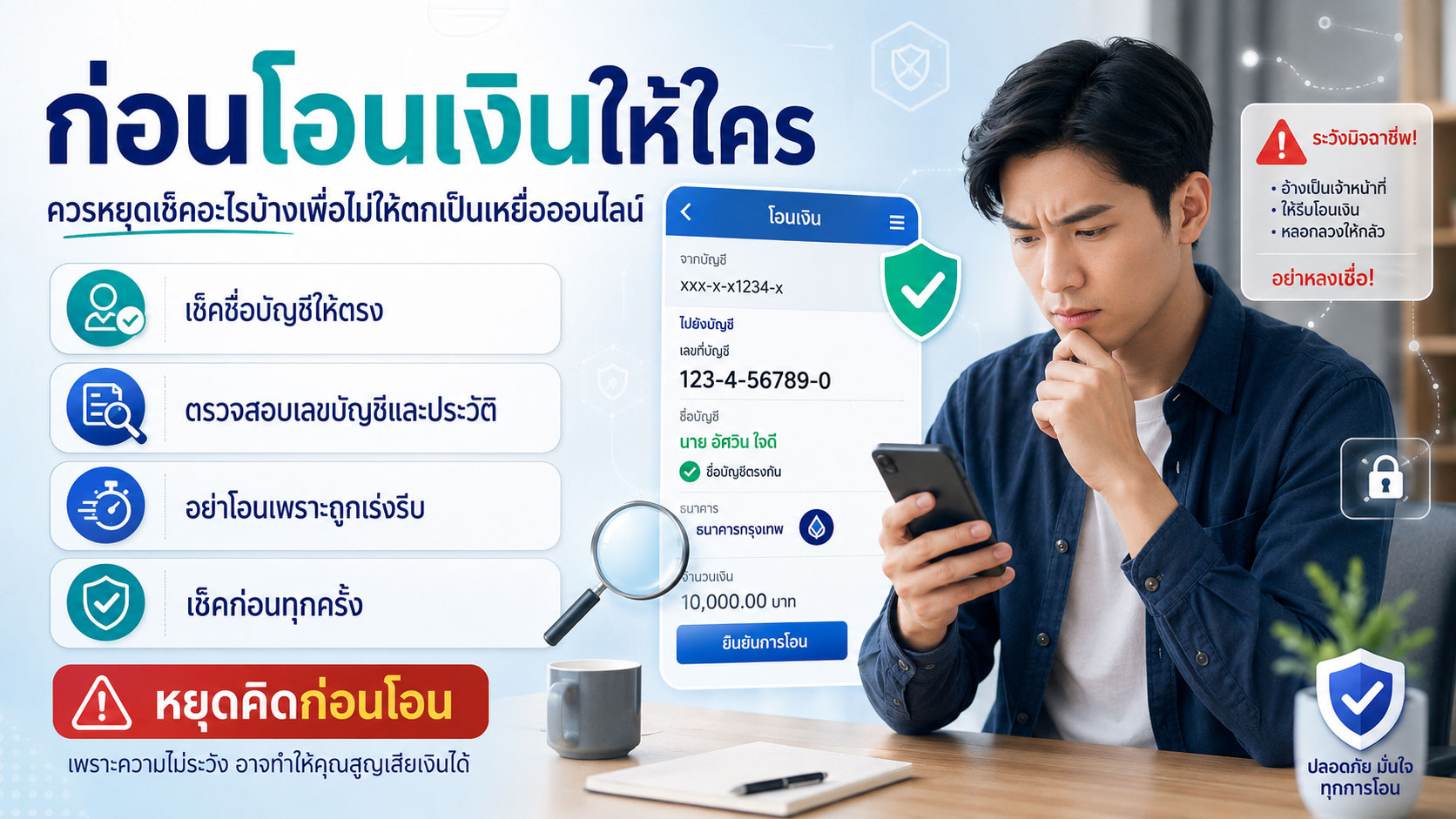
ในยุคที่การโอนเงินผ่านแอปธนาคารทำได้ภายในไม่กี่วินาที ความสะดวกนี้ช่วยให้การซื้อขาย การจองบริการ การจ่ายเงิน และการทำธุรกรรมต่าง ๆ ง่ายขึ้นมาก แต่ในอีกด้านหนึ่ง ความรวดเร็วนี้ก็เป็นสิ่งที่มิจฉาชีพนำมาใช้กดดันให้ผู้คนตัดสินใจผิดพลาดได้เช่นกัน
หลายเหตุการณ์เริ่มต้นจากข้อความธรรมดา เช่น “สินค้าพร้อมส่ง”, “โอนจองก่อน”, “โปรนี้หมดวันนี้”, “ต้องจ่ายค่าธรรมเนียมก่อน”, “บัญชีมีปัญหา”, หรือ “หากไม่ทำตอนนี้จะเสียสิทธิ์” เมื่อผู้รับสารอยู่ในช่วงที่รีบ กลัว เสียดายโอกาส หรือไว้วางใจอีกฝ่ายมากเกินไป การโอนเงินอาจเกิดขึ้นก่อนที่จะมีเวลาได้ตรวจสอบอย่างรอบคอบ
เช็คให้ชัวร์ จึงจัดทำบทความนี้ขึ้นเพื่อเป็นเช็กลิสต์เบื้องต้นสำหรับทุกคนก่อนกดโอนเงิน โดยเฉพาะกรณีที่เป็นการโอนให้บุคคล ร้านค้า เพจ ผู้ขาย นายหน้า ผู้ชักชวนลงทุน หรือช่องทางออนไลน์ที่ยังไม่มั่นใจเต็มที่
เป้าหมายไม่ใช่การทำให้ทุกคนกลัวการโอนเงิน แต่ต้องการช่วยให้ผู้ใช้งานมีนิสัย “หยุดคิดก่อนโอน” เพราะบางครั้งการตรวจสอบเพียงไม่กี่นาที อาจช่วยป้องกันความเสียหายที่ตามมาได้มากกว่าที่เราคิด
ทำไมต้องเช็คก่อนโอนเงินทุกครั้ง
การโอนเงินเป็นจุดที่ความเสี่ยงเปลี่ยนจาก “ความน่าสงสัย” ไปเป็น “ความเสียหายจริง” ได้ทันที เมื่อเงินถูกโอนออกไปแล้ว การติดตามคืนอาจไม่ง่าย และมักต้องอาศัยกระบวนการของธนาคาร หน่วยงานที่เกี่ยวข้อง หรือเจ้าหน้าที่ตามขั้นตอนทางกฎหมาย
ในหลายกรณี มิจฉาชีพไม่ได้หลอกด้วยวิธีซับซ้อนเสมอไป แต่ใช้จังหวะและอารมณ์ของเหยื่อเป็นเครื่องมือ เช่น
- เร่งให้รีบโอนก่อนหมดสิทธิ์
- ทำให้กลัวว่าจะเกิดปัญหาใหญ่
- ทำให้เชื่อว่าเป็นโอกาสพิเศษ
- ทำให้รู้สึกเกรงใจหรือไม่กล้าปฏิเสธ
- ทำให้คิดว่าโอนอีกนิดเดียวแล้วจะได้เงินคืน
- ทำให้เชื่อว่าคนอื่นก็ทำแบบเดียวกัน
ดังนั้น ก่อนโอนเงินทุกครั้ง โดยเฉพาะกับคนหรือช่องทางที่ไม่คุ้นเคย ควรถือว่าการตรวจสอบคือขั้นตอนปกติ ไม่ใช่เรื่องเสียเวลา
1. เช็คว่าคุณรู้จักผู้รับเงินจริงหรือไม่
คำถามแรกก่อนโอนเงินคือ “เรารู้จักผู้รับเงินจริงแค่ไหน”
หลายครั้งเราอาจรู้จักเพียงชื่อเพจ ชื่อร้าน รูปโปรไฟล์ หรือบัญชีแชท แต่ยังไม่รู้จริงว่าอีกฝ่ายเป็นใคร อยู่ที่ไหน หรือมีตัวตนที่ตรวจสอบได้หรือไม่
ก่อนโอนเงิน ควรพิจารณาว่า:
- เคยซื้อขายหรือทำธุรกรรมกับบุคคลนี้มาก่อนหรือไม่
- มีข้อมูลติดต่อที่ตรวจสอบได้หรือไม่
- มีที่อยู่ร้านหรือข้อมูลธุรกิจที่ชัดเจนหรือไม่
- ช่องทางที่ติดต่อเป็นช่องทางทางการจริงหรือไม่
- มีใครเคยยืนยันความน่าเชื่อถือของผู้รับเงินหรือไม่
- หากเกิดปัญหา จะสามารถติดต่อกลับได้อย่างไร
หากคำตอบยังไม่ชัดเจน ควรหยุดก่อนและตรวจสอบเพิ่มเติม อย่าโอนเพียงเพราะอีกฝ่ายพูดจาน่าเชื่อถือหรือส่งหลักฐานบางอย่างที่ยังตรวจสอบไม่ได้
2. เช็คชื่อบัญชีรับเงินให้ตรงกับเรื่องที่ตกลงกัน
ก่อนกดยืนยันโอนเงิน ควรดูชื่อบัญชีรับเงินให้ละเอียดทุกครั้ง เพราะชื่อบัญชีเป็นหนึ่งในข้อมูลสำคัญที่ช่วยบอกความเชื่อมโยงระหว่างผู้รับเงินกับเรื่องที่ท่านกำลังทำธุรกรรม
ตัวอย่างที่ควรตรวจสอบ:
- หากซื้อของจากร้านค้า ชื่อบัญชีสัมพันธ์กับชื่อร้านหรือไม่
- หากซื้อจากบริษัท ชื่อบัญชีเป็นชื่อนิติบุคคลหรือไม่
- หากจ่ายค่าบริการ ชื่อบัญชีตรงกับผู้ให้บริการจริงหรือไม่
- หากจองที่พักหรือบริการ ชื่อบัญชีตรงกับช่องทางทางการหรือไม่
- หากลงทุน ชื่อบัญชีเป็นบัญชีของบริษัทที่ตรวจสอบได้หรือไม่
ควรระวังเป็นพิเศษหากอีกฝ่ายให้เหตุผลว่า:
- บัญชีร้านใช้ไม่ได้ชั่วคราว
- ให้โอนเข้าบัญชีแอดมินแทน
- ให้โอนเข้าบัญชีญาติหรือเพื่อน
- ให้โอนเข้าบัญชีสำรอง
- เปลี่ยนบัญชีรับเงินกะทันหัน
- ชื่อบัญชีไม่เกี่ยวข้องกับร้าน เพจ หรือองค์กรที่อ้างถึง
ชื่อบัญชีไม่ตรงกันไม่ได้แปลว่าเป็นมิจฉาชีพเสมอไป แต่เป็นสัญญาณที่ควรตรวจสอบให้ชัดเจนก่อนโอนเงิน
3. เช็คเลขบัญชี เบอร์โทร ชื่อร้าน และลิงก์ก่อนโอน
ก่อนโอนเงิน ควรนำข้อมูลที่มีไปค้นหาก่อน เช่น เลขบัญชี เบอร์โทรศัพท์ ชื่อบัญชี ชื่อร้านค้า ชื่อเพจ LINE ID หรือลิงก์เว็บไซต์
ข้อมูลที่ควรลองค้นหา ได้แก่:
- เลขบัญชีธนาคาร
- ชื่อบัญชี
- เบอร์โทรศัพท์
- ชื่อร้านค้า
- ชื่อเพจ Facebook
- LINE ID
- URL เว็บไซต์
- ข้อความชักชวนที่ได้รับ
- รูปแบบการหลอกลวงที่เกี่ยวข้อง
ท่านสามารถใช้เครื่องมือค้นหาทั่วไป ค้นหาบนโซเชียลมีเดีย หรือใช้เช็คให้ชัวร์เป็นหนึ่งในช่องทางตรวจสอบเบื้องต้น
อย่างไรก็ตาม หากค้นหาแล้วไม่พบข้อมูล ไม่ได้หมายความว่าปลอดภัย 100% เพราะมิจฉาชีพอาจใช้บัญชีใหม่ เบอร์ใหม่ เพจใหม่ หรือชื่อใหม่อยู่เสมอ
การไม่พบข้อมูลควรแปลว่า “ยังไม่มีข้อมูลเพียงพอ” ไม่ใช่ “ปลอดภัยแน่นอน”
4. เช็คว่าอีกฝ่ายกำลังเร่งให้โอนผิดปกติหรือไม่
ความเร่งด่วนเป็นเครื่องมือสำคัญของมิจฉาชีพ เพราะยิ่งเหยื่อมีเวลาตรวจสอบน้อย โอกาสตัดสินใจผิดพลาดก็ยิ่งสูงขึ้น
ควรระวังหากเจอข้อความลักษณะนี้:
- “ต้องโอนตอนนี้เท่านั้น”
- “เหลือชิ้นสุดท้าย”
- “มีคนรอต่อคิวอยู่”
- “ถ้าไม่โอนภายใน 10 นาที จะเสียสิทธิ์”
- “โอนก่อนแล้วค่อยตรวจสอบ”
- “ห้ามวางสาย”
- “ห้ามบอกใคร”
- “ถ้าไม่ทำตอนนี้จะมีปัญหาใหญ่”
- “โอนเพิ่มอีกนิดเดียวก็ถอนได้แล้ว”
ผู้ขายหรือผู้ให้บริการที่สุจริตควรให้เวลาท่านตรวจสอบอย่างเหมาะสม หากอีกฝ่ายไม่ยอมให้เวลาตรวจสอบ หรือทำให้รู้สึกว่าต้องรีบโอนทันที ควรถือเป็นสัญญาณเตือน
5. เช็คราคา ผลตอบแทน หรือข้อเสนอว่าดีเกินจริงหรือไม่
ข้อเสนอที่ดีเกินจริงเป็นอีกหนึ่งกับดักที่พบบ่อย เพราะทำให้ผู้คนรู้สึกกลัวว่าจะพลาดโอกาส
ตัวอย่างที่ควรระวัง:
- สินค้าราคาถูกกว่าตลาดมาก
- สินค้าหายากแต่มีพร้อมส่งจำนวนมาก
- บัตรคอนเสิร์ตหรือคูปองราคาถูกผิดปกติ
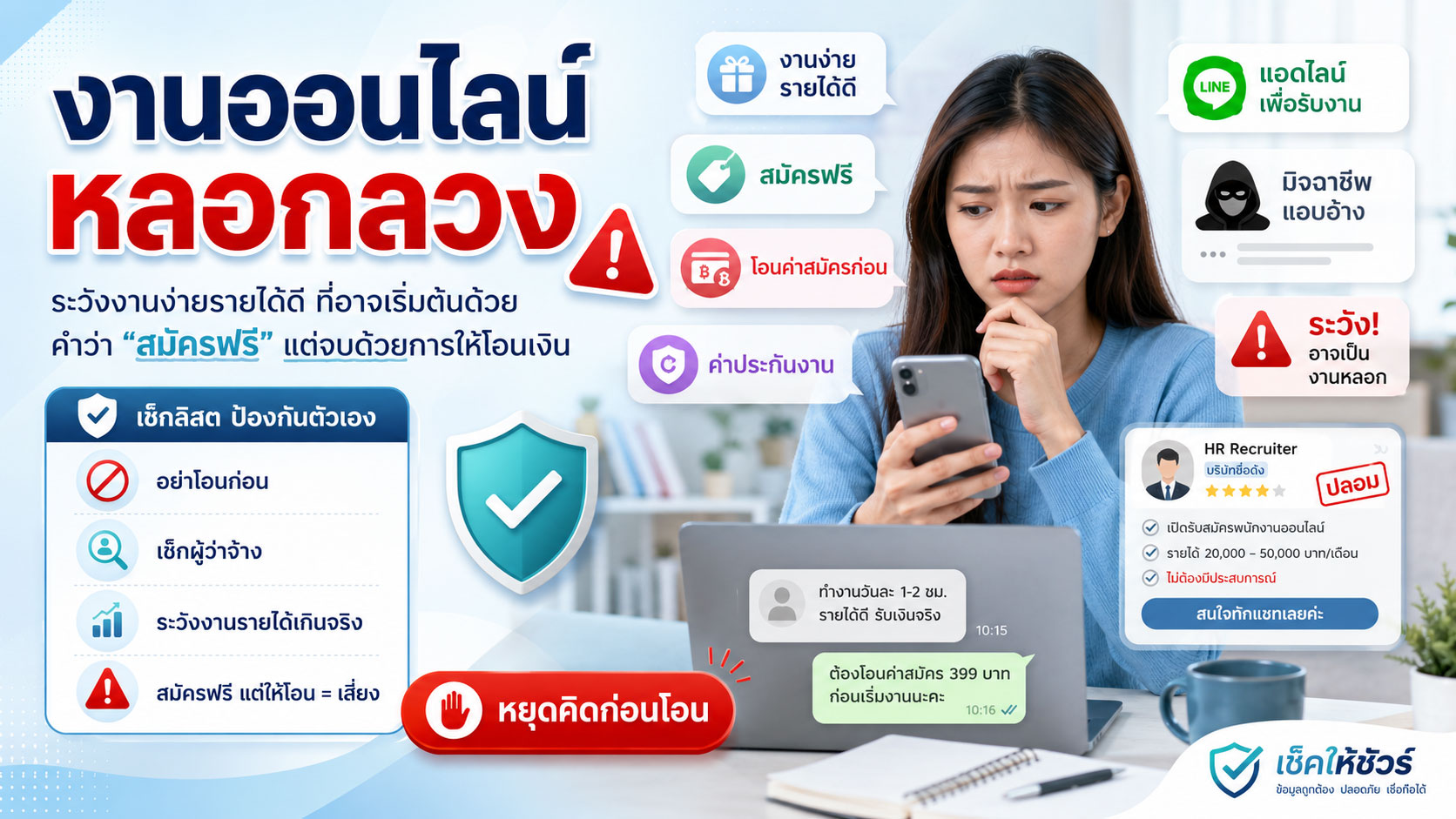
- งานออนไลน์รายได้สูงแต่ทำง่ายมาก
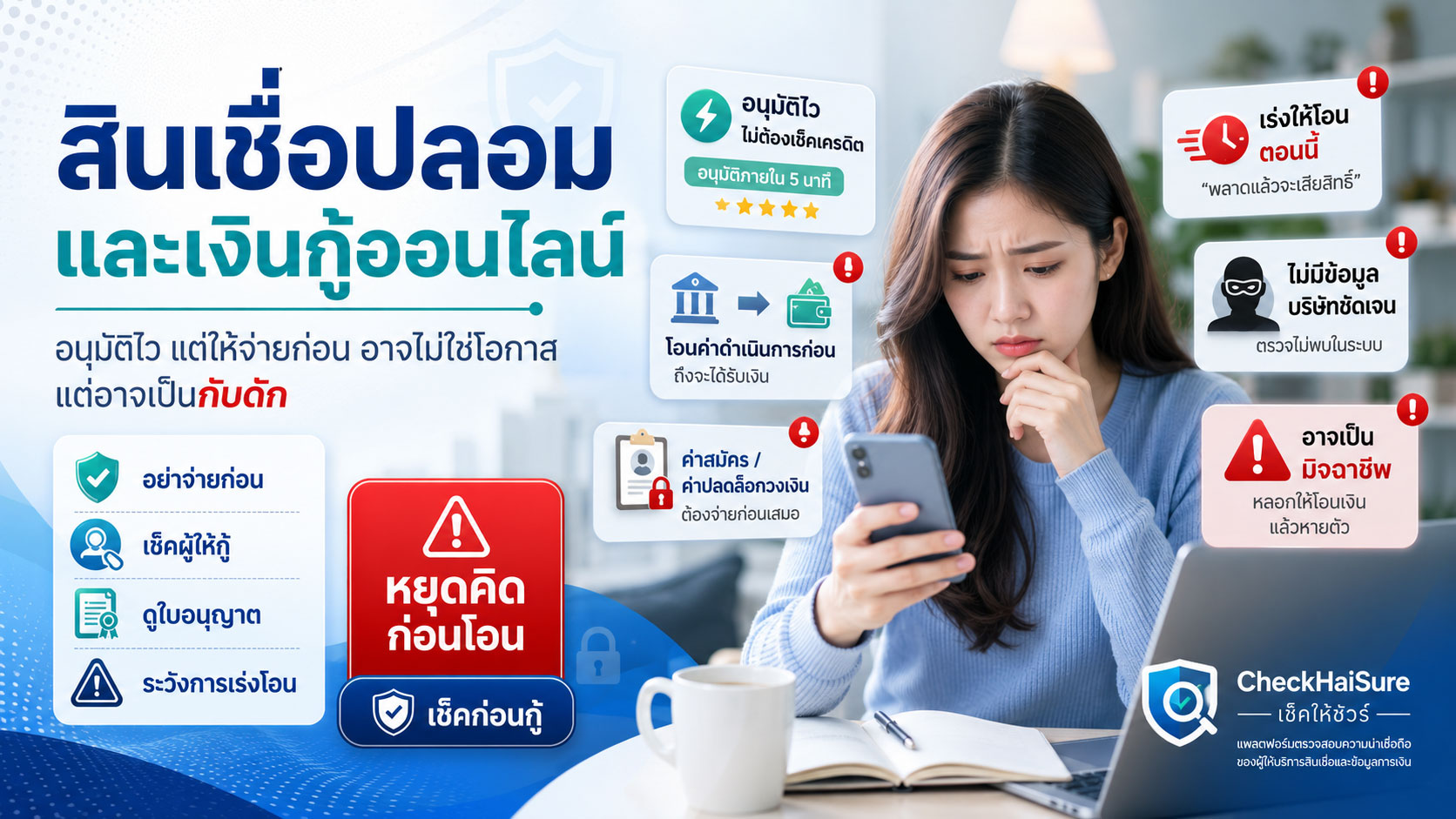
- เงินกู้อนุมัติไวแต่ต้องจ่ายค่าธรรมเนียมก่อน
- การลงทุนที่รับประกันกำไรแน่นอน
- ผลตอบแทนสูงในเวลาสั้นโดยไม่มีความเสี่ยง
ก่อนโอนเงิน ให้ถามตัวเองว่า:
ถ้าข้อเสนอนี้ดีจริง ทำไมอีกฝ่ายต้องเร่งให้เราโอนทันที และทำไมถึงไม่สามารถตรวจสอบได้อย่างโปร่งใส
หากข้อเสนอดูดีมากแต่ตรวจสอบยาก ควรหยุดก่อน
6. เช็คเพจ ร้านค้า หรือบัญชีโซเชียลให้มากกว่าจำนวนผู้ติดตาม
จำนวนผู้ติดตาม รูปรีวิว หรือโพสต์ที่ดูน่าเชื่อถือ อาจไม่เพียงพอในการยืนยันความปลอดภัย เพราะเพจอาจถูกสร้างใหม่ ซื้อบัญชีมา เปลี่ยนชื่อ หรือใช้รีวิวปลอมได้
สิ่งที่ควรตรวจสอบเพิ่มเติม:
- เพจเปิดมานานแค่ไหน
- เคยเปลี่ยนชื่อเพจหรือไม่
- มีประวัติการโพสต์ต่อเนื่องหรือไม่
- ความเห็นของลูกค้าดูเป็นธรรมชาติหรือไม่
- รีวิวมีรายละเอียดจริงหรือเป็นข้อความซ้ำ ๆ
- มีที่อยู่หรือข้อมูลติดต่อที่ตรวจสอบได้หรือไม่
- รูปสินค้าถูกนำมาจากร้านอื่นหรือไม่
- มีการตอบคำถามอย่างชัดเจนหรือหลีกเลี่ยงเมื่อถามรายละเอียด
- มีช่องทางชำระเงินที่คุ้มครองผู้ซื้อหรือไม่
หากเพจดูดีแต่ข้อมูลพื้นฐานตรวจสอบไม่ได้ ควรระวังเป็นพิเศษ
7. เช็คว่ามีการขอข้อมูลลับหรือไม่
ก่อนโอนเงินหรือระหว่างการทำธุรกรรม หากอีกฝ่ายขอข้อมูลลับ ถือเป็นสัญญาณอันตรายทันที
ข้อมูลที่ไม่ควรให้ใคร ได้แก่:
- รหัส OTP
- รหัสผ่าน
- PIN
- รหัสเข้าแอปธนาคาร
- เลขบัตรเครดิตเต็ม
- CVV หลังบัตร
- รหัสยืนยันตัวตน
- ข้อมูลเข้าสู่ระบบอีเมลหรือโซเชียลมีเดีย
ไม่มีเหตุผลที่ผู้ขายทั่วไป แอดมินเพจ บริษัทขนส่ง หรือเจ้าหน้าที่ที่ติดต่อผ่านแชทส่วนตัวจะต้องขอรหัสเหล่านี้จากท่าน
หากมีใครขอข้อมูลลับ ให้หยุดการติดต่อและตรวจสอบผ่านช่องทางทางการทันที
8. เช็กลิงก์และแอปก่อนกดหรือดาวน์โหลด
มิจฉาชีพบางรายไม่ได้เริ่มจากการขอให้โอนเงินทันที แต่อาจเริ่มจากการส่งลิงก์หรือแอปให้กดก่อน เพื่อหลอกเอาข้อมูลหรือควบคุมอุปกรณ์
ควรระวังหากลิงก์หรือแอปมีลักษณะดังนี้:
- ส่งมาจาก SMS หรือแชทที่ไม่รู้จัก
- โดเมนสะกดคล้ายเว็บไซต์จริงแต่ไม่ใช่เว็บทางการ
- ขอให้กรอกข้อมูลธนาคารหรือรหัสผ่าน
- ขอให้ติดตั้งแอปจากไฟล์ภายนอก
- ขอสิทธิ์เข้าถึงข้อความ หน้าจอ หรือ Accessibility
- อ้างว่าต้องกดเพื่อยืนยันตัวตน รับเงินคืน หรือแก้ปัญหาบัญชี
วิธีที่ปลอดภัยกว่าคือ เปิดเว็บไซต์หรือแอปทางการด้วยตนเอง และไม่ติดตั้งแอปจากลิงก์ที่ผู้อื่นส่งมาให้
9. เช็ควิธีชำระเงินว่ามีทางเลือกที่ปลอดภัยกว่าหรือไม่
หากเป็นไปได้ ควรเลือกวิธีชำระเงินที่มีหลักฐานและมีระบบคุ้มครองผู้ซื้อ มากกว่าการโอนเงินตรงเข้าบัญชีบุคคลที่ไม่รู้จัก
ทางเลือกที่ควรพิจารณา:
- ระบบชำระเงินของแพลตฟอร์มที่มีการคุ้มครองผู้ซื้อ
- เก็บเงินปลายทางเมื่อเหมาะสม
- นัดรับสินค้าในสถานที่ปลอดภัยสำหรับสินค้ามูลค่าสูง
- ชำระผ่านช่องทางทางการของร้านหรือบริษัท
- ขอใบเสนอราคา ใบเสร็จ หรือหลักฐานที่ตรวจสอบได้
- หลีกเลี่ยงการจ่ายเต็มจำนวนล่วงหน้าหากยังไม่มั่นใจ
หากอีกฝ่ายปฏิเสธทุกช่องทางที่ปลอดภัยกว่า และยืนยันให้โอนเข้าบัญชีส่วนตัวเท่านั้น ควรตรวจสอบเพิ่มก่อนตัดสินใจ
10. เช็คใจตัวเองก่อนกดยืนยัน
ก่อนกดยืนยันโอนเงิน ลองหยุดถามตัวเองสั้น ๆ ว่า:
- เรารู้จักผู้รับเงินจริงหรือไม่
- ชื่อบัญชีตรงกับสิ่งที่ตกลงกันหรือไม่
- เรามีหลักฐานเพียงพอหรือยัง
- อีกฝ่ายเร่งให้โอนผิดปกติหรือไม่
- ราคาหรือข้อเสนอดีเกินจริงหรือไม่
- เราค้นหาเลขบัญชี เบอร์โทร หรือชื่อร้านแล้วหรือยัง
- หากเงินจำนวนนี้ไม่ได้คืน เรารับความเสี่ยงได้หรือไม่
- เราได้ถามคนที่ไว้ใจแล้วหรือยัง
- มีทางเลือกที่ปลอดภัยกว่านี้หรือไม่
- ถ้ายังไม่มั่นใจ ทำไมต้องรีบโอนตอนนี้
คำถามเหล่านี้อาจดูเรียบง่าย แต่ช่วยให้เราได้หยุดคิดก่อนตัดสินใจในช่วงเวลาสำคัญ
หากยังไม่มั่นใจ อย่าเพิ่งโอน
การไม่โอนในตอนที่ยังไม่มั่นใจ ไม่ใช่การเสียโอกาสเสมอไป แต่อาจเป็นการป้องกันความเสียหาย
หากผู้ขายหรือผู้ติดต่อเป็นคนสุจริต เขาควรเข้าใจว่าผู้ซื้อหรือผู้ใช้งานมีสิทธิ์ตรวจสอบก่อนโอนเงิน โดยเฉพาะในยุคที่ภัยออนไลน์เกิดขึ้นได้ง่าย
หากอีกฝ่ายโกรธ กดดัน ข่มขู่ หรือทำให้รู้สึกผิดเพียงเพราะท่านขอเวลาตรวจสอบ นั่นอาจเป็นสัญญาณว่าควรระวังมากขึ้น
ถ้าโอนไปแล้วและเริ่มสงสัย ควรทำอย่างไร
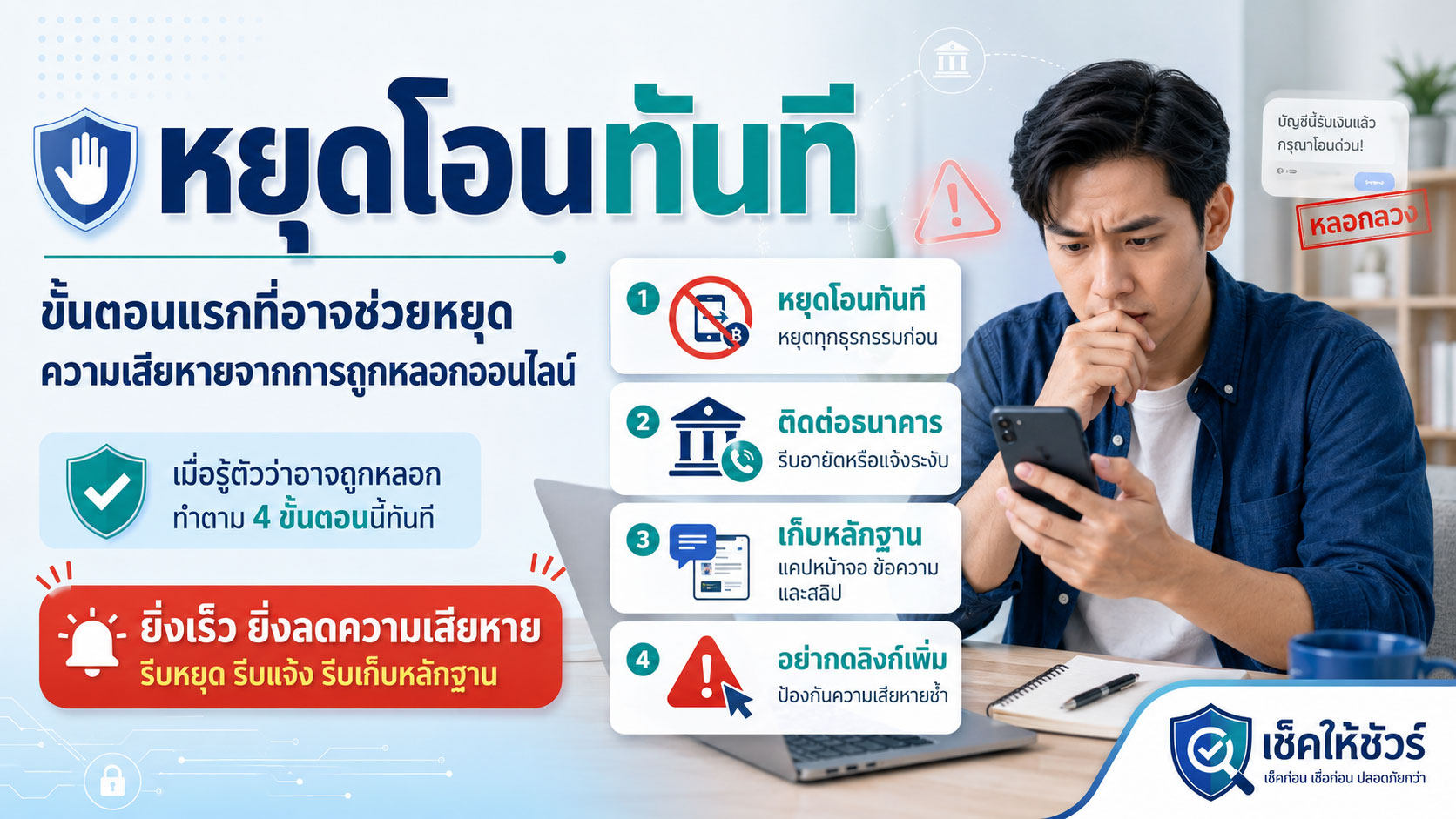
หากท่านโอนเงินไปแล้วและเริ่มสงสัยว่าถูกหลอก ควรรีบดำเนินการดังนี้:
- หยุดโอนเงินเพิ่มทันที
- เก็บสลิปโอนเงิน
- เก็บภาพหน้าจอแชทและลิงก์ที่เกี่ยวข้อง
- เก็บเลขบัญชี ชื่อบัญชี เบอร์โทร และช่องทางติดต่อของอีกฝ่าย
- ติดต่อธนาคารของท่านผ่านช่องทางทางการโดยเร็วที่สุด
- แจ้งความหรือแจ้งเหตุผ่านหน่วยงานที่เกี่ยวข้อง หากมีความเสียหาย
- เปลี่ยนรหัสผ่านหากเคยให้ข้อมูลหรือกดลิงก์
- แจ้งข้อมูลเข้ามายังเช็คให้ชัวร์เพื่อช่วยเตือนผู้อื่น
โดนโกงแล้วควรทำอย่างไร: โดนโกงแล้วควรทำอย่างไร
ช่องทางหน่วยงานที่เกี่ยวข้อง: ช่องทางหน่วยงานที่เกี่ยวข้อง
ใช้เช็คให้ชัวร์เป็นหนึ่งในขั้นตอนก่อนโอน
เช็คให้ชัวร์ถูกพัฒนาขึ้นเพื่อเป็นหนึ่งในเครื่องมือช่วยตรวจสอบข้อมูลต้องสงสัยเบื้องต้น เช่น เบอร์โทรศัพท์ เลขบัญชี ชื่อบัญชี ชื่อร้านค้า เพจ ลิงก์ หรือข้อความชักชวนที่อาจเกี่ยวข้องกับภัยออนไลน์
ก่อนโอนเงิน ท่านสามารถลองตรวจสอบข้อมูลที่มีอยู่ผ่านแพลตฟอร์มของเรา และอ่านบทความความรู้ที่เกี่ยวข้องเพื่อประกอบการตัดสินใจ
ตรวจสอบข้อมูลต้องสงสัย: ตรวจสอบข้อมูลต้องสงสัย
แจ้งข้อมูลต้องสงสัย: แจ้งข้อมูลต้องสงสัย
อย่างไรก็ตาม หากไม่พบข้อมูลในระบบ ไม่ได้หมายความว่าปลอดภัยแน่นอน เพราะข้อมูลใหม่อาจยังไม่เคยมีผู้แจ้งเข้ามา ผู้ใช้งานควรตรวจสอบจากหลายแหล่ง ใช้วิจารณญาณ และไม่โอนเงินหากยังมีข้อสงสัย
ข้อความสำคัญ
ข้อมูลในบทความนี้มีวัตถุประสงค์เพื่อให้ความรู้และเป็นแนวทางตรวจสอบเบื้องต้นก่อนโอนเงินเท่านั้น ไม่ถือเป็นคำแนะนำทางกฎหมาย การเงิน หรือการรับรองว่าบุคคล ร้านค้า องค์กร บัญชี หรือช่องทางใดปลอดภัยหรือไม่ปลอดภัยอย่างแน่นอน
เช็คให้ชัวร์ไม่ใช่หน่วยงานรัฐ ธนาคาร ตำรวจ ศาล หรือผู้ให้คำปรึกษาทางกฎหมายโดยตรง และไม่สามารถอายัดบัญชี ติดตามเงินคืน ดำเนินคดี หรือสั่งการแทนหน่วยงานที่มีอำนาจได้
หากท่านได้รับความเสียหายทางการเงินหรือพบเหตุอันควรสงสัยว่าเกี่ยวข้องกับอาชญากรรม กรุณาติดต่อธนาคารของท่านและหน่วยงานที่เกี่ยวข้องผ่านช่องทางทางการโดยเร็วที่สุด
เช็คให้ชัวร์ — ก่อนเชื่อ ก่อนโอน ก่อนแชร์
What Should You Check Before Transferring Money to Someone Online?
In an era where money can be transferred through a mobile banking app within seconds, financial transactions have become faster and more convenient than ever. We can buy products, book services, pay deposits, settle bills, and complete many types of transactions almost instantly.
However, this same speed is also used by scammers to pressure people into making quick decisions before they have enough time to verify the situation.
Many scam cases begin with simple messages such as “Ready to ship,” “Transfer now to reserve,” “This promotion ends today,” “You need to pay a fee first,” “Your account has a problem,” or “If you do not act now, you will lose this benefit.”
When someone is busy, afraid, excited by an opportunity, or trusting the other party too quickly, money may be transferred before proper checking is done.
CheckHaiSure created this article as a practical checklist for everyone before transferring money, especially when dealing with a person, shop, page, seller, agent, investment promoter, or online channel that you do not fully trust yet.
The goal is not to make people afraid of online payments. The goal is to help everyone build the habit of pausing before transferring money, because a few minutes of checking may help prevent serious damage later.
Why You Should Check Before Every Transfer
A money transfer is often the moment when risk becomes real damage. Once money has been transferred, recovering it may not be easy and may require procedures through banks, relevant organizations, or official authorities.
In many cases, scammers do not always use complicated methods. Instead, they use timing and emotion, such as:
- Pressuring you to act before the offer ends
- Making you afraid that a serious problem will happen
- Making you believe this is a special opportunity
- Making you feel guilty or uncomfortable saying no
- Making you believe that one more transfer will help recover your money
- Making you think that everyone else is doing the same thing
Before transferring money, especially to someone or a channel you are not familiar with, checking should be treated as a normal step, not a waste of time.
1. Check Whether You Really Know the Receiver
The first question before transferring money is: “How well do I really know the receiver?”
Sometimes we may only know a page name, shop name, profile photo, or chat account, but we may not actually know who is behind it, where they are located, or whether their identity can be verified.
Before transferring money, consider:
- Have you bought from or dealt with this person before?
- Is there verifiable contact information?
- Is there a clear shop address or business information?
- Is the contact channel truly official?
- Has anyone trustworthy confirmed this receiver’s reliability?
- If a problem happens, how can you contact them again?
If the answers are unclear, pause and check further. Do not transfer money only because the other party sounds convincing or sends evidence that cannot be properly verified.
2. Check Whether the Account Name Matches the Transaction
Before confirming a transfer, always look carefully at the receiving account name. The account name is one important clue that shows whether the receiver is connected to the transaction.
Examples to check:
- If you are buying from a shop, does the account name relate to the shop name?
- If you are buying from a company, is the account under a verifiable company name?
- If you are paying for a service, does the account name match the real service provider?
- If you are booking accommodation or a service, does the account match the official channel?
- If you are investing, is the account under a verifiable company?
Be extra careful if the other party says:
- The shop account is temporarily unavailable
- You should transfer to an admin’s account instead
- You should transfer to a relative’s or friend’s account
- You should transfer to a backup account
- The receiving account suddenly changed
- The account name is unrelated to the shop, page, or organization being claimed
A mismatched account name does not always mean fraud, but it is a warning sign that should be checked clearly before transferring money.
3. Search the Account Number, Phone Number, Shop Name, and Link Before Transferring
Before transferring money, search the information you already have, such as the bank account number, phone number, account name, shop name, page name, LINE ID, or website link.
Information worth searching includes:
- Bank account number
- Account name
- Phone number
- Shop name
- Facebook page name
- LINE ID
- Website URL
- Promotional or invitation message you received
- Related scam pattern
You can use general search engines, social media searches, or CheckHaiSure as one of your preliminary checking channels.
However, if no information is found, it does not mean the transaction is 100% safe. Scammers may use new accounts, new phone numbers, new pages, or new names regularly.
No search result should be understood as “not enough information yet,” not as “definitely safe.”
4. Check Whether the Other Party Is Pressuring You to Transfer Quickly
Urgency is one of the most common tools used by scammers. The less time a victim has to think, the more likely they are to make a mistake.
Be careful if you see messages like:
- “You must transfer now only.”
- “This is the last item.”
- “Other buyers are waiting.”
- “If you do not transfer within 10 minutes, you will lose the right.”
- “Transfer first, check later.”
- “Do not hang up.”
- “Do not tell anyone.”
- “If you do not act now, there will be a serious problem.”
- “Transfer just a little more and you can withdraw.”
An honest seller or service provider should allow you reasonable time to verify information. If the other party refuses to let you check or makes you feel forced to transfer immediately, treat it as a warning sign.
5. Check Whether the Price, Return, or Offer Is Too Good to Be True
Offers that look too good to be true are common traps because they make people afraid of missing an opportunity.
Examples to be careful with:
- Products priced far below market value
- Rare products available in large quantities
- Concert tickets or coupons at unusually low prices
- Online jobs with very high income and very easy tasks
- Fast loan approval that requires an upfront fee
- Investments with guaranteed profit
- High returns in a short time with no risk
Before transferring money, ask yourself:
If this offer is truly so good, why is the other party rushing me to transfer immediately, and why is it not easy to verify transparently?
If the offer looks very attractive but is difficult to verify, pause first.
6. Check Pages, Shops, or Social Accounts Beyond Follower Counts
Follower count, product photos, and reviews are not enough to confirm safety. Pages may be newly created, purchased, renamed, or filled with fake reviews.
Things to check include:
- How long has the page existed?
- Has the page changed its name before?
- Does the page have consistent posting history?
- Do customer comments look natural?
- Are reviews detailed, or do they look repetitive?
- Is there a verifiable address or contact information?
- Are product photos copied from another shop?
- Does the seller answer questions clearly or avoid details?
- Is there a buyer-protection payment option?
If a page looks professional but basic information cannot be verified, be extra careful.
7. Check Whether They Are Asking for Confidential Information
Before transferring money or during a transaction, if the other party asks for confidential information, treat it as a serious warning sign.
Information you should never share includes:
- OTP codes
- Passwords
- PINs
- Mobile banking login codes
- Full credit card numbers
- CVV codes
- Verification codes
- Email or social media login information
There is no normal reason for a seller, page admin, delivery company, or person contacting you through private chat to ask for these codes.
If anyone asks for confidential information, stop the conversation and verify through official channels immediately.
8. Check Links and Apps Before Clicking or Downloading
Some scams do not begin with a money request. They may begin with a link or app that is used to steal information or control your device.
Be careful if a link or app:
- Was sent by SMS or chat from someone you do not know
- Uses a domain that looks similar to a real website but is not official
- Asks for banking information or passwords
- Asks you to install an app from an external file
- Requests access to messages, screen control, or Accessibility permissions
- Claims you must click to verify identity, receive a refund, or fix an account problem
A safer practice is to open the official website or app yourself and avoid installing apps from links sent by others.
9. Check Whether There Is a Safer Payment Method
Where possible, choose payment methods that provide evidence and buyer protection, rather than transferring directly to a personal account you do not know.
Safer options may include:
- Payment systems on platforms with buyer protection
- Cash on delivery where appropriate
- Meeting in a safe public place for high-value items
- Payment through the official channel of the shop or company
- Requesting a quotation, receipt, or verifiable document
- Avoiding full upfront payment if you are not confident
If the other party refuses every safer method and insists only on a direct transfer to a personal account, check further before deciding.
10. Check Your Own Feeling Before Pressing Confirm
Before pressing confirm, pause and ask yourself:
- Do I really know the receiver?
- Does the account name match what was agreed?
- Do I have enough evidence?
- Is the other party rushing me unusually?
- Is the price or offer too good to be true?
- Have I searched the account number, phone number, or shop name?
- If I do not get this money back, can I accept the risk?
- Have I asked someone I trust?
- Is there a safer option?
- If I am not sure, why do I need to transfer now?
These questions may sound simple, but they can help you pause during an important decision.
If You Are Still Not Sure, Do Not Transfer Yet
Choosing not to transfer when you are unsure is not always a lost opportunity. It may be a way to protect yourself from damage.
If the seller or contact is honest, they should understand that buyers and users have the right to check before transferring money, especially in an era where online scams are common.
If the other party becomes angry, pressures you, threatens you, or makes you feel guilty simply because you ask for time to verify, that may be another warning sign.
If You Already Transferred and Start to Suspect a Scam
If you have already transferred money and begin to suspect that you may have been scammed, act quickly:
- Stop transferring more money immediately
- Keep the transfer slip
- Save chat screenshots and related links
- Save the account number, account name, phone number, and contact channel
- Contact your bank through official channels as soon as possible
- Report through relevant official channels if damage has occurred
- Change passwords if you shared information or clicked a suspicious link
- Submit information to CheckHaiSure to help warn others
What to do if scammed: What to do if scammed
Official resources and support channels: Official resources and support channels
Use CheckHaiSure as One Step Before Transferring
CheckHaiSure was developed as one of the tools to help people perform preliminary checks on suspicious information, such as phone numbers, bank account numbers, account names, shop names, pages, links, or suspicious messages related to online threats.
Before transferring money, you can try checking the information you have through our platform and read related educational articles to support your decision.
Check suspicious information: Check suspicious information
Report suspicious information: Report suspicious information
However, if no information is found in the system, it does not mean the transaction is definitely safe. New information may not have been reported yet. Users should verify through multiple sources, use careful judgment, and avoid transferring money if any doubt remains.
Important Notice
The information in this article is intended for education and preliminary checking guidance before transferring money only. It is not legal advice, financial advice, or a guarantee that any person, shop, organization, account, or channel is definitely safe or unsafe.
CheckHaiSure is not a government agency, bank, police authority, court, or direct legal advisory service. We cannot freeze accounts, recover money, conduct legal proceedings, or act on behalf of authorized agencies.
If you have suffered financial loss or suspect criminal activity, please contact your bank and the relevant official authorities through official channels as soon as possible.
CheckHaiSure — Check before you trust, transfer, or share.
Leave a Reply
You must be logged in to post a comment.