
ภัยออนไลน์ไม่ได้เกิดขึ้นกับคนกลุ่มใดกลุ่มหนึ่งเท่านั้น เด็กที่เริ่มใช้มือถือ ผู้สูงอายุที่ใช้แอปธนาคาร คนทำงานที่รับข้อความจากลูกค้า เจ้าของร้านที่ขายของผ่านโซเชียล หรือสมาชิกครอบครัวที่ใช้ LINE, Facebook, TikTok, SMS และแอปต่าง ๆ ในชีวิตประจำวัน ล้วนมีโอกาสพบความเสี่ยงได้ทั้งสิ้น
หลายครั้งเมื่อเกิดเหตุแล้ว เรามักตั้งคำถามว่า “ทำไมถึงเชื่อ”, “ทำไมถึงโอน”, “ทำไมไม่ถามก่อน” แต่ในความเป็นจริง ผู้ที่ถูกหลอกจำนวนมากไม่ได้ขาดความระมัดระวังเสมอไป เพียงแต่เขาอาจอยู่ในช่วงเวลาที่ถูกเร่ง ถูกทำให้กลัว ถูกทำให้สงสาร หรือถูกทำให้เชื่อว่าเรื่องนั้นเป็นเรื่องจริงและต้องรีบตัดสินใจ
สิ่งสำคัญจึงไม่ใช่การรอให้เกิดเหตุแล้วค่อยตำหนิกัน แต่คือการสร้างบรรยากาศในครอบครัวที่ทุกคนสามารถถาม เตือน และขอความช่วยเหลือได้โดยไม่รู้สึกอายหรือกลัวถูกดุ
เช็คให้ชัวร์ เชื่อว่า “ครอบครัวปลอดภัยออนไลน์” ไม่ได้เริ่มจากการติดตั้งแอปใดแอปหนึ่งเท่านั้น แต่เริ่มจากการสร้างนิสัยร่วมกันในบ้านว่า ก่อนเชื่อ ก่อนโอน ก่อนกดลิงก์ หรือก่อนให้ข้อมูลส่วนตัว เราควรหยุดคิดและตรวจสอบให้ชัวร์ก่อนเสมอ
ทำไมความปลอดภัยออนไลน์ควรเป็นเรื่องของทั้งครอบครัว
ในชีวิตจริง สมาชิกแต่ละคนในครอบครัวมีรูปแบบการใช้อินเทอร์เน็ตต่างกัน
เด็กอาจเจอลิงก์เกมปลอม ของรางวัลปลอม หรือคนแปลกหน้าทักมาในแชท
วัยรุ่นอาจเจอหลอกซื้อขายออนไลน์ งานเสริมปลอม หรือบัญชีโซเชียลปลอม
คนทำงานอาจเจออีเมลปลอม ลิงก์ปลอม แอบอ้างเป็นบริษัทหรือหน่วยงาน
ผู้สูงอายุอาจเจอโทรศัพท์แอบอ้างเป็นเจ้าหน้าที่ ธนาคาร ขนส่ง หรือคนรู้จัก
เจ้าของร้านหรือคนค้าขายออนไลน์อาจเจอหลอกโอนเงิน หลอกส่งสลิป หรือหลอกให้กดลิงก์รับเงิน
แม้ความเสี่ยงจะแตกต่างกัน แต่สิ่งที่เหมือนกันคือ มิจฉาชีพมักใช้ “จังหวะที่เราไม่ทันตั้งตัว” เป็นช่องทางในการหลอกลวง
หากครอบครัวมีวัฒนธรรมการเตือนกันอย่างสุภาพ มีข้อตกลงร่วมกัน และมีช่องทางให้ถามกันได้ง่าย ความเสียหายหลายอย่างอาจหยุดได้ตั้งแต่ก่อนเริ่มต้น
อย่ารอให้โดนหลอกก่อนแล้วค่อยคุยกัน
หลายครอบครัวเริ่มพูดเรื่องภัยออนไลน์หลังจากมีคนใดคนหนึ่งถูกหลอกแล้ว ซึ่งมักเป็นช่วงเวลาที่เต็มไปด้วยความเครียด ความเสียใจ และความกังวล
แต่การคุยกันล่วงหน้าจะช่วยได้มากกว่า เพราะเมื่อทุกคนรู้กติกาพื้นฐานร่วมกันแล้ว หากเกิดเหตุจริง สมาชิกในครอบครัวจะรู้ว่าควรทำอย่างไรและควรบอกใครก่อน
ตัวอย่างเรื่องที่ควรคุยกันล่วงหน้า ได้แก่
- ถ้ามีคนโทรมาอ้างเป็นเจ้าหน้าที่และให้โอนเงิน ต้องวางสายก่อน
- ถ้ามี SMS ส่งลิงก์มาให้กด ต้องอย่ากดทันที
- ถ้ามีใครขอ OTP รหัสผ่าน หรือ PIN ต้องไม่ให้เด็ดขาด
- ถ้ามีร้านค้าออนไลน์เร่งให้โอนเงิน ต้องตรวจสอบก่อน
- ถ้ามีใครส่งแอปให้ติดตั้งนอกช่องทางทางการ ต้องหยุดก่อน
- ถ้ามีคนอ้างว่าเป็นคนรู้จักแล้วขอยืมเงิน ต้องโทรเช็กกับเจ้าตัวจริง
- ถ้าเผลอโอนไปแล้วหรือกดลิงก์ไปแล้ว ต้องรีบบอก ไม่ต้องอาย
การคุยเรื่องเหล่านี้ไม่จำเป็นต้องเป็นการประชุมจริงจัง อาจเริ่มจากการเล่าเคสข่าว แชร์บทความ หรือถามกันสั้น ๆ ว่า “ถ้าเจอแบบนี้ เราควรทำอย่างไร”
กฎพื้นฐาน 5 ข้อที่ทุกบ้านควรมี
เพื่อให้จำง่าย ครอบครัวอาจตั้งกฎร่วมกันเป็นหลักสั้น ๆ ที่ใช้ได้กับทุกวัย
1. ไม่ให้รหัสลับกับใคร
รหัส OTP รหัสผ่าน PIN รหัสเข้าแอปธนาคาร หรือรหัสยืนยันตัวตน เป็นข้อมูลที่ไม่ควรบอกใคร ไม่ว่าจะเป็นคนที่อ้างว่าเป็นธนาคาร เจ้าหน้าที่ บริษัทขนส่ง แอดมินเพจ หรือคนรู้จัก
ประโยคที่ควรจำร่วมกันคือ
“รหัสลับมีไว้ใช้เอง ไม่ได้มีไว้บอกคนอื่น”
หากมีใครขอรหัสเหล่านี้ ให้ถือเป็นสัญญาณอันตรายและหยุดทันที
2. ไม่กดลิงก์ที่ไม่มั่นใจ
ลิงก์จาก SMS แชท อีเมล หรือโพสต์โซเชียล อาจดูเหมือนเว็บไซต์จริง แต่พาไปยังเว็บปลอมที่หลอกให้กรอกข้อมูลหรือดาวน์โหลดแอปอันตรายได้
กฎง่าย ๆ คือ หากเป็นเรื่องธนาคาร ขนส่ง หน่วยงานรัฐ หรือบริการสำคัญ ให้เปิดแอปหรือเว็บไซต์ทางการด้วยตนเอง ไม่กดจากลิงก์ที่ผู้อื่นส่งมา
3. ไม่โอนเงินเพราะถูกเร่งหรือขู่
มิจฉาชีพมักใช้ความเร่งด่วน เช่น “ต้องโอนตอนนี้”, “ห้ามวางสาย”, “ถ้าไม่ทำจะมีคดี”, “ถ้าไม่จ่ายจะเสียสิทธิ์”, หรือ “โอนอีกนิดเดียวก็ได้เงินคืน”
ครอบครัวควรตกลงกันว่า หากมีใครถูกเร่งให้โอนเงิน ต้องหยุดก่อนอย่างน้อยหนึ่งขั้นตอน และถามคนในบ้านหรือคนที่ไว้ใจก่อนเสมอ
4. ไม่ติดตั้งแอปจากลิงก์แปลก ๆ
แอปบางประเภทอาจขอสิทธิ์เข้าถึงหน้าจอ ข้อความ หรือการควบคุมอุปกรณ์ หากติดตั้งจากลิงก์ที่ผู้อื่นส่งมา อาจทำให้บัญชีและข้อมูลในเครื่องไม่ปลอดภัย
ควรใช้เฉพาะแอปจาก App Store, Google Play หรือช่องทางทางการของผู้ให้บริการจริงเท่านั้น
5. ไม่อายที่จะบอกเมื่อสงสัยหรือพลาด
ข้อนี้สำคัญมาก เพราะหลายคนไม่กล้าบอกครอบครัวเมื่อเริ่มสงสัยว่าถูกหลอก เนื่องจากกลัวถูกดุ ถูกตำหนิ หรือถูกมองว่าไม่ระวัง
ครอบครัวควรสร้างความมั่นใจให้กันว่า หากมีอะไรผิดปกติ ให้รีบบอกทันที เพราะยิ่งบอกเร็ว ยิ่งมีโอกาสหยุดความเสียหายได้เร็ว
ประโยคที่ควรใช้ในครอบครัวคือ
“ถ้าสงสัย ให้บอกก่อน ไม่ต้องกลัวโดนดุ”
วิธีสอนเด็กให้ปลอดภัยออนไลน์โดยไม่ทำให้กลัว
เด็กและวัยรุ่นเติบโตมากับโลกดิจิทัล การห้ามใช้อินเทอร์เน็ตอย่างเดียวอาจไม่ใช่คำตอบ แต่ควรสอนให้เข้าใจความเสี่ยงและรู้จักขอความช่วยเหลือเมื่อเจอสิ่งผิดปกติ
เรื่องที่ควรสอนเด็ก ได้แก่
- อย่าคุยกับคนแปลกหน้าที่ถามข้อมูลส่วนตัว
- อย่าส่งรูปส่วนตัวหรือข้อมูลครอบครัวให้คนที่รู้จักออนไลน์
- อย่ากดลิงก์รับของรางวัล เกมฟรี หรือเหรียญฟรีโดยไม่ถามผู้ปกครอง
- อย่าให้รหัสเกม รหัสอีเมล หรือรหัสโซเชียลกับใคร
- ถ้ามีคนทำให้รู้สึกกลัว อึดอัด หรือบอกให้เก็บเป็นความลับ ต้องรีบบอกผู้ใหญ่
- ถ้าเผลอกดอะไรไปแล้ว ให้รีบบอก ไม่ต้องกลัว
ผู้ใหญ่ควรหลีกเลี่ยงการดุทันทีเมื่อเด็กเล่าเรื่องผิดพลาด เพราะหากเด็กกลัว เขาอาจเลือกปิดบังในครั้งต่อไป ซึ่งทำให้ความเสี่ยงมากขึ้น
วิธีช่วยผู้สูงอายุให้รู้ทันภัยออนไลน์
ผู้สูงอายุจำนวนมากใช้สมาร์ตโฟน แอปธนาคาร และโซเชียลมีเดียมากขึ้น แต่บางท่านอาจไม่คุ้นกับรูปแบบการหลอกลวงที่เปลี่ยนไปอย่างรวดเร็ว
การช่วยผู้สูงอายุไม่ควรใช้วิธีตำหนิว่า “ทำไมไม่รู้” แต่ควรใช้วิธีอธิบายซ้ำ ๆ อย่างใจเย็น และทำให้เขารู้ว่าหากสงสัยสามารถถามได้เสมอ
เรื่องที่ควรย้ำกับผู้สูงอายุ ได้แก่
- เจ้าหน้าที่จริงไม่ควรขอ OTP หรือรหัสผ่าน
- ธนาคารไม่ควรโทรมาสั่งให้โอนเงินไปตรวจสอบ
- ถ้ามีคนโทรมาข่มขู่ ให้กดวางแล้วโทรถามลูกหลานหรือธนาคารเอง
- อย่ากดลิงก์จาก SMS เรื่องพัสดุ เงินคืน หรือบัญชีมีปัญหา
- อย่าติดตั้งแอปตามคำสั่งคนที่โทรมา
- หากมีคนอ้างเป็นญาติหรือคนรู้จักมาขอยืมเงิน ให้โทรหาเบอร์เดิมของญาติคนนั้นก่อน
อาจช่วยตั้งค่ามือถือให้ปลอดภัยขึ้น เช่น เปิดการล็อกหน้าจอ ตั้งค่าการยืนยันตัวตน เพิ่มเบอร์ฉุกเฉินของคนในครอบครัว และสอนให้รู้จักตรวจสอบแอปที่ติดตั้ง
วิธีรับมือเมื่อคนในครอบครัวอาจกำลังถูกหลอก
หากสงสัยว่าคนในครอบครัวกำลังตกอยู่ในสถานการณ์เสี่ยง เช่น คุยกับคนแปลกหน้าที่ขอเงิน ถูกชักชวนลงทุน ถูกหลอกให้ติดตั้งแอป หรือกำลังจะโอนเงินให้บัญชีที่ไม่น่าไว้ใจ ควรเริ่มจากการคุยด้วยความเข้าใจ
อย่าเริ่มด้วยคำว่า “โดนหลอกแล้วแน่ ๆ” หรือ “ทำไมถึงเชื่อ” เพราะอาจทำให้อีกฝ่ายปิดใจและไม่เล่ารายละเอียดต่อ
วิธีที่ดีกว่าคือถามอย่างใจเย็น เช่น
- เขาขอให้ทำอะไรบ้าง
- รู้จักคนนี้จากช่องทางไหน
- เคยวิดีโอคอลหรือพบตัวจริงหรือยัง
- ทำไมต้องโอนเงินตอนนี้
- ชื่อบัญชีรับเงินตรงกับคนที่ติดต่อมาหรือไม่
- ลองหยุดก่อนสักครู่แล้วช่วยกันตรวจสอบได้ไหม
เป้าหมายคือทำให้อีกฝ่ายรู้สึกว่ามีคนช่วย ไม่ใช่มีคนตัดสินเขา
หากคนในครอบครัวโอนเงินไปแล้ว ควรทำอย่างไร
หากเกิดเหตุแล้ว สิ่งสำคัญคือหยุดความเสียหายและจัดการอย่างเป็นขั้นตอน ไม่ใช่เริ่มจากการตำหนิ
แนวทางเบื้องต้น ได้แก่
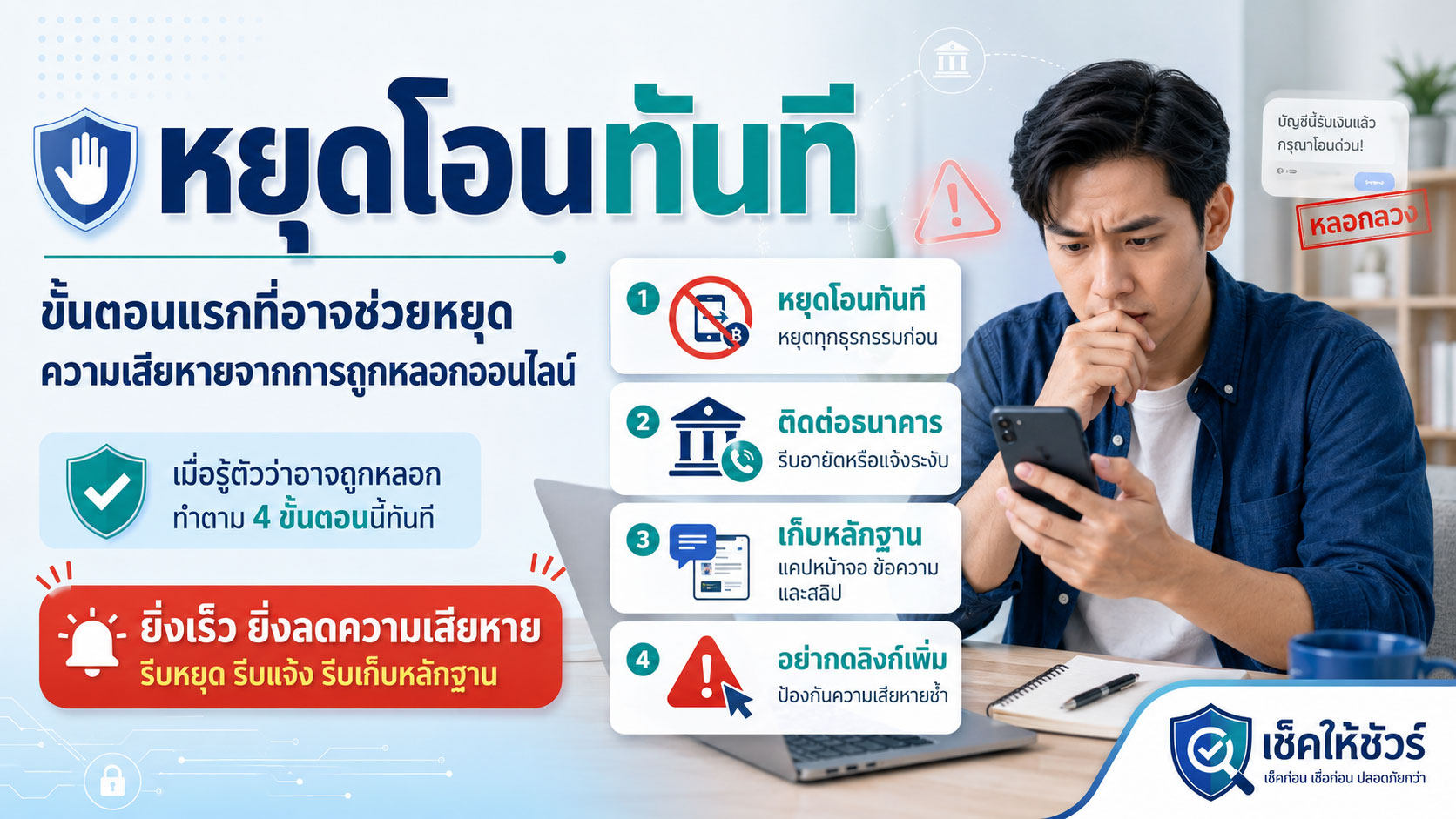
- หยุดโอนเงินเพิ่มทันที
- เก็บสลิปโอนเงิน
- เก็บภาพหน้าจอแชท เบอร์โทร ลิงก์ เพจ หรือโปรไฟล์ที่เกี่ยวข้อง
- บันทึกวัน เวลา จำนวนเงิน และรายละเอียดเหตุการณ์
- ติดต่อธนาคารผ่านช่องทางทางการโดยเร็ว
- เปลี่ยนรหัสผ่านบัญชีสำคัญ หากมีการให้ข้อมูลหรือกดลิงก์
- ตรวจสอบโทรศัพท์ หากเคยติดตั้งแอปต้องสงสัย
- แจ้งเหตุผ่านช่องทางทางการ หากมีความเสียหาย
- แจ้งข้อมูลต้องสงสัยเพื่อช่วยเตือนผู้อื่น หากเห็นว่าเป็นประโยชน์
โดนโกงแล้วควรทำอย่างไร: [ใส่ลิงก์หน้า What To Do If Scammed]
ช่องทางหน่วยงานที่เกี่ยวข้อง: [ใส่ลิงก์หน้า Official Resources]
ในช่วงนี้ คำพูดของคนในครอบครัวมีผลมาก ควรใช้ถ้อยคำที่ช่วยให้ผู้เสียหายตั้งสติ เช่น “เดี๋ยวเราช่วยกันดูทีละขั้น”, “ตอนนี้หยุดโอนก่อน”, “เก็บหลักฐานไว้”, หรือ “ยังมีขั้นตอนที่เราทำได้”
สร้างกลุ่มครอบครัวให้เป็นพื้นที่เตือนภัย
หลายครอบครัวมีกรุ๊ป LINE หรือช่องทางสื่อสารร่วมกันอยู่แล้ว สามารถใช้พื้นที่นั้นเป็นช่องทางเตือนภัยออนไลน์ได้อย่างมีประโยชน์
แนวทางที่ทำได้ง่าย เช่น
- แชร์ข่าวเตือนภัยที่มาจากแหล่งน่าเชื่อถือ
- แชร์บทความความรู้แบบอ่านง่าย
- เตือนเมื่อมี SMS หรือลิงก์แปลก ๆ ระบาด
- ช่วยกันตรวจสอบเบอร์โทรหรือเลขบัญชีที่สงสัย
- ตั้งข้อตกลงว่า หากใครจะโอนเงินให้คนไม่รู้จัก ควรถามในกลุ่มก่อน
- ส่งข้อความเตือนสั้น ๆ เป็นระยะ เช่น “อย่าให้ OTP กับใคร” หรือ “ก่อนโอนเงินให้คนแปลกหน้า ถามกันก่อน”
การเตือนกันบ่อย ๆ อย่างเป็นมิตร จะช่วยให้เรื่องความปลอดภัยออนไลน์กลายเป็นนิสัยของบ้าน ไม่ใช่เรื่องที่ถูกพูดถึงเฉพาะหลังเกิดปัญหา
ความปลอดภัยออนไลน์ไม่ใช่เรื่องของคนเก่งเทคโนโลยีเท่านั้น
หลายคนคิดว่าการป้องกันภัยออนไลน์ต้องใช้ความรู้ด้านเทคนิคสูง แต่ความจริงแล้วหลายเหตุการณ์สามารถป้องกันได้ด้วยหลักง่าย ๆ เช่น ไม่รีบเชื่อ ไม่รีบโอน ไม่ให้รหัสลับ ไม่กดลิงก์ทันที และถามคนที่ไว้ใจก่อนตัดสินใจ
คนในครอบครัวไม่จำเป็นต้องรู้ทุกกลโกงอย่างละเอียด แต่ควรมีหลักคิดร่วมกันว่า
ถ้าเรื่องใดทำให้เราต้องรีบ กลัว สงสาร โลภ หรือไม่กล้าถามใคร เรื่องนั้นควรหยุดตรวจสอบก่อน
หลักคิดนี้ใช้ได้กับหลายสถานการณ์ ไม่ว่าจะเป็นคอลเซ็นเตอร์ ลิงก์ปลอม ร้านค้าออนไลน์ หลอกลงทุน หลอกกู้เงิน Romance Scam หรือการหลอกบริจาค
ใช้เช็คให้ชัวร์เป็นเครื่องมือช่วยครอบครัวตรวจสอบ
ก่อนโอนเงิน กดลิงก์ หรือเชื่อข้อมูลจากบุคคลที่ยังไม่มั่นใจ สมาชิกในครอบครัวสามารถใช้เช็คให้ชัวร์เป็นหนึ่งในขั้นตอนช่วยตรวจสอบเบื้องต้น เช่น
- ค้นหาเบอร์โทรต้องสงสัย
- ค้นหาเลขบัญชีหรือชื่อบัญชี
- ค้นหาชื่อร้าน เพจ หรือลิงก์
- อ่านบทความเกี่ยวกับภัยออนไลน์รูปแบบต่าง ๆ
- แจ้งข้อมูลต้องสงสัยอย่างสุจริตเพื่อช่วยเตือนผู้อื่น
ตรวจสอบข้อมูลต้องสงสัย: [ใส่ลิงก์หน้า Check/Search]
แจ้งข้อมูลต้องสงสัย: [ใส่ลิงก์หน้า Report Scam]
อย่างไรก็ตาม หากไม่พบข้อมูลในระบบ ไม่ได้หมายความว่าปลอดภัยแน่นอน เพราะข้อมูลใหม่อาจยังไม่เคยมีผู้แจ้งเข้ามา ผู้ใช้งานควรตรวจสอบจากหลายแหล่ง ใช้วิจารณญาณ และพูดคุยกับคนที่ไว้ใจก่อนตัดสินใจเรื่องสำคัญ
ครอบครัวที่ปลอดภัย เริ่มจากการไม่ปล่อยให้ใครต้องรับมือคนเดียว
ภัยออนไลน์อาจเปลี่ยนรูปแบบไปเรื่อย ๆ แต่มนุษย์ยังต้องการสิ่งเดิมเสมอ คือความเข้าใจ ความช่วยเหลือ และพื้นที่ที่สามารถพูดความจริงได้โดยไม่ถูกซ้ำเติม
หากครอบครัวสามารถสร้างวัฒนธรรมที่ทุกคนกล้าถาม กล้าเตือน และกล้าบอกเมื่อพลาด ความเสียหายหลายอย่างอาจลดลงได้
การป้องกันภัยออนไลน์จึงไม่ใช่หน้าที่ของคนใดคนหนึ่ง แต่เป็นความร่วมมือของทั้งบ้าน
บางครั้งการถามกันเพียงประโยคเดียวว่า
“อันนี้เช็คให้ชัวร์หรือยัง”
อาจช่วยหยุดความเสียหายได้มากกว่าที่เราคิด
ข้อความสำคัญ
ข้อมูลในบทความนี้มีวัตถุประสงค์เพื่อให้ความรู้และสร้างความตระหนักเกี่ยวกับความปลอดภัยออนไลน์ในครอบครัวเบื้องต้นเท่านั้น ไม่ถือเป็นคำแนะนำทางกฎหมาย การเงิน หรือความปลอดภัยไซเบอร์เฉพาะกรณี
เช็คให้ชัวร์ไม่ใช่หน่วยงานรัฐ ธนาคาร ตำรวจ ศาล หรือผู้ให้คำปรึกษาทางกฎหมายโดยตรง และไม่สามารถอายัดบัญชี ติดตามเงินคืน ดำเนินคดี หรือสั่งการแทนหน่วยงานที่มีอำนาจได้
หากท่านหรือคนในครอบครัวได้รับความเสียหายทางการเงิน หรือพบเหตุอันควรสงสัยว่าเกี่ยวข้องกับอาชญากรรม กรุณาติดต่อธนาคารของท่านและหน่วยงานที่เกี่ยวข้องผ่านช่องทางทางการโดยเร็วที่สุด
เช็คให้ชัวร์ — ก่อนเชื่อ ก่อนโอน ก่อนแชร์
Family Online Safety: It Starts with Talking Before Damage Happens
Online threats do not affect only one group of people. Children who are beginning to use smartphones, elderly family members using mobile banking apps, working adults receiving messages from customers, online shop owners selling through social media, and family members using LINE, Facebook, TikTok, SMS, and other apps in daily life can all face digital risks.
Many times, after something goes wrong, people ask, “Why did you believe it?”, “Why did you transfer money?”, or “Why didn’t you ask first?” But in reality, many victims are not careless. They may simply be placed under pressure, frightened, rushed, emotionally affected, or made to believe that the situation is real and requires quick action.
That is why the most important thing is not to wait until damage happens and then blame one another. It is to create a family environment where everyone feels safe to ask, warn, and seek help without shame or fear of being scolded.
CheckHaiSure believes that “family online safety” does not start only with installing an app. It starts with building a shared habit at home: before trusting, transferring money, clicking a link, or sharing personal information, we should pause and check carefully first.
Why Online Safety Should Be a Family Matter
In real life, each family member uses the internet differently.
Children may encounter fake game links, fake rewards, or strangers in online chats.
Teenagers may face online shopping scams, fake side jobs, or fake social media accounts.
Working adults may receive fake emails, fake links, or messages impersonating companies or organizations.
Elderly people may receive calls pretending to be from officers, banks, delivery companies, or people they know.
Shop owners or online sellers may face fake payment slips, suspicious transfer claims, or fake links asking them to receive money.
The risks may be different, but one thing is often the same: scammers usually take advantage of moments when we are unprepared.
If a family has a culture of kindly warning each other, simple shared rules, and an easy way to ask for help, many losses may be stopped before they begin.
Do Not Wait Until Someone Gets Scammed Before Talking About It
Many families only start talking about online scams after someone has already been scammed. By then, the situation may already involve stress, regret, fear, and financial damage.
Talking in advance can help much more. When everyone already understands basic safety rules, family members will know what to do and who to tell first if something suspicious happens.
Topics worth discussing in advance include:
- If someone calls pretending to be an officer and asks for money, hang up first.
- If an SMS sends a link, do not click immediately.
- If anyone asks for an OTP, password, or PIN, never share it.
- If an online shop pressures you to transfer money quickly, check first.
- If someone asks you to install an app outside official channels, pause first.
- If someone claims to be a friend or relative and asks to borrow money, call that person directly through their usual number.
- If you already transferred money or clicked a link, tell the family quickly and do not feel ashamed.
These conversations do not need to be formal. They can begin with sharing a news case, reading an article together, or asking a simple question: “If this happened to us, what should we do?”
5 Basic Rules Every Family Should Have
To make online safety easy to remember, families can agree on a few simple rules that work for all ages.
1. Never Share Secret Codes with Anyone
OTP codes, passwords, PINs, mobile banking login codes, and verification codes should never be shared with anyone, whether that person claims to be a bank officer, government officer, delivery company, page admin, or someone you know.
A sentence every family should remember is:
“Secret codes are for personal use, not for sharing with others.”
If anyone asks for these codes, treat it as a warning sign and stop immediately.
2. Do Not Click Links You Are Unsure About
Links from SMS, chat messages, emails, or social media posts may look like real websites but may lead to fake pages that steal information or trick users into downloading dangerous apps.
A simple rule is: if it involves banking, delivery, government services, or important accounts, open the official app or website yourself instead of clicking a link sent by someone else.
3. Do Not Transfer Money Because You Are Rushed or Threatened
Scammers often use urgency, such as “You must transfer now,” “Do not hang up,” “If you do not act, you will face a legal case,” “If you do not pay, you will lose your right,” or “Transfer just a little more and you will get your money back.”
Families should agree that if anyone is pressured to transfer money, they must pause first and ask someone at home or someone they trust before taking action.
4. Do Not Install Apps from Strange Links
Some apps may request access to the screen, messages, or device control. If installed from a link sent by someone else, the app may put accounts and information on the device at risk.
Use only apps from the App Store, Google Play, or verified official channels of the service provider.
5. Do Not Feel Ashamed to Speak Up When Something Feels Wrong
This rule is extremely important. Many people do not tell their family when they begin to suspect they have been scammed because they are afraid of being blamed, scolded, or judged.
Families should reassure one another that if something seems wrong, it is better to speak up quickly. The earlier someone tells the family, the better the chance of reducing further damage.
A helpful family phrase is:
“If you are unsure, tell us first. You do not need to be afraid of being scolded.”
How to Teach Children Online Safety Without Making Them Afraid
Children and teenagers grow up with the digital world. Simply banning them from the internet may not be the answer. It is better to teach them how to recognize risks and ask for help when something feels wrong.
Topics to teach children include:
- Do not talk to strangers who ask for personal information.
- Do not send personal photos or family information to people known only online.
- Do not click links claiming free rewards, free games, or free coins without asking a parent or guardian.
- Do not share game passwords, email passwords, or social media passwords.
- If someone makes them feel scared, uncomfortable, or asks them to keep something secret, they should tell an adult immediately.
- If they accidentally click something, they should speak up quickly and not be afraid.
Adults should avoid scolding children immediately when they admit a mistake. If children feel afraid, they may hide the situation next time, which can make the risk worse.
How to Help Elderly Family Members Stay Safe Online
Many elderly people now use smartphones, mobile banking, and social media more than before. However, they may not be familiar with scam patterns that change quickly.
Helping elderly family members should not involve blaming them for “not knowing.” It should involve patient explanation, repeated reminders, and reassurance that they can always ask for help.
Important reminders for elderly users include:
- Real officers should not ask for OTPs or passwords.
- Banks should not call and order customers to transfer money for verification.
- If someone calls and threatens them, they should hang up and call family members or the bank directly.
- Do not click SMS links about parcels, refunds, or account problems.
- Do not install apps according to instructions from someone who calls.
- If someone claims to be a relative or friend asking to borrow money, call that person’s usual number first.
Families can also help make devices safer by enabling screen locks, setting up authentication, adding emergency family contacts, and teaching elderly users how to check installed apps.
How to Respond When a Family Member May Be Getting Scammed
If you suspect that a family member is in a risky situation, such as talking to a stranger who asks for money, being invited into a suspicious investment, being told to install an app, or preparing to transfer money to an untrusted account, start with understanding.
Do not begin with “You are definitely being scammed” or “Why would you believe this?” because the person may become defensive and stop sharing details.
A better approach is to ask calmly:
- What are they asking you to do?
- Where did you meet this person?
- Have you had a video call or met in real life?
- Why must the money be transferred now?
- Does the receiving account name match the person or organization contacting you?
- Can we pause for a moment and check together?
The goal is to help the person feel supported, not judged.
If a Family Member Has Already Transferred Money
If damage has already occurred, the priority is to stop further loss and take action step by step, not to start by blaming the person.
Initial steps include:
- Stop transferring more money immediately.
- Keep transfer slips.
- Save screenshots of chats, phone numbers, links, pages, or related profiles.
- Record the date, time, amount, and incident details.
- Contact the bank through official channels as soon as possible.
- Change important passwords if any information was shared or a suspicious link was clicked.
- Check the phone if a suspicious app was installed.
- Report through official channels if damage occurred.
- Submit suspicious information to help warn others, if appropriate.
What to do if scammed: [Insert What To Do If Scammed page link]
Official resources and support channels: [Insert Official Resources page link]
During this period, family words matter a lot. Use supportive phrases such as “Let’s handle this step by step,” “Stop transferring first,” “Save the evidence,” or “There are still actions we can take.”
Turn the Family Chat Group into a Warning Space
Many families already have a LINE group or another shared communication channel. This space can be used as a helpful online safety alert channel.
Simple ways to use it include:
- Sharing scam alerts from reliable sources
- Sharing easy-to-read educational articles
- Warning each other when suspicious SMS messages or fake links spread
- Helping check suspicious phone numbers or bank account numbers
- Agreeing that anyone planning to transfer money to an unfamiliar person should ask the group first
- Sending short reminders from time to time, such as “Never share OTPs” or “Before transferring to a stranger, ask the family first”
Friendly and repeated reminders can help online safety become a normal family habit, not something discussed only after a problem happens.
Online Safety Is Not Only for People Who Are Good with Technology
Many people think online safety requires advanced technical knowledge. In reality, many incidents can be prevented with simple principles: do not trust too quickly, do not transfer too quickly, do not share secret codes, do not click links immediately, and ask someone you trust before deciding.
Family members do not need to know every scam in detail. What matters is having one shared principle:
If something makes us rush, fear, sympathize too quickly, feel greedy, or afraid to ask others, we should pause and check first.
This principle works across many situations, including call center scams, fake links, suspicious online shops, fake investments, fake loans, romance scams, and fake donation scams.
Use CheckHaiSure as a Family Checking Tool
Before transferring money, clicking a link, or trusting information from someone you are unsure about, family members can use CheckHaiSure as one step for preliminary checking.
You can use it to:
- Search suspicious phone numbers
- Search bank account numbers or account names
- Search shop names, pages, or links
- Read articles about different types of online threats
- Report suspicious information in good faith to help warn others
Check suspicious information: [Insert Check/Search page link]
Report suspicious information: [Insert Report Scam page link]
However, if no information is found in the system, it does not mean the situation is definitely safe. New information may not have been reported yet. Users should check multiple sources, use careful judgment, and talk to trusted people before making important decisions.
A Safer Family Starts When No One Has to Face Online Threats Alone
Online threats may continue to change, but people still need the same things: understanding, support, and a safe space where they can speak honestly without being blamed.
If a family can build a culture where everyone feels comfortable asking, warning, and speaking up after a mistake, many losses can be reduced.
Online safety is not the responsibility of only one person. It is a shared effort within the household.
Sometimes, one simple question can make a big difference:
“Have we checked this carefully yet?”
That question may help stop more damage than we realize.
Important Notice
The information in this article is intended for general education and awareness about family online safety only. It is not legal, financial, or case-specific cybersecurity advice.
CheckHaiSure is not a government agency, bank, police authority, court, or direct legal advisory service. We cannot freeze accounts, recover money, conduct legal proceedings, or act on behalf of authorized agencies.
If you or a family member has suffered financial loss or suspects criminal activity, please contact your bank and the relevant official authorities through official channels as soon as possible.
CheckHaiSure — Check before you trust, transfer, or share.
Leave a Reply
You must be logged in to post a comment.