การถูกหลอกออนไลน์เป็นเรื่องที่ไม่มีใครอยากให้เกิดขึ้นกับตัวเองหรือคนใกล้ตัว แต่ในสังคมดิจิทัลปัจจุบัน ภัยรูปแบบนี้เกิดขึ้นได้ง่ายและรวดเร็วมากขึ้น ไม่ว่าจะเป็นการหลอกให้โอนเงิน ซื้อของแล้วไม่ได้รับสินค้า กดลิงก์ปลอม ติดตั้งแอปต้องสงสัย ถูกแอบอ้างเป็นเจ้าหน้าที่ หรือถูกชักชวนให้ลงทุนในสิ่งที่ดูน่าเชื่อถือเกินจริง
หลายครั้งผู้เสียหายไม่ได้ขาดความระมัดระวัง เพียงแต่อยู่ในสถานการณ์ที่ถูกกดดัน ถูกเร่ง ถูกทำให้กลัว หรือถูกสร้างความไว้ใจอย่างแนบเนียน จนตัดสินใจผิดพลาดภายในเวลาไม่นาน
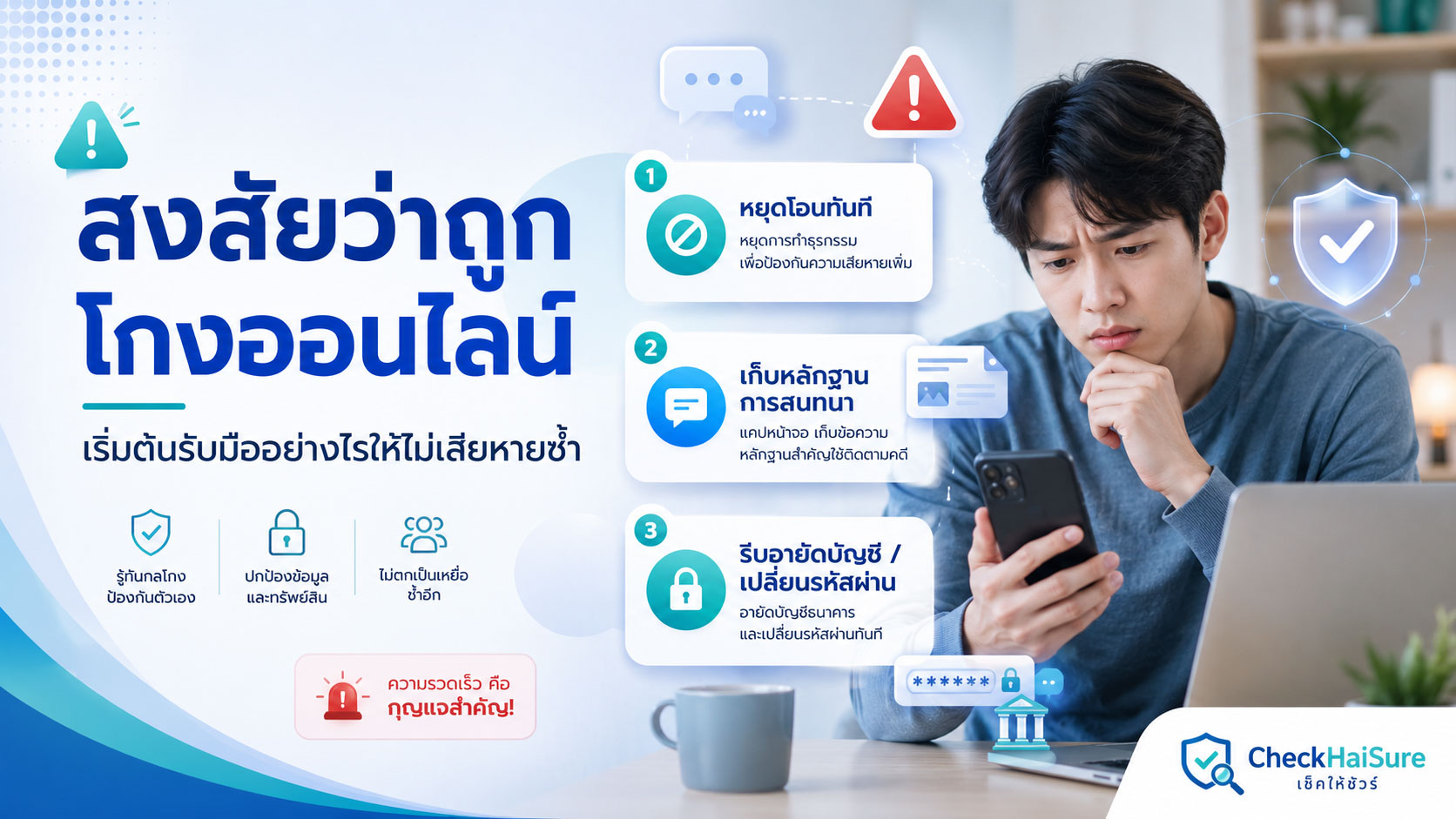
สิ่งสำคัญที่สุดหลังเริ่มสงสัยว่าถูกโกง คือ ต้องหยุดความเสียหายให้เร็วที่สุด เก็บหลักฐานให้ครบ และติดต่อช่องทางที่เกี่ยวข้องอย่างเป็นระบบ
บทความนี้จาก เช็คให้ชัวร์ จัดทำขึ้นเพื่อเป็นแนวทางเบื้องต้นสำหรับผู้ที่สงสัยว่าตนเองหรือคนใกล้ตัวอาจตกเป็นเหยื่อของภัยออนไลน์ เพื่อให้รู้ว่าควรเริ่มจากจุดใด และควรหลีกเลี่ยงอะไรหลังเกิดเหตุ
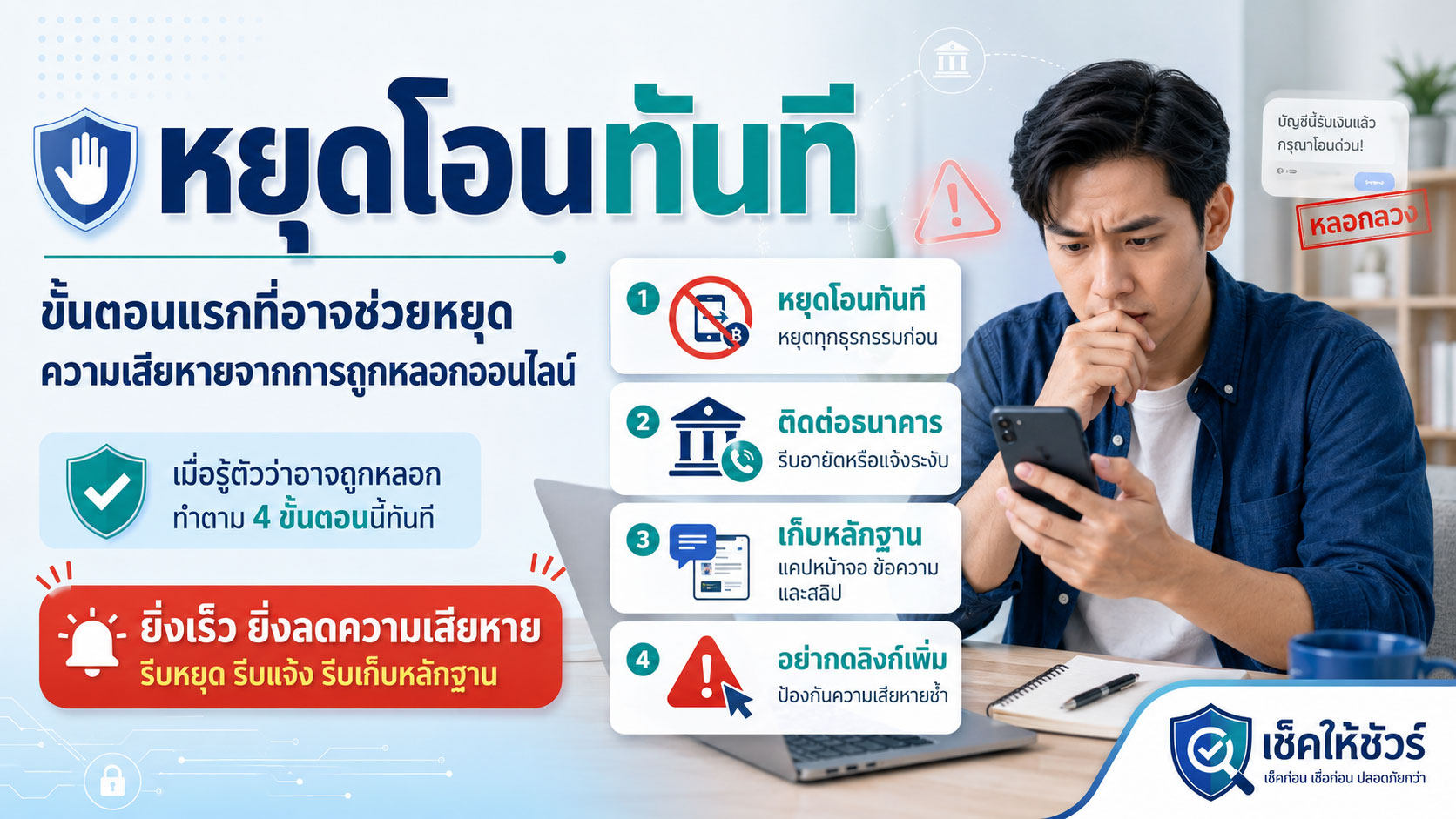
1. ตั้งสติและหยุดโอนเงินเพิ่มทันที
เมื่อเริ่มรู้สึกว่าสถานการณ์ผิดปกติ สิ่งแรกที่ควรทำคือหยุดโอนเงินเพิ่มทันที ไม่ว่าอีกฝ่ายจะให้เหตุผลอย่างไรก็ตาม
มิจฉาชีพมักพยายามทำให้เหยื่อเชื่อว่า หากโอนเงินเพิ่มอีกนิดจะสามารถแก้ปัญหา ถอนเงินคืน ปลดล็อกบัญชี ยกเลิกคดี รับสินค้า หรือรักษาสิทธิ์บางอย่างไว้ได้
ตัวอย่างข้ออ้างที่พบบ่อย เช่น
- ต้องจ่ายค่าธรรมเนียมก่อนจึงจะถอนเงินได้
- ต้องโอนเงินเพิ่มเพื่อปลดล็อกระบบ
- ต้องจ่ายค่าภาษี ค่าประกัน หรือค่าดำเนินการ
- ต้องโอนเงินเพื่อยืนยันตัวตน
- ต้องจ่ายเพิ่มเพื่อให้ได้เงินเดิมคืน
- หากไม่โอนทันที เงินที่จ่ายไปก่อนหน้าจะหายทั้งหมด
หากเจอข้ออ้างลักษณะนี้ ให้หยุดก่อนเสมอ เพราะการโอนเงินเพิ่มอาจทำให้ความเสียหายมากขึ้น และมักไม่ช่วยให้ได้เงินคืนจริง
2. หยุดทำตามคำสั่งของอีกฝ่าย
นอกจากการโอนเงิน มิจฉาชีพอาจพยายามควบคุมพฤติกรรมของเหยื่อด้วยการบอกให้ทำตามขั้นตอนต่าง ๆ เช่น กดลิงก์ ดาวน์โหลดแอป เปิดกล้อง แชร์หน้าจอ ส่งเอกสาร หรือห้ามวางสาย
หากเริ่มสงสัยว่าไม่ปลอดภัย ควรหยุดทำตามคำสั่งทันที โดยเฉพาะคำสั่งเหล่านี้
- ให้กดลิงก์เพื่อยืนยันตัวตน
- ให้ติดตั้งแอปจากลิงก์ที่ส่งมา
- ให้เปิดสิทธิ์ควบคุมหน้าจอหรือ Accessibility
- ให้แชร์หน้าจอโทรศัพท์
- ให้ส่งรหัส OTP หรือรหัสผ่าน
- ให้ถ่ายรูปบัตรประชาชนหรือเอกสารส่วนตัว
- ให้โอนเงินไปยังบัญชีอื่นเพิ่มเติม
- ห้ามวางสายหรือห้ามบอกคนในครอบครัว
ผู้ให้บริการที่น่าเชื่อถือไม่ควรบังคับให้ท่านให้รหัสลับ ติดตั้งแอปจากลิงก์แปลก ๆ หรือห้ามท่านตรวจสอบกับคนอื่น
3. เก็บหลักฐานทั้งหมดก่อนลบหรือบล็อก
หลายคนเมื่อรู้ตัวว่าถูกหลอก อาจรีบบล็อก ลบแชท หรือลบข้อมูลเพราะรู้สึกตกใจหรืออาย แต่หลักฐานเหล่านี้อาจมีความสำคัญมากต่อการติดต่อธนาคาร แจ้งความ หรือแจ้งข้อมูลเพื่อเตือนผู้อื่น
ก่อนลบหรือบล็อก ควรเก็บหลักฐานให้ครบเท่าที่ทำได้ เช่น
- สลิปโอนเงิน
- เลขบัญชีและชื่อบัญชีผู้รับเงิน
- ชื่อธนาคารปลายทาง
- วันและเวลาที่โอนเงิน
- จำนวนเงินที่โอน
- ภาพหน้าจอแชททั้งหมด
- เบอร์โทรศัพท์ที่ใช้ติดต่อ
- LINE ID, Facebook, TikTok, Instagram หรือบัญชีโซเชียลที่เกี่ยวข้อง
- ลิงก์เว็บไซต์หรือเพจที่เกี่ยวข้อง
- ข้อความ SMS หรืออีเมลที่ได้รับ
- รูปสินค้า โฆษณา หรือโพสต์ที่เกี่ยวข้อง
- เอกสารหรือไฟล์ที่อีกฝ่ายส่งมา
- ลำดับเหตุการณ์ตั้งแต่เริ่มติดต่อจนถึงจุดที่สงสัย
ควรจัดเก็บหลักฐานตามลำดับเวลา เพื่อให้เล่าเหตุการณ์ได้ชัดเจนเมื่อต้องติดต่อธนาคารหรือหน่วยงานที่เกี่ยวข้อง
4. ติดต่อธนาคารโดยเร็วที่สุด
หากมีการโอนเงินออกจากบัญชี หรือสงสัยว่าข้อมูลทางการเงินของท่านอาจไม่ปลอดภัย ควรติดต่อธนาคารของท่านผ่านช่องทางทางการทันที
ข้อมูลที่ควรเตรียมเมื่อติดต่อธนาคาร ได้แก่
- วันและเวลาที่โอนเงิน
- จำนวนเงินที่โอน
- เลขบัญชีและชื่อบัญชีผู้รับเงิน
- ธนาคารปลายทาง
- หมายเลขอ้างอิงธุรกรรม, หากมี
- ช่องทางที่ถูกติดต่อ เช่น โทรศัพท์ LINE Facebook เว็บไซต์ หรือ SMS
- หลักฐานประกอบ เช่น สลิป แชท และภาพหน้าจอ
การติดต่อธนาคารโดยเร็วอาจช่วยให้ท่านได้รับคำแนะนำเกี่ยวกับขั้นตอนที่ควรทำต่อไป เช่น การตรวจสอบธุรกรรม การระงับบริการบางอย่าง การเปลี่ยนรหัส หรือการดำเนินการตามกระบวนการของธนาคาร
ควรใช้เบอร์โทรจากเว็บไซต์ทางการ แอปธนาคาร หรือด้านหลังบัตรเท่านั้น อย่าโทรกลับเบอร์ที่อีกฝ่ายส่งมาให้โดยไม่ตรวจสอบ
5. แจ้งความหรือแจ้งเหตุผ่านช่องทางทางการ
หากมีความเสียหายเกิดขึ้น หรือมีเหตุอันควรสงสัยว่าเกี่ยวข้องกับอาชญากรรม ควรแจ้งความหรือแจ้งเหตุผ่านช่องทางทางการ พร้อมเตรียมหลักฐานให้ครบถ้วน
ก่อนแจ้งเหตุ ควรเตรียมข้อมูลเหล่านี้
- ข้อมูลผู้เสียหาย
- ลำดับเหตุการณ์โดยสรุป
- สลิปโอนเงิน
- เลขบัญชีและชื่อบัญชีผู้รับเงิน
- หลักฐานการสนทนา
- เบอร์โทรศัพท์หรือบัญชีโซเชียลของอีกฝ่าย
- ลิงก์เว็บไซต์หรือเพจที่เกี่ยวข้อง
- จำนวนเงินที่เสียหาย
- วัน เวลา และช่องทางที่เกิดเหตุ
การแจ้งเหตุอย่างรวดเร็วและมีหลักฐานครบถ้วน จะช่วยให้กระบวนการพิจารณาของหน่วยงานที่เกี่ยวข้องทำได้ชัดเจนขึ้น
6. หากกดลิงก์หรือติดตั้งแอปต้องสงสัย ให้รีบป้องกันบัญชี
หากท่านกดลิงก์ กรอกข้อมูลส่วนตัว หรือติดตั้งแอปจากลิงก์ที่ผู้อื่นส่งมา ควรระวังเป็นพิเศษ เพราะอุปกรณ์หรือบัญชีของท่านอาจมีความเสี่ยง
สิ่งที่ควรทำเบื้องต้น ได้แก่
- หยุดใช้งานแอปธนาคารบนอุปกรณ์ที่สงสัยว่าไม่ปลอดภัย
- ตัดการเชื่อมต่ออินเทอร์เน็ตชั่วคราว หากสงสัยว่าเครื่องถูกควบคุม
- ลบแอปที่ไม่รู้จักหรือแอปที่ติดตั้งจากลิงก์แปลก ๆ
- ตรวจสอบสิทธิ์ของแอป เช่น การอ่านข้อความ การควบคุมหน้าจอ หรือ Accessibility
- เปลี่ยนรหัสผ่านบัญชีสำคัญจากอุปกรณ์ที่ปลอดภัย
- เปิดการยืนยันตัวตนสองขั้นตอนในบัญชีสำคัญ
- ติดต่อธนาคารทันทีหากเคยเปิดแอปธนาคารหลังติดตั้งแอปต้องสงสัย
- ขอคำแนะนำจากศูนย์บริการหรือผู้เชี่ยวชาญที่เชื่อถือได้ หากไม่มั่นใจ
หากโทรศัพท์มีอาการผิดปกติ เช่น หน้าจอขยับเอง แอปเปิดเอง มี OTP เข้ามาโดยไม่ทราบสาเหตุ หรือเครื่องควบคุมยาก ควรหยุดใช้เครื่องนั้นทำธุรกรรมสำคัญทันที
7. หากส่งข้อมูลส่วนตัวไปแล้ว ต้องเฝ้าระวังการถูกแอบอ้าง
หากท่านเคยส่งข้อมูลส่วนตัวให้บุคคลต้องสงสัย เช่น รูปบัตรประชาชน เลขบัตรประชาชน ที่อยู่ เบอร์โทรศัพท์ สำเนาเอกสาร หรือข้อมูลบัญชี อาจมีความเสี่ยงที่ข้อมูลถูกนำไปใช้แอบอ้าง
สิ่งที่ควรทำ ได้แก่
- จดบันทึกว่าข้อมูลใดถูกส่งออกไปบ้าง
- เก็บหลักฐานการส่งข้อมูล
- เฝ้าระวังการติดต่อผิดปกติ
- เปลี่ยนรหัสผ่านบัญชีที่เกี่ยวข้อง
- ตรวจสอบบัญชีออนไลน์และโซเชียลมีเดียของตนเอง
- ติดต่อผู้ให้บริการที่เกี่ยวข้อง หากข้อมูลนั้นเกี่ยวกับบัญชีการเงินหรือบริการดิจิทัล
- แจ้งหน่วยงานที่เกี่ยวข้อง หากพบว่าถูกนำข้อมูลไปใช้แอบอ้างจริง
ข้อมูลส่วนตัวเมื่อถูกส่งออกไปแล้วอาจควบคุมได้ยาก จึงควรรีบป้องกันบัญชีและติดตามความผิดปกติให้เร็วที่สุด
8. ระวังการถูกหลอกซ้ำหลังเกิดเหตุ
หลังจากถูกโกง บางคนอาจตกเป็นเหยื่อซ้ำจากผู้ที่อ้างว่าสามารถช่วยตามเงินคืน อายัดบัญชี หรือดำเนินการแทนเจ้าหน้าที่ได้ โดยเรียกเก็บค่าดำเนินการล่วงหน้า
สัญญาณที่ควรระวัง ได้แก่
- อ้างว่าสามารถตามเงินคืนได้แน่นอน
- ขอค่าดำเนินการก่อนเริ่มช่วยเหลือ
- อ้างว่ารู้จักเจ้าหน้าที่หรือสามารถเร่งคดีได้
- ขอข้อมูลบัญชี รหัสผ่าน หรือเอกสารส่วนตัวเพิ่มเติม
- ติดต่อผ่านแชทส่วนตัวโดยไม่มีตัวตนที่ตรวจสอบได้
- กดดันให้รีบจ่ายเงินเพื่อรักษาสิทธิ์ในการได้เงินคืน
หากมีใครอ้างว่าสามารถช่วยได้ แต่ขอเงินล่วงหน้า ควรระวังอย่างมาก เพราะอาจเป็นการหลอกซ้ำจากความเดือดร้อนของผู้เสียหาย
9. แจ้งข้อมูลต้องสงสัยเพื่อช่วยเตือนผู้อื่น
หลังจากดำเนินการกับธนาคารและหน่วยงานที่เกี่ยวข้องแล้ว ท่านสามารถแจ้งข้อมูลต้องสงสัยเข้ามายังเช็คให้ชัวร์ เพื่อให้ทีมงานพิจารณา กลั่นกรอง และใช้เป็นข้อมูลประกอบในการแจ้งเตือนหรือพัฒนาฐานข้อมูลเพื่อประโยชน์ของสาธารณะ
ข้อมูลที่สามารถแจ้งได้ เช่น
- เบอร์โทรศัพท์ต้องสงสัย
- เลขบัญชีหรือชื่อบัญชี
- ลิงก์เว็บไซต์หรือเพจ
- LINE ID หรือบัญชีโซเชียล
- ข้อความ SMS หรือแชท
- รูปแบบการหลอกลวงที่พบ
- รายละเอียดเหตุการณ์
- หลักฐานประกอบเท่าที่เหมาะสม
การแจ้งข้อมูลด้วยความสุจริตอาจช่วยให้คนอื่นค้นพบข้อมูลก่อนตัดสินใจโอนเงิน กดลิงก์ หรือให้ข้อมูลส่วนตัว
แจ้งข้อมูลต้องสงสัย: แจ้งข้อมูลต้องสงสัย
10. อย่าโทษตัวเองจนไม่กล้าขอความช่วยเหลือ
การถูกหลอกออนไลน์สามารถเกิดขึ้นได้กับทุกคน ไม่ว่าจะมีอายุเท่าใด ใช้เทคโนโลยีเก่งแค่ไหน หรือมีประสบการณ์มากเพียงใด
มิจฉาชีพจำนวนมากใช้จิตวิทยา ความเร่งด่วน ความกลัว ความโลภ ความสงสาร หรือความไว้ใจ มาออกแบบสถานการณ์ให้เหยื่อตัดสินใจผิดพลาดในเวลาสั้น ๆ
หากเกิดเหตุขึ้นแล้ว สิ่งที่สำคัญกว่าการโทษตัวเอง คือการรีบหยุดความเสียหาย เก็บหลักฐาน ติดต่อหน่วยงานที่เกี่ยวข้อง และใช้เหตุการณ์นี้เป็นบทเรียนเพื่อป้องกันตนเองและคนรอบตัวในอนาคต
หากคนในครอบครัวถูกหลอก ควรช่วยกันอย่างเข้าใจ ไม่ตำหนิซ้ำ เพราะความอายหรือความกลัวอาจทำให้ผู้เสียหายไม่กล้าพูด และทำให้การแก้ไขปัญหาล่าช้ากว่าเดิม
เช็กลิสต์สั้น ๆ หลังสงสัยว่าถูกโกง
ใช้รายการนี้เพื่อตรวจสอบว่าท่านได้ดำเนินการเบื้องต้นแล้วหรือยัง
- หยุดโอนเงินเพิ่มแล้ว
- หยุดกดลิงก์หรือติดตั้งแอปเพิ่มเติมแล้ว
- เก็บสลิปโอนเงินแล้ว
- เก็บภาพหน้าจอแชทแล้ว
- เก็บเลขบัญชี ชื่อบัญชี เบอร์โทร และลิงก์ที่เกี่ยวข้องแล้ว
- ติดต่อธนาคารแล้ว
- แจ้งความหรือแจ้งเหตุผ่านช่องทางทางการแล้ว หากมีความเสียหาย
- เปลี่ยนรหัสผ่านบัญชีสำคัญแล้ว หากเคยให้ข้อมูลหรือกดลิงก์
- ตรวจสอบความปลอดภัยของโทรศัพท์แล้ว หากเคยติดตั้งแอปต้องสงสัย
- แจ้งข้อมูลเข้ามายังเช็คให้ชัวร์เพื่อช่วยเตือนผู้อื่นแล้ว
ใช้เช็คให้ชัวร์เป็นพื้นที่ช่วยเตือนภัยร่วมกัน
เช็คให้ชัวร์ตั้งใจเป็นแพลตฟอร์มที่ช่วยให้คนไทยมีเครื่องมือในการตรวจสอบข้อมูลต้องสงสัย เรียนรู้รูปแบบภัยออนไลน์ และร่วมกันสร้างภูมิคุ้มกันทางความรู้ให้กับสังคม
แม้แพลตฟอร์มนี้ไม่สามารถอายัดบัญชี ติดตามเงินคืน ดำเนินคดี หรือสั่งการแทนหน่วยงานที่มีอำนาจได้ แต่ข้อมูลที่ประชาชนแจ้งเข้ามาด้วยความสุจริต อาจช่วยให้คนอื่นระมัดระวังมากขึ้นก่อนเกิดความเสียหาย
ตรวจสอบข้อมูลต้องสงสัย: ตรวจสอบข้อมูลต้องสงสัย
ช่องทางหน่วยงานที่เกี่ยวข้อง: ช่องทางหน่วยงานที่เกี่ยวข้อง
ข้อความสำคัญ
ข้อมูลในบทความนี้มีวัตถุประสงค์เพื่อให้คำแนะนำเบื้องต้นสำหรับผู้ที่สงสัยว่าถูกหลอกออนไลน์เท่านั้น ไม่ถือเป็นคำแนะนำทางกฎหมาย การเงิน หรือความปลอดภัยไซเบอร์เฉพาะกรณี
เช็คให้ชัวร์ไม่ใช่หน่วยงานรัฐ ธนาคาร ตำรวจ ศาล หรือผู้ให้คำปรึกษาทางกฎหมายโดยตรง และไม่สามารถอายัดบัญชี ติดตามเงินคืน ดำเนินคดี หรือสั่งการแทนหน่วยงานที่มีอำนาจได้
หากท่านได้รับความเสียหายทางการเงินหรือพบเหตุอันควรสงสัยว่าเกี่ยวข้องกับอาชญากรรม กรุณาติดต่อธนาคารของท่านและหน่วยงานที่เกี่ยวข้องผ่านช่องทางทางการโดยเร็วที่สุด
เช็คให้ชัวร์ — ก่อนเชื่อ ก่อนโอน ก่อนแชร์
Suspect You Have Been Scammed Online? How to Respond Without Causing Further Damage
Being scammed online is something no one wants to experience, whether it happens to ourselves or someone close to us. However, in today’s digital society, these threats can happen more easily and more quickly than ever before. They may come in the form of fraudulent money transfer requests, online shopping scams, fake links, suspicious apps, impersonation of officials, or investment offers that appear more trustworthy than they really are.
In many cases, victims are not careless. They may simply be placed under pressure, rushed into making a decision, frightened, or carefully manipulated into trusting someone within a short period of time.
The most important thing after you begin to suspect that you have been scammed is to stop further damage quickly, keep all evidence, and contact the relevant channels in an organized way.
This article from CheckHaiSure was created as a practical first guide for people who suspect that they or someone close to them may have become a victim of an online scam. It explains where to start and what to avoid after the incident.
1. Stay Calm and Stop Transferring More Money Immediately
When you begin to feel that something is wrong, the first step is to stop transferring more money immediately, no matter what reason the other party gives.
Scammers often try to convince victims that if they transfer a little more money, they will be able to solve the problem, withdraw their money, unlock an account, cancel a case, receive the product, or keep a certain benefit.
Common excuses include:
- You must pay a fee before withdrawing money.
- You must transfer more money to unlock the system.
- You must pay tax, insurance, or processing fees.
- You must transfer money to verify your identity.
- You must pay more to recover the money already transferred.
- If you do not transfer immediately, all previous payments will be lost.
If you hear these excuses, stop first. Transferring more money may increase the damage and usually does not help you recover the money.
2. Stop Following the Other Party’s Instructions
In addition to asking for money, scammers may try to control your actions by telling you to click links, download apps, turn on your camera, share your screen, send documents, or stay on the phone.
If you begin to suspect that the situation is unsafe, stop following their instructions immediately, especially if they ask you to:
- Click a link to verify your identity
- Install an app from a link they sent
- Enable screen control, Accessibility access, or similar permissions
- Share your phone screen
- Send an OTP or password
- Take a photo of your ID card or personal documents
- Transfer more money to another account
- Stay on the call or keep the matter secret from your family
A trustworthy service provider should not force you to share secret codes, install unknown apps, or prevent you from checking with others.
3. Keep All Evidence Before Deleting or Blocking
When people realize they may have been scammed, they may feel shocked or embarrassed and quickly block the other party or delete the chat. However, this evidence can be very important when contacting the bank, reporting to official authorities, or warning others.
Before deleting or blocking anything, save as much evidence as possible, such as:
- Money transfer slips
- Receiving account number and account name
- Receiving bank name
- Date and time of transfer
- Amount transferred
- Screenshots of all chat messages
- Phone numbers used to contact you
- LINE ID, Facebook, TikTok, Instagram, or other related social media accounts
- Website or page links involved
- SMS or email messages received
- Product photos, advertisements, or related posts
- Documents or files sent by the other party
- A timeline from the first contact to the moment you became suspicious
Try to organize the evidence in chronological order. This will help you explain the case more clearly when contacting your bank or relevant authorities.
4. Contact Your Bank as Soon as Possible
If money has been transferred from your account, or if you suspect that your financial information may no longer be safe, contact your bank immediately through official channels.
Information to prepare when contacting your bank includes:
- Date and time of the transfer
- Amount transferred
- Receiving account number and account name
- Receiving bank
- Transaction reference number, if available
- Channel used by the suspicious party, such as phone, LINE, Facebook, website, or SMS
- Supporting evidence such as transfer slips, chats, and screenshots
Contacting your bank quickly may help you receive guidance on the next steps, such as checking the transaction, restricting certain services, changing passwords, or following the bank’s internal process.
Use only phone numbers from the bank’s official website, banking app, or the back of your card. Do not call back numbers sent by the suspicious party without verification.
5. Report the Incident Through Official Channels
If damage has occurred, or if there is reasonable suspicion that the case may involve criminal activity, report the incident through official channels and prepare complete evidence.
Before reporting, prepare the following information:
- Victim’s information
- Short timeline of the incident
- Money transfer slip
- Receiving account number and account name
- Chat evidence
- Phone number or social media account used by the other party
- Website or page links involved
- Amount of financial damage
- Date, time, and channel where the incident occurred
Reporting quickly with complete evidence can help the relevant authorities understand the case more clearly.
6. If You Clicked a Suspicious Link or Installed a Suspicious App, Protect Your Accounts Quickly
If you clicked a link, entered personal information, or installed an app from a link sent by someone else, be extra cautious because your device or accounts may be at risk.
Initial steps you should consider include:
- Stop using mobile banking apps on the device you suspect may be unsafe.
- Temporarily disconnect from the internet if you suspect the device is being controlled.
- Remove unknown apps or apps installed from suspicious links.
- Check app permissions, such as message access, screen control, or Accessibility permissions.
- Change passwords for important accounts from a safe device.
- Enable two-factor authentication for important accounts.
- Contact your bank immediately if you used mobile banking after installing a suspicious app.
- Seek help from a trusted service center or technical expert if you are unsure.
If your phone behaves unusually, such as the screen moving by itself, apps opening by themselves, unexpected OTP messages appearing, or the device becoming difficult to control, stop using that device for important transactions immediately.
7. If You Shared Personal Information, Watch for Impersonation Risk
If you shared personal information with a suspicious person, such as a photo of your ID card, national ID number, address, phone number, document copies, or bank account information, there may be a risk that your information could be misused for impersonation.
Steps you should consider include:
- Record what information was shared.
- Keep evidence of how and when the information was sent.
- Watch for unusual contact or activity.
- Change passwords for related accounts.
- Check your online and social media accounts.
- Contact relevant service providers if the information relates to financial accounts or digital services.
- Report to relevant authorities if your information is actually misused.
Once personal information has been sent out, it may be difficult to control. Acting early can help reduce further risk.
8. Beware of Being Scammed Again After the Incident
After being scammed, some victims may be targeted again by people claiming they can recover the money, freeze accounts, or act on behalf of officials. These people often ask for upfront service fees.
Warning signs include:
- They claim they can definitely recover your money.
- They ask for a processing fee before helping.
- They claim to know officials or can speed up the case.
- They ask for bank account details, passwords, or additional personal documents.
- They contact you through private chat with no verifiable identity.
- They pressure you to pay quickly to keep your chance of recovering the money.
If someone claims they can help but asks for money in advance, be very careful. This may be another scam targeting victims who are already distressed.
9. Submit Suspicious Information to Help Warn Others
After contacting your bank and relevant official authorities, you may submit suspicious information to CheckHaiSure. Our team may review, filter, and use the information to support public warnings or improve the database for public safety purposes.
Information you may submit includes:
- Suspicious phone numbers
- Bank account numbers or account names
- Website or page links
- LINE IDs or social media accounts
- SMS or chat messages
- Scam patterns you encountered
- Incident details
- Supporting evidence where appropriate
A good-faith report may help others find relevant information before transferring money, clicking a link, or sharing personal information.
Report suspicious information: Report suspicious information
10. Do Not Blame Yourself So Much That You Avoid Asking for Help
Online scams can happen to anyone, regardless of age, digital experience, or level of education.
Many scammers use psychology, urgency, fear, greed, sympathy, or trust to create situations where victims make quick decisions under pressure.
After an incident happens, what matters most is not blaming yourself. It is more important to stop further damage, keep evidence, contact the relevant channels, and use the experience as a lesson to protect yourself and people around you in the future.
If someone in your family has been scammed, help them with understanding rather than blame. Shame or fear may cause victims to stay silent, which can delay important action.
Short Checklist After You Suspect You Have Been Scammed
Use this checklist to review your first steps:
- I have stopped transferring more money.
- I have stopped clicking links or installing more apps.
- I have saved the transfer slip.
- I have saved chat screenshots.
- I have saved the account number, account name, phone number, and related links.
- I have contacted my bank.
- I have reported through official channels if financial damage occurred.
- I have changed important passwords if I shared information or clicked a link.
- I have checked my phone’s safety if I installed a suspicious app.
- I have submitted suspicious information to CheckHaiSure to help warn others.
Use CheckHaiSure as a Shared Warning Space
CheckHaiSure was created to help people in Thailand access tools for checking suspicious information, learning about online threats, and building knowledge-based immunity together as a society.
Although the platform cannot freeze accounts, recover money, conduct legal proceedings, or act on behalf of authorized agencies, information submitted by the public in good faith may help others become more cautious before damage occurs.
Check suspicious information: Check suspicious information
Official resources and support channels: Official resources and support channels
Important Notice
The information in this article is intended to provide general guidance for people who suspect they have been scammed online. It is not legal, financial, or case-specific cybersecurity advice.
CheckHaiSure is not a government agency, bank, police authority, court, or direct legal advisory service. We cannot freeze accounts, recover money, conduct legal proceedings, or act on behalf of authorized agencies.
If you have suffered financial loss or suspect criminal activity, please contact your bank and the relevant official authorities through official channels as soon as possible.
CheckHaiSure — Check before you trust, transfer, or share.
Leave a Reply
You must be logged in to post a comment.