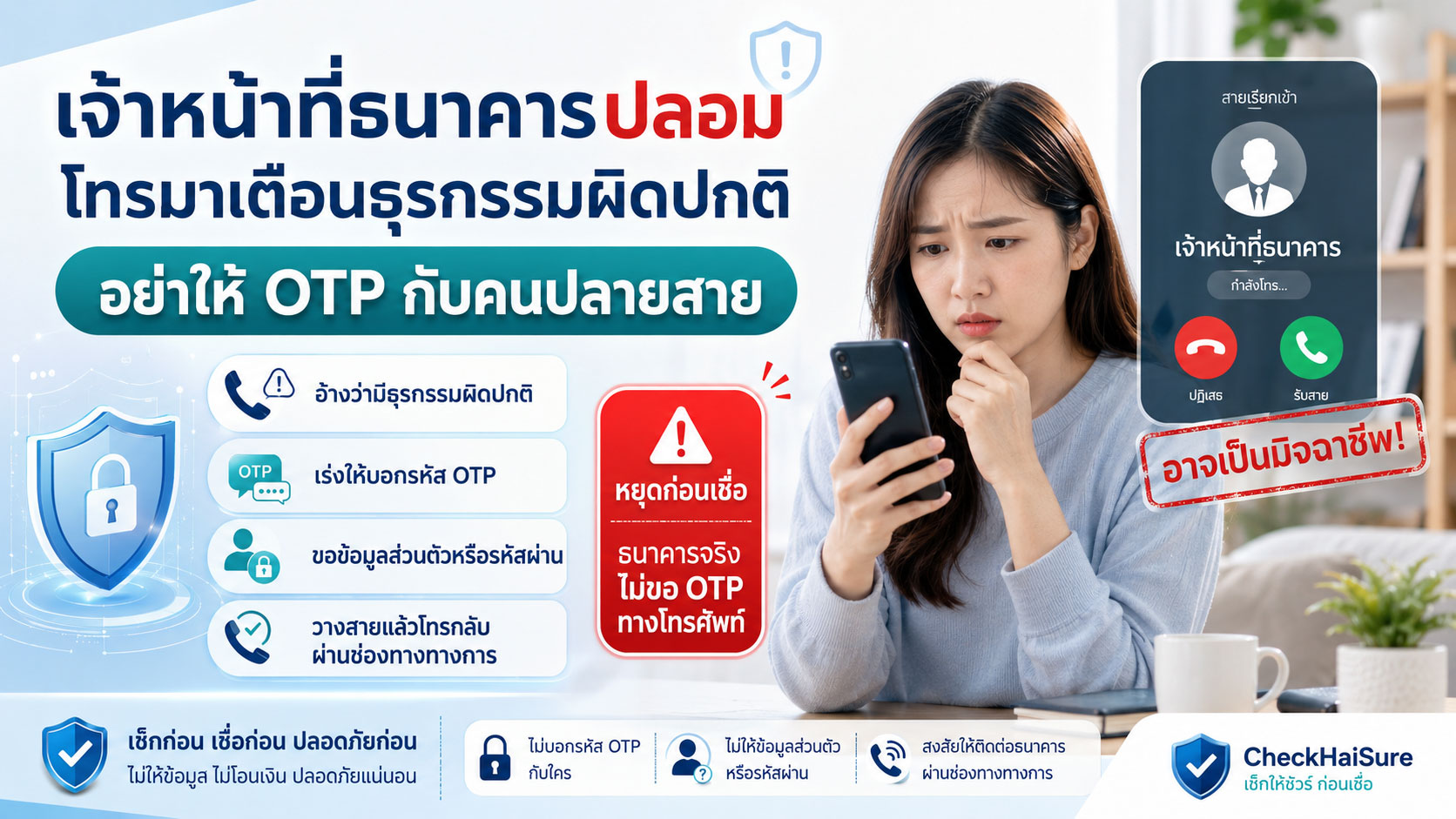
“มีรายการผิดปกติในบัญชีของคุณค่ะ”
ถ้าได้ยินประโยคนี้จากคนที่อ้างว่าเป็นธนาคาร หลายคนคงตกใจทันที
บางคนรีบเปิดแอปธนาคาร
บางคนรีบถามว่ารายการอะไร
บางคนกังวลว่าเงินจะหาย
บางคนกลัวว่าบัตรถูกแฮ็ก
บางคนกลัวว่ามีคนเอาชื่อไปกู้เงิน
และบางคนอาจทำตามทุกขั้นตอนที่คนปลายสายบอก เพราะคิดว่าเจ้าหน้าที่กำลังช่วยป้องกันความเสียหาย
นี่คือจุดที่มิจฉาชีพใช้ประโยชน์จากความกลัว
เขาไม่ได้เริ่มจากการบอกให้คุณโอนเงินทันทีเสมอไป
แต่เริ่มจากการทำให้คุณรู้สึกว่า “บัญชีของคุณกำลังไม่ปลอดภัย”
จากนั้นจึงค่อยๆ พาคุณไปสู่สิ่งที่เขาต้องการจริงๆ
เช่น ขอ OTP
ขอรหัสยืนยัน
ขอเลขบัตร
ขอข้อมูลบัญชี
ให้กดลิงก์
ให้ติดตั้งแอป
หรือให้ทำรายการใน Mobile Banking ระหว่างที่ยังอยู่ในสาย
สิ่งที่ควรจำให้ชัดคือ
OTP ไม่ใช่รหัสสำหรับบอกเจ้าหน้าที่
และถ้ามีใครโทรมาขอ OTP ไม่ว่าจะอ้างว่าเป็นธนาคารหรือหน่วยงานใด ให้ถือว่าอันตรายทันที
กลโกงนี้เริ่มจากการทำให้เราเชื่อว่าธนาคารกำลังปกป้องเรา
มิจฉาชีพมักรู้ดีว่า คนส่วนใหญ่กลัวเรื่องเงินในบัญชีมาก
เขาจึงไม่จำเป็นต้องขู่แรงตั้งแต่แรก
แค่พูดให้เหมือนกำลังช่วยเหลือก็เพียงพอแล้ว
เช่น
“พบการเข้าสู่ระบบจากอุปกรณ์แปลกปลอม”
“มีรายการใช้บัตรที่คุณไม่ได้ทำ”
“มีคนพยายามโอนเงินออกจากบัญชี”
“มีการสมัครสินเชื่อด้วยชื่อของคุณ”
“ระบบตรวจพบความเสี่ยง ต้องยืนยันตัวตนด่วน”
“หากไม่ดำเนินการตอนนี้ บัญชีอาจถูกระงับ”
“เจ้าหน้าที่ฝ่ายความปลอดภัยจะช่วยยกเลิกรายการให้”
คำพูดเหล่านี้ทำให้คนฟังรู้สึกว่าอีกฝ่ายอยู่ข้างเดียวกับเรา
เหมือนเขากำลังช่วยหยุดความเสียหาย
แต่ความจริง เขาอาจกำลังสร้างความเสียหายขึ้นมาเอง
และใช้คำว่า “เพื่อความปลอดภัย” เป็นเหตุผลให้เรายอมบอกข้อมูลที่ไม่ควรบอก
ทำไมคำว่า “ธุรกรรมผิดปกติ” ถึงทำให้คนพลาดง่าย
เพราะมันฟังดูเป็นเรื่องเร่งด่วนและเกี่ยวกับเงินโดยตรง
เมื่อมีคนบอกว่าเงินในบัญชีเสี่ยง คนเรามักอยากแก้ไขทันที
เราอาจยังไม่ทันคิดว่าเบอร์ที่โทรมาเป็นของใคร
ยังไม่ทันตรวจสอบว่าเป็นธนาคารจริงหรือไม่
ยังไม่ทันเปิดแอปเอง
ยังไม่ทันโทรกลับ Call Center ทางการ
และยังไม่ทันถามคนใกล้ตัว
ยิ่งอีกฝ่ายพูดเร็ว ใช้น้ำเสียงจริงจัง และบอกว่าต้องทำภายในไม่กี่นาที ความกลัวก็ยิ่งทำให้เราตัดสินใจเร็วขึ้น
มิจฉาชีพต้องการจังหวะนี้
เขาต้องการให้คุณรู้สึกว่า ถ้าช้าจะเสียเงิน
แต่ความจริง บางครั้งการทำตามเร็วเกินไปต่างหากที่ทำให้เงินหาย
OTP คืออะไร และทำไมถึงห้ามบอกใคร
OTP หรือรหัสยืนยันแบบใช้ครั้งเดียว มักถูกใช้เพื่อยืนยันการทำธุรกรรม การเข้าสู่ระบบ การเพิ่มอุปกรณ์ หรือการเปลี่ยนแปลงบางอย่างในบัญชี
พูดง่ายๆ คือ OTP มักเป็นเหมือน “กุญแจชั่วคราว” ที่ใช้ยืนยันว่าเจ้าของบัญชีกำลังอนุญาตให้ทำบางอย่าง
ดังนั้น ถ้าคุณบอก OTP ให้คนอื่น คุณอาจไม่ได้กำลังช่วยให้ธนาคารตรวจสอบบัญชี
แต่อาจกำลังเปิดประตูให้มิจฉาชีพทำรายการแทนคุณ
มิจฉาชีพอาจพูดว่า
“ขอรหัสเพื่อยืนยันว่าเป็นเจ้าของบัญชี”
“ขอ OTP เพื่อยกเลิกรายการ”
“รหัสนี้ใช้สำหรับระงับธุรกรรม ไม่ใช่การโอนเงิน”
“อ่านรหัสให้เจ้าหน้าที่ เพื่อปิดระบบที่ถูกแฮ็ก”
“ถ้าไม่แจ้งรหัส ระบบจะยกเลิกให้ไม่ได้”
แต่ไม่ว่าจะอ้างอย่างไร ให้จำไว้ว่า
รหัสที่ส่งมาที่เครื่องคุณ ไม่ควรอ่านให้ใครฟัง
ถ้าเป็นการตรวจสอบจริง ธนาคารควรมีช่องทางยืนยันที่ปลอดภัยโดยไม่ให้ลูกค้าบอกรหัสลับกับคนปลายสาย
ธนาคารจริงจะขอ OTP ทางโทรศัพท์หรือไม่
หลักที่ปลอดภัยที่สุดคือ
อย่าให้ OTP กับใครทางโทรศัพท์ แชท หรือข้อความ
ไม่ว่าจะเป็นคนที่อ้างว่าเป็นเจ้าหน้าที่ธนาคาร
ฝ่ายความปลอดภัย
ฝ่ายตรวจสอบธุรกรรม
พนักงาน Call Center
ตำรวจ
หน่วยงานรัฐ
หรือพนักงานแพลตฟอร์มใดๆ
หากมีคนขอ OTP ให้สงสัยก่อนเสมอ
เพราะ OTP ไม่ได้มีไว้ให้เจ้าหน้าที่ถาม
แต่มีไว้ให้เจ้าของบัญชีใช้กับระบบที่ถูกต้องด้วยตัวเองเท่านั้น
หากคุณไม่แน่ใจว่าธุรกรรมที่เกิดขึ้นจริงหรือไม่ ให้หยุดคุยกับคนปลายสาย แล้วเปิดแอปธนาคารด้วยตัวเอง หรือติดต่อธนาคารผ่านเบอร์ทางการที่คุณหาเอง
ไม่ใช่เบอร์ที่คนปลายสายให้มา
และไม่ใช่ลิงก์ที่ส่งมาใน SMS หรือแชท
สัญญาณเตือนของเจ้าหน้าที่ธนาคารปลอม
ถ้ามีคนโทรมาอ้างว่าเป็นธนาคาร ให้ระวังเป็นพิเศษเมื่อเจอพฤติกรรมเหล่านี้
บอกว่ามีธุรกรรมผิดปกติ แต่ไม่ให้คุณวางสายไปตรวจสอบเอง
ขอ OTP หรือรหัสยืนยันที่ส่งมาทาง SMS
ขอ PIN หรือรหัสผ่าน Mobile Banking
ขอเลขหน้าบัตร เลขหลังบัตร หรือ CVV
ขอให้บอกยอดเงินในบัญชี
ให้กดลิงก์เพื่อยืนยันตัวตน
ให้เพิ่ม LINE เจ้าหน้าที่
ให้ติดตั้งแอปเพื่อให้ช่วยตรวจสอบบัญชี
ขอให้เปิดแชร์หน้าจอ
ขอให้ทำรายการในแอปธนาคารขณะอยู่ในสาย
บอกว่าห้ามบอกคนอื่น เพราะเป็นข้อมูลลับของธนาคาร
บอกว่าถ้าวางสายจะยกเลิกรายการไม่ทัน
บอกให้โอนเงินไปบัญชีปลอดภัยหรือบัญชีตรวจสอบ
หรือพูดให้คุณรู้สึกว่าต้องรีบทำทันทีโดยไม่มีเวลาเช็ก
ถ้ามีข้อใดข้อหนึ่งเกิดขึ้น ให้หยุดก่อน
เพราะเจ้าหน้าที่จริงไม่ควรกดดันให้คุณเปิดเผยรหัสลับหรือทำธุรกรรมตามคำสั่งทางโทรศัพท์
“ขอรหัสเพื่อยกเลิกรายการ” คือประโยคที่ควรระวังมาก
หนึ่งในประโยคที่มิจฉาชีพใช้บ่อยคือ
“ขอ OTP เพื่อยกเลิกรายการ”
ประโยคนี้อันตราย เพราะทำให้เหยื่อรู้สึกว่าการบอกรหัสเป็นการป้องกันตัวเอง
แทนที่จะรู้สึกว่ากำลังอนุมัติอะไรบางอย่าง
แต่ในหลายกรณี OTP ที่ส่งมาอาจเกี่ยวข้องกับการเข้าสู่ระบบ การเปลี่ยนรหัส การเพิ่มอุปกรณ์ใหม่ หรือการทำธุรกรรมจริง
หากคุณอ่านรหัสให้คนปลายสาย คุณอาจไม่รู้เลยว่ารหัสนั้นถูกใช้ทำอะไร
ดังนั้น ถ้ามีข้อความ OTP เข้ามา ให้ดูข้อความอย่างละเอียด
และถ้าคุณไม่ได้เป็นคนเริ่มทำรายการเอง ให้หยุดทันที
อย่าอ่านรหัสให้ใคร
อย่ากรอกในลิงก์ที่คนอื่นส่ง
และอย่าทำตามคำอธิบายของคนปลายสายเพียงเพราะเขาพูดว่า “เพื่อยกเลิก”
อย่าทำธุรกรรมในแอประหว่างที่ยังอยู่ในสาย
อีกหนึ่งจุดเสี่ยงคือ มิจฉาชีพอาจไม่ได้ขอ OTP ตรงๆ แต่สั่งให้คุณทำรายการเองในแอปธนาคาร
เขาอาจพูดว่า
“เปิดแอปธนาคารไว้ค่ะ”
“กดเมนูนี้เพื่อยืนยันตัวตน”
“กดโอนเพื่อตรวจสอบระบบ แต่เงินจะไม่ถูกหักจริง”
“สแกน QR นี้เพื่อยกเลิกรายการ”
“ทำตามที่เจ้าหน้าที่บอกทีละขั้นตอน”
“ห้ามออกจากสายจนกว่าระบบจะเสร็จ”
ถ้าใครสั่งให้คุณทำรายการทางการเงินขณะอยู่ในสาย ให้หยุดทันที
การใช้แอปธนาคารควรเกิดจากการตัดสินใจของคุณเอง และควรทำหลังจากตรวจสอบช่องทางทางการแล้ว ไม่ใช่ทำตามคำพูดของคนแปลกหน้าที่โทรมา
หากกังวลว่ามีรายการผิดปกติ ให้ปิดสายก่อน แล้วเปิดแอปเพื่อตรวจสอบด้วยตัวเอง หรือโทรหา Call Center ธนาคารจากเบอร์ทางการ
ถ้าเขารู้ข้อมูลบางส่วนของเรา แปลว่าเป็นธนาคารจริงไหม
ไม่เสมอไป
บางครั้งมิจฉาชีพอาจรู้ชื่อ เบอร์โทร เลขบัตรบางส่วน ที่อยู่บางส่วน หรือข้อมูลที่เคยรั่วไหลจากแหล่งอื่น
การที่อีกฝ่ายรู้ข้อมูลบางอย่าง ไม่ได้แปลว่าเขาเป็นเจ้าหน้าที่ธนาคารจริง
ข้อมูลบางประเภทอาจหลุดจากการสมัครบริการออนไลน์ การซื้อของ การกรอกแบบฟอร์ม การรั่วไหลของฐานข้อมูล หรือการถูกส่งต่อโดยไม่ตั้งใจ
มิจฉาชีพอาจใช้ข้อมูลเล็กๆ เหล่านี้เพื่อสร้างความน่าเชื่อถือ
เช่น พูดชื่อจริงของคุณ
บอกเลขท้ายบัตรบางหลัก
บอกธนาคารที่คุณใช้
หรือบอกข้อมูลที่ทำให้คุณรู้สึกว่า “เขาน่าจะเป็นเจ้าหน้าที่จริง”
แต่เจ้าหน้าที่จริงก็ไม่ควรใช้ข้อมูลเหล่านี้เพื่อขอ OTP หรือรหัสลับจากคุณ
ถ้าเขารู้ข้อมูลบางส่วนแล้วยังขอข้อมูลลับเพิ่ม ให้ยิ่งต้องระวัง
ถ้าได้รับสายแบบนี้ ควรทำอย่างไร
ถ้ามีคนโทรมาอ้างว่าเป็นธนาคารและบอกว่ามีธุรกรรมผิดปกติ ให้เริ่มจากตั้งสติ
อย่าให้ข้อมูลเพิ่ม
อย่าอ่าน OTP
อย่ากดลิงก์
อย่าเพิ่ม LINE
อย่าติดตั้งแอป
อย่าเปิดแชร์หน้าจอ
อย่าโอนเงิน
อย่าทำรายการใน Mobile Banking ตามคำสั่งคนปลายสาย
จากนั้นให้พูดสั้นๆ ว่า
“ขอบคุณค่ะ/ครับ เดี๋ยวจะติดต่อธนาคารผ่านช่องทางทางการเอง”
แล้ววางสาย
หลังจากนั้นให้เปิดแอปธนาคารด้วยตัวเองเพื่อตรวจสอบรายการ หรือโทร Call Center จากเบอร์ที่อยู่บนเว็บไซต์ธนาคาร เบอร์หลังบัตร หรือช่องทางทางการอื่นๆ
อย่ากดโทรกลับจากเบอร์ที่ส่งมาใน SMS
อย่าใช้ลิงก์ที่คนปลายสายส่งให้
และอย่าเชื่อว่า “ถ้าวางสายแล้วจะช่วยไม่ได้”
ถ้าเรื่องจริง ธนาคารจริงยังตรวจสอบได้ผ่านช่องทางทางการ
ถ้าเผลอบอก OTP หรือข้อมูลไปแล้ว ควรทำอะไรต่อ
ถ้าคุณเผลอบอก OTP รหัสผ่าน เลขบัตร หรือข้อมูลสำคัญไปแล้ว ให้รีบดำเนินการทันที
ติดต่อธนาคารผ่านช่องทางทางการ
แจ้งว่าคุณอาจถูกหลอกให้เปิดเผยข้อมูล
ขอให้ธนาคารช่วยตรวจสอบรายการผิดปกติ
สอบถามเรื่องการระงับบัตร อายัดบัญชี หรือปิดช่องทางที่เสี่ยงตามคำแนะนำของธนาคาร
เปลี่ยนรหัสผ่านที่เกี่ยวข้องจากอุปกรณ์ที่ปลอดภัย
ตรวจสอบประวัติธุรกรรม
เก็บหลักฐาน เช่น เบอร์โทร ข้อความ OTP แชท ลิงก์ เว็บไซต์ หรือเวลาที่เกิดเหตุ
ถ้ามีเงินถูกโอนออก ให้แจ้งธนาคารโดยเร็วและดำเนินการตามช่องทางแจ้งเหตุที่เกี่ยวข้อง
อย่ารอเพราะรู้สึกอาย
การแจ้งเร็วอาจสำคัญมากกว่าการโทษตัวเอง
ถ้าติดตั้งแอปหรือแชร์หน้าจอไปแล้ว ต้องระวังเป็นพิเศษ
บางกรณี มิจฉาชีพไม่ได้ต้องการแค่ OTP
แต่ต้องการมองเห็นหน้าจอ หรือควบคุมเครื่องของคุณ
หากคุณติดตั้งแอปที่คนปลายสายส่งมา หรือเปิดสิทธิ์แชร์หน้าจอให้เขาเห็น ข้อมูลในเครื่องอาจมีความเสี่ยง
โดยเฉพาะแอปธนาคาร ข้อความ SMS อีเมล รูปบัตรประชาชน หรือรหัสที่แจ้งเตือนบนหน้าจอ
สิ่งที่ควรทำคือหยุดใช้อุปกรณ์นั้นกับบัญชีสำคัญชั่วคราว
ตัดการเชื่อมต่ออินเทอร์เน็ตถ้าจำเป็น
ถอนการติดตั้งแอปที่น่าสงสัย
เปลี่ยนรหัสผ่านจากอุปกรณ์อื่นที่ปลอดภัย
ตรวจสอบบัญชีธนาคารและบัญชีออนไลน์
และขอคำแนะนำจากธนาคารหรือศูนย์บริการที่เชื่อถือได้
อย่าคิดว่า “แค่เปิดให้ดูหน้าจอ” จะไม่เป็นไร
เพราะบางครั้งสิ่งที่มิจฉาชีพต้องการอาจเป็นเพียงการเห็นรหัสที่เด้งขึ้นมาบนเครื่องคุณ
ทำไมการวางสายจึงเป็นการป้องกันที่สำคัญ
มิจฉาชีพไม่ชอบให้เหยื่อวางสาย
เพราะเมื่อคุณวางสาย คุณจะได้เวลาคิด
คุณจะมีโอกาสเปิดแอปเอง
โทรหาธนาคารเอง
ถามคนในครอบครัว
ค้นหาข้อมูลเตือนภัย
ตรวจสอบเบอร์ทางการ
และมองเห็นว่าบางอย่างไม่สมเหตุสมผล
มิจฉาชีพจึงพยายามทำให้คุณอยู่ในสาย
อาจบอกว่า
“ถ้าวางสายจะยกเลิกรายการไม่ทัน”
“ต้องทำตอนนี้เท่านั้น”
“ห้ามบอกใครเพื่อความปลอดภัยของบัญชี”
“ระบบจะปิดภายในไม่กี่นาที”
“เจ้าหน้าที่กำลังช่วยอยู่ อย่าออกจากสาย”
แต่ความปลอดภัยที่แท้จริงไม่ได้เกิดจากการอยู่ในสายกับคนที่คุณยังไม่รู้ว่าเป็นใคร
ความปลอดภัยเริ่มจากการออกจากสถานการณ์ที่ถูกกดดัน แล้วตรวจสอบผ่านช่องทางที่ถูกต้อง
ครอบครัวควรคุยกันเรื่อง OTP ก่อนเกิดเหตุ
OTP เป็นเรื่องที่ควรคุยกันในบ้าน
โดยเฉพาะกับผู้สูงอายุ คนที่อยู่คนเดียว หรือคนที่ไม่ค่อยคุ้นกับแอปธนาคาร
ควรตกลงกันง่ายๆ ว่า
ถ้ามีใครโทรมาขอ OTP ให้ปฏิเสธทันที
ถ้ามีใครบอกว่าเป็นธนาคาร ให้โทรกลับช่องทางทางการเอง
ถ้ามีใครให้ติดตั้งแอป ให้ถามคนในบ้านก่อน
ถ้ามีใครให้โอนเงินไปบัญชีปลอดภัย ให้หยุดทันที
ถ้ามีใครบอกว่าห้ามบอกครอบครัว ให้ยิ่งต้องบอก
และถ้าไม่แน่ใจ ให้โทรหาคนที่ไว้ใจได้ก่อนทำรายการ
บางครั้งการป้องกันที่ดีที่สุดไม่ใช่เทคโนโลยีซับซ้อน
แต่เป็นข้อตกลงง่ายๆ ในครอบครัวว่า
“รหัส OTP ห้ามบอกใครเด็ดขาด”
ประโยคที่ควรจำ: OTP คือกุญแจ ไม่ใช่ข้อมูลสำหรับบอกเจ้าหน้าที่
ถ้าต้องจำประโยคเดียวจากบทความนี้ ขอให้จำว่า
OTP คือกุญแจ ไม่ใช่ข้อมูลสำหรับบอกเจ้าหน้าที่
รหัสที่ส่งมาที่เครื่องคุณ อาจใช้เปิดทางให้เกิดการทำรายการสำคัญ
ไม่ว่าจะเป็นการโอนเงิน
เข้าสู่ระบบ
เพิ่มอุปกรณ์ใหม่
เปลี่ยนรหัสผ่าน
ยืนยันธุรกรรม
หรืออนุมัติบางอย่างในบัญชี
ดังนั้น อย่าอ่าน OTP ให้ใครฟัง
อย่าส่ง OTP ในแชท
อย่ากรอก OTP ในลิงก์ที่คนอื่นส่งมา
อย่าบอก OTP เพราะเขาอ้างว่าจะช่วยยกเลิกรายการ
และอย่าเชื่อว่าเจ้าหน้าที่ต้องใช้ OTP ของคุณเพื่อช่วยเหลือคุณ
ถ้าคุณไม่ได้เป็นคนเริ่มรายการเอง ให้หยุดก่อนเสมอ
สรุป: ธุรกรรมผิดปกติควรตรวจสอบผ่านธนาคารจริง ไม่ใช่คนปลายสาย
กลโกงเจ้าหน้าที่ธนาคารปลอมอันตราย เพราะมันไม่ได้เริ่มจากการขอเงินตรงๆ
แต่มันเริ่มจากการทำให้เรากลัวว่าเงินในบัญชีกำลังไม่ปลอดภัย
จากนั้นจึงหลอกให้เราเปิดเผยสิ่งที่สำคัญที่สุด เช่น OTP รหัสผ่าน เลขบัตร หรือข้อมูลบัญชี
สิ่งที่ควรทำคือหยุดและตรวจสอบ
อย่าให้ OTP
อย่าให้รหัสผ่าน
อย่าให้ PIN
อย่าให้เลขหลังบัตรหรือ CVV
อย่ากดลิงก์จากคนปลายสาย
อย่าติดตั้งแอป
อย่าแชร์หน้าจอ
อย่าทำธุรกรรมใน Mobile Banking ตามคำสั่งทางโทรศัพท์
และอย่าโอนเงินไปบัญชีที่เขาเรียกว่า “ปลอดภัย”
ถ้ามีคนโทรมาแจ้งธุรกรรมผิดปกติ ให้ขอบคุณ แล้ววางสาย
จากนั้นเปิดแอปธนาคารด้วยตัวเอง หรือติดต่อธนาคารผ่านช่องทางทางการ
เพราะถ้าเป็นเรื่องจริง ธนาคารจริงยังตรวจสอบได้
แต่ถ้าเป็นมิจฉาชีพ การวางสายอาจช่วยป้องกันเงิน ข้อมูล และบัญชีของคุณได้ทันเวลา
A Fake Bank Officer Calls About a Suspicious Transaction: Never Share Your OTP with the Person on the Phone
“There is a suspicious transaction on your account.”
If you hear this sentence from someone claiming to be from your bank, many people would panic immediately.
Some people quickly open their banking app.
Some ask what transaction it is.
Some worry that their money may disappear.
Some fear their card has been hacked.
Some fear someone used their name to apply for a loan.
And some may follow every step the caller says because they believe the “officer” is helping protect them from damage.
This is exactly where scammers take advantage of fear.
They do not always begin by asking you to transfer money immediately.
They begin by making you feel that “your bank account is not safe.”
Then they slowly lead you toward what they really want.
For example:
They may ask for your OTP.
They may ask for a verification code.
They may ask for your card number.
They may ask for your account details.
They may ask you to click a link.
They may ask you to install an app.
Or they may ask you to perform actions in your mobile banking app while staying on the call.
One thing you should remember clearly is this:
An OTP is not a code to give to an officer.
If anyone calls and asks for your OTP, no matter whether they claim to be from a bank or another organization, treat it as dangerous immediately.
This Scam Begins by Making You Believe the Bank Is Protecting You
Scammers know very well that most people are afraid of losing money from their bank account.
So they do not need to threaten you harshly from the beginning.
They only need to sound like they are helping.
They may say:
“We detected a login from an unknown device.”
“There is a card transaction you did not make.”
“Someone is trying to transfer money out of your account.”
“There is a loan application under your name.”
“The system detected a risk. We need urgent identity verification.”
“If you do not act now, your account may be suspended.”
“Our security officer will help cancel the transaction.”
These words make the listener feel that the caller is on their side.
It feels like they are helping stop the damage.
But in reality, they may be creating the damage themselves.
And they may use the phrase “for your security” as a reason for you to share information that should never be shared.
Why the Phrase “Suspicious Transaction” Makes People Vulnerable
Because it sounds urgent and directly involves money.
When someone tells you your money may be at risk, you naturally want to fix it immediately.
You may not have time to think about who is calling.
You may not have time to check whether it is really your bank.
You may not have time to open the app yourself.
You may not have time to call the official call center.
And you may not have time to ask someone close to you.
The faster the caller speaks, the more serious their tone, and the more they insist you must act within minutes, the more fear can push you into making a quick decision.
That is exactly what scammers want.
They want you to feel that if you are slow, you will lose money.
But sometimes, following instructions too quickly is what causes the money to disappear.
What Is an OTP, and Why Should You Never Share It?
An OTP, or one-time password, is often used to confirm a transaction, login, new device registration, or important account change.
In simple terms, an OTP is like a temporary key that confirms the account owner is allowing something to happen.
So if you give your OTP to someone else, you may not be helping your bank check your account.
You may be opening the door for a scammer to take action on your behalf.
Scammers may say:
“We need the code to confirm you are the account owner.”
“We need the OTP to cancel the transaction.”
“This code is for blocking the transaction, not transferring money.”
“Please read the code so we can shut down the hacked session.”
“If you do not provide the code, the system cannot cancel it.”
But no matter what they claim, remember this:
A code sent to your phone should not be read out to anyone.
If the situation is real, the bank should have a secure way to verify you without asking you to reveal a secret code to someone on the phone.
Would a Real Bank Ask for Your OTP by Phone?
The safest rule is:
Never give your OTP to anyone by phone, chat, or message.
Not to someone claiming to be a bank officer.
Not to a security officer.
Not to a transaction investigation officer.
Not to a call center agent.
Not to the police.
Not to a government officer.
And not to a platform support agent.
If someone asks for your OTP, be suspicious immediately.
An OTP is not meant for officers to ask from you.
It is meant for the account owner to use with the correct system by themselves.
If you are unsure whether a transaction is real, stop talking to the caller. Open your banking app yourself or contact the bank through an official number you find yourself.
Do not use the number the caller gives you.
And do not use any link sent through SMS or chat.
Warning Signs of a Fake Bank Officer
If someone calls and claims to be from your bank, be especially careful if you notice any of these behaviors:
They say there is a suspicious transaction but do not let you hang up and verify it yourself.
They ask for your OTP or verification code sent by SMS.
They ask for your mobile banking PIN or password.
They ask for the card number, security code, or CVV.
They ask how much money is in your account.
They ask you to click a link to verify your identity.
They ask you to add an officer on LINE.
They ask you to install an app so they can check your account.
They ask you to share your screen.
They ask you to perform actions in your banking app while staying on the call.
They say you must not tell anyone because it is confidential bank information.
They say that if you hang up, the transaction cannot be cancelled in time.
They tell you to transfer money to a safe account or verification account.
Or they make you feel you must act immediately without time to check.
If any of these happen, stop first.
A real officer should not pressure you to reveal secret codes or perform financial transactions under instructions over the phone.
“We Need the Code to Cancel the Transaction” Is a Very Dangerous Phrase
One phrase scammers often use is:
“We need your OTP to cancel the transaction.”
This is dangerous because it makes victims feel that sharing the code is a way to protect themselves.
Instead, it may actually approve something.
In many cases, the OTP may be connected to a login attempt, password change, new device registration, or real transaction.
If you read the code to the caller, you may not know what the code is really being used for.
So when you receive an OTP message, read it carefully.
If you did not start the action yourself, stop immediately.
Do not read the code to anyone.
Do not enter it into a link sent by someone else.
And do not follow the caller’s explanation simply because they say it is “for cancellation.”
Do Not Perform Banking Transactions While Staying on the Call
Another risk is that scammers may not directly ask for your OTP. Instead, they may instruct you to perform actions yourself inside your banking app.
They may say:
“Please open your banking app.”
“Tap this menu to verify your identity.”
“Press transfer to check the system. The money will not actually be deducted.”
“Scan this QR code to cancel the transaction.”
“Follow the officer’s instructions step by step.”
“Do not leave the call until the system is complete.”
If anyone tells you to perform financial actions while you are still on the call, stop immediately.
Using your banking app should be your own decision, after you have verified the official channel. It should not be done under instructions from an unknown caller.
If you are worried about a suspicious transaction, end the call first. Then open the app yourself to check, or call your bank’s official call center.
If the Caller Knows Some of Your Information, Does That Mean They Are Really from the Bank?
Not always.
Sometimes scammers may know your name, phone number, part of your card number, part of your address, or information leaked from other sources.
The fact that the caller knows some information does not mean they are a real bank officer.
Some information may be exposed through online service registrations, shopping records, forms, data leaks, or careless sharing.
Scammers may use these small details to build trust.
They may say your real name.
They may mention the last digits of a card.
They may name the bank you use.
Or they may mention details that make you think, “They must be a real officer.”
But a real officer should still not use that information as a reason to ask for your OTP or secret code.
If the caller knows some details and then asks for more confidential information, be even more careful.
What Should You Do If You Receive This Kind of Call?
If someone calls claiming to be from your bank and says there is a suspicious transaction, start by staying calm.
Do not provide more information.
Do not read out an OTP.
Do not click any link.
Do not add a LINE account.
Do not install an app.
Do not share your screen.
Do not transfer money.
Do not perform mobile banking actions based on the caller’s instructions.
Then say briefly:
“Thank you. I will contact the bank through the official channel myself.”
After that, hang up.
Then open your banking app yourself to check your transactions, or call the bank’s official call center using the number on the official website, the back of your card, or another official channel.
Do not call back using a number sent by SMS.
Do not use a link provided by the caller.
And do not believe the claim that “if you hang up, we cannot help you.”
If the issue is real, the real bank can still check it through official channels.
What If You Already Shared an OTP or Sensitive Information?
If you already shared an OTP, password, card number, or other sensitive information, act immediately.
Contact your bank through official channels.
Tell the bank that you may have been tricked into revealing information.
Ask the bank to check for suspicious transactions.
Ask about suspending a card, freezing an account, or closing risky access channels according to the bank’s advice.
Change related passwords from a safe device.
Check your transaction history.
Save evidence such as the caller’s number, OTP messages, chats, links, websites, or the time of the incident.
If money has been transferred out, report it to the bank quickly and follow the relevant incident reporting process.
Do not wait because you feel embarrassed.
Reporting quickly may be more important than blaming yourself.
If You Installed an App or Shared Your Screen, Be Extra Careful
In some cases, scammers do not only want your OTP.
They want to see your screen or control your device.
If you installed an app sent by the caller or allowed screen sharing, the data on your device may be at risk.
This is especially true for banking apps, SMS messages, emails, photos of ID cards, or codes that appear on your screen.
You should stop using that device for important accounts temporarily.
Disconnect from the internet if necessary.
Uninstall suspicious apps.
Change passwords from another safe device.
Check your bank and online accounts.
And seek advice from your bank or a trusted service center.
Do not assume that “just showing the screen” is harmless.
Sometimes all the scammer needs is to see the code that appears on your phone.
Why Hanging Up Is an Important Protection Step
Scammers do not like victims hanging up.
Because once you hang up, you have time to think.
You can open your banking app yourself.
Call the bank yourself.
Ask your family.
Search for scam warnings.
Check the official number.
And notice that something does not make sense.
That is why scammers try to keep you on the call.
They may say:
“If you hang up, the transaction cannot be cancelled in time.”
“This must be done now.”
“Do not tell anyone for the security of your account.”
“The system will close within a few minutes.”
“The officer is helping you. Do not leave the call.”
But real safety does not come from staying on the line with someone whose identity you have not verified.
Safety begins by leaving the pressured situation and checking through the correct channel.
Families Should Talk About OTPs Before Anything Happens
OTPs are something families should talk about.
This is especially important for elderly family members, people living alone, or anyone who is not very familiar with banking apps.
A family can agree on simple rules:
If someone calls asking for an OTP, refuse immediately.
If someone claims to be from a bank, call the official channel yourself.
If someone asks you to install an app, ask someone in the family first.
If someone tells you to transfer money to a safe account, stop immediately.
If someone tells you not to tell your family, tell your family immediately.
And if you are unsure, call someone you trust before making any transaction.
Sometimes the best protection is not complicated technology.
It is a simple family rule:
“Never tell anyone your OTP.”
A Sentence to Remember: An OTP Is a Key, Not Information to Give to an Officer
If you remember only one sentence from this article, remember this:
An OTP is a key, not information to give to an officer.
The code sent to your phone may allow an important action to happen.
It may be used to transfer money.
Log in to an account.
Add a new device.
Change a password.
Confirm a transaction.
Or approve something connected to your account.
So do not read your OTP to anyone.
Do not send an OTP in chat.
Do not enter an OTP into a link sent by someone else.
Do not share an OTP because someone claims they need it to cancel a transaction.
And do not believe that an officer needs your OTP to help you.
If you did not start the action yourself, stop first.
Conclusion: Suspicious Transactions Should Be Checked Through the Real Bank, Not the Caller
The fake bank officer scam is dangerous because it does not begin by asking for money directly.
It begins by making you afraid that your bank account is not safe.
Then it tricks you into revealing the most important things, such as OTPs, passwords, card numbers, or account details.
The right response is to stop and verify.
Do not share your OTP.
Do not share your password.
Do not share your PIN.
Do not share the card security code or CVV.
Do not click links from the caller.
Do not install apps.
Do not share your screen.
Do not perform mobile banking transactions under phone instructions.
And do not transfer money to an account they call “safe.”
If someone calls to warn you about a suspicious transaction, thank them and hang up.
Then open your banking app yourself or contact the bank through official channels.
If it is real, the real bank can still check it.
But if it is a scam, hanging up may protect your money, personal information, and bank account in time.

Leave a Reply
You must be logged in to post a comment.