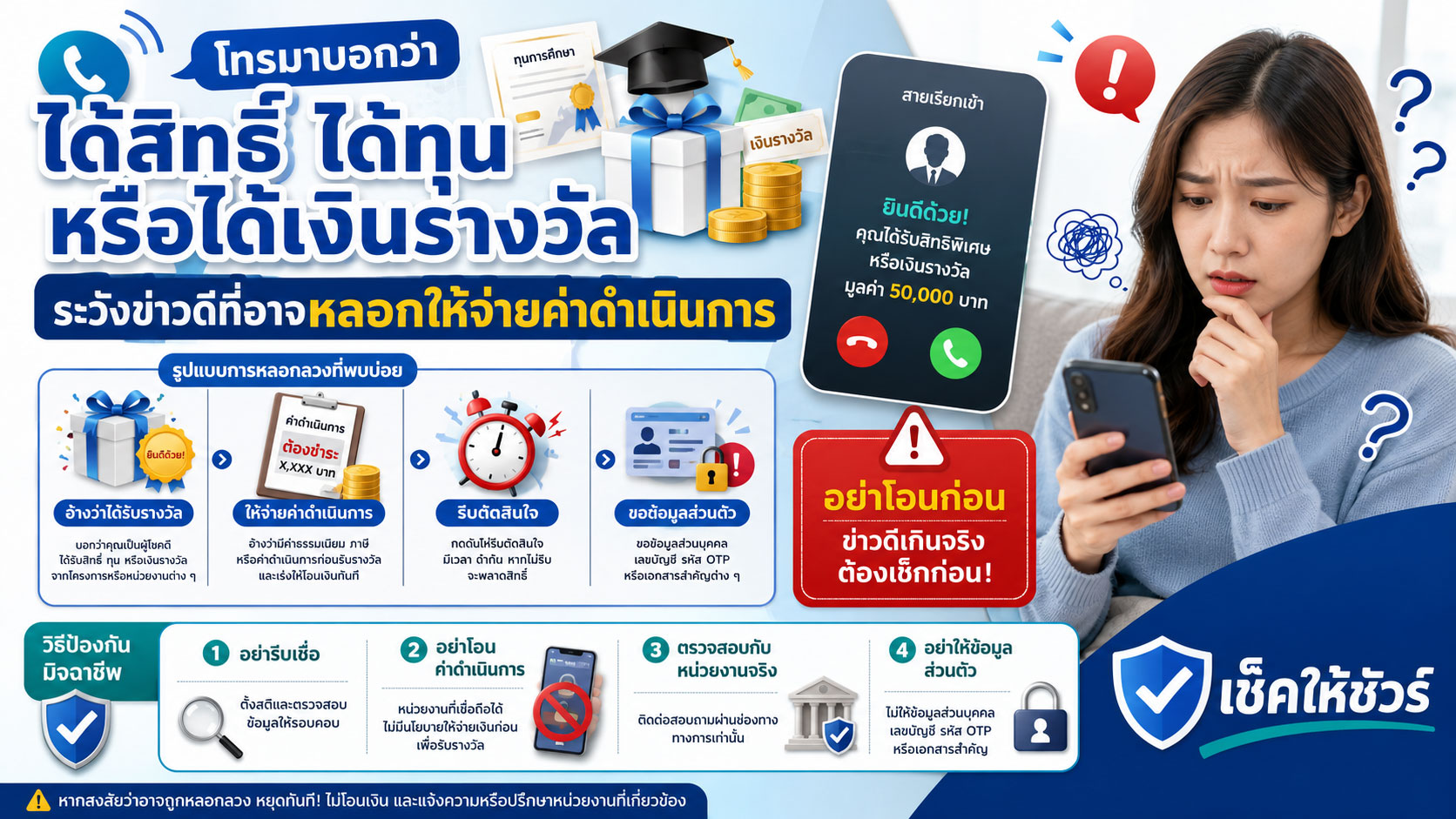
“ยินดีด้วยค่ะ คุณได้รับสิทธิ์พิเศษ”
“คุณได้รับเลือกให้รับทุนสนับสนุน”
“คุณได้รับเงินรางวัลจากแคมเปญ”
“มีชื่อคุณอยู่ในรายชื่อผู้ได้รับเงินช่วยเหลือ”
“กรุณาชำระค่าดำเนินการก่อนรับเงิน”
ถ้าได้รับสายหรือข้อความแบบนี้ หลายคนอาจรู้สึกดีใจทันที
เพราะคำว่า “ได้สิทธิ์” “ได้ทุน” หรือ “ได้เงินรางวัล” ทำให้รู้สึกว่าเรากำลังจะได้รับอะไรบางอย่าง
บางคนอาจคิดว่าเป็นโชคดี
บางคนอาจคิดว่าเป็นโครงการช่วยเหลือจริง
บางคนอาจคิดว่าเคยลงทะเบียนไว้แล้วจำไม่ได้
บางคนอาจคิดว่าเป็นแคมเปญจากร้านค้า แพลตฟอร์ม หรือหน่วยงานที่เคยใช้บริการ
และบางคนอาจอยากรีบทำให้ทัน เพราะกลัวเสียสิทธิ์
มิจฉาชีพเข้าใจความรู้สึกนี้ดี
เขาไม่ได้เริ่มด้วยการขอเงินก้อนใหญ่เสมอไป
แต่เริ่มจากการบอกว่าเรากำลังจะได้เงิน ได้ทุน ได้รางวัล หรือได้สิทธิ์บางอย่าง
จากนั้นจึงค่อยพาเราไปสู่ขั้นตอนที่ต้อง “จ่ายก่อน”
จ่ายค่าดำเนินการ
จ่ายค่าภาษี
จ่ายค่าประกัน
จ่ายค่าธรรมเนียม
จ่ายค่าปลดล็อก
จ่ายค่ายืนยันตัวตน
หรือโอนเงินเพื่อเปิดสิทธิ์รับรางวัล
จำไว้ว่า
ข่าวดีเรื่องเงินที่มาพร้อมกับการให้เราโอนเงินก่อน ควรหยุดตรวจสอบทันที
ทำไมคำว่า “ยินดีด้วย” ถึงทำให้คนลดความระวัง
เวลาเราได้รับข้อความหรือสายที่ขึ้นต้นด้วยคำว่า “ยินดีด้วย” สมองมักรู้สึกว่าเรื่องนี้เป็นบวก
ไม่ใช่การขู่
ไม่ใช่การทวงหนี้
ไม่ใช่การบังคับ
แต่เป็นโอกาส
ความรู้สึกนี้ทำให้หลายคนเปิดใจฟังมากขึ้น
ยิ่งถ้าอีกฝ่ายพูดจาดี สุภาพ มีข้อมูลบางอย่างของเรา หรืออ้างชื่อองค์กรที่ดูน่าเชื่อถือ เราอาจเริ่มรู้สึกว่า “อาจจะจริงก็ได้”
บางคนไม่ได้โลภ
แต่คิดว่า ถ้าเป็นสิทธิ์ที่ตัวเองควรได้ ก็น่าเสียดายถ้าปล่อยผ่าน
บางคนกำลังมีปัญหาเรื่องเงินอยู่พอดี จึงรู้สึกว่าเงินก้อนนี้อาจช่วยได้
บางคนเห็นยอดเงินรางวัลไม่มากเกินไป จึงคิดว่าไม่น่าจะหลอก
บางคนถูกบอกว่าเหลือเวลาไม่นาน จึงรีบตัดสินใจ
นี่คือจุดที่มิจฉาชีพใช้เล่นงาน
เขาไม่ได้ใช้แค่ความโลภ
แต่ใช้ความหวัง ความเสียดาย และความกลัวเสียโอกาส
กลโกงแบบนี้มักมาในรูปแบบไหน
สายหรือข้อความประเภท “ได้สิทธิ์ ได้ทุน ได้เงินรางวัล” อาจมาได้หลายแบบ
เช่น
ได้สิทธิ์รับเงินช่วยเหลือจากโครงการหนึ่ง
ได้รับเลือกให้รับทุนการศึกษา
ได้รับทุนสนับสนุนอาชีพ
ได้รับสิทธิ์กู้เงินพิเศษ
ได้รับเงินรางวัลจากการจับฉลาก
ได้รับ cashback จากแคมเปญ
ได้รับคูปองเงินสด
ได้รับรางวัลจากการกดไลก์หรือแชร์โพสต์
ได้รับรางวัลจากแพลตฟอร์มช้อปปิ้ง
ได้รับสิทธิ์จากการเป็นลูกค้าธนาคาร
ได้รับสิทธิ์จากการใช้ซิมหรือเบอร์โทรศัพท์
ได้รับทุนจากองค์กรการกุศลหรือมูลนิธิ
หรือได้รับเลือกเป็นผู้โชคดี ทั้งที่เราไม่แน่ใจว่าเคยสมัครอะไรไว้หรือไม่
บางครั้งเรื่องอาจดูสมจริงมาก
มีชื่อโครงการ
มีโลโก้
มีเลขอ้างอิง
มีเอกสาร
มีชื่อเจ้าหน้าที่
มีรูปบัตรพนักงาน
มีหน้าเว็บให้กรอกข้อมูล
มีรีวิวคนที่อ้างว่าได้รับเงินจริง
หรือมีข้อความบอกว่ามีคนรับเงินไปแล้วหลายราย
แต่สิ่งที่ต้องจำคือ
รายละเอียดที่ดูครบ ไม่ได้แปลว่าเรื่องจริง
มิจฉาชีพสามารถสร้างฉาก สร้างเอกสาร และสร้างความน่าเชื่อถือปลอมได้
จุดเปลี่ยนสำคัญคือ “ต้องจ่ายก่อนรับ”
ถ้าฟังช่วงแรก เรื่องอาจดูดี
แต่จุดที่ควรระวังมากที่สุดคือเมื่ออีกฝ่ายเริ่มบอกว่าต้องจ่ายบางอย่างก่อน
เช่น
“ต้องชำระค่าดำเนินการก่อนค่ะ”
“ต้องจ่ายภาษีรางวัลก่อนรับเงิน”
“ต้องโอนค่าประกันสิทธิ์”
“ต้องจ่ายค่าธรรมเนียมเปิดระบบ”
“ต้องโอนเพื่อยืนยันบัญชีรับเงิน”
“ต้องมีเงินคงเหลือในบัญชีตามเกณฑ์”
“ต้องเติมยอดก่อน ระบบถึงจะปล่อยเงิน”
“ต้องชำระค่าจัดส่งของรางวัล”
“ต้องจ่ายค่าปลดล็อกเงินรางวัล”
“ต้องโอนก่อน แล้วระบบจะคืนให้พร้อมเงินรางวัล”
คำพูดเหล่านี้ทำให้การจ่ายเงินดูเหมือนเป็นขั้นตอนปกติ
โดยเฉพาะถ้าจำนวนเงินครั้งแรกไม่มาก
บางคนคิดว่า
“จ่ายแค่นี้ แต่ได้เงินกลับมากกว่า ก็น่าลอง”
แต่เมื่อโอนไปแล้ว มิจฉาชีพอาจมีขั้นตอนใหม่เพิ่มขึ้นเรื่อยๆ
ค่าดำเนินการรอบแรก
ค่าภาษี
ค่าธรรมเนียม
ค่าปลดล็อก
ค่าระงับข้อผิดพลาด
ค่าปรับยอด
ค่าค้ำประกัน
หรือค่าปิดบัญชีระบบ
จากเงินจำนวนเล็กน้อย อาจกลายเป็นเงินหลายรอบ
และสุดท้ายเงินรางวัลที่เขาพูดถึงอาจไม่มีอยู่จริงตั้งแต่แรก
“ค่าภาษีรางวัล” เป็นคำที่ถูกใช้หลอกบ่อย
บางคนอาจเชื่อเพราะได้ยินคำว่า “ภาษี”
เพราะคิดว่าการได้รับเงินรางวัลหรือของรางวัลอาจต้องเสียภาษีจริง
มิจฉาชีพจึงใช้คำนี้ให้ดูน่าเชื่อถือ
แต่สิ่งที่ควรระวังคือ เขามักให้โอนเงินเข้าบัญชีที่เขาระบุเอง
บางครั้งเป็นบัญชีบุคคล
บางครั้งเป็นบัญชีชื่อไม่เกี่ยวข้องกับองค์กร
บางครั้งบอกว่าต้องโอนทันที ไม่อย่างนั้นสิทธิ์หมดอายุ
บางครั้งห้ามถามคนอื่น
บางครั้งห้ามติดต่อหน่วยงานเอง
บางครั้งบอกว่าหากไม่จ่ายภาษีตอนนี้ จะถูกตัดสิทธิ์
ถ้ามีเรื่องภาษีจริง ควรมีช่องทางตรวจสอบที่เป็นทางการ ไม่ใช่ให้โอนตามคำสั่งของคนปลายสาย
อย่าใช้คำว่า “ภาษี” เป็นเหตุผลให้รีบโอน
ให้ตรวจสอบกับหน่วยงานหรือองค์กรที่ถูกอ้างถึงผ่านช่องทางทางการด้วยตัวเองก่อนเสมอ
ระวังทุนปลอมที่เล่นกับความหวังของครอบครัว
กลโกง “ได้รับทุน” อาจอันตรายมาก เพราะมันไม่ได้หลอกแค่เงิน แต่หลอกความหวัง
บางคนอยากได้ทุนการศึกษาให้ลูก
บางคนอยากได้ทุนทำอาชีพ
บางคนอยากได้เงินสนับสนุนเริ่มต้นธุรกิจ
บางคนอยากได้ทุนรักษาพยาบาล
บางคนอยากได้ทุนช่วยเหลือผู้มีรายได้น้อย
มิจฉาชีพอาจโทรมาอ้างว่าได้รับเลือก หรือผ่านการพิจารณาเบื้องต้นแล้ว
จากนั้นขอให้จ่ายเงินเล็กน้อยก่อน เช่น
ค่าลงทะเบียน
ค่ายืนยันสิทธิ์
ค่าทำเอกสาร
ค่าประกันทุน
ค่าธรรมเนียมบัญชี
ค่าจัดส่งเอกสาร
หรือค่าเปิดระบบรับเงิน
หลายคนยอมจ่ายเพราะคิดว่ากำลังแลกกับโอกาสที่ใหญ่กว่า
แต่ทุนจริงควรตรวจสอบแหล่งที่มาได้
ควรมีประกาศชัดเจน
ควรมีหน่วยงานหรือองค์กรที่ยืนยันได้
และไม่ควรกดดันให้ผู้รับทุนโอนเงินส่วนตัวแบบเร่งด่วนผ่านแชทหรือโทรศัพท์
ถ้าทุนดีจริง เขาควรให้เวลาคุณตรวจสอบ ไม่ใช่เร่งให้จ่ายก่อนคิด
ได้สิทธิ์พิเศษ ไม่ได้แปลว่าต้องรีบให้ข้อมูล
บางสายอาจไม่ได้เริ่มจากการเก็บเงินทันที
แต่อาจเริ่มจากการเก็บข้อมูล
เช่น
ชื่อ-นามสกุล
เลขบัตรประชาชน
วันเดือนปีเกิด
ที่อยู่
เบอร์โทร
บัญชีธนาคาร
รูปบัตรประชาชน
รูปหน้าตรง
ข้อมูลรายได้
ข้อมูลครอบครัว
หรือรหัส OTP
เขาอาจบอกว่าเป็นการยืนยันสิทธิ์
แต่ข้อมูลเหล่านี้อาจถูกนำไปใช้ต่อได้
ใช้เปิดบัญชีปลอม
ใช้แอบอ้างตัวตน
ใช้สมัครบริการอื่น
ใช้หลอกคนรอบตัว
ใช้ทำให้ scam ครั้งต่อไปดูน่าเชื่อถือขึ้น
หรือใช้เจาะบัญชีออนไลน์ของเรา
อย่าคิดว่า “ยังไม่ได้โอนเงินก็ไม่เป็นไร”
บางครั้งการเสียข้อมูลสำคัญอาจนำไปสู่ความเสียหายภายหลัง
ถ้ามีคนบอกว่าได้สิทธิ์ แต่ขอข้อมูลลึกเกินจำเป็น ให้หยุดก่อน
“ต้องทำวันนี้” คือสัญญาณกดดัน
มิจฉาชีพชอบกำหนดเวลา
เพราะเวลาเป็นสิ่งที่ทำให้คนคิดน้อยลง
เขาอาจพูดว่า
“สิทธิ์หมดวันนี้”
“ต้องยืนยันภายใน 10 นาที”
“ระบบจะปิดรอบแล้ว”
“ถ้าไม่ทำตอนนี้ จะเสียสิทธิ์”
“มีผู้รอรับสิทธิ์แทนคุณ”
“เจ้าหน้าที่รอทำรายการอยู่”
“โครงการนี้มีจำนวนจำกัด”
“ถ้าช้า เงินจะถูกส่งคืนระบบ”
คำเหล่านี้ทำให้เรากลัวพลาดโอกาส
แต่โอกาสจริงควรตรวจสอบได้
ถ้าเป็นทุนจริง รางวัลจริง หรือสิทธิ์จริง ควรมีรายละเอียดที่ตรวจสอบย้อนหลังได้ ไม่ใช่หายไปทันทีเมื่อเราขอเวลาคิด
ถ้าอีกฝ่ายไม่ยอมให้คุณหยุดคิด ให้สงสัยไว้ก่อนว่าเขาอาจกลัวคุณจะตรวจสอบเจอความจริง
อย่าเชื่อเพียงเพราะเขารู้ข้อมูลบางอย่างของเรา
บางครั้งมิจฉาชีพอาจมีข้อมูลบางส่วนของเราอยู่แล้ว
เช่น ชื่อเล่น
เบอร์โทร
ชื่อจริง
จังหวัด
สินค้าที่เคยสั่ง
ชื่อเพจที่เคยกดไลก์
หรือข้อมูลจากโซเชียลมีเดีย
เมื่อเขาพูดข้อมูลเหล่านี้ออกมา เราอาจรู้สึกว่าเรื่องนี้น่าเชื่อถือ
แต่การรู้ข้อมูลบางอย่าง ไม่ได้แปลว่าเขาเป็นเจ้าหน้าที่จริง
ข้อมูลจำนวนมากอาจหลุดมาจากหลายแหล่ง
บางส่วนอาจมาจากโพสต์สาธารณะ
บางส่วนอาจมาจากฟอร์มที่เราเคยกรอก
บางส่วนอาจมาจากบัญชีที่เคยใช้งาน
หรือบางส่วนอาจถูกเดาจากบริบท
อย่าใช้การที่เขารู้ชื่อเราเป็นเหตุผลให้เชื่อทั้งหมด
ให้ดูพฤติกรรมต่อไปว่าเขาขออะไรจากเรา
ถ้ารู้ชื่อเราแล้วขอให้โอนเงิน ให้ OTP หรือกรอกข้อมูลสำคัญ นั่นยังคงน่าสงสัย
อย่าตรวจสอบจากลิงก์หรือเบอร์ที่เขาส่งมา
ถ้าอีกฝ่ายอ้างว่าเป็นหน่วยงาน องค์กร บริษัท หรือมูลนิธิ เขาอาจส่งลิงก์ให้ตรวจสอบ
แต่ลิงก์นั้นอาจเป็นเว็บปลอม
หรือส่งเบอร์ให้โทรกลับ แต่เบอร์นั้นอาจเป็นของกลุ่มเดียวกัน
หรือให้เพิ่ม LINE เจ้าหน้าที่ แต่บัญชีนั้นอาจเป็นบัญชีปลอม
การตรวจสอบที่ปลอดภัยควรเริ่มจากช่องทางที่คุณหาเอง
เช่น
เว็บไซต์ทางการที่ค้นหาเอง
แอปทางการ
เบอร์ Call Center ที่อยู่บนเว็บไซต์จริง
บัญชีโซเชียลที่ยืนยันแล้ว
หรือสำนักงานจริงของหน่วยงานนั้น
อย่าตรวจสอบมิจฉาชีพผ่านช่องทางที่มิจฉาชีพเตรียมไว้ให้
เพราะนั่นอาจเป็นเพียงอีกฉากหนึ่งของการหลอก
ถ้าได้รับสายว่าได้เงินรางวัล ควรถามตัวเองก่อน
ก่อนจะให้ข้อมูลหรือโอนเงิน ให้ถามตัวเองง่ายๆ
เราเคยสมัครกิจกรรมนี้จริงหรือไม่
ประกาศผู้ได้รับรางวัลอยู่ที่ไหน
องค์กรที่อ้างถึงมีอยู่จริงหรือไม่
ทำไมถึงต้องโอนเงินก่อนรับเงิน
ทำไมถึงต้องให้ OTP
ทำไมต้องใช้บัญชีส่วนตัว
ทำไมต้องเพิ่ม LINE แทนที่จะติดต่อผ่านช่องทางหลัก
ทำไมต้องรีบวันนี้
ทำไมไม่ให้เราโทรกลับช่องทางทางการ
และถ้าเป็นเงินรางวัลจริง ทำไมการรับเงินจึงยุ่งยากจนต้องจ่ายเพิ่มหลายขั้นตอน
ถ้าคำตอบเริ่มไม่ชัด ให้หยุด
ข่าวดีที่จริงควรทนต่อการตรวจสอบได้
ข่าวดีที่หลอกมักพังทันทีเมื่อเราขอเวลาเช็ก
ถ้าเป็นทุนหรือสิทธิ์จริง ควรมีอะไรให้ตรวจสอบ
ทุนหรือสิทธิ์ที่น่าเชื่อถือควรมีข้อมูลที่ตรวจสอบได้
เช่น
ชื่อโครงการชัดเจน
หน่วยงานผู้ให้ทุนชัดเจน
เว็บไซต์หรือประกาศทางการ
เงื่อนไขการสมัคร
ระยะเวลารับสมัคร
ช่องทางติดต่อที่เป็นทางการ
เอกสารที่ระบุขั้นตอนอย่างชัดเจน
รายชื่อผู้เกี่ยวข้องที่ตรวจสอบได้
และกระบวนการที่ไม่บังคับให้โอนเงินเข้าบัญชีส่วนตัวแบบเร่งด่วน
ถ้ามีแต่คนโทรมาแจ้ง ไม่มีประกาศ ไม่มีเว็บไซต์ชัดเจน ไม่มีเงื่อนไขตรวจสอบได้ และเร่งให้โอนเงินทันที ให้ระวังมาก
โดยเฉพาะถ้าใช้คำว่า “คุณได้รับเลือกแล้ว” แต่เราไม่เคยสมัครอะไรเลย
ถ้าเผลอจ่ายค่าดำเนินการไปแล้ว
ถ้าคุณเผลอโอนเงินไปแล้ว ให้หยุดทันทีเมื่อเริ่มสงสัย
อย่าโอนเพิ่มเพื่อแก้รายการ
อย่าจ่ายค่าปลดล็อกต่อ
อย่าจ่ายภาษีเพิ่มเพราะเขาบอกว่าเงินก้อนใหญ่รออยู่
อย่าส่ง OTP
อย่าติดตั้งแอป
อย่าลบหลักฐาน
ให้เก็บข้อมูลทั้งหมด เช่น
เบอร์โทร
แชท
ลิงก์
ชื่อโครงการที่ถูกอ้าง
ชื่อเจ้าหน้าที่ที่ใช้
เอกสารที่ส่งมา
เลขบัญชีปลายทาง
ชื่อบัญชี
สลิปโอนเงิน
เวลาและยอดเงินที่โอน
จากนั้นติดต่อธนาคารผ่านช่องทางทางการหากมีการโอนเงิน
แจ้งเหตุผ่านช่องทางที่เกี่ยวข้อง
และบอกคนใกล้ตัวให้ช่วยดูสถานการณ์
อย่ากลับไปคุยกับคนเดิมเพราะเขาอาจหลอกซ้ำว่า “ต้องจ่ายอีกนิดเดียวถึงจะได้เงิน”
ถ้ามีคนในบ้านได้รับสายแบบนี้ ควรช่วยอย่างไร
ถ้าคนในบ้านเล่าว่ามีคนโทรมาบอกว่าได้ทุน ได้สิทธิ์ หรือได้เงินรางวัล อย่าเพิ่งดุทันที
เพราะถ้าเขารู้สึกอายหรือกลัวถูกตำหนิ ครั้งต่อไปเขาอาจไม่กล้าบอก
ให้ถามอย่างใจเย็นว่า
เขาอ้างว่าเป็นใคร
บอกว่าได้เงินหรือสิทธิ์อะไร
ให้ทำอะไรต่อ
ขอข้อมูลอะไรบ้าง
ให้โอนเงินหรือไม่
ส่งลิงก์หรือบัญชีอะไรมา
และบอกว่าต้องทำภายในเวลาเท่าไร
จากนั้นช่วยกันตรวจสอบผ่านช่องทางทางการ
การคุยกันด้วยความเข้าใจจะช่วยให้คนในบ้านกล้าขอความช่วยเหลือเร็วขึ้น
ซึ่งสำคัญมากในสถานการณ์ที่มิจฉาชีพใช้ความเร่งด่วนกดดัน
ครอบครัวควรมีข้อตกลงเรื่องข่าวดีทางการเงิน
ในบ้านควรมีข้อตกลงง่ายๆ ว่า
ถ้ามีใครโทรมาบอกว่าได้เงิน ได้ทุน ได้สิทธิ์ หรือได้รางวัล ต้องไม่โอนเงินทันที
ถ้ามีค่าดำเนินการ ต้องถามคนในบ้านก่อน
ถ้ามีลิงก์ให้กด ต้องไม่กดทันที
ถ้ามี OTP ต้องไม่บอกใคร
ถ้ามีบัญชีให้โอน ต้องตรวจสอบก่อน
ถ้าบอกว่าสิทธิ์หมดวันนี้ ต้องยิ่งหยุดคิด
และถ้าไม่เคยสมัครอะไร แต่มีคนบอกว่าได้รับเลือก ให้สงสัยไว้ก่อน
ข้อตกลงแบบนี้ไม่ได้ทำให้คนในบ้านพลาดโอกาส
แต่ช่วยให้ไม่ถูกใช้คำว่า “โอกาส” มาหลอก
ประโยคที่ควรจำ: ได้เงิน ได้ทุน ได้รางวัล แต่ให้จ่ายก่อน ให้สงสัยไว้ก่อน
ถ้าต้องจำประโยคเดียวจากบทความนี้ ขอให้จำว่า
ได้เงิน ได้ทุน ได้รางวัล แต่ให้จ่ายก่อน ให้สงสัยไว้ก่อน
เงินรางวัลจริงไม่ควรทำให้เราต้องโอนเงินหลายรอบ
ทุนจริงไม่ควรบังคับให้จ่ายค่าปลดล็อกผ่านบัญชีส่วนตัว
สิทธิ์จริงควรตรวจสอบได้ ไม่ใช่เร่งให้ทำในไม่กี่นาที
และข่าวดีจริงไม่ควรกลัวการถามคำถาม
ถ้าคนปลายสายไม่ยอมให้ตรวจสอบ แสดงว่าอาจมีบางอย่างที่ไม่อยากให้เรารู้
สรุป: ข่าวดีที่เร่งให้จ่ายเงิน อาจไม่ใช่ข่าวดี
กลโกงแบบโทรมาบอกว่าได้สิทธิ์ ได้ทุน หรือได้เงินรางวัล อันตรายเพราะมันเริ่มจากความรู้สึกดี
เราอาจคิดว่าได้โอกาส
ได้ความช่วยเหลือ
ได้เงินก้อน
ได้ทุน
หรือได้รางวัลที่ไม่คาดคิด
แต่ถ้าข่าวดีนั้นพาเราไปสู่การจ่ายเงินก่อน ให้ข้อมูลสำคัญ กดลิงก์ ให้ OTP หรือโอนเงินหลายรอบ สิ่งนั้นอาจไม่ใช่โอกาส
แต่อาจเป็นกับดัก
ก่อนเชื่อ ให้หยุดก่อน
ตรวจสอบว่าเคยสมัครจริงหรือไม่
ตรวจสอบหน่วยงานหรือองค์กรที่อ้างถึง
ใช้ช่องทางทางการที่หาเอง
ไม่กดลิงก์ที่ส่งมาแบบเร่งด่วน
ไม่โอนเงินเพื่อรับเงินรางวัล
ไม่ให้ OTP
ไม่ส่งเอกสารสำคัญโดยไม่มั่นใจ
และไม่ตัดสินใจคนเดียวเพราะกลัวเสียสิทธิ์
เพราะโอกาสที่แท้จริงควรตรวจสอบได้
แต่โอกาสปลอมมักต้องการให้เรารีบจ่ายก่อนที่จะได้คิด
A Call Saying You Have Received a Special Right, Grant, or Prize: Beware of Good News That May Trick You into Paying a Processing Fee
“Congratulations, you have received a special right.”
“You have been selected to receive a support grant.”
“You have won a prize from our campaign.”
“Your name is on the list of people eligible for financial assistance.”
“Please pay the processing fee before receiving the money.”
If you receive a call or message like this, many people may feel happy immediately.
Because words like “special right,” “grant,” or “prize money” make us feel that we are about to receive something.
Some people may think it is good luck.
Some may think it is a real assistance program.
Some may think they registered for something but forgot.
Some may think it is a campaign from a store, platform, or organization they have used before.
And some may want to act quickly because they are afraid of losing the opportunity.
Scammers understand this feeling well.
They do not always start by asking for a large amount of money.
They start by telling you that you are about to receive money, a grant, a prize, or a special benefit.
Then they slowly lead you to a step where you must “pay first.”
A processing fee.
A tax payment.
An insurance fee.
A service fee.
An unlocking fee.
An identity verification fee.
Or a transfer to activate your right to receive the prize.
Remember this:
Good news about receiving money that begins with you transferring money first should be checked immediately.
Why the Word “Congratulations” Can Lower Your Guard
When a call or message begins with “Congratulations,” our brain often treats it as something positive.
It does not feel like a threat.
It does not feel like debt collection.
It does not feel like pressure.
It feels like an opportunity.
That feeling can make many people more willing to listen.
And if the other person speaks politely, has some of your information, or claims to represent an organization that sounds credible, you may start to think, “Maybe this is real.”
Some people are not greedy.
They simply think that if it is something they are entitled to, it would be a shame to miss it.
Some may be facing financial difficulty and feel that this money could help.
Some may see that the prize amount is not too large and think it is unlikely to be a scam.
Some may be told that there is not much time left, so they decide quickly.
This is where scammers take advantage.
They do not only use greed.
They use hope, fear of missing out, and the worry that you may lose a real opportunity.
What These Scams Often Look Like
Calls or messages about “special rights, grants, or prizes” can appear in many forms.
For example:
You are eligible for money from an assistance program.
You have been selected to receive an education grant.
You have received a career support grant.
You are eligible for a special loan.
You have won money from a lucky draw.
You have received cashback from a campaign.
You have received a cash coupon.
You have won a prize for liking or sharing a post.
You have won a reward from an online shopping platform.
You have received a special right as a bank customer.
You have received a benefit from your SIM card or phone number.
You have received a grant from a charity or foundation.
Or you have been selected as a lucky winner, even though you are not sure whether you ever applied for anything.
Sometimes the story may look very realistic.
There may be a project name.
A logo.
A reference number.
A document.
A staff name.
A photo of an employee ID card.
A website for entering information.
Reviews from people claiming they received real money.
Or messages saying many people have already received their payments.
But one thing to remember is this:
Complete-looking details do not prove that the story is real.
Scammers can create scenes, documents, and fake credibility.
The Critical Turning Point Is “Pay First to Receive”
At first, the story may sound positive.
But the most important warning sign is when the other person starts saying that you must pay something first.
For example:
“You need to pay the processing fee first.”
“You must pay the prize tax before receiving the money.”
“You must transfer an insurance fee to secure your right.”
“You need to pay a system activation fee.”
“You must transfer money to verify your receiving account.”
“You need to maintain a required balance in your account.”
“You must top up before the system can release the money.”
“You need to pay the delivery fee for the prize.”
“You must pay an unlocking fee for the prize money.”
“Transfer first, and the system will return it together with the prize.”
These phrases make the payment sound like a normal procedure.
Especially when the first amount is small.
Some people may think:
“I pay only a little, but I will receive much more back. It may be worth trying.”
But once you transfer, scammers may add more steps.
The first processing fee.
A tax fee.
A service fee.
An unlocking fee.
An error correction fee.
A balance adjustment fee.
A guarantee fee.
Or a system closing fee.
A small payment can quickly become multiple payments.
And in the end, the prize money they promised may never have existed.
“Prize Tax” Is a Common Word Used to Trick People
Some people may believe the scam because they hear the word “tax.”
They may think that receiving prize money or a prize may involve tax.
Scammers use this word to make the request sound more credible.
But the warning sign is that they often ask you to transfer money to an account they provide.
Sometimes it is a personal account.
Sometimes the account name has no clear connection to the organization.
Sometimes they say you must transfer immediately or your right will expire.
Sometimes they tell you not to ask anyone else.
Sometimes they tell you not to contact the organization yourself.
Sometimes they say that if you do not pay the tax now, you will lose the prize.
If a tax matter is real, there should be an official way to verify it.
It should not rely on transferring money based on instructions from someone on the phone.
Do not let the word “tax” become a reason to rush into transferring money.
Always check with the real organization or agency through official channels first.
Beware of Fake Grants That Play with Family Hope
Fake grant scams can be especially harmful because they do not only target money. They target hope.
Some people want an education grant for their children.
Some want support to start or continue a career.
Some want financial support to start a small business.
Some want medical assistance.
Some want support for low-income households.
Scammers may call and claim that you have been selected or passed the initial screening.
Then they ask you to pay a small amount first, such as:
A registration fee
A confirmation fee
A document processing fee
A grant insurance fee
An account service fee
A document delivery fee
Or a system activation fee to receive the money
Many people agree to pay because they feel they are exchanging a small amount for a much bigger opportunity.
But real grants should have sources you can verify.
There should be a clear announcement.
There should be an organization or agency you can confirm.
And they should not pressure recipients into urgently transferring personal money through chat or a phone call.
If the grant is real, they should give you time to check.
They should not rush you into paying before you can think.
A Special Right Does Not Mean You Must Rush to Share Information
Some calls may not begin by asking for money.
They may begin by collecting information.
For example:
Full name
National ID number
Date of birth
Address
Phone number
Bank account
Photo of your ID card
Face photo
Income information
Family information
Or an OTP
They may say this is required to confirm your eligibility.
But this information may be misused later.
It can be used to open fake accounts.
Impersonate you.
Register for other services.
Scam people around you.
Make future scams sound more believable.
Or break into your online accounts.
Do not think, “I have not transferred money yet, so it should be fine.”
Sometimes losing sensitive information can lead to damage later.
If someone says you have received a benefit but asks for too much personal information, stop first.
“You Must Do It Today” Is a Pressure Signal
Scammers like deadlines.
Deadlines make people think less.
They may say:
“The right expires today.”
“You must confirm within 10 minutes.”
“The system is closing soon.”
“If you do not do it now, you will lose the benefit.”
“There are other people waiting to receive this right.”
“The officer is waiting to process your case.”
“This program has limited slots.”
“If you are too late, the money will be returned to the system.”
These phrases create fear of missing out.
But real opportunities should be verifiable.
If it is a real grant, prize, or benefit, there should be details that can be checked later. It should not disappear the moment you ask for time to think.
If the other person refuses to let you pause, suspect that they may be afraid you will discover the truth.
Do Not Believe Only Because They Know Some of Your Information
Sometimes scammers may already have some information about you.
For example:
Your nickname
Phone number
Full name
Province
Products you have ordered
Pages you have liked
Or information from social media
When they say these details, you may feel that the story is more credible.
But knowing some information does not mean they are real officers or representatives.
Many kinds of information can come from many places.
Some may come from public posts.
Some may come from forms you once filled out.
Some may come from accounts you have used.
Some may simply be guessed from context.
Do not treat the fact that they know your name as a reason to believe everything.
Look at what they ask you to do next.
If they know your name but ask you to transfer money, provide an OTP, or enter sensitive information, it is still suspicious.
Do Not Verify Through Links or Phone Numbers They Send
If the other person claims to represent an agency, organization, company, or foundation, they may send you a link to verify.
But that link may lead to a fake website.
They may send a phone number for you to call back, but that number may belong to the same scam group.
They may ask you to add a LINE officer, but that account may be fake.
Safe verification should begin from a channel you find yourself.
For example:
An official website you search for yourself
An official app
A call center number listed on the real website
A verified social media account
Or the real office of that organization
Do not verify scammers through channels prepared by the scammers.
That may simply be another scene in the scam.
If You Receive a Call About a Prize, Ask Yourself First
Before sharing information or transferring money, ask yourself:
Did I actually apply for this activity?
Where was the winner announcement made?
Does the organization they mention really exist?
Why do I need to transfer money before receiving money?
Why do they need my OTP?
Why are they using a personal bank account?
Why do I need to add LINE instead of contacting the main channel?
Why does it have to be done today?
Why will they not let me call back through an official channel?
And if this is real prize money, why is the receiving process so complicated that I need to pay more at several steps?
If the answers are unclear, stop.
Real good news should survive verification.
Fake good news often falls apart as soon as you ask for time to check.
What Should a Real Grant or Special Right Have?
A credible grant or benefit should have verifiable information.
For example:
A clear project name
A clear funding organization or agency
An official website or announcement
Application conditions
Application period
Official contact channels
Documents that clearly explain the process
Verifiable people or departments involved
And a process that does not force you to urgently transfer money into a personal account
If there is only a phone call, no announcement, no clear website, no verifiable conditions, and pressure to transfer money immediately, be very careful.
Especially if they say “you have been selected” even though you never applied for anything.
If You Already Paid the Processing Fee
If you already transferred money, stop immediately once you begin to suspect something is wrong.
Do not transfer more to fix the transaction.
Do not pay another unlocking fee.
Do not pay more tax because they say a large amount of money is waiting.
Do not send an OTP.
Do not install an app.
Do not delete evidence.
Save all information, such as:
Phone number
Chat messages
Links
The project name they used
The staff name they used
Documents they sent
Destination account number
Account name
Transfer slip
Time and amount transferred
Then contact your bank through official channels if money was transferred.
Report the incident through the relevant channels.
And tell someone close to you so they can help review the situation.
Do not go back to the same person, because they may continue the scam by saying, “You only need to pay a little more to receive the money.”
How to Help Someone at Home Who Received This Kind of Call
If someone in your family says they received a call about a grant, special right, or prize money, do not scold them immediately.
If they feel embarrassed or afraid of being blamed, they may not tell you next time.
Ask calmly:
Who did they claim to be?
What money, grant, or benefit did they say you received?
What did they ask you to do next?
What information did they request?
Did they ask you to transfer money?
Did they send any link or bank account?
How quickly did they say you needed to act?
Then help verify through official channels.
A calm conversation helps people in the family ask for help faster.
That matters a lot when scammers use urgency to pressure victims.
Families Should Have Rules About Good Financial News
Families can make simple agreements:
If someone calls saying you received money, a grant, a benefit, or a prize, do not transfer money immediately.
If there is a processing fee, ask someone in the family first.
If there is a link, do not click it immediately.
If there is an OTP, do not tell anyone.
If there is a bank account to transfer to, verify first.
If they say the opportunity expires today, pause even more.
And if you never applied for anything but someone says you have been selected, be suspicious.
Rules like these do not make people miss opportunities.
They help prevent scammers from using the word “opportunity” as bait.
A Sentence to Remember: If You Receive Money, a Grant, or a Prize but Must Pay First, Be Suspicious
If you remember only one sentence from this article, remember this:
If you receive money, a grant, or a prize but must pay first, be suspicious.
Real prize money should not require you to transfer money many times.
Real grants should not force you to pay unlocking fees through a personal account.
Real benefits should be verifiable, not rushed within minutes.
And real good news should not be afraid of questions.
If the caller refuses to let you verify, there may be something they do not want you to know.
Conclusion: Good News That Rushes You to Pay May Not Be Good News
Scams that call to say you received a special right, grant, or prize are dangerous because they begin with a positive feeling.
You may think you have received an opportunity.
Financial support.
A lump sum.
A grant.
Or an unexpected prize.
But if that good news leads you to pay first, share sensitive information, click a link, provide an OTP, or transfer money several times, it may not be an opportunity.
It may be a trap.
Before believing it, pause first.
Check whether you actually applied.
Verify the organization or agency they mention.
Use official channels you find yourself.
Do not click urgent links.
Do not transfer money to receive prize money.
Do not provide an OTP.
Do not send important documents unless you are sure.
And do not decide alone because you are afraid of losing the opportunity.
Real opportunities should be verifiable.
Fake opportunities usually want you to pay before you have time to think.

Leave a Reply
You must be logged in to post a comment.