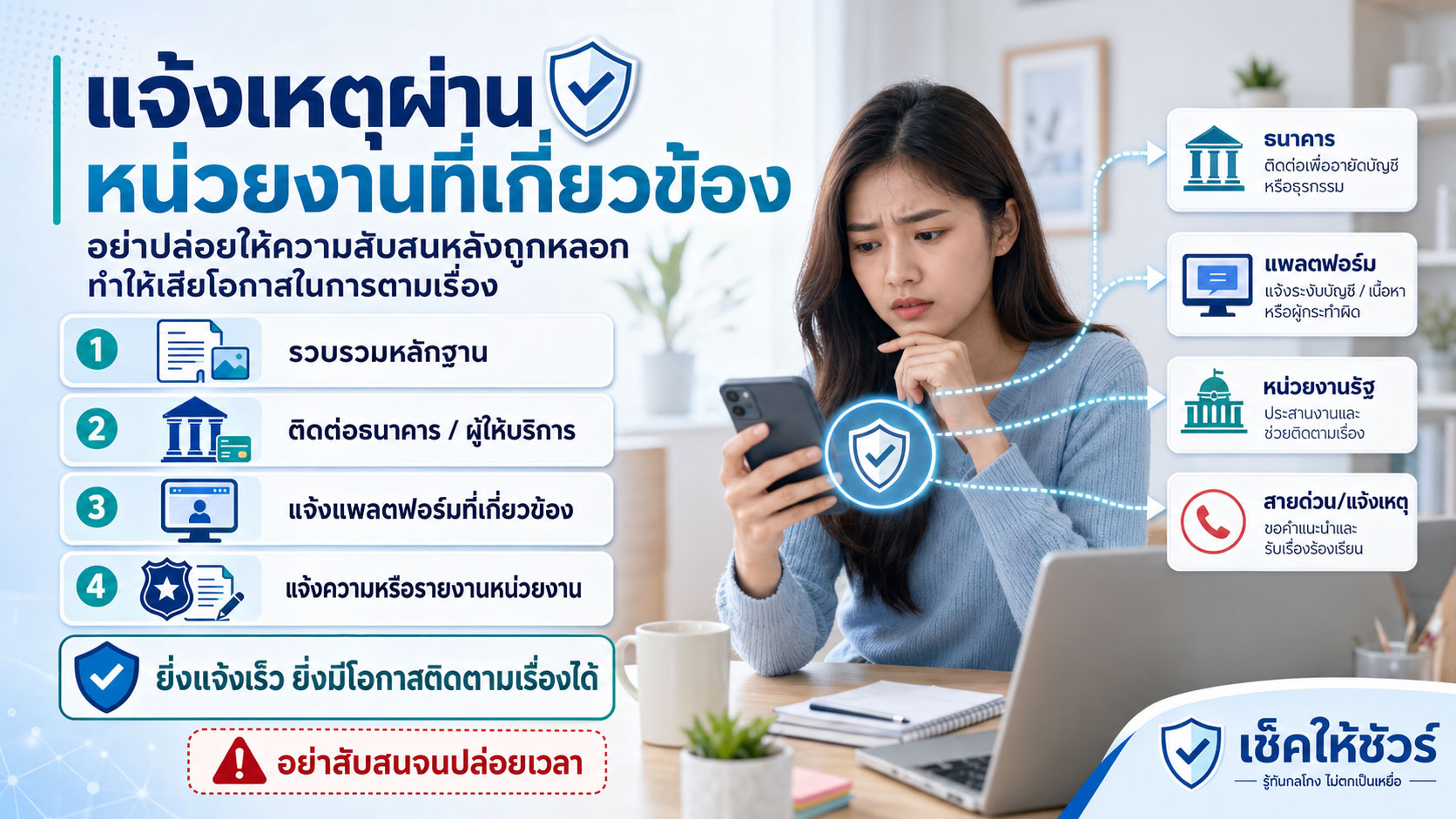
หลังจากรู้ตัวว่าอาจถูกหลอกออนไลน์ สิ่งที่เกิดขึ้นบ่อยมากคือ “ความสับสน”
ควรโทรหาธนาคารก่อนหรือไม่
ควรแจ้งตำรวจเลยไหม
ต้องแจ้งความออนไลน์หรือไปสถานีตำรวจ
ต้องรายงานเพจปลอมที่ไหน
ต้องเก็บหลักฐานอะไรก่อน
ต้องคุยกับมิจฉาชีพต่อหรือเปล่า
แล้วถ้าโอนเงินไปแล้ว ยังพอทำอะไรได้ไหม
คำถามเหล่านี้มักเกิดขึ้นในช่วงที่ใจยังไม่นิ่ง
บางคนตกใจ
บางคนโกรธตัวเอง
บางคนกลัวคนในบ้านรู้
บางคนอายจนไม่กล้าขอความช่วยเหลือ
บางคนเสียเวลาไปกับการค้นหาข้อมูลหลายที่
และบางคนถูกมิจฉาชีพหลอกซ้ำ เพราะมีคนแอบอ้างว่าจะช่วยตามเงินคืนให้
ในสถานการณ์แบบนี้ สิ่งสำคัญไม่ใช่การทำทุกอย่างพร้อมกันจนสับสน
แต่คือการ “แจ้งให้ถูกช่องทาง” และ “ทำให้เร็วพอ”
เพราะการแจ้งเหตุผ่านหน่วยงานที่เกี่ยวข้องอาจช่วยให้การระงับความเสียหาย การเก็บข้อมูล และการติดตามเรื่องเดินหน้าได้เป็นระบบมากขึ้น
แจ้งเหตุ ไม่ได้แปลว่าต้องแน่ใจ 100% ว่าถูกหลอกแล้ว
หลายคนลังเลที่จะติดต่อธนาคารหรือตำรวจ เพราะยังไม่แน่ใจว่าตัวเองถูกหลอกจริงหรือไม่
บางคนคิดว่า “อาจเป็นความเข้าใจผิด”
บางคนคิดว่า “รอดูอีกนิดก่อน”
บางคนคิดว่า “ถ้าแจ้งไปแล้วไม่ใช่เรื่องจริงจะเสียหน้าไหม”
บางคนยังเชื่อคำพูดของอีกฝ่ายที่บอกว่า “กำลังดำเนินการให้” หรือ “อีกไม่นานได้เงินคืน”
แต่ในหลายกรณี การรอนานเกินไปอาจทำให้ตามเรื่องยากขึ้น
หากมีการโอนเงินไปแล้ว มีการให้ข้อมูลสำคัญไปแล้ว หรือมีพฤติกรรมที่ชัดเจนว่าอีกฝ่ายกำลังหลอกให้โอนเพิ่ม การติดต่อหน่วยงานที่เกี่ยวข้องควรทำโดยเร็ว
คุณไม่จำเป็นต้องรอให้แน่ใจทุกอย่าง
เพียงแค่มีเหตุให้สงสัย ก็ควรเริ่มหยุดความเสียหาย เก็บหลักฐาน และสอบถามช่องทางที่ถูกต้องก่อน
เพราะการถามเร็ว อาจช่วยให้คุณรู้ว่าควรทำอะไรต่อ
แต่การเงียบไว้เพราะกลัวอาย อาจทำให้มิจฉาชีพมีเวลามากขึ้น
ขั้นแรกหลังรู้ตัว: หยุดโอน หยุดส่งข้อมูล และเก็บหลักฐาน
ก่อนแจ้งเหตุ สิ่งที่ควรทำทันทีคือหยุดการติดต่อที่เพิ่มความเสี่ยง
อย่าโอนเงินเพิ่ม
อย่าส่งรหัส OTP
อย่าส่งรูปบัตรประชาชน
อย่ากดลิงก์ซ้ำ
อย่าติดตั้งแอปที่อีกฝ่ายส่งมา
อย่าให้ใคร remote เข้าเครื่อง
และอย่าเชื่อคำว่า “โอนอีกครั้งสุดท้ายแล้วจะได้เงินคืน”
จากนั้นให้เก็บหลักฐานเท่าที่มี
เช่น แชท สลิปโอนเงิน เลขบัญชี ชื่อบัญชี เบอร์โทร ลิงก์ เว็บไซต์ รูปโปรไฟล์ โฆษณา หน้าเพจ เลขพัสดุ หรือข้อความที่ใช้ขู่และกดดัน
หลักฐานเหล่านี้จะช่วยให้การแจ้งธนาคาร แพลตฟอร์ม หรือหน่วยงานที่เกี่ยวข้องชัดเจนขึ้น
อย่าเพิ่งลบแชทหรือบล็อกทันทีถ้ายังไม่ได้บันทึกข้อมูลสำคัญ
แต่ก็ไม่จำเป็นต้องคุยต่อเพื่อเก็บข้อมูลเพิ่มจนเสี่ยงกว่าเดิม
เก็บเท่าที่มี หยุดเสียหาย แล้วเริ่มแจ้งช่องทางที่เหมาะสม
ถ้ามีการโอนเงิน: รีบติดต่อธนาคารและสายด่วนที่เกี่ยวข้อง
ถ้าคุณโอนเงินไปแล้ว สิ่งแรกที่ควรทำคือรีบติดต่อธนาคารของคุณผ่านช่องทางทางการ
แจ้งว่าอาจถูกหลอกให้โอนเงิน
แจ้งวัน เวลา จำนวนเงิน และบัญชีปลายทาง
เตรียมสลิปโอนเงิน
แจ้งข้อมูลของมิจฉาชีพเท่าที่มี
และสอบถามขั้นตอนที่ธนาคารสามารถช่วยดำเนินการได้
ในประเทศไทย ยังมีสายด่วน AOC 1441 สำหรับปัญหาอาชญากรรมออนไลน์ ซึ่งเป็นช่องทางสำคัญที่ประชาชนสามารถใช้ขอคำแนะนำและแจ้งเหตุเกี่ยวกับภัยออนไลน์ได้
หากมีการโอนเงินไปยังบัญชีมิจฉาชีพ การแจ้งเร็วมีความสำคัญมาก เพราะบางขั้นตอนเกี่ยวกับการระงับหรืออายัดบัญชีมีกรอบเวลาและขั้นตอนที่ต้องดำเนินการต่อเนื่อง
สิ่งที่ควรจำคือ อย่าใช้เบอร์หรือช่องทางที่มิจฉาชีพส่งมาให้
ให้ติดต่อธนาคารจากแอปธนาคาร เว็บไซต์ทางการ เบอร์หลังบัตร หรือสาขาเท่านั้น
และถ้าจะติดต่อหน่วยงานรัฐ ให้ใช้ช่องทางที่ตรวจสอบได้จากแหล่งทางการ ไม่ใช่ลิงก์หรือเพจที่โฆษณาว่าช่วยตามเงินคืน
แจ้งความออนไลน์หรือไปสถานีตำรวจ: ควรเข้าใจบทบาทของแต่ละช่องทาง
คดีออนไลน์บางประเภทสามารถเริ่มแจ้งความผ่านระบบออนไลน์ของตำรวจไซเบอร์ได้ ส่วนบางกรณีอาจต้องไปพบพนักงานสอบสวนที่สถานีตำรวจตามขั้นตอน
สิ่งสำคัญคือใช้ช่องทางที่ถูกต้อง
เพราะมิจฉาชีพอาจสร้างเพจปลอม เว็บไซต์ปลอม หรือบัญชีปลอมที่อ้างว่ารับแจ้งความออนไลน์ ช่วยอายัดบัญชี หรือช่วยตามเงินคืน
บางรายอาจหลอกซ้ำโดยอ้างว่าเป็นเจ้าหน้าที่ แล้วขอค่าดำเนินการ ค่าปลดล็อก ค่าติดตามบัญชี หรือให้กรอกข้อมูลส่วนตัวเพิ่มเติม
ดังนั้น หากต้องแจ้งความออนไลน์ ให้ตรวจสอบว่าเป็นเว็บไซต์ของหน่วยงานจริง
อย่ากดลิงก์จากโฆษณาหรือเพจที่ไม่น่าเชื่อถือ
อย่าส่งข้อมูลส่วนตัวให้แชทแอดมินที่อ้างว่าเป็นเจ้าหน้าที่โดยไม่ตรวจสอบ
และอย่าจ่ายเงินให้ใครที่อ้างว่าจะช่วย “แฮ็กเงินคืน” หรือ “ดึงเงินกลับ” ให้
หน่วยงานจริงควรมีช่องทางตรวจสอบได้ ไม่ใช่เร่งให้โอนค่าดำเนินการผ่านบัญชีส่วนตัว
ถ้าเป็นเว็บปลอม เพจปลอม หรือโฆษณาหลอก: รายงานแพลตฟอร์มด้วย
หลายคนคิดว่าแจ้งธนาคารหรือตำรวจแล้วก็จบ
แต่ในกรณีที่เริ่มจากเพจ โฆษณา เว็บร้านค้า แอป หรือบัญชีโซเชียล การรายงานต่อแพลตฟอร์มก็สำคัญเช่นกัน
เช่น รายงานเพจปลอมบน Facebook
รายงานบัญชีปลอมบน Instagram หรือ TikTok
รายงานร้านค้าต้องสงสัยบน marketplace
รายงานแชทหลอกลวงใน LINE
รายงานโฆษณาที่พาไปเว็บปลอม
หรือรายงานแอปต้องสงสัยใน Store
การรายงานอาจไม่ได้ทำให้ได้เงินคืนทันที
แต่ช่วยลดโอกาสที่บัญชีหรือโฆษณานั้นจะไปหลอกคนอื่นต่อ
ก่อนรายงาน ควรถ่ายภาพหน้าจอเก็บไว้ก่อน เพราะบางแพลตฟอร์มอาจซ่อนหรือลบบัญชีหลังรายงาน ทำให้ย้อนกลับไปดูหลักฐานได้ยาก
การรายงานแพลตฟอร์มจึงควรทำควบคู่กับการเก็บหลักฐาน ไม่ใช่ทำแทนการเก็บหลักฐาน
ถ้าเป็นปัญหาซื้อขายออนไลน์หรือเว็บไซต์ผิดกฎหมาย: อย่ามองข้ามช่องทางร้องเรียนออนไลน์
ในบางกรณี เหตุการณ์อาจไม่ใช่แค่การโอนเงินให้บัญชีมิจฉาชีพโดยตรง แต่เกี่ยวข้องกับร้านค้าออนไลน์ เว็บไซต์ซื้อขาย โฆษณาออนไลน์ หรือผู้ให้บริการดิจิทัล
เช่น สั่งของแล้วไม่ได้ของ
ได้รับของไม่ตรงปก
เว็บขายสินค้าหายไปหลังรับเงิน
โฆษณาหลอกติดตั้งแอป
เว็บไซต์ปลอมแอบอ้างหน่วยงาน
หรือพบเว็บที่อาจผิดกฎหมาย
กรณีเหล่านี้อาจสามารถขอคำปรึกษาหรือร้องเรียนผ่านหน่วยงานที่เกี่ยวข้องกับปัญหาออนไลน์และการซื้อขายออนไลน์ได้ เช่น ศูนย์รับเรื่องร้องเรียนออนไลน์ของ ETDA 1212 ซึ่งให้คำปรึกษาและรับเรื่องเกี่ยวกับเว็บไซต์ผิดกฎหมาย การซื้อขายออนไลน์ และภัยคุกคามทางไซเบอร์
การรู้จักช่องทางเหล่านี้ช่วยให้เราไม่ต้องวนอยู่กับการถามในกลุ่มโซเชียลเพียงอย่างเดียว
เพราะบางครั้งการได้คำแนะนำจากหน่วยงานที่เกี่ยวข้องโดยตรง อาจช่วยให้รู้ว่าควรเตรียมหลักฐานอะไร และควรดำเนินการต่ออย่างไร
อย่าตกเป็นเหยื่อซ้ำจากคนที่อ้างว่าจะช่วยตามเงินคืน
หลังถูกหลอก มักมีอีกภัยหนึ่งตามมา คือ “คนช่วยปลอม”
บางคนอาจทักมาว่า
“เราช่วยตามเงินคืนได้”
“รู้จักเจ้าหน้าที่”
“มีระบบอายัดบัญชีทันที”
“จ่ายค่าดำเนินการก่อน แล้วจะได้เงินคืน”
“ส่งข้อมูลบัญชีมา เดี๋ยวจัดการให้”
“ต้องโอนค่าปลดล็อกก่อนถึงจะดึงเงินกลับได้”
คำพูดเหล่านี้อาจฟังดูมีความหวังในช่วงที่เรากำลังเสียใจ
แต่มิจฉาชีพจำนวนมากใช้ความหวังนี้หลอกซ้ำ
หลักที่ควรจำคือ อย่าจ่ายเงินเพิ่มให้ใครที่อ้างว่าจะช่วยตามเงินคืนแบบไม่ผ่านช่องทางทางการ
อย่าส่งรหัสผ่าน OTP หรือข้อมูลบัญชีให้ใคร
อย่าให้ remote เข้าเครื่อง
และอย่าเชื่อเพียงเพราะเขาบอกว่ามีเส้นสายหรือรู้จักเจ้าหน้าที่
ถ้าต้องการความช่วยเหลือ ให้กลับไปที่ธนาคาร หน่วยงานรัฐ แพลตฟอร์ม หรือช่องทางร้องเรียนที่ตรวจสอบได้เท่านั้น
ควรเตรียมข้อมูลอะไรเมื่อแจ้งเหตุ
เพื่อให้การแจ้งเหตุมีประสิทธิภาพขึ้น ควรเตรียมข้อมูลให้ครบเท่าที่ทำได้
ข้อมูลของผู้เสียหาย เช่น ชื่อ เบอร์ติดต่อ และข้อมูลที่จำเป็นตามช่องทางรับเรื่อง
วันและเวลาที่เกิดเหตุ
ช่องทางที่เริ่มต้น เช่น Facebook, LINE, TikTok, เว็บไซต์, SMS, โทรศัพท์ หรือโฆษณา
ชื่อบัญชีหรือโปรไฟล์ของมิจฉาชีพ
เบอร์โทร อีเมล username หรือ ID ที่เกี่ยวข้อง
ลิงก์เว็บไซต์ เพจ หรือโฆษณา
เลขบัญชี ชื่อบัญชี และธนาคารปลายทาง
จำนวนเงิน วันเวลา และสลิปการโอน
ข้อความแชทหรือหลักฐานการพูดคุย
รายละเอียดสินค้า พัสดุ หรือคำสั่งซื้อ หากเป็นการซื้อขายออนไลน์
ข้อมูลแอปหรือลิงก์ดาวน์โหลด หากเกี่ยวข้องกับแอปต้องสงสัย
ลำดับเหตุการณ์แบบสั้นๆ ว่าเกิดอะไรขึ้นก่อนหลัง
ไม่ต้องรอให้ทุกอย่างสมบูรณ์ 100% ก่อนเริ่มแจ้ง
แต่ยิ่งเตรียมได้มาก การอธิบายเหตุการณ์ก็จะยิ่งชัดเจนขึ้น
จดหมายเลขอ้างอิงและขั้นตอนถัดไปไว้เสมอ
เมื่อแจ้งเหตุแล้ว อย่าลืมจดข้อมูลสำคัญไว้
เช่น หมายเลขอ้างอิงเคส
วันที่และเวลาที่แจ้ง
ชื่อหน่วยงานหรือช่องทางที่ติดต่อ
ชื่อหรือรหัสเจ้าหน้าที่ หากมี
คำแนะนำที่ได้รับ
เอกสารที่ต้องเตรียมเพิ่ม
และขั้นตอนถัดไปที่ต้องทำ
ข้อมูลเหล่านี้ช่วยให้ติดตามเรื่องได้ง่ายขึ้น
เพราะหลังเกิดเหตุ เราอาจต้องติดต่อหลายที่ เช่น ธนาคาร ตำรวจ แพลตฟอร์ม บริษัทขนส่ง หรือหน่วยงานรับเรื่องร้องเรียน
ถ้าไม่จดไว้ อาจสับสนว่าแจ้งที่ไหนแล้ว ใครให้คำแนะนำอะไร หรือควรทำอะไรต่อ
การจัดข้อมูลให้เป็นระบบจึงช่วยลดความเครียดและช่วยให้เรื่องไม่หลุดระหว่างทาง
แจ้งเหตุแล้ว อย่าหยุดดูแลตัวเอง
การถูกหลอกออนไลน์ไม่ใช่แค่เรื่องเงิน
แต่กระทบความรู้สึก ความมั่นใจ และความปลอดภัยทางใจด้วย
หลังแจ้งเหตุแล้ว คุณอาจยังรู้สึกโกรธ อาย เสียใจ หรือไม่อยากเล่าให้ใครฟัง
ความรู้สึกเหล่านี้เป็นเรื่องปกติ
แต่อย่าปล่อยให้ความอายทำให้คุณอยู่คนเดียวกับปัญหา
บอกคนที่ไว้ใจได้
ขอให้ช่วยดูหลักฐาน
ขอให้ช่วยโทรสอบถามช่องทางทางการ
หรือช่วยอยู่เป็นเพื่อนระหว่างดำเนินเรื่อง
การมีคนช่วยคิดในช่วงที่เรากำลังเครียด อาจทำให้ตัดสินใจได้ปลอดภัยขึ้น
และที่สำคัญ อย่าโทษตัวเองจนไม่กล้าดำเนินการต่อ
มิจฉาชีพตั้งใจออกแบบวิธีหลอกให้คนเชื่อ
การขอความช่วยเหลือไม่ใช่ความน่าอาย แต่เป็นการปกป้องตัวเอง
ประโยคที่ควรจำ: แจ้งให้ถูกที่ เร็วพอ และมีหลักฐาน
เมื่อเจอเหตุหลอกลวงออนไลน์ เราอาจอยากทำหลายอย่างพร้อมกัน
แต่หลักที่ควรจำคือ
แจ้งให้ถูกที่
แจ้งให้เร็วพอ
และแจ้งพร้อมหลักฐานเท่าที่มี
ถ้าเกี่ยวกับเงิน ให้เริ่มจากธนาคารและสายด่วนที่เกี่ยวข้อง
ถ้าเป็นคดีอาชญากรรมทางเทคโนโลยี ให้ใช้ช่องทางของตำรวจไซเบอร์
ถ้าเกี่ยวกับเพจ โฆษณา หรือบัญชีปลอม ให้รายงานแพลตฟอร์ม
ถ้าเกี่ยวกับการซื้อขายออนไลน์หรือเว็บไซต์ผิดกฎหมาย ให้ขอคำปรึกษาจากหน่วยงานร้องเรียนออนไลน์
และถ้าไม่แน่ใจ ให้เริ่มจากช่องทางทางการที่ตรวจสอบได้ ไม่ใช่ลิงก์ที่ใครส่งมาให้
อย่าปล่อยให้ความตกใจทำให้เราไปผิดช่องทาง
และอย่าปล่อยให้ความอายทำให้เราไม่แจ้งเลย
สรุป: หลังถูกหลอก อย่าอยู่กับปัญหาคนเดียว
การแจ้งเหตุผ่านหน่วยงานที่เกี่ยวข้องอาจดูยุ่งยากในช่วงแรก
แต่เป็นขั้นตอนสำคัญที่ช่วยให้การรับมือหลังถูกหลอกมีทิศทางมากขึ้น
สิ่งที่ควรทำคือ
หยุดโอนเงินเพิ่ม
หยุดส่งข้อมูล
เก็บหลักฐาน
ติดต่อธนาคารผ่านช่องทางทางการ
แจ้งสายด่วนหรือระบบรับแจ้งเหตุที่เกี่ยวข้อง
รายงานแพลตฟอร์มที่พบมิจฉาชีพ
ขอคำปรึกษาจากหน่วยงานที่ดูแลปัญหาออนไลน์
และจดหมายเลขอ้างอิงทุกครั้งที่ติดต่อ
ไม่จำเป็นต้องรู้ทุกขั้นตอนตั้งแต่แรก
แต่ควรเริ่มจากช่องทางที่ถูกต้อง
เพราะยิ่งเริ่มเร็ว โอกาสในการจำกัดความเสียหายและตามเรื่องอย่างเป็นระบบก็ยิ่งมากขึ้น
เมื่อถูกหลอก อย่าเงียบเพราะอาย
ให้เก็บหลักฐาน แล้วแจ้งผ่านหน่วยงานที่เกี่ยวข้อง
การขอความช่วยเหลือให้ถูกทาง อาจเป็นก้าวสำคัญที่ช่วยให้คุณกลับมาตั้งหลักได้เร็วขึ้น
Report the Incident to the Relevant Authorities: Do Not Let Confusion After a Scam Cost You the Chance to Follow Up
After realizing that you may have been scammed online, one thing often happens very quickly:
Confusion.
Should you call the bank first?
Should you report it to the police immediately?
Should you file an online report or go to a police station?
Where should you report a fake page?
What evidence should you save first?
Should you keep talking to the scammer?
And if money has already been transferred, is there still anything you can do?
These questions often come when your mind is not yet calm.
Some people panic.
Some blame themselves.
Some are afraid their family will find out.
Some feel too embarrassed to ask for help.
Some lose time searching for information from many different places.
And some are scammed again by people pretending they can help recover the money.
In this situation, the most important thing is not to try to do everything at once until you become overwhelmed.
It is to report through the right channels and act quickly enough.
Reporting the incident to relevant authorities or organizations can help make the process of limiting damage, collecting information, and following up more systematic.
Reporting Does Not Mean You Must Be 100% Sure It Is a Scam
Many people hesitate to contact their bank or the police because they are not completely sure whether they have really been scammed.
Some think, “Maybe it is just a misunderstanding.”
Some think, “I will wait a little longer.”
Some worry, “What if I report it and it turns out not to be a scam?”
Some still believe the other person who says, “We are processing it for you,” or “You will get your money back soon.”
But in many cases, waiting too long can make follow-up more difficult.
If money has already been transferred, sensitive information has already been shared, or the other person is clearly trying to make you transfer more, you should contact the relevant channels quickly.
You do not need to wait until everything is fully confirmed.
If there is enough reason to be suspicious, start by stopping the damage, saving evidence, and asking the right channels what to do next.
Asking early may help you understand the next steps.
Staying silent because you feel embarrassed may only give the scammer more time.
First Step After Realizing Something Is Wrong: Stop, Protect, and Save Evidence
Before reporting the incident, stop any action that could increase your risk.
Do not transfer more money.
Do not send OTPs.
Do not send photos of your ID card.
Do not click the link again.
Do not install an app sent by the other person.
Do not allow anyone to remotely access your device.
And do not believe the phrase, “Just one final transfer and you will get your money back.”
Then save the evidence you have.
This may include chat messages, transfer slips, bank account numbers, account names, phone numbers, links, websites, profile photos, ads, page screenshots, tracking numbers, or messages showing threats or pressure.
These records can help make your report to the bank, platform, or relevant organization much clearer.
Do not delete chats or block the account immediately if you have not yet saved important information.
But you also do not need to keep talking just to collect more information if that puts you at greater risk.
Save what you already have, stop the damage, and then report through the appropriate channels.
If Money Was Transferred: Contact Your Bank and the Relevant Hotline Quickly
If you have already transferred money, the first thing you should do is contact your bank through official channels.
Tell the bank that you may have been tricked into transferring money.
Provide the date, time, amount, and destination account.
Prepare your transfer slip.
Share the scammer’s information if you have it.
And ask what steps the bank can help with.
In Thailand, the AOC 1441 hotline is an important channel for online crime support and guidance. It can help people seek advice and report online scam incidents.
If money has been transferred to a scammer’s account, reporting quickly is important because some steps related to freezing or suspending suspicious accounts may involve time limits and follow-up procedures.
Remember: do not use a phone number or contact channel sent by the scammer.
Contact your bank only through official sources, such as your banking app, the bank’s official website, the number on the back of your card, or a bank branch.
If you contact a government agency, use a channel that can be verified from official sources — not a link or page advertising that it can help recover your money.
Online Police Report or Police Station: Understand the Role of Each Channel
Some online crime cases may be reported through the cyber police’s online reporting system. Other cases may still require meeting an investigating officer at a police station, depending on the situation and procedure.
The key point is to use the correct channel.
Scammers may create fake pages, fake websites, or fake accounts claiming to accept online police reports, freeze accounts, or recover lost money.
Some may scam victims again by pretending to be officers and asking for processing fees, account unlocking fees, investigation fees, or more personal information.
So if you need to file an online police report, make sure the website belongs to the real authority.
Do not click links from suspicious ads or pages.
Do not send personal information to a chat admin claiming to be an officer without verification.
And do not pay anyone who claims they can “hack the money back” or “pull the money back” for you.
A real authority should have verifiable contact channels. It should not pressure you to transfer processing fees into a personal bank account.
If It Involves a Fake Website, Fake Page, or Scam Ad: Report the Platform Too
Many people think that once they have contacted the bank or police, the process is complete.
But if the scam began from a page, ad, website, app, or social media account, reporting it to the platform is also important.
For example, you can report a fake page on Facebook.
Report a fake account on Instagram or TikTok.
Report a suspicious seller on a marketplace.
Report scam conversations in LINE.
Report ads that lead to fake websites.
Or report suspicious apps in the official app store.
Reporting the platform may not get your money back immediately.
But it can help reduce the chance that the same account, ad, or page continues to harm others.
Before reporting, take screenshots first. Some platforms may hide or remove accounts after reports, making it harder to access evidence later.
Reporting to the platform should be done together with evidence collection, not instead of it.
If It Involves Online Shopping or Illegal Websites: Do Not Ignore Online Complaint Channels
In some cases, the issue may not be a direct transfer to a scammer’s account. It may involve online shops, shopping websites, online ads, or digital services.
Examples include:
You paid but did not receive the product.
You received the wrong product.
The seller’s website disappeared after receiving payment.
An ad tricked you into installing an app.
A fake website pretended to be an organization.
Or you found a website that may be illegal.
In Thailand, issues like these may be eligible for advice or complaint support through online consumer protection channels such as ETDA 1212, which provides guidance and receives complaints related to illegal websites, online shopping problems, and cyber threats.
Knowing these channels helps you avoid relying only on comments in social media groups.
Sometimes, advice from the relevant organization can help you understand what evidence to prepare and what steps to take next.
Beware of Being Scammed Again by People Claiming They Can Recover Your Money
After someone has been scammed, another risk often follows:
Fake helpers.
Someone may contact you and say:
“We can recover your money.”
“We know an officer.”
“We can freeze the account immediately.”
“Pay the processing fee first, then you will get your money back.”
“Send your account details and we will handle it.”
“You must pay an unlocking fee before the money can be returned.”
These words can sound hopeful when you are upset and desperate.
But many scammers use that hope to scam victims again.
A key rule is:
Do not pay more money to anyone claiming they can recover your funds through unofficial channels.
Do not send passwords, OTPs, or account information to anyone.
Do not allow remote access to your device.
And do not believe someone simply because they claim to have special connections or know an officer.
If you need help, go back to your bank, government agencies, platforms, or verified complaint channels only.
What Information Should You Prepare When Reporting?
To make your report more effective, prepare as much information as you can.
This may include:
Your information, such as name, contact number, and details required by the reporting channel
Date and time of the incident
Where the incident started, such as Facebook, LINE, TikTok, a website, SMS, phone call, or ad
The scammer’s account name or profile
Phone number, email, username, or ID involved
Website link, page link, or ad link
Bank account number, account name, and destination bank
Amount transferred, date and time, and transfer slip
Chat messages or conversation evidence
Product, parcel, or order details if it was an online shopping case
App name or download link if a suspicious app was involved
A short timeline of what happened step by step
You do not need to wait until everything is 100% complete before reporting.
But the more information you can prepare, the clearer your explanation will be.
Always Record Case Numbers and Next Steps
After you report the incident, write down important details.
For example:
Case reference number
Date and time of the report
Organization or channel contacted
Officer name or staff ID, if available
Advice you received
Documents you need to prepare
Next steps you need to take
These details help you follow up more easily.
After a scam, you may need to contact several parties, such as the bank, police, platform, delivery company, or complaint center.
If you do not write things down, it can become confusing to remember where you reported, who gave which advice, and what you need to do next.
Keeping records helps reduce stress and prevents important steps from being missed.
After Reporting, Do Not Forget to Take Care of Yourself
Being scammed online is not only about money.
It can affect your emotions, confidence, and sense of safety.
After reporting, you may still feel angry, embarrassed, sad, or unwilling to talk about what happened.
These feelings are normal.
But do not let embarrassment force you to face the problem alone.
Tell someone you trust.
Ask them to help review the evidence.
Ask them to help call official channels.
Or ask them to stay with you while you handle the process.
Having someone help you think while you are stressed can make your next decisions safer.
Most importantly, do not blame yourself so much that you stop taking action.
Scammers intentionally design their methods to make people believe them.
Asking for help is not shameful. It is a way of protecting yourself.
A Sentence to Remember: Report to the Right Place, Fast Enough, with Evidence
When you face an online scam, you may feel like doing many things at once.
But the key idea is simple:
Report to the right place.
Report quickly enough.
And report with whatever evidence you have.
If money is involved, start with your bank and the relevant hotline.
If it is a technology-related crime, use the cyber police reporting channel.
If it involves a fake page, fake ad, or fake account, report the platform.
If it involves online shopping or an illegal website, seek help from an online complaint channel.
And if you are unsure, start from a verifiable official channel — not from a link someone sent you.
Do not let panic send you to the wrong channel.
And do not let embarrassment stop you from reporting at all.
Conclusion: After Being Scammed, Do Not Face the Problem Alone
Reporting an incident to the relevant authorities or organizations may feel difficult at first.
But it is an important step that helps give direction to what happens next.
What you should do is:
Stop transferring more money.
Stop sharing information.
Save the evidence.
Contact your bank through official channels.
Report through the relevant hotline or reporting system.
Report the platform where you found the scammer.
Seek advice from organizations that handle online problems.
And write down every case reference number when you contact anyone.
You do not need to know every step from the beginning.
But you should start from the right channel.
The faster you begin, the better your chance of limiting damage and following up systematically.
If you have been scammed, do not stay silent because you feel embarrassed.
Save the evidence, then report the incident to the relevant authorities.
Getting help through the right channel may be an important step toward regaining control.

Leave a Reply
You must be logged in to post a comment.