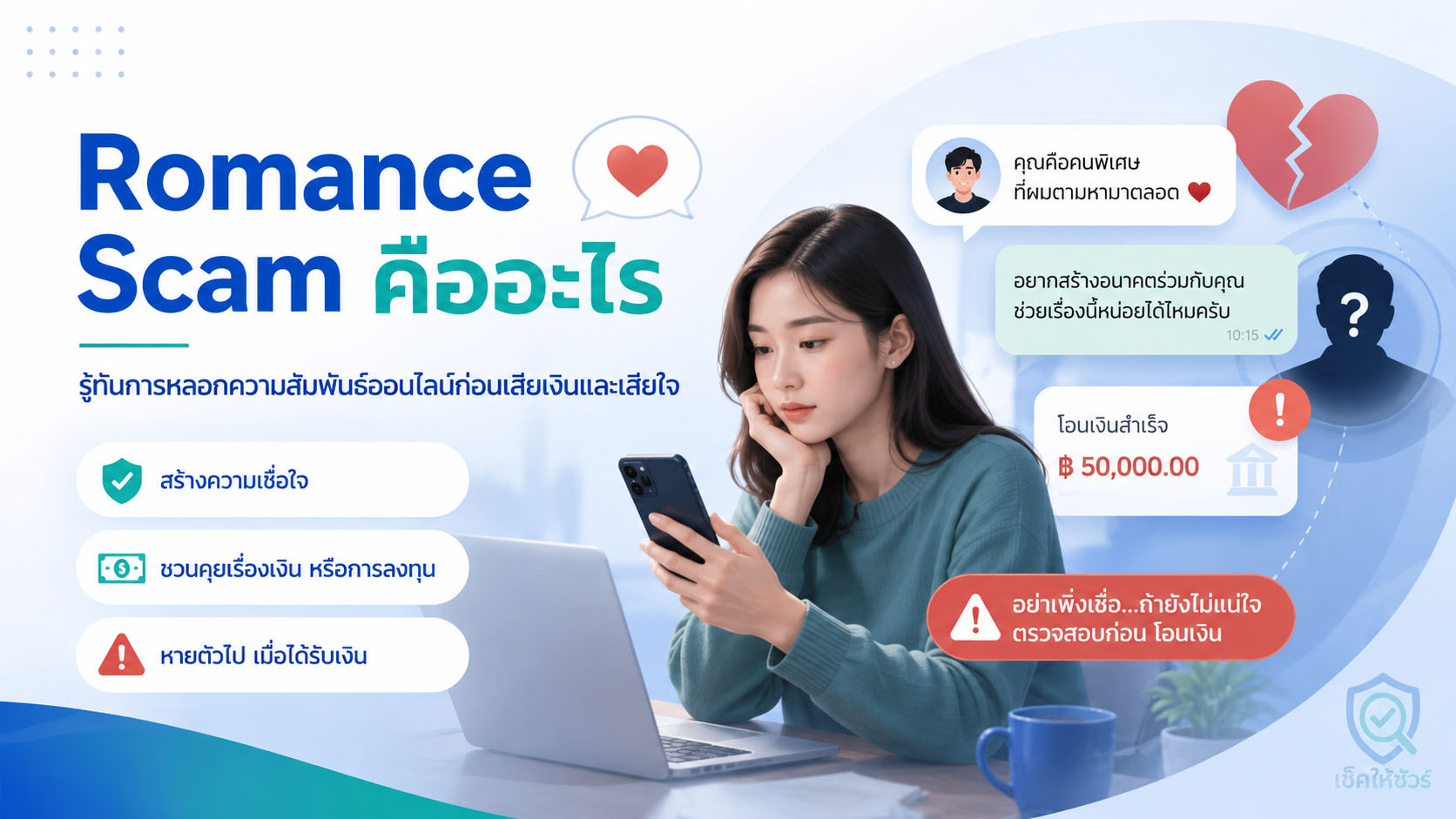
ในยุคที่ผู้คนสามารถรู้จักกันผ่านโซเชียลมีเดีย แอปหาคู่ แชทออนไลน์ หรือกลุ่มชุมชนต่าง ๆ ได้ง่ายขึ้น ความสัมพันธ์ที่เริ่มต้นบนโลกดิจิทัลจึงกลายเป็นเรื่องปกติของสังคมปัจจุบัน
หลายความสัมพันธ์อาจเริ่มต้นจากการพูดคุยที่ดี ความใส่ใจ คำพูดที่อบอุ่น หรือการแสดงความจริงใจอย่างต่อเนื่อง แต่ในขณะเดียวกัน มิจฉาชีพบางกลุ่มก็ใช้ช่องทางเหล่านี้เป็นเครื่องมือในการสร้างความไว้ใจ เพื่อหลอกให้เหยื่อโอนเงิน ส่งข้อมูลส่วนตัว รับพัสดุปลอม จ่ายค่าธรรมเนียม หรือช่วยเหลือทางการเงินในสถานการณ์ที่ถูกสร้างขึ้น
ภัยลักษณะนี้มักถูกเรียกว่า Romance Scam หรือ การหลอกความสัมพันธ์ออนไลน์
สิ่งที่ทำให้ Romance Scam อันตรายกว่าการหลอกลวงทั่วไป คือมิจฉาชีพไม่ได้หลอกด้วยเงินตั้งแต่แรก แต่เริ่มจากการสร้างความรู้สึก ความผูกพัน ความเชื่อใจ และความหวังในความสัมพันธ์ เมื่อเหยื่อเริ่มไว้ใจแล้ว จึงค่อย ๆ นำไปสู่การขอความช่วยเหลือทางการเงินหรือข้อมูลสำคัญ
เช็คให้ชัวร์ จัดทำบทความนี้ขึ้นเพื่อช่วยให้ผู้อ่านเข้าใจรูปแบบของ Romance Scam สังเกตสัญญาณเตือน และป้องกันตนเองหรือคนใกล้ตัวจากการตกเป็นเหยื่อของการหลอกลวงผ่านความสัมพันธ์
Romance Scam ไม่ได้เกิดจากความโง่หรือความไม่ระวัง
สิ่งแรกที่ควรเข้าใจคือ ผู้ที่ตกเป็นเหยื่อ Romance Scam ไม่ควรถูกตำหนิอย่างง่าย ๆ เพราะกลโกงประเภทนี้มักถูกออกแบบมาให้ใช้เวลาสร้างความไว้ใจอย่างแนบเนียน
มิจฉาชีพอาจพูดคุยนานหลายวัน หลายสัปดาห์ หรือหลายเดือน ก่อนจะเริ่มขอเงินหรือขอความช่วยเหลือ บางรายอาจส่งข้อความทุกวัน ถามไถ่เรื่องชีวิต แสดงความห่วงใย พูดถึงอนาคตร่วมกัน หรือทำให้เหยื่อรู้สึกว่าตนเองเป็นคนสำคัญ
เมื่อความรู้สึกและความไว้ใจถูกสร้างขึ้นแล้ว เหยื่ออาจตัดสินใจช่วยเหลือเพราะความรัก ความสงสาร ความเชื่อใจ หรือความหวังว่าจะได้พบกันจริงในอนาคต
ดังนั้น Romance Scam ไม่ใช่แค่เรื่องของการหลอกเงิน แต่เป็นการใช้จิตวิทยาและอารมณ์ของมนุษย์เป็นเครื่องมือ
รูปแบบที่พบบ่อยของ Romance Scam
Romance Scam สามารถเกิดขึ้นได้หลายรูปแบบ แต่มักมีโครงเรื่องคล้ายกัน คือเริ่มจากการสร้างตัวตนที่น่าเชื่อถือ สร้างความสัมพันธ์ แล้วค่อยสร้างเหตุจำเป็นให้เหยื่อช่วยเหลือ
1. โปรไฟล์ดูดีเกินจริง
มิจฉาชีพมักใช้รูปโปรไฟล์ที่ดูน่าเชื่อถือ ดูดี หรือดูมีฐานะ เช่น แอบอ้างเป็นชาวต่างชาติ ทหาร แพทย์ วิศวกร นักธุรกิจ นักลงทุน กัปตันเรือ พนักงานบริษัทใหญ่ หรือคนที่ทำงานในต่างประเทศ
บางครั้งรูปภาพอาจถูกขโมยมาจากบุคคลอื่นบนอินเทอร์เน็ต หรือเป็นรูปที่ถูกจัดฉากให้ดูน่าเชื่อถือ
สัญญาณที่ควรระวัง เช่น
- รูปโปรไฟล์ดูดีมากแต่มีข้อมูลส่วนตัวน้อย
- ไม่ค่อยมีเพื่อนหรือกิจกรรมจริงในบัญชี
- รูปภาพดูเหมือนมาจากแหล่งอื่น
- บัญชีเพิ่งสร้างใหม่
- ข้อมูลชีวิตดูสมบูรณ์แบบเกินไป
- ไม่สามารถตรวจสอบตัวตนจริงได้
หากรู้จักใครผ่านช่องทางออนไลน์และโปรไฟล์ดูน่าเชื่อถือมากเกินไป ควรตรวจสอบอย่างรอบคอบก่อนเปิดใจหรือให้ข้อมูลส่วนตัว
2. แสดงความรักหรือความผูกพันเร็วผิดปกติ
มิจฉาชีพมักเร่งสร้างความสัมพันธ์ทางอารมณ์ให้เร็วเกินธรรมชาติ เช่น คุยไม่นานแต่บอกว่ารัก พูดถึงการแต่งงาน วางแผนอนาคต หรือบอกว่าไม่เคยรู้สึกแบบนี้กับใครมาก่อน
คำพูดเหล่านี้อาจทำให้เหยื่อรู้สึกพิเศษและเริ่มไว้ใจเร็วขึ้น
ตัวอย่างพฤติกรรมที่ควรระวัง:
- บอกรักเร็วมากทั้งที่เพิ่งรู้จัก
- พูดถึงการแต่งงานหรือใช้ชีวิตร่วมกันเร็วผิดปกติ
- เรียกชื่อหวาน ๆ และส่งข้อความตลอดเวลา
- ทำให้รู้สึกว่าเราเป็นคนเดียวที่เขาไว้ใจ
- เล่าเรื่องชีวิตที่น่าสงสารเพื่อสร้างความผูกพัน
- พยายามย้ายการสนทนาไปยังแชทส่วนตัวอย่างรวดเร็ว
ความสัมพันธ์ที่ดีควรมีเวลาให้รู้จักกันอย่างเป็นธรรมชาติ ไม่ควรรีบผูกพันจนทำให้การตัดสินใจลดความระมัดระวังลง
3. หลีกเลี่ยงการวิดีโอคอลหรือพบตัวจริง
แม้มิจฉาชีพจะพูดคุยอย่างใกล้ชิด แต่เมื่อต้องวิดีโอคอลหรือพบตัวจริง มักมีข้ออ้างเสมอ เช่น กล้องเสีย อินเทอร์เน็ตไม่ดี อยู่ในพื้นที่ทำงานที่ห้ามใช้กล้อง อยู่ต่างประเทศ ยังไม่สะดวก หรือมีเหตุฉุกเฉิน
หากมีการนัดพบ มักเลื่อนนัดซ้ำ ๆ หรือสร้างเหตุการณ์บางอย่างก่อนวันเดินทาง เช่น ป่วย ถูกกักตัว เอกสารมีปัญหา พาสปอร์ตมีปัญหา หรือเงินติดขัด
สัญญาณที่ควรระวัง:
- ไม่เคยวิดีโอคอลแบบเห็นหน้าชัดเจน
- วิดีโอคอลสั้นมากหรือภาพไม่ชัด
- เลื่อนนัดพบหลายครั้ง
- มีเหตุฉุกเฉินทุกครั้งก่อนจะเจอกัน
- ไม่ยอมให้ตรวจสอบตัวตนผ่านช่องทางอื่น
- ใช้ข้ออ้างเรื่องงาน ความปลอดภัย หรือความลับตลอดเวลา
หากความสัมพันธ์มีแต่คำพูด แต่ไม่เคยยืนยันตัวตนจริงได้ ควรระมัดระวังเป็นพิเศษ
4. อ้างว่าจะส่งของขวัญ เงิน หรือทรัพย์สินมาให้
หนึ่งในรูปแบบที่พบบ่อยคือมิจฉาชีพอ้างว่าจะส่งของมีค่า เงินสด ของขวัญ เครื่องประดับ โทรศัพท์ กระเป๋า หรือพัสดุจากต่างประเทศมาให้ จากนั้นจะมีบุคคลอีกคนติดต่อมาอ้างว่าเป็นเจ้าหน้าที่ขนส่ง ศุลกากร หรือบริษัทจัดส่ง แจ้งว่าต้องจ่ายค่าธรรมเนียม ค่าภาษี ค่าประกัน หรือค่าปลดปล่อยพัสดุ
ตัวอย่างข้ออ้างที่พบบ่อย:
- ของติดศุลกากร ต้องจ่ายค่าธรรมเนียม
- ในพัสดุมีเงินสด ต้องจ่ายค่าตรวจสอบ
- ต้องจ่ายค่าประกันก่อนส่งของต่อ
- ต้องโอนเงินเพื่อปลดล็อกพัสดุ
- หากไม่จ่าย ของจะถูกยึดหรือมีปัญหาทางกฎหมาย
หากมีคนที่ไม่เคยพบตัวจริงอ้างว่าจะส่งของมีค่ามาให้ และมีการขอให้ท่านโอนเงินเพื่อรับของ ควรถือเป็นสัญญาณอันตรายอย่างมาก
5. สร้างเหตุฉุกเฉินเพื่อขอเงิน
หลังจากสร้างความไว้ใจแล้ว มิจฉาชีพมักสร้างเหตุการณ์เร่งด่วนเพื่อขอความช่วยเหลือทางการเงิน เช่น ป่วย เข้าโรงพยาบาล กระเป๋าหาย ธุรกิจมีปัญหา เดินทางไม่ได้ ถูกกักที่สนามบิน หรือมีปัญหากับเอกสาร
เหตุการณ์เหล่านี้มักถูกสร้างขึ้นให้ดูน่าสงสารและเร่งด่วน เพื่อให้เหยื่อรู้สึกว่าต้องช่วยทันที
ตัวอย่างคำขอที่ควรระวัง:
- ขอยืมเงินค่ารักษาพยาบาล
- ขอเงินค่าตั๋วเครื่องบิน
- ขอเงินค่าธรรมเนียมเอกสาร
- ขอเงินเพื่อปลดล็อกบัญชี
- ขอให้ช่วยโอนเงินแทนชั่วคราว
- ขอให้รับเงินหรือโอนเงินต่อให้บุคคลอื่น
- ขอให้ช่วยลงทุนร่วมกัน
หากความสัมพันธ์ออนไลน์นำไปสู่การขอเงิน โดยเฉพาะจากคนที่ไม่เคยพบตัวจริง ควรหยุดและตรวจสอบทันที
6. ขอข้อมูลส่วนตัวหรือเอกสารสำคัญ
บางกรณีมิจฉาชีพอาจไม่ได้ขอเงินทันที แต่ขอข้อมูลส่วนตัว เช่น รูปบัตรประชาชน ที่อยู่ เบอร์โทร ข้อมูลบัญชีธนาคาร หรือเอกสารต่าง ๆ โดยอ้างว่าจะใช้ส่งของ เปิดบัญชี ทำเอกสารเดินทาง ทำธุรกรรมร่วมกัน หรือยืนยันตัวตน
ข้อมูลเหล่านี้อาจถูกนำไปใช้แอบอ้าง สร้างบัญชีปลอม สมัครบริการ หรือใช้ในกิจกรรมที่สร้างความเสียหายในภายหลัง
ข้อมูลที่ควรระวังเป็นพิเศษ:
- รูปบัตรประชาชน
- เลขบัตรประชาชน
- ที่อยู่บ้าน
- เบอร์โทรศัพท์
- ข้อมูลบัญชีธนาคาร
- รูปถ่ายส่วนตัว
- เอกสารทางการเงิน
- ข้อมูลครอบครัวหรือคนใกล้ตัว
อย่าส่งข้อมูลสำคัญให้คนที่รู้จักผ่านออนไลน์เท่านั้น โดยเฉพาะหากยังไม่สามารถยืนยันตัวตนจริงของอีกฝ่ายได้
ทำไม Romance Scam ถึงยากต่อการตัดสินใจ
Romance Scam แตกต่างจากกลโกงประเภทอื่น เพราะเหยื่อไม่ได้ตัดสินใจจากข้อมูลเพียงอย่างเดียว แต่มีความรู้สึกเข้ามาเกี่ยวข้อง
เมื่อเราเชื่อใจใครบางคนแล้ว สมองอาจมองข้ามสัญญาณเตือนบางอย่าง เช่น ข้ออ้างที่ไม่สมเหตุสมผล การเลื่อนนัดซ้ำ ๆ หรือการขอเงินหลายครั้ง เพราะเราอยากเชื่อว่าอีกฝ่ายจริงใจ
มิจฉาชีพอาจใช้คำพูดที่ทำให้เหยื่อรู้สึกผิด เช่น
- “ถ้าคุณรักฉันจริง คุณต้องช่วยฉัน”
- “ฉันไม่มีใครนอกจากคุณ”
- “ถ้าคุณไม่ช่วย ฉันคงแย่มาก”
- “อีกนิดเดียวเราก็จะได้เจอกันแล้ว”
- “ฉันสัญญาว่าจะคืนเงินทั้งหมด”
- “อย่าบอกใคร เพราะเขาจะไม่เข้าใจความรักของเรา”
คำพูดเหล่านี้ถูกออกแบบมาให้เหยื่อรู้สึกผูกพันและตัดสินใจด้วยอารมณ์มากกว่าข้อเท็จจริง
สัญญาณเตือนสำคัญของ Romance Scam
หากพบหลายข้อพร้อมกัน ควรหยุดและตรวจสอบอย่างจริงจัง
- รู้จักกันออนไลน์เท่านั้นและไม่เคยพบตัวจริง
- อีกฝ่ายบอกรักหรือวางแผนอนาคตเร็วผิดปกติ
- โปรไฟล์ดูดีเกินจริงแต่ตรวจสอบตัวตนไม่ได้
- หลีกเลี่ยงการวิดีโอคอลหรือพบตัวจริง
- มีเหตุฉุกเฉินซ้ำ ๆ เมื่อต้องพบกัน
- ขอเงิน ยืมเงิน หรือให้จ่ายค่าธรรมเนียม
- อ้างว่าส่งของขวัญหรือเงินมาให้แต่ต้องจ่ายค่ารับพัสดุ
- ขอข้อมูลส่วนตัวหรือเอกสารสำคัญ
- ขอให้เก็บความสัมพันธ์หรือปัญหาเป็นความลับ
- ทำให้รู้สึกผิดหากไม่ช่วยเหลือ
- ขอให้รับเงิน โอนเงินต่อ หรือใช้บัญชีของท่านทำธุรกรรม
- คำอธิบายเปลี่ยนไปมาเมื่อตรวจสอบรายละเอียด
หากมีสัญญาณเหล่านี้ อย่าเพิ่งโอนเงินหรือส่งข้อมูลเพิ่มเติม ควรปรึกษาคนที่ไว้ใจและตรวจสอบจากหลายช่องทางก่อน
วิธีป้องกันตัวจาก Romance Scam
การป้องกัน Romance Scam ไม่ได้หมายความว่าต้องไม่ไว้ใจใครเลย แต่หมายถึงการมีขอบเขตและตรวจสอบอย่างเหมาะสมก่อนตัดสินใจเรื่องสำคัญ
1. อย่าโอนเงินให้คนที่ไม่เคยพบตัวจริง
ไม่ว่าอีกฝ่ายจะคุยมานานแค่ไหน ดูจริงใจแค่ไหน หรือเล่าเรื่องน่าสงสารเพียงใด หากยังไม่เคยพบตัวจริงและยังตรวจสอบตัวตนไม่ได้ ไม่ควรโอนเงินให้
โดยเฉพาะหากเป็นการโอนเงินเพื่อ:
- ค่าตั๋วเดินทาง
- ค่ารักษาพยาบาล
- ค่าธรรมเนียมพัสดุ
- ค่าภาษีหรือศุลกากร
- ค่าปลดล็อกบัญชี
- เงินลงทุนร่วมกัน
- เงินช่วยเหลือฉุกเฉิน
ความสัมพันธ์ที่จริงใจไม่ควรเริ่มจากการให้เรารับภาระทางการเงินโดยไม่มีหลักฐานที่ตรวจสอบได้
2. ตรวจสอบรูปและโปรไฟล์
หากสงสัย ควรลองตรวจสอบรูปโปรไฟล์ ชื่อบัญชี และข้อมูลที่อีกฝ่ายให้มา
สิ่งที่ควรทำ:
- ค้นหารูปภาพย้อนกลับ หากสามารถทำได้
- ค้นหาชื่อหรือรูปจากหลายแหล่ง
- ตรวจสอบว่าบัญชีมีประวัติจริงหรือไม่
- ดูว่ามีเพื่อนหรือกิจกรรมที่น่าเชื่อถือหรือไม่
- ระวังบัญชีที่มีรูปดูดีมากแต่มีข้อมูลน้อย
- ระวังบัญชีที่เพิ่งสร้างใหม่หรือมีความเคลื่อนไหวผิดปกติ
หากรูปภาพถูกใช้ในหลายชื่อ หลายบัญชี หรือข้อมูลไม่สอดคล้องกัน ควรระวังเป็นพิเศษ
3. ขอวิดีโอคอลอย่างเป็นธรรมชาติ
การวิดีโอคอลไม่ใช่การยืนยันความปลอดภัย 100% แต่ช่วยลดความเสี่ยงจากการใช้รูปปลอมได้ระดับหนึ่ง
ควรสังเกตว่า:
- อีกฝ่ายยอมวิดีโอคอลหรือไม่
- ภาพและเสียงสอดคล้องกับบุคคลในรูปหรือไม่
- มีข้ออ้างหลีกเลี่ยงซ้ำ ๆ หรือไม่
- การสนทนาเป็นธรรมชาติหรือเหมือนวิดีโอที่เตรียมไว้หรือไม่
หากอีกฝ่ายหลีกเลี่ยงวิดีโอคอลตลอดเวลา แต่ยังคงขอเงินหรือข้อมูลส่วนตัว ควรหยุดและตรวจสอบ
4. ปรึกษาคนใกล้ตัวก่อนตัดสินใจเรื่องเงิน
มิจฉาชีพมักไม่อยากให้เหยื่อปรึกษาคนอื่น เพราะคนนอกความสัมพันธ์อาจเห็นสัญญาณผิดปกติได้ชัดกว่า
ก่อนโอนเงินหรือส่งข้อมูลสำคัญ ควรเล่าเรื่องให้คนที่ไว้ใจฟัง เช่น คนในครอบครัว เพื่อนสนิท หรือผู้ที่มีประสบการณ์ด้านดิจิทัล
หากเรารู้สึกไม่กล้าเล่า เพราะกลัวถูกห้ามหรือถูกตำหนิ นั่นอาจเป็นสัญญาณว่าเรื่องนี้ควรได้รับการตรวจสอบมากขึ้น ไม่ใช่รีบทำต่อเพียงลำพัง
5. อย่าใช้บัญชีของตนเองรับหรือโอนเงินแทนผู้อื่น
บางกรณีมิจฉาชีพอาจไม่ได้ขอเงินจากเหยื่อโดยตรง แต่ขอให้เหยื่อช่วยรับเงิน โอนเงินต่อ เปิดบัญชี หรือใช้บัญชีของตนเองทำธุรกรรม โดยอ้างว่าเป็นเรื่องธุรกิจ ปัญหาเอกสาร หรือความจำเป็นชั่วคราว
สิ่งนี้มีความเสี่ยงสูง เพราะบัญชีของท่านอาจถูกนำไปเกี่ยวข้องกับธุรกรรมที่ผิดกฎหมายหรือความเสียหายของผู้อื่น
ไม่ควรรับเงิน โอนเงินต่อ หรือใช้บัญชีของตนเองแทนบุคคลที่ไม่สามารถตรวจสอบตัวตนและเหตุผลได้อย่างชัดเจน
หากสงสัยว่าตนเองหรือคนใกล้ตัวกำลังเจอ Romance Scam
หากเริ่มสงสัย ควรดำเนินการอย่างระมัดระวังและไม่ตัดสินใจด้วยอารมณ์
สิ่งที่ควรทำ:
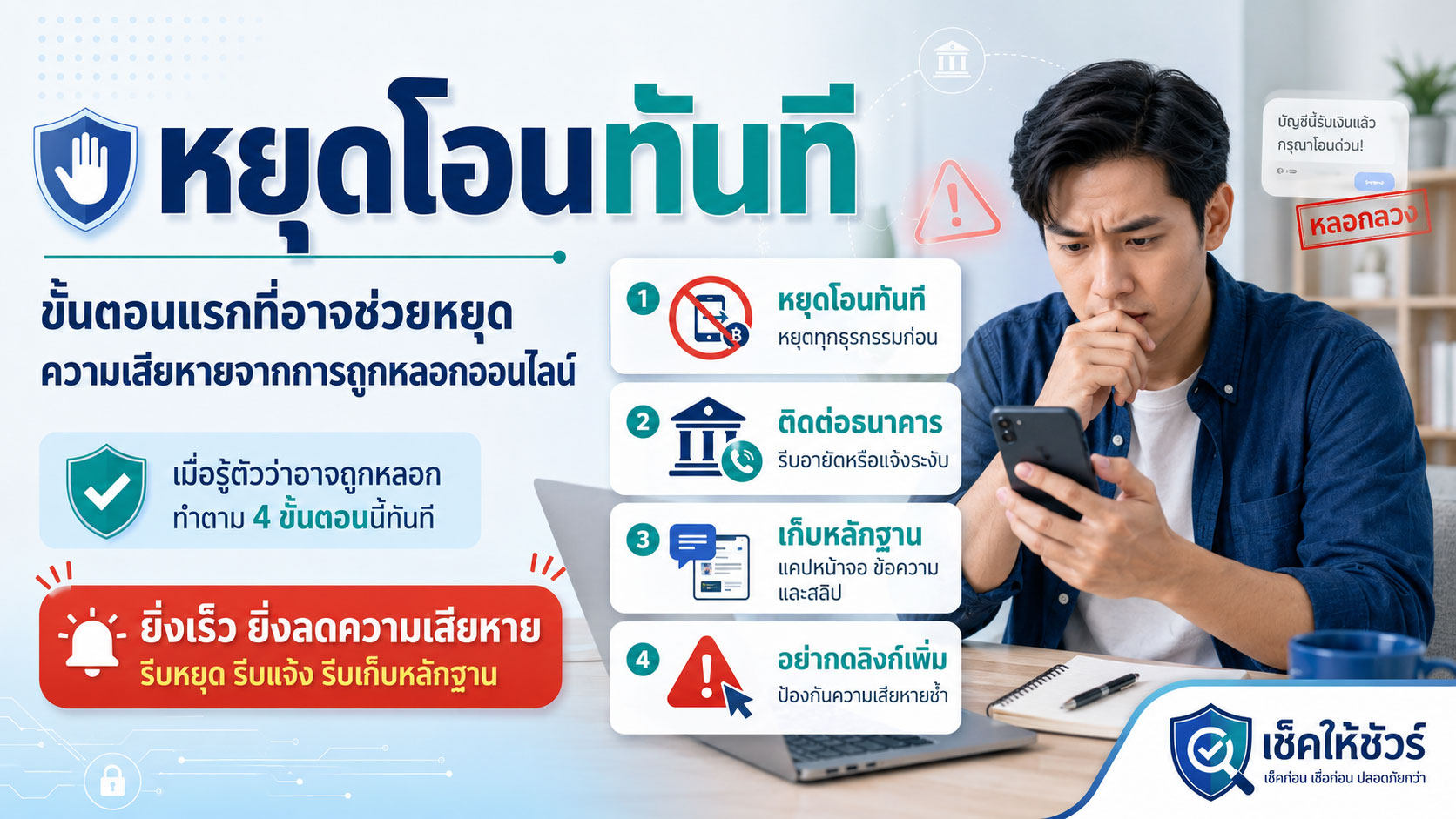
- หยุดโอนเงินหรือส่งข้อมูลเพิ่มเติม
- เก็บหลักฐานการสนทนา
- เก็บเลขบัญชี เบอร์โทร ลิงก์ และโปรไฟล์ที่เกี่ยวข้อง
- ตรวจสอบรูปภาพและข้อมูลของอีกฝ่าย
- ปรึกษาคนที่ไว้ใจ
- หากโอนเงินไปแล้ว ให้ติดต่อธนาคารโดยเร็ว
- หากมีความเสียหาย ให้แจ้งความหรือแจ้งหน่วยงานที่เกี่ยวข้องผ่านช่องทางทางการ
- แจ้งข้อมูลต้องสงสัยเข้ามายังเช็คให้ชัวร์ หากเห็นว่าอาจช่วยเตือนผู้อื่นได้
แจ้งข้อมูลต้องสงสัย: แจ้งข้อมูลต้องสงสัย
โดนโกงแล้วควรทำอย่างไร: โดนโกงแล้วควรทำอย่างไร
หากคนในครอบครัวกำลังตกอยู่ในความสัมพันธ์ที่น่าสงสัย
หากท่านสงสัยว่าพ่อแม่ ญาติ ผู้สูงอายุ เพื่อน หรือคนใกล้ตัวกำลังถูกหลอกผ่านความสัมพันธ์ออนไลน์ ควรพูดคุยด้วยความเข้าใจ ไม่ตำหนิหรือทำให้อับอาย
ผู้ที่กำลังอยู่ในสถานการณ์ Romance Scam อาจเชื่อใจอีกฝ่ายมาก และอาจรู้สึกว่าคนรอบตัวไม่เข้าใจความสัมพันธ์ของตน หากใช้คำพูดรุนแรงเกินไป เขาอาจยิ่งปิดบังและไม่ยอมขอความช่วยเหลือ
แนวทางที่อาจช่วยได้:
- ฟังอย่างใจเย็น
- ถามคำถามเพื่อให้เขาคิดเอง
- ช่วยตรวจสอบข้อมูลโดยไม่กล่าวหาทันที
- แนะนำให้หยุดโอนเงินก่อน
- ช่วยเก็บหลักฐาน
- ช่วยตรวจสอบรูปโปรไฟล์และบัญชี
- ชวนติดต่อธนาคารหรือหน่วยงานที่เกี่ยวข้อง หากมีความเสียหาย
- ย้ำว่าไม่ใช่ความผิดของเขาคนเดียว และยังสามารถเริ่มแก้ไขได้
การช่วยเหลือด้วยความเข้าใจ อาจทำให้ผู้เสียหายกล้าพูดความจริงและหยุดความเสียหายได้เร็วขึ้น
ความรักที่ดีไม่ควรบังคับให้เสี่ยง
ความสัมพันธ์ที่จริงใจควรมีความเคารพ ความโปร่งใส และไม่กดดันให้ฝ่ายใดฝ่ายหนึ่งต้องรับความเสี่ยงทางการเงินหรือเปิดเผยข้อมูลส่วนตัวเกินจำเป็น
หากใครบางคนใช้ความรัก ความสงสาร หรือความผูกพันมาเป็นเหตุผลให้ท่านต้องโอนเงินซ้ำ ๆ ส่งข้อมูลสำคัญ หรือปิดบังเรื่องนี้จากคนรอบตัว ควรหยุดคิดและตรวจสอบอย่างจริงจัง
ความรู้สึกดี ๆ ไม่ควรทำให้เราสูญเสียความปลอดภัยของตนเอง
ใช้เช็คให้ชัวร์เป็นหนึ่งในเครื่องมือช่วยตรวจสอบ
ก่อนโอนเงิน ส่งข้อมูล หรือทำธุรกรรมกับคนที่รู้จักผ่านออนไลน์ ท่านสามารถใช้เช็คให้ชัวร์เป็นหนึ่งในเครื่องมือช่วยตรวจสอบเบื้องต้น เช่น
- ค้นหาเบอร์โทรศัพท์
- ค้นหาเลขบัญชี
- ค้นหาชื่อบัญชี
- ค้นหาลิงก์หรือเพจ
- ค้นหารูปแบบการหลอกลวงที่คล้ายกัน
- อ่านบทความเกี่ยวกับ Romance Scam และภัยออนไลน์อื่น ๆ
ตรวจสอบข้อมูลต้องสงสัย: ตรวจสอบข้อมูลต้องสงสัย
อย่างไรก็ตาม หากไม่พบข้อมูลในระบบ ไม่ได้หมายความว่าปลอดภัยแน่นอน เพราะข้อมูลอาจยังไม่เคยมีผู้แจ้งเข้ามา ผู้ใช้งานควรตรวจสอบจากหลายแหล่ง ใช้วิจารณญาณ และปรึกษาคนที่ไว้ใจก่อนตัดสินใจเรื่องสำคัญ
ข้อความสำคัญ
ข้อมูลในบทความนี้มีวัตถุประสงค์เพื่อการให้ความรู้และสร้างความตระหนักเกี่ยวกับ Romance Scam หรือการหลอกความสัมพันธ์ออนไลน์เบื้องต้นเท่านั้น ไม่ถือเป็นคำแนะนำทางกฎหมาย การเงิน หรือความปลอดภัยไซเบอร์เฉพาะกรณี
เช็คให้ชัวร์ไม่ใช่หน่วยงานรัฐ ธนาคาร ตำรวจ ศาล หรือผู้ให้คำปรึกษาทางกฎหมายโดยตรง และไม่สามารถอายัดบัญชี ติดตามเงินคืน ดำเนินคดี หรือสั่งการแทนหน่วยงานที่มีอำนาจได้
หากท่านได้รับความเสียหายทางการเงินหรือพบเหตุอันควรสงสัยว่าเกี่ยวข้องกับอาชญากรรม กรุณาติดต่อธนาคารของท่านและหน่วยงานที่เกี่ยวข้องผ่านช่องทางทางการโดยเร็วที่สุด
เช็คให้ชัวร์ — ก่อนเชื่อ ก่อนโอน ก่อนแชร์
What Is a Romance Scam? Understanding Online Relationship Fraud Before You Lose Money and Trust
In an era where people can meet through social media, dating apps, online chats, and digital communities, relationships that begin online have become a normal part of modern life.
Many relationships may start with kind conversations, attention, warm words, or what appears to be sincere care. At the same time, scammers may use these same channels to build trust and later trick victims into transferring money, sharing personal information, receiving fake parcels, paying false fees, or providing financial help for situations that were created to manipulate them.
This type of fraud is commonly known as a Romance Scam, or online relationship fraud.
What makes romance scams especially dangerous is that scammers often do not begin by asking for money. They first build emotional connection, trust, hope, and attachment. Once the victim begins to trust them, they gradually move toward requests for financial help or sensitive personal information.
CheckHaiSure created this article to help readers understand how romance scams work, recognize warning signs, and protect themselves or loved ones from emotional and financial harm.
Romance Scams Are Not About Being Careless
The first thing to understand is that victims of romance scams should not be blamed too quickly. This type of scam is often carefully designed to build trust over time.
A scammer may talk to the victim for days, weeks, or even months before asking for money or help. They may send messages every day, ask about daily life, show concern, talk about the future, or make the victim feel important and special.
Once emotional trust has been built, the victim may decide to help because of love, sympathy, trust, or the hope of meeting in person someday.
Romance scams are therefore not only about stealing money. They are about using human emotions and psychology as tools.
Common Forms of Romance Scams
Romance scams can happen in many forms, but they often follow a similar pattern: creating a believable identity, building a relationship, and then creating a situation where the victim feels they must help.
1. A Profile That Looks Too Perfect
Scammers often use profiles that look attractive, trustworthy, or successful. They may pretend to be foreigners, soldiers, doctors, engineers, business owners, investors, ship captains, employees of large companies, or people working overseas.
The photos may be stolen from someone else online or staged to look convincing.
Warning signs include:
- The profile photo looks very attractive, but there is little personal information
- The account has few real friends or normal activities
- The photos look like they may come from another source
- The account was recently created
- The life story seems too perfect
- The person’s real identity cannot be verified
If you meet someone online and their profile appears unusually impressive, check carefully before trusting them or sharing personal information.
2. Love or Emotional Attachment Happens Too Quickly
Scammers often try to create emotional closeness faster than normal. They may say “I love you” shortly after meeting, talk about marriage, plan a future together, or say they have never felt this way before.
These words may make the victim feel special and begin trusting the person more quickly.
Behaviors to watch for include:
- Saying “I love you” very soon after first contact
- Talking about marriage or a future together unusually quickly
- Using sweet names and sending messages constantly
- Making you feel like you are the only person they trust
- Sharing sad life stories to create emotional attachment
- Moving the conversation quickly to private chat
A healthy relationship should allow time to know each other naturally. It should not rush emotional attachment in a way that reduces your caution.
3. Avoiding Video Calls or Real-Life Meetings
Even if the scammer talks closely with the victim, they often avoid video calls or real-life meetings. Common excuses include a broken camera, poor internet, work restrictions, being overseas, safety concerns, or an emergency.
If a meeting is planned, they may repeatedly postpone it or create a problem shortly before the date, such as illness, quarantine, document issues, passport problems, or financial trouble.
Warning signs include:
- They never agree to a clear face-to-face video call
- Video calls are very short or unclear
- They postpone meetings repeatedly
- Emergencies always happen before meeting
- They refuse to verify their identity through other channels
- They constantly use work, safety, or confidentiality as an excuse
If the relationship is based only on words and the person’s real identity cannot be confirmed, be especially cautious.
4. Claiming They Will Send Gifts, Money, or Valuable Items
A common romance scam pattern is when the scammer claims they will send valuable items, cash, gifts, jewelry, phones, bags, or parcels from overseas. Later, another person may contact the victim pretending to be from a delivery company, customs office, or shipping service. They then claim that fees, taxes, insurance, or release charges must be paid.
Common excuses include:
- The parcel is stuck at customs and a fee must be paid
- The parcel contains cash and requires inspection fees
- Insurance must be paid before delivery can continue
- Money must be transferred to release the parcel
- If fees are not paid, the parcel will be seized or cause legal problems
If someone you have never met in person claims they are sending valuable items and asks you to pay money to receive them, treat it as a serious warning sign.
5. Creating an Emergency to Ask for Money
After building trust, scammers often create urgent situations to request financial help. They may claim to be sick, hospitalized, robbed, facing business problems, unable to travel, stuck at the airport, or dealing with document issues.
These situations are designed to create sympathy and urgency, so the victim feels they must help immediately.
Requests to be careful with include:
- Asking for money for medical treatment
- Asking for money for plane tickets
- Asking for money for document fees
- Asking for money to unlock an account
- Asking you to transfer money temporarily
- Asking you to receive money or transfer money to someone else
- Asking you to invest together
If an online relationship leads to money requests, especially from someone you have never met in person, stop and verify immediately.
6. Asking for Personal Information or Important Documents
In some cases, scammers may not ask for money immediately. Instead, they may ask for personal information such as a photo of your ID card, address, phone number, bank account information, or documents. They may claim they need it for shipping, account opening, travel documents, joint transactions, or identity verification.
This information may later be used for impersonation, fake accounts, service registration, or other harmful activities.
Information to protect carefully includes:
- Photo of national ID card or passport
- National ID or passport number
- Home address
- Phone number
- Bank account information
- Personal photos
- Financial documents
- Information about family members or close contacts
Do not send important personal information to someone you only know online, especially if you cannot verify their real identity.
Why Romance Scams Are Hard to Judge
Romance scams are different from many other types of fraud because decisions are not based only on information. Feelings are involved.
Once we trust someone, our mind may overlook warning signs, such as unreasonable excuses, repeated postponed meetings, or repeated requests for money, because we want to believe the other person is sincere.
Scammers may use emotionally manipulative phrases such as:
- “If you really love me, you will help me.”
- “I have no one except you.”
- “If you do not help me, I will be in serious trouble.”
- “We are so close to finally meeting.”
- “I promise I will pay everything back.”
- “Do not tell anyone. They will not understand our love.”
These words are designed to create emotional pressure and make victims decide based on feelings rather than facts.
Key Warning Signs of a Romance Scam
If several of these signs appear together, stop and verify carefully:
- You only know the person online and have never met in real life
- They say they love you or plan a future unusually quickly
- Their profile looks too perfect but cannot be verified
- They avoid video calls or real-life meetings
- Emergencies happen repeatedly before meeting
- They ask for money, loans, or fees
- They claim they sent gifts or money, but you must pay to receive them
- They ask for personal information or important documents
- They ask you to keep the relationship or problem secret
- They make you feel guilty if you do not help
- They ask you to receive money, transfer money, or use your account
- Their explanation changes when you ask for details
If you notice these signs, do not transfer money or send more information. Talk to someone you trust and check through multiple sources first.
How to Protect Yourself from Romance Scams
Protecting yourself from romance scams does not mean you should never trust anyone. It means having clear boundaries and verifying carefully before making important decisions.
1. Do Not Transfer Money to Someone You Have Never Met in Person
No matter how long you have been chatting, how sincere the person seems, or how sad their story sounds, if you have never met them in person and cannot verify their identity, you should not transfer money.
Be especially careful if the money is requested for:
- Travel tickets
- Medical costs
- Parcel fees
- Taxes or customs charges
- Account unlocking fees
- Joint investment
- Emergency help
A sincere relationship should not begin by asking you to take financial risk without verifiable proof.
2. Check Photos and Profiles
If you are unsure, try checking the person’s profile photo, account name, and information they have given you.
Things you can do include:
- Use reverse image search where possible
- Search for the name or photo across multiple sources
- Check whether the account has a real history
- Look for realistic friends or activity
- Be cautious of accounts with attractive photos but very little information
- Be cautious of newly created accounts or unusual activity
If the same photo appears under many names or accounts, or if information does not match, be extra careful.
3. Ask for a Natural Video Call
A video call is not a perfect guarantee of safety, but it can help reduce the risk of fake photos.
Observe whether:
- The person agrees to a video call
- The face and voice match the profile
- They repeatedly make excuses to avoid it
- The conversation feels natural or seems like a prepared video
If the person always avoids video calls but continues asking for money or personal information, stop and verify.
4. Talk to Someone You Trust Before Making Money Decisions
Scammers often do not want victims to talk to others because someone outside the relationship may notice warning signs more clearly.
Before transferring money or sending important information, speak with someone you trust, such as a family member, close friend, or someone with digital safety experience.
If you feel afraid to tell someone because they may stop you or criticize you, that may be a sign that the situation needs more checking, not faster action.
5. Do Not Use Your Bank Account to Receive or Transfer Money for Someone Else
In some cases, scammers may not ask directly for your money. Instead, they may ask you to receive money, transfer money onward, open an account, or use your account for their transaction. They may claim it is for business, document issues, or a temporary problem.
This is highly risky because your account may become connected to unlawful transactions or harm caused to other people.
Do not receive money, transfer money onward, or use your account for someone whose identity and reasons cannot be clearly verified.
If You Suspect You or Someone Close to You Is Facing a Romance Scam
If you begin to suspect something is wrong, act carefully and avoid deciding based only on emotion.
Recommended steps:
- Stop transferring money or sending more information
- Save chat evidence
- Save account numbers, phone numbers, links, and related profiles
- Check the other person’s photos and information
- Talk to someone you trust
- If money has been transferred, contact your bank as soon as possible
- If damage has occurred, report through official channels
- Submit suspicious information to CheckHaiSure if it may help warn others
Report suspicious information: Report suspicious information
What to do if scammed: What to do if scammed
If a Family Member May Be Involved in a Suspicious Online Relationship
If you suspect that a parent, relative, elderly person, friend, or someone close to you may be involved in a romance scam, talk with understanding. Avoid blaming or shaming them.
A person in a romance scam situation may strongly trust the other party and may feel that people around them do not understand the relationship. If you use harsh words, they may hide the situation and avoid asking for help.
Helpful approaches include:
- Listen calmly
- Ask questions that help them think
- Help check information without immediately accusing
- Suggest pausing money transfers first
- Help save evidence
- Help check profile photos and accounts
- Support contacting the bank or relevant authorities if damage occurred
- Reassure them that it is not only their fault and that they can still take action
Helping with understanding may make the victim more willing to speak honestly and stop the damage earlier.
Healthy Love Should Not Force You into Risk
A sincere relationship should involve respect, transparency, and care. It should not pressure one person to take financial risks or disclose excessive personal information.
If someone uses love, sympathy, or emotional attachment as a reason for you to repeatedly transfer money, send important documents, or keep the situation secret from people around you, stop and check carefully.
Good feelings should not cost you your safety.
Use CheckHaiSure as One Tool to Help You Check
Before transferring money, sending information, or making transactions with someone you met online, you can use CheckHaiSure as one of your preliminary checking tools.
You may search for:
- Phone numbers
- Bank account numbers
- Account names
- Links or pages
- Similar scam patterns
- Articles about romance scams and other online threats
Check suspicious information: Check suspicious information
However, if no information is found in the system, it does not mean the situation is definitely safe. The information may not have been reported yet. Users should check multiple sources, use careful judgment, and talk to someone they trust before making important decisions.
Important Notice
The information in this article is intended for general education and awareness about romance scams and online relationship fraud only. It is not legal, financial, or case-specific cybersecurity advice.
CheckHaiSure is not a government agency, bank, police authority, court, or direct legal advisory service. We cannot freeze accounts, recover money, conduct legal proceedings, or act on behalf of authorized agencies.
If you have suffered financial loss or suspect criminal activity, please contact your bank and the relevant official authorities through official channels as soon as possible.
CheckHaiSure — Check before you trust, transfer, or share.
Leave a Reply
You must be logged in to post a comment.